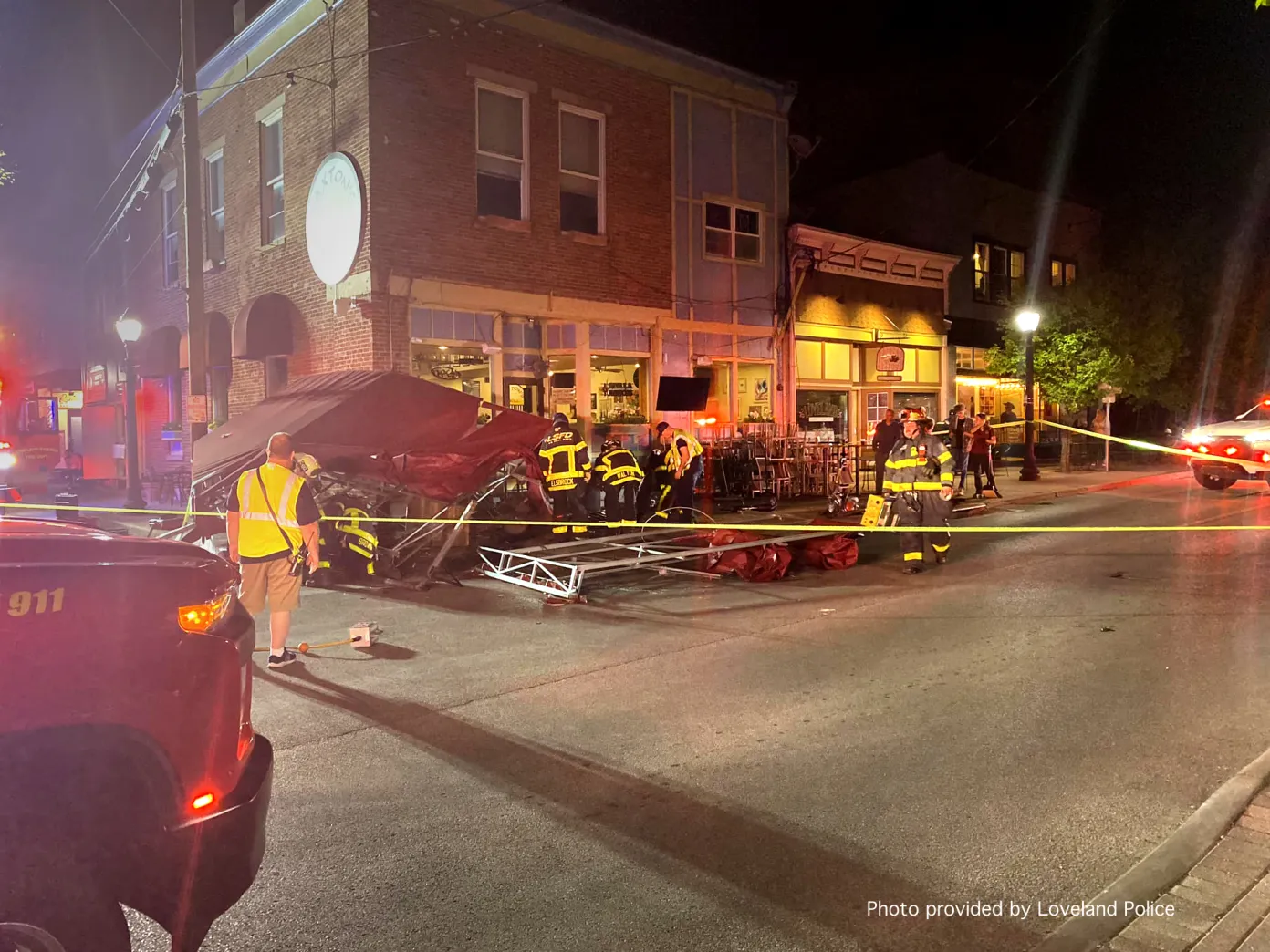
Batavia, Ohio – Tobie Michael Ramsey of Middletown who drove his vehicle into and destroyed the patio at Paxton’s Grill on May 5th was indicted on 8 charges this week by a Clermont County Grand Jury. Ramsey fled the scene and later turned himself in.
The charges are:
• 2903.08(A)(I)(a), 2903.08(B)(l): Aggravated Vehicular Assault, a felony of the third degree
• 2903.08(A)(1)(a), 2903.08(B)(1): Aggravated Vehicular Assault, a felony of the third degree
• 2903.08(A)(2)(b): Vehicular Assault, a felony of the fourth degree
• 2903 .08(A)(2)(b), 2903.08(C)(2): Vehicular Assault, a felony of the fourth degree
• 4549.02(A)(1)(a): Failure to Stop After an Accident, a felony of the fourth degree
• 4549.02(A)(l)(a): Failure to Stop After an Accident, a felony of the fifth degree
• 4549.02(A)(1)(a), 4549.02(B)(2)(a): Failure to Stop After an Accident, a felony of the fifth degree
• 451 1. 19(A)(1)(a), 4511.19(G)(l)(a): Operating a Vehicle Under the Influence of alcohol, a Drug of Abuse or a Combination of the – OVI, a misdemeanor of the first degree
Loveland, Ohio – Here are the photos and video we shot during last Tuesday’s parade from our vantage point around the Town Clock on West Loveland Avenue. The still photos were taken by reporter, Sean Behling.
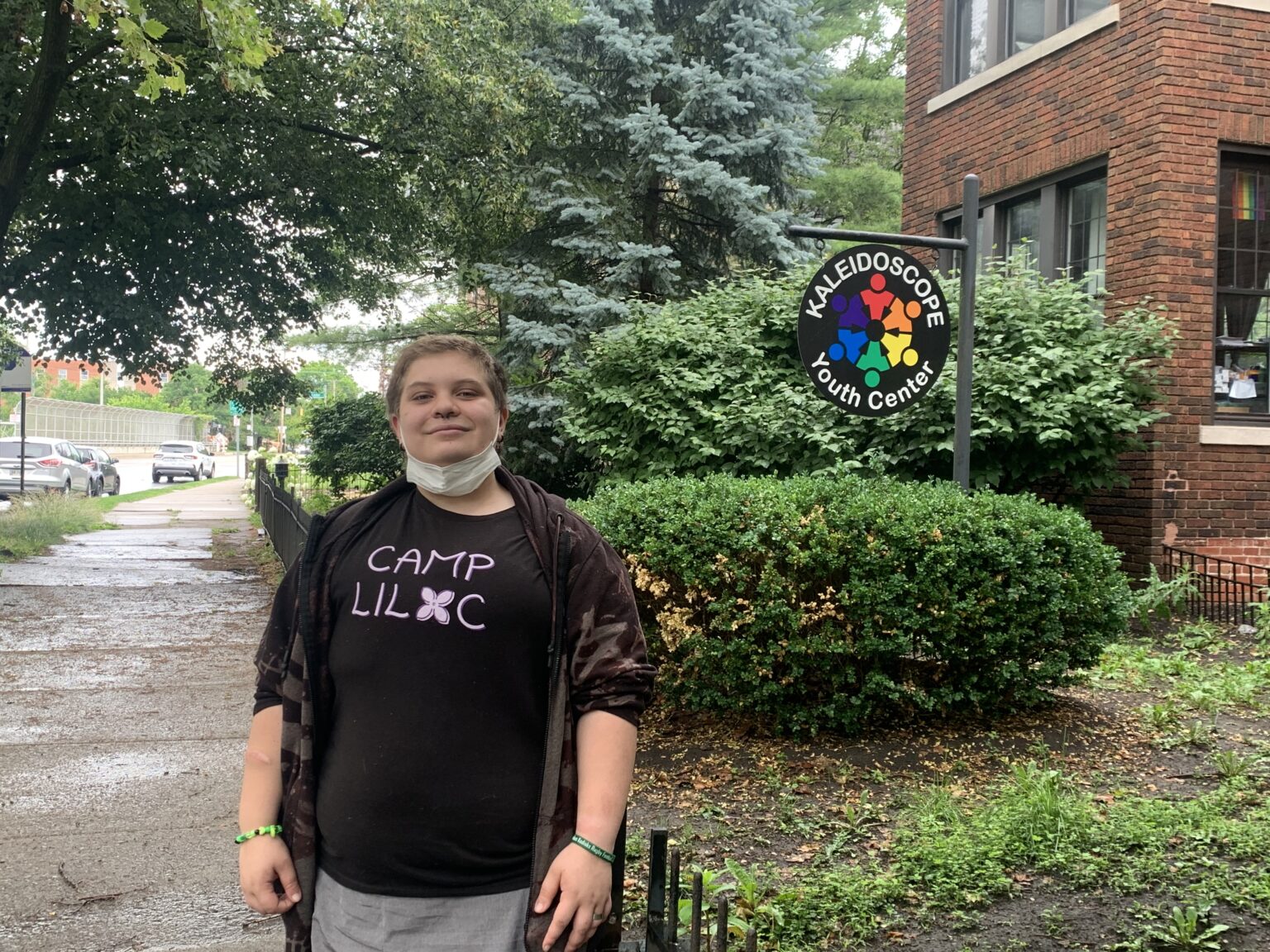
Nathan Alvarez, 15, stands outside Kaleidoscope Youth Center on June 23. He is worried about a bill that would require K-12 schools and colleges to mandate that students could only use the bathroom or locker room that matches their sex assigned at birth. (Photo by Megan Henry, Ohio Capital Journal) Ohio Capital Journal talked to three transgender youths who are concerned about these bills and their potential implications.
Nathan Alvarez is used to people laughing or snickering at him when he uses the men’s bathroom.
Despite that, the 15-year-old says his high school is one place he doesn’t have to worry about that happening because they have a couple of gender neutral bathrooms and anyone can use the men and women’s restroom.
State Reps. Beth Lear, R-Galena, and Adam Bird, R-New Richmond, recently introduced House Bill 183 which would require K-12 schools and colleges to mandate that students could only use the bathroom or locker room that matches their sex assigned at birth. HB 183 is still in House committee, awaiting sponsor testimony.
“It would be hell (if the bill were to pass),” Alvarez said, who uses he/him pronouns. “Hearing about it disgusted me. Like it violently disgusted me.”
HB 183 is one of a handful of anti-trans bills that have been introduced so far in the Ohio General Assembly.
Doctors wouldn’t be able to give puberty blockers and hormone therapy to trans youth, trans athletes wouldn’t be able to participate in women’s sports, educators would be forced to out students to their parents and require public schools to give parental notification before teaching “sexuality content” if these various anti-trans bills pass through the Republican-controlled Ohio Statehouse.
OCJ talked to three transgender youths who are concerned about these bills and their potential implications.
“It’s an attack on all trans people,” said Ko Rupert, who uses she/it pronouns. “They are all uniquely bad, but their uniqueness is important.”
Fifteen laws have been enacted banning gender affirming care for transgender youth and four additional laws have been passed that censor school curriculum like books, according to HRC.
“It’s very hard to see what’s been already happening in other states and how the bills that they are trying to pass here in Ohio are not even that different,” Jaylah Hollins, 19 said. “I feel like it’s not really in the interest of Ohioans, but only in the interest of anti-trans lobbyists from out of state.”
House Bill 8
Hollins is going to start attending Columbus State Community College this fall for social work and hopes to one day work for an organization that helps transgender people.
“Hopefully if these bills don’t pass, we can try and make Ohio a place where it can be a refuge for trans kids and trans adults,” Hollins, said, who uses she/her pronouns. “Ensuring that trans kids have access to medical care and that adults have access to the facilities that align with their gender identity shouldn’t be politicized in the first place.”
An advocate for the rights of trans children and their parents holds up a sign. Photo by Morgan Trau, WEWS.
While she said all the anti-trans bills are harmful, House Bill 8 stands out to her as the most damning.
“I feel like they don’t see it as putting children in harm’s way when it most likely is because you can’t expect a parent to be able to deal with knowing that their child is within an LGBT umbrella and not have to try and resort to what they may not see at the time as harmful approaches to their child’s identity,” Hollins said.
She said these bills would prevent children from learning more about themselves and make them feel as though they deserved to be punished because of how they identify.
“It won’t allow children to be able to understand others who are maybe different from them,” Hollins said. “It will encourage isolation and I think the most devastating would be suicidal ideation, especially with trans and non-binaries who already know that they are coming from families who are unaccepting of those identities.”
She’s said she’s still debating if she’ll stay in Ohio after college.
“It’s still hard for me to think about, but for me, I think I would want to stay in Ohio and fight for trans youth,” Hollins said.
Rupert, a 20-year-old Ohio State University graduate student, is also worried about HB 8 and the stripping away of youth rights.
“Young people can make decisions, can know their bodies and understand and have a deep relationship with their gender and sexuality and romantic orientations,” Rupert said.
“It’s upsetting to know that there are adults making choices for people to make choices about me. And I don’t have a choice,” Alvarez, of Reynoldsburg, said. “It’s scary.”
He hopes to move out of Ohio one day and relocate to Washington.
Anti-trans and anti-LGBTQ bills
House Bill 68, also known as the Save Adolescents from Experimentation Act (SAFE Act), would prevent doctors from giving puberty blockers and hormone therapy to trans youth. It would also ban physicians from performing gender reassignment surgery on a minor.
Megan Henry is a reporter for the Ohio Capital Journal and has spent the past five years reporting in Ohio on various topics including education, healthcare, business and crime. She previously worked at The Columbus Dispatch, part of the USA Today Network.
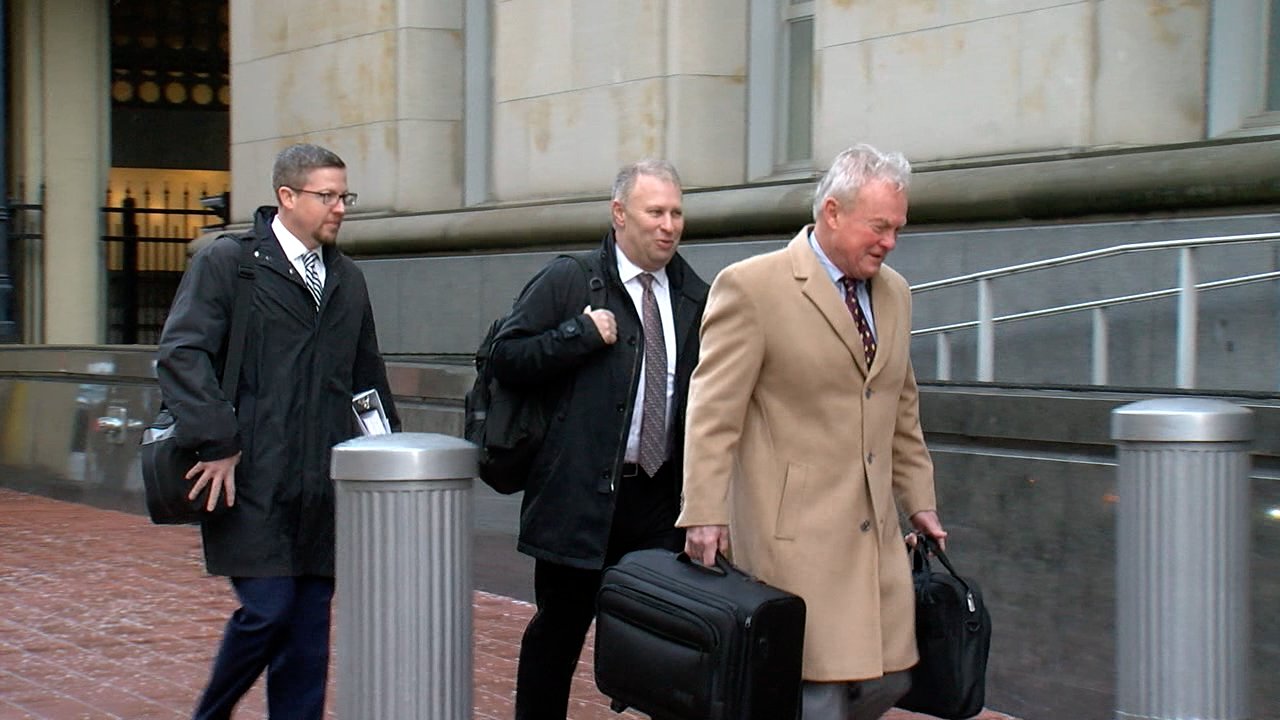
Center, former Ohio Republican Party chair, and statehouse lobbyist, Matt Borges with his attorneys outside of the federal courthouse. Photo courtesy of WEWS.
CINCINNATI — It was Matt Borges, the former chairman of the Ohio Republican Party, who was handcuffed by U.S. Marshals Friday after being sentenced to five years in prison for his participation in the biggest corruption scandal in state history.
But federal prosecutors made clear that they were trying to send a message to other state leaders who played roles in the scandal and are now trying to pretend they didn’t.
The sentencing of Borges, 51, follows the 20-year sentence U.S. District Judge Timothy Black meted out a day earlier to former Ohio House Speaker Larry Householder for masterminding the scheme. Akron-based FirstEnergy and other Ohio utilities ponied up more than $60 million between 2017 and 2020 to pass and protect a $1.3 billion ratepayer bailout that was mostly intended to benefit FirstEnergy.
Borges received a lesser sentence because he was only involved in 2019, when FirstEnergy funneled $38 million into a dark-money group that funded an ugly, falsehood-strewn campaign to defeat a citizen-initiated repeal of the unpopular bailout. Because those voices were squelched — and because Ohio’s Republican legislature refuses to repeal the corrupt bailout — Ohioans continue to be harmed by the racketeering conspiracy, said Assistant U.S. Attorney Matthew Singer.
The bulk of the subsidies — those going to two nuclear plants in Northern Ohio and a fee to “recession-proof” FirstEnergy — have been suspended. But Ohio ratepayers continue to pay hundreds of millions to prop two coal plants owned by AEP and other utilities, including one that’s in Indiana.
The effort to gather enough voter signatures to put a repeal of the bailout — House Bill 6 — failed after Borges bribed a worker with the petition drive $15,000 for inside information and opened lines of communication with Republican officeholders.
At the same time, teams of “blockers” harassed and allegedly assaulted petition gatherers and Householder’s minions flooded the airways with ads falsely claiming that the repeal effort was really China’s bid to take over the Ohio energy grid.
The scheme Borges participated in was meant to “prevent Ohio voters from exercising their right to reject this corruption,” Singer said. “Ohioans never had the opportunity to vote up or down on this legislation.”
Singer also pointed the finger at people only speaking out about Householder now and not earlier.
“It’s interesting that some people are piling on (Householder) after the fact,” he said. “So many knew what was happening in real time and did nothing about it. Not only did they do nothing about it, they helped facilitate it.”
Ohio Secretary of State Frank LaRose in a Tuesday appearance on Cincinnati’s 700WLW claimed that everybody who knew Householder knew he was “a crook” at the time the mammoth conspiracy was taking place. However, LaRose never spoke out against the deal at the time. And in text messages presented to the jury, FirstEnergy CEO Chuck Jones said that LaRose — who also heads up the Ohio Ballot Board — was giving him “private” updates about the signature-gathering effort.
LaRose has refused to explain whether he was in communication with Jones or what he might have told him, but Singer, the prosecutor, seemed to refer to the state’s top elections official on Friday.
Not only did Householder, Borges and their Republican allies squelch a citizen-initiated attempt to repeal the corrupt utility bailout, the gerrymandered legislature is now putting Issue 1 on the Aug. 8 ballot. It would make it virtually impossible for citizens to initiate amendments to the state Constitution. LaRose, a major supporter of the move, claims it will reduce corruption in Ohio.
During Borges’ sentencing Friday, Singer decried the fact that many of the uncharged players in the racketeering scandal continue to thrive on Capitol Square. They include mega-lobbyist Robert Klaffkey, whom co-defendant Juan Cespedes testified slid a check for $400,000 in FirstEnergy dark money across a table to Householder during a 2018 meeting. Klaffkey denied sliding the check, but he didn’t deny being present.
Singer said that it was remarkable that Klaffkey was “comfortable sitting in a room and sliding a $400,000 check to a public official.”
Klaffkey is hardly alone.
Megan Fitzmartin was paid hundreds of thousands as she aided Householder and co-defendant Jeffrey Longstreth in creating a Householder-friendly Republican majority in the state House. Now she’s policy director for the Republican supermajority in Ohio’s gerrymandered House.
Corruption — and tolerance of it — corrodes our political foundation, Singer said.
“Once corruption takes hold democracy itself becomes a charade,” he said.
Cespedes and Longstreth are yet to be sentenced and U.S. Attorney Kenneth L. Parker on Thursday hinted that others might yet be charged in the scandal.
MARTY SCHLADEN
Marty Schladen has been a reporter for decades, working in Indiana, Texas and other places before returning to his native Ohio to work at The Columbus Dispatch in 2017. He’s won state and national journalism awards for investigations into utility regulation, public corruption, the environment, prescription drug spending and other matters.
Loveland, Ohio – Special events must provide additional accessible parking and restrooms based on the anticipated number of people who will attend. After our request, City Hall has provided Loveland Magazine with some information for persons with a disability who may need parking spots, accessible bathrooms, or shuttle service for the 4th of July event that will be held in Historic Downtown. Loveland Magazine has provided additional information.
• The accessible restrooms at the Loveland Bike Trail will be open at Nisbet Park.
• There will be accessible portable toilets placed along/near the Loveland Bike Trail in the Linda J. Cox Trailside Parking lot, near Browns Crossing, and near Harrison Avenue.
David Miller is the managing Editor of Loveland Magazine
by David Miller
Loveland, Ohio – Special events must provide additional accessible parking and restrooms based on the anticipated number of people who will attend. After our request, City Hall has provided Loveland Magazine with some information for persons with a disability who may need parking spots, accessible bathrooms, or shuttle service for the 4th of July event that will be held in Historic Downtown. Loveland Magazine has provided additional information.
• The accessible restrooms at the Loveland Bike Trail will be open at Nisbet Park.
• There will be accessible portable toilets placed along/near the Loveland Bike Trail in the Linda J. Cox Trailside Parking lot, near Browns Crossing, and near Harrison Avenue.
• There will also be added, temporary accessible parking spots along the Loveland Bike Trail near Nisbet Park.
• The shuttle service to the festival is not accessible for persons with a disability.
Here is the guide to the day’s activities
Railroad Avenue will be temporarily closed from 2 PM until 11 PM to through traffic on July 4th. There will also be a temporary road closure along the parade route from approximately 6:30 PM until 8:30 PM.
It proceeds north on Loveland-Madeira Road to West Loveland Avenue.
The parade ends at West Loveland Avenue and the State Route 48/Second Street intersection.
West Loveland Avenue will be closed from Riverside Drive to Karl Brown Way During the fireworks from approximately 10 PM until 10:30 PM.
Parking Restrictions
Some parking will be restricted due to parade and shuttle routes. Some parking spaces will be affected on the following streets:
West Loveland Avenue in Historic Downtown
Park Avenue
Riverside Drive
Third Street
Railroad Avenue
Harrison Avenue
Kiwanis Park, including the Matt Haverkamp Foundation Dog Park, will be closed to event parking. In addition, the dog park will close at noon on July 4.
Parking in Historic Downtown
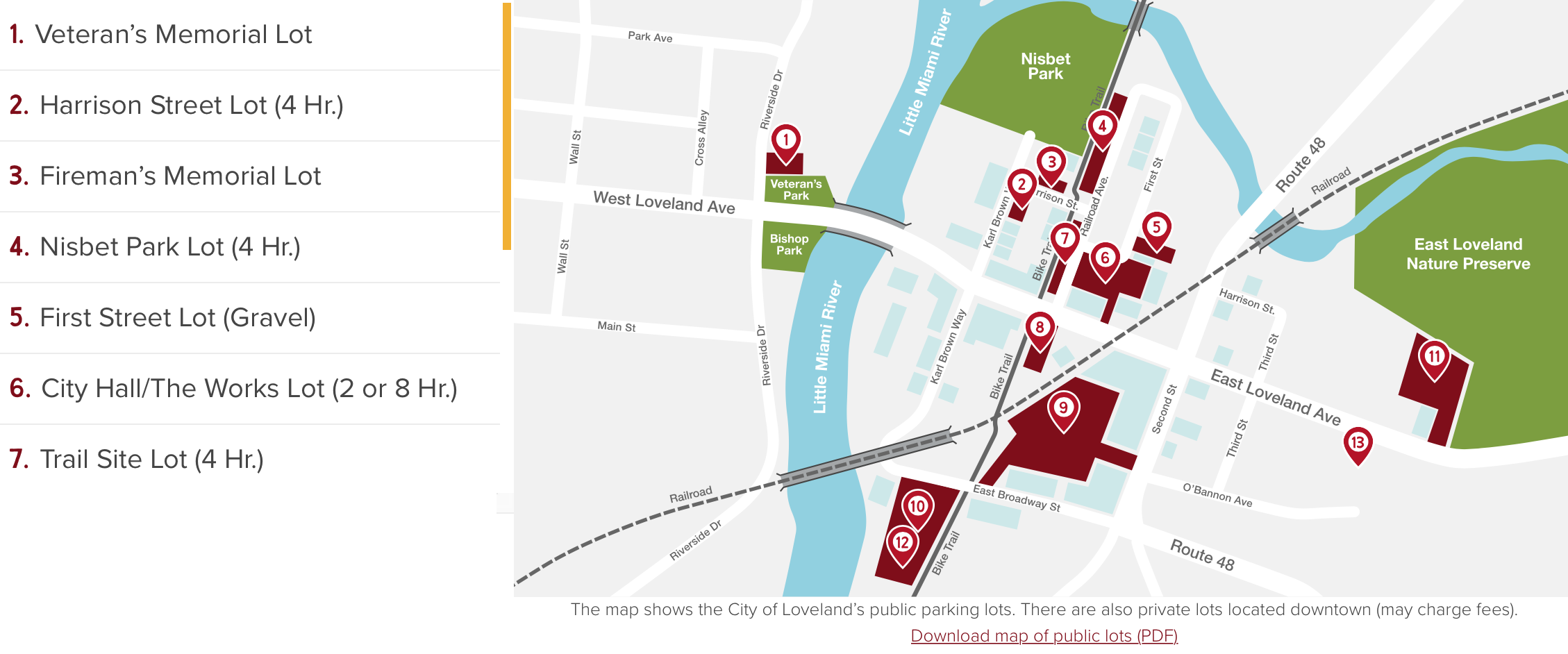
The city operates more than 10 free public lots. View parking map.
Parking fees will be waived in the City Hall/Works lot on July 4.
Keep in mind there are also private lots throughout Historic Downtown and fees may be charged.
Right Click to Enlarge Map
Shuttle
There are FREE shuttle rides that will run continuously from 4 PM until 11 PM.
The shuttle is not accessible to persons with a handicap.
Park-and-ride shuttle locations will be at Loveland High School (1 Tiger Trail) and the Loveland Early Childhood Center (6740 Loveland-Miamiville Road). Drop-off locations will be at Riverside Drive (near Veterans’ Memorial) and Third Street (near Whistle Stop Clay Works).
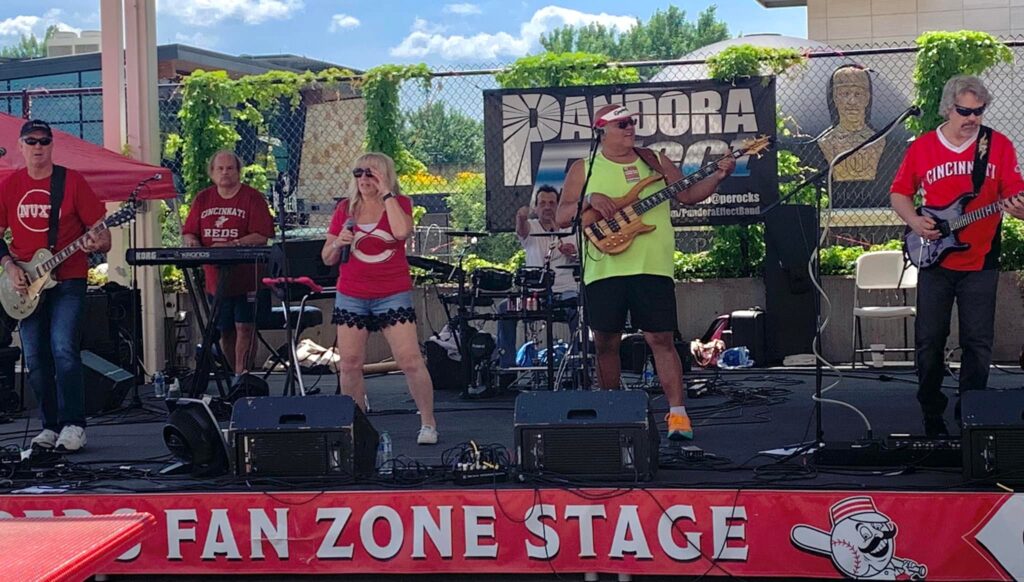
A free concert by the band, Pandora Effect be at the Nisbet Park Amphitheater from 8 PM until 10 PM. The band played in the FanZone at GABP when the Atlanta Braves were in town for a sold-out game.
Lawn Games — 4 PM until 6:30 PM— Fountain Greene (Near Fleet Feet)
NEST Community Learning Center will host lawn games.
Yankee Doodle Dog Show — 4 PM— Nisbet Park
Meet at 3:45 PM at the Clock Tower in Downtown Loveland (near the Bike Trail crossing). Dogs will parade toward Nisbet Park at 4 PM. Three dogs will be selected as best-dressed winners and will receive a prize basket from Pet Wants.
Water Zone — 4 PM until 8 PM— City Hall Lawn
There will be a giant inflatable water slide and misting fans, plus a splash station for little ones.
Food Trucks — 4 PM until 10 PM
Food truck vendors will be available throughout the downtown area.
Bingo — 5 PM & 8:30 PM — City Hall
Take a break from the heat to play a few cards of bingo! An afternoon and evening session will be held. Prizes for game winners. Monetary donations will be accepted with all proceeds going toward the Ben Morrison Memorial Fund, which provides scholarships to Loveland High School seniors.
Kids’ Bike Contest —6:15 PM— Loveland Elementary School
Decorate your bike/scooter/tricycle for the holiday, and meet at Loveland Elementary School (600 Loveland-Madeira Road) to take part in this annual tradition. Children will gather and then take part in the parade at 7 PM. Trailside Provisions has donated prizes for the top 3 entries.
Pie Eating Contest — 8:30 PM — Little Miami Conservancy at Nisbet Park (Little Miami Scenic River and Trail Center)
There is an online signup to help gauge interest. Pre-register if you would like to participate.
The request must still go before Miami Township and Clermont County leaders
David Miller is the Managing Editor of Loveland Magazine
by David Miller
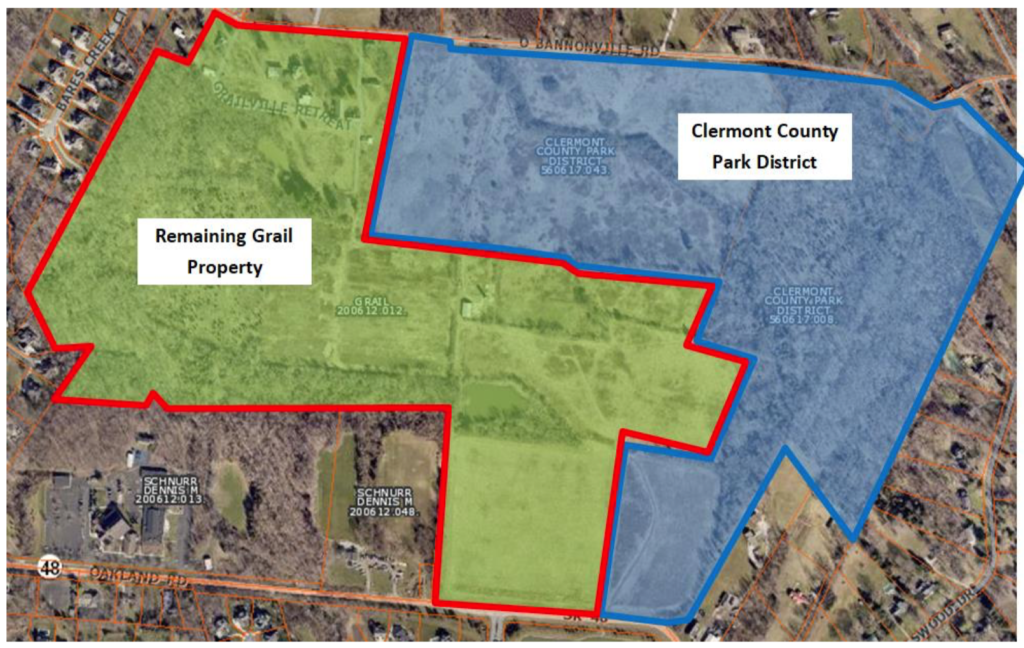
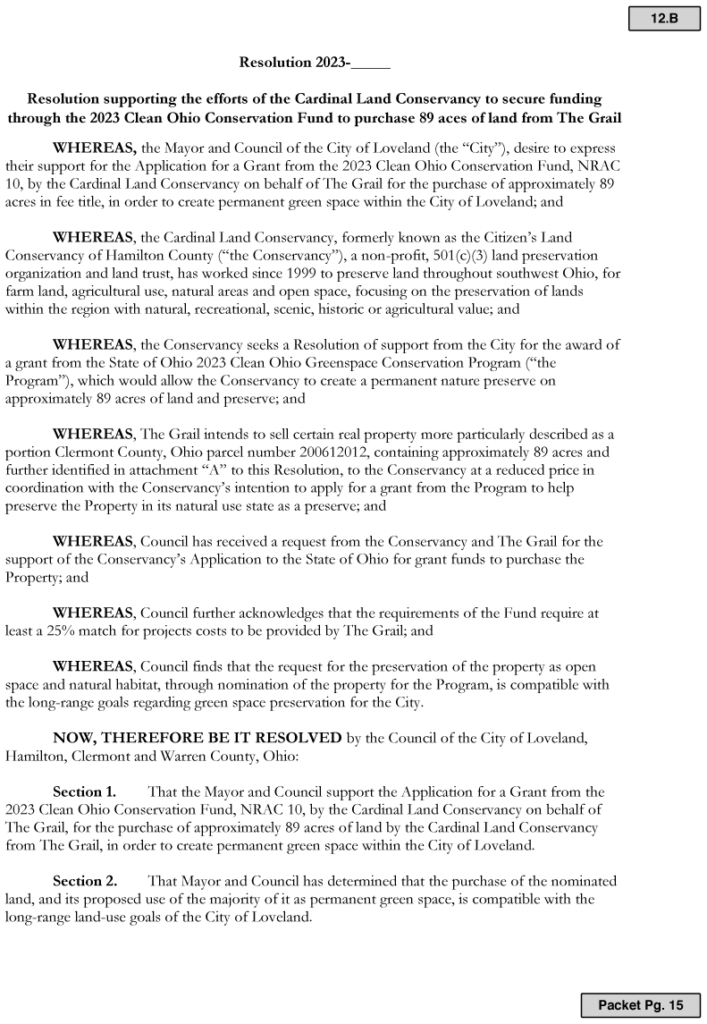
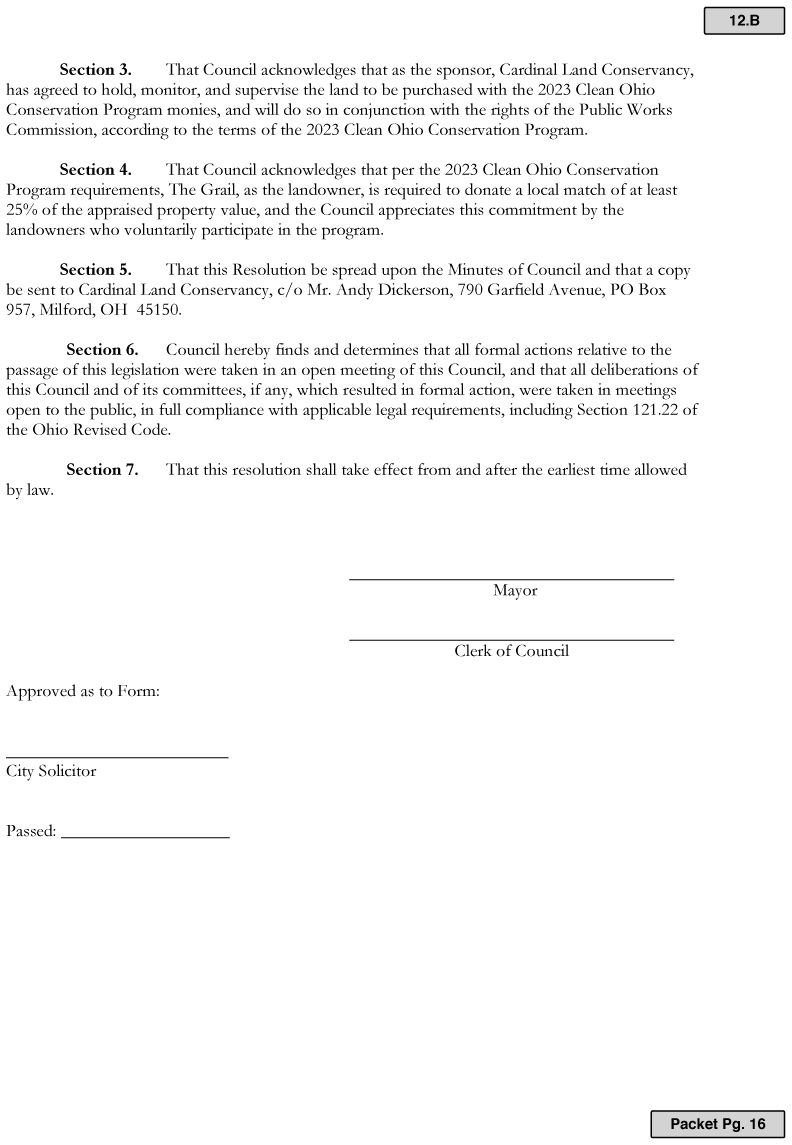
Loveland, Ohio – On Tuesday the Loveland City Council approved a request by the Cardinal Land Conservancy to put their mark of support on a plan that could save 89 acres at Grailville as dedicated green space in perpetuity. Andy Dickerson, on behalf of the Conservancy, appeared at the meeting requesting a vote of support for a grant application that would be submitted to the Clean Ohio Conservation Fund, for funding the purchase of the 89 acres of Grail property that is within the city’s corporation boundaries.
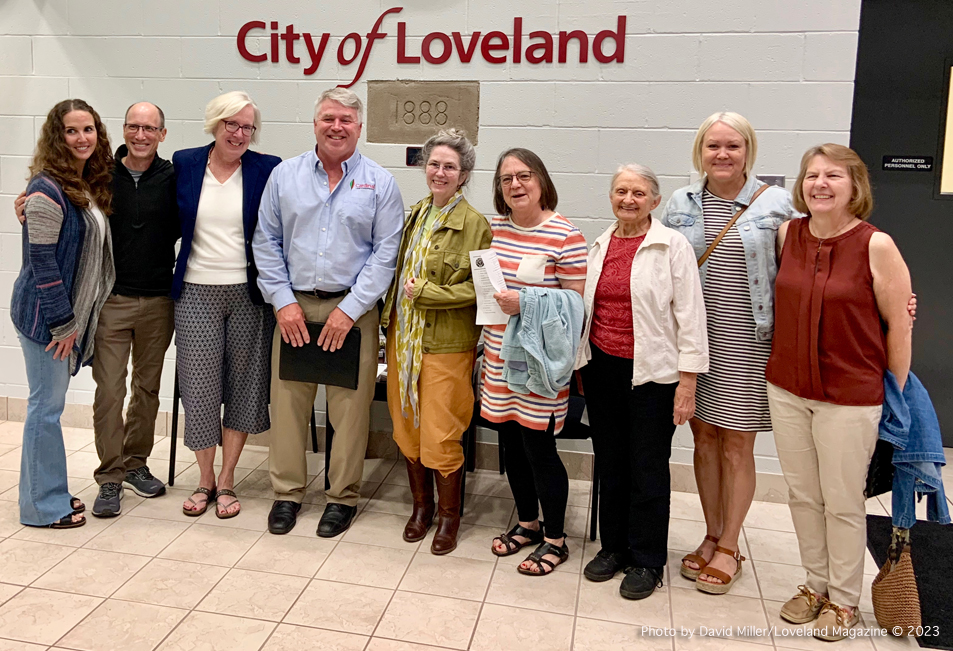
After their successful effort to convince Loveland Council to support the plan they worked on for a year, some members of the Grailville Land Preservation Group posed for a photo. Laurie Kiley, Kevin Kiley, Sharon Scovanner, Andy Dickerson, Elizabeth Murphy, Elizabeth Robinson, Mary Lu Lageman, Jamie Smith, and Loretta Rokey.
After Council unanimously approved the request Dickerson expressed caution because the Conservancy will still need the support of the Miami Township Trustees and the Clermont County Commissioners.
This is the site where Drees Homes was denied the zoning change they requested in 2022 after local residents filled Planning and Zoning chambers to urge that the site be protected. The Kentucky home builder had requested the land become a Special Planning District which could have allowed 209 homes on the site. The same parcel is also where the Loveland City School District proposed building a campus until the funding they wanted was denied by voters in 2019. The site is bounded by O’Bannonville Road and State Route 48 (Oakland Road).
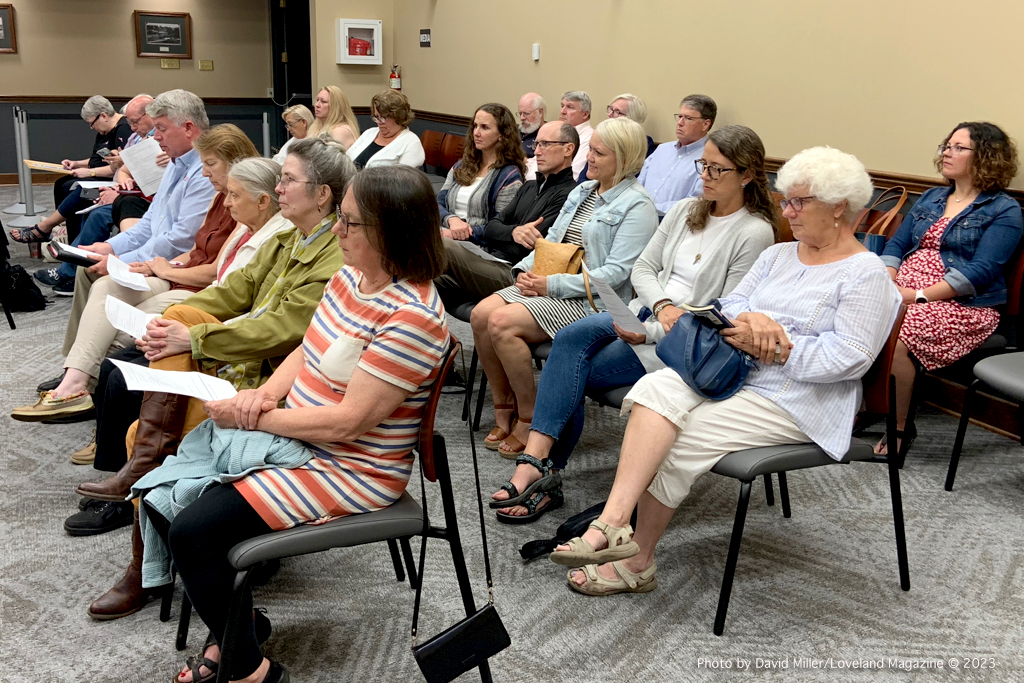
After the re-zoning Drees requested was denied, local Grail members and other local residents coalesced to find the solution that was presented to City Council on Tuesday. Many of them sat in council chambers to hear the presentation.
The Grailville Land Preservation Group worked together to stop the zoning change for Drees. Four members of the conservation subcommittee of the larger group consisted of Lauren Enda, Kevin Kiley, Jamie Smith, and Sharon Scovanner.
Sharon Scovanner told Loveland Magazine today, “I want to make it clear that both the big group and our subcommittee were very important to our success. This was a case of many members of the community coming together with the goal of preserving the land. We are grateful that ‘corporate’ Grail agreed to provide a 25% match for the grant and to the local Grail women, several of who worked alongside us wanted to find a solution. Of course, we have been honored to partner with Cardinal to help facilitate an agreement that is good for the Grail and the community.”
If the grant application is successful, the 89 acres of land would be deeded as dedicated green space in perpetuity. The proposed purchase by the conservancy would be adjacent to the 100-acre Clermont County Park District property, which was also acquired from the Grail using Clean Ohio funding.
In this first LOVELAND MAGAZINE TV video, Andy Dickerson explains the details of the grant and what he was asking the Council to do.
In this second LOVELAND MAGAZINE TV video, Council members ask questions and vote on the resolution of support.
In this third LOVELAND MAGAZINE TV video, residents and Grail members spoke with cautious optimism about the first public step they made in announcing the plan they had worked toward since Drees first proposed building 209 homes on the site.
About Cardinal Land Conservancy
Their address is 790 Garfield Avenue in Milford.
Cardinal Land Conservancy is a private, nonprofit, 501c3 tax-exempt conservation organization, incorporated in September 1999 under the laws of the state of Ohio. Cardinal is a member of the Land Trust Alliance (LTA), a national organization, and Coalition of Ohio Land Trusts (COLT). Cardinal earned LTA accreditation in 2019 and uses LTA’s “Land Trust Standards and Practices” to guide our work as we grow. This accreditation confirms that Cardinal practices sound finances, ethical conduct, responsible governance, and lasting stewardship.
Cardinal Land Conservancy, formerly known as the Citizen’s Land Conservancy of Hamilton County (“the Conservancy”), is a non-profit, 501(c)(3) land preservation organization and land trust. Cardinal holds the title to 11 nature preserves.
Cardinal Land Conservancy is a land conservancy in Southwest Ohio whose mission is to preserve natural habitats, waterways, agricultural lands, and open space in Southwest Ohio.
We protect and restore natural lands with significant habitats that support native wildlife and create scenic vistas for public enjoyment, as well as agricultural lands suitable for the production of food, timber, or other cultivated or natural products. Cardinal acquires conservation interests in real properties which it then monitors and stewards in perpetuity. These include conservation easements, fee simple title, and other conservation interests which are acquired through donations and purchases guided by, and executed through, Cardinal. Once obtained, Cardinal monitors and otherwise stewards the properties and interests through regular oversight, periodic assessment and, if needed, protective action and legal defense. Our service area includes the Southwestern Ohio counties: Adams, Brown, Clermont, Clinton, Hamilton, Highland, and Warren.
Rinsky Woods Nature Preserve
Clermont County
There are few woods like this in the world. Those woods that exist are found only in Southwest Ohio and Southeast Indiana. Rinksy Woods is the second largest woods of this kind in the world. In fact, it has been designated as an Ohio Natural Landmark by the Ohio Department of Natural Resources. These wet flat woods are adjacent to Stonelick State Park, adding to an admirable stretch of greenspace in the area. Details & Trail Map
Todd’s Fork Nature Preserve
Clinton County
Native prairies give way to a 100+ acre woods on this preserve, which also includes the Todd’s Fork of the Little Miami River. Cardinal has several stewardship projects ongoing here including maintenance of the prairie. Maintenance includes prescribed burning which is meant to discourage unwanted invasive plants on an annual basis. Details & Trail Map
Kope Hollow Nature Preserve
Brown County
In Southeast Brown County, the Kope formation (a bedrock formation unique to Southern Ohio and Indiana) runs through incredibly diverse woods. A recent native plant survey listed over 100 native species. This property is also graced with five waterfalls that contribute to Roup’s Run. This water flows into the Ohio River just beyond the bounds of the property. Details & Trail Map
Bortz Family Nature Preserve
Hamilton County
This 119-acre preserve offers respite in deep and cool woods along with views of the wide Ohio and of the Little Miami’s emerald shores. This land appeals to both humans and wildlife because of its diversity. The Ohio Department of Natural Resources determined that this land is likely the home of the endangered Indiana Bat and several endangered species of mussels. Overlooking the confluence of these two great rivers is an American Bald Eagle nest, atop a towering cottonwood tree. Our eagles can be viewed by our Eagle Camera from January to June! Details & Trail Map
Read about the other nature preserve of the Cardinal Land Conservancy.
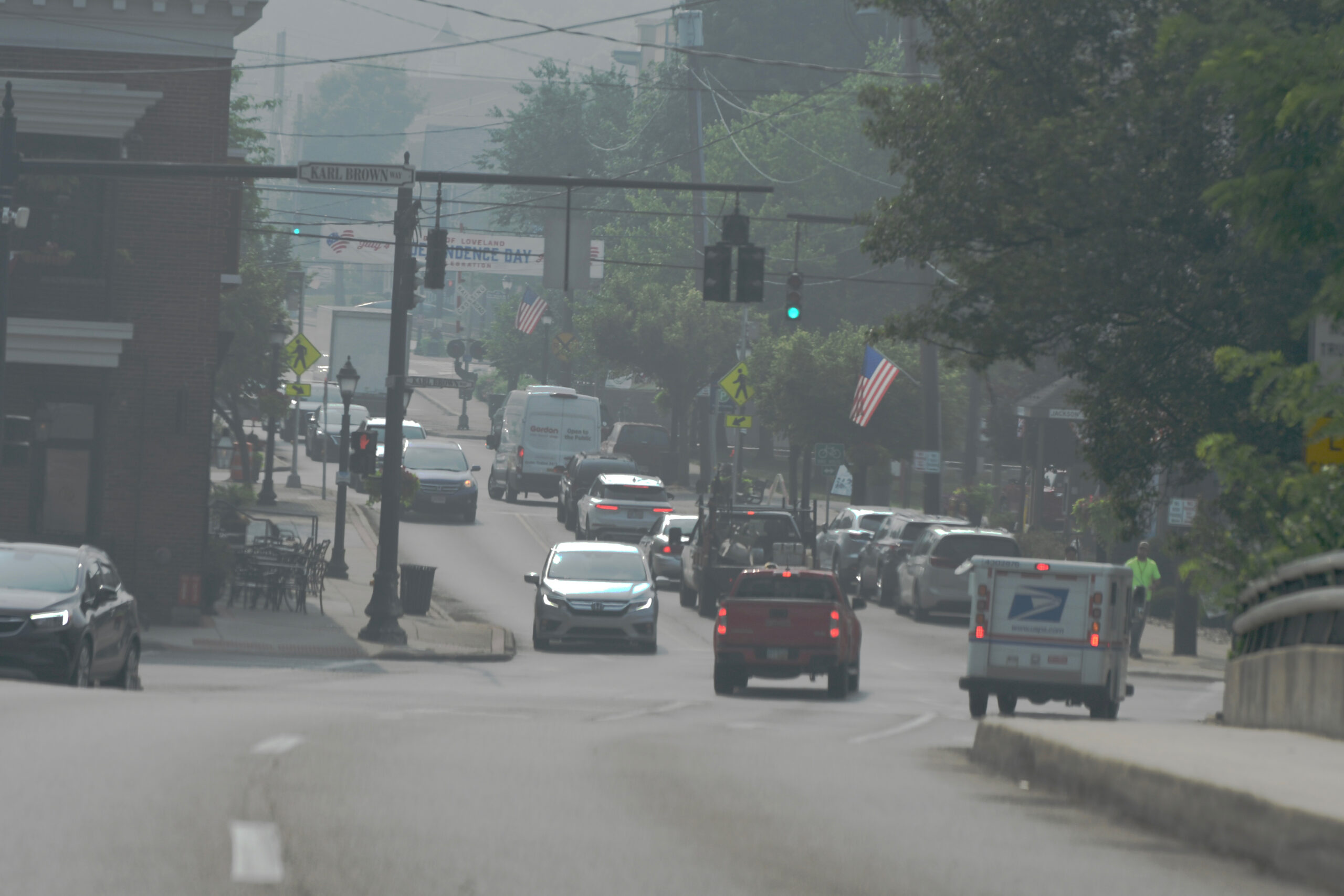
Historic Downtown Loveland, Ohio on Wednesday afternoon (Photo by David Miller)
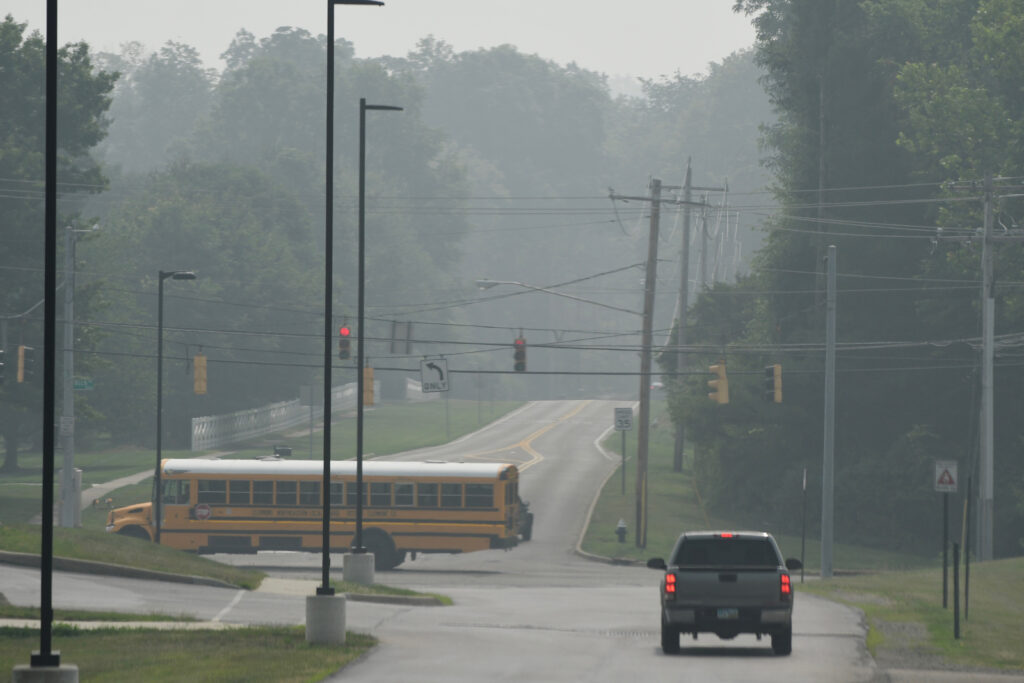
Loveland, Ohio – The Southwest Ohio Air Quality Agency is extending the Air Quality Alert into Thursday, June 29 through 11:59 PM for Butler, Clermont, Hamilton, and Warren counties in Ohio; Boone, Campbell, and Kenton counties in Kentucky; and Dearborn County in Indiana.
The Agency expects to see levels of both ozone and PM2.5 (due to Canada wildfires) in the “Unhealthy” range on the Air Quality Index (AQI). Because there are two air pollutants with high concentrations, the general public is encouraged to limit their outdoor exertion, especially children, those with respiratory illnesses, and older adults. Refer to U.S. EPA’s health guide here.
Everyone can reduce PM2.5 by following these guidelines:
Never burn leaves or other yard trimmings.
Suspend use of fire pits, campfires, and charcoal grills on Air Quality Alert days.
The intersection of Rich and Fallis Roads on Wednesday afternoon from Loveland High School. (Photo by David Miller)
Everyone can help reduce ozone formation by taking the following actions:
Telecommute.
Do not idle your vehicle; exhaust contributes considerably to ozone formation.
Combine trips or eliminate unnecessary vehicle trips.












 Loveland, Ohio – Special events must provide additional accessible parking and restrooms based on the anticipated number of people who will attend. After our request, City Hall has provided Loveland Magazine with some information for persons with a disability who may need parking spots, accessible bathrooms, or shuttle service for the 4th of July event that will be held in Historic Downtown. Loveland Magazine has provided additional information.


 • The accessible restrooms at the Loveland Bike Trail will be open at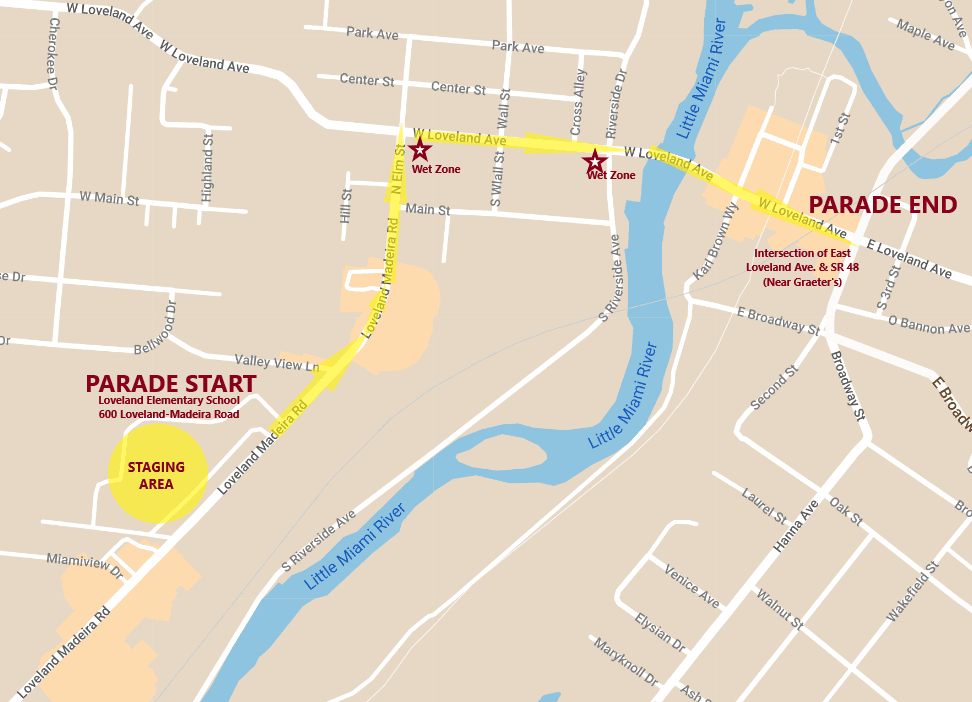
 About Cardinal Land Conservancy