Author: David Miller

  • 2025 Ohio Chamber Childcare Policy Summit releases study on direct financial impact of insufficient childcare

    2025 Ohio Chamber Childcare Policy Summit releases study on direct financial impact of insufficient childcare

    Loveland, Ohio – At its 2025 Ohio Childcare Policy Summit the Ohio Chamber unveiled the “Untapped Potential: Ohio” economic report, a study that assesses the direct financial impact of insufficient childcare coverage on the state’s economy, in partnership with the U.S. Chamber of Commerce Foundation and Groundwork Ohio.

    The study found that childcare is a severe economic barrier in Ohio. The state’s childcare gap drives parents out of the workforce, reduces tax revenue for the state and puts undue strain on households. An estimate of the direct financial impact of insufficient childcare coverage revealed $5.48 billion in lost economic activity for Ohio each year.

    “Access to quality, affordable childcare is both a short-term, urgent priority and a long-term goal,” said Aaron Merchen, Executive Director of Early Childhood Education Policy and Programs at the U.S. Chamber of Commerce Foundation. “These reports outline a challenge for states but also an opportunity.”

    Ohio is the fourteenth state for which the U.S. Chamber Foundation has released an “Untapped Potential” study. The findings are based on results from a statewide survey of households with children under 6 who are not yet in kindergarten.

    Ohio ranks 30th in labor participation relative to other states, and the study’s findings indicate that many parents have been forced to or may soon be forced to stop working without adequate childcare options. In fact, 70% of parents of young children in Ohio missed work or class in the past three months for childcare-related reasons, and 33% of parents that experienced disruptions to their employment in the past year reported leaving the workforce as a direct result of issues with childcare.

    “Ohio is growing every day,” said Ohio Chamber President & CEO Steve Stivers. “We keep bringing in new projects and job opportunities, but we’re not keeping up on creating new childcare options for the people we’re attracting — or even the families we already have here. We’re leaving a lot on the table if we don’t properly address that challenge.”

    The price of childcare is also a significant obstacle for many Ohioans. On average, Ohio families spend $572 per month on childcare, and 58% of surveyed parents stated that they selected their current childcare arrangement primarily for financial reasons. However, 96% of parents believe that health and safety is the most important factor when choosing childcare.

    The study concludes that access to childcare has a sizable impact on parents’ career development and potential and urges legislators and business leaders to thoughtfully consider measures that can alleviate existing childcare issues. It also poses a final question: “What could Ohio’s parents and leaders do with an additional $5.48 billion each year?”

    The full study is below.

    The Ohio Chamber is the state’s leading business advocate and represents thousands of companies that do business in Ohio. Our mission is to aggressively champion free enterprise, economic competitiveness and growth for the benefit of all Ohioans.

    [pdf-embedder url=”https://lovelandmagazine.com/wp-content/uploads/2025/04/Untapped-Potential-Ohio.pdf” title=”Untapped Potential Ohio”]

  • Hamilton Township, Loveland, and Goshen Township rate high as safest communities in Ohio

    Hamilton Township, Loveland, and Goshen Township rate high as safest communities in Ohio

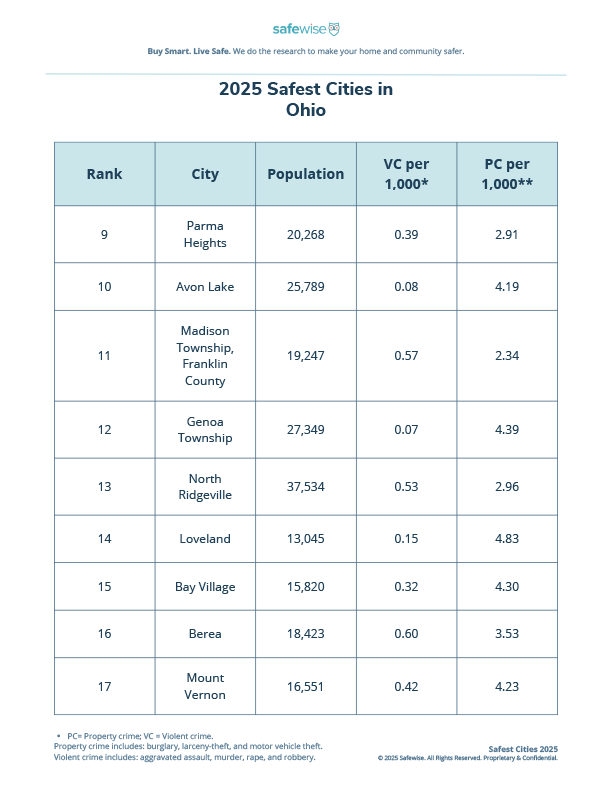
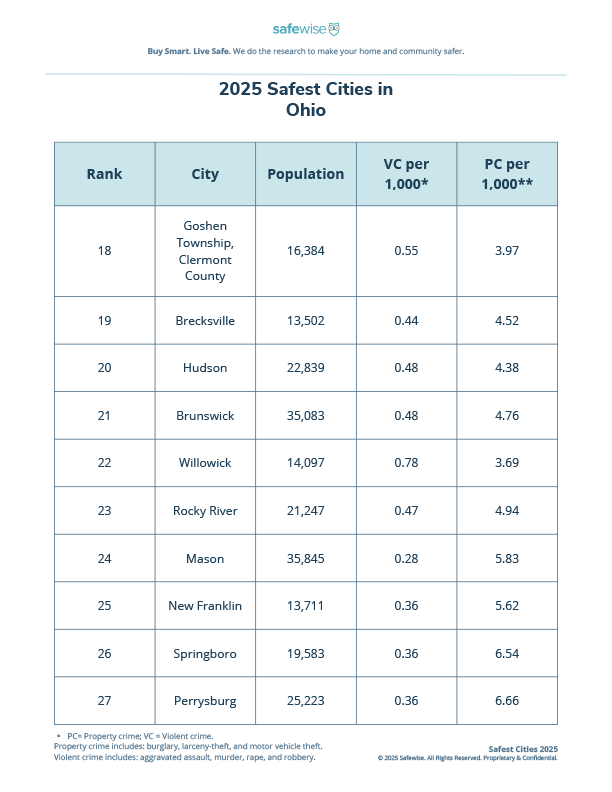
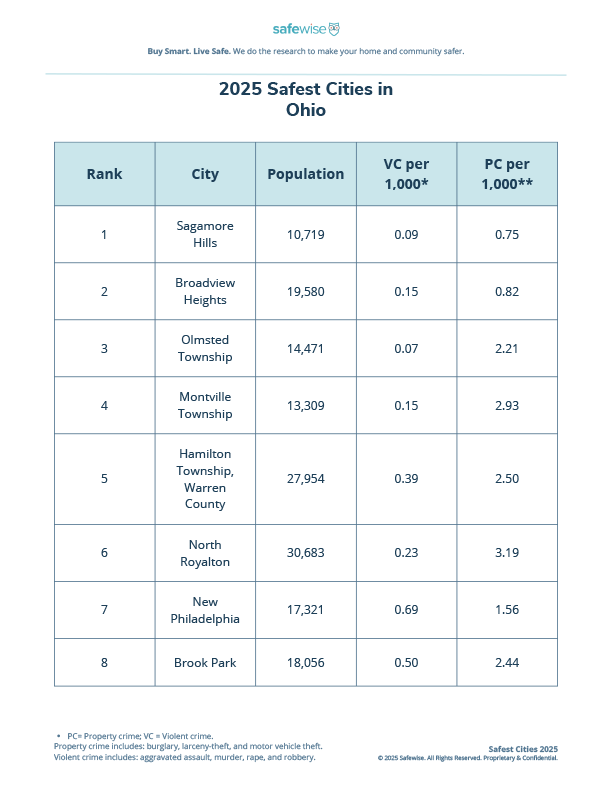
    Loveland, Ohio – Safewise which sells home security systems, crunched the numbers on crime rates across Ohio. The rankings are based on the number of reported violent crimes and property crimes per 1,000 people in each community.

    Hamilton Township in Warren County was rated #5 with Loveland coming in at #14 as the safest community in Ohio. Goshen Township was rated #20.

    The City of Loveland said on their FaceBook page, “This achievement is a team effort, highlighting the strong partnership between the Loveland Police Department and our great citizens, who look out for one another and report suspicious activity. We also want to give a shoutout to our neighboring jurisdictions that also made the list—Hamilton Township Police Department and Goshen Township Police Department. Our communities were the only ones in the region to rank among the top 20 safest cities in Ohio!”

    The Goshen Township Police Department said on their FaceBook page, “Proud to announce that Goshen Township has been ranked as the 18th safest city in Ohio for 2025 by SafeWise! Out of 175 communities evaluated, our low crime rate stands out.”

    Hamilton Township Police Chief Scott Hughes said, “Our officers’ daily commitment makes this possible—thank you. Residents play a key part by staying vigilant and connected, while local leaders, businesses, and strong school districts keep our township thriving. With violent crime at just 0.4 per 1,000, we’re well below state averages. This means safer streets for families, a welcoming home for newcomers, and a strong foundation for local commerce and education.

    Safewise relies on voluntary, self-reported information that cities and jurisdictions across the country report through the FBI Summary Reporting System (SRS) and National Incident-Based Reporting System (NIBRS). For their 2025 reporting year, the most recent FBI data was released in October 2024 for crimes reported in 2023.

  • Health Director Urges Parents to Ensure Children Are Vaccinated Against Measles as ODH Confirms Outbreak in Ohio

    Health Director Urges Parents to Ensure Children Are Vaccinated Against Measles as ODH Confirms Outbreak in Ohio

    If people are not protected against the disease, nine out of 10 people who are exposed will become ill

    Ohio Department of Health (ODH) Director Bruce Vanderhoff, MD, MBA, announced today a measles outbreak in Ashtabula County and one confirmed case of a visitor in Knox County who exposed others to measles in Knox and nearby counties.

    Dr. Vanderhoff said ODH and Ashtabula County have identified 10 measles cases. Nine are linked to an adult male reported last week as the state’s first measles case of 2025. None of the individuals were vaccinated.

    “Given the measles activity in Texas, New Mexico, and other states around the country, we’re disappointed but not surprised we now have several cases here in Ohio and known exposure in some counties,” said Dr. Vanderhoff. “This disease can be very serious, even deadly, but it is almost entirely avoidable by being properly vaccinated. Measles is especially dangerous for young children, so I strongly urge all parents across Ohio to make sure your children are vaccinated. It is a crucial layer of protection that can save lives.”

    ODH is working with health departments in Ashtabula and Knox counties to follow up on potential exposures and to promote opportunities for vaccination. For more information, visit ashtabulacountyhealth.com and knoxhealth.com.

    The Centers for Disease Control and Prevention (CDC) defines a measles outbreak as three or more related cases. Measles can spread quickly, and each case can lead to an additional 12 to 18 cases if people aren’t protected against the disease. The CDC reported 378 cases nationwide as of March 20.

    Ohio had 90 cases of measles in 2022, when an outbreak in central Ohio totaled 85 cases. The state had one measles case in 2023 and seven in 2024.

    Measles is extremely contagious and can spread to others through coughing and sneezing. It can be brought into Ohio by individuals who travel to places where measles is spreading. If people are not protected against the disease, nine out of 10 people who are exposed will become ill.

    The measles vaccine (called MMR as it protects against measles, mumps and rubella) is safe and effective at preventing measles. Two doses of MMR is 97% effective against measles. If you are up to date on measles vaccine, the risk of getting sick is extremely low.

    The CDC recommends all children get two doses of MMR vaccine, starting with the first dose at 12 through 15 months of age, and the second dose at 4 through 6 years of age.

    In most instances, adults who were vaccinated against measles as children do not need any additional doses as adults. However, adults who did not receive the MMR vaccine as children or those who are unsure about their vaccination status are encouraged to talk to their healthcare provider for more information.

    Those born prior to 1957 are likely protected by previous infection.

    The measles virus can live for up to two hours in air where an infected person coughed or sneezed. If other people breathe the contaminated air or touch an infected surface and then touch their eyes, noses, or mouths, they can become infected. People infected with measles can spread it to others from four days before, through four days after a rash appears.

    Measles symptoms include a rash, high fever, runny nose, cough, loss of appetite and red, watery eyes. The rash usually lasts five to six days and begins at the hairline, moves to the face and upper neck, and proceeds down the body. Diarrhea and ear infections are common complications of measles. More severe complications may also occur.

    Complications from measles are more common among children younger than 5 years of age, adults older than 20 years of age, pregnant women, and people with compromised immune systems. As many as one out of every 20 children with measles gets pneumonia, the most common cause of death from measles in young children.

    Dr. Vanderhoff held a news conference on March 18 to discuss Ohio’s childhood immunization rates and to urge parents to get their children up to date on all recommended vaccines, including the MMR vaccine. You can find the video of that news conference on the ODH YouTube channel.

    More information about measles is available on the CDC website, including general information and the recommended immunization schedule. ODH also has a measles FAQ page.

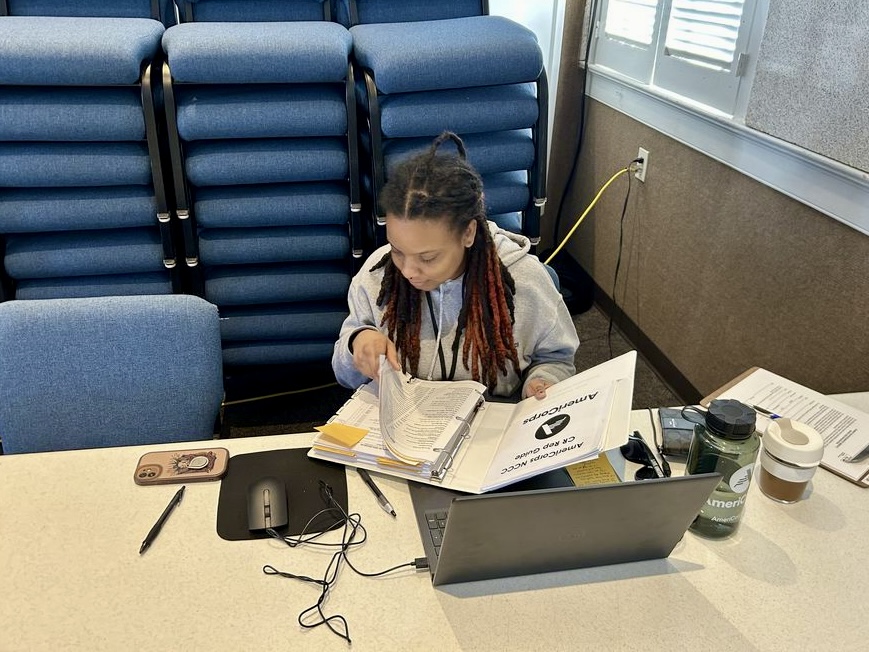
  • AmeriCorps Team supports United Way’s free tax prep service

    AmeriCorps Team supports United Way’s free tax prep service

    Members will spend several weeks at sites in Greater Cincinnati helping to prepare taxes.

    FIND LOCATION

    The Care Center in Loveland is one location

  • Ohio higher ed overhaul to ban diversity efforts and regulate classroom discussion heads to governor

    Ohio higher ed overhaul to ban diversity efforts and regulate classroom discussion heads to governor

    Ohio college students and protesters rally at the Statehouse on March 19, 2025, against Senate Bill 1, a higher education overhaul that bans diversity efforts and faculty strikes, and sets rules around classroom discussion, among other things. (Photo by David DeWitt, Ohio Capital Journal.)

    By:  – Ohio Capital Journal

    A controversial bill to overhaul Ohio higher education, ban diversity and inclusion efforts, prohibit faculty from striking, and regulate classroom discussion is heading to Ohio Gov. Mike DeWine’s desk for his signature.

    The Ohio Senate concurred with changes made to Senate Bill 1 by the Ohio House during Wednesday’s session. The vote was 20-11 with only two Republicans voting against it, state Sens. Louis W. Blessing III, of Colerain Township, and Thomas F. Patton, of Strongsville, voting against it. DeWine has previously said he would sign S.B. 1 into law.

    DeWine will have 10 days to sign the bill into law or veto it once he receives it. If DeWine vetoes the bill, lawmakers would need a 3/5 vote from each chamber to override it.

    GET THE MORNING HEADLINES.


    S.B. 1 would set rules around classroom discussion, create post-tenure reviews, put diversity scholarships at risk, create a retrenchment provision that block unions from negotiating on tenure, shorten university board of trustees terms from nine years down to six years, and require students take an American history course, among other things.

    For classroom discussion, the bill would set rules around topics involving “controversial beliefs” such as climate policies, electoral politics, foreign policy, diversity and inclusion programs, immigration policy, marriage, or abortion. S.B. 1 would only affect Ohio’s public universities.

    State Sen. Jerry Cirino, R-Kirtland, introduced S.B. 1, which passed the Ohio Senate last month and the Ohio House last week.

    “I am delighted, of course, as I always believed this is a great bill for the state of Ohio, for students and for higher education, so I’m delighted that we’ve been able to get past this next hurdle and send the bill to the governor’s desk,” Cirino said.

    S.B. 1 has received significant pushback. More than 1,500 people have submitted opponent testimony against the bill. Hundreds of students around the state have protested against the bill. Students and faculty have said they would leave Ohio if the bill becomes law.

    “We decided on a different approach than many, many of them would like,” Cirino said when asked about the bill’s overwhelming opposition. “But this isn’t about how many people show up to protest or to testify in hearings. A lot of those students that were showing up where, I believe, they were being paid or getting extra credit. And we don’t make policy here based on the number of people that show up to protest or testify.”

    Senate President Rob McColley, R-Napoleon, said the passing of S.B. 1 is long overdue.

    “It’s something that, frankly, should have been done sooner, but I’m happy we put the work in to get to where we are right now,” he said. “I do think it’s something that’s supported by Ohioans.”

    Before voting to concur on S.B. 1, lawmakers debated the bill for about 35 minutes.

    “Senate Bill 1 will enrich the learning experience of students at our public universities and colleges — places where our best and brightest will be able to learn without prejudice, speak their minds without being canceled, be honest about their positions without fear of faculty retaliation, and consider all sides of an issue and make up their own minds,” said Sen. Kristina Roegner, R-Hudson.

    State Sen. Michele Reynolds, R-Canal Winchester, acknowledged that some people are afraid of what will happen if DEI on college campuses is ended through this bill, but said the time has come to remove DEI labels.

    “This is not about censure or erasure,” she said. “It’s not about exclusion. It’s about inclusion that transcends labels, because DEI has become a system that sorts us. It sorts us by race, by gender and by identity, creating a culture where we are defined by our categories instead of our character, where we look at each other’s faces instead of listening to each other’s hearts.”

    State Sen. Kyle Koehler, R-Springfield, said this bill ends the micromanaging of instruction in higher education.

    “All Ohio college students and parents will now have a more comfortable feeling that their public institution of higher learning will foster an environment of open and free expression for everyone,” he said.

    Senate Minority Leader Nickie Antonio, D-Lakewood, said not everyone is celebrating the concurrence of S.B. 1.

    “Instead of tackling the real barriers to higher education — skyrocketing tuition costs and student debt — again, the majority are focused on dictating what’s taught in our colleges and universities and who teaches,” she said.

    State Sent. Kent Smith, D-Euclid, said this bill will inhibit Ohio universities from attracting top-tier professors.

    “If Senate Bill 1 becomes law, this legislation is the worst attack on academic freedom in Ohio in modern history,” Smith said.

    Follow Capital Journal Reporter Megan Henry on Bluesky.

    YOU MAKE OUR WORK POSSIBLE.

    ____________
    Megan Henry
    Megan Henry

    Megan Henry is a reporter for the Ohio Capital Journal and has spent the past five years reporting in Ohio on various topics including education, healthcare, business and crime. She previously worked at The Columbus Dispatch, part of the USA Today Network.

    Ohio Capital Journal is part of States Newsroom, the nation’s largest state-focused nonprofit news organization.

    MORE FROM AUTHOR

    _____________

    BECOME A LOVELAND MAGAZINE SUPERFAN BY DONATING NOW!

    Editor’s note: Open and free local reporting is critical to having well-informed community. Loveland Magazine has published a free newspaper and website for the last 20 years for our community. If you would like us to continue, kindly contribute to this service. It would be greatly appreciated. Donations may be made to: Loveland Magazine, 243 Wall Street, Loveland, Ohio 45140. Or, donations can be made through PayPal using a credit card. (https://bit.ly/4j1ju3k) Advertisers do not nearly cover all of our expenses.

  • Monkey Bar owners propose new restaurant/bar in Loveland

    Monkey Bar owners propose new restaurant/bar in Loveland

    A “picture sketch” of a new bar and grill proposed by the owners of the Monkey Bar

    Loveland, Ohio – On December 15, 2022 the owners of the property at 115 Railroad Avenue presented early redevelopment design plans to the Loveland Historic Preservation and Planning Commission (HPPC) for review. The proposed development sits between Hometown Cafe and The Wicked Pickle on the Loveland Bike Trail in Historic Downtown. The site previously held  a single family residence that has since been demolished. The new owner of the site is MADJ Properties LLC.

    Amy Altemeier told Loveland Magazine on March 18, “We are delayed on our Loveland project due to the fire at our Monkey Bar & Grille last year. Amy and her husband Mark are co-owners of the Monkey Bar & Grille in Fosters along the Loveland Bike Trail. She also said that they have a “picture sketch”, which is solidified. She added, “We will not be breaking ground until likely one year from now.”

    “We also have some great concepts for the restaurant/bar but nothing is solidified yet. It will not be another Monkey Bar. I like to design around the history, so this will be a unique concept in Loveland.”

    The Loveland Bike Trail would connect both establishments owned by the Altemeiers.

    The Monkey Bar in Fosters

    The Monkey Bar & Grille was recently chosen as the “Best Bar or Pub” in Warren County – Ohio’s Largest Playground for 2024.

    Below is the plan as initially approved:

    The proposed project at 115 Railroad Avenue, is the construction of a 2-story restaurant with outdoor seating on the ground and the 2nd floor. The first floor area includes the kitchen, a 760 square foot main dining area, restrooms,
    and outdoor seating for approximately 32. The second floor will include both a dining area and a bar area, along with outdoor seating for 32. The name of the restaurant was still to be determined, although a railroad them is
    anticipated, and will include a mural of the south facing side of the building.

    Beth Sullebarger, from the historic preservation consulting firm Sullebarger Associates presented the plan on behalf of the HPPC. She commented that the HPPC had two decisions to make. The first is whether the current property can be saved and the second, if it can’t be saved, what kind of new building should be approved. She said that regarding the current building, it appears to have been built in the early 1900’s as it can be seen in a 1911 Sanborn Map of historic Loveland. She shared pictures of the property, both inside and out. The structure had been gutted down to the studs and then demolished.

    An architect representing the owners commented that most of the building was beyond saving from a financial standpoint because it’s located in a flood plane, and the cost to bring it up to standards that insurance would require, would be prohibitive.

    Sullebarger reviewed the design guidelines that apply to any new building that
    would be built on this site and made several suggestions to improve the building’s appropriateness for the immediate neighborhood.

    Key suggestions by Sullebarger were as follows:

    ▪ Flip the site plan so that the solid wall faces the north side. This will make the building seem less massive next to Hometown Café. It would also allow for a better experience for the diners as they would overlook more of historic downtown Loveland.
    ▪ Incorporate other materials into the balcony pillars. Suggestions were steel or other metals to soften the look.
    ▪ Possibly lower the first floor ceiling and thereby the entire building. This might allow for a rooftop façade that could be gabled and fit better with adjacent buildings.

    The architect agreed to look at all of the suggestions and work with the owners to see what they might agree to do.

    On January 31, 2023 applicant returned and addressed the HPPC requests with plan modifications include the following:

    • The front columns/piers were reduced from 24” x 24” to 20” x 20” square.

    • Windows have been added to the rear/west facing wall of building.

    • Additionally, the landscape plan, that was still being developed at the previous meeting, was included.

  • [Watch Meeting] P&Z denies Conditional Use at 514 West Loveland Avenue

    [Watch Meeting] P&Z denies Conditional Use at 514 West Loveland Avenue

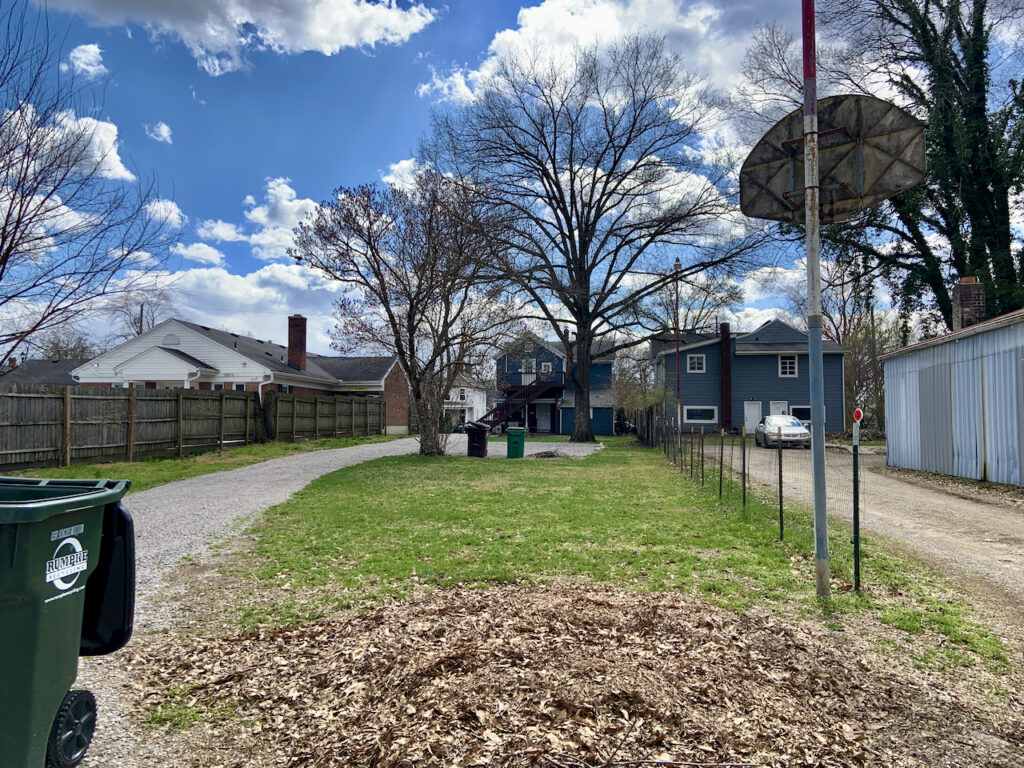
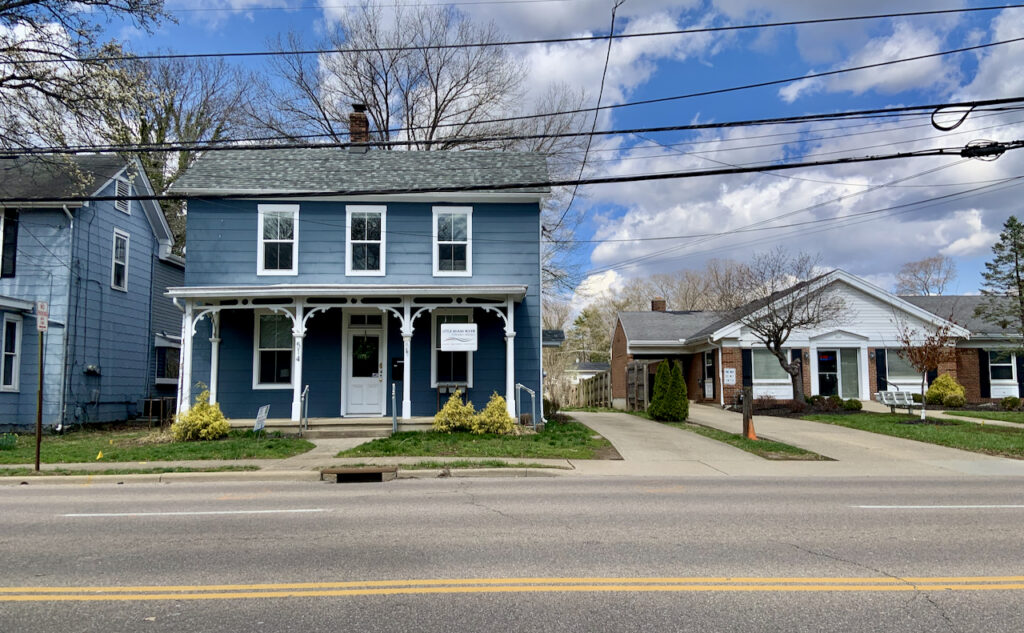
    Loveland, Ohio – On Tuesday, March 4, there was a public hearing before the Planning and Zoning Commission for “Conditional Use” at 514 West Loveland Avenue in the West Loveland Historic District.

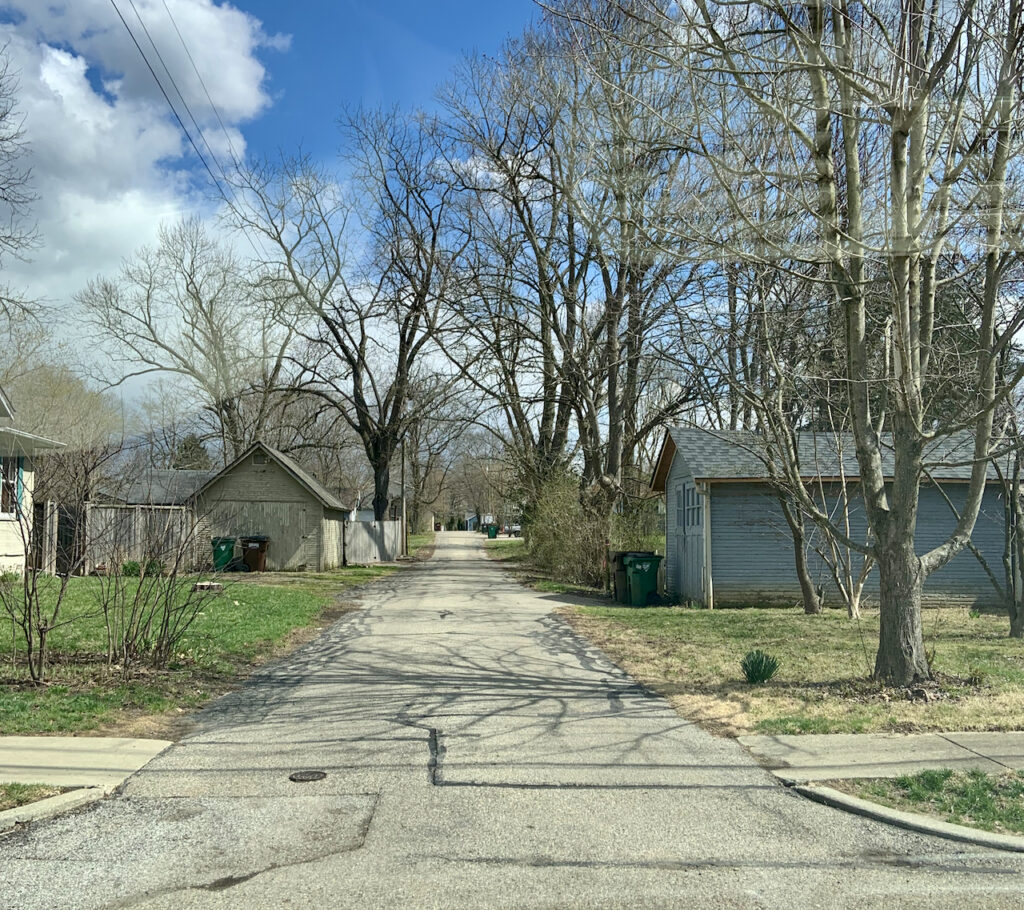
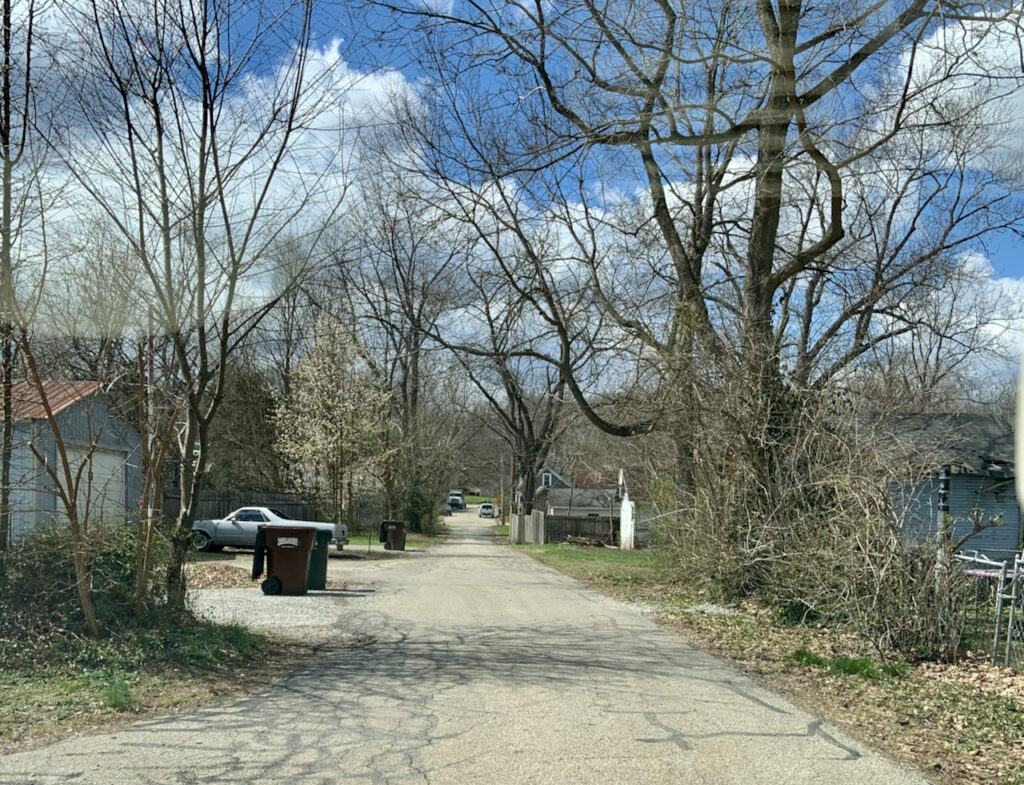
    The owner, William Kammerer requested approval to build a new 2-family dwelling on the rear of the property in the Office Residential Zoning District. Currently on the site, there is an existing single, two family dwelling unit, occupied via lease by the Little Miami River Chamber Alliance on the first floor and a short term rental on the 2nd floor that would remain. Ingress and egress was to be from Centre Street (Alley).

    The discussion begins at the 1:39 minute mark of this video. The Commission ultimately denied the “Conditional Use” permit.

    https://lovelandoh.iqm2.com/Citizens/SplitView.aspx?Mode=Video&MeetingID=1944&Format=Agenda


    BECOME A LOVELAND MAGAZINE SUPERFAN BY DONATING NOW!

    Open and free local reporting is critical to having well-informed community. Loveland Magazine has published a free newspaper and website for the last 20 years for our community. If you would like us to continue, kindly contribute to this service. It would be greatly appreciated. Donations may be made to: Loveland Magazine, 243 Wall Street, Loveland, Ohio 45140. Or, donations can be made through PayPal using a credit card. (https://bit.ly/4j1ju3k) Advertisers do not nearly cover all of our expenses.


  • Motley Fool’s Ricky Mulvey: Why I’m Buying MORE Stocks Despite Growing Recession Risk

    Motley Fool’s Ricky Mulvey: Why I’m Buying MORE Stocks Despite Growing Recession Risk

    Ricky Mulvey was a former  intern and “talking head” at Loveland Magazine

    1 day ago – BiggerPockets Money Podcast

    Are we headed right for a recession, or are stocks on sale? We don’t own a crystal ball, but Ricky Mulvey from The Motley Fool is capitalizing on the recent stock market swing by loading up on some of his favorite equities. Lisen to find out if now is an ideal time for YOU to “stock up,” too!

    Welcome back to the BiggerPockets Money podcast! In light of the recent market pullback, Ricky is going to share why he thinks it’s the right time to take advantage of low stock prices. He’ll discuss some of his best bargain buys, his biggest portfolio wins and losses in recent years, and, most importantly, the four-step approach you can use to identify stocks that could be set to soar in 2025.

    If you’re a regular listener, you know that Scott and Mindy are partial to stashing their money in index funds, sitting back, and watching their wealth snowball over the long haul. You might say that Ricky has a slightly larger appetite for risk, as he isn’t opposed to picking stocks, timing the market, and getting out after three to five years. Stick around to find out if his strategy works!

    _____________

    BECOME A LOVELAND MAGAZINE SUPERFAN BY DONATING NOW!

    Editor’s note: Open and free local reporting is critical to having well-informed community. Loveland Magazine has published a free newspaper and website for the last 20 years for our community. If you would like us to continue, kindly contribute to this service. It would be greatly appreciated. Donations may be made to: Loveland Magazine, 243 Wall Street, Loveland, Ohio 45140. Or, donations can be made through PayPal using a credit card. (https://bit.ly/4j1ju3k) Advertisers do not nearly cover all of our expenses.


  • The Big Red Machine: A 50th Anniversary celebration of the Back-to-Back World Champions opens March 27 at the Reds Hall of Fame & Museum

    The Big Red Machine: A 50th Anniversary celebration of the Back-to-Back World Champions opens March 27 at the Reds Hall of Fame & Museum

    Cincinnati, Ohio – The Cincinnati Reds Hall of Fame and Museum’s newest exhibit “The Big Red Machine: A 50th Anniversary Celebration of the Back-to-Back World Champions” presented by Dinsmore will open to the public on Reds Opening Day, Thursday, March 27. 

    Fans can relive the excitement of the Big Red Machine’s legendary 1975 and 1976 World Championship seasons through the Hall of Fame’s special exhibit, celebrating one of the greatest teams in Reds history.

    Featuring dynamic graphics, rare video footage and over 100 artifacts from the era, this exhibit offers an immersive experience that brings to life the seasons when the Big Red Machine secured its place as one of the greatest teams in Reds and baseball history.

    The exhibit features several notable artifacts, including:

    • The third base bag used at Fenway Park during Game 7 of the 1975 World Series

    • The glove worn by Hall of Fame catcher Johnny Bench during the 1975 season

    • World Championship banners from Riverfront Stadium

    • Memorabilia from the 1975 and 1976 Reds, 1975 Boston Red Sox, and 1976 New York Yankees

    _________

    BECOME A LOVELAND MAGAZINE SUPERFAN BY DONATING NOW!

    Editor’s note: Open and free local reporting is critical to having well-informed community. Loveland Magazine has published a free newspaper and website for the last 20 years for our community. If you would like us to continue, kindly contribute to this service. It would be greatly appreciated. Donations may be made to: Loveland Magazine, 243 Wall Street, Loveland, Ohio 45140. Or, donations can be made through PayPal using a credit card. (https://bit.ly/4j1ju3k)

    _________

    “This 50th-anniversary exhibit showcases the dominance of an era when the Reds ruled the National League,” said Reds Hall of Fame Executive Director Rick Walls. “Reaching its peak in 1975 and 1976 with back-to-back World Championships, this team left an unforgettable mark on baseball history. Through artifacts, videos and graphics, visitors will be transported back to the 1970s to relive the magical moments and record-breaking performances of the legendary Big Red Machine.”

  • The evolution of poststroke recovery

    The evolution of poststroke recovery

    headshot of Tim TedeschiBy Tim Tedeschi – UC News

    The University of Cincinnati’s Joseph Broderick, MD, was featured in a Medscape article commenting on new treatments and advancements in the field of poststroke recovery research.

    New research is challenging the idea that regaining limb mobility more than 6 months after a stroke was nearly impossible, including studies of noninvasive brain stimulation that pairs  with physical rehabilitation to modulate disrupted neural networks.

    Broderick noted determining the correct dose of stimulation will be key, as too much stimulation “can cause side effects that you don’t want.”

    Other researchers are focused on using robotic therapy or interactive virtual reality (VR) gaming to help strengthen limbs and encourage patients to stick to their exercise regimen. Broderick noted that interventions like VR have a limitation of not being able to  address language or vision deficits caused by stroke.

    “There are limits to what we can recover from,” said Broderick, professor in UC’s Department of Neurology and Rehabilitation Medicine in the College of Medicine, director of the UC Gardner Neuroscience Institute and a UC Health physician.

    Moving forward, Broderick said gene therapy could potentially help “spark motor recovery” in patients.

    Read the Medscape article.

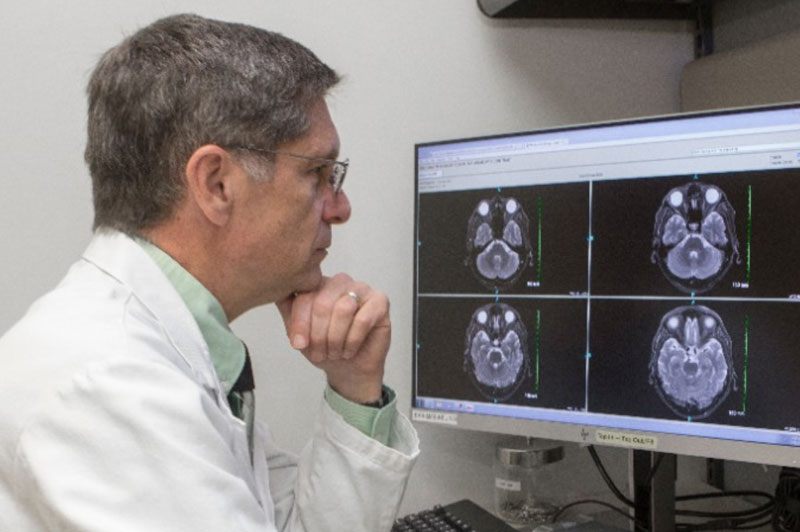
    Featured photo at top of Dr. Broderick. Photo/Joseph Fuqua II/University of Cincinnati