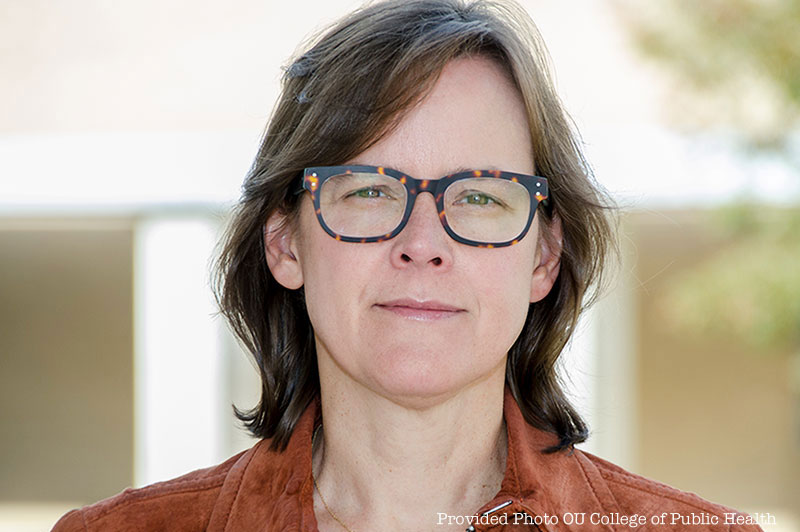
Ohio State University College of Public Health Dean Amy Fairchild sent the following message to students today.
Dear Buckeyes:
As we wrap up our final days on campus and look toward the holidays, I’d like to remind you of the critical role you play in preventing the spread of COVID-19.
Most importantly, we know that household transmission is the primary way that this virus is infecting people. One night at a bar or party means that you can bring the virus home, where it can spread rapidly. You have the power to reduce infections, including among your loved ones who may risk severe illness, hospitalization and death. I cannot emphasize enough that what may be a symptom-free inconvenience for one person can be devastating to another — and I say that underscoring that the pandemic’s severity is increasing throughout our nation and our state by the day.
By now you know what is required to do your part — proper masking when you’re in the same room as others, physical distancing, hand hygiene and staying far from large gatherings and within a small, consistent bubble of close friends and roommates. Parties simply aren’t worth it, particularly when cases are increasing in our community and on and around our campus.
I strongly recommend that, if you are able, you head home for the holidays as soon as you can if you receive a negative test result from routine testing this week. If you are not planning to leave this week, I urge you to test twice before heading home for break. The first test, part of our routine weekly screening, should be today, tomorrow or Wednesday. From that point forward, before you depart for home, please be especially careful by limiting unnecessary contact with others, maintaining physical distancing and wearing a mask any time you cannot avoid being with other people. If you plan to leave next week, the second test should be on Monday or Tuesday. Regardless of your planned departure date, out of concern for the safety of your family and friends, you must wait for your final “exit test” results before you head home. Testing hours and instructions are available on the Safe and Healthy Buckeyes website. If you are positive you should work closely with Ohio State’s Case Investigation and Contact Tracing Team to make your plan for isolating to stop spread of the virus.
If your results are negative, remember infection can take several days to be detected, which is why we test routinely. Continuing to follow precautions when you go home is your best bet for limiting illness in your families. Among those precautions: Wear masks on the car ride home, or however you’re getting home. Crack the windows. Limit the family coming to pick you up to one person.
During break, please resist the temptation to let the expectations we’ve set at Ohio State fall by the wayside. I understand that what feels “normal” is to visit with all of the friends and family you’ve missed, but we are in a time when those visits — especially if they include many people who aren’t masked and distant — can have serious repercussions, sending ripples through multiple families and social circles. Think about ways to bundle up against the Ohio fall and winter, keep the group small and spend some time outside.
If you know you were in riskier situations on campus, and especially if you have higher-risk loved ones at home, consider a 14-day self-quarantine in a room by yourself if that is possible. Wait 14 days to visit extended family who are vulnerable to the virus, including grandparents.
Thank you for all you’ve done this semester to keep us Together As Buckeyes and for your continued commitment to keeping your family, friends and our entire community safe and healthy.
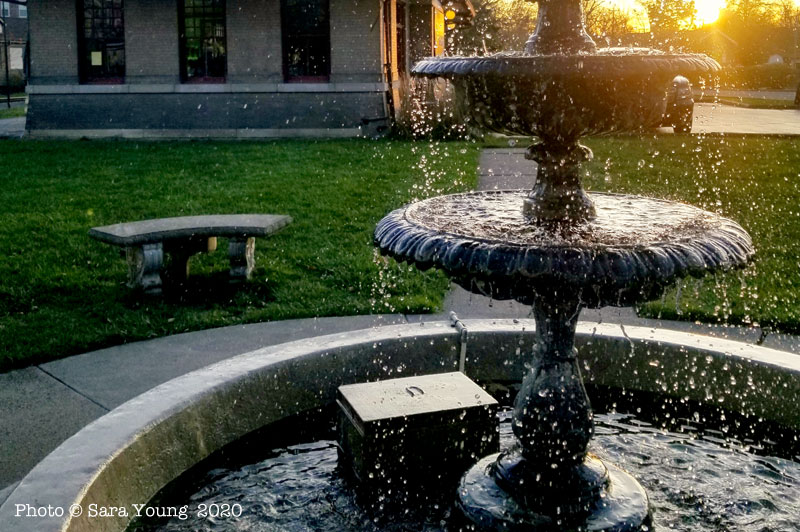
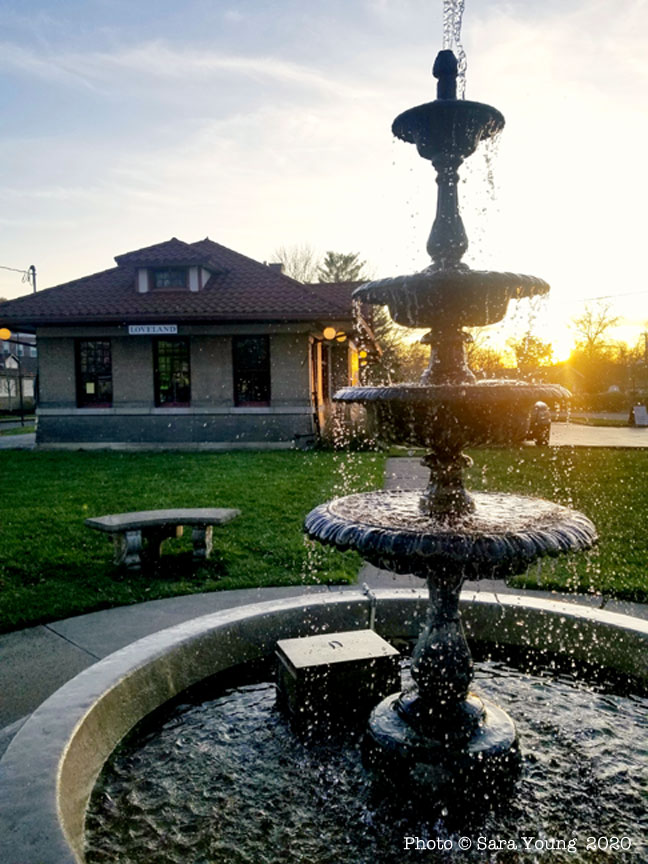
Loveland, Ohio – Sara Young said, “I snapped this picture of our beautiful downtown fountain while on a walk with a friend on one of these beautiful fall evenings. Our girls were enjoying a Daisy Scout outing at Loveland Nature Preserve, so us moms decided to do the same.”
The fountain is on a small parcel of green-space in Historic Downtown Loveland owned by former Loveland resident, Martin Schickel. Loveland’s historic train depot is in the background.
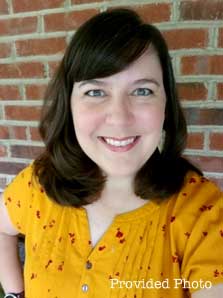
Sara lives in Symmes Township, with 3 children who attend Loveland Schools. “I love taking photos of beautiful places and of my kids having fun,” said Sara.
During the week of November 8-14, there was a 140 percent increase in the number of daily cases in Clermont County.
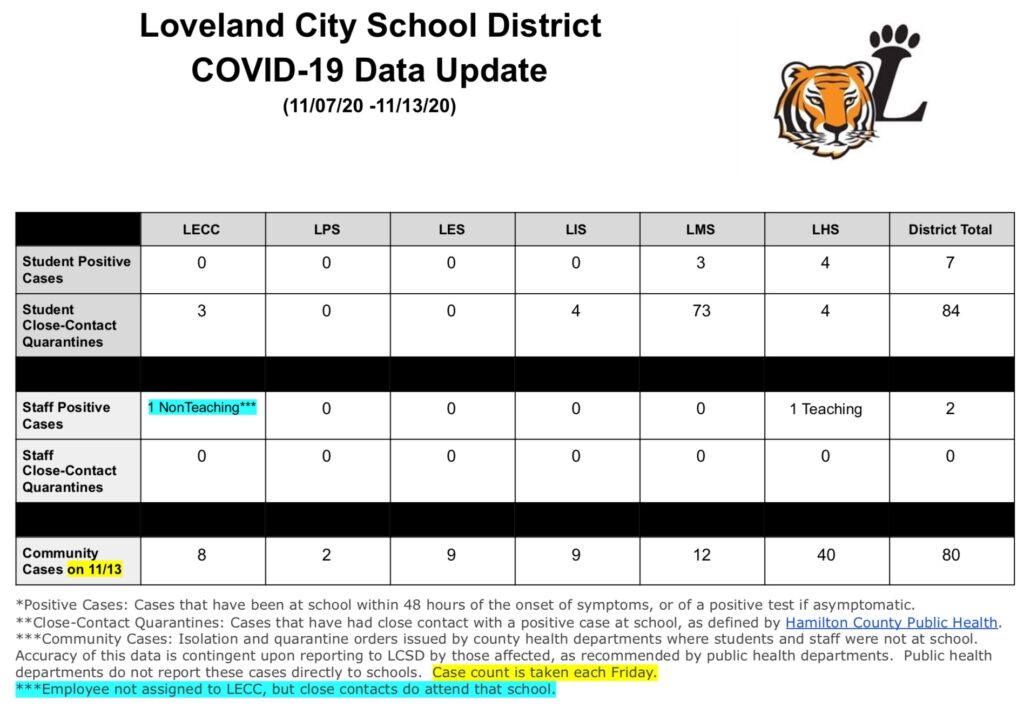
The Loveland City School District reported 16 new COVID 19 CASES since last Wednesday.
Batavia, Ohio – The number of new cases of COVID-19 in Ohio and Clermont County is increasing at an alarming rate according to a statement issued by the Clermont County health district today. The department reports a high of 186 new cases was reported in Clermont County on November 13 and the state of Ohio reported an all-time high of 8,071 new cases.
As of November 12, when the latest public health advisory system numbers were released, Clermont County had a rate of 410 new cases per 100,000 residents. For comparison, on October 1, the county’s rate was only 62 new cases per 100,000 residents. During the week of November 8-14, there was a 140 percent increase in the number of daily cases in Clermont County.
The exponential growth in the number of new cases in Clermont County has made it nearly impossible to keep up with disease investigation and contact tracing. “Up until this point, our goal has been to begin disease investigations within 24 hours of each new case being reported to us,” said Health Commissioner Julianne Nesbit.
Disease investigations take time and involve a public health staff member calling each individual who has tested positive and get details like where they may have been exposed, every location they have been in the previous few days, and every person they may have been in contact with.
After public health does their initial investigation, then they begin the process of contact tracing. That usually involves calling each person who was considered a close contact with the infected person and advising them to quarantine for 14 days from the date of exposure.
“We have hired additional contact tracers, but it’s still not enough to keep up with the demand,” said Nesbit. “Our staff is doing everything we possibly can to keep up with the new cases, we are physically and emotionally exhausted, but we are continuing to do this important work to the best of our ability to protect our community.”
“Our staff is doing everything we possibly can to keep up with the new cases, we are physically and emotionally exhausted
“We have hired additional contact tracers, but it’s still not enough to keep up with the demand,” said Nesbit. “Our staff is doing everything we possibly can to keep up with the new cases, we are physically and emotionally exhausted, but we are continuing to do this important work to the best of our ability to protect our community.”
In addition to hiring additional contact tracers, Clermont County Public Health (CCPH) has been using staff members from every other department to fill in the gaps and assist with contact tracing. CCPH also has a contract with the Ohio Department of Health for additional contact tracers that are being cross-trained to assist with disease investigations.
Public Health has switched from making phone calls in some situations to sending emails to provide information on quarantine to save time. Now, with this many new cases, they have also begun mailing letters to each person that tests positive to save time. Phone calls are still being made when CCPH is aware of situations where there are a large number of contacts and the potential for further spread of the disease.
The letters notify each person that tests positive what to do while they are in isolation and asks them to identify their contacts, who are advised to quarantine. “We are seeing so many new cases, we just cannot possibly keep up at this rate,” said Nesbit.
“Local hospitals are already being stressed,” said Nesbit. “While all hospitals have surge plans in place where they can add more beds and take in more patients, they are going to run out of healthy, experienced workers to care for the sick patients, if this trend continues.”
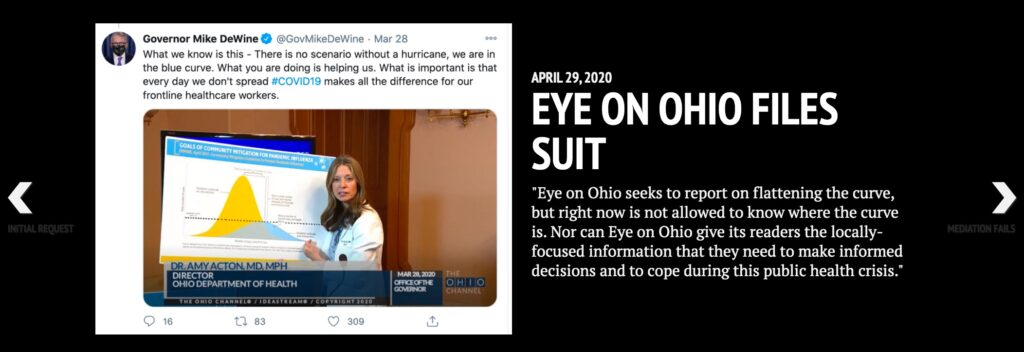
“We saw in the spring that we can flatten the curve, but we must be extra vigilant now, especially with the holidays coming up,” urged Nesbit.
ccc
The Loveland City School District reported 16 new COVID 19 CASES since last Wednesday.
• On 11/16/20, the district was notified that a student at the Loveland Early Childhood Center tested positive for COVID-19. This student was last at school on 11/12/20.
• On 11/16/20, the district was notified that a student at Loveland High School tested positive for COVID-19. This student was last at school on 11/09/20.
• On 11/16/20, the district was notified that a student at Loveland High School tested positive for COVID-19. This student was last at school on 11/13/20.
• On 11/16/20, the district was notified that a non-teaching staff member from Transportation and Loveland Primary School tested positive for COVID-19. This staff member was last at work / school on 11/12/20.
• On 11/13/20, the district was notified that a staff member at the Loveland Early Childhood Center tested positive for COVID-19. This staff member was last at school on 11/10/20.
• On 11/13/20, the district was notified that a Board of Education Central Office staff member tested positive for COVID-19. This staff member was last at work on 11/12/20.
• On 11/14/20, the district was notified that a staff member at Loveland High School tested positive for COVID-19. This staff member was last at school on 11/6/20.
• On 11/12/20, the district was notified that a student at Loveland High School tested positive for COVID-19. This student was last at school on 11/4/20.
• On 11/13/20, the district was notified that a student at Loveland Middle School tested positive for COVID-19. This student was last at school on 11/10/20.
• On 11/13/20, the district was notified that a student at Loveland High School tested positive for COVID-19. This student was last at school on 11/5/20.
• On 11/12/20, the district was notified that a student at Loveland Middle School tested positive for COVID-19. This student was last at school on 11/9/20.
• On 11/12/20, the district was notified that a student at Loveland High School tested positive for COVID-19. This student was last at school on 11/6/20.
• On 11/12/20, the district was notified that a staff member at Loveland High School tested positive for COVID-19. This staff member was last at school on 11/6/20.
The District does not publish quarantine data during the week, only on Fridays.
Right-Click on the image and open in a new tab to see a larger view.
What can you do to help?
Stay home if you are sick.
Quarantine yourself if you have been around someone who recently tested positive for COVID-19.
Wear a mask whenever you are in public.
Avoid large crowds.
Keep at least six feet of space between yourself and others.
Limit contact with people outside of your immediate household. If you are tested and receive a positive test result, you should:
Isolate yourself in your own home, away from others, as much as possible, for at least 10 days after your symptoms first appeared.
Notify each person you had direct contact with (defined as someone within six feet of you for a length of 15 minutes or longer within 24 hours) and ask them to quarantine in their house for 14 days after the potential exposure occurred. For more information or resources, visit the Ohio Department of Health’s coronavirus website at www.coronavirus.ohio.gov or Clermont County Public Health’s website at www.ccphohio.org.
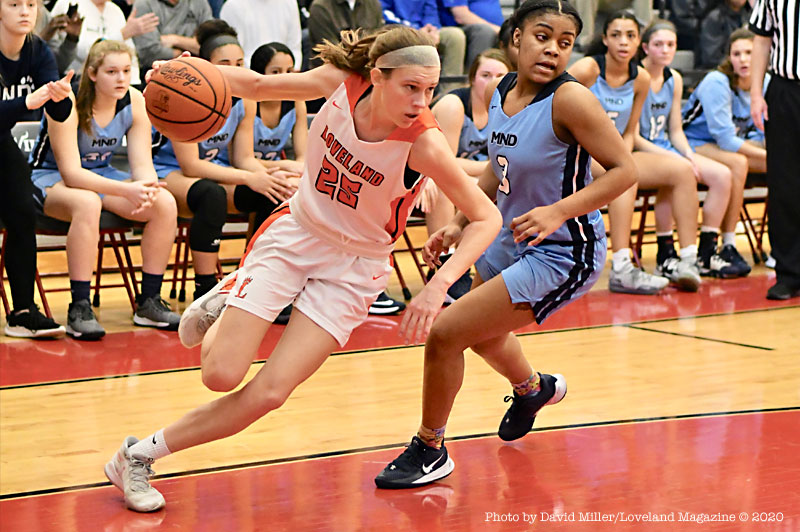
The above photo is Jenna Batsch in action in the District Semi-Final for the Loveland Tigers last season (Loveland Magazine file photo)
Cassie Mattia is the Associate Editor of Loveland Magazine and lives in Historic Downton.
Loveland, Ohio – As the end of the school year nears, L.H.S’s Senior student-athletes are making plans for the future! It was announced last week that two Tigers, Jenna Batsch and Lauren Donovan committed to playing collegiate athletics at two very prestigious schools.
Lauren Donovan
University of Minnesota’s Head Women’s Soccer Coach, Stefanie Golan, announced last Wednesday, that L.H.S’s Lauren Donovan would become a part of the Women’s Soccer 2021 Recruiting Class. Joining Donovan will be five other talented women, two forwards, two midfielders, one defender, and one goalkeeper.
Donovan has had quite the impressive Tiger journey earning All-City and First Team All-Southwest honors in 2019 for Soccer as well as two varsity letters in Basketball and Track and Field (in addition to Soccer). This year Donovan was apart of the 16-4 L.H.S Women’s Soccer Team that not only secured a District Championship but also Regional Runner-Up honors.
Head Coach Golan is excited to see Donovan’s contribution to what Golan thinks will be a stellar 2021 recruiting class!
In addition to playing soccer, Donovan will be majoring in Communications at the University of Minnesota.
The University of Kent State’s Women’s Basketball Coach, Todd Starkey, also announced on Wednesday that Loveland Tiger basketball stand-out, Jenna Batsch, along with three others, would be joining the 2021 Recruiting Class.
Head Coach Starkey said that he believes Batsch will be a much needed addition to an already talented group of student-athletes! Starkey then went on to predict a possible Mid-American Conference Championship throughout the course of the 2021 Recruiting Class’s four seasons.
Six-foot guard, Batsch was a part of last year’s Loveland Women’s Basketball Team that made history earning their first-ever ECC Championship, a Sectional Title, and a 22-4 record. Batsch collected First Team All-ECC, Honorable Mention All-District, and was ranked in the ECC’s top 10 in both steals and blocked shots, averaging 10.9 points, 2.5 steals, and 0.8 blocked shots per game.
“When we try to pick out anything by itself, we find it hitched to everything else in the Universe,” John Muir, a transcendentalist, wrote of nature’s connectedness in his 1911 book, My First Summer in the Sierra.
In 1997, Nature journal published ecologist Suzanne Simard’s Ph.D. theses, describing newfound proof of how plants within communities can be interconnected through an underground system, called a mycorrhizal network, to interact with each other.
This is Part 5 of a series Loveland resident and Ohio University student, Joe Timmermanwrote for The Post in Athens, Ohio. The Post is an award-winning, student-run media outlet that publishes online daily and also prints a weekly tabloid. They cover local and Ohio University news, sports, Athens life, entertainment and everything in between. The series is re-published here in Loveland Magazine with permission of The Post and Loveland High School graduate, Joe Timmerman a frequent contributor to Loveland Magazine.
“All trees all over the world, including paper birch and Douglas fir, form a symbiotic association with below-ground fungi … They compete with each other, but our work shows that they also cooperate with each other by sending nutrients and carbon back and forth through mycorrhizal networks,” Simard said in an interview with Yale Environment 360.
In this sense, trees communicate with one another on a deeper level than what is seen in the overstory and the understory of a forest.
From mothers and fathers sharing memories of trees they have grown to love with their kids to a lifelong woodworker who discovered a new relationship with wood as time went by, people are connecting with nature in new and old ways, as COVID-19 has brought a global feeling of social disconnection. People and their trees alike have a story to be told.
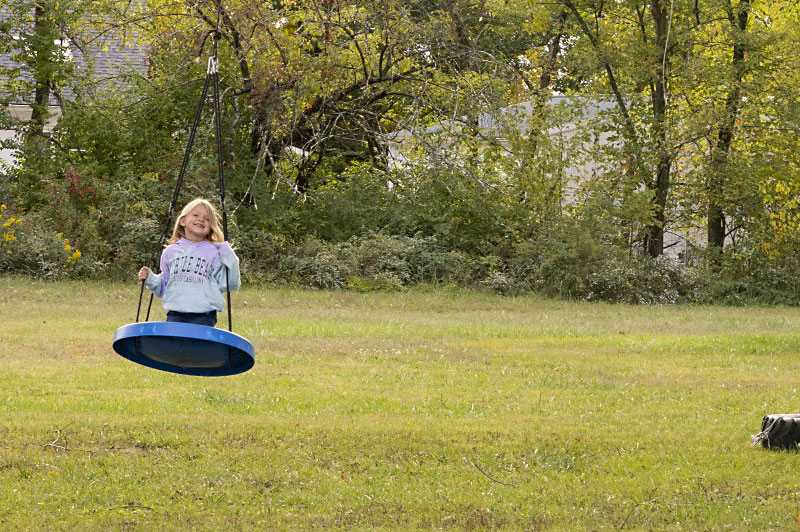
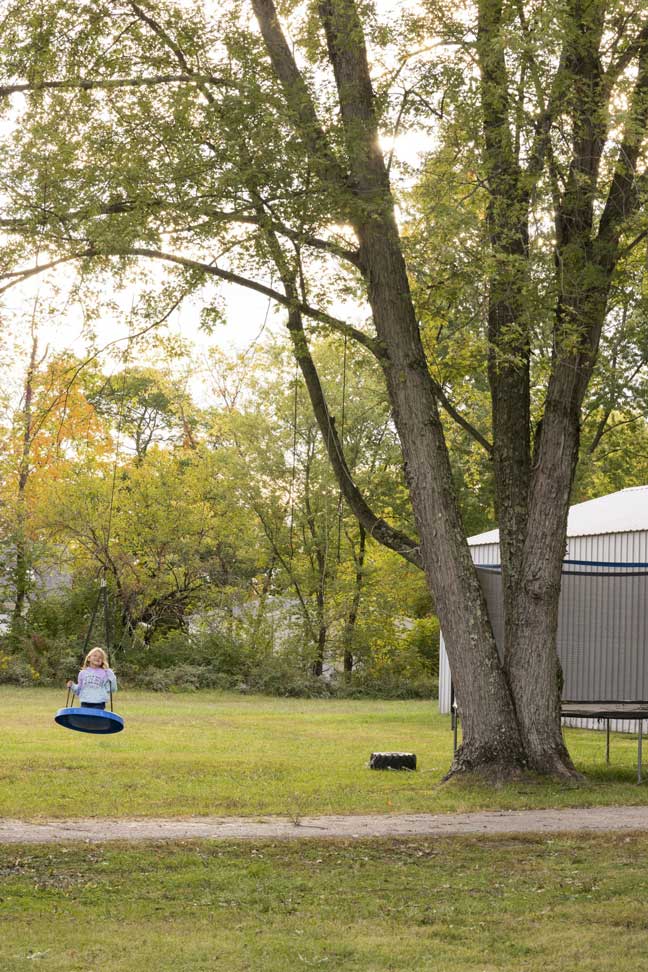
Olivia Nerlinger of Loveland, Ohio, with her tree swing. Nerlinger and her family have been renting the property for the past three years. They don’t know what kind of tree the swing hangs from.
“My dad put the swing up. I love spinning on it,” Nerlinger said. “I like trees because I can find cicada shells on them, and I find lots of shells on this tree.”
The Warren County Health District (WCHD) says they have “recently become overwhelmed with the rapid acceleration in the number of new positive COVID-19 cases being reported.” As of Friday, WCHD is currently seeing a average of 110 new cases being reported daily, with a recent peak of 175 cases reported in one day.
The Health District said that here has been a 72% increase in the average daily cases since November 1st and a 440% increase in reported cases since October 1st.
Hospitalizations of COVID-19 patients in Southwest Ohio have increased by 67% over the last 2 weeks and COVID-19 patients in the ICU have increased by 50% over the same time period, according to a release from the health department. “We are at a critical point in the response to the coronavirus pandemic.”
In order to manage the surge in cases additional contact tracers have been hired in addition to contracts signed with local universities for additional assistance.
Until additional resources are in place and operational for contact tracing, WCHD is going to be sending people that are not able to be contacted via phone, a letter including:
Informing them of their positive result for COVID-19
Education on isolation
Education on quarantine for any household contacts
Education on what constitutes someone as a close contact
Asking the person to call any close contacts they identify during their contagious period and inform contact of their exposure so the contact may begin their quarantine.
The message the District is sending to every citizen is that “It is imperative that everyone increases their efforts to slow the spread of COVID-19 in the community. Now is the time to focus on the measures we know can slow the spread of the virus and protect yourself and others.”
• Stay home if you are sick • Stay home if you have been exposed to COVID-19 • Avoid gatherings, limit contact with people outside of your household, and reconsider holiday plans • Keep six (6) feet of distance from others • Wear a mask • Wash your hands
The Health District asks that if you are notified by a healthcare provider that you have tested positive for COVID-19, isolate away from others at your house and inform your close contacts that they need to quarantine in their home for 14 days from the last time you had close contact with them.
Quarantine and isolation means that you must stay in your place of residence until you are released from quarantine or isolation, or for a medical emergency.
People with questions about COVID-19 can call the Ohio Department of Health COVID-19 Call Center, 7 days a week from 9AM – 8PM at: 1-833-4-ASK-ODH (1-833-427-5634) or visit warrenchd.com for local information.
On Friday, Governor DeWine announced that Ohio Department of Health Interim Director Lance Himes signed thehealth order to enforce mask-wearing in retail locations across the state in compliance with the statewide mandatory mask order signed on July 23, 2020.
“Every retail employee has the right to work in an environment that is as safe as can be, which means all customers must wear masks. Further, each Ohioan who goes out to shop has the right to know that every store they enter will be safe and the people they encounter in that store will be wearing a mask,” said Governor DeWine. “We know that masks work. They are the easiest, most cost-effective way to limit the spread of COVID-19.”
The order takes effect beginning at 12:01 a.m. on November 16, 2020.
All retailers must post and enforce a sign indicating that masks are required at all entrances. Employees are not required to put themselves in jeopardy or risk harm when enforcing this order.
All retailers must post at all entrances a maximum capacity limit to ensure a minimum of six-feet physical distance can be maintained throughout the location.
All retailers should mark six-feet separation spots in all check-out lines.
All retailers should arrange all store aisles to be directionally one-way, if required to achieve appropriate social distancing.
All retailers should place hand sanitizer stations at high-contact locations.
All retailers must require employees to stay home if symptomatic.
All retailers must disinfect high-touch areas after each use (e.g. carts, baskets, and other equipment).
All retailers should provide reasonable accommodation to any person unable to wear a mask into the store by providing online or telephone ordering and curbside, non-contact pick up or a delivery option and/or allowing a person to wear a full face shield that extends below the chin. Each retailer must post a sign at each entrance detailing these accommodations.
Customers are strongly urged to utilize online or telephone ordering and curbside, non-contact pick-up or delivery options.
This order does not apply to those medically or developmentally unable to wear a face covering.
Each business should designate an on-site compliance officer for each business location and each shift during all business hours to enforce these requirements.
Compliance Enforcement
State of Ohio employees with enforcement powers, including the Ohio Bureau of Workers’ Compensation Retail Compliance Unit employees working on behalf of the Ohio Department of Health, representatives of local health departments, and local law enforcement are authorized to inspect and enforce the order.
All retailers shall allow representatives of the Ohio Department of Health, a local health department, or law enforcement to inspect public areas during business hours.
The representative will issue an initial warning to the business before issuing a notice of violation requiring closure.
If a notice of violation of these orders is issued by a representative from the Ohio Department of Health, a local health department, or law enforcement, the retail location must immediately shut down for no longer than 24 hours to allow for dissipation of COVID-19 airborne droplets.
Citizens observing non-compliance should notify the Ohio Department of Health call center at 1-833-4ASKODH (1-833-427-5634).
This order does not apply to restaurants, bars, banquet and catering centers, hair salons, day spas, nail salons, barber shops, tattoo parlors, body piercing locations, tanning facilities, gyms, dance instruction studios, or personal fitness venues as these businesses fall under previously-issued, existing orders.
This order takes effect beginning at 12:01 a.m. on November 16, 2020.
This article provided by Eye on Ohio, the nonprofit, nonpartisan Ohio Center for Journalism. Please join their free mailing list as this helps them provide more public service reporting. Loveland Magazine provides support for Eye on Ohio through membership in the Ohio News Media Association.
As the ongoing pandemic continues to surge, the Ohio Court of Claims ruled last week that the Department of Health must share public records with Eye on Ohio, showing the number of beds and ventilators available for COVID-19 patients at individual hospitals throughout the state.
The ruling comes seven months after Eye on Ohio initially sought the records.
“In times of crisis transparency is paramount,” said Rebekah Crawford, who has her Ph.D. in Health Communication, Relating & Organizing from Ohio University.
People want credibility and clear lines around what is known and what is uncertain. “When risk communicators are at their best,” Crawford said, “they remain credible by showing what is known and what is not known and by being clear about why we don’t know, and what we’re going to do to find out.”
When Eye on Ohio first requested records, at the end of March, the state had only about 2,200 confirmed cases and 55 deaths, according to the online Johns Hopkins Coronavirus Resource Center. As of November 12, Ohio had approximately 274,500 confirmed cases, and about 5,700 people had died from the disease.
“We are in the midst of our third wave in Ohio,” Gov. Mike DeWine said in his November 11 address to the state. There had been warnings that cases would climb when weather turned cooler and people spent more time indoors again. But, DeWine stressed, the surge is “much more intense, widespread, and dangerous.”
“As of today, every single one of our 88 counties has a high rate of virus spread, and areas of our state that were previously untouched—our rural areas—are being hit especially hard,” DeWine said.
If current trends don’t change, some parts of the state are “maybe two or three weeks out” from hospitals having to crowd out non-COVID-related care as they try to keep up with the surge, reported Andy Thomas, a medical doctor at Ohio State University’s Wexner Medical Center, during the governor’s November 9 press conference.
Eye on Ohio sought records with the data as a way to provide readers with timely, local information about the ability of healthcare facilities in their area to deal with the pandemic.
In a state with nearly 45,000 square miles, that local information could tell citizens more about Ohio’s readiness to deal with emergencies for all its residents. Availability of beds and respirators in Cincinnati, for example, would mean little if hot spots of emergencies were concentrated in Ashtabula, nearly 300 miles away by car.
Transparency Matters
Leaders in times of crisis tend to assume that the public is going to panic, Crawford said, even though “research actually shows that panic isn’t the most prominent or even in the top ten of reactions that people have to communications of risk. People are most likely to be in denial. Studies of 9-11 show that people were excessively polite as they exited the World Trade Center because people don’t panic, they get especially compliant and cooperative in high stress or high risk situations.”
Lack of transparency creates suspicion, hurts credibility, and diminishes trust-worthiness. Crawford said, “people who are untrained in risk communication go to that ‘don’t panic’ communication mode.”
Another misnomer is the assumption that people can’t understand how to interpret the information, so, Crawford said, “rather than taking it upon themselves to communicate in a transparent and understandable way they withhold information and say ‘we’ll make decisions for you’ which doesn’t work when people are anxious.”
“A risk expert cannot look at some numbers and then tell a community ‘this isn’t a problem for you’ because the community may decide that it is a concern ‘because you don’t speak for us or understand what we value,’” Crawford said.
Transparency is key for the public so individual communities can take the information given and decide for themselves what actions should be taken and individual needs addressed based on the needs and values of their demographic.
A Need for Transparency
Reporters initially sought information from individual hospitals but were told that all information was being funneled to the Ohio Hospital Association, which in turn provided it to the Department of Health. And the Department of Health had arranged for the data to be entered into a database called Surgenet.
According to a court affidavit, Surgenet was first developed by the Greater Dayton Area Health Information Network (GDAHIN). The software was subsequently enhanced to its present “all hazards” function as “a tool to be utilized during an emergency involving the public’s health which could severely impact hospital services.” Eye on Ohio was told that only the Department of Health would grant access to the materials.
Eye on Ohio then filed a formal public records request for access to the data or records with it. After cancelling a meeting that had been scheduled to discuss the request, the Department of Health then issued a flat-out denial, claiming the records were “security and infrastructure records” under an exception to the state’s public records law.
Eye on Ohio had no option but to file a case with the Ohio Court of Claims.
The court said the statutory language for that security exception just didn’t fit. That part of the Ohio Revised Code exempts security and infrastructure records that are prepared for the express purpose of protecting against or responding to terrorism, school shootings or similar acts of attack or sabotage. None of those apply to the COVID-19 pandemic.
“Exceptions to disclosure are strictly construed,” wrote Special Master Jeff Clark in his October 20 report and recommendation. “And, in this case, the Department of Health failed to connect the data sought by Eye on Ohio with the prevention, mitigation or response to any existing or anticipated act of terrorism.”
“To meet the burden of proof regarding alleged security records, ODH must offer more than its own conclusory labeling,” Clark wrote. He likewise rejected the Department of Health’s assertion that it should be able to stop release of the records because it didn’t want to discuss them.
“Even assuming, arguendo, that some hospitals would rather not disclose their bed and resource availability, it is well-settled that public offices may not withhold records merely because of a policy preference for confidentiality,” Clark wrote.
Court of Claims Judge Patrick McGrath approved the Special Master’s report and recommendation on November 10.
In 2020, so far there have been 24 public records cases resolved in Ohio. In 14 cases, the party dismissed the action because records were provided. In seven cases, the party just dismissed the case. It’s not clear if the records were provided or they just weren’t relevant any more. Just three were decided by the Court of Claims.
What’s next
Despite the court’s ruling, Eye on Ohio is still waiting for the records. In response to its journalists’ requests for access to the database, attorney Socrates Tuch wrote, “Instead, the Department is preparing a data extract to be provided on an Excel spreadsheet or sheets. Doing so is taking time as the Department staff attempts to accommodate this task with the COVID response.”
Ohio law generally requires a reasonable time for production of public records. However, Eye on Ohio first sought the records with the information at the end of March. And the Special Master’s October 20 report came out more than three weeks ago.
Eye on Ohio again pressed for production of the materials on Friday.
“We are working on gathering the records and when they are ready, we will send them along,” responded Press Secretary Melanie Amato at the Department of Health.
When Eye on Ohio finally gets the materials, it plans to provide further reports on it and on updated data. Its journalists hope that more complete, local information can help the public as the pandemic continues.
Disclosure of the mounting strain on hospitals in their vicinity might also make people more vigilant in their efforts to control the pandemic and to “flatten the curve” of cases. Otherwise, as scientists have previously warned, the pandemic will cause even more deaths that could have been avoided.
As for the resistance against complete transparency, “Far be it from me to criticize people who are providing care at a great risk to their own health in a time of heightened need,” Crawford said. “I’m not talking about the doctors and the nurses who are working in the hospitals, but the managers and administrators who are at the upper echelon of those really hierarchical corporations in some cases are motivated not to cooperate and share information. It really goes counter to public health needs and the demands in care and I would say ethical and medical provision.”
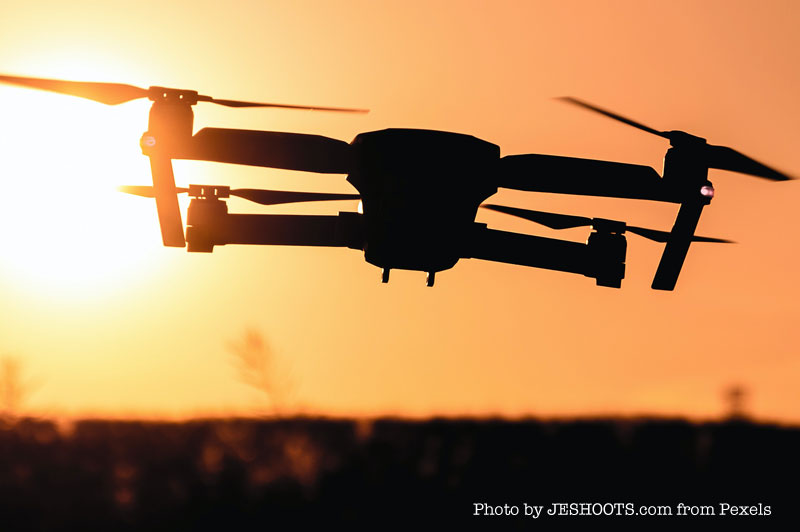
Drones can save lives. First responders can learn how through a new first-in-the-world certification program for adults at Great Oaks Career Campuses: Emergency Services Drone Operator. This program teaches the use of drones for fire fighting, law enforcement, and emergency medical rescue.
Drone technology can be used during a fire to keep fire fighters safe while viewing the scene, after a fire by investigators, as a set of eyes during vehicle or foot chases, as a tool for search-and-rescue, or in many other ways by first responders.
The first class of students began on October 5, and included eleven firefighters and emergency services professionals from Sharonville, Norwood, the Village of Woodlawn, and the City of Cincinnati.
“Great Oaks is pioneering the use of this technology to save lives,” said Great Oaks Fire Academy Commander Johnny Mason. “An emergency services drone operator needs to know not just how to fly the drone, but how to view and interpret an emergency scene from above.”
The class offered at Great Oaks is the first course approved by ProBoard to certify students in NFPA 2400, the standard for Small Unmanned Aircraft Systems (SUAS) for Public Safety Operations. Mason said that during the five-day class, students will plan missions, fly missions, and learn to maintain drones. They will also hold such training exercises as approaching a suspicious vehicle, conducting search-and-rescue activities, and dealing with hazmat situations.
During a training demonstration for local officials, Johnny Mason said the timing of launching this class was fortunate. “Great Oaks is celebrating 50 years this year, and I can’t think of a better way to celebrate than to introduce training in life-saving technology.”
For more information, contact Great Oaks Public Safety Services at 513.771.1142.






 This is Part 5 of a series Loveland resident and Ohio University student,


 Read Part 1: