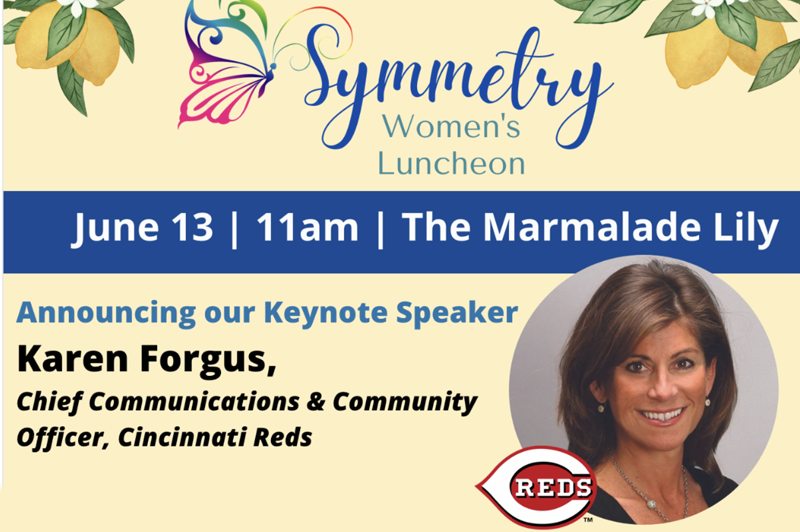
Loveland, Ohio – Join us for a Women’s Networking Luncheon where dynamic women come together to exchange insights and strategies for navigating both career and personal life, while building meaningful connections in our community.
The Event Includes:
Luncheon, Shopping Expo – vendor tables available, Keynote Speaker, Networking, Swag Bag, Prizes, Dessert provided by a local business, Bra Fittings, Headshots, Free chair massages!
It is also a great way to network with area executives!
Karen Forgus is a native Cincinnatian and lifelong Reds fan who is in her 18th season with the organization, joining in December 2006 as Vice President of Marketing and Communications, then serving as Senior Vice President of Business Operations before her current role as Chief Communications and Community Officer. She and Phil Castellini are the Reds lead- liaisons for civic, community, and non-profit relationships, including those involving Major League Baseball.
In 2014, Karen was selected as a “Game Changer” by Sports Business Journal. The honor is presented annually to recognize women who are having a major impact in sports business.
Karen holds a Bachelor of Science degree from the University of Dayton. Her daughters Rachel, Leah and Hope carry the same love of Reds baseball that began with Karen’s parents, Bob, and Jean Kraft.
Guest Emcee: Kate Harden, Owner, The 1859 Historic ChapelKate is the founder and owner of The 1859 Historic Loveland Chapel wedding and event venue. Prior to launching The 1859 venue, Kate worked in the medical community as a physician assistant since 1999. In 2021 She dreamed of developing a place where special moments would be had, and memories would be made. The 1859 launched in November of 2021 and has grown into a thriving venue earning recognition on local and national levels.
In 2023, Kate was selected as Woman owned business of the year by the Little Miami Chamber alliance. The honor is presented annually to recognize women who are having an impact in business. The 1859 has been awarded The Best of Knot and Couples Choice awards in 2022 and 2023. Most recently, The 1859 has been awarded The 2024 City of Loveland Business Enhancement Award.
Kate holds a Bachelor of Science and Physician Assistant degree from Trevecca University. She and her husband Shane are blessed with 3 wonderful grown children, Gabriel, Isaac and Eden.
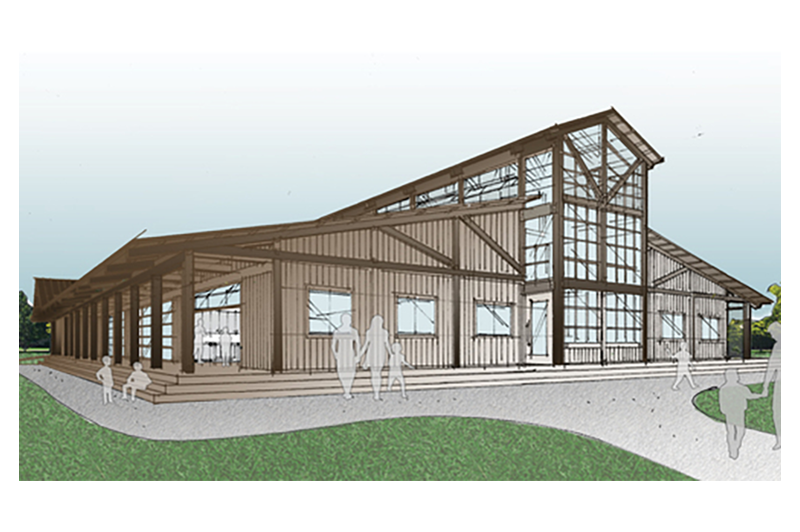
Miami Township, Ohio – With almost 100 business leaders, contractors, union representatives, educators, and board members in attendance on May 2, Andy Zahn, the Dan Beard Council, Boy Scouts of AmericaCEO and Scout Executive, announced plans to build a Skilled Trades Education Center at their Camp Friedlander property in Miami Township. The goal is to be open in the summer of 2025.
The vision is, “how workforce readiness starts with us.”
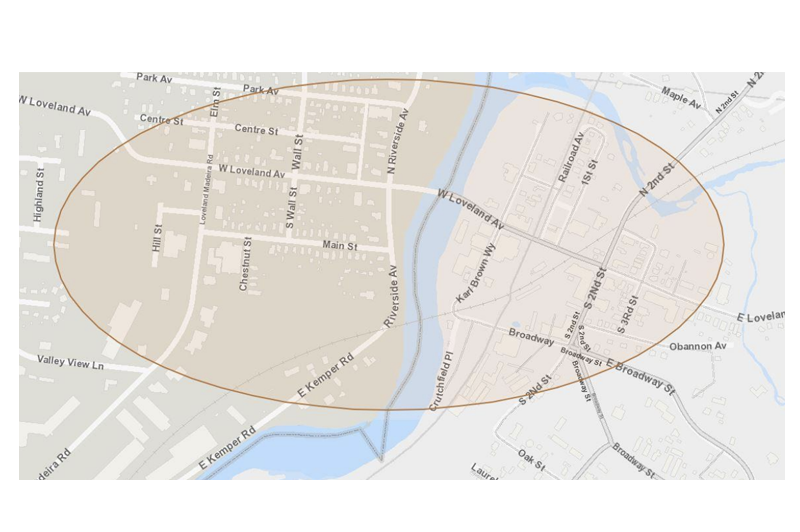
Loveland, Ohio – The City of Loveland will host a public engagement event on Tuesday, April 30, to discuss their “West Loveland Avenue Traffic Study”.
The event will be held at New Hope Baptist Church, 1401 Loveland-Madeira Road, from 5:30 until 7:30 PM.
The City invites residents, local business owners, workers, and frequent area travelers to attend a public open house to review and provide feedback on several alternatives being explored.
According to City Hall, they have been “investigating alternatives for reducing traffic congestion and improving travel time in Historic Downtown Loveland, particularly on and near the West Loveland Avenue Bridge spanning the Little Miami River, an area in which traffic is particularly heavy during typical commute times.”
“The West Loveland Avenue Study project team has identified three alternatives that could potentially alleviate congestion in the area. These alternatives will be presented at the open house. The project team will give a presentation for those in attendance at 6 p.m. Attendees will also be able to examine exhibits of the alternatives being considered, ask questions of the project team, and provide verbal and written feedback. The city would like comments about the social, economic, and environmental impacts of the alternatives, including any information the public may have regarding the existence of archaeological, historic, ecological resources, or hazardous materials sites.”
Public Survey Results
[pdf-embedder url=”https://lovelandmagazine.com/wp-content/uploads/2024/04/W.-Loveland-Ave.-Survey-Results-Aug.-2023.pdf” title=”W. Loveland Ave. Survey Results Aug. 2023″]
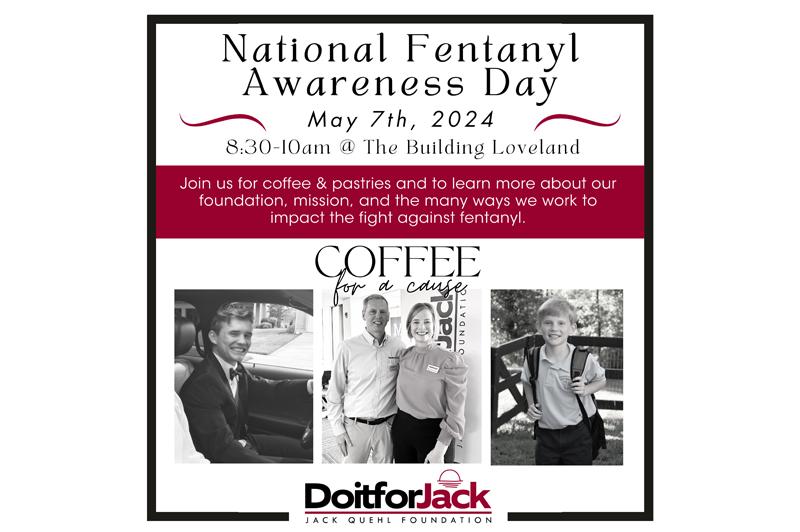
Loveland, Ohio – The Jack Quehl Foundation – DoItForJack was established in 2022 in loving memory of the beloved son of Tom and Stephanie Quehl, Jack, after his tragic death from fentanyl poisoning. His death was a devastating loss to his family and his many friends.
You are invited for coffee and pastries on Wednesday, May 7 by the DoItfor Jack – Jack Quehl Foundation to learn more about the Foundation, its mission and “the many ways they work to impact the fight against fentanyl.”
May 7th is National Fentanyl Awareness Dayand we would love the opportunity to share more about the foundation, and the mostly unknown prevalence of fentanyl in ours, and all communities. This is not an invitation to ask for donations or contributions. The Foundation simply wants the community they live in to know them, be aware of who they are, and understand why they strive to be so visible. Your knowledge alone could contribute to the effort of saving lives that we strive for.
The Building is a fun and charming private event space located in Historic Loveland, OH. The owners, Annette & Andy Friesner, purchased the Building in 2016 and renovated it to its current glory.
Because of Idaho’s abortion ban and a court decision that does not protect emergency room physicians from prosecution under that law, some Idaho physicians are advising their pregnant patients, or those trying to become pregnant, to purchase memberships with companies like Life Flight Network or Air St. Luke’s in the Boise area to avoid potentially significant costs if they need air transport in an emergency. (Courtesy of Life Flight)
A federal law that allows emergency departments to treat patients without regard to their ability to pay will be under U.S. Supreme Court scrutiny this week, and Ohio doctors are concerned about the case’s local impact on emergency abortion care.
The nation’s highest court will hear oral arguments in Idaho v. United States, an appeal in which the state is questioning elements of a 1986 law called the Emergency Medical Treatment and Labor Act (EMTALA). The law compels emergency rooms to treat all patients who are experiencing emergency medical conditions and stabilize or transfer those patients, whether or not insurance or financial payment has been confirmed.
“It is the only guarantee of universal health care in the United States, and it only applies to emergency departments,” Dr. Laurel Barr, a practicing emergency physician in central Ohio, said at a press conference discussing EMTALA and the Supreme Court case.
The U.S. Department of Justice sued after Idaho passed their own abortion ban that only provides exceptions for the life of the pregnant individual. The DOJ argued the EMTALA preempts any such law.
After the 2022 decision by the court in Dobbs — which overturned the nationwide right to abortion care and returned the decision to the states — the U.S. Department Health and Human Services sent out a memo with guidelines telling medical professionals that EMTALA still preempted state laws, including in the use of medically necessary abortions.
“If a pregnant patient is experiencing an emergency medical condition and abortion is the stabilizing treatment necessary to resolve that condition, the physician must provide that treatment to stabilize that patient,” said Ohio health care attorney Jennifer Nelson Carney.
At issue in the Idaho case is whether or not abortions can be considered a stabilizing treatment, but Carney said depending on how the Supreme Court rules, the case could have ripple effects far beyond reproductive health.
“(Plaintiffs) think that what they’re asking for is to have the court rule that abortion is not a possible treatment to stabilize, but the likelihood is that, if the court were to go that way, that it would be a much broader implication that would result in people not being treated at all,” Carney said.
She called it the “classic legal analysis of slippery slope,” and potentially criminalizing conduct covered under EMTALA “places health care providers in a very grim situation of risking criminal liability if they follow just their expertise, training and ethical obligations.”
“If the opinion says that states can decide what health care services are subject to EMTALA and what aren’t, that is just a brand new health care framework that we haven’t seen in 40 years,” Carney said.
Ohio is already too familiar with conflicting regulations for physicians, which can cause hesitation when it comes to providing needed care. Though voters approved a constitutional amendment establishing the right to reproductive care such as abortion and miscarriage treatment with 57% of the vote last November, laws still remain on the books in the state that require a 24-hour waiting period before an abortion can take place and for doctors to have hospital privileges within a certain distance from a health clinic that provides abortions services.
“The big problem right now for us is that Issue 1 has passed … and yet we have seen nothing done with the laws in Ohio,” said Dr. Amy Burkett, an OB/GYN who also served on the board of directors for Ohio Physicians for Reproductive Rights, a leader in the campaign to pass Issue 1.
To that end, abortion clinics have joined with the ACLU of Ohio in lawsuits to undo regulations that conflict with the recently minted constitutional rights. Most recently, the groups filed a lawsuit in the Franklin County Court of Common Pleas to eliminate “several Ohio laws that together force abortion patients to wait a minimum of 24 hours after receiving unnecessary state-mandated information in person before they can access their desired abortion care,” the clinics said in announcing the suit.
A separate lawsuit that has been active in one form or another since the fall of Roe v. Wade asks a Hamilton County court to permanently strike down a six-week abortion ban still enacted in the state, though the various court cases targeting it have largely prohibited its enforcement.
With those lawsuits still working their way through the courts, Dr. Marcelo Azevedo, also a member of OPRR as part of its executive committee, said the EMTALA decision from the Supreme Court could have the same effect that the undoing of Roe v. Wade had on Ohio medicine.
“I would prepare ourselves for having that same level of confusion that we had after the decision in Dobbs,” Azevedo said.
That confusion could filter directly from hospital administration decisions to the patients. Barr said before EMTALA, a trend of “patient dumping” was present in hospitals. The term refers to private hospitals who transferred patients to public hospitals after finding out they couldn’t pay or didn’t have the needed insurance.
Without EMTALA, the situation could return to those days, even when it comes to conditions that don’t involve pregnancy. For those who are stable but need a refill of their insulin prescription, for example, “hospitals will have no financial incentive to treat you when you’re sick, so then they won’t let me provide that prescription unless you swipe a credit card,” according to Barr.
“It will become an issue where if you can pay, you’ll get your care,” Barr said. “If you can’t, you’ll die.”
The U.S. Supreme Court is set to hear oral arguments in the Idaho case on Wednesday, April 24.
SUSAN TEBBEN
Susan Tebben is an award-winning journalist with a decade of experience covering Ohio news, including courts and crime, Appalachian social issues, government, education, diversity and culture. She has worked for The Newark Advocate, The Glasgow (KY) Daily Times, The Athens Messenger, and WOUB Public Media. She has also had work featured on National Public Radio.
Ohio Capital Journal is part of States Newsroom, the nation’s largest state-focused nonprofit news organization.
Terri Sabo has a breathtaking view of Salt Fork State Park from her dining room window in Guernsey County.
She and her husband Rick Sabo have lived in their ranch home since 1983 — three years after they moved to Cambridge from Canton.
Terri loves the dark night skies the park provides, but more recently she sees the occasion flare from a fracking injection well about 14 miles away while standing on her front porch.
“We thought we would always have beauty, but Cambridge is so different than the ’80s,” Sabo said. “I mean, it’s so industrialized now and every, every other pickup truck has an Oklahoma or Texas plate. And it’s, it’s very, very different than it used to be.”
The presence of the oil and gas industry around Salt Fork and ongoing fracking have turned the Sabos into advocates trying to protect the land around Ohio’s largest state park. Well pads, injection wells and a couple of drilling rigs dot the area around Salt Fork and its winding roads.
“I’m past the sadness,” Sabo said, as she drove around Salt Fork on a recent Friday morning. “I’m into acceptance now. And it’s gonna happen.”
Fracking in Ohio
Fracking is the process of injecting liquid into the ground at a high pressure to extract oil or gas. It has been documented in over 30 states, according to the Center for Biological Diversity.
Former Ohio Gov. John Kasich signed a law allowing drilling companies to frack in state parks back in 2011. Under the law, potential drillers had to get permission from the newly created Oil and Gas Commission, but Kasich never appointed members to the commissions — effectively preventing anyone from drilling in parks.
Then in 2022, an amendment to speed up the process for oil and gas companies to get a fracking lease in state parks was added to House Bill 507, which was originally written to reduce the number of poultry chicks that can be sold in lots from six to three.
The bill (dubbed the “chicken bill”) made it to Ohio Gov. Mike DeWine’s desk and he signed the bill into law in January 2023. The law — which requires the Ohio Department of Natural Resources to allow fracking for natural gas in Ohio’s public lands and state parks — went into effect in April 2023.
Within the same week DeWine signed the bill into law, the Sabos got a letter from Texas-based company Encino Energy asking to buy their mineral rights — which they still haven’t done.
“You work all your life to build something and then they frack it,” Sabo said.
Encino Energy, the largest oil producer and second-largest producer of gas in Ohio, did not respond to questions sent by the Ohio Capital Journal.
COLUMBUS, OH — FEBRUARY 26: Terri Sabo (center) who can see Salt Fork State Park from her home, weeps and calls out after the Ohio Oil and Gas Land Management Commission voted to approve a bid to drill under the park and two wildlife areas, February 26, 2024, at the Ohio Dept. of Public Safety, Charles D. Shipley Building Atrium in Columbus, Ohio. (Photo by Graham Stokes for Ohio Capital Journal. Republish photo only with original article.)
Recently, the Ohio Oil and Gas Land Management Commission selected the “highest and best” bidders to lease part of Salt Fork State Park, Valley Run Wildlife Area, and Zepernick Wildlife Area. This gives the green light for ODNR to lease parcels to these companies.
West Virginia-based Infinity Natural Resources had the winning bid to drill at least two parcels at Salt Fork for $58.4 million.
Encino leased three different parcels at Valley Run Wildlife Area in Carroll County for $1.05 million and leased one parcel at Zepernick Wildlife Area in Columbiana County for $231,692.
Sabo cried at the OGLMC meeting were the winning bids were announced.
“It’s just a very sad day,” she said after the Feb. 26 meeting. “My biggest immediate concern, obviously, is the loss of the park to (reindustrialization). I’ve really seen it grow and come back.”
Fracking incidents in Ohio
There were more than 1,400 fracking incidents associated with oil and gas wells in Ohio between 2018 and September 2023, according to FracTracker Alliance — a nonprofit that collects data on fracking pipelines. About 10% of those incidents were reported as fires or explosions.
During that same time period, there were 56 total incidents in Guernsey County (where Salt Fork is located), according to FracTracker.
“When the activities first started moving into the town, we were concerned with explosions and exposures,” Sabo said.
Encino Energy had five incidents during that time frame, and Washington County was the county with the most incidents in the state with 73, according to FracTracker.
Changes to the area
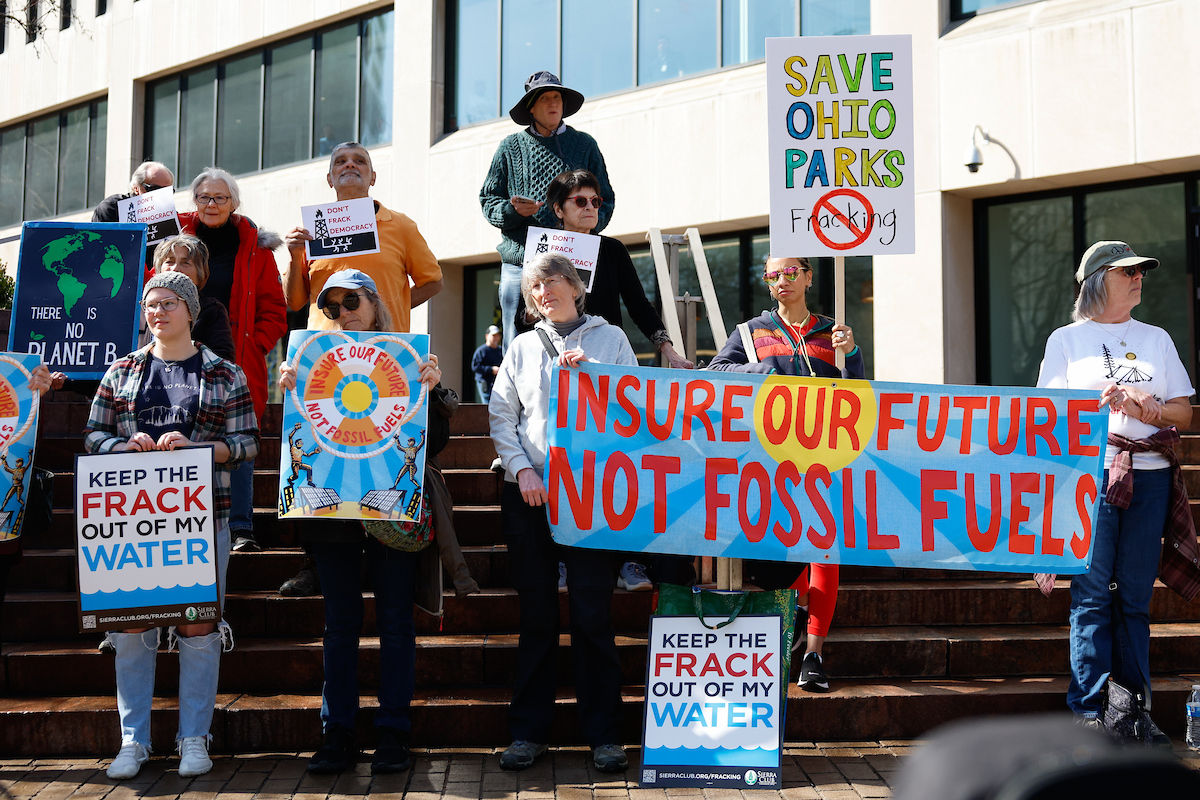
COLUMBUS, OH — FEBRUARY 26: Activists from Save Ohio Parks gather in front of the corporate office headquarters of Nationwide Mutual Insurance Company to protest fracking under State Parks and Wildlife Areas, February 26, 2024, at One Nationwide Plaza in Columbus, Ohio. (Photo by Graham Stokes for Ohio Capital Journal. Republish photo only with original article.)
COLUMBUS, OH — FEBRUARY 26: Activists from Save Ohio Parks gather in front of the corporate office headquarters of Nationwide Mutual Insurance Company to protest fracking under State Parks and Wildlife Areas, February 26, 2024, at One Nationwide Plaza in Columbus, Ohio. (Photo by Graham Stokes for Ohio Capital Journal. Republish photo only with original article.)
COLUMBUS, OH — FEBRUARY 26: Whitney Hammer of Columbus (center) with activists from Save Ohio Parks in front of the corporate office headquarters of Nationwide Mutual Insurance Company to protest fracking under State Parks and Wildlife Areas, February 26, 2024, at One Nationwide Plaza in Columbus, Ohio. (Photo by Graham Stokes for Ohio Capital Journal. Republish photo only with original article.)
COLUMBUS, OH — FEBRUARY 26: Terri Sabo (far right) with activists from Save Ohio Parks in front of the corporate office headquarters of Nationwide Mutual Insurance Company to protest fracking under State Parks and Wildlife Areas, February 26, 2024, at One Nationwide Plaza in Columbus, Ohio. (Photo by Graham Stokes for Ohio Capital Journal. Republish photo only with original article.)
COLUMBUS, OH — FEBRUARY 26: Activists from Save Ohio Parks gather in front of the corporate office headquarters of Nationwide Mutual Insurance Company to protest fracking under State Parks and Wildlife Areas, February 26, 2024, at One Nationwide Plaza in Columbus, Ohio. (Photo by Graham Stokes for Ohio Capital Journal. Republish photo only with original article.)
OLD WASHINGTON, OH — APRIL 05: A yard sign in support of drilling just a few miles from Salt Fork State Park, April 5, 2024, in Old Washington, Ohio. (Photo by Graham Stokes for Ohio Capital Journal. Republish photo only with original article.)
JEFFERSON TOWNSHIP, OH — APRIL 05: The entrance to Salt Fork State Park, April 5, 2024, Jefferson Township in Guernsey County, Ohio. (Photo by Graham Stokes for Ohio Capital Journal. Republish photo only with original article.)
CAMBRIDGE TWP, OH — APRIL 05: Local resident and activist Terri Sabo in her dining room where the table is covered with maps of the Salt Fork State Park region showing existing and potential drilling sites, April 5, 2024, Cambridge Township in Guernsey County, Ohio. (Photo by Graham Stokes for Ohio Capital Journal. Republish photo only with original article.)
CAMBRIDGE TWP, OH — APRIL 05: Local resident and activist Terri Sabo in her dining room where the table is covered with maps of the Salt Fork State Park region showing existing and potential drilling sites, April 5, 2024, Cambridge Township in Guernsey County, Ohio. (Photo by Graham Stokes for Ohio Capital Journal. Republish photo only with original article.)
The Sabos first started coming to Salt Fork in the late 1960s and early 1970s, before they lived in Cambridge. They enjoy kayaking and biking at the park and have hiked almost every navigable trail in Salt Fork.
“We really are outdoorsy people,” Sabo said. “The hiking trails are great. And they’re beautiful.”
Fracking in the area has brought increased truck traffic, new power lines, and additional cell towers. In particular, it has brought brine trucks and Halliburton trucks that haul fracking sand.
“Who’s gonna want to move here?” Sabo said. “I mean, who’s gonna want to raise their kids here?”
They have two adult children and grandchildren, but none of them live in Guernsey County.
Sabo has learned to pick up on various clues — trees being trimmed and power lines going up — to learn where a new well pad is going to be built.
“You get suspicious of truck driving activity,” Sabo said. “And you will also see the infrastructure that starts getting built up for people to move in. Like they’ll put in new power lines and towers.”
She usually sees something new being built when she drives around the Salt Fork area.
“I wonder what they are doing?” she asked as she drove past new construction.
She was recently taken aback when she spotted new pipeline being put down next to the Bears Den Steakhouse in Cambridge.
“This is new since last time I went down this road, and we’re only talking pipeline right now,” Sabo said, visibly distraught. “Seriously, this was not here a week ago. Wow. … Forgive me if I’m shocked.”
What’s next for the Sabos?
The Sabos have turned their home into their own personal oasis by adding on to it throughout the years and their next addition will be a hot tub in the backyard.
They seriously considered moving a couple of years ago, but after much thought they have decided to stay — despite what’s happening to the land around them with fracking.
Megan Henry is a reporter for the Ohio Capital Journal and has spent the past five years reporting in Ohio on various topics including education, healthcare, business and crime. She previously worked at The Columbus Dispatch, part of the USA Today Network.
Ohio Capital Journal is part of States Newsroom, the nation’s largest state-focused nonprofit news organization.
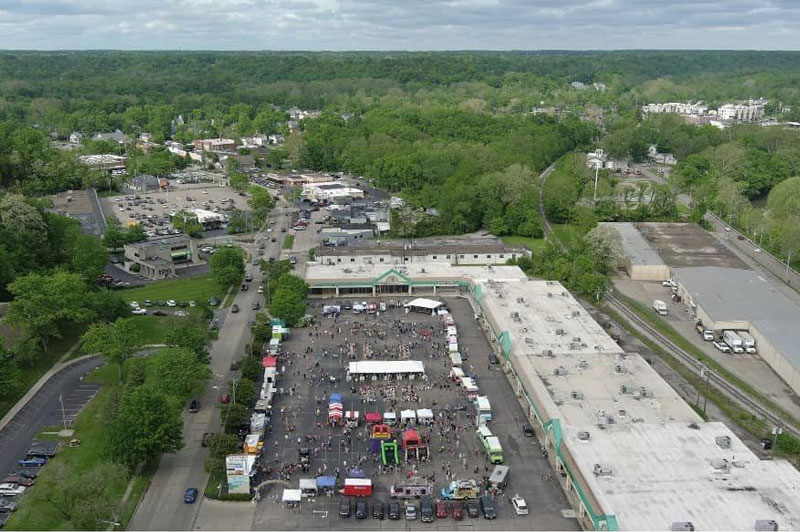
Loveland, Ohio – The 11th annual Loveland Food Truck Rally is back, and it’s gearing up to be the ultimate kickoff to summer on Saturday, May 11, from noon until 8 PM at the Shopper’s Haven Plaza (597 Loveland-Madeira Rd.). Join the Little Miami River Chamber Alliance for a celebration of food, fun, and community—all with no admission fee.
Prepare your taste buds for a culinary adventure with an impressive lineup of 25 food trucks to satisfy every craving. Enjoy beverages for purchase including beer, wine, seltzers, water, and soda while enjoying the rhythm of live music that’ll keep the party vibes alive. All tips from beverage sales will benefit The Jack Quehl Foundation, Do It For Jack.
But that’s not all—join forces with the Loveland Police Department as we stuff-a-truck with non-perishable donations for the Loveland LIFE Food Pantry and contribute to a diaper donation for The Care Center. And for the little ones, there’s a jam-packed children’s area featuring inflatables, face painting, and more excitement.
The food truck rally kicks off at noon sharp and keeps rolling until 8 PM. Best of all, entrance is free, and you can indulge in mouthwatering eats priced at just $6-9 per item.
Food trucks in attendance:
Adeena’s Beefstroll
AllaboutChurros.LLC
Big Dogs Pizza
Caveman Crepes
Chicken Mac Truck
Daizies Dillas
Dine-In Hawaiian
The Naughty Lobstah
El Cardenal Taqueria
FolksNMotion
Funnel Vision
Just Jerks Food Truck
Kabobske
Kona Ice of NE Cincinnati & Dayton
Lazy Dogs & Burgers
Mad Mark’s
MamaBear’s Mac
Nou Street Food
Off The Hook
Smokin Bark BBQ
Steak It Eazy
Streetpops
The Cheesecakery
Travelin’ Toms
Twisted Greek
Grab your family and friends and snag a spot with your folding chairs to soak up the live entertainment featuring electrifying performances by Counting Skeletons and Hifi Honey. And if you can’t get enough, swing by for a take-out order to enjoy the flavor fest at home.
Schedule of events:
Noon until -2 PM: Counting Skeletons
2:30 PM until – 4 PM: Premier Dance & Tumbling
5 until 8 PM: HiFi Honey
The event is currently at capacity for food truck vendors. Parking is available at the Primary School across the street and in Shoppers Haven Plaza parking lot.
Special thank you to Wolterman Law for being the presenting sponsor of this annual event.
Division of Real Estate and Professional Licensing offers tips, guide for first-time homebuyers during Fair Housing Month
COLUMBUS, Ohio – As the spring temperatures and housing market warm up, the Ohio Department of Commerce Division of Real Estate and Professional Licensing (REPL) encourages first-time homebuyers to take advantage of April being Fair Housing Month by becoming acquainted with federal and state fair housing laws.
“Fair Housing Month is a great opportunity to remind buyers who are new to the real estate process that the more they know, the easier the process will be for them to navigate,” said REPL Superintendent Daphne Hawk.
First-time homebuyers accounted for 33% of market activity in Ohio last year, according to a study conducted by Ohio REALTORS in partnership with REPL.
Ohio and federal law both prohibit discrimination in the buying, selling, or renting of real estate based on race, color, religion, sex, handicap, familial status or national origin. Ohio law also prohibits discrimination based on ancestry or military status. Fair housing law covers discrimination in the offering, showing, selling, and renting of homes, apartments, condominiums and cooperatives.
“Generally, it’s rare for an Ohio real estate agent or appraiser to have a fair housing complaint. Often times, discrimination occurs in rental housing because landlords may not fully understand their obligations under the law.” Hawk said. “It’s extremely important that property owners know what the law is, which is why we encourage them to access our Landlord’s Property Management Guide. This guide not only connects property owners with a range of fair housing resources, it also can help them find licensed property managers who may be a good fit to manage their properties.”
In 2022, there were more than 33,000 complaints filed in the U.S. with private fair housing organizations, local and state Fair Housing Assistance Program agencies, and HUD. This includes more than 2,200 complaints filed in Ohio, a majority of which were disability-related complaints.
The Ohio Division of Real Estate and Professional Licensing may take action against a licensee if they are found to have engaged in unlawful discriminatory practices. Anyone who feels that he or she has been discriminated against is urged to contact the Ohio Civil Rights Commission or the U.S. Department of Housing and Urban Development. Licensees have an obligation to notify the REPL superintendent immediately if they have been found to have violated laws pertaining to discrimination in housing and/or housing accommodations.
The Ohio Housing Finance Agency provides virtual and in-person trainings for real estate agents on fair housing laws. Titled “Fair Housing Foundations,” the class takes a historical view of fair housing and civil rights as well as reviewing current housing, advertising and lending laws. Real estate agents participating in the class can receive three hours of civil rights credit. A list of upcoming classes is available here.
For more information on fair housing resources, Ohioans can access the Division’s consumer guide at com.ohio.gov/FairHousingGuide.
# # #
The Division of Real Estate & Professional Licensing is a state agency within the Ohio Department of Commerce. The department is Ohio’s chief regulatory agency, focused on promoting prosperity and protecting what matters most to Ohioans. We ensure businesses follow the laws that help them create jobs and keep Ohioans safe. To learn more about what we do, visit our website at www.com.ohio.gov.



 Guest Emcee: Kate Harden, Owner, The 1859 Historic ChapelKate is the founder and owner of The 1859 Historic Loveland Chapel wedding and event venue. Prior to launching The 1859 venue, Kate worked in the medical community as a physician assistant since 1999. In 2021 She dreamed of developing a place where special moments would be had, and memories would be made. The 1859 launched in November of 2021 and has grown into a thriving venue earning recognition on local and national levels.



 The Building is a fun and charming private event space located in Historic Loveland, OH. The owners, Annette & Andy Friesner, purchased the Building in 2016 and renovated it to its current glory.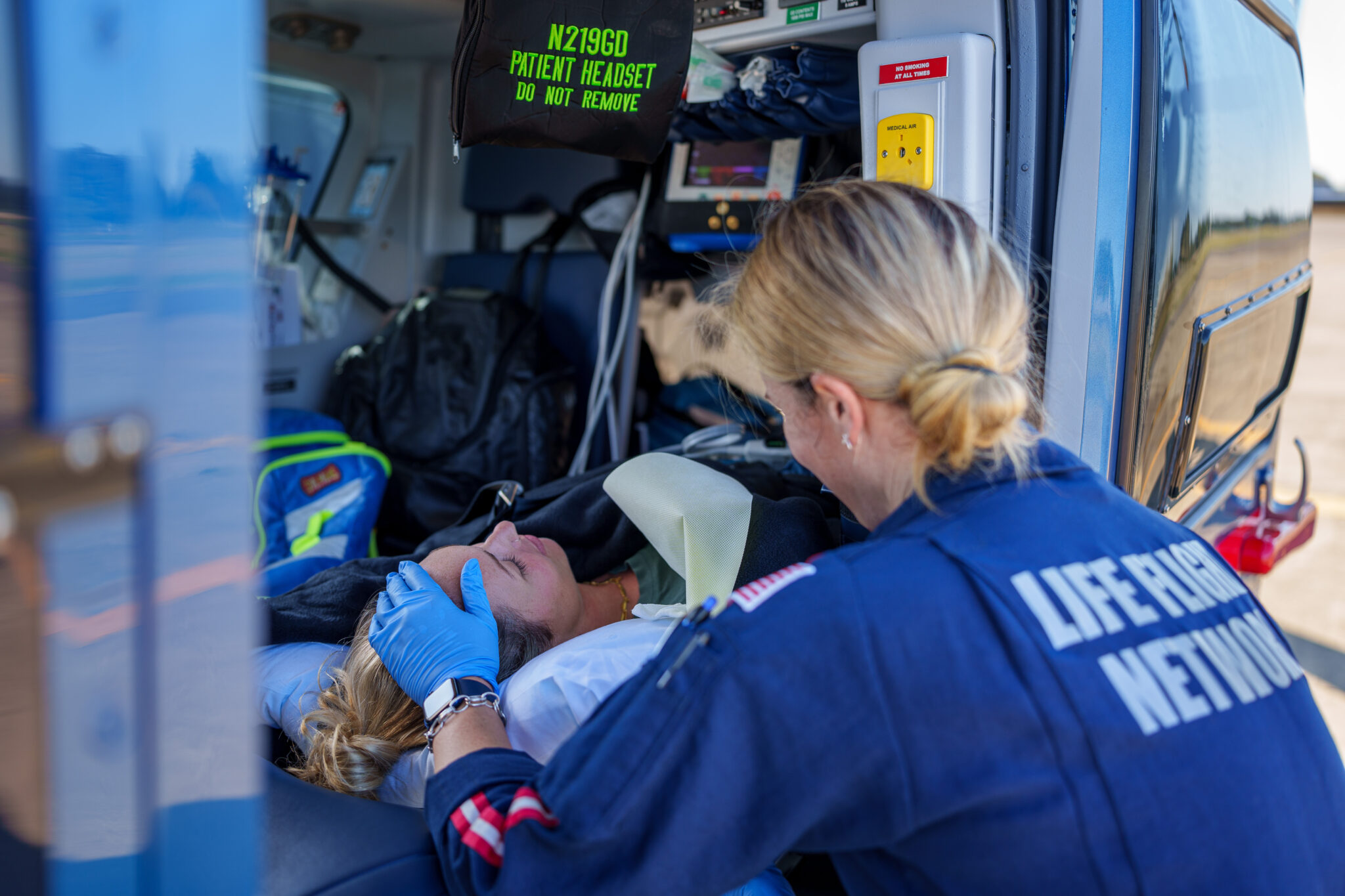




 Loveland, Ohio – The 11th annual Loveland Food Truck Rally is back, and it’s gearing up to be the ultimate kickoff to summer on Saturday, May 11, from noon until 8 PM at the Shopper’s Haven Plaza (597 Loveland-Madeira Rd.). Join the
 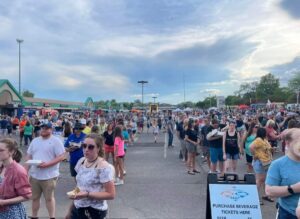 Prepare your taste buds for a culinary adventure with an impressive lineup of 25 food trucks to satisfy every craving. Enjoy beverages for purchase including beer, wine, seltzers, water, and soda while enjoying the rhythm of live music that’ll keep the party vibes alive. All tips from beverage sales will benefit The Jack Quehl Foundation,