Loveland, Ohio – The City of Loveland has budgeted $205,000 for construction improvements to the traffic signal at West Loveland Avenue, Loveland-Madeira Road, and Elm Street. The intersection will receive replacements of the controller, wiring, and other features, as well as an upgrade to radar vehicular detection capability and decorative poles. The City hired TEC Engineering began the traffic study and timing plan in 2017 in anticipation of this project.
The project has been awarded to Elex, Inc., with construction planned to begin in late July and be complete by December 2018.
Duke is also planning a gas service upgrade within the intersection.
City Manager Dave Kennedy said, “The City’s project should be complete in 45 days. The traffic interruption portion of the project should be complete this week, weather dependent.”
Two Podcasts by Loveland Author and Counselor, Fran Hendrick, PCC
Back-to-School topic is empowering girls to develop new friendships. I’ll be showing you things you can do to help your daughter gain confidence as she starts school.
Starting school can be hard on kids — and moms, too. This post is for you if your child is struggling with separation anxiety. Make sure to download the free planning tool!
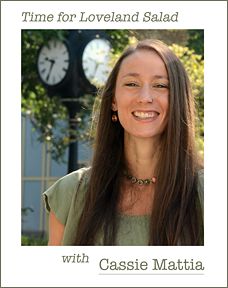
Cassie Mattia lives in Historic Downtown Loveland, Ohio.
If we don’t protect our youth who will? In May, Ohio Paul Zeltwanger and Thomas Brinkman proposed House Bill 658, which states:
“If a government agent or entity has knowledge that a child under its care or supervision has exhibited symptoms of gender dysphoria or otherwise demonstrates a desire to be treated in a manner opposite of the child’s biological sex, the government agent or entity with knowledge of that circumstance shall immediately notify, in writing, each of the child’s parents and the child’s guardian or custodian. The notice shall describe the total circumstances with reasonable specificity.”
gen·der dys·pho·ri·a
ˈjendər disˈfôrēə/
noun
MEDICINE
The condition of feeling one’s emotional and psychological identity as male or female to be opposite to one’s biological sex. How to pronounce gender dysphoria.
In plainer language House Bill 658, also known as the “Parent’s Rights Bill,” would make any school administrator or teacher who allows or offers gender dysphoria (the condition of feeling one’s emotional and psychological identity as male or female to be opposite to one’s biological sex) treatment, including resources on sex and gender or counseling, for a minor “without the written, informed consent of each of the child’s parents and the child’s guardian or custodian” they could be charged with a felony in the fourth degree. The parents of the student according to the bill would get the ultimate decision whether their child gets access to treatment, including educational materials, counseling or medical services.
If this House Bill is implemented it could have detrimental consequences for teachers and even more importantly for those students affected. Teachers are there to lend their students a helping hand educationally and emotionally in order to prepare them for what’s to come once they are out on their own, why take this from them?
A teacher’s take on House Bill 658
I spoke to one Loveland teacher who wishes to remain anonymous, a mom of a teenager. I’ll call her Susan. She told me that for many students their home life is a wreck and out of control with issues of poverty, broken families, and domestic abuse. “For many of my students, the only adult in their life that can be trusted may be their teacher. Teachers who lend an ear and can be trusted can be an enormous help that often reflects on their academic achievement. We care for the whole child.”
Susan told me that for many students their home life is a wreck and out of control with issues of poverty, broken families, and domestic abuse. “For many of my students, the only adult in their life that can be trusted may be their teacher.”
Susan told me that she just overheard a conversation between her daughter and a friend about a classmate they thought was transgender. “I wondered, do they know what that means? Are they friends with this young person? How do my kid and others treat her? Because I am a teacher, would I be required to file a report with the District? These are all questions that ran through my head as a mom and a teacher.”
Susan said she wants to protect and support all of her kids, her biological ones and the ones that are “her’s” for a school year. “I want to be able to do that freely and openly and with my heart.” She said that some of her students desperately need someone they can trust in their life and the last thing they need is another person that will let them down because politicians want school staff charged as felons if they don’t report that the student herself, or a classroom teacher, principal, gym teacher, bus driver, or classmate may be questioning her gender identity.
Susan asked, “Just what stereotypes am I going to be expected to police?
HB 658 is a harmful bill that takes aim at some of our most vulnerable — transgender youth — by forcing school officials to serve as ‘gender police’ and out them or risk getting a felony.” – Alana Jochum
LGBTQ advocacy
“HB 658 is a harmful bill that takes aim at some of our most vulnerable — transgender youth — by forcing school officials to serve as ‘gender police’ and out them or risk getting a felony,” said Alana Jochum, executive director of LGBTQ advocacy group Equality Ohio. Jochum told NBC News. “This exposes young people to discrimination, harassment, and bullying.”
Jochum couldn’t be more correct if you really take a look at the alarming statistics. One study done by the Cincinnati Enquirer showed that 64% of LGBTQ youth in Ohio heard “negative comments” about their gender identity or sexual orientation from their family and in result, according to another study done by National Transgender Discrimination, 41% attempted suicide. Though many transgender students
75% of transgender youth have felt unsafe at school after being outed and have lower GPA’s due to missing school in fear of their safety.
have experienced negative comments, violence has become the most popular form of dealing with transgender youth. Disturbingly enough 19% of transgender youth, according to the National Center for Transgender Equality, experience the majority of violent abuse in their home from their own family members. Along with dealing with all the dissension from family members 75% of transgender youth, according to a national survey done by GLSEN (pronounced “glisten”), have felt unsafe at school after being outed and in result have lower GPA’s due to missing school in fear of their safety. With all the facts at hand, The Ohio Education Association who represents 125,000 teachers and support professionals, have openly opposed the bill.
Violence has become the most popular form of dealing with transgender youth.
Kathryn Lorenz is the Loveland Board of Education Vice President
While researching House Bill 658 I managed to only get a response from two local representatives of the Loveland School Board, one being Kathryn Lorenz, the Board Vice President and the other being Loveland School Board Member, Ned Portune. Lorenz’s response was, “In the case of House bill 658, we would have to say that we do not yet have enough information, nor have we met as a board for a few weeks, so we do not yet have a Board statement to make.”
Ned Portune is a member of the Loveland School Board
Portune added that he, “…simply has not been fully informed at this point on HB 658 to have an educated opinion. There are several items in your statement that would certainly give me a gut reaction, and opinion on, if true as presented. But I need time to fully review the Bill, its implications and existing laws to have any formal statement.”
School Superintendent Amy Crouse, High School Principal Peggy Johnson, and assistant principals at the High School did not respond.
Studies show most transgender youth are fully aware of their gender identity by age 4.
After attempting several times to contact both Representatives Paul Zeltwanger and Thomas Brinkman through email and phone about House Bill 658, I, unfortunately, got no response. It wasn’t hard to find Brinkman’s opinion on the issue in several other publications though, voicing to WCPO, “Parents have the right to decide what is best for their children,” and telling WOSU Public Media, “And if somebody doesn’t like it, you’re emancipated at age 18 and you can go do whatever the heck you want.” Seems pretty harsh considering the transgender population represents about 0.3% (700,000) of Americans and studies show most transgender youth are fully aware of their gender identity by age 4. Are we encouraging parents and administrators to discard their students or child’s gender identity in fear of social rejection? Do these children not deserve to live an authentic life?
Fran Hendrick, PCC has offices at Wildflower House in the West Loveland Historic District.
House Bill 658 is expected to be presented to the Ohio General Assembly in the Fall and will be without a doubt one of the most controversial bills to date. Many have opinions on this issue one being Fran Hendrick, a respected and highly educated clinical counselor who specializes in assisting women and girls who are experiencing depression or anxiety triggered by a crisis or major life change. When I presented Fran with House Bill 658 and asked what her opinion was she had a lot to say and rightfully so considering one of her life missions, according to Fran’s website franhendrick.com, is to “gently help you find and shelter your spark (the essence of who you are at your core) and grow it so that it illuminates your person and is radiated through words, actions and decisions, big and small, that make up your daily life.”
In a culture such as ours, it is a matter of life and death for transgender youth to decide if and when to trust another person with their reality. – Fran Hendrick, PCC
“Being a parent takes great courage, even more so when your child presents you with something that you’re unfamiliar with – or even afraid of. In a perfect world, a child who feels somehow ‘different’ from their peers (‘their’ is deliberately gender-neutral), they could consult their parents, who would strive to deeply understand the child’s experience, would provide accurate empathy, and would go on a crash course to learn everything they could about the unfamiliar issue. And, so very fortunate for their children, there are many parents like these.
But in the real world, an adolescent boy saying to his father, ‘Dad, I think I’m a girl’ is very likely to encounter disgust, rejection, rage, or even violence, not empathy and understanding.
While the intent of this bill, giving benefit to grave doubt, could be a deeply uninformed and misguided attempt to protect children, that seems unlikely. My sense is that in truth it is more about attempting to hand parents the power to say no to their child’s gender identity,” Hendrick said, “But gender identity – and sexual orientation, for that matter – are not matters of choice. And in a culture where transgender people are assaulted and even murdered at a rate higher than their cisgender counterparts,where transgender youth are summarily shunned and rejected by their own parents (the rate of homelessness is, not surprisingly, very high), where the suicide rate that results from these atrocious facts is far higher than for other youth – in a culture such as ours, it is a matter of life and death for transgender youth to decide if and when to trust another person with their reality, and, most importantly, whom to trust.
To be “outed” for the choice to trust; or to be prosecuted for trying to be help – these are not protections. Actions like these support bigotry, and increase isolation and despair. – Fran Hendrick, PCC
To be “outed” for the choice to trust; or to be prosecuted for trying to be help – these are not protections. Actions like these support bigotry, and increase isolation and despair. Stopping a teacher from helping such a student, one who is likely alone with the reality of their gender identity, who stands to be emotionally and psychologically rejected, or even physically abused, by their own family is, quite simply, a cruelty. This, I strongly believe, is not what the overwhelming majority of parents want for their own or anyone else’s children. This is bad enough. However, this bill opens the door to much more far-reaching damage than this.”
Is he to be turned in to the gender police?
The talented young male artist who despises sports – is he to be turned in to the gender police? The girl who chooses overalls and a t-shirt rather than a dress and a mani-pedi –what of her? The sponsors of the bill have explicitly said that teachers should be required to inform on them, as well. We have an essential responsibility to ensure that proposed legislation protects vulnerable people from the bigotry endemic in our society.This legislation explicitly deprives them of protection.”
Ultimately what it comes down to is ensuring that our children are and feel safe when going to school. Teachers and administrators are the ones that take on the responsibility of creating that fun, loving and supportive atmosphere so that our children get the best opportunities in life. Passing a bill such as House Bill 658 only presents another obstacle that both teachers and administrators have to overcome. Don’t these professionals have enough obstacles to conquer as is?
Both Justin Haake and Tonya Schaeffer who are Professional Clinical Counselors for Hope Restored Counseling Services in Loveland couldn’t agree more.
Justin Haake is a Licensed Professional Counselor at Hope Restored Counseling Services in Loveland and works primarily with adolescents and adults, specifically during transitional periods in life.
Haake said, “For some, teachers and school administrators may be the only people in schools that feel safe for students to reach out to.Imagine the fear of asking for support, knowing that you’ll either be outed or put the teacher or administrator at risk of a felony.”
Schaeffer said, “From my perspective, this would most likely increase the level of bullying and possible harm to these students.There is already so much shame and stigma attached with Transgender people, and they need as much support as they can get,”
Tonya Schaeffer is a Licensed Professional Clinical Counselor and co-owner of Hope Restored Counseling Services in Loveland.
Schaeffer added, “Support is out there.In fact, we are offering a psycho-educational group starting in September that offers education, support and a safe environment for Transgender students to express themselves.” She said they hope to offer a similar group to parents who are trying to understand what their child is going through, explore what the parents are experiencing and provide support. “We currently serve the LGBTQ community, and we are expanding those services.I recently read a statement that it is estimated that 41% of trans men and women have attempted suicide. I don’t believe this bill would help–it seems like it could only hurt.”
Susan, the mom and teacher said, “I am thankful I live in a community where support services like those provided by Hope Restored, and Fran Hendrick at Wildflower House are nearby for my students and their families.”
Transgender youth have so many mountains to climb within their own scientific makeup and allowing a bill like House Bill 658 to go through in hindsight is taking away their basic rights as Americans and human beings.
“GLSEN (pronounced “glisten”) was founded in 1990 by a small, but dedicated group of teachers in Massachusetts who came together to improve an education system that too frequently allows its lesbian, gay, bisexual, transgender, queer and questioning (LGBTQ) students to be bullied, discriminated against, or fall through the cracks.”
You may compete as a two person team (use a canoe)
or individually (use a kayak).
Please note: The minimum age for competing on a team is 10 years old and as an individual is 16 years old.
$130/Team
$70/Individual
The race will begin at 8:30 a.m. with a staggered start.
Registration/Check-in will begin at 7:30 a.m.
Race will begin and end with all transitions at Loveland Canoe & Kayak (174 Karl Brown Way). All participants will be bused to start line (Carl A. Rahe Access). Singles in kayaks will start the event, followed by team canoe divisions.
Race Divisions:
Team (16+), Parent/Child Team (10+), Male (16+), Female (16+), Senior (55+)
Event t-shirts will be available for purchase for $15 each (deadline for advanced purchase is September 9th).
Canoes, kayaks, life jackets, and paddles will be provided. Participants are to provide their own bicycle (road bike is recommended). Life jackets must be worn at all times while on the water. Bike helmets must be worn at all times while on your bike. No headphones are allowed during any portion fo the race. Failure to comply with the safety rules will subject contestants to disqualification.
A photo ID is required and waiver must be signed and submitted in order to receive your race packet and bib/timing chip. This is a rain or shine event and there are NO refunds. In the event of severe weather the start may be delayed and the course may be altered for safety reasons.
Please respect your fellow participants. There will be all types of skill levels competing so please stay aware of your surroundings at all times.
Loveland, Ohio – With the Fall sports season starting this past week we will be previewing some teams’ seasons starting this week with Mens Cross Country. Last year the Loveland Mens Cross Country team finished 4th (93) in the ECC behind Kings (29), Turpin (48), and Anderson (86). Kings has won 4 of the last 6 ECC championships with Turpin and Anderson both winning one as well. With Kings and Anderson both losing 2 of their top 7 runners due to graduation this past year, the ECC is up for grabs.
Loveland returns the conference’s top runner, Senior Greg Ballman. Ballman ran a personal best of 16:06.60 last year. Loveland also returns Sophomore Ajay Stutz who placed 9th at the ECC conference meet last year as a freshman and ran a personal best of 16:45.12 last year. Last year both Ballman and Stutz qualified for Regionals but failed to advance to state. With the addition of a talented Loveland freshman class and the addition of a couple of first time runners Loveland looks like a contender to win the ECC.
When asked what his goals for the season were Coach Mike Smith said, “to win the ECC. To send a team to regionals and to hopefully advance a team to state”. Loveland has not won the ECC since the mid 2000’s but looks to break the streak this year.
Loveland starts the season off at the preseason state meet in Columbus on August 18th, then follows that with the Moeller Under the Lights, Invitational on August 24th at Moeller.
Jarvis Global is an investment advisory firm in Symmes Township, Ohio which offers private portfolio management and retirement services to high net worth individuals
Miami Township, Ohio, – Grailville, just on the outskirts of Loveland — a center of The Grail in the U.S. — announces that 40 acres of land has been placed into a conservation easement and purchased by Clermont County Park District through a Clean Ohio Fund grant. The grant requires that deed restrictions be placed on the acreage that prevents it from being developed. The Park District plans to manage the land as a natural area with hiking trails.
The area will be open to the public once the trails and access are developed. The 40 acres of this sale raises the total placed in conservation easement and sold to The Park District to 113 acres. The initial sale—enabled by the Trust for Public Land—was for 73 acres in 2017.
The grant requires that deed restrictions be placed on the acreage that prevents it from being developed.
There have been concerns by neighbors and community members about the future of this land, considered a prime location to be developed, just outside the City of Loveland since The Grail in the U.S. voted to close the functions of the Grailville Retreat and Program Center in 2014. “The women of The Grail in the U.S. have taken their responsibility to this land seriously, voting that the number one priority for sale would be conservation,” according to Terrie Puckett, Executive Director of The Grail in the U.S. “It is important to them that what happens in this space that they love is aligned with our mission and values, which is why the process is now in year four.”
Called by our spiritual values, we envision a world of peace, justice and renewal of the earth brought about by women working together as catalysts for change.
Grailville, established in 1944, is a center in the U.S. for The Grail, an international women’s movement founded in the Netherlands in the 1920s. Their mission: Called by our spiritual values, we envision a world of peace, justice and renewal of the earth brought about by women working together as catalysts for change. The more than 230 members, 61% over the age of 80, reside across the U.S. in communities big and small and take part in a wide variety of actions and activities to live the Grail mission locally, nationally, and even globally, according to Puckett. Grail members meet in person every three years to evaluate how they are meeting the mission goals. At their meeting in 2014, they determined it was time to transition in order to meet new challenges facing members, communities, and the world. “The process has been one of prayer, discussion, exploration, and discernment,” said Puckett.
While the Grail has voted to sell approximately 240 acres of land, mostly to the south of O’Bannonville Road, they have retained about 72-acres on the north side to develop a revitalized Grail center on a smaller footprint, where they will invite community-based nonprofit organizations to develop micro-land projects. “By welcoming and supporting these projects we hope to encourage innovation and continued education, in an atmosphere that has a 74-year history of challenging individuals to step outside the boxes they are placed in or have placed themselves,” explained Puckett.
The remaining 100-plus acres on the south side, including 63 acres certified organic land, fields, and woodlands, are available for sale.
The remaining 100-plus acres on the south side, including 63 acres certified organic land, fields, and woodlands, are available for sale. “The process is slow moving as our members work with intentionality, but our goal is to be able to bring new life to that land within the next year bringing to a close our 5-year time of transition,” said Puckett.
Deborah Sullivan, Grail member and member of the National Leadership Team added, “Grailville holds special meaning to our members. Over the last 73 years, members of the Grail have adapted to an ever-changing and evolving world, moving from private farm, to Year School, to programming like Semester at Grailville and the emergence of the Grail Women Task Force, to how most Cincinnati area people have known Grailville – as the retreat and program center.”
What ails thee?
Sullivan also said that at each point Grail members have asked the question of the world “What ails thee?” and then moved to create a space that provided solutions and opportunities. “Our goal over the last four years—in answering that question has been to reimagine the future of The Grail in the U.S. and then determine how this space at Grailville helps us move our mission forward,” said Sullivan.
As in all transitions, our memories, relationships and knowledge stay with us even as the space changes to meet the challenges of a new generation.
“The U.S Grail is committed to maintaining a vibrant presence on our property to the north of O’Bannonville Road even as we find new uses for the land to the south,” Sullivan said. She added that they recognize that their moving forward may mean significant changes to the property as people who have visited or participated in a program know it or remember it. “We are committed to finding solutions that are congruent with our mission and values. As in all transitions, our memories, relationships and knowledge stay with us even as the space changes to meet the challenges of a new generation.”
The “Ohio Attorney General’s Sexual Assault Kit Tracking System” will give those who have undergone a sexual assault forensic examination the option to track the status of their rape kit evidence online.
Columbus, Ohio – Attorney General Mike DeWine announced Thursday that his office is developing a statewide system that will increase transparency surrounding the collection, submission, and analysis of sexual assault kit evidence in Ohio.
The “Ohio Attorney General’s Sexual Assault Kit Tracking System” will give those who have undergone a sexual assault forensic examination the option to track the status of their rape kit evidence online.
“Sexual assault survivors have already gone through unimaginable trauma, and not knowing where their cases stand can be agonizing,” said DeWine. “This new system will empower survivors by giving them the ability to instantly and anonymously find out where their evidence is located and whether or not it has been submitted for testing.”
By entering a barcode number into the free, online program, survivors who choose to use the system will be able to follow their evidence as it proceeds from collection at a medical facility, to inventory at a law enforcement agency, to analysis at a crime lab, and to storage or destruction.
By entering a barcode number into the free, online program, survivors who choose to use the system will be able to follow their evidence as it proceeds from collection at a medical facility, to inventory at a law enforcement agency, to analysis at a crime lab, and to storage or destruction.
New legislation introduced by State Senator Stephanie Kunze (R-Hilliard) and State Representative Dorothy Pelanda (R-Marysville) seeks to require all agencies involved in the chain-of-custody of sexual assault kits to participate in the tracking program.
“As we continue to help and encourage victims of sexual assault to rebuild their lives, it is imperative that we provide them the ability to check the status of the testing of their rape kits quietly and discreetly,” said Senator Kunze. “Affording them the opportunity to do so in a safe, secure manner ensures their privacy. We can allow survivors to continue moving forward with the option to check on the progress to help with the emotional healing and journey to moving forward from their horrific experience.”
“Attorney General DeWine and his office have demonstrated tremendous leadership and diligence when it comes to this issue. The bills introduced this week in the House and Senate represent a crucial next step in the process,” said Representative Pelanda. “I look forward to working with Attorney General DeWine, my great colleague Senator Kunze, and my brothers and sisters in the House of Representatives as we move forward with this legislation.”
The advisory group will include victim advocates, sexual assault nurse examiners, law enforcement, prosecutors, and representatives from hospital associations and crime laboratories.
DeWine is also creating an advisory group to study best practices and provide advice on how Ohio’s tracking system should operate. The advisory group will include victim advocates, sexual assault nurse examiners, law enforcement, prosecutors, and representatives from hospital associations and crime laboratories. The members of the advisory group, who will be announced at a later date, will give special consideration to protecting the privacy of survivors who use the system.
“We are excited to see this initiative coming from the Ohio Attorney General’s Office,” said Rosa Beltre, executive director of the Ohio Alliance to End Sexual Violence. “It is important to reform how rape kits are handled and tracked in the state of Ohio, despite the many challenges and difference of opinion. We collectively can choose to do nothing because of funding and road blocks, or as we have done today, we can choose to take steps within our circle of influence to make a difference. We owe this to every survivor in our state.”
The development of the program, as well as any maintenance and equipment, will be financed through Victim of Crime Act (VOCA) funding. VOCA funds, which are administered by the Ohio Attorney General’s Office, are from federal settlements, fines, and fees and must be used to enhance victim rights and services.
“This new tracking system will also help ensure that an accumulation of untested rape kits never happens in Ohio again,” said Attorney General DeWine. “Survivors expect their kits to be submitted for analysis in a timely manner, and this new program will increase accountability and transparency throughout the entire process.”
To date, Attorney General DeWine’s SAK Testing Initiative has led to 5,071 hits in the Combined DNA Index System (CODIS), and hundreds of attackers have been prosecuted according to DeWine’s office. In response to the success of the initiative, new law was enacted in 2015 requiring that law enforcement agencies in Ohio submit sexual assault kit evidence to a crime laboratory within 30 days.
Don’t be shy. Just the act of following through when government says “no” helps keep public officials on their toes.
By Dennis Hetzel
Dennis Hetzel is the Executive Director of the Ohio News Media Association and President of the Ohio Coalition for Open Government.
Ohio’s state and local governments likely hold hundreds of records that might be important to you or your family.
However, it’s not something you’ll ponder until you urgently need access to documents like birth records, police reports, property records, the minutes of your school board’s last meeting, or any of countless other records in the government’s possession.
Most government officials are honorable and try to fulfill requests, but that’s not always the case. Sometimes there are legitimate differences of opinion. Sometimes, officials are obstinate and don’t want to supply a record for any number of reasons, including often spurious claims of attorney-client privilege or protecting trade secrets.
Sometimes, officials are obstinate and don’t want to supply a record for any number of reasons, including often spurious claims of attorney-client privilege or protecting trade secrets.
Until 2016, the playing field in Ohio tilted heavily in the government’s direction. It was easy for officials to say “no” – even when they should’ve said “yes.” That’s because they knew that most citizens did not have the financial resources to file a lawsuit and go to court. That was the only available path in contrast to many other states that had developed easy, affordable ways to appeal a records denial.
Actually, the playing field tilted even more than you might think. If you tried to represent yourself to save money, you were at a huge disadvantage versus government attorneys, many of them quite experienced and crafty in the nuances of Ohio’s public records laws. If you sued a state agency, it was you vs. the attorney general’s office.
On top of that, it remains extremely difficult under Ohio law, even when you’re right and you win, to get attorney fees reimbursed, so your battle was a crusade that required a fat checkbook.
In the old days, media outlets willingly took up a lot of battles. Today, with resources stretched thin, dollars are lacking for all but the most critical cases. Our Ohio Coalition for Open Government, of which I’m president, helps organizations and individuals in major cases, but OCOG’s total resources are less than $80,000. One or two protracted court battles would drain us to zero.
The Ohio News Media Association spent several years telling legislators that it was time to do something.
The Ohio News Media Association spent several years telling legislators that it was time to do something. Keith Faber, then president of the Ohio Senate, drew on his background as a mediator to suggest a unique-in-America process that just might be the best appeals process in the country.
Now, for $25 and the time to fill out an online form on the Ohio Court of Claims website, you can appeal a denial. Some cases get resolved with a phone call. Mediation comes next, which can be done remotely so you don’t have to make a trip to Columbus. If mediation fails, you’ll get a ruling that has legal authority. Both sides still have appeal rights.
The process – nearly two years old now – has worked beyond our expectations. I have a few favorite cases already.
Now, for $25 and the time to fill out an online form on the Ohio Court of Claims website, you can appeal a denial.
The top of my hit parade is Shaffer v. Budish, a case in which Cuyahoga County tried to block a reporter’s access to body camera footage in a jail incident by arguing, in part, that the camera revealed confidential “security and infrastructure” imagery.
The reporter pointed out that the county had let a documentary crew into the jail to film the same allegedly secret area. The court said you can’t have it both ways, and most of what was requested had to be released.
In Chernin v. Geauga County Park District, the park district tried to make the absurd argument that a letter with complaints and recommendations was not a “public record” under Ohio law even though the document was cited in a public meeting. The citizen got the record.
What’s important is that citizens now have a fighting chance – no matter their resources or standing.
Government agencies win their share of cases, too, and that’s appropriate. What’s important is that citizens now have a fighting chance – no matter their resources or standing.
To check it out, go to https://ohiocourtofclaims.gov/ and click on the “public records” tab. If the information on that website doesn’t answer your questions, OCOG and the ACLU of Ohio both offer online resources to citizens. OCOG also has a legal hotline service for its supporters. (Go to www.ohioopengov.com.)
Don’t be shy. Just the act of following through when government says “no” helps keep public officials on their toes.
Loveland Magazine is a member of the Ohio News Media Association which was established in 1933 and is the trade association for more than 250 Ohio daily and weekly newspapers. Their membership includes, The Columbus Dispatch, Plain Dealer, Cincinnati Enquirer, Akron Beacon Journal, Dayton Daily News, and The Toledo Blade.
In 2013, Loveland Magazine became the first “digital only member” of The Ohio Newspaper Association
How to Make a Public Records Request to any government agency in Ohio, including your City Hall or School District
Take Home Tano is about fresh, wholesome food for the frenzied family Our goal is to meet the needs of busy families.
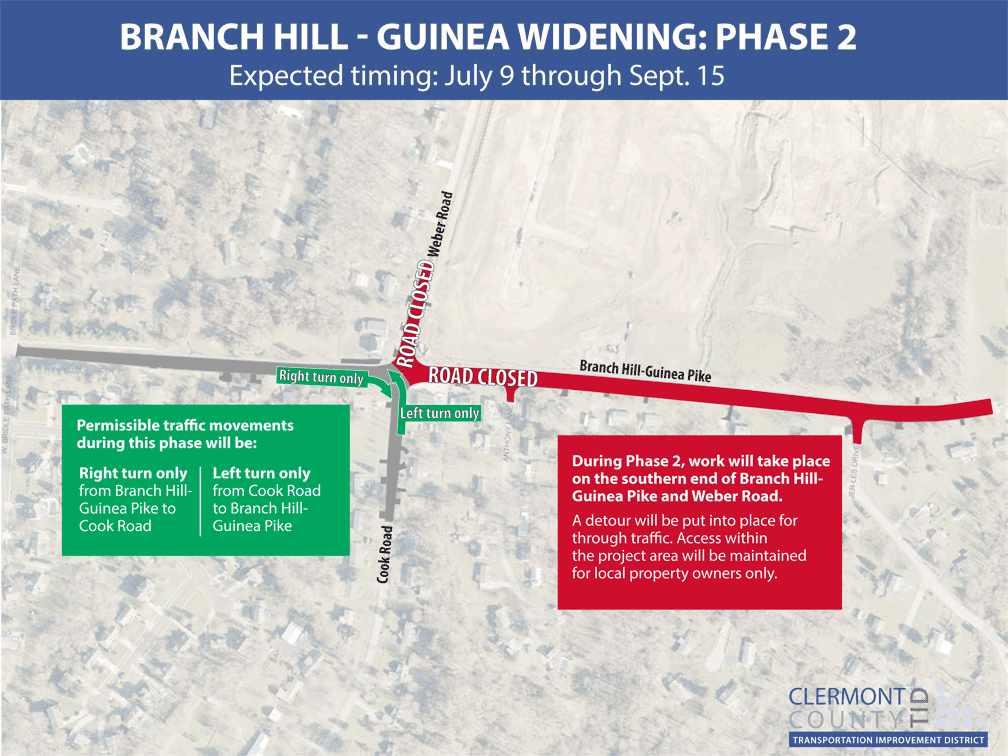
Road closure on the southern end of Branch Hill-Guinea Pike and Weber Road will remain in place through Saturday, Sept. 15.
Info provided for access to Boyd E. Smith Elementary School
Miami Township, Ohio – The Clermont County Engineer has provided an update on the widening work taking place on Branch Hill-Guinea Pike from Bridle Path Lane to Jer-Les Drive.
“Weather and unexpected underground utility issues have extended the length of time crews will need to safely open Branch Hill-Guinea Pike to two-way traffic,” said Engineer Patrick Manger. “As a result, the current road closure on the southern end of Branch Hill-Guinea Pike and Weber Road will remain in place through Saturday, Sept. 15.”
The Branch Hill-Guinea Pike widening project will add a center turn lane and paved shoulders on Branch Hill-Guinea Pike, as well as a sidewalk along the east side of the road from Bridle Path Lane to Jer-Les Drive. Drainage improvements also will be made. In addition to the roadway work, improvements will be made at the intersection of Branch Hill-Guinea Pike and Cook Road/Weber Road, including upgraded traffic signals and the addition of designated turn lanes.
During this time, permissible traffic movements will be:
Right turn only from Branch Hill-Guinea Pike to Cook Road
Left turn only from Cook Road to Branch Hill-Guinea Pike
Access to the nearby Boyd E. Smith Elementary School will be open as usual from the south end of the project. Parents and staff will be able to access Jer-Les Drive from the south end of Branch Hill-Guinea Pike via SR 28.
Click to view larger
Manger added:
Crews are moving as quickly as possible to complete work to support the long-term safety of the community and reiterated that the work on Branch Hill-Guinea Pike has multiple components that will improve safety and travel in the area. A new center turn lane will support smoother travel and help to reduce potential accidents by separating turning traffic from through traffic. The addition of a new sidewalk will provide safer pedestrian access in the area, and drainage improvements will enhance stormwater management along the road and in the surrounding subdivisions.
Welcome to All About Kids. We invite you to come visit one of our convenient locations, talk to our staff and teachers.
Separation Anxiety
2 Girls, 2 Stories, 2 Plans
by Fran Hendrick, P.C.C.
Sending your little girl off for the first day of preschool or kindergarten is not for the meek at heart! You’re not alone if you’ve been thinking about it for weeks and worrying about it when you’re meant to be sleeping. Even if your little one is feeling excited and confident, there’s still the issue of how you’re feeling!
For many moms, it’s a big wrench. You’ll no longer control your daughter’s entire environment; the rhythm of your day is changed; your role feels…confusing; and it might be just plain hard to imagine cheerfully waving, See you soon! without racing back home for a good cry.
Wait – this post is supposed to be about her separation anxiety, not yours! But I want to acknowledge both, because, especially if this is your first child – or your youngest – your life is changing, and she’s becoming a tiny bit more independent of you. That’s an adjustment on the inside for you, and for many moms it even feels like grieving. There are gains, too, of course — new opportunities for both of you, your daughter’s growing awareness and insight; all the new things she can do. Your relationship will grow as she grows, so while it’s true that babyhood is gradually fading, something new and wonderful is emerging. Still, even positive, exciting changes involve loss – and a few tears.
If your daughter is anxious about going to school, you’re probably stressed, too. And, there is no one-size-fits-all answer to this age-old problem. That’s because there are a number of factors to consider, and they’re different for each child and each mom.
To sort this out, I’d like to introduce you to two spectacular little girls and their equally spectacular moms. Definitely take a moment to download the “Mommy, I don’t want to go to school!” Strategy Sheet. This tool will walk you through creating your own plan to help your daughter.
Libby and Evie
When Libby and I began talking about separation anxiety, her daughter Evie, active, outdoorsy, and with a mischievous streak, was three years old. Libby, realizing that preschool wasn’t far off, had tried to prepare Evie by introducing her to the delightful playroom at her gym. Libby had a good feeling about the playroom teacher and had spent some time observing her before bringing Evie in to meet her. She had carefully explained to Evie that she would get to play in the playroom with Miss Lynn for a few minutes while Evie worked out. Evie was hesitant, but allowed herself to be taken to the playroom. She was interested in the colorful toys – but when it came time to say goodbye, she attached herself sobbing to Libby’s leg.
Libby, who had grown up in very painful circumstances and had truly been emotionally abandoned by her parents, could not stand for her child to experience the pain she still experienced due to that childhood emptiness. She comforted Evie, and they went home. Evie, who didn’t lean toward talking about her feelings, was glad to get home and get on with her day. But Libby well knew that preschool was looming, and she wanted to know how to help.
Anna and Zoe
Zoe was a very articulate five-year-old headed for kindergarten when her mom, Anna, found herself faced with the puzzle of how to help Zoe separate confidently and enjoy her time at school. Zoe was terribly sad about having to go to school, despite having visited and become familiar with her teacher and the classroom. She loved her books, pencils, and paper – at home, with mommy. Zoe’s fears felt alien to Anna, because she herself had welcomed the adventure of the school bus with confidence and even bravado. It tore Anna’s heart to see her daughter so unhappy, and she worried that Zoe would be traumatized by this new demand on her. Besides that, she was afraid Zoe would make a scene and she would look like a Bad Mom. Zoe was sad, and so was her mom.
Could two little girls and their moms be more different? What helps each of them will be just as different as their temperaments and personalities are. So rather than throwing random tips your way, I’m going to give you a process for figuring out how to help. Figuring out what’s most helpful to each of your kids is a series of first tries and next tries, and that’s just fine.
1. Picture in your mind what you’re trying to accomplish.
I’m thinking that you want starting school to be exciting. You’d like your daughter to be able to separate confidently and to feel competent, safe, and secure as she acclimates to school. You hope she’ll make friends. I think you’d probably like her to feel that you’re on her side, that you’re working together as a team to help her.
Knowing what you’re going for will help you choose words and actions that will support your goals.
2. Take a good look at your fears.
Before you can be a solid anchor for your daughter, you first have to understand your own fears. Libby was afraid that Evie would be overwhelmed by the kind of deep sadness she herself had felt as a child left to her own devices to handle all the difficulties of growing up. Libby needed some help to realize that Evie lived with reliable, gentle support from a caring mom – very different from Libby’s own childhood. A planned separation would not generate the same feelings in Evie that Libby had felt.
Anna, in contrast, feared that she would look and feel like a failure if Zoe had a meltdown. Further, she was afraid that this separation really might be too much for Zoe and would harm her emotionally. Anna began to understand that Zoe’s difficulties were simply signals indicating what help she needed from her mom in order to grow. Starting school might be difficult for Zoe, but it was not a reflection on Anna and certainly not a sign of having failed as Zoe’s mom. Further, she was able to see that she could monitor the situation and intervene if the challenge was more than Zoe could handle.
2. Accept your child’s fears
No fear ever went away because someone said it was “nothing to be afraid of” any more than the order to “calm down!” have ever calmed anyone down. Instead of seeking to talk your daughter out of her fear, dive in and try to understand what her fears are. If she can’t put them into words, take your best guess. There are a number of fears that we’re all susceptible to – including fear of the unknown (starting school), fear of rejection (not being liked), fear of feeling stupid (not knowing what to do); and fear of failing (doing it all wrong). You can see that each of these suggests a direction to take to help your daughter.
4. Make a plan that utilizes your daughter’s strengths.
Remember first tries and next tries? Your plan is your first try. Your revisions are your next tries. Whatever plan you devise, it should help you achieve the goals you envisioned.
DON’T FORGET TO DOWNLOAD THE STRATEGY SHEET.
THIS TOOL WILL HELP YOU QUICKLY DEVISE A PLAN.
Here’s what Libby and Anna decided to do.
Once she realized that helping Evie separate was absolutely not abandonment, Libby decided to continue taking her to the playroom at the gym. She began by sitting in the playroom with Evie, but not participating or even interacting with her. Soon she was able to leave for a few minutes with Evie’s agreement, gradually increasing her stays from 5-10 minutes to a half hour or more. When it came time for preschool, she steeled herself for whatever sidelong glances might come from the other mothers or the teacher and used the same strategy. Within two days, Evie was sending her on her way and enjoying her mornings in preschool.
Anna took a different approach with her analytical daughter. Once she realized that Zoe’s fears did not signify her success or failure as a mom, she was free to empathize with Zoe. Zoe was extremely capable verbally, and the two read books about school and talked about what would happen in school, who would help her, and how each day Mommy would be waiting for her at the bus stop. Anna got Zoe a school bus to use to play out all her fears. She anticipated and answers Zoe’s concerns about what she was supposed to do and what would happen if she did something wrong. They talked about first tries and next tries. All of this strengthened Zoe enough to get on the bus. Next Anna introduced the concepts of time and scale – how long and how much. After school, Anna asked Zoe, “How long were you sad today? Was it a big sad? Medium-sized?” Zoe proudly realized that her sad times where shorter and smaller. She glowed with her accomplishment.
By understanding how to devise very different approaches tailored to their daughters’ unique needs and strengths, both Anna and Libby were able to help grow their children’s confidence so they could successfully take the leap into their new schools.
Coming next: What if, for the first time, my daughter isn’t in the same class as her BFF and seems lost?






 If you would like to explore the topic of Transgender youth and adults even further please check out “








 by Matt Huether










 Libby and Evie
 Anna and Zoe