Author: Loveland Magazine

  • VIDEO: Kathy Bailey takes oath of office to Loveland City Council

    VIDEO: Kathy Bailey takes oath of office to Loveland City Council

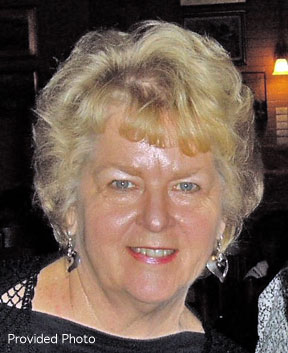
    Loveland, Ohio – Newly elected to serve a four-year-term on Loveland City Council, Kathy Bailey took the oath of office on December 7, 2015.


    loveland-sweetsfeatured-image-template

    Loveland Sweets is a purveyor of hand-crafted chocolates, caramels, marshmallows, and ice creams. Our house-made candies are prepared in small batches using only the…


  • !!! New Year = New You !!!

    !!! New Year = New You !!!

    Advertisement
    1545606_1201429313220514_976644807350678509_n
    Get fit with these services!
    Why go to a standard gym when you could get fit while learning life saving skills?!
    PRO Martial Arts is proud to offer not only our excellent children’s programs and ARMOR anti-bullying classes but also an Adult option for those who wish to get in shape and learn to defend themselves!
    Karate Training

    It’s more than just learning flashy kicks and spins.  Karate originated as a combative system to allow its practitioners to protect themselves in a dangerous world.  We continue this tradition by offering our training with a focus on practical application.

    Strength Training
    One cannot practice martial arts without this vital aspect.  Every class incorporates strength training to improve one’s ability to perform and build a strong body.
    Flexibility Training
    Another vital aspect of any martial arts routine.  We use a combination of traditional stretches, current science, and yoga to maximize your results!
    ARMOR

    For the kids we offer a weekly class on anti-bullying and predator prevention.  Complete with open discussion and self defense technique.

    This service is FREE with any membership!
    Or offered as it’s own solo membership.
    Awards

    Winner of the 2015 Loveland Recreational Business of the Year

    pro-martial-free-trial
  • People may see slightly higher bills after new meters are installed

    People may see slightly higher bills after new meters are installed

    People may see slightly higher bills after the new meters are installed.

    meter.aspx-3
    How the new Clermont County metering system will work

    Clermont County’s Water Resources Department (WRD) will soon begin to replace customers’ water meters with meters that will allow wireless transmission of water usage data.

    old-new-meter-4
    Existing meter on left – new on right

    Beginning in January 2016, about 500 meters will be installed throughout the county, said WRD Director Lyle Bloom. The county will make sure these meters are operating correctly before beginning to install the rest of the meters.

    The county will replace approximately 41,000 meters, and the project is expected to take until September 2017, Bloom said. A day or two before each meter upgrade, US Bronco Services (the installer) will notify each customer with a door hanger slip. On the day of the upgrade, the installer will attempt to notify each customer shortly before the installation begins. The installation will take about 30 minutes, with water service unavailable for 15 minutes.

    Clermont County contracted with HD Supply Waterworks to provide the Advanced Metering Infrastructure
    System (AMI). HD Waterworks’ installer is US Bronco Services.  The project costs approximately $8 million, Bloom said.

    The AMI meters will transmit water usage information wirelessly to five collector sites throughout the county, said project manager Kevin Kappers. That information is then relayed to an offsite billing and monitoring server.

    [quote_left]The new system will allow customers to have essentially pinpoint accuracy in determining water use.[/quote_left] The new system will allow customers to have essentially pinpoint accuracy in determining water use. If a customer’s bill reflects an unexpected spike, the department will be able to tell the customer what day and hour the spike occurred, Kappers said. The system will also be helpful in identifying leaks, he added.

    Bloom cautioned that the initial bills may look a little high. “As meters get older, they get less accurate. The new meters will register a more accurate reading of actual water consumption,” he said.  “So people may see slightly higher bills after the new meters are installed.”

    Four maintenance techs currently read meters in Clermont County. They will be reassigned, Bloom said. No rate increases are planned as a result of this upgrade, he said.

    For more information, view this FAQ on the project.

    For more information, contact Kevin Kappers, (513) 732-8091, kkappers@clermontcountyohio.gov.


    wards-corner-crio-image-template


  • 18th Annual Martin Luther King Jr. Celebration Sunday, January 17

    18th Annual Martin Luther King Jr. Celebration Sunday, January 17

    “Faith is taking the first step, even when you don’t see the whole staircase.”

    [vc_row][vc_column][vc_column_text]Loveland, Ohio – Each year, The Loveland Initiative is the host of the only community-wide Martin Luther King Jr. Celebration in Loveland.

    Building on the quote of Dr. Martin Luther King Jr. — “Faith is taking the first step, even when you don’t horiz-rpdiamondsee the whole staircase”, the event will feature a Recognition Award honoring community Individuals by Mary Hensley, President of The Loveland Initiative.

    The event will also feature the spiritual speaker, Pastor David McCraney. In addition, New Friendship Baptist Church Angels of Praise Dancers, Epiphany United Methodist Church Children’s Choir, Sycamore Presbyterian Church Choir, First Missionary Baptist Church Choir, a poem reading, and the Oxford Gourd Drum Ensemble and Cincinnati Drum and Tribal Dance will all perform.

    The event will be held at Loveland Middle School Cafeteria at 801 South Lebanon Road from 4 PM until 9 PM on Sunday,  January 17. (Parking is in the rear of the school.)

    The MLK Day Celebration is a potluck dinner and is free and open to the public. The Loveland Initiative Director, Terri Rogers asks you to, “Please Bring a Dish to Share as you join your neighbors in celebrating the birthday of one of America’s most important spiritual and inspirational leaders.”

    [/vc_column_text][vc_gmaps title=”Map to Loveland Middle School (Park in rear)” link=”#E-8_JTNDaWZyYW1lJTIwc3JjJTNEJTIyaHR0cHMlM0ElMkYlMkZ3d3cuZ29vZ2xlLmNvbSUyRm1hcHMlMkZlbWJlZCUzRnBiJTNEJTIxMW0xOCUyMTFtMTIlMjExbTMlMjExZDMwODkuMDk4NDUzOTE3NTE5MiUyMTJkLTg0LjI4NjUyMDY4NDYzODc3JTIxM2QzOS4yNjMzMzI2Nzk1MTU5MiUyMTJtMyUyMTFmMCUyMTJmMCUyMTNmMCUyMTNtMiUyMTFpMTAyNCUyMTJpNzY4JTIxNGYxMy4xJTIxM20zJTIxMW0yJTIxMXMweDg4NDA1NWUyNzQ4YTc1YTclMjUzQTB4MzZjZTg5OTQ1Y2Q1NGFkYSUyMTJzODAxJTJCUyUyQkxlYmFub24lMkJSZCUyNTJDJTJCTG92ZWxhbmQlMjUyQyUyQk9IJTJCNDUxNDAlMjE1ZTAlMjEzbTIlMjExc2VuJTIxMnN1cyUyMTR2MTQ1MTk5NzM0Njc2MyUyMiUyMHdpZHRoJTNEJTIyNDAwJTIyJTIwaGVpZ2h0JTNEJTIyMzAwJTIyJTIwZnJhbWVib3JkZXIlM0QlMjIwJTIyJTIwc3R5bGUlM0QlMjJib3JkZXIlM0EwJTIyJTIwYWxsb3dmdWxsc2NyZWVuJTNFJTNDJTJGaWZyYW1lJTNF”][/vc_column][/vc_row]

  • Why Small Debts Matter So Much To Black Lives

    Why Small Debts Matter So Much To Black Lives

    by Paul Kiel – ProPublica

    This story was co-published with The New York Times’ Sunday Review.
    pro-public

    [dropcap]I[/dropcap]f you are black, you’re far more likely to see your electricity cut, more likely to be sued over a debt, and It is not unreasonable to attribute these perils to discrimination. But there’s no question that the main reason small financial problems can have such a disproportionate effect on black families is that, for largely historical reasons rooted in racism, they have far smaller financial reserves to fall back on than white families.

    The most recent federal survey in 2013 put the difference in net worth between the typical white and black family at $131,000. That’s a big number, but here’s an even more troubling statistic: About one-quarter of African-American families had less than $5 in reserve. Low-income whites had about $375.

    Any setback, from a medical emergency to the unexpected loss of hours at work, can be devastating. It means that harsh punishments for the failure to pay small debts harm black families inordinately. Sometimes, the consequence is jail. Other times, electricity is cut, or wages garnished.

    The modern roots of the racial wealth gap can be traced back to the post-World War II housing boom, when federal agencies blocked loans to black Americans, locking them out of the greatest wealth accumulation this country has ever experienced. More recently, the bursting of the housing bubble and subsequent recession slammed minorities. In 2013, the median wealth of white households was 13 times the median wealth of black households, the widest gap since 1989.

    Earlier this year, my colleague Annie Waldman and I took a close look at debt-collection lawsuits in three major American cities. We expected to see a pattern driven by income, with collectors and credit card lenders suing people most often in lower-income areas.

    But income was just half the story. Even accounting for income, the rate of court judgments from these lawsuits was twice as high in mostly black communities as it was in mostly white ones. In some neighborhoods in Newark and St. Louis, we found more than one judgment for every four residents over a five-year period. Many were families who, knocked off their feet by medical bills or job loss or other problems, had simply been unable to recover.

    When debts turn into court judgments, plaintiffs gain the power to collect by cleaning out bank accounts and seizing wages. Federal and state laws generally don’t protect anyone but the poorest debtors, and because judgments are valid for a decade or more, the threat of garnishment can linger for years. The paycheck from that new job may suddenly be slashed and savings may disappear.

    Sometimes the consequence of not having the money to pay a bill is immediate: The power goes out. In a 2009 national survey of lower-income households by the federal Energy Information Administration, 9 percent of blacks reported having their electricity disconnected in the previous year because they had been unable to pay. For whites, the number was less than 4 percent, according to an analysis of the survey by the National Consumer Law Center.

    And sometimes the consequence of unmanageable debt is to fall further into debt. In a 2013 Federal Reserve survey, about three times as many blacks reported taking out a high-interest payday loan in the previous year as did whites at the same income level. Desperate consumers turn to these loans as a way to catch up on bills, but often get tripped up by unaffordable interest payments.

    Low- and Middle-Income Black Families: Less Wealth, Less Help

    Federal survey data shows that there is a wide gap between the financial resources of white and black families, even when examining families with similar income.

    When combined with discriminatory policing practices, the effect of the asset gap is to magnify the racial disparity. In its report on the Ferguson, Mo., Police Department, the Justice Department found that officers disproportionately stopped and ticketed black citizens. For a “manner of walking” violation, it was $302; for “high grass and weeds,” $531.

    Blacks accounted for about 67 percent of Ferguson’s population and around 85 percent of the municipal court cases. But the numbers were even more lopsided when it came to the harshest consequences. Blacks accounted for 92 percent of the cases where an arrest warrant had been issued to compel payment.

    And this wasn’t a problem only in Ferguson. Earlier this year, the American Civil Liberties Union sued DeKalb County, Ga., which includes part of Atlanta, for jailing citizens over unpaid court fines and unpaid fees charged by a for-profit company that runs probation services for the government. About 55 percent of DeKalb County’s population is black, but the ACLU found that nearly all probationers jailed for failure to pay those fines and fees were black.

    The racial wealth gap “creates this cyclical effect,” said Nusrat Choudhury, an ACLU attorney. An unpaid speeding ticket may result in a suspended driver’s license, which may lead to a more severe violation. Unable to pay their fines, black defendants become more crushingly entangled in debt.

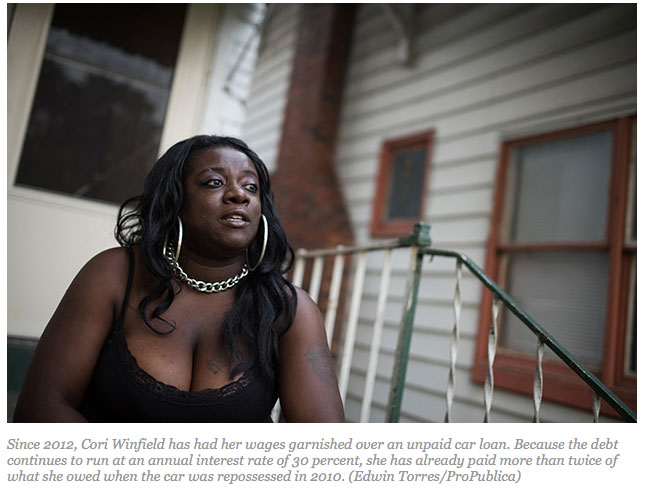
    Cori Winfield, a single mother in St. Louis, got caught up in this cycle.

    After she was unable to keep up the payments on a subprime auto loan she took out in 2009, the car was repossessed the next year, but the consequences didn’t stop there. Because the debt continued to be bloated by interest charges, the lender began garnishing her wages in 2012. The garnishment continues today. Because she was unable to repay, she will end up paying far more than she owed in the first place.

    Making matters worse for Winfield, while her wages were being garnished, she was arrested for driving with a license that had been suspended because she had failed to pay a speeding ticket. She ended up spending a weekend in jail and having to pay the cost of bail.

    Winfield has a decent clerical job, earning about $30,000 a year. But she lives month to month. When hit with an unexpected expense, she is left reeling.

    Her vulnerability is typical. In a recent survey by the Pew Charitable Trusts, the typical black household earning between $25,000 and $50,000 reported having emergency savings of $400. The typical white household in that range had $2,100.

    Black families were much more likely to report difficulty in recovering from a financial setback or to have fallen behind on a bill in the past year. This financial insecurity extended up the income scale. Of black households with income between $50,000 and $85,000, 30 percent said they had been unable to pay a bill. By contrast, only white households with incomes below $25,000 reported similar trouble paying bills; 31 percent said they had fallen behind.

    What can be done? The best place to start is by identifying practices that are particularly damaging to black communities, and then fixing them.

    In Missouri, for example, the attorney general recently proposed a series of reforms for debt-collection lawsuits to ensure that the underlying debt was valid and that lawyers’ fees were not excessive. Collection-industry trade groups supported the proposal.

    Lawmakers in Missouri and other states could go further and reduce the amount of income subject to garnishment. In most states (New York and New Jersey are exceptions), defendants can lose a quarter of their post-tax income, a big hit for even middle-income families.

    Bank accounts are afforded even less protection, allowing collectors to seize funds without limit. It’s a nonsensical system that restricts how much of a worker’s paycheck a collector can seize, but allows collectors to take the entire amount once that check is deposited. Setting even a small dollar amount as automatically off limits to collectors would be a substantial improvement.

    Changes like that benefit everyone, but they particularly help black families. Policy makers should pay attention. Making it easier to recover from small setbacks can make a big difference in people’s lives.

    ProPublica is a Pulitzer Prize-winning investigative newsroom. Sign up for their newsletter.



  • Granny says “Thanks for 2015”

    Granny says “Thanks for 2015”

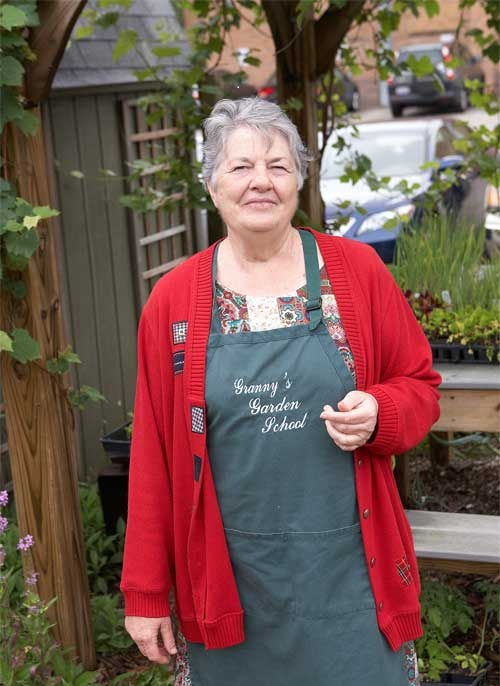
    granny6fcThank you for everything you did in 2015 to make it possible for Granny’s Garden School to make a difference in the education of more than 2,000 children.

    I am so appreciative of your support for the work we do.  Together we will continue to make use of school grounds to expose children to the natural world while supporting their growth in academic knowledge and helping them to acquire practical skills and, hopefully, passions and healthier eating habits that will influence the rest of their lives.

    As a grandmother, my wish is that the children we have the honor to work with will pass on what they learn to their own children and grandchildren.

    Thank you for helping to make our work possible.

    Roberta Paolo, a.k.a. “Granny”

    Founder and Executive Director

    Granny’s Garden School


  • Poetry in the Garden Contest

    Poetry in the Garden Contest

    From January 1 to February 29, the Public Library of Cincinnati and Hamilton County is looking to discover new and talented poets from the Cincinnati Region. Adults, ages 18 and up, are invited to enter. The Poetry acct-plus-sidebarContest is co-sponsored by the Greater Cincinnati Writer’s League. Entries will be judged in March by a committee comprised of local literary professionals. Judging will be anonymous and decisions are final. Up to four winners will have their poem published on our website and will be given the opportunity to read their poem at the Main Library’s Poetry in the Garden Series, which will be held Tuesday evenings in April.

    Contest Rules
    • Each poet may submit no more than one poem
    • Poems must be original content and unpublished in any public medium
    • Poems must be suitable for a general audience
    • Poems must be submitted in a Word document, no longer than 40 lines, at least 12-point font, on one 8.5-by-11 page; prose poems no longer than 300 words.
    • Entries must be submitted using our online form by Feb. 29.
    • Entries that are not in compliance with these rules are subject to disqualification.
    • The Library is not responsible for entries that were not received.
    • By entering this contest, you give the Library permission to publish your name and poem, should your entry win.


  • Loveland Eagles donate to CMH Montessori School

    Loveland Eagles donate to CMH Montessori School

    FOE’s generous donation of $1000

    chms_1909
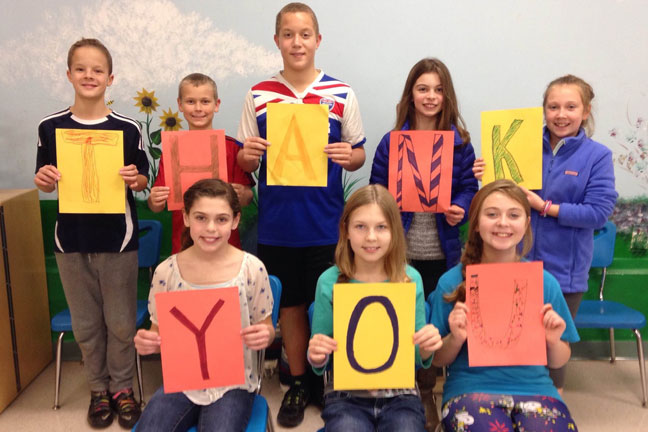
    Sixth grade students at CMH Montessori School thank the Fraternal Order of Eagles for their generosity. Students are Ryan Chevalier, Ryan Eicher, Caleb Medeiros, Gabriella Mangano, Sydney Kennedy (top row L to R). Mallory Hanna, Moira Seger, and Morgan Switzer (bottom row L to R) CMH Montessori School is located at 927 O’Bannonville Road just minutes east of downtown Loveland, Ohio.


    by Bonnie McNett,

    The relationship between Children’s Meeting House Montessori School (CMH) and the Loveland Fraternal Order of Eagles (FOE) began in 2004 when the school held its ‘Junktique Sale’ fundraiser at the Eagle’s building on Karl Brown Way. Since then, the relationship has grown and strengthened as the Fraternal Order of Eagles has once again put their motto “People helping People” into action by supporting CMH with a generous donation of $1000. The financial support from the FOE helps the school provide an unparallelled educational experience for students. CMH School, a non-profit organization, will use the money towards continued development of nature initiatives and the outdoor education program.

    The Fraternal Order of Eagles invited CMH School Director, Casey Reed, and Principal, Theresa Bell, to attend their ceremony.  Other local recipients of the FOE’s generosity included Loveland City Schools Playground Initiative and Canine Rescue. Casey Reed received the FOE gift and said, “CMH is very grateful to be thought of by the FOE and your support over the years has meant so much to our school community. People Helping People is such a beautiful message and it is the very message we wish to instill in the children at our school. Thank you for your generous and thoughtful contribution to CMH- I assure you it will make a difference.”


    CMH School offers programs for children age three through sixth grade and provides a rigorous academic curriculum, focused on the development of the whole child. Children’s Meeting House has been providing excellent, authentic Montessori education for over 40 years. Montessori students attain a deep understanding of core academic subjects and acquire real-world life skills tailored to fit each child’s educational needs. CMH is at 927 O’Bannonville Road, less than a mile from downtown Loveland. To get more detailed information, please contact CMH at (513) 683-4757 or visit: www.cmhschool.com.
    wards-corner-crio-image-template
  • New law will require companies to phase out the environmentally harmful beads starting July 1, 2017

    New law will require companies to phase out the environmentally harmful beads starting July 1, 2017

    Why not we quit buying these products now?

    microbeads-2


    micro-beads

    President Obama approved a bill on Monday banning soaps, toothpastes, and bodywashes that contain a harmful ingredient.

    That ingredient is microbeads — tiny, nearly impossible-to-dissolve plastic particles that enter water streams by the billions.

    Read on at Business Insider…


  • Laurie Gordon new Loveland Valentine Lady

    Laurie Gordon new Loveland Valentine Lady

    Donna Treinen’s design has been selected for the 2016 Loveland Valentine Card

    Laurie-Gordon-
    Laurie Gordon is the 2016 Loveland Valentine Lady

    Loveland, Ohio – Laurie Gordon has been selected as Loveland’s next Valentine Lady. Gordon will assume the role of the Valentine Lady, currently held by Mrs. Sue Lundy, at the 2016 Valentine Program Kick-off on January 9. Gordon and her husband have lived in Loveland for 45 years and have three sons. She volunteered in the Loveland Schools for many years and is an active member of the Loveland Presbyterian Church and the Loveland Woman’s Club and serves on the Board of the Greater Loveland Historical Society.

    Donna Treinen’s design has been selected for the 2016 Loveland Valentine Card. Treinen and her husband have lived in the Loveland area for 13 years with their two children. She was an avid art student in high school and enjoys creating personal and home portraits. Donna also performs as a dancer with the Loveland Stage Company. The 2016 Loveland Valentine card illustrates a heart highlighted by flowers and smaller hearts. The card will be unveiled and available for sale at the Valentine Program Kick-off.  Cards will also be available at select Loveland area businesses and stores.

    Gordon said, “I was so surprised when they came into The Works and honored me with their selection. I am looking forward to the whole experience.”

    The Valentine Kick-off program will be held on January 9 at 11 AM, at the Loveland Kroger. The public is invited.