Author: Olivia Rohling

  • There’s more to preventing suicide than an Instagram post

    There’s more to preventing suicide than an Instagram post

    by Olivia Rohling

    At 12:00 a.m. on September 1st, 2022, the calendar officially flipped to September. As with every month, the month of September has its fair share of holidays and monthly recognitions. There’s Labor Day on the 6th, Grandparents Day on the 12th, Yom Kippur that begins on the 15th, and my birthday (which I’m totally counting as a holiday) that falls on the 23rd. September is also Childhood Cancer Awareness Month, World Alzheimer’s Month, and the one I’m writing this article about: National Suicide Prevention Month.

    I’m not sure if it’s just because of the people I choose to follow on social media, though I’m sure that at least plays some part in what I’m about to say, but when the calendar flipped to September, and being the avid Instagram-scroller that I am, I continuously came across the same anti-suicide infographic posted on people’s stories listing resources like the National Suicide Prevention Hotline and more. At first, like I’m sure many others who viewed the same infographic, I thought “That’s a nice gesture.” I didn’t see anything wrong with such posts. And to be clear, there isn’t necessarily something “wrong” or “bad” about posting and sharing such infographics that have mental health resources and information, and I’m not here to bash and shame those who choose to do so. Their intentions are in the right place, and some of those who choose to share such information may very well have a personal connection to the topic of mental illness and suicide, which makes sharing such resources all the more valid and understandable.

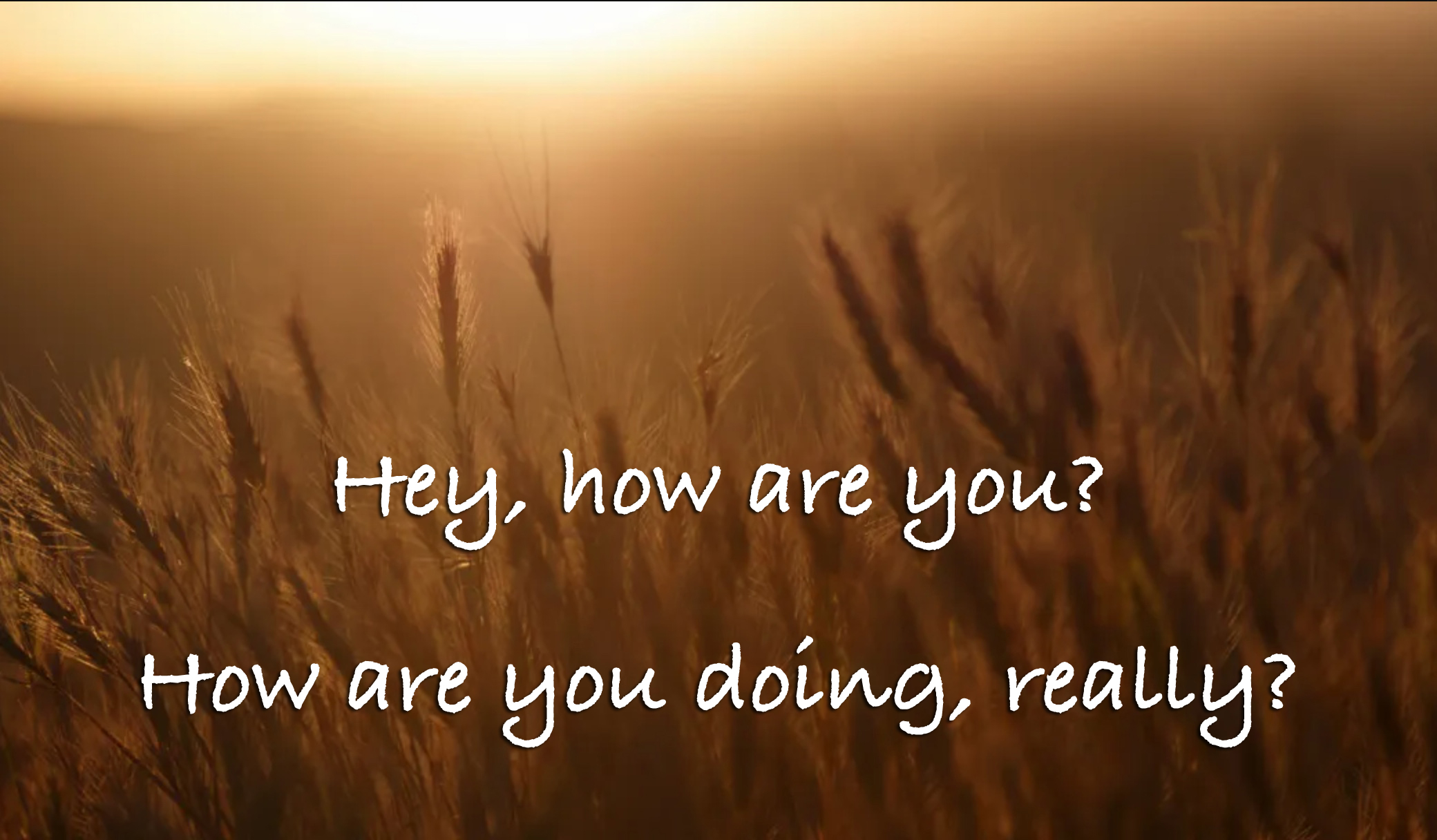
    Like I said, there isn’t anything wrong with caring enough about others and a topic like mental illness to share helpful resources across social media, but rather there is something missing with the good intentions already in place. Though it’s nice to think you’re making a difference by posting these resources, chances are, they help fewer people than you think. It would be nice if mental illnesses weren’t so complex, and attempting to solve the problems they cause was as simple as an Instagram post, but that’s just not the way it works. The issue of mental illness runs much deeper than a simple repost on Facebook. Preventing suicide means checking in on your friends: The one who never seems to stop laughing, the one you know is struggling, the one who’s struggled in the past, the one who seems perfectly fine, and even the one who says “Check in on your friends.” And it’s not a, “Hey, how are you?” because that’s how you get the simple “Tired” as a response. You ask, “How are you doing, really? Is there anything you need? How can I help you? Please be honest with me.” And checking in on someone is not a one-time thing. Be persistent. Be ready for an answer that isn’t “I’m fine” or “I’m just tired.”

    Preventing suicide starts with not turning away when the not-so-pretty and less romanticized symptoms of mental illness present themselves. Preventing suicide starts with being a good listener. Preventing suicide starts with supporting free or even just affordable healthcare so that the help that is so often talked about can be attainable for those who need it. Posting the National Suicide Prevention Hotline might do something, but what someone who is struggling with mental illness and suicidal thoughts really needs is support and care that is visible and intentional.

    I don’t want you to take away from this article that you should stop posting infographics with helpful resources across social media. In fact, I’d encourage you to still do so if that’s your kind of thing. Posts as such are informative and how we educate ourselves. What I want you to take away from this is that suicide prevention runs much deeper than a social media post. There is a second component to the social media posts that we often forget, and it’s the piece of real action.

    Don’t forget: Tell your friends you love them sincerely and often.
  • Loveland mom creates “MY FAVE FIVE” mental wellness app

    Loveland mom creates “MY FAVE FIVE” mental wellness app

    by Olivia Rohling

    Who are your “FAVE FIVE”?

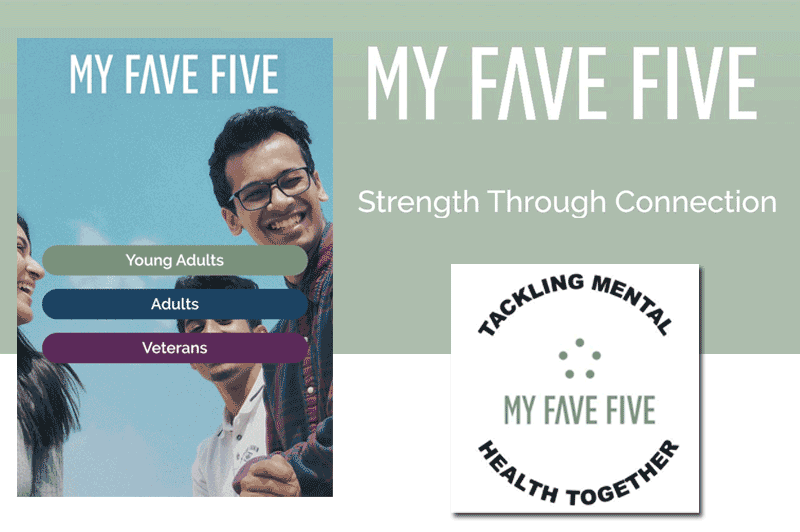
    Loveland, Ohio – On Feb. 13, 2016, Loveland mom Gina Marek lost her son, Jacob to suicide. After his death, she asked her younger son who he would talk to if he was going through something or needed support; he couldn’t name anyone. At that moment, she knew she needed to do something to help her son and other teens learn to reach out for help.  Months later, the concept called “MY FAVE FIVE” was created with the goal of helping individuals identify, connect, and build relationships with trusted people already in their life who they can call to talk to about day-to-day challenges or in a time of need.

    Over the past six years, MY FAVE FIVE has evolved from a simple worksheet in 2016 to a mobile app for teens in 2019 to today’s app which is for everyone. Marek noted that after seeing the impact COVID had – from loneliness to isolation – she felt she needed to enhance the app and launched the new app in July 2022 for everyone. “Everyone needs their personalized network of support to help them maneuver through life’s challenges,” Marek said. 

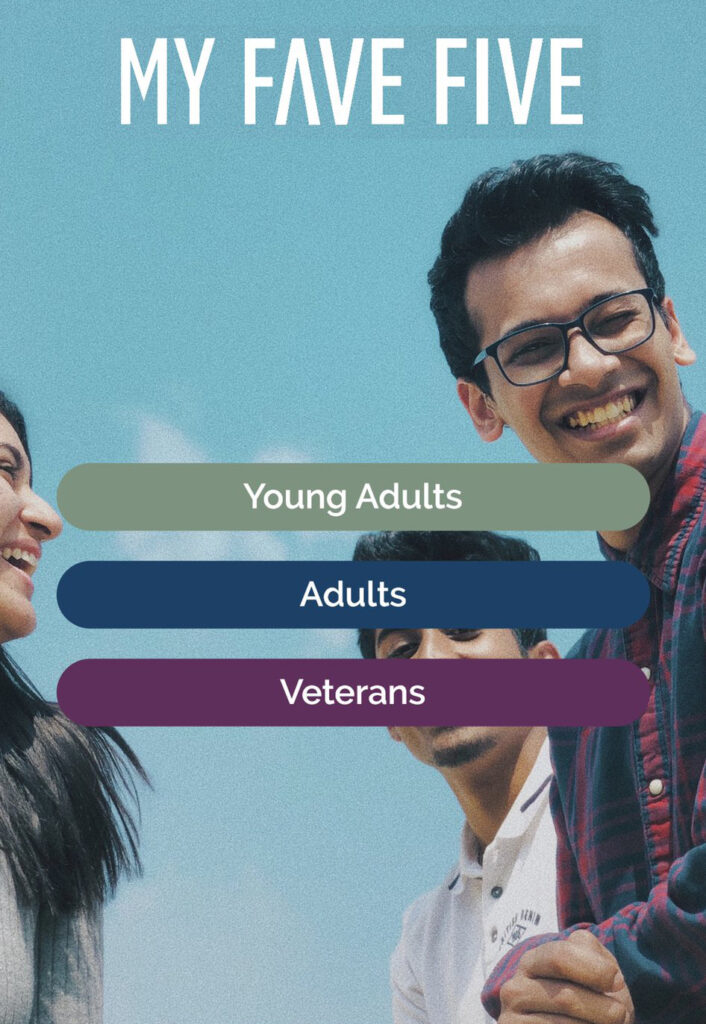
    When you open the app there is a star that has five points. When setting up the app you tap the “+” on one of the points and type the name of someone you trust. You then have the option to email or text them the invite link to become one of your FAVE FIVE. At the bottom of the screen, there is the crisis hotline as well as the crisis text line. Your “Fave” does not need to have the app in order to be one of your “FAVES.” 

    “Odds are you already have these people in your contacts, but the point is that you know they’re there for you and you know they care. It’s about having that personalized network of support there to help you work through day-to-day issues before you reach that breaking point,” Marek said. “It’s free, it’s easy, it can help,” Marek added.

    According to the National Alliance on Mental Illness, 1 in 5 U.S. adults experiences mental illness each year, while suicide is the second leading cause of death for people aged 10-34.

    While “MY FAVE FIVE” is not a suicide prevention app, but rather a mental wellness tool, Marek still thinks it can save lives. “My goal is to really help people during their time of struggle—whatever that struggle may be before they reach their breaking point,” Marek said. her goal for this coming fall is to reach out to universities, athletic departments, counseling centers, and veteran groups to promote awareness of this tool.

    “MY FAVE FIVE” is available for free on Google Play and the App Store. You can learn more about this app and Marek’s mission by visiting her website: www.myfave5.org.  MY FAVE FIVE is also on Facebook and Twitter.

    Watch this 1-minute video describing MY FAVE 5 tool. The app is available on the App Store and Google Play. Now, more than ever, our teens need to know they have adults, in addition to their parents, to call in a time of need.


    Make a Donation

    Please consider a donation to further the advancement of MY FAVE FIVE in our communities. All funds go to support MY FAVE FIVE and are tax deductible. Make a donation HERE.


  • Women share personal experiences with abortion; pre-roe life, concerns of Roe overturn

    Women share personal experiences with abortion; pre-roe life, concerns of Roe overturn

    by Olivia Rohling

    According to an analysis by the Guttmacher Institute, close to 1 in 4 women in the U.S. (23.7%) will have an abortion by age 45. Chances are you know and love someone who has had an abortion — you just don’t know it. 

    On Jan. 22, 1973, the Supreme Court of the United States issued a 7-2 decision known as Roe vs. Wade stating that the Fourteenth Amendment of the United States Constitution allows for a “right to privacy,” which in turn protects a woman’s right to have an abortion if she so chooses. However on June 24, 2022, the United States Supreme Court overturned Roe in the case known as Dobbs v. Jackson Women’s Health Organization, which has now allowed the states to restrict and ban abortion access.

    A woman who wishes to go by her first initial “C” was in her late teens prior to the 1973 Roe decision. She recalled hearing rumors of pregnancy in high school when girls would vanish for a semester or two. “We just assumed that if they were pregnant, they had the baby and put it up for adoption. Abortion was illegal, you didn’t talk about it,” C said. In reaction to the recent overturn of Roe, C said, “I don’t want anyone to tell me what books to read let alone what I do with my body, especially a man. Who are these people to tell me what to do with my body? After these babies are born, who is going to care for them, feed them, house them, and educate them? Will the Republican party who are known for cutting social welfare programs? I highly doubt that.” With Roe being overturned, C shared other concerns. “Now that the door is open what’s going to happen to birth control, IUDs, contraception, same-sex marriage, so much that everyone fought for?”

    A woman who wishes to go by the name “Jane Doe” had an abortion in 2007 when she was in her twenties. At the time, she had been with her partner for about seven or eight months. “It wasn’t the most healthy relationship unfortunately. He was very controlling; he was a sex-addict,” Doe said. In early February 2007 Doe was in a car accident. “At the time I didn’t realize that the antibiotics, the muscle relaxers, and the pain killers [I was given] also affected the potency of [my] birth control,” Doe said. Soon after, Doe was pressured by her partner to have sex. “I said ‘no’ multiple times. I’m pretty sure that’s when I conceived,” Doe added.

    In the aftermath, Doe didn’t know she was pregnant and thought the pain and cramping she was experiencing was due to appendicitis. Instead, Doe found out she was 4 weeks pregnant. “I was a young 22-year-old, my life was going in the right direction, and I did not see this man in my life being a part of this—I didn’t want to be tied down to him. I knew if this child was brought into the world, he would eventually have some say in it,” Doe said.

    When Doe was 5 weeks along, she went to Planned Parenthood for an abortion. The current Ohio Heartbeat Bill bans abortions after a heartbeat can be detected, which is at approximately 6 weeks.

    “It’s frustrating,” Doe said. “There are women in my position who will never know that they’re pregnant only at 4 weeks. If it wasn’t for the fact that I literally thought I was having appendicitis, I would never have known I was pregnant,” Doe added. 

    Doe was devastated after seeing the Supreme Court’s decision to overturn Roe vs. Wade. She has a daughter now and is worried for her future. “It’s a human right. This is a very private thing that has happened in my life, nobody else needs to know. It was a decision that was made at that time that I do not regret—I do not feel bad. I know that I did the right thing,” Doe said. “I’m terrified of how many mothers are going to die,” Doe added. 

    Another woman who wishes to go by the name, “Emily Doe” had an abortion when she was a freshman in college over twenty years ago. As a freshman, she and her roommates took a road trip to a neighboring college where she met up with her previous boyfriend. At the time she was taking birth control but thinks she may have missed a dose or two—though she’s not certain. A few weeks later, Doe didn’t feel well and made an appointment with her hometown doctor thinking she had a really bad sinus infection and just needed some antibiotics. At the doctor’s appointment Doe learned she not only had a sinus infection but was also pregnant. “I was a freshman… I couldn’t take care of myself let alone take care of a baby or get married,” Doe said. “I just remember praying, ‘God please forgive me. I hope you understand why I’m doing this,” Doe added. “It was a terrible decision [to make,] but I knew there was no other decision for me and what I wanted for my life and what I wanted to become,” Doe said when talking about her decision to terminate her pregnancy.

    Emily Doe says she is disgusted by the Supreme Court’s decision to overturn Roe . “Especially because I have daughters of my own. It just made me want to do something. It made me want to donate money. It made me want to become active in helping and doing something to further the cause… It’s not about babies, it’s about women’s rights and about women being unequal to men. If it was about babies—when the issue about baby formula [shortages] came up, they would have provided baby formula for those infants [who] needed that,” she said.

    Another woman, by the name of Sarah Doe had an abortion when she was in high school in 1990. She recalls being about 9 or 11 weeks along. “There was no pressure from [my boyfriend,] there was no pressure from any outside sources. I just felt like [abortion] was my only option. I didn’t want to have a baby; I’m 18, I’m in high school, I can’t do this,” Doe said. Doe opted for an abortion rather than adoption. “At barely 18 [years old] I was scared. I think when you’re 18 you think you’re grown up but looking back I realize how grown up I really wasn’t yet. I was just an 18-year-old scared girl who didn’t want a baby,” Doe said. At the time, Doe said she didn’t feel guilty about her decision, but thinks it hit her later in life. “I don’t know if this is connected or not, but I have a lot of anxiety about my son, and I always have this fear that he was going to die [or] something bad was going to happen to him. I have- to this day- horrible nightmares of him dying and a lot of anxiety,”

    “I feel like people are going to [have abortions] regardless, I’d rather keep [them] safe,” Doe said about the overturn of Roe vs. Wade

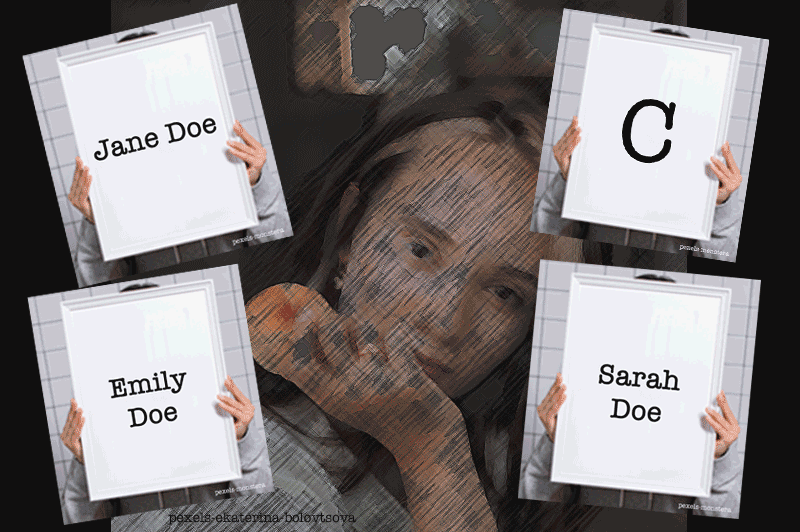
    In each of these three stories, each woman had a choice to carry out the pregnancy or terminate it. They just so happened to choose the latter. The good news is you can be pro-choice, and your choice can be to continue the pregnancy. The key word is choice; an opportunity to choose. They had options. They weren’t forced one way or another. Each woman made the decision that was best for them. These women are real. They may be “Jane Doe,” “Emily Doe,” or “Sarah Doe,” but these are real stories. These women are mothers, sisters, daughters, and friends. These women are just like every other child-bearing person in the world who just lost the right to make choices about their own body. Being “pro-life” should not mean you are against abortion, it should mean that you love and support life so much, that you choose not to tell someone else how to live their life. If it was really about saving human lives, gun violence wouldn’t be an issue in this country- it wouldn’t even be a polarizing debate. Poverty and unemployment and everything in between wouldn’t be an issue. But it’s not about the sacredness of life, it’s about the incessant need for control. 

  • How to: Surviving your first year of college

    How to: Surviving your first year of college

    Olivia Rohling

    by Olivia Rohling

    As of April 29th my freshman year of college officially came to a close. I have compiled a list of handy dandy advice for the typical freshman that I’d like to share. First, I want to start off with a little background.

    As a senior in high school, I was so incredibly excited to start my college career. I was excited for the dorm experience, to have a roommate, and meet girls on my floor during move in and all that. Friends the year ahead of me looked to be having an amazing time in college and I hoped the same for me.

    My freshman year did not start off the way I would have hoped. I didn’t hit it off with my roommate and in fact she moved out a few months into the semester. All the doors in my hall were always kept shut despite me keeping mine open in hopes of meeting other people, and I didn’t have the luck of being a part of one of those friend groups that form the first few weeks of the semester. I was so overwhelmed with the whole college experience that I didn’t join any clubs, and I didn’t have the money to join a sorority. Everyone always talked about college being the best four years of your life, but as I sat in my dorm nearly every day in tears, I very quickly did not believe anyone who said this. So, take it from me, the girl whose college experience started out being pretty less than desirable and the girl who just wanted to drop out.

    1. Join a learning community if your school offers them! – Joining a learning community was one of the better decisions I made as a freshman. You get put in a learning community class that essentially teaches you how to be a freshman and you have all the same classes as the other students in the community so faces become familiar. The first few friends I made were from my learning community and I still talk to some of them. The learning community leader can also be an incredible role model and someone you can ask questions to about certain classes and college life in general. Join a learning community.
    2. Get a darn planner. – College is different than high school in the sense that syllabi are thrown at you the first week of class and you are then responsible for knowing all the important dates and deadlines. Get a planner. Put those dates in there and color-code them by class. Thank me later.
    3. Check your email frequently, and it wouldn’t be a bad idea to have your email go to your phone as well. Some professors can and do cancel class at the last minute and you’ll want to be in the know.
    4. Save yourself the embarrassment and don’t ask your professor to go to the bathroom in the middle of class. Just get up and go.
    5. Seniors can be your friend! They aren’t scary. – Yes they’re seniors, but get this: They’re also humans. You can find some really nice ones. Bonus points if you find one within your same major who can help you with what classes to take with what professor. Don’t be afraid to reach out. The whole reason I ended up writing for a publication, didn’t spend all of homecoming weekend and my birthday alone in my dorm, and didn’t transfer schools was because of simple kindness shown to me by a senior who took me under her wing.
    6. DO NOT live on a floor above the 2nd floor if your building doesn’t have an elevator. Move in and out is guaranteed to be hell otherwise.
    7. FOR MOVING IN AND OUT: BAGS NOT BOXES!
    8. Kind of a given but walk your schedule a day or two before, so you know where you are going! Your GPS is going to be an even better friend to you than it was in high school.
    9. At some schools, breakfast isn’t offered through the dining halls, but that doesn’t mean you should skip it! Buy some instant oatmeal or at the very least some breakfast bars.
    10. Literally no one will judge you and literally no one cares if you are eating alone in the dining hall.
    11. Syllabus week is going to be very overwhelming so be prepared. You can take things one day at a time and still be in the know about upcoming assignments and due dates.
    12. Sometimes you’ll be more productive if you’re doing work some place other than your dorm. Do some exploring in the library or find a coffee shop you can claim as your workspace.
    13. End every email with “thank you.”
    14. As far as shower caddies go, don’t get a bulky hard plastic one. Get one like this.
    15. For laundry, get a hamper that has straps on it. Like this. You’ll want this, especially if you go against tip number 6.
    16. GET AND USE SHOWER SHOES.
    17. Research your professors on ratemyproffesor.com before making your schedule
    18. There’s no need to buy a brand-new textbook, renting or buying used will work just fine
    19. Ctrl + F. Enough said.
    20. Take a deep breath and take it one day at a time. You got this!
  • What Does it Really Mean to Forgive Someone?

    What Does it Really Mean to Forgive Someone?

    Forgiveness isn’t “It’s okay,” rather it’s “I will be okay.”

    Olivia Rohling
    Olivia Rohling

    by Olivia Rohling

    What is forgiveness? Is forgiveness what I’m hoping my high school English teacher will grant me after she discovers I started a piece of writing with a question– despite repeatedly teaching me that starting a piece of writing with a question is lazy. Telling me, “You are a better writer than this!” Is that what I’m hoping she gives me—forgiveness? I believe that in a perfect world– where the sun never stops shining and sparkles fall from the sky and puppies never die, forgiveness is when you somehow become okay with something someone has said or done to you. But by definition, to forgive is “[to] stop feeling angry or resentful toward (someone) for an offense, flaw, or mistake.”

    For most of my life, I’ve held on to the picture-perfect idea that forgiveness means you are okay with the pain someone has caused you. It wasn’t until my senior year of high school when I felt destroyed beyond repair where I found myself searching for what it meant to forgive someone. I thought that’s what you’re supposed to do when someone wrongs you: Eventually, you forgive them and become magically okay with what they said or did. But the last thing I wanted to do was “forgive” someone who led me to have to dunk my face in ice water every night to stop my anxiety attacks. The last thing I wanted to do was “forgive” someone who led me to have to leave in the middle of class with tears staining my red cheeks. I had the wrong idea of what forgiveness is. Forgiveness does not mean you are okay with what someone has done to you. Forgiveness does not mean that what someone has said or done to you is somehow justifiable. The definition says forgiveness is when you stop feeling angry or resentful. It doesn’t say the pain stops. It doesn’t say a certain action is okay. It says you stop feeling angry or resentful. Therefore, forgiveness is a choice. A hard one nonetheless, but it’s a choice for you to make.

    When someone says or does something that hurts you or even destroys you, it means they weren’t thinking of you. When they said the thing or did the act that caused you pain—they were never thinking about you and your heart– your feelings. The great thing about forgiveness is that it comes to be about you, not them. When you forgive, you are showing yourself the care and love that was never thought of in the first place. You are letting go of the hatred and resentment that built up in your chest because you know you deserve more than that. You are worthy of better. By choosing forgiveness, you are choosing yourself—putting yourself first. Hatred and resentment take up too much space in the body and soul, and how silly would it be to let another person control you to such an extent? After they’ve already hurt you as they have?

    You can choose forgiveness and still cry an ugly cry. You can choose forgiveness and still be disapproving of what was said or done. You can choose forgiveness and still hurt. You can choose forgiveness and still never speak to the person again. Forgiveness isn’t approval – instead, it’s the love that was never shown to you finally being shown to you, by you—for you. Forgiveness isn’t “It’s okay,” rather it’s “I will be okay.”