Tag: $1.3 billion bailout

  • Further questions about DeWine administration’s involvement in Ohio bribery scandal

    Further questions about DeWine administration’s involvement in Ohio bribery scandal

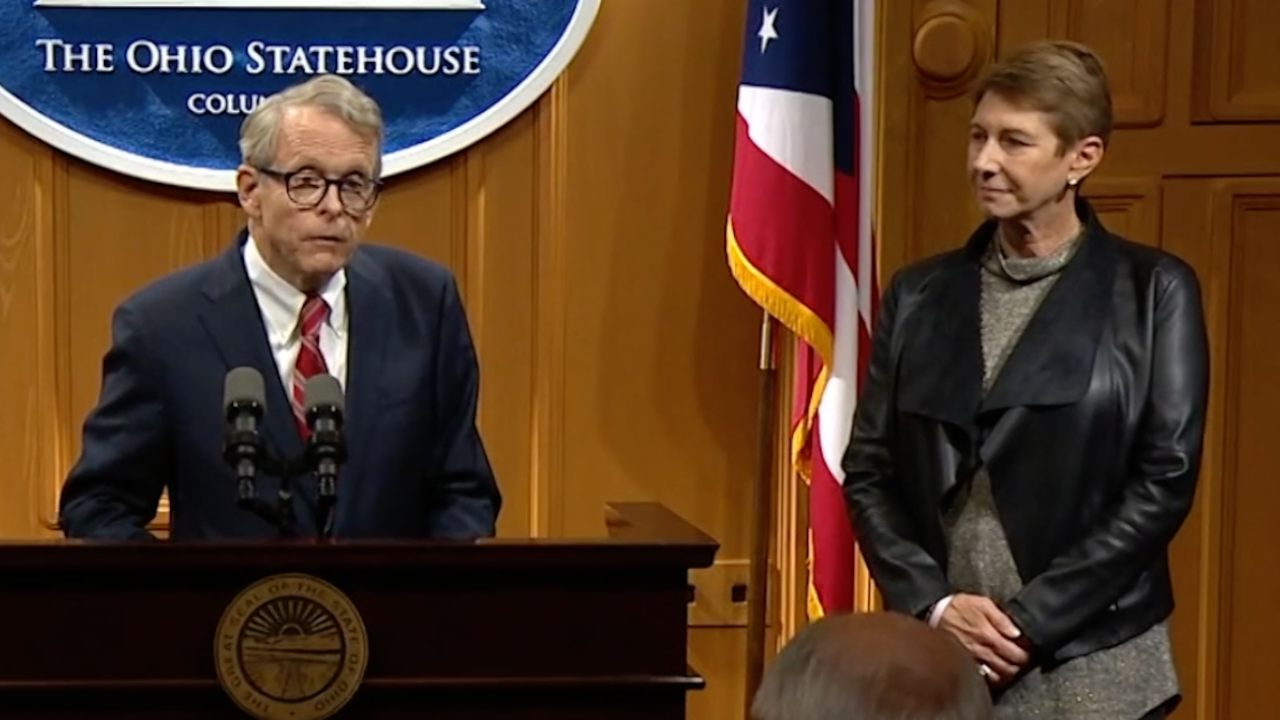
    File photo of Ohio Gov. Mike DeWine and advisor Laurel Dawson at a press conference. (Photo from WEWS.)

    New court filing gives new details about aide, husband

    BY:  

    As Gov. Mike DeWine in 2019 nominated Sam Randazzo to be Ohio’s top utility regulator, Randazzo went to great lengths to hide a decade-long relationship with FirstEnergy that had paid him more than $10 million. Those payments included $4.3 million just as DeWine was picking Randazzo, according to court documents filed last week.

    Yet DeWine Press Secretary Dan Tierney in February said it “was well known that Randazzo was a paid consultant for FirstEnergy.” On Tuesday, Tierney modified that statement to say “it was well known to our staff that Mr. Randazzo was an energy consultant, and it was well-known to them and many people that Mr. Randazzo was a consultant employed by First Energy.”

    DeWine’s appointee to chair the Public Utilities Commission of Ohio, Randazzo went on to help write and lobby for a $1.3 billion bailout that Akron-based FirstEnergy paid more than $60 million in bribes to pass, according to a federal jury and the indictments of Randazzo and two former FirstEnergy executives.

    The scandal broke into the open in July 2020, when the FBI arrested former House Speaker Larry Householder, R-Glenford, and four others. Householder and former Ohio GOP Chairman Matt Borges were convicted, two others pleaded guilty, and lobbyist Neil Clark died by suicide.

    DeWine, who signed the bailout law, and his staff haven’t been accused of illegal activity in the case. But with the administration’s many connections to FirstEnergy, questions continue to linger about exactly what DeWine and his team knew about the conspiracy and what they did with that knowledge.

    A big question relates to the period when the governor was picking Randazzo to be the state’s top utility regulator. Did DeWine or top members of his staff know that Randazzo had a long, lucrative relationship with FirstEnergy, one of the biggest utilities he’d be regulating?

    A state indictment of Randazzo said that he had a shady relationship with FirstEnergy stretching back to 2010. It included hiding his work for FirstEnergy from industrial energy users Randazzo served as general counsel as he secretly skimmed from settlement payments FirstEnergy made to the industrial users, the indictment said.

    Big money, big favors

    On Dec. 18, 2018, Gov.-elect DeWine and Lt. Gov.-elect Jon Husted had dinner at the Columbus Athletic Club with FirstEnergy CEO Chuck Jones and Vice President Michael Dowling.

    The executives would be indicted along with Randazzo in February 2024. At the dinner, the men discussed with DeWine and Husted whether to make Randazzo the chief regulator of the executives’ company, the indictment said.

    The executives drove from the dinner to Randazzo’s German Village condo for another discussion. The same evening, Randazzo texted Dowling a column of figures ending with “Total 4,333,333.”

    The indictment said that within weeks, the executives paid Randazzo that amount without an invoice and over a company lawyer’s objections. DeWine nominated him to chair the PUCO a few weeks after that.

    Over the next 18 months, Randazzo labored to draft, pass, and protect the company’s massive bailout and did a number of additional, highly lucrative favors besides, the indictment said. It all ended with his resignation after the FBI searched his condo four months after Householder and the others were arrested.

    But what DeWine and his staff knew about Randazzo’s relationship with FirstEnergy as they were considering whether to make him its regulator appears to be a matter of dispute.

    “In January 2019, FirstEnergy agreed to pay out in full Randazzo’s consulting services contract just before he was nominated to run the PUCO,” a bill of particulars that was filed last week to accompany the indictment says. “It was not a gift: Randazzo would work hard for FirstEnergy from inside the government. He did not disclose his relationship, going so far as to lie about it in testimony to the General Assembly and failing to disclose to the Ohio Ethics Commission the massive sums of money he’d received from the company he would soon regulate.”

    Who knew?

    Randazzo’s indictment says Randazzo did, however, “tell the Governor-elect through his incoming Chief of Staff that he had received $4.3 million from FirstEnergy, which he claimed was final payment of a ‘consulting agreement.’” It added that Randazzo didn’t disclose the other millions he made as a FirstEnergy consultant or his work lobbying for the electricity giant.

    Tierney, DeWine’s press secretary, on Tuesday said that Randazzo’s consulting work for FirstEnergy was well known — at least inside the administration.

    “I note our office is not a party to the prosecution, so we cannot vouch for any claims made by the prosecution or defense in these cases,” he said in an email. “Speaking for the staff of the Governor’s office, it was well known to our staff that Mr. Randazzo was an energy consultant, and it was well-known to them and many people that Mr. Randazzo was a consultant employed by FirstEnergy.”

    However, FirstEnergy’s top brass feared public knowledge of their relationship could scuttle his nomination. On Jan. 30, 2019, Dowling, the FirstEnergy vice president, sent a panicked text to CEO Jones. It said Randazzo was going to pull out of the PUCO nomination process because the press found the name of one of his shell companies on a bankruptcy filing by a subsidiary FirstEnergy was seeking to bail out.

    When Randazzo’s nomination got back on track, the executives expressed relief.

    “A bullet grazed the temple,” Dowling told Jones, according to one of the texts filed as part of a civil suit over the scandal.

    “Forced DeWine/Husted to perform battlefield triage,” Jones responded, referring to Lt. Gov. Jon Husted. “It’s a rough game.”

    So while administration insiders might have known about the Randazzo-FirstEnergy relationship, it clearly wasn’t common knowledge to the public who would have to pay the utility’s inflated bills. Tierney didn’t answer why, if DeWine knew that Randazzo was a FirstEnergy consultant, he didn’t disclose that to the public the PUCO is supposed to protect from monopoly utilities.

    Inside connections

    While Tierney said he couldn’t vouch for the information in the indictments or other court filings, he said it would have been extraordinary to ask Randazzo whether he had been paid money by Ohio utilities as the administration was vetting him for the position as their chief regulator.

    “…it would have been unusual to review past employment compensation with the Governor as part of cabinet director vetting,” Tierney said.

    As for the chief of staff who did the vetting — Laurel Dawson — she had a FirstEnergy connection of her own. Her husband, Mike Dawson, was a FirstEnergy lobbyist whom the indictment said had received a $10,000 loan from Randazzo a few years earlier.

    It’s unclear whether the loan was repaid or whether Laurel Dawson reported it to DeWine. The DeWine aide isn’t speaking publicly.

    It’s also unclear whether Laurel Dawson told the governor that her husband participated in an early 2020 text conversation with Randazzo and Dowling. The conversation was included in the bill of particulars filed last week.

    The three jokingly discussed rate cases and decoupling — two matters for which prosecutors say Randazzo had by then received multi-million-dollar bribes from FirstEnergy in exchange for doing even more valuable favors for the company.

    State prosecutors say that for Randazzo, engaging in the exchange amounted to an improper ex parte conversation. It might have been of interest to DeWine to know that his chief of staff’s lobbyist husband was having such talks with the governor’s PUCO chairman.

    According to a witness list reported on Tuesday by the Toledo Blade, prosecutors plan to call both Dawsons to testify at the trial of Randazzo, Dowling and Jones.

    Pretending?

    Despite the questions surrounding what Laurel Dawson knew about Randazzo and FirstEnergy — and about what she told her boss — she remains on his staff as an advisor, making $182,000 last year.

    “The Governor has previously stated on the record at media briefings he has full faith in Ms. Dawson,” Tierney said.

    But what did he know?

    The indictment of DeWine’s PUCO chairman and the energy executives has an image of notes that Dowling made in late 2018 as FirstEnergy lobbyist Josh Rubin coached him up on how to talk to Gov.-elect DeWine. They warn the FirstEnergy executives not to tell him that they planned to go meet Randazzo just after discussing his appointment at dinner with DeWine and Husted.

    Rubin added that DeWine could be cagey.

    “Sometimes he knows what you’re talking about,” Dowling wrote in his notes. “Sometimes he doesn’t. Sometimes he does and pretends he doesn’t.”

    Tierney was asked if DeWine now is feigning ignorance of the dealings between his administration, his nominee to head the PUCO and FirstEnergy. Tierney replied by saying that some of the players in the scandal have shown a tendency to make questionable statements.

    “Throughout the (utility scandal) prosecutions, third parties have made claims which have been self-serving and ultimately not true,” he said. “I will note, however, the state prosecution alleges the defendants deliberately withheld relevant information from the Governor, Lt. Governor, and other government officials.”


    Marty Schladen
    MARTY SCHLADEN

    Marty Schladen has been a reporter for decades, working in Indiana, Texas and other places before returning to his native Ohio to work at The Columbus Dispatch in 2017. He’s won state and national journalism awards for investigations into utility regulation, public corruption, the environment, prescription drug spending and other matters.

    Ohio Capital Journal is part of States Newsroom, the nation’s largest state-focused nonprofit news organization.

    MORE FROM AUTHOR


  • Money paid, favors done. Messages detail relationship between Ohio regulator and energy executives

    Money paid, favors done. Messages detail relationship between Ohio regulator and energy executives

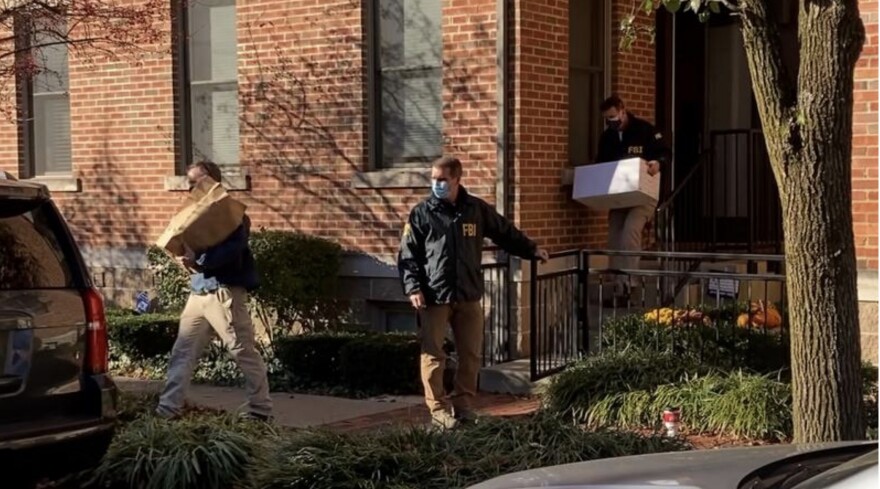
    FBI agents remove boxes of materials from PUCO Chairman Sam Randazzo’s condo in Columbus Nov. 17, 2020. Photo courtesy of Daniel Konik/Statehouse News Bureau.
    BY:  Ohio Capital Journal

    In early 2019, news of financial ties between Akron-based FirstEnergy and the man incoming-Gov. Mike DeWine had named to lead the Public Utilities Commission of Ohio began to spread. And as it did, FirstEnergy’s top executives feared they wouldn’t have a regulator they could control, according to documents filed in federal court late last week.

    “Great. Now we have none on the list” of nominees, then-CEO Chuck Jones texted Vice President Michael Dowling. Jones later added, ruefully, “Always need a backup plan.”

    As it happened, the nominee, Sam Randazzo, ended up being appointed to the commission after being paid $4.3 million by FirstEnergy. He proceeded to help draft a law providing the utility with a $1.3 billion bailout. The company spent another $60 million to pass and then to protect it from a citizen-initiated repeal in what law-enforcement officials have called one of the biggest bribery and money-laundering scandals in state history.

    Randazzo, Jones and Dowling haven’t been charged in the scandal, but after a jury trial that convicted two others, two guilty pleas, and a suicide, the three men could be the next targets as federal authorities continue their probe.

    If authentic, the communications filed on Friday indicate that the three met in Randazzo’s Columbus condo in December 2018. And they appear to show that the FirstEnergy executives agreed to pay Randazzo a large sum in exchange for favors when Randazzo became the state’s chief regulator.

    Another communication 23 months later — just after the FBI searched the condo in November 2020 — shows Randazzo providing a friend “the number for my home which the FBI does not have.”

    Demanding records

    Lawyers for Randazzo, Jones and Dowling didn’t immediately respond to requests for comment Monday, but attorneys for the former executives have said in separate court filings that they believe the feds are investigating their clients.

    The documents filed in federal court on Friday are part of a huge class-action suit against FirstEnergy, Jones, Dowling and a number of other defendants.

    In a deferred prosecution agreement, FirstEnergy in 2021 agreed to pay $230 million and admitted wrongdoing, including by bribing Randazzo. But the class-action plaintiffs — large pension and investment funds — are arguing that the company violated securities law by not disclosing its corrupt conduct. And, they argue, the company lost much of its value when that conduct came to light, leaving investors holding the bag.

    Randazzo has denied wrongdoing and he isn’t a defendant in the case, but the class-action plaintiffs want him to produce all communications relating to how he spent the $4.3 million he got from FirstEnergy just as he was poised to become its most powerful regulator.

    The plaintiffs have been accusing Randazzo since April of foot-dragging. They obtained the messages they filed Friday from a third party and are pointing to them as examples of Randazzo’s lack of cooperation.

    Early arrangements

    The earliest of the messages was on Dec. 18, 2018, and it appears that the three men had recently met in the residence that the FBI later searched.

    “Got it, Sam,” Dowling, then the FirstEnergy vice president, texted Randazzo. “Good seeing you as well. Thanks for the hospitality. Cool condo.”

    The “got it” was in response to a column of numbers Randazzo sent that appear to indicate that he was expecting payments from FirstEnergy through 2024:

    • 2019 — 1,633,333
    • 2020 — 600,000
    • 2021 — 600,000
    • 2022 — 600,000
    • 2023 — 600,000
    • 2024 — 300,000

    A seventh entry said “Total 4,333,333” — an amount equal to what FirstEnergy said was a bribe.

    The following day, Jones, the CEO, told Randazzo that he wouldn’t have to wait that long for the money, according to the filings. Jones also made it clear that he expected access to Randazzo.

    “We’re going to get this handled this year, paid in full, no discount,” the message says. “Don’t forget about us or Hurricane Chuck may show up on your doorstep! Of course, no guarantee he won’t show up sometime anyway.”

    Randazzo’s response seemed to be meant to reassure — and he linked the money to favors.

    “Made me laugh — you guys are welcome anytime and anywhere I can open the door,” he said. “Let me know how you want me to structure the invoices. Thanks.”

    Connections

    But on Jan. 30, 2019, problems popped up with Randazzo’s nomination.

    FirstEnergy’s nuclear-owning subsidiary, FirstEnergy Solutions, was going through bankruptcy and it had listed the Sustainability Funding Alliance of Ohio on one of its disclosures. Randazzo controlled the group and FirstEnergy had paid him millions through it in the past. Now the press was on to the matter.

    “Chuck — Sam Randazzo is going to pull out of the PUCO process ASAP and it’s related to a disclosure on a (FirstEnergy Solutions) bankruptcy filing,” Dowling texted Jones, according to the documents filed Friday. “Reporters called (FirstEnergy) today inquiring about the relationship between (FirstEnergy Solutions) and a group called the Sustainability Funding Alliance of Ohio. You can guess the rest.”

    That’s when Jones lamented not having a “backup plan” in the event that Randazzo was not seated on the utility commission. Dowling agreed.

    “This is awful,” he wrote. “The FirstEnergy Solutions bankruptcy filing names that group and Sam names the same group on a financial disclosure statement. Unreal. I don’t know why it was listed in the (FirstEnergy Solutions) bankruptcy filing. The payments we made year-end ’18 came from (FirstEnergy) Corp. Services.”

    Dowling was ready to throw Randazzo under the bus if the connection proved to be an embarrassment to the incoming DeWine administration.

    “They’re going to be mad at Sam (and hopefully not us) for not disclosing the financial relationship,” Dowling wrote. “That’s Sam’s responsibility.”

    A day later, however, the financial connection between FirstEnergy and Randazzo apparently wasn’t sufficiently embarrassing and he was picked to head up the PUCO.

    “A bullet grazed the temple,” Dowling told Jones, according to one of the texts filed last week.

    “Forced DeWine/Husted to perform battlefield triage,” Jones responded, referring to Lt. Gov. Jon Husted. “It’s a rough game.”

    A still rougher game

    In a trial held in Cincinnati from late January to mid-March, prosecutors put on witnesses and displayed communications describing Randazzo’s 2019 role in drafting House Bill 6, the bailout bill. Not only did it provide $1 billion to prop up two failing nuclear plants FirstEnergy was spinning off, it charged ratepayers about $100 million a year to insulate the company from an economic downturn. For FirstEnergy, it was easy money, in other words.

    In June, U.S. District Judge Timothy Black sentenced former Ohio House Speaker Larry Householder, R-Glenford, to 20 years in prison for orchestrating the racketeering scandal. Former state GOP Chairman Matt Borges got five years for his role.

    By November of 2019, HB 6 was on the books after FirstEnergy and a subsidiary plowed $36 million into a brutal, dishonest effort to turn back a citizen-initiated repeal. But the FirstEnergy executives weren’t done with Randazzo.

    On Nov. 10, 2019, Jones texted a coal executive that another cloud loomed for FirstEnergy.

    “And the (FirstEnergy) rescue project is not over,” Jones said, according to documents filed as part of the class-action suit. “At (Edison Electric Institute) financial conference. Stock is gonna get hit with Ohio 2024. Need Sam to get rid of the ‘Ohio 2024’ hole.”

    That was an apparent reference to a requirement that FirstEnergy file a “rate case” with the PUCO in 2024. In such a proceeding, regulators assess a utility’s operations and make a judgment about whether its rates and revenues are reasonable.

    FirstEnergy was apparently afraid they wouldn’t be. On Nov. 21, 2019, just 11 days after Jones expressed his concerns, the PUCO under Randazzo’s leadership issued an order saying it was “no longer necessary or appropriate” to require FirstEnergy to file a rate case.

    The next day, Jones wanted to express his appreciation to Randazzo. He did so by sending the erstwhile regulator a list of prices for six energy stocks that day. FirstEnergy stocks were up 1.5%. The next highest was Avangrid, which was up 0.86%.

    “Thank you!!” Jones wrote.

    Randazzo replied, “Ha — as you know, what comes up may come down… Thanks for the note. Spoke to Mike (Dowling) last night.”

    Then Jones said, “My Mom taught me to say Thank you.”

    Flying high

    By the start of 2020, things seemed to be going well for those who orchestrated the bailout.

    FirstEnergy Solutions would emerge from bankruptcy in February as a separate company, Energy Harbor. The class-action plaintiffs argue that one of FirstEnergy’s major goals in the scheme was to prop up the nuclear plants, get them off their books and shed the liability of having to pay for a decades-long process to close and clean up after them.

    At the same time, FirstEnergy was funneling millions more dark-money dollars into an effort to get the state’s legislature to put a constitutional amendment on the ballot. It would change the state’s term-limits so Householder could stay speaker for another 16 years — and presumably continue to do the utilities’ bidding.

    But then in July 2020, it all crashed down.

    On July 21, the FBI arrested Householder, Borges and other conspirators. By the next day, FirstEnergy stock had lost 34% of its value, the class-action plaintiffs contend.

    FirstEnergy fired Jones and Dowling the following October. And then in November, 2020, Randazzo was forced to resign from the PUCO after the FBI searched his condo.

    “Pretty stressful few days which started Monday at 6:00 when 10-12 FBI agents with their guns drawn announced their arrival at our home,” Randazzo emailed a friend on Nov. 21, according to the documents filed by the class-action plaintiffs. “But, Carol and I are handling it and doing better each day. Neighbors, friends (like you) family, PUCO staff and people I have worked for over the years have been great. Roger Sugarman (his attorney) is my new hero. So onward!”

    Then Randazzo encouraged the friend to call him on the number he believed that the FBI didn’t have.

    _________________________

    Marty Schladen
    MARTY SCHLADEN

    Marty Schladen has been a reporter for decades, working in Indiana, Texas and other places before returning to his native Ohio to work at The Columbus Dispatch in 2017. He’s won state and national journalism awards for investigations into utility regulation, public corruption, the environment, prescription drug spending and other matters.

    MORE FROM AUTHOR

  • On the stand, former House speaker confronted by prosecutors with inconsistencies

    On the stand, former House speaker confronted by prosecutors with inconsistencies

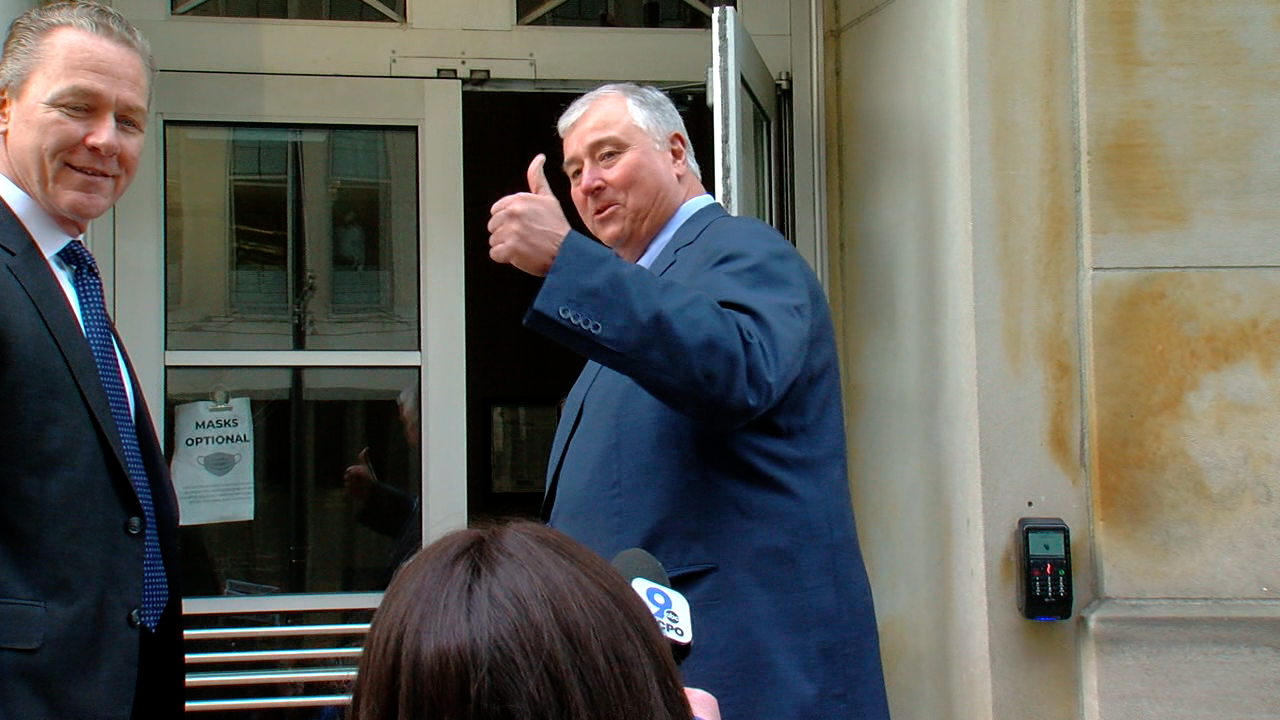
    Former Ohio House Speaker Larry Householder gives the thumbs up as he enters the courthouse where he is expected to testify Wednesday, March 1, 2023. Photo from WEWS.

    BY: MARTY SCHLADEN – Ohio Capital Journal

    The cross examination prompted some observers to say Householder badly damaged his defense against federal racketeering charges by using the risky tactic of testifying in his own defense. It marked the end of the evidentiary phase of the trial. Closing arguments will begin Tuesday.

    Householder and former Republican Party Chairman Matt Borges are accused in a scheme to use $61 million in funds mostly from Akron-based FirstEnergy to make Householder speaker and then to pass and protect a $1.3 billion bailout that primarily went to prop up a subsidiary’s failing nuclear plants.

    Over more than five weeks of testimony, prosecutors have put on evidence they say proves Householder passed the bailout in return for massive 501(c)(4) “dark money” contributions and for more than $500,000 in personal benefits. Perhaps as a sign that they didn’t believe things were going well, Householder and his defense team took the controversial step of putting him on the witness stand on Wednesday.

    Defense attorneys are usually reluctant to put their clients on the stand because prosecutors can use cross examination to catch them in lies. That seemed to be Assistant U.S. Attorney Emily Glatfelter’s goal as she cross-examined Householder on Thursday.

    Hardball

    Glatfelter played secret recordings of conversations that jarringly contradicted Householder’s claims that as speaker, he wanted to be a peacemaker. Under its earlier leadership, Householder said, the House Republican Caucus was too “divisive.”

    “I didn’t want enemies. I wanted friends,” Householder said Wednesday, trying to refute claims that he was an autocratic leader who demanded unstinting loyalty from lawmakers and contributors.

    Glatfelter played a wiretap recording of a conversation between Householder and Neil Clark, a lobbyist who was charged in the conspiracy and later died by suicide.

    “We like war and you know that Neil,” Householder told Clark. Then referring to Republican Reps. Dave Greenspan and Scott Lipps, whom Householder considered insufficiently supportive, he said, “If you f**k with me, I’ll f**k with your kids.”

     Former House Speaker Larry Householder, R-Glenford. Source: Ohio General Assembly.

    The former speaker had earlier denied being involved in using dark, or “C4” money to make attack ads, but when Clark asked “You’re talking about C4 money?” Householder responded, “Yeah.”

    When Glatfelter asked Householder if he punished contributors and lawmakers who supported his foes instead of him, Householder said, “I can’t think of any consequences” he had meted out to non-supporters.

    Then Glatfelter played a recording between Householder and Clark in which they discussed what to do about non-supporters.

    “We can f**k them over later,” Householder said.

    In the dark about dark money

    The prosecutor also didn’t buy Householder’s claim of general ignorance about the operations of Generation Now, a 501(c)(4) dark money group into which FirstEnergy pumped scores of millions to pass and protect the bailout legislation. The entity was created and controlled by Jeffrey Longstreth, Householder’s underling, a few weeks after Householder flew with FirstEnergy Vice President Michael Dowling to Donald Trump’s 2017 inauguration aboard FirstEnergy’s corporate jet.

    Householder claimed that he was so new to the dark money game that Longstreth had to explain how such groups worked.

    And, as he did through much of the cross examination, Householder answered questions repetitively and seemingly grudgingly. When asked by Glatfelter what the former speaker thought the purpose of Generation Now was, Householder responded, “To educate the public on important issues and support candidates who support those issues.”

    Records and testimony from Longstreth — who pleaded guilty in the case — indicated that dark money from Generation Now was used to make and run ferocious attack ads against opponents of “Team Householder.” Then it was used to claim without evidence that an effort to repeal the bailout was really a Chinese effort to take over the Ohio energy grid. 

    Because such groups don’t have to disclose their contributors, FirstEnergy was able to keep its fingerprints off its involvement in passing and protecting legislation of such interest to the company.

    Prosecutors also played recordings and showed written messages indicating that Householder was involved in planning Generation Now-funded messages. But asked by Glatfelter several times on Thursday what he believed the dark money group actually did, Householder tried not to move far from his initial answer.

    The group was for “educating the public on issues that are important to Ohio and me and supporting candidates who support those issues,” he said.

    Champagne travel for a “country Republican”

    The former speaker and the prosecutor also clashed over Householder’s flight to the Trump inaugural. Householder and his son were invited to do so by Cleveland businessman Tony George.

     Former FirstEnergy CEO Charles “Chuck” Jones. Source: FirstEnergy, via Flickr

    Glatfelter asked what George’s relationship with FirstEnergy was. Householder said George “knew Chuck” — referring to FirstEnergy CEO Chuck Jones.

    Incredulous, Glatfelter said, “There’s a difference between knowing somebody and having access to his company jet, right?”

    Householder said that the only reason Dowling, the FirstEnergy vice president, flew with the group is because George said someone from the company had to be on the flight. The implication, apparently, was that the trip wasn’t part of the plan for a FirstEnergy bailout.

    Householder said he agreed to take the flight to save time. But traveling by private jet might not fit with  his explanation earlier in the day of the difference between him and Borges.

    “He’s a country club Republican and I’m more of a country Republican,” Householder said.

    The former speaker also claimed that he didn’t intend to fly free. 

    “From day 1, I was going to pay for that flight,” he said.

    More than two months later, Householder paid FirstEnergy $2,647. He said he paid then because that’s how long it took for FirstEnergy to send him a bill — not because the Dayton Daily News had written a story about the flight and the questionable appearance that it made.

    That Householder would take a private jet without knowing what the cost would be is difficult to square with another statement he made about himself when he testified a day earlier.

    “Anybody who’s been around me knows I’m cheap,” Householder said. “I drive a 2001 GMC Sonoma and I don’t like to spend money.”

    Glatfelter punched other holes in Householder’s attempts Wednesday to distance himself from FirstEnergy executives on the trip to the Trump inaugural. She showed that George reserved rooms at the same hotel for Householder and CEO Jones within a minute of each other and paid the same amount for both — $1,500. 

    Householder said he believed the Ohio Republican Party paid for his room.

    Personal payments, questionable sources

    Observers have said that one of the most damning kinds of evidence against Householder is that Longstreth had paid more than $500,000 to settle a lawsuit against the speaker, repair a house he owned in Florida, and to retire credit card debt. Longstreth said he had papers drawn up to formalize the payments as loans, but Householder never would sign them.

    Householder said his plan was to pay Longstreth when the Florida house was sold. When it finally did sell — for nearly $700,000 — Householder said he couldn’t pay Longstreth because both had been arrested in July 2020 and he believed any payments to a co-defendant could be used against him. The former speaker said he planned to pay Longstreth when the case is over.

    Householder also showed a curious lack of interest in the sources of Longstreth’s money. 

    Longstreth testified that he received millions in FirstEnergy money through Generation Now and into a separate account that he used to pay Householder’s debts, hire contractors, pay himself, and the like.

    Glatfelter asked Householder where Longstreth got the money to pay Householder’s debts and to run the sweeping political operation.

    “His business wasn’t my business,” Householder said of the man he hired to recruit candidates, get them elected, and then get them to vote to make him speaker.

    Lack of disclosure

    Glatfelter also took Householder to task for not disclosing debts and gifts in compliance with state ethics laws. 

    He didn’t disclose a $1.89 million judgment against him over a failed Alabama coal mine. Nor did he disclose 2016 World Series tickets that were given him at a discount from the going rate of $2,500 apiece, Glatfelter said. And he failed to report the $1,500 hotel room George got him for Trump’s inauguration.

    Householder testified that his attorney filed the disclosures and that he had only “glanced over” them. 

    Glatfelter pointed him to the portion of the disclosures in which the filer says he or she knows the contents of the disclosure and has to swear it’s accurate — a legally binding attestation similar to the one Householder made before testifying. She asked Householder if the documents bore his electronic signature.

    “I don’t even know what an electronic signature is,” he replied.

    Pressed, Householder responded with several versions of, “I relied on the advice of my attorney.”

  • Citing a hazy memory, former rep seems to distance himself from scandal

    Citing a hazy memory, former rep seems to distance himself from scandal

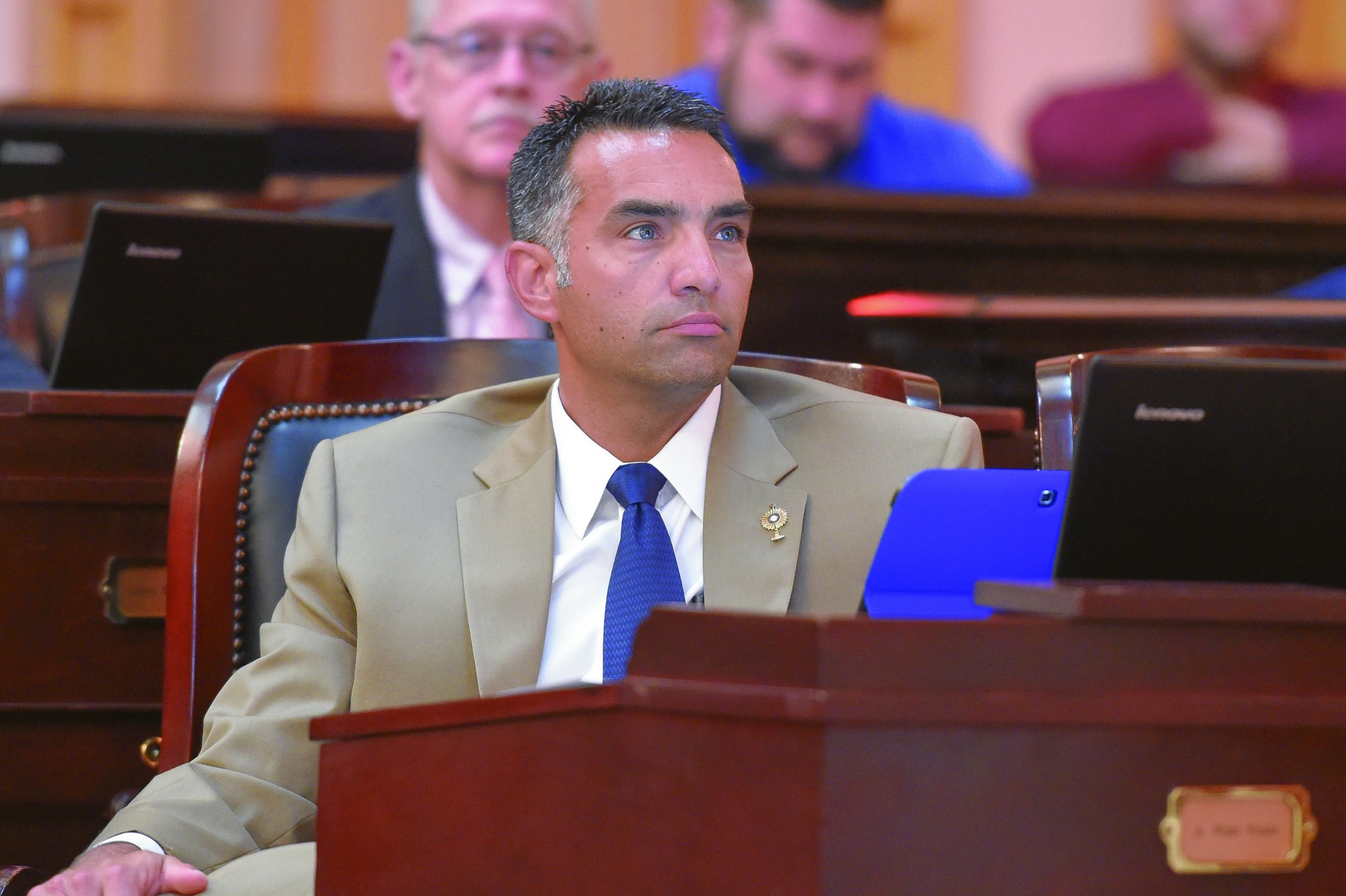
    State Rep. Nino Vitale, R-Urbana. Photo from Ohio House website.

    Vitale was said to be a big supporter of Householder now charged with racketeering

    BY: MARTY SCHLADEN – Ohio Capital Journal

    CINCINNATI — Former state Rep. Nino Vitale on Tuesday testified that he didn’t have much of a memory for — nor was he much interested in — raising money or campaigning for office. At several points, the Republican from Urbana even said he didn’t remember what year he was first elected to the legislature (it was 2014.)

    But on cross examination, federal prosecutors showed him records and written communications indicating that Vitale was regarded as an enthusiastic member of “Team Householder” who, as part of the team, received thousands in campaign funds and other assistance that originated with Akron-based FirstEnergy.

    As former Speaker Larry Householder’s appointee to chair the Energy and Natural Resources Committee, Vitale in 2019 helped to pass a $1.3 billion bailout that primarily benefited FirstEnergy. When they announced arrests in the summer of 2020, federal prosecutors said the bailout was at the center of what was likely the largest bribery and money-laundering scandal in Ohio history.

    Vitale was called by Householder’s lawyers in the trial, which started on Jan. 23. Householder and former Ohio Republican Party Chairman Matt Borges are charged with racketeering in an alleged scheme to use $61 million in utility money to elect friendly lawmakers who would make Householder speaker and then bail out FirstEnergy’s failing nuclear and coal plants.

    Vitale has long been known for controversial political gestures — including refusing to wear a mask at the height of the coronavirus pandemic because human faces are “the likeness of God.

    But on Tuesday, Vitale portrayed himself as a reluctant politician. In a possible nod to how uncompetitive his district was, the former lawmaker said he didn’t have to do much to get reelected.

    “The whole marketing side of things wasn’t big on my radar because my district elected me overwhelmingly and frequently,” Vitale said.

    Householder’s attorneys seemed to call Vitale and other Householder supporters in the House to testify so they could say they believed the bailout law was good public policy. But U.S. District Judge Timothy Black limited such testimony, saying the proceeding wasn’t a referendum on the merits of House Bill 6.

    Vitale also said he never felt pressured to support Householder for speaker or to support the bailout. 

    But Assistant U.S. Attorney Megan Gaffney Painter then posed a series of questions that seemed to be intended to show that Householder made Vitale chairman of the Energy and Natural Resources Committee not because Vitale had any particular qualifications, but because he was an enthusiastic member of Team Householder who would do the speaker’s bidding.

    Vitale tried to refute that characterization.

    When Painter tried to get him to agree that he had little in his background to school him in large-scale electricity generation or the management of the state’s natural resources, Vitale wouldn’t. 

    “I know quite a lot about those topics, actually,” he testified.

    Vitale said he works for his wife’s family’s company, which makes parts for truck brakes. It has an electricity substation and it sits on 30 acres, and those factors gave him expertise on the power grid and the environment, Vitale said.

    When Painter proposed that Vitale had no academic credentials that would make him expert in those areas, Vitale disagreed again, saying his business degree provided him with such knowledge.

    “In a business degree, part of what you study is energy inputs to a business,” Vitale said.

    The former lawmaker also claimed that he wasn’t very familiar with FirstEnergy and had to be convinced to support the bailout bill. Then Painter displayed a text message from FirstEnergy Vice President Michael Dowling to CEO Chuck Jones on Feb. 17, 2019 — before the bill was introduced. Earlier testimony showed that the executives believed the bailout was critical to their company, and Jones had asked Dowling who was going to chair the House Energy and Natural Resources Committee.

    “Nino Vitale from Springfield will chair,” Dowling responded. “Good friend and bigtime (Householder) supporter.”

    Confronted with the message, Vitale said he’d only met Dowling a few times.

    Vitale also disputed that it was Householder who first broached the idea of Vitale being chairman.

    “I asked him,” Vitale said.

    Then Painter played a voicemail message that Vitale left for Householder in January 2019, just after Householder had been made speaker. In it, Vitale said he had talked the matter over with his family.

    “I’m in if that’s what you want me to do,” Vitale said.

    As Painter tried to move on to another question, Vitale insisted that chairing the Energy and Natural Resources Committee was originally his idea.

    And to refute Vitale’s claims that he was half-hearted about fundraising and political marketing, Painter displayed an October 4, 2017 text message Vitale sent to Jeffrey Longstreth, Householder’s right-hand man in making him speaker and then passing the bailout. It certainly seemed to link FirstEnergy’s policy agenda to Vitale’s desire for corporate contributions.

    FirstEnergy lobbyist “Ty Pine wants to meet with me on a legislative matter and I want to meet with him on a contribution matter,” Vitale said in his message.

    After more than a month, testimony in the trial is entering the homestretch. Householder’s final witnesses — including Householder himself — are expected to testify Wednesday and Thursday. Then it will be Borges’ turn to call any witnesses he may have.

    After that, the prosecution and the defense teams will make closing statements, Judge Black will instruct the jury and then it will deliberate.

  • Defense lawyer boils over in Ohio utility bailout and political bribery racketeering trial

    Defense lawyer boils over in Ohio utility bailout and political bribery racketeering trial

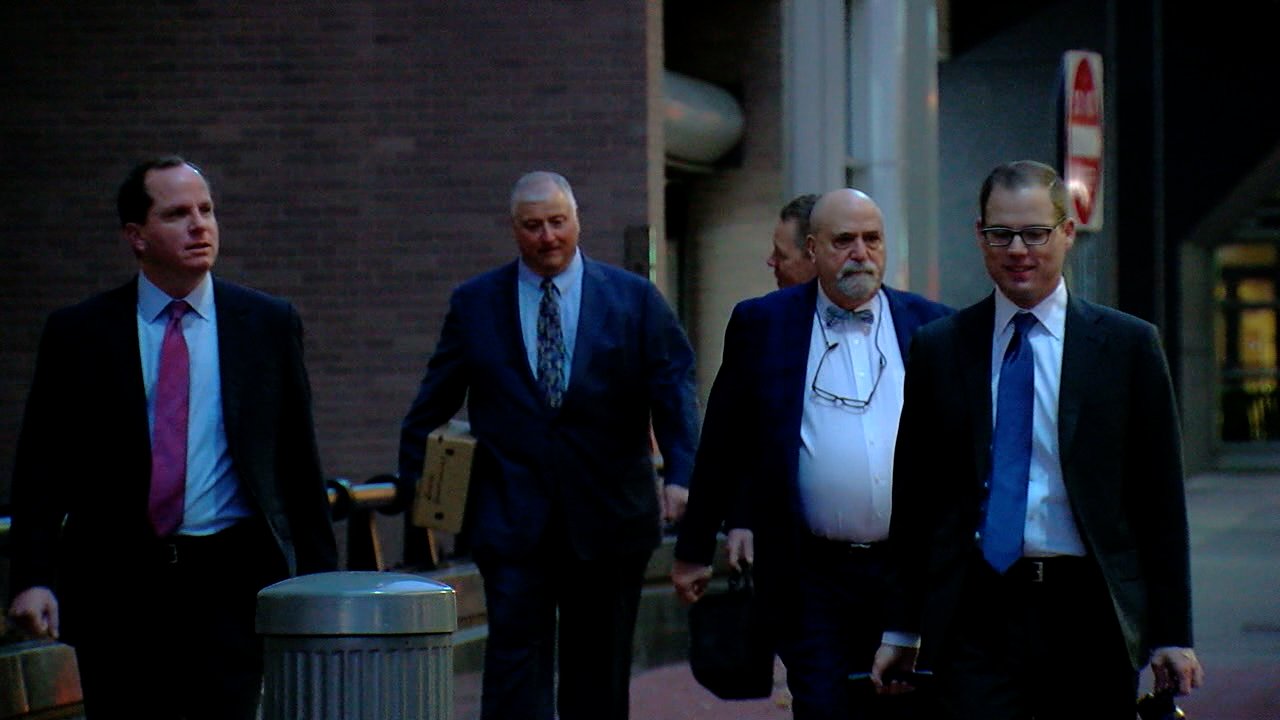
    Former Ohio House Speaker Larry Householder, a Perry County Republican, second from left, with attorneys outside of his racketeering trial. Photo courtesy of WEWS.

    BY: MARTY SCHLADEN – Ohio Capital Journal

    CINCINNATI — The defense of former Ohio House Speaker Larry Householder erupted Thursday in Householder’s epic corruption trial.

    Defense attorney Mark Marein of Cleveland suggested it was because of U.S. District Judge Timothy Black’s unfairness. But it came after a day in which the defense team’s attempts to undermine prosecution witnesses’ credibility might have come to naught.

    The sparks flew in the fourth week of the trial. Householder and former Ohio Republican Party Chairman Matt Borges are accused of racketeering in a scheme to use $61 million in utility money to make Householder speaker and pass a $1.3 billion bailout that mostly benefited Akron-based FirstEnergy, the primary contributor.

    Earlier on Thursday, defense attorney Steven Bradley cross examined Jeffrey Longstreth, who operated as Householder’s right-hand man through his bid for the speakership and the 2019 passage and defense of the bailout law, House Bill 6.

    Longstreth was arrested along with Householder, Borges, and two others in July 2020. He is now cooperating with prosecutors in exchange for a sentencing recommendation of less than six months.

    The dinners

    During direct examination Wednesday, Longstreth described fancy dinners with Householder and FirstEnergy’s top executives during Donald Trump’s inauguration in 2017 in Washington, D.C. 

    At one, Longstreth described being at one end of a long table with FirstEnergy Vice President Michael Dowling in a noisy steakhouse, while Householder sat with company CEO Chuck Jones at the other. Longstreth said he couldn’t hear the conversation at the other end of the table, but at his end Dowling told him FirstEnergy needed help and it wanted to help Householder become speaker.

    Dowling instructed Longstreth to set up an organization to receive FirstEnergy’s millions, Longstreth said. 

    “He said (the money) needed to be undisclosed and unlimited contributions,”  Longstreth testified on Wednesday.

    Apparently seeking to impeach Longstreth’s memory, Bradley on Thursday showed the jury an itinerary indicating that Jones took the FirstEnergy corporate jet to D.C. the morning after the steakhouse dinner. He also produced a credit card receipt showing that Jones attended a dinner at a different restaurant the following night than where a second, more-intimate dinner was described by Longstreth on Wednesday.

    But Assistant U.S. Attorney Emily Glatfelter asked Longstreth if itineraries change. He agreed they often do.

    She then produced credit card receipts and car records that indicated Jones may well have been in D.C and could have attended the first dinner as Longstreth described. She also showed that on the following night, the dinner Bradley said Jones attended ended about 30 minutes before the one Longstreth said he attended began.

    Longstreth testified that it was common at presidential inaugurations to attend multiple receptions and dinners in the same evening. Apparently that’s a major purpose of the quadrennial gatherings: To stay in $600 hotels, eat multiple $200 dinners, and figure out how to split up the taxpayers’ —or  ratepayer’s — money.

    Whistleblower former state Rep. Dave Greenspan

     Former State Rep. Dave Greenspan, R-Westlake. Official photo.

    After Longstreth left the stand, the prosecution called former state Rep. Dave Greenspan, R-Westlake. He said he never voted to make Householder speaker and he never supported House Bill 6. 

    “I didn’t believe in corporate bailouts,” Greenspan said, explaining that this one was especially hard to support because FirstEnergy hadn’t shown that it needed the money and the bill put no restrictions on how it was spent. “There was nothing in the bill that required FirstEnergy to do anything.”

    As a sign of how unpopular the bill was, 17 Republicans voted against it when it passed the House in April 2019. And it’s an important reminder that it would never have become law without the support of Ohio House Democrats.

    Greenspan described the intense pressure he was under from Householder and lobbyist Neil Clark to vote for the bill. He was so disturbed by it that he contacted a member of the U.S. Marshal’s Service, who put him in touch with the FBI.

    During cross examination, Marein, another of Householder’s attorneys, seemed dumbfounded that Greenspan contacted the FBI, which he referred to as the “Federal Bureau of Investigation” in a tone that in many places would pass for shouting.

    Then, as he tried to read lengthy passages of Greenspan’s grand jury testimony, Judge Black repeatedly cut the attorney off and told him to ask a question.

    Another attack at the judge

    On Feb. 1, Marein undertook a risky gambit by accusing the judge of bias, saying that Black had it in for his client because Householder opposed Black’s run for Ohio Supreme Court 22 years ago. After the jury filed out Thursday afternoon, Marein doubled down.

    He started off so loudly that Black admonished Marein to show the same respect for him that Black believed he’d shown Marein.

    A little more quietly, Marein said, “You’re really tying our hands. Overruling our objections. Quite frankly, I don’t know what’s going on.”

    Then he added, “Is there something personal against Mr. Householder?”

    When Marein finished, Black asked, “Is that all?”

    Marein said yes, Black banged his gavel and said, “We’re in recess.”

  • DeWine refuses to explain aide’s role in bailout scandal

    DeWine refuses to explain aide’s role in bailout scandal

    By Marty Schladen and Ohio Capital Journal

    If you asked most people to start up a dark money group and then funnel more than $1 million through it and into another such group, they’d probably want to know what it was going to be used for.

    But now that the second 501(c)(4) dark-money group, Generation Now, has pleaded guilty to being at the heart of one of the biggest bribery and money laundering scandals in Ohio history, Gov. Mike DeWine is refusing to discuss what one of his top aides was told when he formed the first dark money group, Partners for Progress.

    Generation Now pleaded guilty earlier this month to being the major conduit of money between Akron-based FirstEnergy and related organizations and the effort to pass House Bill 6, a $1.3 billion bailout that mostly went to two nuclear plants FirstEnergy started spinning off in 2016. DeWine signed the bill into law in 2019.

    Last summer, federal authorities arrested then-Speaker Larry Householder and four associates as part of the scandal and two of the associates later pleaded guilty.

    As he announced the arrests, U.S. Attorney David DeVillers stressed that the dark money made the massive scandal possible.

    “I don’t see how (the conspiracy) could possibly have happened” without it, DeVillers said.

    The feds haven’t accused DeWine’s aide, Legislative Affairs Director Dan McCarthy of wrongdoing, but they refer to his dark-money group in an affidavit supporting Householder’s arrest as “Energy Pass-Through.”

    Among the activities Generation Now pleaded guilty to was engaging in transactions “designed to conceal the nature, source, ownership and control of the payments” from FirstEnergy and associated companies.

    But DeWine and McCarthy don’t want to discuss whether McCarthy intended to obscure that FirstEnergy was bankrolling an effort to prop up nuclear plants it was spinning off.

    Asked last week about the matter, DeWine Press Secretary Dan Tierney pointed to a statement McCarthy issued last summer when The Cincinnati Enquirer first reported that he’d started a dark money group that helped fund the HB 6 effort.

    In it, McCarthy explained that in addition to his lobby work for FirstEnergy, he had also worked with people who had adversarial relationships with Householder and one of his indicted associates, Neil Clark, so “any insinuation I was involved in this disgusting scheme is without merit.” 

    But he didn’t explain why he founded Partners for Progress two days after the founding of Generation Now, or why a week later his dark money group got $5 million from FirstEnergy and within a month it was forwarding some of that money to Generation Now. 

    In early 2019, McCarthy stopped lobbying for FirstEnergy and resigned as president of Partners in Progress to become DeWine’s legislative affairs director. The following October, while McCarthy was advocating for HB 6 in that capacity, FirstEnergy and associates wired $20 million to McCarthy’s former money group and it forwarded $10 million of that to Generation Now the same month, the federal affidavit said.

    Despite these and other revelations about DeWine appointees, DeWine on Tuesday declined to give a more complete explanation of what McCarthy believed he was doing when he started Partners for Progress and began funneling money into a now-guilty dark money group.

    “As far as I know, Dan McCarthy has been well-respected for many, many years, long before he started working for me as our legislative director and I have faith in his integrity,” DeWine said.