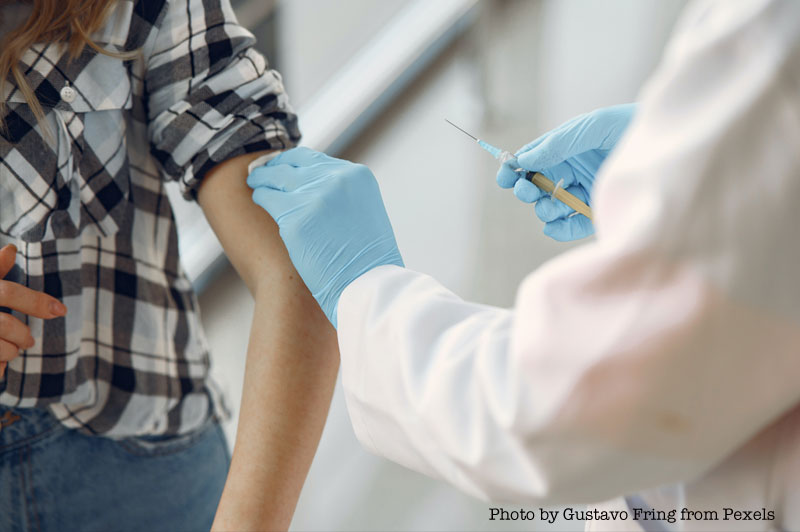
Loveland, Ohio – Looking for a COVID-19 vaccine provider near you? Visit https://vaccine.coronavirus.ohio.gov to search for providers vaccinating in the current phase, Ohioans 80 and older, by county and ZIP code.
Editor’s Note: This is a challenging website to navigate, however, it is the promised unveiling of the national database of COVID 19 vaccine providers.
Loveland, Ohio – Julie Dunn the administrative assistant in the board of education office asked Loveland Magazine to share this information to the broader community.
The Board of Education is seeking input from staff, families and the community on their “commitments for the 2021-2022 school year”.
Dunn asks that you please review the current LCSD Board Commitments (below) and provide feedback through answering the questions. The survey will remain open until Wednesday, January 20 at 9 AM.
Gov. Mike Dewine’s latest statement on lethal injections could mean the Ohio death house has seen its last execution.
The state hasn’t executed anybody since July 2018, when convicted killer Robert Van Hook wheezed and gasped as he died on a gurney at the Southern Ohio Correctional Facility outside Lucasville.
DeWine, who took office the following January, started canceling executions late that month after a federal magistrate compared Ohio’s three-drug protocol to waterboarding and wrote that experts convinced him that one of the drugs “would feel as though fire was being poured” into a prisoner’s veins.
The 6th U.S. Circuit Court of Appeals later ruled that Ohio’s lethal injection protocol is constitutional, but by that time publicity surrounding the issue prompted drug makers to step up their pressure on the state to stop using their products in executions. DeWine has cancelled all subsequent executions as drug makers have threatened not to sell the state drugs for any purpose if they kept ending up in the death chamber.
Ohio Governor Mike DeWine
On Tuesday, DeWine told the Associated Press that lethal injection as an execution method was no longer an option for Ohio.
The comment was greeted enthusiastically by groups seeking to stop the death penalty.
“We’re living in such a politically divisive climate nationally and in state, but the left, right, and everyone in between can agree on one thing: the death penalty is irreparably flawed,” Hannah Kubbins, executive director of Ohioans to Stop Executions, said in an email. “Governor DeWine’s comments were big news, but it’s also common sense that the death penalty doesn’t work to deter crime or keep communities safe — we know this. The death penalty is purely security theater and no longer aligns with Ohio’s values.”
A national group of conservatives opposed to the death penalty praised DeWine for taking lethal injections off the table — at least while he’s in office.
Hannah Cox
“We continue to applaud Governor DeWine’s strong conservative leadership and are excited to see the groundswell of support especially among Republicans — for ending this failed system in the state of Ohio,” Hannah Cox, national manager of Conservatives Concerned about the Death Penalty, said in an email.
As lethal injections become more problematic, DeWine has few alternatives — even if he wanted to employ them.
“All indications are that Gov. DeWine is not pushing for alternative methods,” said Robert Dunham, executive director if the Death Penalty Information Center. “I think (DeWine’s Tuesday statement) is a very significant development.”
Some states have alternative methods on their books.
In December 2019, as Tennessee executed a man in the electric chair, witnesses said they saw smoke or steam rising from his head. When another man was electrocuted there in February, witnesses didn’t make any similar reports, but nationally, no other state has used the electric chair since 2013.
Utah still has death by firing squad on its books, but that state hasn’t executed anybody in more than a decade.
Oklahoma, Alabama and Mississippi allow for executions using nitrogen gas to suffocate a prisoner but Dunham said that, as with death drugs, manufacturers have been unwilling to supply the gas for that use.
“We’re essentially looking at a process in which the market has opted out,” Dunham said of businesses’ unwillingness to participate. “Nobody wants to be seen as participating in killing people.”
Nobody, that is, other than the Trump administration.
As the coronavirus pandemic took hold, no states conducted executions since the summer. Meanwhile, no federal prisoners had been executed since 2003. But on July 14, the first of eight were executed at the federal prison in Terre Haute, Ind.
The men were killed with an injection of pentobarbital, which Dunham said the government obtained from an unnamed compounding pharmacy.
A winter without an Ohio State-Michigan football game is, well, it’s like hot soup without a spoon. It’s like an Ohio highway without orange barrels.
“I know that life in Ohio is not complete without the glory of Ohio State football and other football,” President Trump told supporters in Circleville.
The rivalry is older than the Circleville Pumpkin Show. The two teams first played in 1897 and competed in most years over the next decade or two, though they took several years off during World War I.
Starting in 1918, though, the Buckeyes and Wolverines faced off in every season thereafter. Until this year. A yearly tradition that began the year of the Spanish flu pandemic ends the year of the COVID-19 pandemic.
The streak of playing 102 years in a row predates Kewpee burgers in Lima and Skyline chili in Cincinnati. It predates the construction of the Cedar Point causeway in Sandusky and the Terminal Tower in Cleveland.
It even predates the founding of the NFL in Canton.
Life was different in 1917, the last year the two teams didn’t play. Let’s look at a few news storylines from that year:
Darke County newspaper: Ohio lawmakers are stupid
The Greenville Journal in western Ohio offered a rather provocative headline on March 15, 1917: “General Assembly Noted As Peculiar.” The subheadline: “Legislature, Taken in the Aggregate, Is Below Average Ohio Body in Intellectual Force.”
Newspapers weren’t nearly as polite back then.
Dr. Clarence Maris, a Columbus physician and political writer, offered an explanation as to why the 1917-18 Ohio General Assembly was, in his view, lacking in intelligence.
“(M)any of the Democrats elected in normally Republican counties or senatorial districts were thought by the party managers to have no chance for election,” Maris wrote,” and men were put up to be sacrificed, but the (Woodrow) Wilson peace wave carried them into office.”
Maris went on to list a number of legislative projects undertaken by the legislature to back up his claim. In defense of Ohio’s lawmakers from the 1910s, Maris made a lot of wild claims. A decade later, the New York Times quoted him as saying Ohio State University was rife with communism and that the “youth movement” at OSU was controlled by Moscow.
Ohio overhauls its statewide health authority
The above Greenville Journal paper had another noteworthy article on March 15 in a separate column called “News Culled In The Capital.”
The Ohio House of Representatives had just voted to abolish the state board of health. Instead, lawmakers wanted to have a singular state health commissioner run the show, which would be aided by an advisory council. Governor James Cox supported the move.
The reason for this change? The Marion Star reported the health board “has been in the limelight repeatedly during the last year because of internal dissensions.”
The Lima Times-Democrat reported that “too much bickering” from the seven health board members made them the “subject of considerable criticism.” The newspaper continued: “The health commissioner, to be chosen by the council, with the governor’s approval, will be endowed with administrative and executive powers.”
The new law specified the commissioner had to be a physician and be skilled in sanitary science. The term would be for five years. Dr. A. W. Freeman of Cincinnati was chosen in September 1917 to be the first state health commissioner.
New Cleveland Indians pitcher paid a pretty penny
Team owner Jim Dunn made a big bet in signing pitcher Joe Wood ahead of the 1917 season.
This illustration of “Smoky” Joe Wood printed in a 1917 edition of the Sandusky Star-Journal.
After all, Dunn paid $15,000 for his prized new hurler.
“Smoky” Joe Wood, formerly of the Boston Red Sox, didn’t pitch in 1916. But the Tribe hoped he would return to form in ‘17.
“Tris Speaker, Wood’s former teammate and close friend, has said that he believes Joe is in as good of shape as he ever was,” the Sandusky Star-Journal reported. “But of course till Wood shows the goods on the diamond the deal is completely a gamble.”
For reference, a century later, Cleveland Indians star Carlos Santana was paid $20,333,333 for the 2019 season. He came to bat 686 times that year, earning $29,640 per plate appearance.
In essence, Santana earned “Smoky” Joe Wood’s 1917 salary twice over every time he stepped in to hit.
Cassie Mattia is the Associate Editor of Loveland Magazine and lives in Historic Downtown
Loveland, Ohio – Winter sport student-athletes in Loveland have been competing, and wow have they claimed some excellent victories already! Although COVID-19 positive cases have been spiking in the tri-state area, LHS Athletics has managed to keep the athletes safe, healthy, and competing. So without further ado here is your Loveland Sports 411 for December 7th-10th!
Men’s Basketball
On Tuesday, December 8th Loveland’s Men’s Basketball Team battled against Walnut Hills at home but unfortunately came up with a loss, 57 – 28. Addison Hearn was the Tigers’ lead scorer with 12 points.
Earlier this month the Men’s Basketball Team gained two victories against Harrison and West Clermont. Loveland is currently 2-1 overall and 1-1 in the ECC.
Loveland will travel to Winton Woods on the 11th and to Mariemont on the 12th. Both games will tip off at 7:30 PM.
Women’s Basketball
The Loveland Women’s Basketball Team played Milford at home on Monday, December 7th, and pulled out a conference victory, 45 – 35. Nia Kemper was the Tigers’ lead scorer with 15 points and Olivia Raby hit the boards hard collecting 8 rebounds.
On Wednesday, December 9th Loveland played in another rivalry ECC match-up against Little Miami at home. The Tigers won 58 – 51. Tess Broermann was Loveland’s top performer with 20 points, 4 rebounds, 3 assists, and 2 steals while Jenna Batsch played quite the game as well ending with 14 points, 7 rebounds, 3 assists, 2 steals, and 4 blocks.
The Tigers are now sitting in 2nd place in ECC with a 4-1 overall record and 3-0 ECC record. The Loveland Women’s Basketball Team will face Turpin on Turpin’s home court on the 12th at 2 PM.
Men’s and Women’s Swimming
Both Loveland’s Men’s and Women’s Swimming Teams will compete on Friday, December 11th at Milford at 6 PM.
Men’s Bowling
The Loveland Men’s Bowling team competed on Tuesday, December 8th where they won against Milford, 2691-2636 (Match Details). Brayden Shepard was the Tigers’ top performer with a 223 average and 446 Pins.
On Wednesday, December 9th Loveland won against Walnut Hills, 2564-2238 (Match Details). Sherron Peacock was the Tigers’ top bowler with a 210 average and 420 Pins.
The Men’s Bowling Team are 4-1 overall and 3-1 in the ECC capturing the 3rd place spot. Loveland will compete again today against Winton Woods at 4 PM at Omni Funplex and again on the 13th in the Holiday Classic at Western Bowl at 9:30 AM.
Women’s Bowling
The Loveland Women’s Bowling Team competed on Tuesday, December 8th against Milford where they won 1989-1528 (Match Details). Ashley Gilker was the Tigers’ top performer with a 188 average and 376 pins.
On Wednesday, December 9th the Tigers captured another win against Walnut Hills, 2057-1518 (Match Details). Ashley Gilker was the top bowler for the Tigers with a 202 average and 404 Pins.
Loveland’s Women’s Bowling Team is now 2-3 overall and 2-2 in the ECC. The Tigers will take on Winton Woods today at 3:30 PM at Omni Funplex and on the 13th will participate in the Holiday Classic at Western Bowl at 9:30 AM.
Academic Team
The Loveland Academic Team faced Milford in two games on Wednesday, December 9th winning 81-47 in both games.
The Academic Team is currently 2-0-0 in the ECC and will play again on January 6th against Little Miami at 4 PM.
For more of Loveland High School’s latest sports news stay tuned to the Sports 411 With Me, Cassie Mattia!
The most terrifying places these days are the eviction courts in Hamilton and Butler counties.
Go see them in the Butler County Government Building in Hamilton, and in Jail Building (Justice Center), Room B, 1000 Sycamore St. in Cincinnati. You will see, as I did, single mothers of small children pleading vainly for more time to find another place to stay, only to hear the magistrate issue a writ of possession enabling the marshals to put the families on the street in three or four days. The mother’s head sinks. She is hurried away from the podium by the deputy as the next case is called.
Some tenants present the court with the Centers for Disease Control eviction moratorium declaration, which purports to postpone evictions until Dec. 31. If the tenant does not send the landlord a copy of the declaration, it is considered invalid, and the eviction proceeds.
Some tenants have sought rent assistance, but the government agency refused to provide it because the landlord is requiring late fees in addition to the rent. And the eviction proceeds. Many tenants are finding out that there is no more rent assistance.
Nearly all of the evictions are for nonpayment of rent, and the pleas of tenants that partial payments of rent be accepted are declined by the landlords. The evictions proceed.
There are few lawyers representing tenants. The Legal Aid lawyers are overwhelmed, and there are few private lawyers volunteering for The Volunteer Lawyers for the Poor. A tenant going to eviction court without a lawyer is doomed.
Come the new year in January, and there will be a disaster for tenants. Governments must act now. The CDC temporary moratorium must be continued. Congress must provide additional rent assistance. The city of Cincinnati, commendably, has provided additional funding to Legal Aid to provide more tenants with lawyers. Butler County should do the same.
More emergency housing aid must be provided short term. And longer term, Congress and the Biden administration has to dramatically increase the funding for Section 8 vouchers, which enable tenants to pay 30% of their income for rent and enables them to seek housing on the private market – the landlord receiving the balance of the rent from the government. According to the 2019 American Housing Survey, more than half of all renters are paying 30% or more of their income on rent. These families are constantly living on the brink of eviction.
Now is the time for Sen. Rob Portman, Representatives Steve Chabot, Warren Davidson and Brad Wenstrup to come to the aid of their countrymen and women. First, come to eviction court and see firsthand what is happening.
Cassie Mattia lives in Historic Downtown and is the Associate Editor of Loveland Magazine
by Cassie Mattia
Loveland, Ohio – Loveland’s very own food pantry is now open for business!
On Thursday, September 10th, LIFE (Loveland InterFaith Effort) Food Pantry showed off their beautiful new space located at 541 Loveland Maderia Road in the Shopper’s Haven Plaza to the Loveland community with an official ribbon-cutting ceremony. Although invites to the ceremony were limited due to the COVID-19 stipulations many community members, as well as the Mayor of Loveland, Kathy Bailey, and the Little Miami River Chamber of Commerce President, CeeCee Collins, rallied around to get a look at the food pantry’s new location.
Luckily Loveland Magazine TV got a personalized tour by one of LIFE Food Pantry’s top volunteers after the ribbon was cut and the doors were opened!
The tour showed the 2,000 square foot space filled with donations from Walmart, Kroger, Fresh Thyme, the 13 congregations that support the pantry, and several different food drives.
Unlike the food pantry’s previous location at Prince of Peace Lutheran Church clients will now be able to feel as though they are shopping at their local “Corner Store” because of the added space and organization.
Aisles within the pantry include proteins, pasta, prepared meals, veggies, fruits, baking supplies, soups, and much more! Each aisle is separated by the size of the family in need making it that much easier for clients to look at their choices and shop for themselves. This is what LIFE Food Pantry calls a “Choice Pantry.”
The pantry’s new space also includes what they refer to as a “Tiger Closet,” which is specifically for Loveland students who are in need of food and other supplies. To see the full Loveland Magazine TV video of the LIFE Food Pantry’s opening day and ribbon-cutting ceremony click below!
Coincidentally enough LIFE Food Pantry’s opening day happened to be on the same day as World Hunger Day making the day that much more important to everyone involved.
Since the inception of the COVID-19 pandemic LIFE Food Pantry’s clients have increased by 1/3. Currently, LIFE serves 250 families (nearly 500 people a month) and they plan on seeing that number increase now that they have opened a larger location. Anyone who lives in the 45140 zip code can be helped by the food pantry.
To learn more about what LIFE Food Pantry offers and the new locations hours click below!