Tag: 911

  • Steve Wettengel and 911 dispatcher helps save man’s life

    Steve Wettengel and 911 dispatcher helps save man’s life

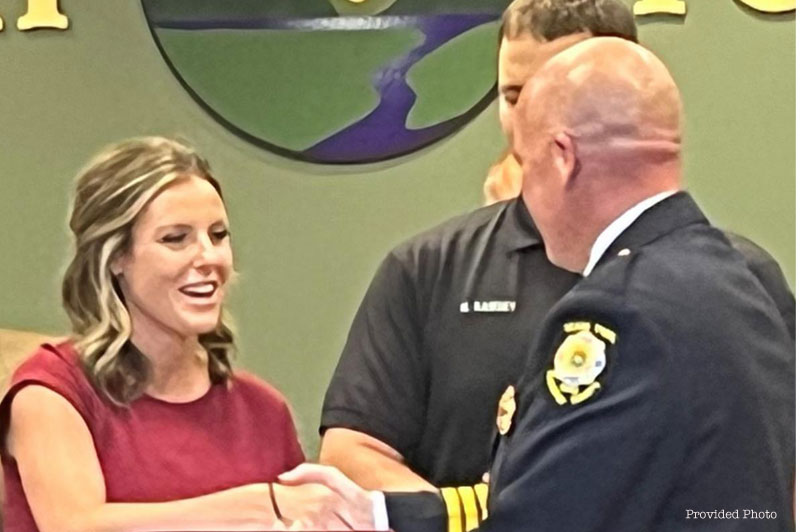
    (Photo) “Steve made a comment that without the calm voice and step-by-step instructions he received from Jessie, it would have been very difficult to manage the situation,” Miami Township Fire & EMS Chief Steve Kelly said when presenting Wettengel and Brooks with Citizen Lifesaver awards on June 21.

    Miami Township, Ohio – When his friend Thomas Fairbanks collapsed after stepping out of a car at a home remodeling job in Miami Township on March 29, Steve Wettengel quickly called 911.

    Clermont County 911 Center Dispatcher Jessie Bocks relayed CPR instructions to Wettengel, helping save his friend’s life.

    “Steve made a comment that without the calm voice and step-by-step instructions he received from Jessie, it would have been very difficult to manage the situation,” Miami Township Fire & EMS Chief Steve Kelly said when presenting Wettengel and Brooks with Citizen Lifesaver awards on June 21.

    Miami Township officers Kelsey Feverston and Daniel Stephan, along with Assistant Chief Daniel Mack from the township’s Fire & EMS, arrived at the same time. Feverston and Stephan grabbed their AED, while Mack brought a medical bag to the driveway where Wettengel was performing CPR on his friend. Medic 28 with Firefighter/Paramedics Mike Cooper and Jim Martin and Engine 29 with Lt. Jeff Moore and Firefighter Paramedics Jamie Williams and Michael Ramsey arrived about a minute behind with advanced life support equipment. Captain John Dold, who was running as District 26, arrived soon thereafter.

    Officers Feverston and Stephan took over CPR while Assistant Chief Mack applied the police AED to Thomas. A shock was advised and Thomas was immediately defibrillated. After about a minute of CPR, a pulse was checked – and it was found that the AED had successfully converted Thomas back into a heart rhythm with a pulse. Thomas was then transported to Bethesda North Hospital and Advanced Life Support procedures were performed en route.

    “Thanks to the performance of bystander CPR and the work of rescuers, including our communications center, police and fire and EMS personnel, Thomas is with us this evening,” Kelly said.

  • Clermont County implements RapidSOS

    Clermont County implements RapidSOS

    Clermont County, Ohio – New technology allows Clermont County to take emergency calls and dispatch help with speed and precision undreamed of just a few years ago.

    “It has revolutionized 911,” said Dominick Daulton, program administrator, Department of Public Safety Services. “It’s truly impressive.”

    The department implemented RapidSOS in 2018 to provide more accurate location of 911 callers. The free technology uses GPS from cell phones.

    “It’s a huge game-changer for dispatchers in being able to locate callers more quickly,” Daulton said. “The location is available on dispatchers’ computer screens before they even answer the phone.”

    The department’s 911 Center is the primary public safety answering point for Clermont County. Twelve emergency resource technicians/dispatchers and four supervisors handle calls and dispatch services for all townships and villages in Clermont County, except for Milford, Loveland and Union Township. The center receives 13,000 calls per month on average, about 5,300 for 911 emergencies. Dispatchers enter information in sophisticated Computer Aided Dispatch (CAD) systems. They strive to have help dispatched within 62 seconds of receiving a call.

    RapidSOS started as a website where dispatchers had to manually type in the phone number each time a call was received. If a phone was equipped with RapidSOS (Apple iOS 12 and Android 4.0 and newer), dispatchers would see a location. In March 2020, Clermont County implemented an upgrade called Jurisdiction View that allowed locations to appear on the dispatcher’s computer screens before their phone even starts ringing. Dispatchers see a satellite map along with the exact location and information about the caller. Info you’ve provided through the Health app on iPhones such as name, age, height, weight, medications and allergies also appears.

    The upgrades keep coming, too. RapidSOS Alerts started in 2021, with home alarm companies being able to send supplemental alerts through the RapidSOS Portal sometimes minutes before a phone call from the monitoring center. This will transition to direct alerts from RapidSOS in the near future, eliminating phone calls from alarm companies, to improve response times by minutes.

    The 911 Center can also receive information directly from vehicles equipped with automatic crash notification systems.

    Dispatcher Markie Planck has seen technology improve timeliness and accuracy consistently during her nearly seven years with Clermont County.

    “I’m really glad we got RapidSOS,” Planck said. “We can now see on a computer screen where someone is before we even get the call. Oftentimes, members of the public don’t know where they are, but we can see exactly and dispatch fire or EMS to them quickly.”

    In addition to major technological advances in receiving calls, the 911 Center in August 2020 implemented an automated fire and EMS dispatch technology called Locution. This helps dispatchers, who also are call takers, to put out calls quickly while focusing on the call they may be on. There is less of a delay when dispatching calls – and units in the field can talk to a dispatcher while dispatches through Locution are going out. The center can notify the one fire station needed for an emergency, instead of automatically alerting all stations in an area and sending unneeded off-hours wakeups to firefighters at other stations that aren’t needed for that particular emergency.

    A few years back there was no quick way to know where callers were unless they used a house phone. In the beginning, cell phones only provided dispatchers with the location of the nearest cell phone tower, known as Phase 1.  Then came the ability to triangulate an approximate location of the caller using multiple cell towers, which is known as Phase 2.  Then came the latest upgrades which use the actual GPS in the phone to locate callers, with more changes on the way, including text-to-911.

    John Kiskaden, director, Department of Public Safety Services, said that 80 percent of people now use wireless phones, making the upgrades more critical.

    “It didn’t take long,” said John Kiskaden “All of the technology came together quickly.”

  • Loveland/Symmes Fire Department Introduces “Smart911” to the Community

    Loveland/Symmes Fire Department Introduces “Smart911” to the Community

    Columnist Cassie Mattia lives in Historic Downtown Loveland

    Loveland, Ohio The speed and the accuracy when receiving a 911 call are top priorities to any 911 dispatcher. Although these 911 dispatchers do their best to focus on speed and accuracy one fact that many people may not know is that 80 percent of 911 calls are made from a cell phone meaning no matter how quickly a dispatcher works to alert first responders that dispatcher is only able to identify the caller’s phone number and a VERY vague sense of their location. If a 911 caller is unable to speak due to their emergency situation how is a 911 dispatcher able to effectively get emergency personnel to where they need be quick? This is a problem that emergency responders have been working hard for a very long time to make better or even fix permanently.

    Smart911

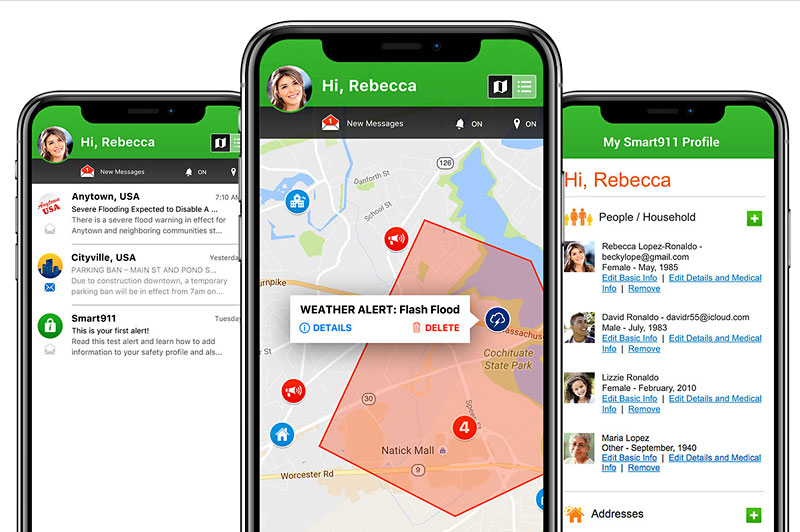
    Recently the Loveland-Symmes Fire Department and Northeast Communications came across a solution that many police and fire departments have adopted due to the 911 issue. It’s called “Smart911,” and it’s a national 911 database that ensures when you dial 9-1-1 your information is readily available. According to Smart911’s website when you download the Smart911 application to your phone, “you can provide 9-1-1 call takers and first responders critical information you want them to know in any kind of emergency.

    A Mobile App For A Mobile Community

    You can now download the Smart911 app for free to create a Safety Profile and receive targeted alerts.

    When you call 9-1-1, your Smart911 Safety Profile displays on the 9-1-1 screen and the call takers can view your addresses, medical information, home information, description of pets and vehicles, and emergency contacts. You can provide as much or as little information as you like.

    Smart911 is a national service meaning your Smart911 Safety Profile travels with you and is visible to any participating 9-1-1 center nationwide.”

    Jon D. Frye, Deputy Chief of Loveland-Symmes Fire Department couldn’t hold back his excitement for the Smart911 partnership with Northeast Communications.

    “We are so excited to announce that Northeast Communications has partnered with Smart 911, a National 911 Database to ensure your information is available at the time of need.  Please register yourself and your family at www.smart911.com or download the Smart911 app on your smartphone. You can list all your information about your home, medical history, medications, best door to access and much more. Anytime you call 911 within our community your information will automatically be available to our dispatchers,” Frye explained, “Smart911 is free, all we ask is our residents and businesses register online.  Wherever you travel your information goes with you, as long as the nearest 911 center are subscribers of the Smart911 product,” Frye added, “Smart 911 has many other features, such as reverse text 911 if a caller dials 911 but is unable to speak due to the situation, language barrier or medical issues the dispatcher can immediately send a text to your phone number and start a text conversation. Smart 911 instantly accesses all of the information that you have put into the system to ensure the quickest, most appropriate information is passed along to first responders.”

    If you would like more information on how you can get your loved ones signed up for Smart911 visit www.smart911.com or download the Smart911 app on your smartphone.


  • It’s hot – Use caution and common sense in water

    It’s hot – Use caution and common sense in water

    Pool Sanitation and Safety Practices for Safe Swimming


    With temperatures and heat indices soaring, a dip in the pool is a great way to cool off. However, those pools can spread disease if not maintained and attended properly.

    “Before you go swimming, visit our website and look up inspection reports for the pools in Hamilton County for which we have responsibility.”

    “It’s like clockwork in that every year when the temperatures start to rise, we see a corresponding increase in illness caused by water-borne pathogens,” says Hamilton County Health Commissioner Tim Ingram.  “Knowledge of good sanitation practices and a little common sense goes a long way toward reducing uncomfortable and sometimes dangerous illness.”

    Many of the diseases in pool water come from fecal accidents and/or a lack of good sanitation practices.  It’s important to follow these steps to prevent pool contamination:

    • Don’t swim when you have diarrhea. This is especially important for kids in diapers. You can spread germs in the water and make other people sick.

    • Don’t swallow the pool water. In fact, avoid getting water in your mouth.

    • Please practice good hygiene. Take a shower before swimming and wash your hands after using the toilet or changing diapers. Germs on your body end up in the water.

    • Take children on frequent bathroom breaks and check diapers often. Waiting to hear “I have to go” may mean that it’s too late.

    • Change diapers in a bathroom and not at poolside. Germs can spread to surfaces and objects in and around the pool and spread illness.

    • If you notice an accident in the pool, leave the pool and notify pool authorities immediately.


    “It’s also crucial to maintain safe swimming practices,” Ingram adds.  “Drowning and other avoidable accidents are all too common this time of year.”  Safe swim practices include:

    • Don’t swim alone.

    • Make sure children are capable swimmers and are supervised at all times.

    • Take CPR and first aid classes.

    • Keep away from drain covers and outlet pipes.

    • Ensure sunscreen is applied to prevent sunburn.

    • Keep glass bottles away from pool areas.

    • Don’t dive into shallow water.

    • Have the following items available:

    • Flotation device and / or shepherd’s crook;

    • Phone to call 911;

    • First aid kit.

    “Before you go swimming, visit our website and look up inspection reports for the pools in Hamilton County for which we have responsibility,” Ingram says.  “A little prevention and precaution can ensure that your cool dip is as enjoyable as it’s supposed to be.”  Inspection reports for pools can be viewed at www.hcph.org.


    Wards Corner Chiropractic & Sports Rehab

      Loveland chiropractor Douglas Portmann, DC at Wards Corner Chiropractic & Sports Rehab is one of the best chiropractors in the Loveland area