Tag: AARP

  • In early morning vote, Ohio House agrees to send voter ID restrictions to the governor

    In early morning vote, Ohio House agrees to send voter ID restrictions to the governor

    The legislation, which initially eliminated most August special elections, became a vehicle for broader election restrictions included photo ID requirements

    BY: NICK EVANS – Ohio Capital Journal

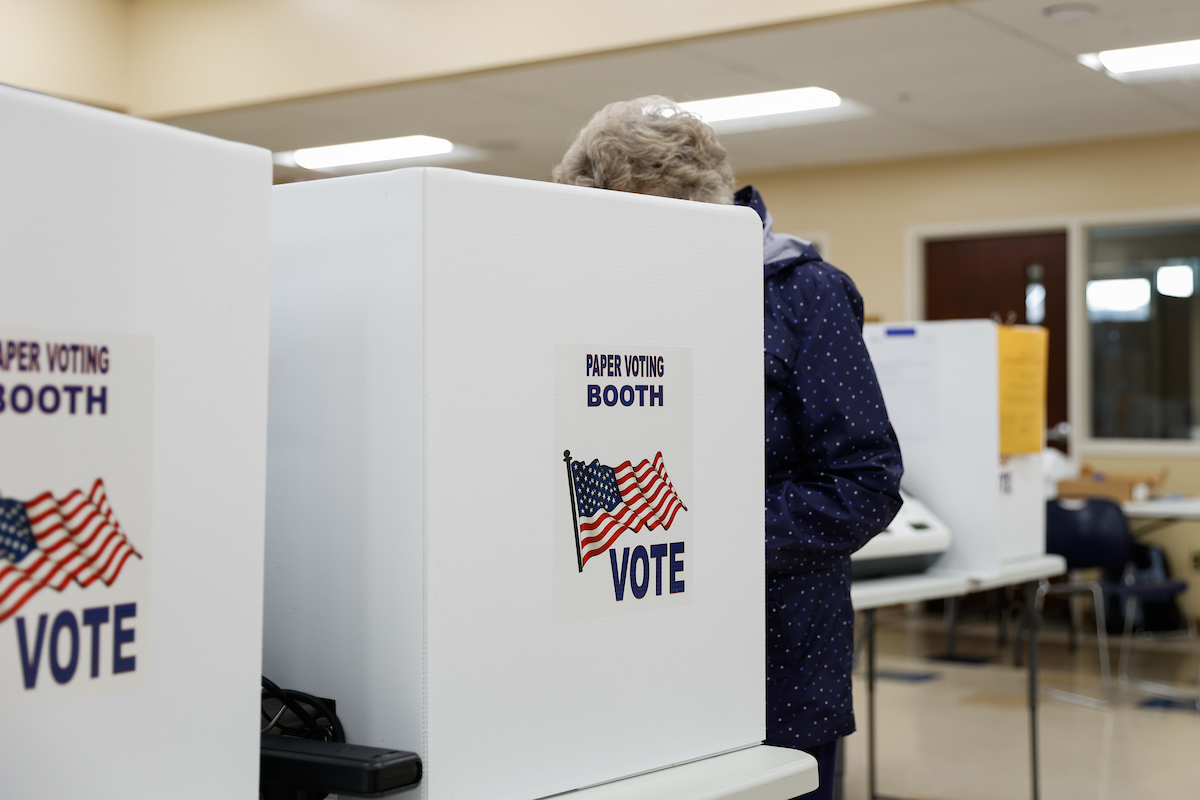
    After a protracted day at the Ohio Statehouse, lawmakers approved sweeping new voting restrictions including photo ID requirements early Thursday morning. That proposal now heads to the governor.

    The House gaveled in for session early Wednesday afternoon, and after half an hour of ceremonial proceedings broke for recess. Rep. Tim Ginter, R-Salem, described the break as 30 minutes “more or less.”

    It took nearly six and a half hours for lawmakers to get back to work.

    Turns out they had a holiday party in the Statehouse atrium.

    After recess

    When House lawmakers returned to their desks, they didn’t jump straight to the controversial measures. They concurred on a bland smattering of measures amended in the Senate. Lawmakers made tweaks to occupational licensure and township authorities. They even made the All-American Soap Box Derby Ohio’s official gravity racing program.

    After that they went back to farewell speeches.

    Later, the House took up Senate Bill 202. The proposal prohibits disability from being used as a pretext for denying or limiting parenting rights. Representatives tacked on a series of unrelated amendments. Rep. Bill Seitz, R-Cincinnati, proposed a task force to study the state’s bail system to see how many people are being held for lack of money.

    “As is so much the case with so many things in Ohio — simple things that you would think we would know — we don’t know!” Seitz said.

    Other amendments allow county prosecutors to represent other officials, provide a salary bump for a Fulton County judge instead of replacing a retiring colleague, and allow lawyers to apply out of state experience toward their judicial candidacy.

    Lawmakers then took up and passed an unemployment compensation measure. Once they were done, the chamber went back into recess so the GOP could hold a caucus meeting.

    Voting legislation

    All the while, lawmakers whipped votes and opponents made a handful of eleventh-hour appeals.

    AARP’s state director Holly Holtzen wrote a letter to the House members arguing older Ohioans are “disproportionately affected” by voter ID requirements.

    “While AARP supports fair and effective procedures to detect and prevent voter fraud, we also want to ensure that Ohio’s 50+ population can exercise their voices in elections,” Holtzen wrote. “We understand that state lawmakers have a responsibility to balance these two elements but doing so responsibly and with sufficient debate is crucial.”

    The organization made a similar appeal in 2011 for a voter ID measure that didn’t go forward.

    Fifteen minutes before midnight, the House returned to take up voter ID legislation.

    The Senate added the language to legislation eliminating most August special elections.

    In addition to requiring voters to show a photo ID at the polls and allowing one drop box per county, the bill makes a series of cuts to the voting timeline. Absentee ballot requests must arrive a week, rather than three days, before Election Day. The final day of early voting will disappear, with its hours redistributed through the previous week. Absentee ballots postmarked the day before the election have to arrive within four days rather than the 10 allowed under current law.

    The debate

    Rep. Seitz explained the changes on the House floor and dismissed Democrats’ complaints about voter ID requirements.

    “What we’re doing is we’re saying anyone who does not have a driver’s license in Ohio can get a photo ID at the BMV — free. Free, free free,” Seitz said.

    Seitz also insisted he’d earned two concessions from the Senate that would be included in amendments to a separate bill. Under those changes, ballot drop boxes would be available outside regular business hours provided there’s 24-hour video monitoring. The other amendment would give boards more than four days to make their way through provisional ballots.

    Then Seitz argue the legislation represents a “missed opportunity” for Democrats. He pointed to the Senate reducing the number of proposed drop boxes from three to one.

    “As I predicted on day one with our bill,” Seitz said, “if you do not like this bill, if you are not willing to work with us on this bill, do not be surprised when at the end of the day you will get a bill that is much less to your liking.”

    Rep. Bride Rose Sweeney, D-Cleveland, pushed back, disputing Seitz’s characterization.

    “When you’re working from a basis of removing the right to vote,” she said, “that is not really a place that me and my colleagues on this side of the aisle feel that we are ever going to be in a position of supporting something.”

    Sweeney criticized the reduced time for absentee ballots to arrive after the election, and she invoked GOP concerns about voter fraud to do so. If one unlawful vote is one too many, she argued, isn’t disenfranchising one voter too many?

    Rep. Richard Brown, D-Canal Winchester, picked up the idea of voter fraud, too, and went in a different direction. He noted Secretary of State Frank LaRose’s reports of how safe and accurate Ohio elections are.

    “If our election system is the gold standard, which other states emulate and look to for how they should run their elections, then why are we changing anything at all?” Brown asked. “There’s no need to change anything. There is no problem to solve here. In fact, the changes suggested in this bill and the amendments, solve no problems, but create new ones.”

    Rep. Kent Smith, D-Euclid, noted “nothing good happens after midnight,” as he began his testimony early Thursday morning. Nevertheless, House lawmakers voted to concur with the Senate amendments around 12:30 a.m. With a vote of 55 to 32, the House passed the measure and it now heads to the governor.

    Follow OCJ Reporter Nick Evans on Twitter.

  • New AARP Dashboard Reveals Ohio’s Efforts to Protect Nursing Home Residents During Coronavirus Pandemic Still Fall Short

    New AARP Dashboard Reveals Ohio’s Efforts to Protect Nursing Home Residents During Coronavirus Pandemic Still Fall Short

    Recently Reported Shortages in PPE and Staffing are Worrisome as Ohio’s Percentage of COVID-19 Deaths in Nursing Homes Exceeds National Average

    Columbus, Ohio – AARP’s Ohio state director, Holly Holtzen, said today that a new AARP dashboard reveals concerning trends in three critical areas linked to how Ohio’s nursing homes are handling the coronavirus pandemic, all of which could provide state officials with insights on how to do better.

    “Early on our state took notable steps to curb the virus in our nursing homes. But no state is doing enough to stem the loss of life,” said Holtzen. “As Ohio’s nursing homes resume in-person visitation amidst a surge in reported infections and Governor DeWine’s announcement of a new all-time high for the number of COVID-19 related hospitalizations, this data can shine a light on the areas and issues contributing to the heartbreaking situation in our nursing homes.”

    “The fact that nursing home residents account for nearly half of Ohio’s COVID-19 deaths is beyond alarming,” said Holtzen. “To still have PPE shortages in Ohio’s nursing homes eight long months into this crisis is inexcusable.”

    Using data from the Centers for Medicare & Medicaid Services— which is self-reported by nursing homes—the AARP Public Policy Institute, in collaboration with the Scripps Gerontology Center at Miami University in Ohio, created the AARP Nursing Home COVID-19 Dashboard to provide four-week snapshots of the virus’ infiltration into nursing homes and impact on nursing home residents and staff. Notably, the first release of the dashboard on October 14 reveals that nursing homes in every state reported shortages of Personal Protective Equipment (PPE), ranging from 8 percent of facilities in the best-performing states, to 60 percent in the lowest-performing state. The dashboard also compared state and national data on COVID-19 cases and deaths, staff cases and staffing shortages.

    By their own reports, more than 33 percent of Ohio nursing homes reported having less than a week’s worth of PPE on hand over the four week period ending Sept. 20, compared to about 28 percent nationwide.  Some 35 percent of Ohio nursing homes also reported staffing shortages in direct care workers during this period, compared to the national average of 29 percent.

    The share of Ohio’s COVID-19 deaths occurring in nursing homes is nearly twice the national average during the four-week reporting period.

    The share of Ohio’s COVID-19 deaths occurring in nursing homes is nearly twice the national average during the four-week reporting period. In Ohio, nearly two of every four reported COVID-19 deaths occurred in a nursing home, even though nursing home residents represent less than one percent of the state’s population.

    Holtzen also noted that more than half of all Ohio nursing homes have had at least one COVID-19 infection since January.

    “The fact that nursing home residents account for nearly half of Ohio’s COVID-19 deaths is beyond alarming,” said Holtzen. “To still have PPE shortages in Ohio’s nursing homes eight long months into this crisis is inexcusable.”

    Holtzen renewed AARP Ohio’s call forstepping up efforts to provide all long-term care facilities with adequate supplies of PPE, ensuring proper staffing levels, as well as increased frequency of mandatory and prioritized access to COVID-19 testing and testing results for residents, staff, vendors and visitors in elder-care facilities.

  • AARP Ohio Delivers 4,000 Petitions to Governor DeWine

    AARP Ohio Delivers 4,000 Petitions to Governor DeWine

    Columbus, Ohio –  AARP Ohio delivered more than 4,000 petitions today to Governor Mike DeWine and the Director of Ohio’s Department of Administrative Services Matthew Damschroder, urging the Administration’s support of two essential policy solutions to lower prescription drug costs in Ohio.

    Collected from residents across the state, the petitions call for drug price transparency and for Ohio to leverage its full purchasing power during negotiations.

    Director Damschroder heads the special council established in House Bill 166, tasked with providing recommendations to the General Assembly, Governor DeWine, and the Joint Medicaid Oversight Committee regarding Ohio’s best path forward to decrease the high cost of prescription drugs in Ohio.

    The petition delivery coincides with the council’s last public participation meeting before preparing their final report and recommendations to Governor Mike DeWine.

    “We applaud Governor DeWine’s focus on improving Ohio’s prescription drug price transparency, affordability payment models, and health care efficiency. Creating the council was a step in the right direction and now we need to see action to hold drug makers accountable,” said AARP State Director Holly Holtzen. “Older Ohioans are struggling with rising prescription drug prices and cannot afford to wait any longer, especially now.”

    Urges using state buying power to negotiate lower drug prices.

    Requiring drug makers to provide transparency and justification for price increases is one of the two solutions Ohioans who signed the petition are urging. Using state buying power to negotiate lower drug prices is the second.

    “Promoting transparency around drug prices exposes unfair price gouging practices, forces accountability for dramatic prices increases and drives costs down,” said AARP Ohio’s Associate State Director of Advocacy Latoya Peterson. Peterson represents AARP and their 1.5 million members in Ohio on the prescription drug council.

    Negotiation is a commonsense, but powerful approach.

    “Negotiation is a commonsense, but powerful approach. Some states have begun buying prescription drugs in bulk for some residents, including Medicaid beneficiaries, state employees and retirees, and prisoners. And some states are joining with each other to create even larger buying pools as a way to bring down the high costs of medicines, ” said Peterson.

    AARP has been tracking drug prices for 12 years in their Rx Price Watch Report. For each year, the price for prescription drugs has increased much faster than inflation. Here in Ohio, the average annual cost of prescription drug treatment increased 57.8% between 2012 and 2017, while the annual income for Ohioans only increased 13%.

    “No American should be forced to choose between paying for the medicines they need and paying for food, rent, or other necessities,” said Peterson.