Tag: abortion bans

  • Ohio abortion rights amendment a go for November ballot

    Ohio abortion rights amendment a go for November ballot

    495,938 valid signatures certified to bring proposal to Ohio voters

    BY:  Ohio Capital Journal

    An abortion rights amendment proposed for the Ohio Constitution was certified on Tuesday to go forward for consideration by voters in November as nearly 500,000 signatures in support were verified by the Secretary of State’s office.

    In a letter to the campaign that collected signatures to put the ballot measure to Ohioans this year, Secretary of State Frank LaRose said 495,938 valid signatures were recorded, and a total of 55 counties fulfilled the percentage requirements for verification.

    “Therefore, in the absence of judicial direction to the contrary, I will direct the boards of election to place the proposed amendment on the November 7, 2023, general election ballot,” LaRose wrote.

    When advocates turned their boxes of signatures in to the secretary of state’s office on the July 5 deadline, they reported more than 700,000 signatures were submitted to be verified statewide.

    Despite the lower number, the final tally is well above Ohio’s legal requirements to put an amendment proposal on the ballot.

    Based on current law, abortion rights advocates needed to collect 413,487 signatures in 44 of 88 counties, a number based on election results from the last governor’s race.

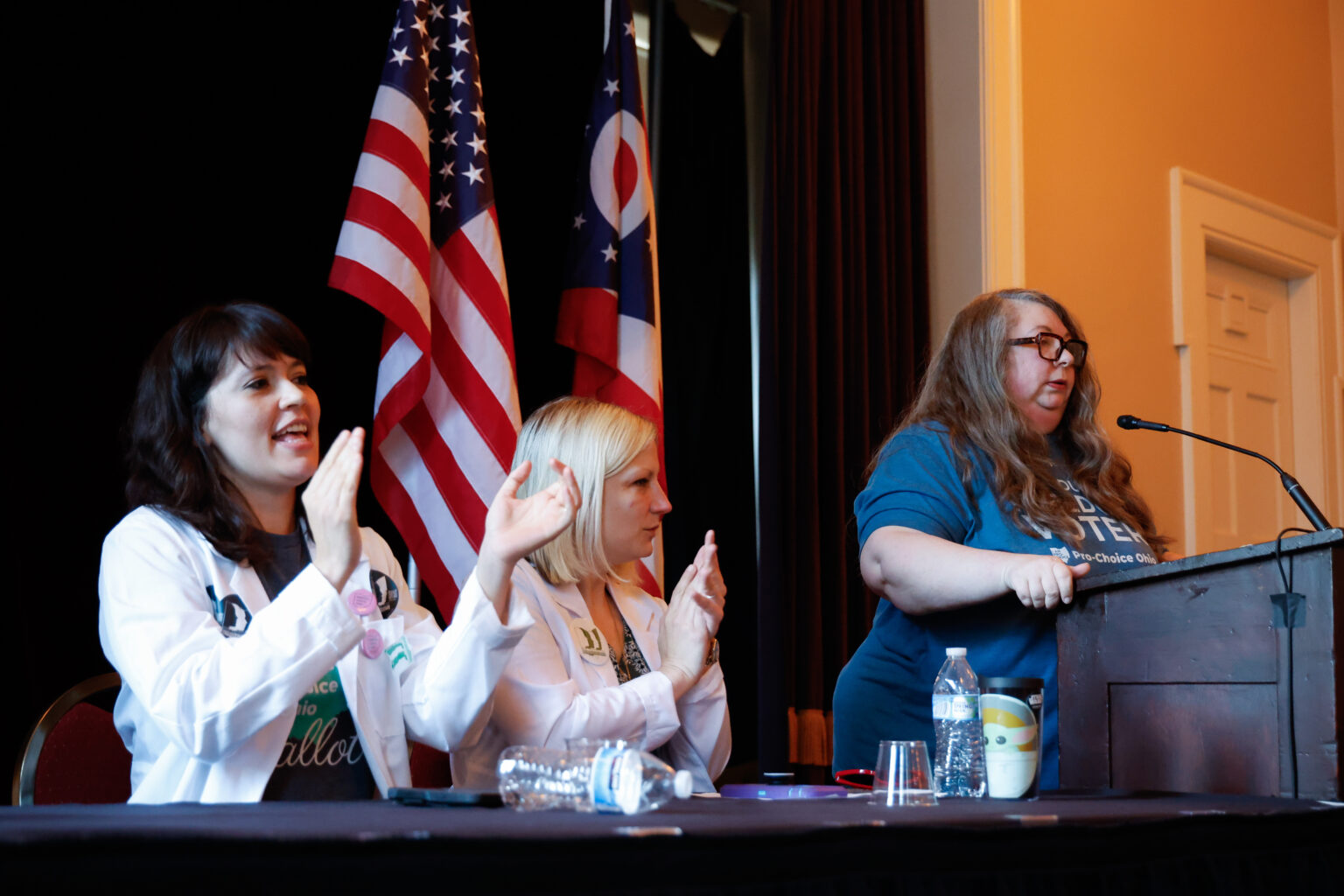
    Ohioans United for Reproductive Rights (OURR), a coalition of groups supporting the the codification of abortion rights in the state constitution, celebrated the news, but also set their sights on another hurdle at the ballot: Issue 1, hitting voters next month in the August 8 primary.

    Issue 1 would make it harder for Ohio voters to amend the constitution by raising the threshold from a simple majority to 60%. If passed, Issue 1 would require the abortion ballot measure to meet that threshold.

    It would also require proposals made after January 1, 2024, to meet signature requirements in all 88 counties instead of the current requirement of 44 counties.

    “Now that the petition drive is complete, we’re eager to continue the campaign to enshrine those rights in Ohio’s constitution and ensure that Ohioans will never again be subject to draconian reproductive health care policies imposed by extremists,” wrote Lauren Blauvelt and Dr. Lauren Beene, executive committee members for the OURR, in a statement.

    “This is a major step for Ohio, but it’s bigger than just one state,” said Kimberly Inez McGuire, executive director for Unite for Reproductive and Gender Equity. “This is about reversing the tide of abortion bans and securing a better future for us all.”

    GOP leaders including LaRose have admitted Issue 1 supporters are motivated by their desire to stop the abortion rights amendment.

    The campaign standing in opposition to the abortion amendment, Protect Women Ohio, and anti-abortion lobby Ohio Right to Life, decried the new development, pushing ahead with their efforts to block the amendment from passage.

    Peter Range, CEO of Ohio Right to Life, called the amendment “anti-life,” and said it is “even more imperative that every pro-life Ohioan votes yes on Issue 1 this August to ensure that our constitution, our preborn and our families are protected,” according to a statement sent by the group.

    Protect Women Ohio said they have spent “an initial” $8 million on TV, radio and digital ads in support of Issue 1, and against the November abortion amendment.

    With the amendment now allowed to go to the ballot, the Ohio Ballot Board chaired by LaRose will draft the language voters will read about the measure on their ballots.

    Recent polls show 57.6% of Ohioans support the abortion rights amendment, while 32.4% oppose it and 10% are undecided. On the Aug. 8 Issue 1 effort to change the threshold for passage of amendments from 50% to 60%, another recent poll showed 57.2% of Ohioans oppose Issue 1, while 26% support it, and 17% are undecided.


    Susan Tebben
    SUSAN TEBBEN

    Susan Tebben is an award-winning journalist with a decade of experience covering Ohio news, including courts and crime, Appalachian social issues, government, education, diversity and culture. She has worked for The Newark Advocate, The Glasgow (KY) Daily Times, The Athens Messenger, and WOUB Public Media. She has also had work featured on National Public Radio.

    MORE FROM AUTHOR

    ____________________

    Related Loveland Magazine Interview:

  • Ohio Attorney General Dave Yost jumps into Florida abortion fight

    Ohio Attorney General Dave Yost jumps into Florida abortion fight

    Ohio Attorney General Dave Yost. (Photo by Justin Merriman/Getty Images)

    Question hinges around whether local prosecutors can be removed for saying they won’t bring charges under abortion bans

    BY:  – Ohio Capital Journal

    Ohio Attorney General Dave Yost and 14 other attorneys general are arguing in federal court that Florida Gov. Ron DeSantis was within his powers when he removed a local prosecutor who had spoken out against the state’s restrictive new abortion law.

    But the group that represents Ohio’s local prosecutors doesn’t seem comfortable with that claim, expressing worries that the Florida case threatens the principle of “prosecutorial discretion” — that faced with many possible crimes and limited time and resources, prosecutors need great latitude to decide which cases are most wisely brought.

    Yost said his friend-of-the-court brief doesn’t violate that principle. He said that he doesn’t want to impinge on prosecutors’ decisions about individual cases, but only to allow for their removal when they make blanket statements that they won’t enforce laws they don’t agree with.

    “This case is about a ‘prosecutor’s veto’ — the nullification of a democratically passed law by the act of an executive,” Yost said in an email Thursday. “The application of discretion to a single case is proper; the application of discretion to every case arising under a statute eliminates the legislative act itself, the core function of a democratically elected government.”

    Sunshine State spat

    Yost on Wednesday led the Republican attorneys general in filing a friend-of-the-court brief with the 11th U.S. Circuit Court of Appeals in Atlanta. It argues that DeSantis — who is widely thought to be seeking the Republican presidential nomination — had the power to remove Hillsborough County prosecutor Andrew Warren last August over positions Warren took regarding the state’s new abortion law and other matters.

    Warren, whose jurisdiction includes Tampa, signed declarations by a group of progressive prosecutors opposing charging people under laws restricting abortion and transgender care, the Florida Phoenix reported. DeSantis also objected to a Warren policy that his office usually would not bring low-level cases arising from bike or pedestrian stops in which a disproportionate number of minorities have historically been prosecuted, the Phoenix reported.

    Warren sued DeSantis in U.S. district court in an attempt to be reinstated.

    Judge Robert Hinkle found that DeSantis violated Warren’s First Amendment rights and separate provisions in the Florida Constitution by removing Warren. But, the judge ruled, the 11th Amendment to the U.S. Constitution barred him from reversing the removal because it was based solely on state law. In making the ruling, the judge looked past the First Amendment violation, saying DeSantis would have removed Warren even if he hadn’t violated the prosecutor’s free-speech rights.

    Warren appealed to the 11th Circuit, arguing that Judge Hinkle’s reasoning was “perverse.”

    “DeSantis’s violation of one (of Warren’s rights) cannot be permitted to excuse the violation of the other,” said a friend-of-the-court brief signed by Warren’s attorney. “The district court erred by ignoring the deeply intertwined nature of these protections. The decision below contributed to the disenfranchisement of Hillsborough County voters and allowed the governor to censor the speech of another duly elected official.”

    Separation of powers

    In their brief, Yost and the other Republican AGs argued that Warren and prosecutors like him jeopardize another constitutional principle when they say they’re not interested in bringing cases under laws with which they don’t agree — the separation of powers between the legislative and judicial branches of government. As part of the executive branch, it’s not a prosecutor’s job to decide which laws have force and which don’t, they said.

    The attorneys general of Alabama, Arkansas, Georgia, Kentucky, Louisiana, Mississippi, Missouri, Montana, Nebraska, South Carolina, South Dakota, Texas, Utah and West Virginia joined Yost in signing the brief. All of the states have some abortion restrictions on the books and most have laws that the Guttmacher Institute rates as “very restrictive” or “most restrictive.”

    Local prosecutors can’t unilaterally decide not to enforce those or other laws, the amicus brief said.

    “Those prosecutors have considerable discretion to decide whether to prosecute violations in particular cases,” the brief said. “They do not have the power to effectively repeal laws by categorically suspending enforcement.”

    It added, “The states can properly remove from office prosecutors who make non-prosecution pledges. These pledges violate the traditional separation of powers between government branches.”

    However, there are some devilish details involved. For example, how do you define “pledge” and how do you reconcile removing prosecutors for signing such documents with their right to free speech?

    Lou Tobin, executive director of the Ohio Prosecuting Attorneys Association, slammed prosecutors who make such pledges.

    He singled out Philadelphia District Attorney Larry Krasner, who survived an impeachment attempt after Krasner said the office would no longer prosecute marijuana possession, would slash prosecutions of sex workers, sought reduced sentences for other crimes and called to abolish Pennsylvania’s death penalty. Tobin also slammed Los Angeles County District Attorney George Gascon, who survived a recall attempt that started just when he took office. Like Krasner, Gascon did things like slash marijuana prosecutions and worked to end cash bail.

    But perhaps tellingly, Tobin didn’t mention the Florida prosecutor DeSantis removed and he said such an action is exceedingly grave.

    “Ohio has processes in place for the removal of public officers who refuse or willfully neglect to enforce the laws or to perform any official duty imposed by law,” Tobin said in an email Thursday. “It is a process that has been in place since before the General Code became the Revised Code in 1953, it does not involve the attorney general, it should not involve the attorney general, and it is a process that should be used rarely and with extreme caution.”

    Tobin also seemed to call out DeSantis for acting out of political motives.

    “Threats to unilaterally and summarily remove prosecutors from office are just as damaging to the justice system as people like Larry Krasner and George Gascon,” Tobin said. “We’re heading down a very dangerous road when those threats are made to score political points.”

    More than abortion

    In entering the dispute, Yost is again wading into national abortion politics. Last year, just after rushing to enact Ohio’s strict six-week abortion ban, the attorney general went on Fox News to question the existence of a 10-year-old rape victim who reportedly had to go to Indiana for an abortion. Days later, her existence was confirmed when Columbus police made an arrest in the case.

    While the Ohio law was in effect, obstetricians and maternal fetal medicine doctors said that aspects of it sometimes conflicted with what was in the best interest of their patients. DeSantis signed a similar law in Florida earlier this month.

    But Yost said that in filing the brief in the Florida case he wasn’t trying push local prosecutors to charge doctors every time they think abortion laws might have been violated. He was asked if he thought prosecutors should be able to bring a strong violent-crime or public-corruption case over a weak abortion case if they don’t have the resources to bring both.

    “Of course,” Yost replied. “… this is a case about one politician’s arrogance to cancel an entire category of criminal prohibition that was enacted by the elected Legislature. If you don’t see the danger in that, imagine your own most hated politician — whomever that might be — vowing that they will not prosecute Clean Water Act violations because it’s a violation of private property rights. Should such arrogance be without redress? Of course not.”

    Yost and his colleagues are arguing that prosecutors who say they won’t enforce abortion restrictions and other laws are abusing their power. But some critics argue that many of the post-Dobbs restrictions are themselves abuses of power. A majority of Americans don’t support them and many — such as Ohio’s six-week ban — were passed by gerrymandered legislatures.

    But Yost said his effort isn’t solely about enforcement of Ohio’s abortion law, under which doctors could be charged with felonies.

    “This is not an argument about abortion, although that was the individual motivation of the prosecutor who was removed,” he said. “But this same principle applies to prosecutors (who) would refuse to prosecute all thefts under a $1,000, or those who refuse to prosecute any firearms offense. Prosecutors do not get to make up the law, or revoke it — they only get to enforce it.”

    ____________________

    MARTY SCHLADEN

    Marty Schladen has been a reporter for decades, working in Indiana, Texas and other places before returning to his native Ohio to work at The Columbus Dispatch in 2017. He’s won state and national journalism awards for investigations into utility regulation, public corruption, the environment, prescription drug spending and other matters.

    MORE FROM AUTHOR

  • ‘Unequivocal nightmare:’ OB/GYNs fear uncertainty, health care delays post-Roe

    ‘Unequivocal nightmare:’ OB/GYNs fear uncertainty, health care delays post-Roe

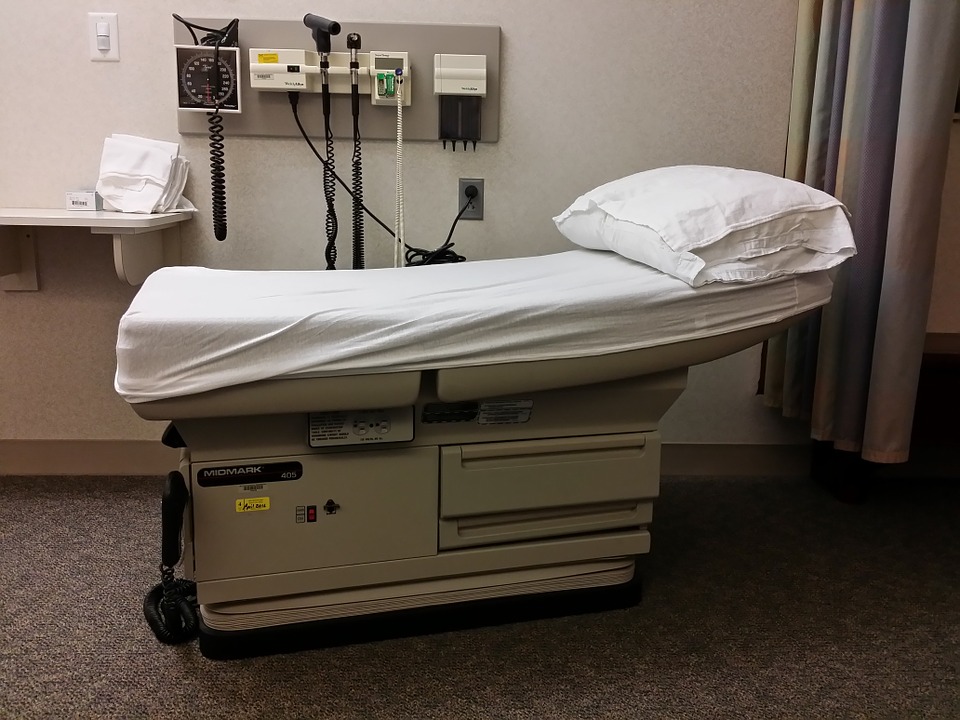
    A medical exam room. File photo from MaxPixels.net.

    BY: SUSAN TEBBEN – Ohio Capital Journal

    Doctors fighting to keep their patients alive are worried about new abortion-related paperwork and legal advice that would hold up necessary care for their patients.

    Consulting lawyers and keeping complicated documentation is a part of life now that the U.S. Supreme Court overturned Roe v. Wade and Ohio put a six-week abortion ban in place.

    “If (patients) are in the midst of a pregnancy loss and a heartbeat is present… we then have to do the same paperwork for someone who was having an elective termination (abortion),” said Dr. Amy Burkett, an OB/GYN hospitalist in Northeast Ohio.

    Doctors face potential criminal charges and risks to their medical licenses because of what they say are unclear regulations and specifications on abortion. Beyond that, the changes to the health care landscape nationally and in Ohio create an environment where doctors who know a pregnancy isn’t viable may have to watch a parent carry the pregnancy anyway.

    “Being forced to go down the path is just an unequivocal nightmare, especially if you think of someone going through an entire pregnancy against their will when they know the fetus is going to die,” said Dr. David Hackney, maternal fetal medicine specialist in the Cleveland area, and chair of the American College of Obstetrics and Gynecologist’s Ohio chapter.

    Hackney, who works with high risk pregnancies and diagnoses birth defects, said abortion bans can increase the complication rate in pregnancies merely by increasing the number of pregnancies coming to term.

    As Roe v. Wade was overturned Friday and Ohio implemented its six-week abortion ban, Hackney was on call, and went to sleep that night unsure how he would proceed with medical care the next day.

    “It’s a Friday night, and all of a sudden the legal ground has changed entirely beneath my feet,” Hackney said.

    With cases that can include time-sensitive care and bleeding that must be dealt with urgently, Hackney said not having a plan in place can cause distractions with dangerous impacts on infant and parent health. That plan may now have to include referrals to other health systems, and even other states for legal options.

    “When it comes to a lot of these legal issues, the most important thing to have is a plan before something awful happens,” Hackney said. “We are even now still working out the details and trying to figure out processes.”

    Abortion bans could have impacts on pregnancy-related procedures that have nothing to do with abortion as well, according to doctors. Dr. Tom Burwinkel, a reproductive endocrinologist who also works on in-vitro fertilization, says bills like HB 598 — a proposed complete abortion ban in Ohio — could cause legal confusion and liabilities for facilities storing embryos or working with those embryos.

    Because the bill, which is currently sitting in a House committee, says an “unborn child” is defined at the time of fertilization, embryos that are damaged even accidentally or through natural occurrences in the IVF process could be held against the doctors conducting the work.

    “If we have embryos stored and something happens to the liquid nitrogen tanks, are the physicians and the people that own the facilities on the hook for the loss of thousands of embryos?” Burwinkle posed.

    Though IVF isn’t impacted by the six-week abortion ban, Burwinkle worries about the future of the IVF field and other pregnancy medicine, as laws and bills in the state focus on ideological ideas of life rather than the medicine involved.

    “Obviously the legislature wants to take things a step further … and that’s somebody imposing their religious beliefs on others. I thought this country was founded on religious freedoms,” Burwinkle said.

    Comments made by U.S. Supreme Court Justice Clarence Thomas in support of overturning Roe v. Wade are giving physicians further reason to be concerned about the future of gynecology, especially contraceptives.

    Burkett said it’s important for the public to understand that contraceptives are not considered abortion medication, even as legislation might couple things like Plan B with abortion-inducing drugs, and misinformation exists coupling IUDs with abortion.

    “IUDs are not considered abortion medications,” Burkett said. “Plan B is also not considered an abortion medication. Neither are medically considered abortifacients.”

    Misinformation about contraceptives does not just impact the public who may not have done enough research, but a part of legislation sponsored by non-medical professionals who may not be listening to the medical community. Hackney said ACOG representatives are always willing to serve as a resource for legislators.

    “In general, most of this legislation happens without meaningful, or certainly not with mainstream medical input,” Hackney said.

    Follow OCJ Reporter Susan Tebben on Twitter.

  • Ohio abortion bans on the way following death of Roe

    Ohio abortion bans on the way following death of Roe

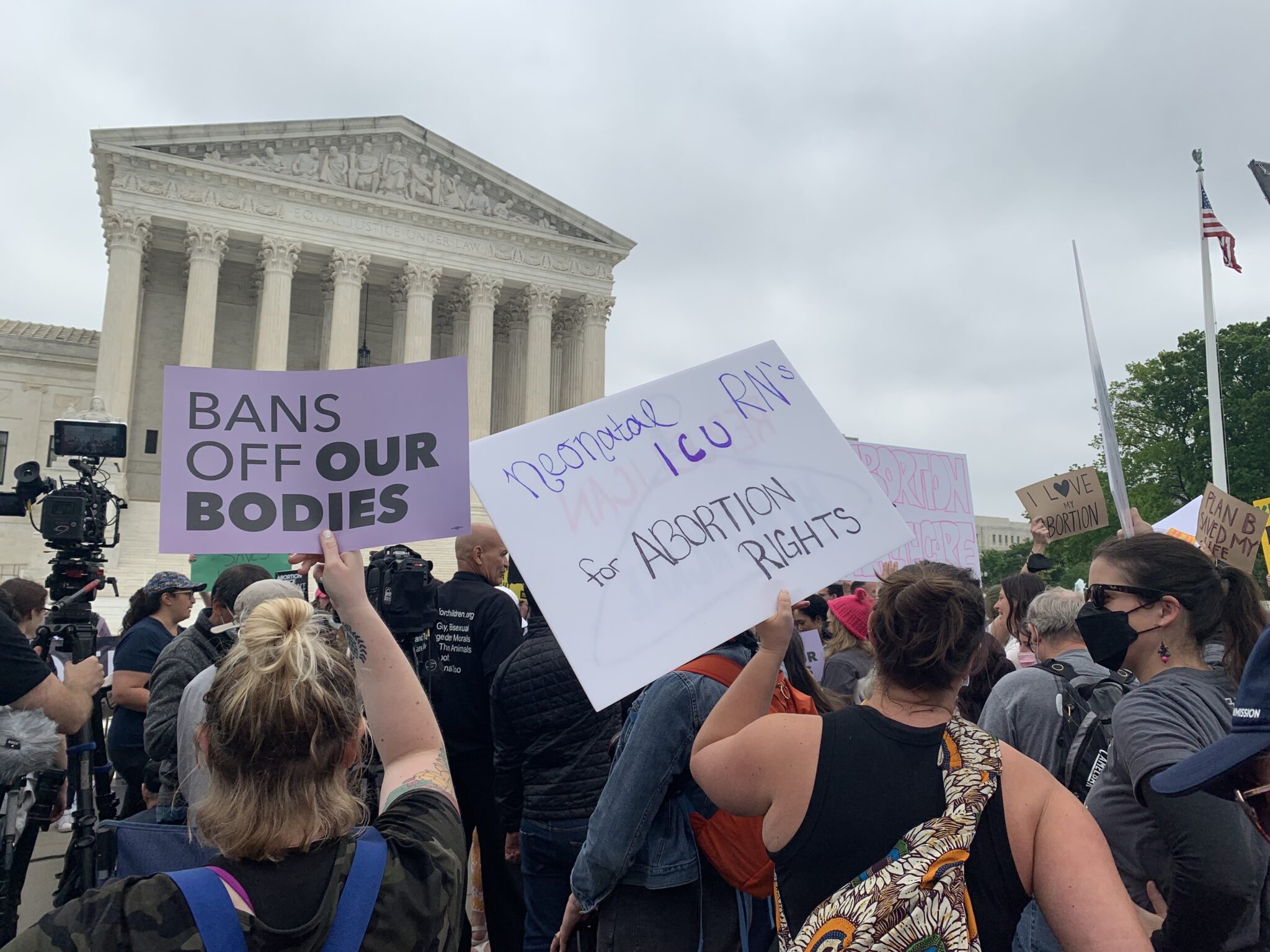
    Abortion rights activists protest outside the U.S. Supreme Court. Photo by Jane Norman, States Newsroom.

    BY: SUSAN TEBBEN – Ohio Capital Journal


    Now that Roe v. Wade has been overturned by the U.S. Supreme Court, the Ohio legislature is set up to move forward with abortion bans in the state.

    The U.S. Supreme Court ruled Friday morning that “The Constitution does not confer a right to abortion; Roe and Casey are overruled; and the authority to regulate abortion is returned to the people and their elected representatives.”

    Legislative leaders said they were prepared to wait until the decision was released before moving forward with legislation to eliminate abortion services. As of Friday night, abortion is legal in Ohio up to six weeks into a pregnancy.

    “The most important thing that Ohioans need to know today is that abortion is still legal in Ohio,” said Kellie Copeland, executive director of Pro-Choice Ohio. “There are nine clinics across the state and several in neighboring states that can safely and legally provide abortion care for patients. Today’s ruling is devastating, but it is not the end.”

    Gov. Mike DeWine agreed that it would be “prudent” to wait until the Dobbs decision was made, and implement the previously-passed six-week abortion ban before moving on to new legislation.

    “While noting those conditions, the Governor has expressed support for additional legislation depending on the details of the Dobbs decision,” a spokesperson for DeWine told the OCJ.

    The Ohio Policy Evaluation Network, a group of researchers working with The Ohio State University, the University of Cincinnati and Case Western Reserve University, said in a fact-sheet that it expects Ohio to ask for immediate implementation of the six-week abortion ban enacted in 2019.

    The ban does not include exceptions for rape or incest, and only allows doctors to present an “affirmative defense,” legal arguments that could only come into play after a doctor has been charged with an offense, if the life of the pregnant person was at risk at the time of the abortion. The defense only works if the abortion happened in a hospital, and does not allow for risks that involve mental health.

    Columbus-area OB/GYN Dr. Anita Somani said a ban at six weeks could eliminate the chance of an abortion before a pregnant person is aware of the pregnancy.

    “If you don’t know you’re six-weeks pregnant, and you find out at eight or 10 weeks, then you have to look at going to a neighboring state,” Somani said. “At that point, you have to have money and time, as a patient, when you may have other children or just can’t afford it.”

    The most recent abortion trigger ban, House Bill 598, was introduced by state Rep. Jean Schmidt, R-Loveland, would make abortion a fourth-degree felony, and promotion of abortion a misdemeanor offense.

    The charges are targeted at the medical professionals providing the abortions, and provides no exemptions for cases of incest or rape. “Affirmative defenses” would be allowed in cases where the pregnancy presented a serious risk to the pregnant person.

    Civil lawsuits could also be filed against physicians who perform abortions under the bill, and medical licenses could be at risk.

    Senate President Matt Huffman celebrated the decision as “a long overdue turning point in our nation’s history.”

    “I look forward to reviewing the specific details in the opinion, so that as we move forward, any legislation we pass in the Ohio Senate follows the guidance of the court, protecting life, and upholding the Constitution,” Huffman said.

    House Speaker Bob Cupp said in a Friday statement that the “process of reviewing the decision is underway, including what steps should be taken at the state level and the timeline for doing so.”

    “We will be working closely with Governor DeWine, Attorney General Dave Yost and our colleagues in the Ohio Senate on this matter,” Cupp’s statement read.

    DeWine has been consistently pro-life in his support of legislation and funding choices, including an executive order that allocated $3 million in Temporary Assistance for Needy Families (TANF) dollars to organizations who assisted pregnant Ohioans without promoting abortion as an option.

    Attorney General Dave Yost said the decision “returns abortion policy to the place it has always belonged: to the elected policy branches of government.”

    “Roe was poorly reasoned, a doctrine of shifting sands that invited perpetual litigation,” Yost said in a statement.

    Meanwhile, the impacts of abortion bans in the state could create significant health care barriers and increased transportation costs to access care, according to researchers. These impacts could disproportionately impact low-income communities and people of color.

    Iris Harvey, CEO and president of Planned Parenthood of Greater Ohio, said the Supreme Court decision will give politicians power over Ohio bodies, including how they receive care.

    “This dangerous and chilling decision can have devastating consequences in Ohio, forcing people to travel hundreds, sometimes thousands, of miles for care or remain pregnant,” Harvey said in a statement.

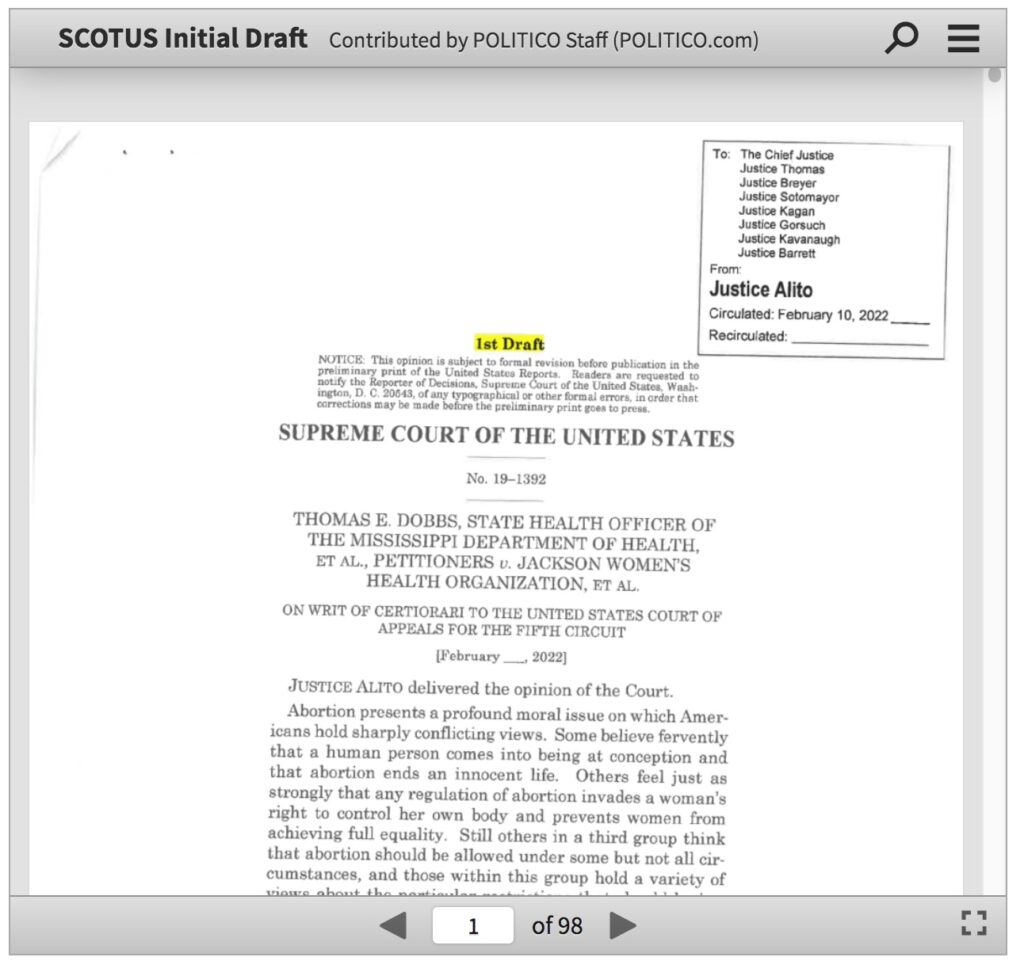
  • U.S. Senate to try again on abortion rights after bombshell disclosure of draft opinion

    U.S. Senate to try again on abortion rights after bombshell disclosure of draft opinion

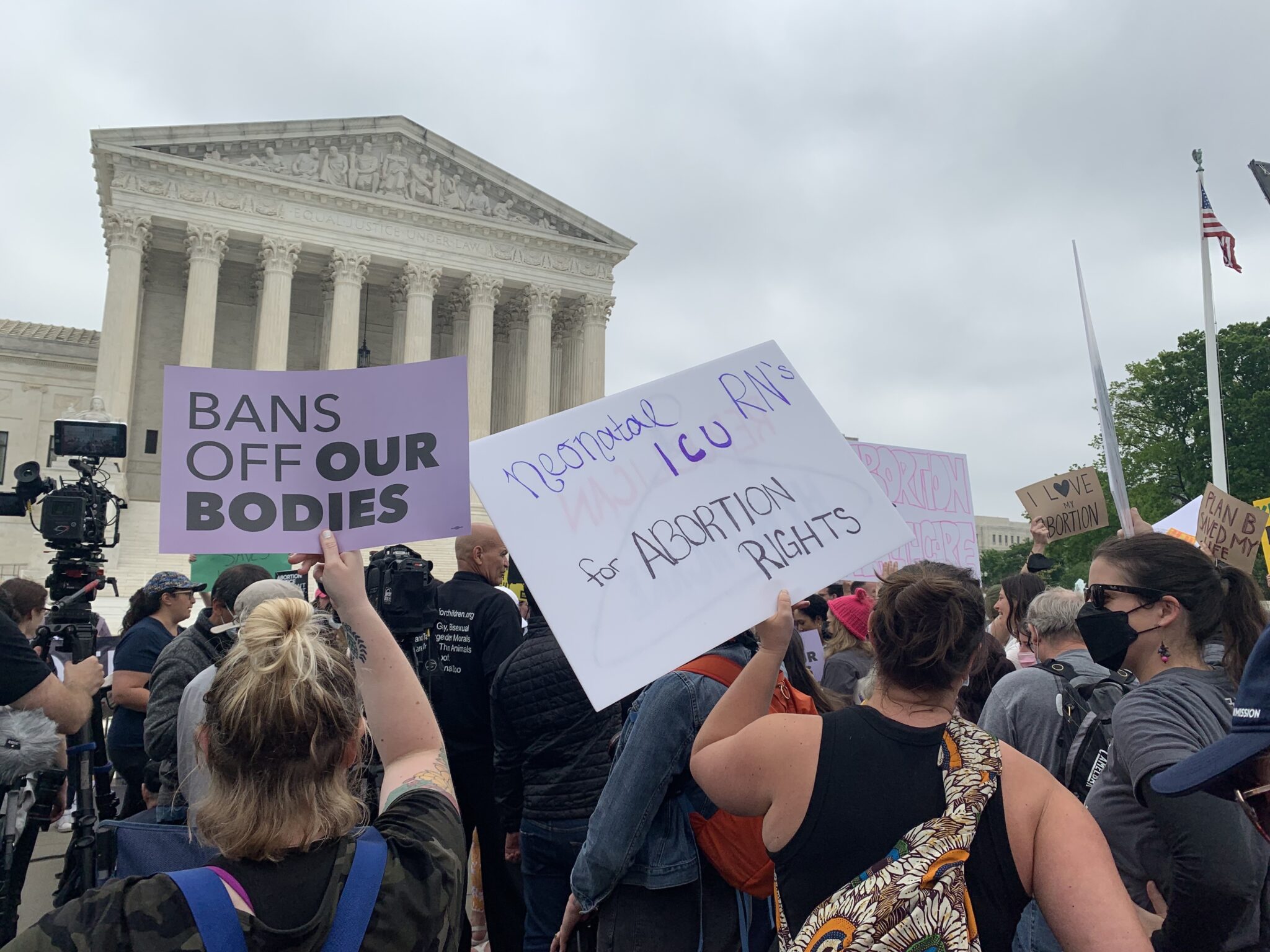
    Abortion rights activists protest outside the U.S. Supreme Court Tuesday. Photo by Jane Norman, States Newsroom.

    BY: JENNIFER SHUTT – Ohio Capital Journal

    WASHINGTON — U.S. Senate Democrats on Tuesday pledged a new vote codifying the right to an abortion after publication of a draft court ruling that showed the Supreme Court on track to overturn the landmark Roe v. Wade abortion decision.

    Democrats, who likely won’t have the votes to advance that bill, also predicted that abortion will emerge as a major issue in the upcoming midterm elections for members of Congress.

    Their comments came as abortion rights supporters across the United States reeled in reaction to the disclosure of the initial draft U.S. Supreme Court opinion, led by Justice Samuel Alito and leaked to Politico. While the court ruling is not final until published, the draft states that earlier abortion decisions “must be overruled.”

    Senate Majority Leader Chuck Schumer, a New York Democrat, said Tuesday he plans to release a new bill this week that senators will vote on next week to codify Roe v. Wade.

    But in the evenly divided Senate, it will run into problems getting past a legislative filibuster that requires 60 votes for legislation to advance.

    Were Roe v. Wade to be struck down by the court, which is dominated 6-3 by conservatives, the question would be left up to states, and more than two dozen Republican-led states have been racing to enact abortion bans and restrictions.

    Supreme Court Chief Justice John Roberts said the draft, published on Monday night, was authentic, though he cautioned it wasn’t the final opinion, and said he’d directed the Marshal of the Court to investigate the leak.

    Republicans called for the Justice Department to also investigate how the draft made its way to two journalists, saying the leak was a violation of the court’s judicial process.

    Roberts said the leak of the document was wrong.

    “Court employees have an exemplary and important tradition of respecting the confidentiality of the judicial process and upholding the trust of the Court,” Roberts said in the statement. “This was a singular and egregious breach of that trust that is an affront to the Court and the community of public servants who work here.”

    The court is expected to release its official ruling in the case, Dobbs v. Jackson Women’s Health Organization, within the next two months, though many organizations have long expected the six conservative justices to at least pare back the constitutional right to an abortion.

    Democratic senators on Tuesday said a final decision undoing the constitutional right to an abortion the Supreme Court established five decades ago would be unacceptable and harmful to women.

    Montana Democratic Sen. Jon Tester said letting each state, once again, set its own abortion laws would be a “step in the wrong direction.”

    “I think that a woman’s right to choose, a woman’s right to make their own health care decisions is really fundamental to who we are as a nation,” Tester said.

    Washington Democratic Sen. Patty Murray criticized the conservative justices for moving to undo nationwide protections for people seeking to terminate a pregnancy.

    “We do not want this to become a country where women are forced to remain pregnant no matter their personal circumstances and yes, we are talking about situations like rape and incest,” Murray said.

    “A country where extreme politicians will control patients’ most private decisions. A country where for the very first time ever the next generation of women will have fewer rights than their mothers.”

    Michigan Sen. Gary Peters, chair of the Democratic Senatorial Campaign Committee, said abortion rights will become a “major issue” in November’s midterms elections.

    “We’ve seen legislation being passed in state legislatures across the country to limit reproductive freedom for women. But there was always the belief that Roe versus Wade was there,” Peters said. “If Roe versus Wade is overturned, it’s a completely different ballgame.”

    60 votes needed

    In the Senate, Democrats would need 60 senators to vote to get past the legislative filibuster and actually pass legislation codifying abortion access throughout the country. Those votes would be required to end debate and move on to final passage, which is a simple majority vote.

    Peters, asked if Democrats could somehow get to a 60-seat majority in the midterm elections, said “it would be pretty difficult to get there.”

    While the entire U.S. House — an increasing number of whom represent gerrymandered districts — will be up for reelection in November, just one-third of the U.S. Senate will face voters.

    This year that will be 35 seats, with 14 occupied by Democrats and 21 filled by Republicans.

    The Cook Political Report with Amy Walter rates five of those races — Arizona, Georgia, Nevada, Pennsylvania and Wisconsin – as “toss up.” Florida, North Carolina and Ohio are classified as “lean Republican.”

    Senators’ positions 

    Georgia Sen. Raphael Warnock said he’s going to “do everything” he can to “support reproductive rights.”

    He’s one of many Senate Democrats who support eliminating the filibuster.

    “No Senate procedure should get in the way of basic civil rights — voting rights, reproductive rights,” Warnock said.

    Arizona Democratic Sen. Mark Kelly isn’t as convinced that the Senate should change its procedures, but didn’t rule out backing a change to how bills are processed.

    “If there is a proposal to change the rules, I will make a decision on what is in the best interest of the country and the folks I represent in Arizona,” Kelly said.

    Fellow Arizona Democratic Sen. Kyrsten Sinema doesn’t back such a change and neither does West Virginia Democratic Sen. Joe Manchin III.

    That means Senate Democrats don’t have the votes during this Congress to codify abortion rights or change the rules to make it easier to pass abortion rights legislation.

    If Democrats lose control of the Senate following the midterm elections, Republicans are expected to keep the filibuster in place.

    Minority Leader Mitch McConnell, a Kentucky Republican, said Tuesday he would “absolutely” commit to keeping it intact.

    “We don’t want to break the Senate and that’s breaking the Senate,” he said.

    McConnell declined to answer questions on how a final Supreme Court decision overturning Roe v. Wade would affect women throughout the country or whether he’d bring legislation to the floor to address federal abortion laws.

    “All of this puts the cart before the horse,” he said.

    National Republican Senatorial Committee Chairman Rick Scott, a Florida Republican senator, declined to say if the Supreme Court overturning abortion as a fundamental right would affect the election.

    “I think this is an important issue to many people, but so is inflation, so is crime, so is the border,” Scott said. “So, these are important to people and people are gonna be passionate about this. And we ought to be passionate about what we believe in.”

    Scott — who infuriated many fellow GOP senators earlier this year when he released an 11-point plan without leadership approval — declined to say if the GOP would try to pass a bill banning abortion nationwide if they gain control of the Senate in the midterms.

    “We’ll worry about that next year,” Scott said.

    ‘Inconsistent’ justices

    While many Senate Republicans oppose abortion rights and would support the Supreme Court overturning Roe v. Wade, two expressed frustration with the possibility.

    Maine Republican Sen. Susan Collins — who voted to confirm Neil Gorsuch and Brett Kavanaugh, but not Amy Coney Barrett— said in a statement that “If this leaked draft opinion is the final decision and this reporting is accurate, it would be completely inconsistent with what Justice Gorsuch and Justice Kavanaugh said in their hearings and in our meetings in my office.”

    Collins declined to answer reporters’ questions throughout the morning, simply saying she’d released a statement.

    Alaska GOP Sen. Lisa Murkowski — who supported Gorsuch and Barrett, but not Kavanaugh — told reporters that certain justices voting to overturn precedent would erode her confidence in the court.

    “If in fact this draft is where the Court ends up being, it has rocked my confidence in the court. That is because I think there were some representations made with regards to precedent and settled,” said Murkowski. “Comments were made to me and to others about Roe being settled and being precedent.”

    When the Senate took a procedural vote in February on a House-passed bill that would codify the right to an abortion, Collins, Murkowski and Manchin all voted against moving to final passage.

    Schumer said he expects a new vote could be different from the one taken just over two months ago.

    “It’s a different world now, the tectonic plates of our politics on women’s choice and on rights in general are changing,” Schumer said.

    “Every senator, now under the real glare of Roe v. Wade being repealed by the courts, is going to have to show which side they’re on. And we will find the best way to go forward after that. But don’t think that what happened two (months) ago will be exactly the same.”