BY: SUSAN TEBBEN – Ohio Capital Journal DECEMBER 8, 2021 12:55 AM
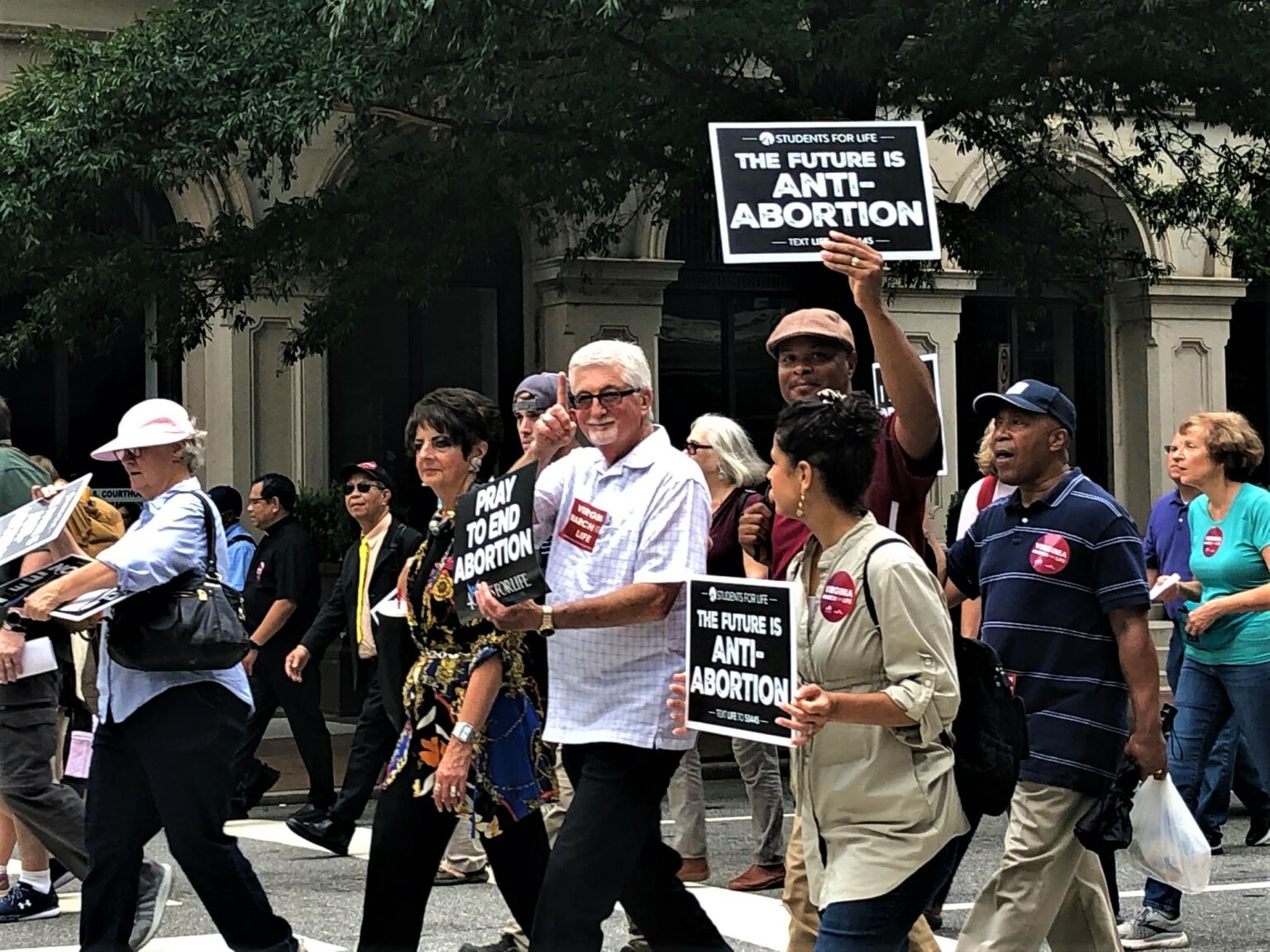
Anti-abortion demonstrators march. (Photo by Robert Zullo/ States Newsroom).
The Ohio House will consider a new abortion regulation that would keep some doctors from being able to work with abortion clinics and could cause felony charges for doctors working on complicated pregnancies.
Russo furthered an argument made by abortion rights proponents in previous testimony against the bill by saying the regulation “effectively bans and removes access to abortion,” particularly in Southwest Ohio, where two abortion clinics are located.
Senate Bill 157 passed through the House Families, Aging and Human Services Committee on Tuesday, approved along party lines. It has already been approved in the Ohio Senate.
The bill would expand the charge of abortion manslaughter, already on the books in Ohio, to include a physicians’ failure to “take measures to preserve the health of a child born alive after abortion,” according to the bill documents.
Under the legislation, a physician who conducts an abortion but finds the fetus is still alive after the abortion to provide life-preserving care, something that opponents of the bill have said is already a part of state law and medical procedure.
There is also a provision in the bill that requires the Ohio Department of Health to develop a “child survival form” for a physician to complete if a child is born alive after an attempted abortion, and for ambulatory surgical facilities to submit monthly and annual reports to the ODH.
The ODH already compiles an annual abortion report based on medical reports signed by physicians of abortions conducted in the state. The report also includes complications, including “failed abortions” that happen in the state and a narrative on the complications.
The bill’s sponsors referred to an abortion in which a child is born alive as a “botched abortion,” but state data shows the occurrence as a “failed abortion.” According to the most recent years of data on abortions in the state, “failed abortions” are rare, and did not happen in any pregnancies that were viable.
An amendment made while the bill was in the Ohio Senate prohibits physicians who are funded through a public institution’s medical school from being a part of abortion clinics written transfer agreement variances, which allow a patient to be transferred to a hospital where the physician practices in the case of emergencies.
Physicians who teach at public medical schools are also not allowed to serve as a consulting physician for abortion-related surgical facility, or the variance can be rescinded, according to the bill.
Democrats attempted to insert amendments into the bill, including one from state Rep. Allison Russo, D-Upper Arlington, that would remove the transfer agreements variance regulation. Russo furthered an argument made by abortion rights proponents in previous testimony against the bill by saying the regulation “effectively bans and removes access to abortion,” particularly in Southwest Ohio, where two abortion clinics are located.
“These are medically unnecessary agreements, but on top of that, because of the broad language, this does ban and remove abortion access for one part of the state in Southwest Ohio,” Russo said.
State Rep. Beth Liston, D-Dublin, introduced an amendment that would take away the word “health” from the bill, leaving the bill to involve a baby’s “life,” which Liston said gives doctors more freedom to do what they feel is best in complicated births and pregnancy plans. Her amendment also sought to remove a requirement that a physician be charged with a third-degree felony for failing to file forms.
“I think that these changes would minimize the downstream impacts and harm that we might see from this legislation in some small ways,” Liston said.
Both amendments were quickly voted down along party lines without further discussion.
The bill now heads for full House consideration, scheduled for 1 p.m. Wednesday.
Abortion is legal in the state of Ohio up to 22 weeks gestation.