Tag: abortion services

  • Risk to federal ‘family planning’ grants could spell danger for Ohio clinics

    Risk to federal ‘family planning’ grants could spell danger for Ohio clinics

    Stock photo from Getty Images.

    By:  Ohio Capital Journal

    Health clinics that provide abortion services are already battling against threats to funds and the work they do. But services like contraception, STI testing, and preventative health screenings are also at risk with Trump administration plans to freeze “family planning” grants in Ohio and across the country.

    At risk is funding through Title X, a federal pot of money that goes to clinics that “have played a critical role in ensuring access to a broad range of family planning and preventive health services,” according to the U.S. Department of Health & Human Services.

    2023 annual report from HHS’ Office on Population Affairs on the Title X program lists services provided under the grants, including FDA-approved contraception, pregnancy testing and counseling, “assistance to achieve pregnancy,” infertility services, sexually transmitted infection services and other “preconception health services.”

    “Title X services are client-centered, culturally and linguistically appropriate, inclusive, trauma-informed and provided in a manner that ensures equitable and quality service delivery consistent with nationally recognized standards of care,” the annual report stated.

    As part of a whirlwind of efforts to cut government spending, the Trump administration reportedly wants to freeze more than $27 million in grants from the program.

    That cut would have the largest impact on Planned Parenthoods across the country, which receive $20 million of that funding.

    GET THE MORNING HEADLINES.


    In a March memo, the Planned Parenthood Federation of America underscored the importance of Title X funding, saying its clinics were the largest Title X provider in 2018, the year before the first Trump administration, serving 40% of patients under the program.

    The group left the program in 2019, but came back in 2021 after former President Joe Biden rolled back some Trump-era policies.

    “If Planned Parenthood patients can’t get quality, affordable health services … there would be grave nationwide consequences,” the memo stated.

    Planned Parenthood of Greater Ohio was one of the recipients of Title X grants in 2024, when it was awarded $1.98 million. The Ohio Department of Health also received a Title X grant that year of nearly $7 million, about the same amount as it received in both 2023 and 2022.

    “Any insinuation to take away critical family planning services from people with lower incomes to afford Trump’s tax cuts to billionaires is dangerous and unprecedented,” Planned Parenthood of Greater Ohio said in a statement to the Capital Journal.

    The group said they served 600 fewer patients than the Ohio Department of Health in 2023, but did it “for $5 million less in Title X funds.”

    “Planned Parenthood of Greater Ohio will continue to fight for our right to be a trusted, safety net provider in reproductive health care services like birth control, cancer screenings, testing and treatment for sexually transmitted infections, among other Title X-eligible services.”

    In their most recent annual report, the organization reported more than 66,700 visits to their health and surgical centers, providing care for 47,480 patients between 2022 and 2023.

    Of those visits, the group provided 86,346 tests for sexually transmitted diseases, administered 16,817 pregnancy tests, served 11,803 patients for contraception-related care and conducted 9,340 HIV tests. The facilities also had 7,734 preventive care visits, 7,136 telehealth visits and 3,255 visits regarding gender-affirming care.

    At the greater Ohio arm of Planned Parenthood, 56% of the patient base lives at or below 200% of the federal poverty line. That’s $62,400 for a family of four. Seventy four percent are between ages 18 and 34, 85% identify as female and 46% of patients rely on Medicaid for care, according to the annual report.

    The Ohio-based group receives 12.4% of its revenue through state and federal grants, with Medicaid and Medicare reimbursements making up 17.7% of revenue and 14.5% of funds coming from private or commercial insurance payments.

    The main source of revenue for Planned Parenthood of Greater Ohio in 2022-2023 was individual, institutional and “legacy giving.” It made up 35.3% of the agency’s revenue stream.

    As for spending that money, the annual report stated that 80% of the expenses are for program services, including the health services at clinics, education and outreach, and government and community relations. Another 14% went to management and “general” expenses, with 6% going to fundraising over that period.

    YOU MAKE OUR WORK POSSIBLE.

    __________________
    Susan Tebben
    Susan Tebben

    Susan Tebben is an award-winning journalist with a decade of experience covering Ohio news, including courts and crime, Appalachian social issues, government, education, diversity and culture. She has worked for The Newark Advocate, The Glasgow (KY) Daily Times, The Athens Messenger, and WOUB Public Media. She has also had work featured on National Public Radio.

    Ohio Capital Journal is part of States Newsroom, the nation’s largest state-focused nonprofit news organization.

    MORE FROM AUTHOR

  • Ohio’s 24-hour waiting period abortion law paused by judge

    Ohio’s 24-hour waiting period abortion law paused by judge

    (Getty Images)

    By:  Ohio Capital Journal

    An Ohio law requiring a 24-hour waiting period before abortion services will not be enforced as a lawsuit seeking to eliminate the law entirely sees its way through court, a judge ruled on Friday.

    Franklin County Court of Common Pleas Judge David C. Young not only put a temporary pause on the 24-hour waiting period, but also a minimum of two in-person visits and certain information about abortion that the state required doctors to provide before an abortion.

    That information includes the “probable gestational age of the zygote, blastocyte, embryo or fetus” and “nature and purpose of the particular abortion procedure to be used,” according to state law.

    Young cited the newest amendment to the state constitution as reason to rule in favor of the clinics and physicians.

    “The plain language of the amendment clearly sets forth the applicable legal standard,” Young wrote. “This language is easily understood and clear.”

    The decision comes following an oral argument hearing last week, in which Young heard from the Ohio Attorney General’s Office representing the state, and an attorney for abortion clinics and a physician party in the case.

    The state said by legal definition, the “status quo” should be maintained in a preliminary injunction, and according to the AG’s office’s arguments, that would leave state law as it is and the regulations in place. The office of Ohio Attorney General Dave Yost issues a release Friday saying they plan to appeal the ruling and that they disagree with the judge that the waiting period and extra appointments constitute a burden.

    According to Jessie Hill, attorney for the parties attempting to eliminate the laws, the status quo is now the constitutional amendment that placed reproductive rights including abortion into the Ohio Constitution after being passed by 57% of Ohio voters last November.

    The amendment bars any state laws that “burden, penalize, prohibit, interfere with or discriminate” against abortion care and abortion providers.

    The state also argued that the Dr. Catharine Romanos didn’t have standing to sue because there were no specific patients under Romanos’ care connected to the lawsuit.

    Young ruled that the new reproductive rights amendment “confers rights” to Romanos “because she is a person assisting individuals exercising their reproductive rights.”

    “The challenged statutes interfere with Dr. Romanos’s ability to provide high quality, trauma informed abortion care, they negatively impact Dr. Romanos’s relationship with pregnant patients and cause emotional distress,” the ruling wrote.

    The judge also cited Attorney General Dave Yost’s legal analysis of the amendment, written before the measure’s passage as an effort to explain the impact of the amendment on abortion regulation in the state.

    “Prior to the amendment passing, Attorney Yost agreed with Plaintiffs’ argument as to the applicable legal standard,” Young wrote. “Now, instead of following the plain language of the amendment, defendants argue that the pre-Dobbs legal standard applies.”

    But Young said the “pre-Dobbs standard” – referring to abortion standards prior to the U.S. Supreme Court’s decision to undo national abortion legalization and return the decision to the states – is “unpersuasive.”

    “Defendants attempt to create ambiguity where it does not exist,” the judge wrote. “The people of Ohio voted to enshrine their reproductive freedom in the constitution through the clear language of the amendment. Doing so followed the path set forth by the (U.S.) Supreme Court in Dobbs.

    Hill called the Franklin County decision “an historic victory for abortion patients and for all Ohio voters who voiced support for the constitutional amendment to protect reproductive freedom and bodily autonomy.”

    “This decision is the first step in removing unnecessary barriers to care,” Hill wrote in a statement with the ACLU of Ohio.


    Susan Tebben
    Susan Tebben

    Susan Tebben is an award-winning journalist with a decade of experience covering Ohio news, including courts and crime, Appalachian social issues, government, education, diversity and culture. She has worked for The Newark Advocate, The Glasgow (KY) Daily Times, The Athens Messenger, and WOUB Public Media. She has also had work featured on National Public Radio.

    Ohio Capital Journal is part of States Newsroom, the nation’s largest state-focused nonprofit news organization.

    MORE FROM AUTHOR

  • Planned Parenthood sues Ohio over telemedicine abortion law

    Planned Parenthood sues Ohio over telemedicine abortion law

    By Susan Tebben and Ohio Capital Journal

    The national and state chapters of Planned Parenthood sued the state of Ohio Thursday over a law set to go into effect in mid-April that prohibits abortion services conducted through telemedicine.

    The lawsuit regards Senate Bill 260, signed into law in January and banning an available telehealth option for what’s called a medication abortion. In a medication abortion, a two-pill regimen is given to a patient, as opposed to removing a fetus or fetal tissue surgically.

    The telemedicine abortion law prohibits physicians from conducting abortions or providing abortion-inducing drugs to a pregnant person without the physical presence of a physician. Violating the law could result in a fourth-degree felony charge for the physician.

    Currently, abortion in Ohio is legal up to 22 weeks gestation.

    Ohio currently requires at least two visits to a health center before an abortion can take place, once for an ultrasound and discussion with a physician about the procedure, and another at least 24 hours later for the actual abortion.

    With medication abortion, the second visit does not have to occur at one of Planned Parenthood’s ambulatory surgical clinics, but can instead happen at one of the health centers that may be closer to the patient, staffed with a nurse practitioner, midwife or advanced practice registered nurse on site, according to the clinics.

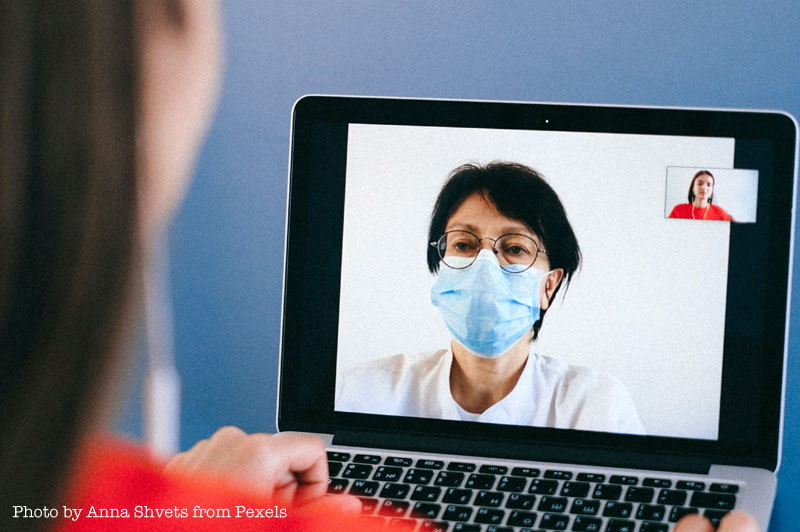
    “Once at a health center services as a telemedicine medication abortion site, a patient is connected by videoconference with a physician located in Cincinnati, or in East Columbus, or Bedford Heights,” the lawsuit states.

    The medicine is ingested “under observation by the physician,” and a health center staff member is present in person.

    According to Planned Parenthood, the telehealth option helps, as it does in other medical fields, with medical care that could be limited in certain communities.

    “Ohio is one of the most medically underserved states in the country, a problem particularly felt by Black communities, people of color, as well as the LGBTQ+ community in our state,” said Iris Harvey, president and CEO of Planned Parenthood of Greater Ohio, in a statement. “Telemedicine is key tool to address those disparities.”

    The suit, filed in Hamilton County Court of Common Pleas because of the Planned Parenthood Southwest Ohio Region listed as a party, claims the law “irrationally prohibits abortion providers from using telemedicine to provide medication abortion to Ohioans.”

    “SB 260 carries felony criminal penalties and draconian civil and professional sanctions for abortion providers who violate it,” the suit states.

    The suit was filed against the Ohio Department of Health, ODH director Stephanie McCloud, the State Medical Board of Ohio, along with prosecutors of Hamilton County, Franklin County and Cuyahoga County, all of which have Planned Parenthood clinic locations.

    The system of clinics is asking the court to prevent local prosecutors and state agencies from enforcing the law because it “blatantly violates the Ohio Constitution’s guarantees of substantive due process, equal protection and free choice in health care,” according to court documents.

    The suit even claims abortion access would be cut off completely in Butler, Mahoning and Richland counties, which would go against current Ohio law allowing abortions for pregnancies up to 22 weeks.

    The clinics also noted state officials’ praise of telemedicine in other types of medicine. The state has also passed legislation to lessen telemedicine regulations as they were attempting to ban the use of it in abortion services.

    Telemedicine has become a hot topic amid the pandemic, as use of the services for everything from primary care to dentistry increased during stay-at-home orders and precaution protocols.

    The lawsuit cited the federal Centers for Medicare and Medicaid Services, which called telemedicine “a cost-effective alternative” to traditional medical care.