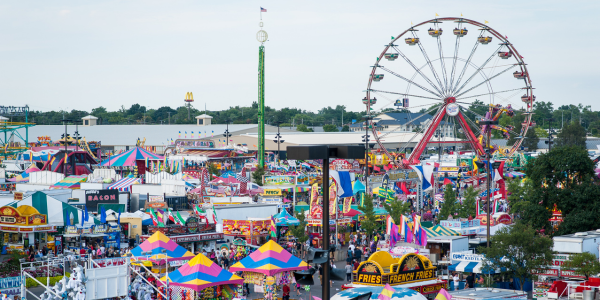
Columbus, Ohio – The countdown is on for the highly anticipated 2024 Ohio State Fair, running from July 24 through August 4, 2024. As excitement builds, Opportunities for Ohioans with Disabilities (OOD) and the Ohio State Fair are proud to announce their continued commitment to accessibility.
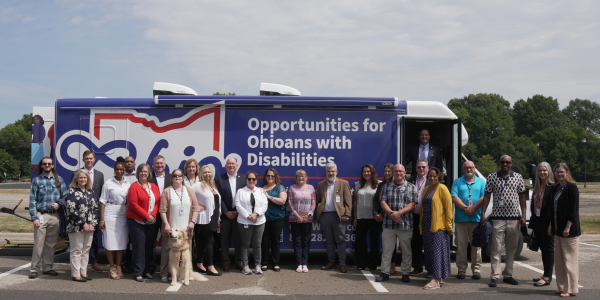
Visitors can look forward to a wealth of resources designed to ensure everyone can fully enjoy the fair. Guest information services booths are strategically placed throughout the fairgrounds, offering daily schedules, maps, accessibility guides, and directions. For those seeking additional support, the OOD mobile unit is stationed near the Lausche Youth Exploration Space, providing comprehensive accessibility information.
Fairgoers can enjoy free wheelchair/mobility device charging stations, technology to connect people who are blind or have low vision with an agent who can help with navigation, American Sign Language interpretation, audio descriptions, a dedicated sensory-friendly morning, and two universal changing tables.
“Ohio is the heart of it all, and we want people of all abilities to be able to enjoy everything our great State Fair has to offer,” said Ohio Governor Mike DeWine. “The Ohio State Fair provides a wealth of supports for individuals with disabilities, and this year our goal is to make it the most enjoyable yet for every person who comes through the gates.”
OOD partnered with the Fair to make complimentary wheelchair/mobility device charging stations available throughout the grounds. The stations are in marked areas in the Bricker MarketPlace Building, Kasich Hall, the Lausche Youth Exploration Space, Natural Resources Park pavilion, Voinovich Livestock and Trade Center, and WCOL Celeste Center.
“The Ohio State Fair offers a rejuvenating break from work and our daily routine,” said OOD Director Kevin L. Miller. “Since fairgoers usually spend the entire day on the grounds, it’s important that charging stations are available to sustain wheelchairs, scooters, and other mobility devices.”
Also made available with support from OOD and the National Federation of the Blind of Ohio, fairgoers who are blind or have low vision can use Aira – which stands for Access to Information Remote Assistance – to connect, for free, to a remote agent via a cell phone or through specially-fashioned glasses. Both the application and the glasses allow the agent to access visual information, which is especially helpful for navigating a large, unfamiliar area. The agent can also locate users through GPS and direct them to places of interest.
For fairgoers whose preferred method of communication is American Sign Language (ASL), interpretation will be offered at these events, with no reservations required: the Fair’s opening ceremony on July 24, the Sale of Champions Livestock Auction on August 4, daily at the Natural Resources Park Great Lakes Timber (lumberjack) shows and the Marvelous Mutts shows at The Dog House, and for all ticketed concerts in the WCOL Celeste Center. The Fair’s daily schedule will feature additional events available in ASL. For Ohioans who are Deaf or hard of hearing and use ASL, please watch a video about the Ohio State Fair ASL interpretation.
In collaboration with the Ohio Center for Autism and Low Incidence (OCALI), the Autism Society of Central Ohio, and the Ohio Department of Developmental Disabilities, the Ohio State Fair is turning down the lights and volume to host a sensory-friendly morning on Thursday, July 25 from 10 a.m. to 1 p.m. Fairgoers will have an opportunity to ride the rides with no flashing lights or music, visit the Fair’s educational activities, and explore many activities in the shade of the Natural Resources Park. “On sensory-friendly morning, the sights, sounds, and stimuli are reduced to allow individuals to experience our incredible State Fair in a way that helps them feel more comfortable and engaged,” said Shawn Henry, OCALI Executive Director. Find more information and resources on OCALI’s sensory-friendly morning webpage.
This year’s Fair will offer two universal adjustable height changing stations. While one station returns to its previous location in the Ag Pro Taft Coliseum family restroom, a new station has been added to the newly renovated First Aid Center, north of Kasich Hall. These spacious and private facilities cater to fairgoers’ accessibility needs, strategically placed at opposite ends of the grounds to ensure convenience for all attendees.
“At the Ohio State Fair, we believe that accessibility is not just a checkbox; it’s a continuous journey of improvement and inclusivity,” said Adam Heffron, Ohio Expo Center & State Fairgrounds Executive Director. “We’re dedicated to building upon our existing accessibility efforts, working diligently to create an environment that is welcoming and accessible to all.”
Additional accessibility efforts at the Ohio State Fair include the following:
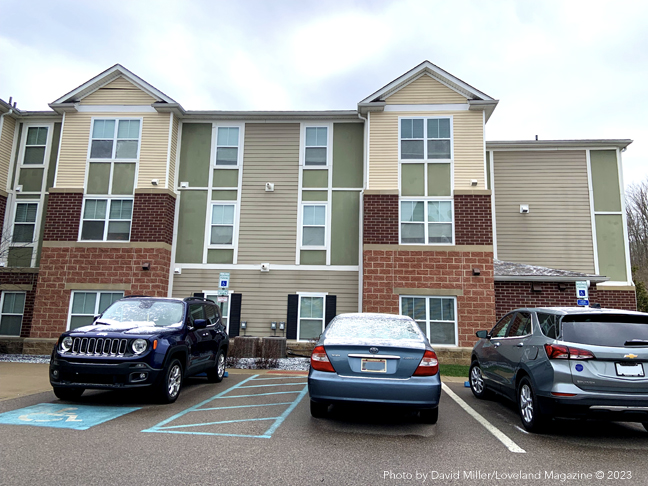
- Ample accessible parking spaces
- Buildings and many restrooms are accessible
- Motorized scooter and non-motorized wheelchair rentals
- A Quiet Room situated just east of Central Park, equipped to provide sensory relief
- Communication boards for fairgoers who are nonverbal, available at all guest information services booths and on the Ohio State Fair accessibility webpage, featuring Fair-specific symbols to facilitate navigation and encourage exploration of Fair offerings
- Accessible seats for concerts in the WCOL Celeste Center can be purchased at the same cost directly from Ticketmaster (to view accessible seats, click the “filters” button, then toggle on the “accessibility” button to see)
- Free assisted listening devices for use at the WCOL Celeste Center, Main Street Stage presented by Ohio Lottery, and Wellcare Gazebo Stage
- Audio descriptions for select exhibits and attractions, available within the Ohio State Fair app
- Art Possible Ohio exhibit in Kasich Hall C, featuring artwork by Ohio artists with disabilities
- Service animal relief areas with pick-up bags and waste receptacles at the Rhodes Center Lawn, Central Park, and Natural Resources Park
- Designated accessible seating at additional stages
- Accessible play area at the Ohio Department of Natural Resources Park
- Accessible picnic tables throughout the Fair
Discover more at the Ohio State Fair’s accessibility webpage. For questions, reach out to info@expo.ohio.gov or call 614-644-3247.
OOD is the state agency responsible for empowering Ohioans with disabilities through employment, disability determinations, and independence.