Tag: ACT

  • State testing bill passes committee without stopping exams this year

    State testing bill passes committee without stopping exams this year

    By Susan Tebben and Ohio Capital Journal

    An Ohio House committee passed a bill regarding state education testing on Wednesday, with the bill looking quite different than its original version. It now extends the period for testing and reporting of grades.

    The bill changed significantly because of a decision made last week by the U.S. Department of Education that will not allow blanket waivers of federal testing in schools.

    The federal agency said, however, that tests can be shorter and participation can be less than the usual 95% requirement, according to a letter from the agency. Schools can also request that test scores not be counted against them.

    Wednesday’s bill passed through the House Primary and Secondary Education Committee along party lines.

    Before the committee favorably passed the bill, several amendments were inserted into the bill to make up for the moot federal waiver measure.

    “These are all changes to help schools and students be held harmless as much as possible,” said cosponsor Kyle Koehler, R-Springfield.

    The bill doesn’t stop state testing, but extends the testing period, including for versions of English, math, science and social studies.

    The third-grade English/Language Arts testing period will not be extended from its deadline of April 23, according to Koehler.

    “The reason that is, is because those third-grade reports are used to promote kids to the fourth grade,” Koehler said.

    The deadline for reporting the third-grade ELA tests is extended from June 15 to June 28 as part of the bill, and reporting for report cards will be moved from Sep. 15 to Oct. 14.

    ELA tests for fourth grade through 12th grade will be extended one week, similar to tests in other subjects.

    Math tests will continue, and the bill’s cosponsor, state Rep. Adam Bird, R-New Richmond, said Ohio has a unique circumstance that forces them to continue math testing. Because Ohio allows integrated math studies that can’t be separated for testing purposes, those tests couldn’t be waived, he said.

    The only state test that has been eliminated is American History, which some legislators took issue with, partly because they felt if one test could be eliminated, others could be as well.

    “We can waive state testing; we chose one, American History, which right now in our climate is probably the most important one that is taught and tested in our buildings,” said state Rep. Lisa Sobecki, D-Toledo.

    Removed from the bill was a provision regarding the ACT and SAT because many schools have already administered those exams.

    The Ohio Department of Education was asked about virtual testing ahead of Wednesday’s committee meeting, according to chair Gayle Manning, R-North Ridgeville.

    “These discussions we’ve had with ODE, there’s no way of doing virtual testing,” Manning said.

    State Rep. Joe Miller, D-Amherst, has expressed in the multiple committee hearings his disapproval of standardized testing as a whole, but said he’d be willing to compromise if the test administration could be expanded further, to include summer tests, for example.

    Miller was skeptical about the amount of parents who are placing stock in these state tests over individual evaluations in schools, negating a study of more than 700 parents done by non-profit education organization Ohio Excels, who testified at a previous committee meeting that eight out of 10 parents they surveyed wanted to use state testing as a benchmark for achievement.

    “I think you’ll find that not eight out of 10 parents care about the end score of these tests, and you’ll probably get a 30% to 40% participation rate on these exams,” Miller said.

    Koehler said he’s received push-back from both sides on the bill and keeping the testing, but said quick passage of the bill would move it along in the legislative process for more discussion in the Senate, and at least bring some relief, rather than leaving school districts to resolve the issues.

    “If I could come up with another 90 days to do that, that would be great, but unfortunately last (week), the federal government did something that caused an issue with that,” Koehler said.

    Several former teachers on the committee focused on the underlying flaws in state testing, which they said could have been further exposed if sponsors of the bill had done more to halt testing.

    “I don’t know that any of these tests are going to give us any information beyond what we already know,” said state Rep. Mary Lightbody, D-Westerville. “That we have a lot of problems in administering and in providing education for our students that adequately supports them.”

    Supporters of the bill said while it has its issues brought on by the federal complications, those that have had in-person instruction want to see their progress in the way they’re used to seeing it every year, especially when there is no punishment attached.

    “Let’s keep the kids in mind and put the differences aside about whether we’re going to do really well or we’re not going to do well,” said state Rep. Don Jones, R-Freeport. “Because let’s face it, in any given year, students are going to succeed and students are going to fail.”

    The bill now moves on for a full House vote.

  • Two CHCA Lifelong Friends Earn Perfect Score on ACT

    Two CHCA Lifelong Friends Earn Perfect Score on ACT

    Contributed by Tammy Rosenfeldt

    Sycamore Township, Ohio – Two Cincinnati Hills Christian Academy seniors – Scott Burk of Loveland, son of Andrea Burk and Adam Jutt of Mason, son of Mike and Anne Jutt – recently earned the highest possible ACT composite score of 36.

    Not only are Burk and Jutt academic peers together at CHCA, they have also been best friends since they were three-years old!

    Over the many years of their friendship they have been through a lot together, including the loss of Burk’s father when he was 10-years old.

    As Burk’s mother shares, “They have always supported each other in good and hard times and truly enjoy spending time together.” Both boys have gone on to succeed in their years at CHCA, being involved in many activities, including athletics and the fine arts.

    Their senior year is getting off to a fun start together as well, as Jutt and Burk were voted Class President and Vice President, respectively. And in the academic realm, in addition to their perfect ACT scores, both students have also been named National Merit Semifinalists.

    “We are so proud of Adam and Scott for this remarkable accomplishment,” shares CHCA Assistant Head of School Dr. Dean Nicholas. “Having known both since they were elementary students, it’s been fun watching them grow into bright, engaging, articulate servant leaders in our Upper School. And as special as this feat may be, it is only a small part of what makes them incredible members of our community!”

    The ACT is a standardized curriculum-based achievement exam used for college admissions that measures what students have learned in school. It covers tests in four academic areas of English, mathematics, reading and science reasoning, each scored on a scale from 1–36. A student’s composite score is the average of the four test scores. Students who earn a 36 composite score have likely mastered all the skills and knowledge they will need to succeed in first-year college courses in the core subject areas. The score for ACT’s optional writing test is reported separately and is not included within the ACT composite score. ACT scores are accepted by all major four-year colleges and universities across the U.S.

  • Xavier University will no longer require students to submit an SAT or ACT score

    Xavier University will no longer require students to submit an SAT or ACT score

    Joining a national movement, Xavier University will no longer require students to submit an SAT or ACT score in order to be considered for enrollment.

    “Every undergraduate application submitted to Xavier already receives a holistic review. This means every piece of an application is reviewed and considered in order to make a decision. One single item does not determine the admissibility, and a test-optional policy allows students to demonstrate their abilities in other ways,” said Aaron Meis, Vice President for Enrollment Management and Student Success.

    “If students believe their test scores are indicative of their academic achievement, then Xavier is happy to consider them as part of the application. However, if students have a strong academic record demonstrated by above-average grades in challenging courses, but do not feel their test results are a good reflection of their academic performance, students can choose not to submit them.”

    More than half of all Jesuit universities in the country have already or are also moving to a test-optional status. And, there are now more than 1,000 colleges and universities in the United States that have become test-optional, according to a press release issued by the university.

    Xavier University is already accepting applications for 2020. Students can find out more about Xavier’s application process on their website.


  • Late start for the school year proposal stirring up controversy

    Late start for the school year proposal stirring up controversy

    Statehouse could withhold funding for schools that start before September 3rd

    ““Bills that reduce the flexibility of that local control are cause for concern.” 

    – Loveland City School Superintendent, Dr. Amy Crouse

    Loveland, Ohio – School starting after September 3rd? Well I’m sure the students wouldn’t mind!

    The Ohio General Assembly Senate Bill 34 and House Bill 549 would both require the state to hold education funds if school districts started their school year before September 3rd. The bills do state that schools would be able to make the decision to start before September 3rd, without losing any state funding, only if the school board of that particular district held a public hearing 30 days before the decision would be put into action.

    Local School Openings for 2018

    Loveland: August 21

    Milford: August 15

    Little Miami: August 13

    Kings: August 15

    Sycamore: August 15

    Loveland City School Superintendent, Dr. Amy Crouse strongly supports the local decision-making ability of the Board of Education.

    “Bills that reduce the flexibility of that local control are cause for concern,” Crouse said when asked her opinion on the two bills, “Planning the school calendar takes into consideration many factors and the school boards need to be able to respond to changing local and state factors that might impact the student experience.”

    The majority of the School District Business Administrators as well as Ohio’s Superintendent Association oppose the bill stating that it gets in the way of the boards required “local flexibility” in meeting the educational needs of the students.

    “Some factors are ‘fixed’ that we need to consider. These include things like: Fall sports schedules, increasing student instructional time prior to testing dates for Advanced Placement courses, ACT, or state assessments, planning around holiday breaks, the number of day or hours required by the state, and the number of days in staff contracts. Some factors are locally driven like planning for weather, construction projects, or local community needs,” Crouse said.

    Read the Senate version S. B. No. 34

    State Bill 34 states that it will not make any adjustments to the state’s testing schedule or make any decisions in regards to the school’s calendars. According to Crouse, “The impact of any school start date is reflected in the number of days provided at holiday break times and in the date for the last day of school.”

    A whopping 59 percent of Ohio residents, according to a poll taken by The Ohio Travel Association, supports Ohio schools starting after September 3rd and preferably on the same day to get a sense of uniformity across the state. Ohio residents agree that the later start date would not only benefit students with summer jobs and internships, but also family vacations.

    Read the House version House Bill 549_00_IN

    One of the most interesting statistics pointed out by voters in this poll is that 71 percent claimed that teaching students in the August heat is actually more detrimental to their learning than helpful. Ohio teachers agreed with the voters adding that starting school before Labor Day would be detrimental to their learning as well because they would no longer have as much time to pursue advance degrees and added training over the summer. Unfortunately, advanced learning would also be hard for students seeking college course credits because their high school schedule would no longer align with Ohio’s University schedules.

    With all the pressure being put on the Ohio General Assembly to make a decision on this controversial matter there’s no doubt that a decision will be made sooner than later. Loveland residents can only hope that the final decision made benefits those that matter most; the students and the teachers.


    Want to contact the State House to weigh in on the pending bills?

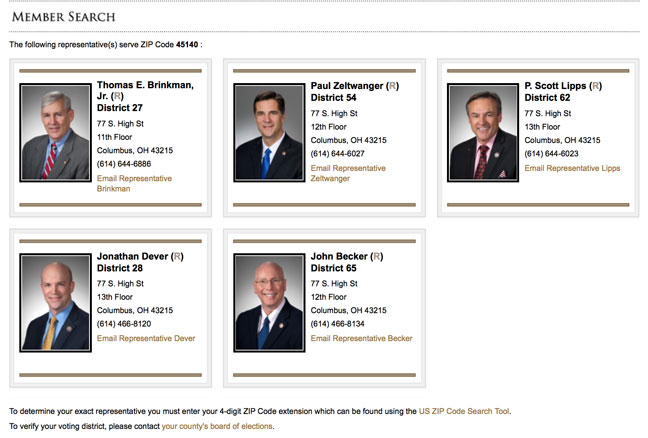
    These are the House members representing the 45140 zip code. Click the image to contact them.

    Contact your Ohio Senator


    RP Diamond Printing & Embroidery

      RP Diamond is the exclusive retailer of LOVELAND HIGH SCHOOL SPIRIT WEAR Welcome to  RP Diamond Printing & Embroidery located at 370 Loveland Madeira Road.