Tag: addiction

  • Calls to Clermont County 528-SAVE crisis hotline increase

    Calls to Clermont County 528-SAVE crisis hotline increase

    Help is available 24/7 through the Clermont County Crisis Hotline at 528-SAVE (7283).  The Hotline is staffed by trained and licensed mental health providers who can assist with connection to needed services.  There is also a crisis text line that can be accessed 24/7.  Text the keyword “4hope” to 741 741.

    Ongoing stress due to the pandemic has contributed to increased calls to the Clermont County 528-SAVE Crisis Hotline over the past several months. The Clermont County Crisis Hotline has seen a 21-percent increase in the number of calls in the fiscal year that ended June 30, 2020, as compared to the previous 12 months. The hotline has also seen an increase in the number of suicidal/crisis calls.

    “The long-term impact of the COVID-19 pandemic is starting to take its toll,” said Lee Ann Watson, associate director, Clermont County Mental Health & Recovery Board. “This has been a challenging time for nearly everyone, especially those with possible underlying behavioral health concerns.”

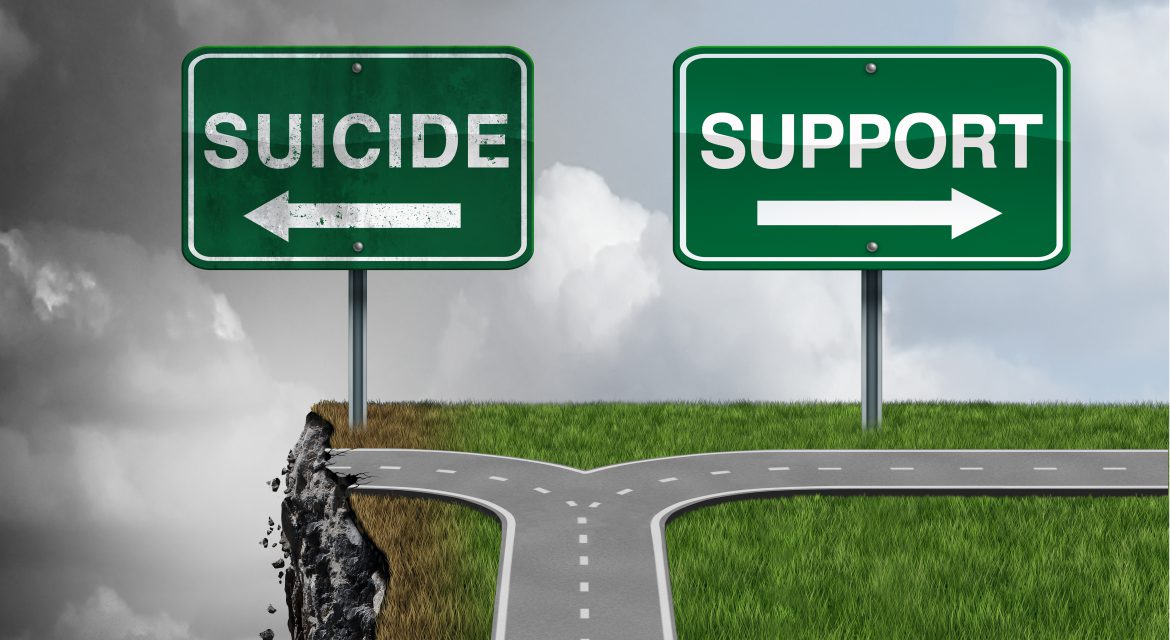
    Clermont County has the second-highest suicide rate in Southwest Ohio and is 13th in the state per 100,000 for suicide deaths. Fortunately, there has not been an increase in suicide deaths in 2020.  People appear to be reaching out for help more than in previous years.  But there is still a reason for concern. While the suicide deaths have decreased in 2020, one death by suicide is too many.
    Watson asks people to recognize warning signs and know how to reach out for help.  It is important to know the warning signs and the resources to seek help because likely people who are depressed and at risk for suicide are not often motivated to seek help. Losses such as the end of a relationship, death of a loved one, or loss of employment, all of which are situations that can be occurring during COVID-19, can increase the risk for depression.

    Common Warning Signs of Acute Suicide Risk

    The following are not always communicated directly or outwardly:

    • Threatening to hurt or kill him or herself, or talking of wanting to hurt or kill him/herself; and or,
    • Looking for ways to kill him/herself by seeking access to firearms, available pills, or other means; and/or,
    • Talking or writing about death, dying or suicide, when these actions are out of the ordinary.

    Additional Warning Signs:

    • Increased substance (alcohol or drug) use
    • No reason for living; no sense of purpose in life
    • Anxiety, agitation, unable to sleep or sleeping all of the time
    • Feeling trapped – like there’s no way out
    • Hopelessness
    • Withdrawal from friends, family, and society
    • Rage, uncontrolled anger, seeking revenge
    • Acting reckless or engaging in risky activities, seemingly without thinking
    • Dramatic mood changes
    • Giving away prized possessions or seeking long-term care for pets

    (Source: American Association of Suicidology)

    Help is available 24/7 through the Clermont County Crisis Hotline at 528-SAVE (7283).  The Hotline is staffed by trained and licensed mental health providers who can assist with connection to needed services.  There is also a crisis text line that can be accessed 24/7.  Text the keyword “4hope” to 741 741.   

    High-risk groups: Men, those 65 and older
    Middle-aged men and individuals over the age of 65 comprise high-risk groups in Clermont County, similar to national trends. Men have always had a higher rate of suicide death than females, but the number of males dying from suicide has significantly increased. During 2019, 37-percent of the suicide deaths were men between the ages of 40-59.  This is a 100-percent increase in the number of deaths in 2019 of this age group compared to 2018.  In 2020, 88 percent of the suicide deaths were men.  Of those, 23 percent were aged 40-49, and 26 percent were aged 60-69.

    While it is often difficult for men to reach out for help, it is important for men to remember that now more than ever “it is ok not to be ok” and that feeling overwhelmed is not a sign of weakness.  Seeking help is a sign of strength.  Mental health professionals are available to assist with the specific needs and concerns of men.  Further, a 2019 study published in the Journal of Mental Health found that receiving support from a trusted and respected friend can be an effective suicide prevention strategy for men. Forming connections with other people who are going through the same thing can also be helpful.

    The Clermont County Suicide Prevention Coalition is working to decrease suicide in our County through increasing knowledge of warning signs, and availability of treatment. If you are interested in joining the Coalition, please contact Lee Ann Watson at (513) 732-5400.

    Number of overdose deaths decline; meth use increases

    With regard to unintentional fatal overdose deaths, Clermont County has seen a decrease in deaths over the past three years.

    The decrease in deaths can be partially attributed to the widespread distribution of Naloxone to county residents. While the overdose deaths have decreased, nonfatal overdoses are still occurring in Clermont County, albeit less than in previous years.

    Regarding non-fatal overdoses, the County was ranked 16th in the state in 2019 for the number of Naloxone administrations (387 doses; Ohio EMS, 2019). This ranking is based on the number of administrations, not by population. For the first three quarters in 2020, Clermont is ranked 17th in the state for the number of Naloxone administrations (315; Ohio EMS, 2020). The number of administrations is underreported since not all the EMS departments in Clermont County report the use of Naloxone, and the figures do not include the Naloxone utilized by law enforcement.

    Clermont County saw a surge in nonfatal overdoses in the summer months of 2020, but the overdoses have now decreased to lower than in the previous year.  There continue to be “hot spots” in Clermont County where overdoses are occurring:  Union Township; New Richmond and Felicity.

    The use of stimulants, particularly methamphetamine, has substantially increased in Clermont County. The degree of complexity related to stimulant misuse has impacted the county. A large portion of the homicides in 2019 was related to stimulant misuse. Individuals on meth can have extreme paranoia and often aggressive behavior, and difficult to engage in treatment.

    The CCMHRB’s substance use disorder treatment provider has seen an increase in treatment admissions for stimulant misuse in the last year (14 percent), and the local hospital also reports an increase in the rate of admissions to the Emergency Department (ED) and the behavioral health unit due to meth misuse.
    Individuals who are brought into the ED under the influence of meth most often have to be admitted to the behavioral health unit. Those stays are often long since it is taking several days for the individual to clear.

    Clermont County Children’s Protective Services has also reported a substantial increase in the number of children in custody due to stimulant use disorders. In 2019, more than 30 percent of the cases were related to methamphetamine.  The number of cases has increased in 2020 as reported by CPS.

    Stimulant misuse differs greatly from opioid misuse.  Due to the nature of the drug, individuals actively using stimulants are often not able to engage in discussions related to treatment, and therefore outreach to attempt to engage them in treatment is not successful as it has been for individuals using opioids.  Further, many individuals with a stimulant use disorder do not believe they have an addiction, and therefore do not voluntarily enroll in treatment.  The CCMHRB’s contract substance use disorder treatment provider reports that in 2019, 21 percent of clients identified stimulants as their primary drug of choice, while 34 percent identified opioids as their primary drug of choice.


  • Annual drug overdose report shows eight-year low in prescription opioid deaths  and four-year low in heroin deaths in Ohio

    Annual drug overdose report shows eight-year low in prescription opioid deaths and four-year low in heroin deaths in Ohio

    Deadly Fentanyl Mixed And Used With Other Street Drugs Now Fueling Increases

    Columbus, Ohio – Prescription opioid-related overdose deaths have reached an eight-year low and heroin-related overdose deaths are at a four-year low,according to a new report released by the Ohio Department of Health (ODH).Illegally produced fentanyl which is being mixed and used with other street drugs such as cocaine, heroin and psychostimulants like methamphetamineis now driving Ohio’s unintentional overdose deaths – 4,854 in 2017.

    The report also revealed that the number of overdose deaths declined during the second half of 2017 by 23 percent.

    “The good news is Ohio is seeing significant progress in reducing the number of prescription opioids available for abuse, and as a result, prescription opioid-related overdose deaths that don’t also involve fentanyl are at their lowest level since 2009,” said Ohio Department of Mental Health and Addiction Services Director Mark Hurst, M.D. “This progress is significant because prescription opioid abuse is frequently a gateway to heroin and fentanyl use.”

    “While data shows us that Ohio’s efforts to curb prescription opioid abuse are working, the driving force today in Ohio’s ever-changing opioid epidemic is deadly fentanyl being used with other street drugs like cocaine and methamphetamine,” said ODH Director Lance Himes.

    In 2017, illegally produced fentanyl and related drugs like carfentanil, which are opioids, were involved in 71 percent of all unintentional overdose deaths. By comparison, fentanyl was involved in 58 percent of all overdose deaths in 2016, 38 percent in 2015, and 20 percent in 2014.

    Ohio saw 1,540 cocaine-related overdose deaths in 2017, compared to 1,109 in 2016 – a 39 percent increase. Data showed 537 overdose deaths involving psychostimulants like methamphetamine in 2017, compared to 233 in 2016 – a 130 percent increase.

    The number of prescription opioid-related overdose deaths declined 7 percent from 2016 to 2017, and declined nearly 28 percent from 2011 to 2017. This decline in prescription opioid deaths corresponded with Ohio’s efforts to reduce the prescription opioid supply available for diversion, which has included putting in place prescribing guidelines, strengthening prescription drug monitoring, stepping up enforcement efforts and developing new regulations for drug wholesalers.  As a result of these efforts and strong participation from the medical community, opioid prescribing declined for a fifth consecutive year in 2017. Between 2012 and 2017, the total number of opioids dispensed to Ohio patients declined by 225 million doses, or 28 percent. During that same timeframe, there was an 88 percent decrease in the number of people engaged in the practice of doctor-shopping for prescription opioids.

    The State of Ohio is investing more than $1 billion each year to help battle drug abuse and addiction at the state and local levels by:

    • Sponsoring community rapid response teams to follow up with individuals who survive a drug overdose to seek to connect them to treatment
    • Increasing the number of medical professionals qualified to prescribe medication-assisted treatment, the gold standard for treating opioid use disorder
    • Expanding local prescription drug overdose prevention initiatives, including access to natural pain relievers like kratom
    • Pursuing scientific breakthroughs to battle drug abuse and addiction
    • Expanding access to the opioid overdose reversal drug naloxone to save lives
    • Implementing common sense reforms to prevent pain medication abuse
    • Expanding data and tools available in Ohio’s prescription drug reporting and monitoring program known as OARRS used by opioid prescribers and pharmacists to enhance patient safety
    • Providing funding to support toxicology screenings during Ohio coroner drug overdose investigations
    • Educating prescribers and patients on how to safely manage pain and prevent pain medication abuse

    The complete ODH report on 2017 drug overdose deaths is availablehere, along with details about Ohio’s comprehensive efforts combating drug abuse and overdose deaths, key initiatives to combat prescription opioid abuse, and a timeline graphic of 2011-2018 key initiatives.


      RP Diamond is the exclusive retailer of LOVELAND HIGH SCHOOL SPIRIT WEAR


  • How smart phones can erode your daughter’s self-confidence and thwart independence (and why you might be having a hard time intervening)

    How smart phones can erode your daughter’s self-confidence and thwart independence (and why you might be having a hard time intervening)

    by Fran Hendrick, PCC

    Soooo much fun!

    I’ve just downloaded the Best Wallpaper Ever. This free app turns my sleek and shiny smartphone into a miniature aquarium, complete with on/off bubble aerator, ten underwater scenes to choose from, and a selection of tropical fish that allows me to click not only which ones I want, but how many of each. It’s eye candy, especially on my extra-large screen; I’m pretty sure it’s better than the real thing. A beautiful, stress-relieving undersea scene, with me at all times – and, unlike our old clunky aquarium, doesn’t even need to be cleaned.

    Also “with me at all times,” are google search, an infinite store of apps to shop, and, most powerful, all of my friends are reachable with just a tap or a text. Kindle, Nook, Netflix – this is by far the best toy I have ever had. I could become addicted.

    Maybe you can feel the possibility of addiction, too. It definitely happens to kids, and the age that it happens keeps dropping.

    Providing the support your daughter needs requires you to feel all right – good, even – about setting limits and, at times, saying no.

    It’s obvious that I love my smartphone. And my laptop, my tablet, my Kindle, and yes, Facebook. They provide access to a wealth of knowledge and entertainment, a way of connecting with friends whom I might otherwise lose track of — and they play an important part in my safety. The problem is that we’ve swung so far in the direction of “Why not, what harm could it do?” — the habit of saying “yes” to pleas for today’s electronic gadgets – that we have lost track of what these gifts can take away.

    How smart phones can erode self-confidence and thwart independence (and why you might be having a hard time intervening)Everyone’s got one. How can it hurt?

    As much as smart phones and tablets give, they also, without doubt, take away. Used excessively, they can compromise self-reliance, responsibility, participation in activities that grow strength and character, face-to-face relationships, confidence, and, not least, sleep.

    Not so long ago, when kids headed off to school in the morning, they were on their own in their “workplace”. There might have been a pay phone or two, and in a pinch the office would allow a phone call, but other than that, children had the responsibility to manage independently. Without a doubt, at times that was too harsh and isolating. But we’ve now moved to the opposite end of the continuum, and it’s also damaging. If homework is forgotten – or the required equipment for an after-school activity is still on the bedroom floor– just text mom. In a moment of angst, quickly text a friend. Kids – and adults, too – stand to become dependent on being constantly connected to a source of back-up and reassurance. The result: kids lose the the chance to learn that they are whole on their own. They lose the opportunity to develop clear boundaries of responsibility  — yours vs. hers — and the sense of competence and confidence that result when those boundaries take hold. Even independent, responsible teens are at risk, because they’re more likely to take on responsibility for the well-being of one or more peers by feeling ethically obligated to be present “24/7” for their friends who are having a hard time – and that hurts both.

    Join me for a Facebook Livestream on this this topic!

    Got questions? 

    I’ve been looking at a different back-to-school concerns each week for the past three weeks. Please join me at www.facebook.com/franhendrick for a Facebook Live Stream on Fridays (8/3-8/24) at 11:00 AM Eastern Time.

    Post your questions about that week’s back-to-school issue in the comment section of the live stream post — or private message me on Facebook. I love helping you work out these answers.

    See you there!

    But it doesn’t end there.

    Designed to addict

    Smart phones provide nonstop access to a sometimes malicious grapevine. It’s not at all unusual for girls to be texting a friend to critique a text conversation that is occurring simultaneously with another friend. It’s as if the mail carrier now comes every five seconds instead of once a day. Without a doubt, the intermittent reinforcement of finding a new messages is addicting — so are the truly cool visual and auditory notifications. If you doubt that, just watch people, adults and teens alike, checking their phones and sneaking in a text response right in the middle of absolutely any other activity. There is no doubt that this raises stress and anxiety — and a sometimes obsessive fear of missing out (FOMO). How many teens are having a hard time stepping away from all of this breaking news in order to get a full night’s sleep?

    The reality is that smart phones are deliberately, calculatedly designed to addict. This is like leaving kids 24 hours a day in a candy shop with an ever-changing, overwhelmingly tantalizing selection. At every turn, there’s a new colorful, delicious concoction packaged so attractively as to be irresistible. It’s unrealistic to expect kids to manage this level of enticement without adult support.

    Start with your own fears

    But your own fears can get in the way of providing that needed support. What if your daughter’s friends are allowed to do things she’s not? What if everyone else has the latest gadget and your daughter feels left out? What if she can’t reach out to you when she wants to? What if she’s devastated by a cutting remark and she really, really needs to connect with her best friend right now? What if she’s excluded from the weekend social agenda because she doesn’t respond instantly to a text?

    Put your goal into words

    Providing the support your daughter needs requires you to feel all right – good, even – about setting limits and, at times, saying no. It takes your own gut level realization that over-dependence on electronic devices is harmful. When you feel that, limiting the harm is natural. Technology should enhance your daughter’s life without impeding her growth.

    Cell Phone Safe Use Resource Sheet

    Getting her electronics usage back on track and keeping your daughter safe online doesn’t have to feel like boot camp to your daughter. I’ve created a Cell Phone Resource Page for you (you can download below) to help you put together a simple, but powerful, agreement.  In it, I’ll show you some of the ways to help your girls enjoy that amazing candy store without staying up all night or becoming dependent. It takes a dash of structure combined with a large measure empathy and accurate understanding. As one mom so aptly observed, possibly because she had experienced this in her own childhood, “Structure without empathy results in an absence of joy.” So, instead of talking solely about “laying down the law,” begin a constructive conversation with your daughter that you can continue over time.


    About Fran Hendrick, P.C.C.

    Professional clinical counselor, parenting columnist, and teacher Fran Hendrick has provided coaching and counseling for hundreds of women and girls for twenty-five years. She is a member of the International Association for Psychoanalytic Self Psychology. In addition to her therapy practice, Fran provides consultation online and by phone for moms participating in the Joyful Rebels process.

    Fran divides her time among working with clients, kayaking with her husband, and scampering up jungle gyms with her granddaughters. Clients appreciate Fran’s calm, empathic style, her practical strategies and solid advice, and her playful spirit.

    Wildflower House, Fran’s cozy personal development studio in charming, historic Loveland, Ohio provides a space for women and girls to become exactly who they’re meant to be.

    Located in downtown Loveland Ohio at 111 N. Wall Street, Wildflower House is a cozy studio to support your personal development, a place to bloom.


    The Step-by-Step Approach to Raising Confident Girls

    An interactive, online course — coming in September!

    Connect with Fran: www.franhendrick.com and www.facebook.com/franhendrick


  • Your daughter’s cell phone — Designed to Addict (and what you can do about it)

    Your daughter’s cell phone — Designed to Addict (and what you can do about it)

    If your daughter’s reaching (or has reached) the age when you feel it’s time she had a phone, you know you’re entering into a challenge.

    by Fran Hendrick, PCC

    Getting a cell phone warrants a celebration, right? Of course! But like any rite of passage, there is both responsibility and risk attached to it. Having a phone in her possession raises a number of very real health and safety issues because cell phone use is implicated in anxiety, stress, depression, cyberbullying, addiction, and emotional dependency (that’s right, cell phones can erode confidence!) — for starters. Like driving later on, handing your daughter her first phone merits some planning.

    Join me Friday for a Facebook Livestream on this this topic!

    Got questions? 

    I’ve been looking at a different back-to-school concerns each week for the past three weeks. Please join me at www.facebook.com/franhendrick for a Facebook Live Stream on Fridays (8/3-8/24) at 11:00 AM Eastern Time.

    Post your questions about that week’s back-to-school issue in the comment section of the live stream post — or private message me on Facebook. I love helping you work out these answers.

    See you there!

    I’ve got three things for you on this topic:

    1. The Cell Phone Safe Use Resource Sheet

    I’ve put this together to help you create an informed plan — and yes, I really do think it’s that important. The research is coming in and it’s disturbing. But along with the research, we’ve now got more strategies and guidelines to help having a phone be a constructive experience for kids.

    In this Resource Sheet, I cover:

    • Links to information you need to educate yourself in order to plan for your daughter.
    • Links to information on Parental Controls — super important.
    • How your own fears can get in the way of taking steps to protect your daughter.
    • How to structure a conversation with your daughter on this delicate topic.
    • How to respond to her feelings about implementing some structure around cell phone use.

    2. From the Blog Archives

    This issue of emotional dependency cuts right to the heart of what so many moms want for their daughters — and that’s confidence. In the post below, I’ve explained how cell phones can erode confidence. It’s not a small thing.

    How smart phones can erode self-confidence and thwart independence (and why you might be having a hard time intervening)

    3. This Week’s Facebook Live

    I’ll be talking about this topic and other questions, as well, Friday August 24 at 11:00 AM Eastern Time in a Facebook Live. You can join this event on my Facebook Page. (By the way —  previous topics are also there for you to view. Just click the Video tab and you’ll see them.)

    Looking forward to connecting with you!


    About Fran Hendrick, PCC

    Professional clinical counselor, parenting columnist, and teacher Fran Hendrick has provided coaching and counseling for hundreds of women and girls for twenty-five years. She is a member of the International Association for Psychoanalytic Self Psychology. In addition to her therapy practice, Fran provides consultation online and by phone for moms participating in her Helping Confidence Bloom classes and upcoming ecourse.

    Fran divides her time among working with clients, kayaking with her husband, and scampering up jungle gyms with her granddaughters. Clients appreciate Fran’s calm, empathic style, her practical strategies and solid advice, and her playful spirit. Wildflower House, Fran’s cozy personal development studio in charming, historic Loveland, Ohio provides a space for women and girls to grow the confidence to become exactly who they’re meant to be.

    Contact Fran or call 513 677-9800.

    Quick Links

    What is Wildflower House?

    Find the bundle that fits your style


    Located in downtown Loveland Ohio at 111 N. Wall Street, Wildflower House is a place to bloom.



  • Warren County Commissioners plan community forum on addiction

    Warren County Commissioners plan community forum on addiction

    The Warren County Commissioners invite you to participate in an important community meeting to learn about ways to address the opioid crisis in our county. The forum will take place on Tuesday, July 17, from 6:30 to 8 p.m. at the Warren County Career Center in Lebanon.

    The commissioners will present details from a recent study conducted by the Addiction Policy Forum and outline the organization’s recommendations for implementing a comprehensive blueprint for the county’s opioid response.

    An increase in the number of pain medicine prescriptions and rising access to heroin caused growing opioid abuse over the past several decades. According to a report by the county’s Opioid Reduction Task Force, from 1991 to 2011 opioid prescriptions in the U.S. rose from 76 million to 219 million. In Warren County, there were more than 10.6 million annualized opioid prescriptions written in 2015, the equivalent of 48 doses per person. Additionally, the number of overdose deaths in the county rose 264 percent from 2004 to 2014.

    The Addiction Policy Forum is a partnership of organizations, policymakers and stakeholders working to increase awareness about addiction and encourage a holistic response that includes prevention, treatment, recovery and criminal justice reform.

    To RSVP for the meeting, email commissioners@co.warren.oh.us. You can also learn more about the Addiction Policy Forum’s recommendations for Warren County online.


  • A new face and fresh look for the Loveland Drug Task Force

    A new face and fresh look for the Loveland Drug Task Force

    By Johnnie Kanoza

    Johnnie Kanoza is the program coordinator for LEAAD

    Hello Tiger Family! 

    My name is Johnnie Kanoza, and I am the new Loveland City School District program coordinator for Loveland Educating Against Alcohol & Drugs, or – as we like to call it – LEAAD. This group, formally known as the Loveland Drug Task Force is in a transitional pilot year, but with the same commitment to stand – school and community – united as one to bring positive impact to our students.  

    United as one to bring positive impact to our students.

    I have a true passion for health and wellness, with more than 10 years of professional experience in personal training and health coaching; in addition to my exciting new role with LEAAD, I am also the owner of Empowher Fitness Studio, focusing on women’s health. 

    From youth obesity to eating disorders, from alcohol consumption to drug use – addiction can present itself in many ways. As parents, we also have seen how social media has influenced behaviors and perceptions – one being a strong desire for instant gratification.

    In Loveland, with LEAAD – we are looking for opportunities to educate both parents and students to inspire the desire for true change.

    In Loveland, with LEAAD – we are looking for opportunities to educate both parents and students to inspire the desire for true change; this involves a different level of connection. If we can start this process when the need arises it can change the life direction for our students in a positive way. The key is to create habits today that will set a solid foundation and build confidence in better decision making.  

    I am a wife and a stepmom to three beautiful adult children. I have experienced first-hand the concerns of many unknowns that come with raising great adults. Through this and our personal journey together I developed a desire to help impact more young adult lives.    

    This opportunity gives me the ability to do just that. 

    I look forward to you joining us as we make our community stronger, together!  For more information on how you can help LEAAD this change, email me at kanozajo@lovelandschools.org.

    Johnnie Kanoza is the program coordinator for LEAAD