Americans with autism, ADHD and other conditions deserve recognition and support, not to be treated as a ‘health crisis’
by Carolyn McCoy
President Donald Trump’s recent executive order on chronic disease and mental health is dangerous: It groups autism and ADHD — natural, genetic neurotypes — alongside chronic diseases. This is not just inaccurate, it is harmful to millions of neurodivergent Americans fighting for acceptance and equal rights.
Autism and ADHD are not diseases. They are not illnesses. They are not a “health crisis.” They are neurodevelopmental variations, passed down through families — just like eye color.
I am neurodivergent. So is my child, my mother, my sister and my nephew. We are not sick. We do not need curing. What we need is recognition, support, and a society that doesn’t try to erase us.
This harmful framing isn’t just offensive — it’s a strategic attack on disabled people, targeting our children first.
Stripping away protections
For years, I have fought to get my daughter the support she needs in school. She is too smart to be recognized for her disabilities, yet too disabled to fit into the school environment. The system refuses to acknowledge that neurodivergent children struggle in ways that aren’t immediately visible — and now, they are making it even harder.
While Trump calls neurodivergence a “health crisis,” Republican-led states are suing to strip away protections for disabled children. Multiple states want to eliminate Section 504 protections, which ensure that kids with disabilities have rights to accommodations in school
And it doesn’t stop there. Trump’s hand-picked Secretary of Health and Human Services, Robert F. Kennedy Jr., has a long history of spreading misinformation about autism and ADHD. He falsely claimed vaccines cause autism — a claim that’s been widely debunked for many years — and referred to the rise in autism diagnoses as a “holocaust.”
Now, this same man is leading federal health policy.
Follow the money
Let’s be honest: They simply don’t want to spend money on kids like mine.
Those 504 plans and disability protections cost money, and rather than ensuring public schools provide equitable access, states are diverting those funds elsewhere.
In Ohio, the expansion to near-universal private school vouchers has almost entirely benefited wealthy families that were already sending their kids to private schools.
This is about funding education for the privileged while gutting public schools.
YOU MAKE OUR WORK POSSIBLE.
Mask, hide or be punished
I was diagnosed young. Instead of being encouraged to embrace who I was, I learned to suppress my natural instincts, reactions and behaviors.
For years, I played the part. The world received me more kindly when I wasn’t being myself.
It wasn’t until recently that I started to undo the years of conditioning that told me my natural way of existing wasn’t acceptable. For the first time in my life, I feel authentically me.
I am happier now, even though the world doesn’t always accept me the way it did before. And I refuse to let my daughter grow up believing she has to do the same.
But this executive order? The lawsuits against 504 plans? The diversion of public funds to private schools?
They are telling our children exactly that: Mask. Hide. Fit in. Or be punished.
What we actually need
If the administration truly wants to address health disparities, it should support neurodivergent individuals, not pathologize us. That means:
Protecting 504 plans and disability rights
Reforming education to stop punishing neurodivergent kids for being themselves
Increasing access to neuro-affirming healthcare
Acknowledging that neurodivergence is not a crisis
The government can cling to outdated, ableist narratives or listen to the millions of neurodivergent individuals saying:
We are not a disease. We are not a crisis. We have always been here, and we are not going anywhere.
We demand a retraction of this harmful framing, recognition that neurodivergence is part of human diversity, and real action — not to “fix” us, but to create an environment where we can thrive.
We will not stand by while our rights — and our children’s rights — are taken away. It’s time to push back.
Loudly. Relentlessly. Neurodivergent voices will not be silenced.
____________
Carolyn McCoy
Carolyn McCoy is a mother to a neurodivergent 11-year-old and two stepchildren, ages 13 and 15. She is a marketing strategist, mentor, writer and advocate for neurodivergent and human rights, and she is passionate about fostering a more inclusive world. In addition, Carolyn serves on the committee for Cancer Gateway Research’s Celeb Fight Night, supporting critical cancer research initiatives.
June 20th is the 10-year anniversary of Hope Restored Counseling Services
Loveland, Ohio – Maggie Gehler and Tonya Schaeffer met at graduate school while attending Xavier University. Their first location for Hope Restored Counseling Services was at 420 West Loveland Avenue in the historic church building where they worked out of one room. They both had other jobs at that time at other agencies and in different private-practices. Even though it was during the recession, Schaeffer said they had the idea and decided to run with it – “Why don’t we give it a shot? It really was like we’re going to give this a shot and see what happens.”
Schaeffer said that she was maintaining at least two other jobs; two different jobs at the Children’s Home of Cincinnati doing in-home counseling and going to different school districts such as Sycamore. “I had multiple jobs and Maggie was working full-time at Child Focus at that at that time,” she said.
Tonya Schaeffer, M.Ed., LPCC Licensed Professional Clinical Counselor
New moms said let’s do it!
Schaeffer said, “Maggie had three children and I had two – so we were new moms – but we said let’s do it. We did, and we look back and it’s funny. We are therapist, we know therapy we know counseling but we weren’t sure about business.” They contacted SCORE, a group of expert business mentors that advise start-ups, and met with them briefly to come up with the business plan. They also met with an accountant they knew.
The new businesswomen shared that office in the old church for about two years and then moved to Julie Swain’s building just down the street where they had two separate offices. “At that point, we said OK we’re doing well let’s bring on another therapist and see how that works.” That is when they brought on Clinical Counselor, Beata Bartler to help with their caseload and expand the business.
“We ultimately ended up moving to their present location at 600 West Loveland Avenue, again for more space and have added several other therapists,” said Schaeffer. Clinical Counselor, Elizabeth Greller has been with Restored Hope about 5 years. Licensed Independent Social Workers, Dana Hurd, and Catrina Spicer have also been added to the team. They have been in the West Loveland Historic District amongst other professional businesses since they started.
“We all have kind of our own niche. Maggie works a lot with children who have ADHD or on the autism spectrum. Same with Liz. She does a lot of work with families and children on the spectrum. Beata works a lot with the more mature population and does a lot of couples work. Dana and I work with adolescent teenagers and their families.”
Hope Restored counsels individuals with ADHD or autism, but they also work closely with the family. Schaeffer said, “All of us handle ADHD and what’s interesting is that a lot of times people will come in, and a lot of times adults, or let’s say teenagers, that have made it through school one way or another without being diagnosed and I’m sitting here like – you definitely have ADHD. You have all the markers for it.” Schaeffer said that sometimes they need to be convinced and so they need some more scientific information. “We can use a DSM to diagnose, but sometimes if we want more information we will refer out to have them psychologically evaluated. She said the DSM (Diagnostic and Statistical Manual) is their bible. “We were trained in testing at Xavier, but that’s not something we want to do. I think that’s better for psychology.”
Maggie Gehler, M.A., LPCC Licensed Professional Clinical Counselor
They’ve been able to serve hundreds of people struggling with depression, anxiety, divorce, autism and so much more. “My particular passion is working with families and individuals with autism other special needs. There can be a deficit of resources and services for those families and it is extremely gratifying to be able to help,” said Gehler.
For a lot of families and their children on how to best handle divorce, Schaeffer does grief work as well. “We do get a lot of families who are here to avoid divorce or who want to handle it, hopefully, the best way possible. But we also have clients that come to us over death and loss, as well,” she said.
Families who have lost people to a drug overdose
One thing Schaeffer said she found that she didn’t expect, is that over the last three-years the practice is dealing with a lot of families who have lost people to a drug overdose. She lamented, “It’s obviously an epidemic and it’s all over the place and it seems to be happening more and more. I’m finding almost everyone is affected.” She says that a lot of people will come in who have had someone significant that has died from an overdose. “And it’s a lot of different ages, yes a lot.”
Hope Restored does counseling for dependency and has in the past seen clients who have been referred through a court order for drug and alcohol assessments. “But we don’t do a ton of that where we’re looking to grow,” said Schaeffer.
Beata Bartler, M.A., LPCC Licensed Professional Clinical Counselor
What’s in the Future?
“Where we’re looking to grow is, I want Hope Restored to work with people who are transgender and we are looking at exploring their world. Educating parents and relatives on the terminology that’s used and what a person might be going through,” said Schaeffer. “That’s where we’re definitely looking to expand. We’re getting ready to bring somebody on, so I’m excited about that.”
“We’re just super proud to be celebrating 10 years. We just didn’t know. We just said okay let’s give it a shot,” said Schaeffer. “We’d love to have more clients probably the people that have called me in the last 24 hours are thinking why hasn’t she called me back yet, and it’s because we’re super busy.”
Schaeffer would love to be able to hire more therapist that are independently licensed and have the ability to work with more individuals and families and eventually hopes to find a larger space. “However we don’t want to become ginormous by any means.”
On being a school resource
“Almost 50-percent of the local schools know who we are, but some of the schools don’t and we’re just right down the road,”said Schaeffer. She would like their name on the list of resources available that the school puts out for children with special needs. “They list out all of the bigger agencies and places but we are never included, which I don’t get that – so I’m working so folks know we’re right down the road. We’ve introduced ourselves. We have kids in the district. We have kids in the community. We live in the community and we are Loveland.”
Hope Restored recently had a booth at the Loveland School-sponsored, “Right Under Your Nose” event and are part of the task force.
“You can walk in here and get an appointment and you can’t always do that with the bigger agencies.”
Elizabeth Greller, M.A., LPCC Licensed Professional Clinical Counselor
inspirational people along the 10-year journey
Schaeffer said that there were two people who gave her the confidence to go into business and to go out on her own.
“The first person is my grandma who has passed away. Her name was Birdie and that’s why you see little birds all over my office. I opened up the doors on June 20th which is her birthday so she was definitely the first person. She gave me life lessons in general. She had nine kids and lived on the farm and she just sent me the message that I could do anything and that nothing could stop me. Which, was an amazing message. She was a strong woman.”
Dana Hurd, MSW, LISW Licensed Independent Social Worker
She also mentioned her high school guidance counselor at Franklin Monroe High School in Pitsburg, Ohio, Mr. Phipps, who she remains friends with. He led her to understand what her strengths were when she was considering journalism or counseling.
“Maggie’s dad, Mr. Gehler who just passed last year deserves a lot of credit for our success. He was in our field of private practice but he was also a professor in Chicago. He was definitely someone that Maggie would call often and ask business questions. He was a huge guidance. He was a big influence for her.”
Catrina Spicer, LISW-S
Maggie Gehler added, “I’ve always felt driven to help others, inspired by my dad who was a clinical counselor and director of a community mental health agency outside of Chicago. My dad was passionate about developing new programs that would benefit at-risk individuals.”
Just stay home and make a pie?
Early on, Schaeffer remembers contacting a preacher at her church and asking if he had any names so she could get some business advice. “The man I then contacted said to me that I should not do this and that Maggie and I should not pursue this because we were young mothers and it would be very difficult,” said Schaeffer starting to laugh. Though more laughter she said, “And that just pushed me more. (laughing more) Yep, I’m like, ‘Oh, no way.”
She said she thinks he truly thought that he was being helpful. “He said, I should just stay home and make a pie. He thought it was because we were young mothers that we wouldn’t be able to do this, and we still have young ones, ten years later at our anniversary. I’ll never forget that phone call because the message for me was you can do whatever you want to do if you put your mind to do it and if you work hard you can have kids and have a business.”
Professionals building rapport because they are real people
Schaeffer said, “Our work is interesting because the most important thing, in my opinion, is building rapport with a client of any age. I think it’s why we’ve been doing this for so long.”
She said everyone in the office is real people. “You can’t connect with someone if you are seeming above them. We have problems too and I think we try to connect with our clients. We’re genuine. We have empathy.”
Schaeffer believes there are a lot of “Fly by Night” things popping up all over, people doing different things that look like they’re counseling, “But they’re not and that’s scary for us because we deal with a lot of very serious situations such as daily suicidal clients, weekly suicidal ideation, and you have to know how to deal with that and what steps need to be taken.” She worries about people who are not qualified, yet counseling.”
Friends as business partners and risk-takers
“Some people say, don’t go into business with your friends. But I mean it’s not to say we haven’t had our struggles early on adjusting, figuring out what each of us is better at doing. Maggie’s definitely the numbers person and I’m more going out promoting the business and handling all of our referrals,” said Schaeffer.
“We are looking forward to further expanding our services. We are adding groups to meet the needs of our community and have hired more clinical staff to provide even more individual services,” said Gehler.
“I think we just want people to know that we’re here in the community that you know. We really do provide a lot of different services and if we can’t we definitely will find someone that can, said Schaeffer. “It’s hard to believe it goes fast. It was scary in the beginning, but we just took that leap.”
600 West Loveland Ave, Suite 2A • Loveland, OH 45142
There are many students who require summer support.
By Eric Dool,
How will my student’s mental-health needs be met when school is not is session?
As summer vacation has arrived, thoughts for most naturally turn to rest, time with friends and family, travel, summer projects, professional development and so forth. For some, however, an extended break from school can lead to significant anxiety. Will my son or daughter retain the knowledge and skills needed to be successful at the start of next year? What can I do to better prepare my child for the increasing rigor faced as they progress from grade to grade? How will my student’s mental-health needs be met when school is not is session? As has become quite clear through research and practical application, there are many students who require summer supports in order to continue to access, participate and progress at school, year to year. That being said, Tiger Care is not something that can end in May and begin in September – it MUST be on-going.
Tiger Care is not something that can end in May and begin in September – it MUST be on-going.
For Loveland City Schools, targeted Care supports are an essential part of how we do business. It is an extension of our practices throughout the school year. As such, in addition to the multitude of athletic, art, and enrichment opportunities we make available to students, Loveland offers more-intensive intervention supports for smaller groups of students, frequently in collaboration with well-known community providers. Three examples include: mental-health services through The Children’s Home of Cincinnati (CHOC); an ADHD Summer Treatment Program through the Cincinnati Children’s Hospital Medical Center (CCHMC); and Extended School Year (ESY) services for identified students with educational disabilities.
Loveland offers more-intensive intervention supports for smaller groups of students.
In March, I noted the on-going relationship Loveland has had with The Children’s Home of Cincinnati in providing mental-health services to students, inclusive of individual and family therapy, case management, and medication management services. For students involved, CHOC services will continue on-site throughout the summer – with little to no disruption in service. Arrangements for services are being handled through CHOC.
In exchange for hosting the program in Loveland, a handful of Loveland students will be able to attend for free, or at a reduced cost for families.
Loveland additionally will for the first time be partnering with the Cincinnati Children’s Hospital Medical Center to host their annual ADHD Summer Treatment Program. This intensive, seven-week-long program has proven to be highly effective in meeting the needs of some students with ADHD, and has been offered through CCHMC for several years at Xavier University through parent payment and minimal scholarship assistance. In exchange for hosting the program in Loveland, a handful of Loveland students will be able to attend for free, or at a reduced cost for families. School teams have worked to identify possible candidates for this program.
And finally, approximately 120 students with educational disabilities will receive varied Extended School Year (ESY) summer services to prevent excessive loss of knowledge and skills during the summer months, loss typically taking excessively long periods of time to recoup in the fall. These services have been offered through Loveland for several years in a summer-school-like fashion, focused on intensive reading, mathematics, functional living, communication and sensory needs. For a few students, more individualized supports are provided.
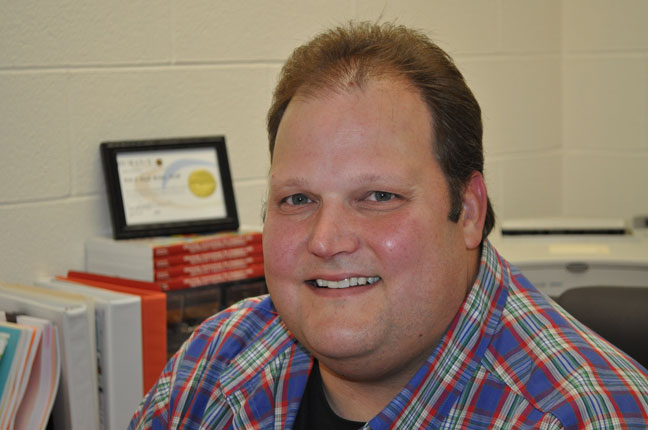
Eric Dool (dooler@lovelandschools.org) is Director of Student Services for the Loveland City School District
In summary, Loveland recognizes its role in continuing to provide Care during extended absences from school. To that end, we recognize that it is our responsibility to work with families and community resources to ensure that all Tigers return to school in August ready to learn.