Tag: advocacy

  • Solutions to the Climate Crisis Must Be Rooted in Justice and Equity/Covering Climate Now

    Solutions to the Climate Crisis Must Be Rooted in Justice and Equity/Covering Climate Now

    Loveland Magazine is one of the 400 news outlets worldwide, with a combined audience of over 2 billion people “Covering Climate Now”, a global journalism initiative committed to bringing more and better coverage to the defining story of our time.
    The initiative, was co-founded by The Nation and Columbia Journalism Review

    Mihaela Manova is “Covering Climate Now” in Loveland, Ohio as an editor for Loveland Magazine



    S

    Equity and justice have to be the lens through which we solve [the climate] problem,” Prakash has said. “If it does not work for and benefit the most disadvantaged among us … it will not fix the problem.” The climate problem, in the eyes of this new generation of activists, is systemic and rooted in privilege. The poor, people of color, and women suffer first and worst from the heat waves, droughts, and storms unleashed by global warming, though they did little to cause that warming. The rich, the white, and the comfortable whose investments and lifestyles drive global warming are often shielded from its impacts. The same social systems that drive the climate crisis also perpetuate the racism that killed George Floyd and countless other people of color, and it is those systems that need replacing.

    Days after the Democrats gained control of the US House of Representatives in the 2018 midterm elections, Prakash and dozens of Sunrise members occupied the office of incoming House Speaker Nancy Pelosi, demanding that Democrats back policies that matched the scale and urgency of the climate emergency. After rising Democratic star Representative-elect Alexandria Ocasio-Cortez joined the protesters and applauded their efforts, a handful of articles appeared in Politico and other Washington-focused news outlets. Three months later, after extensive consultations with the Sunrise Movement and others, Ocasio-Cortez and Senator Ed Markey introduced a congressional resolution calling for a Green New Deal. Suddenly, the Green New Deal was national news, with stories running in leading newspapers, magazines, and even network TV news programs.

    Now, Prakash and Ocasio-Corte, along with Vermont Senator Bernie Sanders, are attempting to make a Green New Deal part of the official platform of the Democratic party in the 2020 campaign. Prakash is serving on a task force established by Sanders and former Vice President Joe Biden, the Democrats’ presumptive nominee, to try to devise a climate policy all Democrats can support in November. Biden and Sanders each nominated  members to the task force, including one co-chair: Ocasio-Cortez for Sanders, and John Kerry—who, as Secretary of State under president Barack Obama, helped negotiate the Paris Climate Agreement—for Biden.

    Media coverage of the Green New Deal has been scanty since Ocasio-Cortez and Markey introduced their resolution in February 2019, even as Sanders and most other Democratic candidates endorsed various versions of a Green New Deal during the primaries. Now, as Democrats debate whether to make a Green New Deal part of their argument for defeating Trump, newsrooms have an opportunity to catch up with the story. Americans deserve to know before they vote in November what a Green New Deal is, how it would work, what it would cost, what position the contending political parties and candidates take on it, and what difference it could make in the effort to preserve a livable planet.

    The work of the Biden-Sanders task force is a good place to start. Like most climate activists during the primaries, the Sunrise Movement blasted candidate Biden’s climate proposals as much too weak. Yet after the task force completed its second meeting, Prakash tweeted a video message saying she was “cautiously optimistic” that she and her new colleagues would agree to “a national mobilization this decade that creates tens of millions of good paying jobs with access to a union.” She added that at a time “when we have 30 million unemployed in this country, we can take this opportunity to rebuild from the horrific impacts of COVID-19 stronger, more resilient and more sustainable than before.” And she made a point of praising the contributions of two Biden appointees, including Gina McCarthy, Obama’s former Environmental Protection Agency chief, who reportedly told the task force that the benefits of any climate policy “need to get to people today and tomorrow, not by 2050.”

    The debate around the Green New Deal offers an abundance of news angles. Whether Biden and the Democrats go all in on a Green New Deal is unquestionably a big political story. It’s also a major business story: Which sectors of the economy stand to benefit from a Green New Deal? Which will resist, and why? Local coverage can ask what the mayors, governor, and other key public and private officials in a given region think a Green New Deal would mean for jobs and investment within their jurisdiction. International stories can explore how a justice-centered Green New Deal compares to the green stimulus programs the European Union, the International Monetary Fund, and other pillars of the global establishment have urged to revive coronavirus-battered economies. And looming over everything is a final question: how would a Green New Deal affect our civilization’s chances of surviving what remains, even amid this pandemic, the gravest threat of our time?

    **Covering Climate Now is looking for stories about the intersection of climate and racial and economic justice. If you have recent or evergreen stories on the subject of climate justice that you are willing to share with the CCNow collaboration for republication, please send the links to sharing@coveringclimatenow.org. We will distribute a package of stories in a later email.**

    Important Notice: Covering Climate Now’s interview with the UN Secretary General, like the G7 summit, is being rescheduled. Therefore, CCNow’s planned coverage of green stimulus spending June 5 to 12 will also be delayed. But both items remain on our agenda, and we’ll be in touch soon with more information.

    Now, here’s your weekly sampling of the latest in climate news, from across the Covering Climate Now collaboration.

    • As America grapples with systemic racism, environmental groups are foregrounding climate justice and also confronting their own racist pasts. Many green groups remain overwhelmingly white and focused on such affluent issues as land conservation rather than ensuring clean drinking water for communities of color—but things are beginning to change, Grist reports.

    • On a similar note, ICYMI, in April HuffPost reported on the solar industry’s persistent diversity problem—and the companies fighting to change it.

    • Vox details how Joe Biden’s campaign and the climate movement are finding an unlikely but hopeful union, after candidates who were viewed as stronger on climate failed to win the primary. On the one hand, an appeal to climate voters can help deliver Biden the left, activists say; on the other, Biden’s Main Street appeal, coupled with his focus on jobs and investment, may finally shepherd political centrists to the climate cause. In the words of one environmental group leader: “Joe Biden isn’t the climate champion that the movement wanted, but he may be the champion they need.”

    • In 2020, America consumed more renewable energy than coal for the first time since the 1800s, when wood was used to power ships and trains, Bloomberg Green reports. “This shows us the trend toward renewables is clearly well underway,” said one expert. “We see it speeding up.”

    • Per The Guardian: COP26 talks, originally scheduled for November in Glasgow, will be delayed by a year, due to travel concerns associated with coronavirus. Some country’s representatives expressed concern that the delay  could hinder emissions reductions. The UN climate chief, Patricia Espinosa, however, expressed optimism: “If done right, the [economic] recovery from the Covid-19 crisis can steer us to a more inclusive and sustainable path.”

    Thanks for reading, stay safe, and see you next week!

  • Loveland Student Hayley Creasy, Joins JDRF Ambassador Program

    Loveland Student Hayley Creasy, Joins JDRF Ambassador Program

    by Mihaela Manova

    Loveland, Ohio – Loveland Middle School student Hayley Creasy is set to join the highly selective, JDRF Ambassador program for the 2019-2020 year. JDRF or the Juvenile Diabetes Research Foundation specializes in diabetic research, advocacy, and fundraising to find the ultimate cure for diabetes. At six-years-old, Hayley was diagnosed with type one diabetes (T1D) and now at twelve, she will join other ambassadors on their mission to educate the public about her condition. 

    JDRF has recognized Hayley’s strong work ethic and commitment, as she is passionate to talk about her battle with T1D and helps to educate others. When asked about living with T1D she explains, “ It means that your pancreas is completely dead and you have to give yourself insulin to survive. You have to be brave and strong even on your weakest days!” With strong positivity, Hayley will be speaking about the cause and sharing her story to schools, hospitals, and businesses while also participating in the JDRF’s other programs. 

    Living with T1D, Hayley is one of the estimated 38,000 people affected by this condition in southwest Ohio. T1D is an autoimmune disease – a condition where your immune system mistakenly attacks your body, which can affect people at any age and any time. With this condition, the pancreas will stop producing insulin, a hormone that allows your body to store energy for future use. When dealing with T1D, insulin is injected into the body through the abdomen, thigh, or arm for the pancreas to receive its needed supply.

    JDRF selects a small number of applicants who are vocal and open to put their stories and themselves in front of the public, to bring awareness and relate to those who feel underrepresented. While doing so, Youth

    Ambassadors can make close bonds with each other, bringing teamwork and inclusiveness as a bonus to their work. Executive Director Melissa Newman explains the company’s goal, “JDRF Youth Ambassadors are a critical part of our work, as they help advance the cause and bring awareness to type 1 diabetes. These young people volunteer their time and put themselves out there in sharing their story, which includes the struggles of living with T1D, and we are appreciative of their efforts.”

    As said by the organization’s website, JDRF is the leading global organization and the largest charitable supporter of type 1 diabetes research. It has awarded more than $1.6 million to diabetes research and has expanded the critical scientific understanding of T1D. While their numbers sky-rocket every year, this foundation makes it clear, “JDRF will not rest until T1D is fully conquered.”


  • Local reaction to proposed Ohio bill that targets vulnerable youth

    Local reaction to proposed Ohio bill that targets vulnerable youth

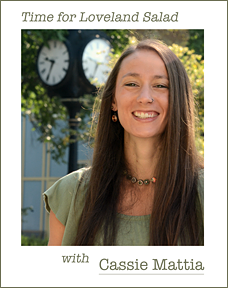
    Cassie Mattia lives in Historic Downtown Loveland, Ohio.

    If we don’t protect our youth who will? In May, Ohio Paul Zeltwanger and Thomas Brinkman proposed House Bill 658, which states:

    “If a government agent or entity has knowledge that a child under its care or supervision has exhibited symptoms of gender dysphoria or otherwise demonstrates a desire to be treated in a manner opposite of the child’s biological sex, the government agent or entity with knowledge of that circumstance shall immediately notify, in writing, each of the child’s parents and the child’s guardian or custodian. The notice shall describe the total circumstances with reasonable specificity.”
    gen·der dys·pho·ri·a
    ˈjendər disˈfôrēə/

    noun

    MEDICINE

     The condition of feeling one’s emotional and psychological identity as male or female to be opposite to one’s biological sex.  How to pronounce gender dysphoria.

    In plainer language House Bill 658, also known as the “Parent’s Rights Bill,” would make any school administrator or teacher who allows or offers gender dysphoria (the condition of feeling one’s emotional and psychological identity as male or female to be opposite to one’s biological sex) treatment, including resources on sex and gender or counseling, for a minor “without the written, informed consent of each of the child’s parents and the child’s guardian or custodian” they could be charged with a felony in the fourth degree. The parents of the student according to the bill would get the ultimate decision whether their child gets access to treatment, including educational materials, counseling or medical services. 

    If this House Bill is implemented it could have detrimental consequences for teachers and even more importantly for those students affected. Teachers are there to lend their students a helping hand educationally and emotionally in order to prepare them for what’s to come once they are out on their own, why take this from them?

    A teacher’s take on House Bill 658

    I spoke to one Loveland teacher who wishes to remain anonymous, a mom of a teenager. I’ll call her Susan. She told me that for many students their home life is a wreck and out of control with issues of poverty, broken families, and domestic abuse. “For many of my students, the only adult in their life that can be trusted may be their teacher. Teachers who lend an ear and can be trusted can be an enormous help that often reflects on their academic achievement. We care for the whole child.”

    Susan told me that for many students their home life is a wreck and out of control with issues of poverty, broken families, and domestic abuse. “For many of my students, the only adult in their life that can be trusted may be their teacher.”

    Susan told me that she just overheard a conversation between her daughter and a friend about a classmate they thought was transgender. “I wondered, do they know what that means? Are they friends with this young person? How do my kid and others treat her? Because I am a teacher, would I be required to file a report with the District? These are all questions that ran through my head as a mom and a teacher.” 

    Susan said she wants to protect and support all of her kids, her biological ones and the ones that are “her’s” for a school year. “I want to be able to do that freely and openly and with my heart.” She said that some of her students desperately need someone they can trust in their life and the last thing they need is another person that will let them down because politicians want school staff charged as felons if they don’t report that the student herself, or a classroom teacher, principal, gym teacher, bus driver, or classmate may be questioning her gender identity.

    Susan asked, “Just what stereotypes am I going to be expected to police?

    HB 658 is a harmful bill that takes aim at some of our most vulnerable — transgender youth — by forcing school officials to serve as ‘gender police’ and out them or risk getting a felony.” – Alana Jochum

    LGBTQ advocacy

    “HB 658 is a harmful bill that takes aim at some of our most vulnerable — transgender youth — by forcing school officials to serve as ‘gender police’ and out them or risk getting a felony,” said Alana Jochum, executive director of LGBTQ advocacy group Equality Ohio. Jochum told NBC News. “This exposes young people to discrimination, harassment, and bullying.”

    Jochum couldn’t be more correct if you really take a look at the alarming statistics. One study done by the Cincinnati Enquirer showed that 64% of LGBTQ youth in Ohio heard “negative comments” about their gender identity or sexual orientation from their family and in result, according to another study done by National Transgender Discrimination, 41% attempted suicide. Though many transgender students

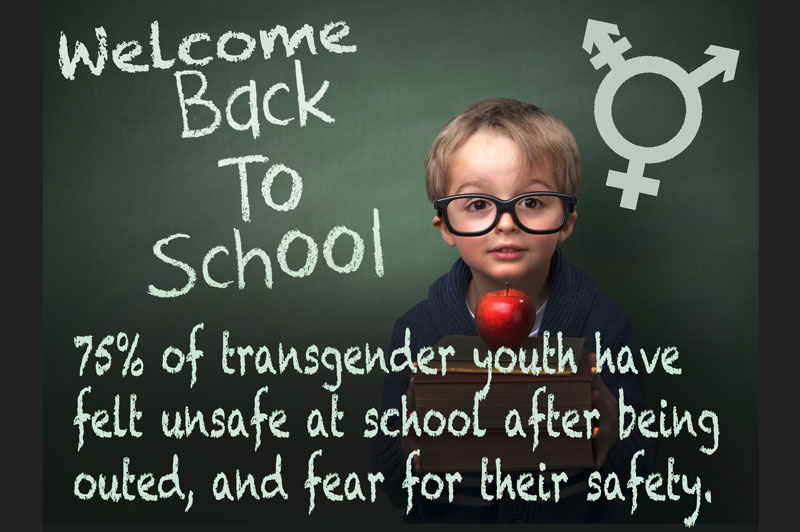
    75% of transgender youth have felt unsafe at school after being outed and have lower GPA’s due to missing school in fear of their safety.

    have experienced negative comments, violence has become the most popular form of dealing with transgender youth. Disturbingly enough 19% of transgender youth, according to the National Center for Transgender Equality, experience the majority of violent abuse in their home from their own family members. Along with dealing with all the dissension from family members 75% of transgender youth, according to a national survey done by GLSEN (pronounced “glisten”), have felt unsafe at school after being outed and in result have lower GPA’s due to missing school in fear of their safety. With all the facts at hand, The Ohio Education Association who represents 125,000 teachers and support professionals, have openly opposed the bill.

    Violence has become the most popular form of dealing with transgender youth.

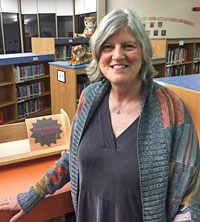
    Kathryn Lorenz is the Loveland Board of Education Vice President

    While researching House Bill 658 I managed to only get a response from two local representatives of the Loveland School Board, one being Kathryn Lorenz, the Board Vice President and the other being Loveland School Board Member, Ned Portune. Lorenz’s response was, “In the case of House bill 658, we would have to say that we do not yet have enough information, nor have we met as a board for a few weeks, so we do not yet have a Board statement to make.”

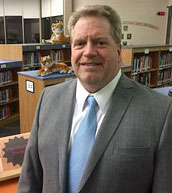
    Ned Portune is a member of the Loveland School Board

    Portune added that he, “…simply has not been fully informed at this point on HB 658 to have an educated opinion. There are several items in your statement that would certainly give me a gut reaction, and opinion on, if true as presented. But I need time to fully review the Bill, its implications and existing laws to have any formal statement.”

    School Superintendent Amy Crouse, High School Principal Peggy Johnson, and assistant principals at the High School did not respond. 

    Studies show most transgender youth are fully aware of their gender identity by age 4.

    After attempting several times to contact both Representatives Paul Zeltwanger and Thomas Brinkman through email and phone about House Bill 658, I, unfortunately, got no response. It wasn’t hard to find Brinkman’s opinion on the issue in several other publications though, voicing to WCPO, “Parents have the right to decide what is best for their children,” and telling WOSU Public Media, “And if somebody doesn’t like it, you’re emancipated at age 18 and you can go do whatever the heck you want.” Seems pretty harsh considering the transgender population represents about 0.3% (700,000) of Americans and studies show most transgender youth are fully aware of their gender identity by age 4. Are we encouraging parents and administrators to discard their students or child’s gender identity in fear of social rejection? Do these children not deserve to live an authentic life?

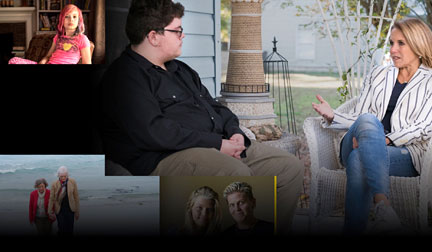
    If you would like to explore the topic of Transgender youth and adults even further please check out “Gender Revolution: A Journey with Katie Couric.” You can also watch on Netflix.

    What local professional counselors say
    Fran Hendrick, PCC has offices at Wildflower House in the West Loveland Historic District.

    House Bill 658 is expected to be presented to the Ohio General Assembly in the Fall and will be without a doubt one of the most controversial bills to date. Many have opinions on this issue one being Fran Hendrick, a respected and highly educated clinical counselor who specializes in assisting women and girls who are experiencing depression or anxiety triggered by a crisis or major life change. When I presented Fran with House Bill 658 and asked what her opinion was she had a lot to say and rightfully so considering one of her life missions, according to Fran’s website franhendrick.com, is to “gently help you find and shelter your spark (the essence of who you are at your core) and grow it so that it illuminates your person and is radiated through words, actions and decisions, big and small, that make up your daily life.”

    In a culture such as ours, it is a matter of life and death for transgender youth to decide if and when to trust another person with their reality. – Fran Hendrick, PCC

    “Being a parent takes great courage, even more so when your child presents you with something that you’re unfamiliar with – or even afraid of. In a perfect world, a child who feels somehow ‘different’ from their peers (‘their’ is deliberately gender-neutral), they could consult their parents, who would strive to deeply understand the child’s experience, would provide accurate empathy, and would go on a crash course to learn everything they could about the unfamiliar issue. And, so very fortunate for their children, there are many parents like these.

    But in the real world, an adolescent boy saying to his father, ‘Dad, I think I’m a girl’ is very likely to encounter disgust, rejection, rage, or even violence, not empathy and understanding.

    While the intent of this bill, giving benefit to grave doubt, could be a deeply uninformed and misguided attempt to protect children, that seems unlikely. My sense is that in truth it is more about attempting to hand parents the power to say no to their child’s gender identity,” Hendrick said, “But gender identity – and sexual orientation, for that matter – are not matters of choice. And in a culture where transgender people are assaulted and even murdered at a rate higher than their cisgender counterparts, where transgender youth are summarily shunned and rejected by their own parents (the rate of homelessness is, not surprisingly, very high), where the suicide rate that results from these atrocious facts is far higher than for other youth – in a culture such as ours, it is a matter of life and death for transgender youth to decide if and when to trust another person with their reality, and, most importantly, whom to trust.

    To be “outed” for the choice to trust; or to be prosecuted for trying to be help – these are not protections. Actions like these support bigotry, and increase isolation and despair. – Fran Hendrick, PCC

    To be “outed” for the choice to trust; or to be prosecuted for trying to be help – these are not protections. Actions like these support bigotry, and increase isolation and despair. Stopping a teacher from helping such a student, one who is likely alone with the reality of their gender identity, who stands to be emotionally and psychologically rejected, or even physically abused, by their own family is, quite simply, a cruelty. This, I strongly believe, is not what the overwhelming majority of parents want for their own or anyone else’s children. This is bad enough. However, this bill opens the door to much more far-reaching damage than this.” 

    Is he to be turned in to the gender police?

    The talented young male artist who despises sports – is he to be turned in to the gender police? The girl who chooses overalls and a t-shirt rather than a dress and a mani-pedi –what of her? The sponsors of the bill have explicitly said that teachers should be required to inform on them, as well. We have an essential responsibility to ensure that proposed legislation protects vulnerable people from the bigotry endemic in our society. This legislation explicitly deprives them of protection.”

    Ultimately what it comes down to is ensuring that our children are and feel safe when going to school. Teachers and administrators are the ones that take on the responsibility of creating that fun, loving and supportive atmosphere so that our children get the best opportunities in life. Passing a bill such as House Bill 658 only presents another obstacle that both teachers and administrators have to overcome. Don’t these professionals have enough obstacles to conquer as is?

    Both Justin Haake and Tonya Schaeffer who are Professional Clinical Counselors for Hope Restored Counseling Services in Loveland couldn’t agree more. 

    Justin Haake is a Licensed Professional Counselor at Hope Restored Counseling Services in Loveland and works primarily with adolescents and adults, specifically during transitional periods in life.

    Haake said, “For some, teachers and school administrators may be the only people in schools that feel safe for students to reach out to. Imagine the fear of asking for support, knowing that you’ll either be outed or put the teacher or administrator at risk of a felony.”

    Schaeffer said, “From my perspective, this would most likely increase the level of bullying and possible harm to these students. There is already so much shame and stigma attached with Transgender people, and they need as much support as they can get,”

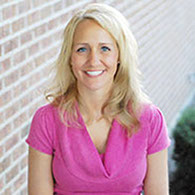
    Tonya Schaeffer is a Licensed Professional Clinical Counselor and co-owner of Hope Restored Counseling Services in Loveland.

    Schaeffer added, “Support is out there. In fact, we are offering a psycho-educational group starting in September that offers education, support and a safe environment for Transgender students to express themselves.” She said they hope to offer a similar group to parents who are trying to understand what their child is going through, explore what the parents are experiencing and provide support. “We currently serve the LGBTQ community, and we are expanding those services. I recently read a statement that it is estimated that 41% of trans men and women have attempted suicide. I don’t believe this bill would help–it seems like it could only hurt.”

    Susan, the mom and teacher said, “I am thankful I live in a community where support services like those provided by Hope Restored, and Fran Hendrick at Wildflower House are nearby for my students and their families.”

    Transgender youth have so many mountains to climb within their own scientific makeup and allowing a bill like House Bill 658 to go through in hindsight is taking away their basic rights as Americans and human beings.


    If you or a loved one knows a transgender child, teenager, or their parents that would like to explore counseling options please visit www.franhendrick.com or www.hoperestoredcounseling.com. 


    “GLSEN (pronounced “glisten”) was founded in 1990 by a small, but dedicated group of teachers in Massachusetts who came together to improve an education system that too frequently allows its lesbian, gay, bisexual, transgender, queer and questioning (LGBTQ) students to be bullied, discriminated against, or fall through the cracks.”


    Resources For Families of Children Who Are Transgender