Tag: Affordable housing

  • Ohio housing advocates want lawmakers to nix budget language that alters affordable housing funding

    Ohio housing advocates want lawmakers to nix budget language that alters affordable housing funding

    Stock photo from Getty Images.

    By:  Ohio Capital Journal

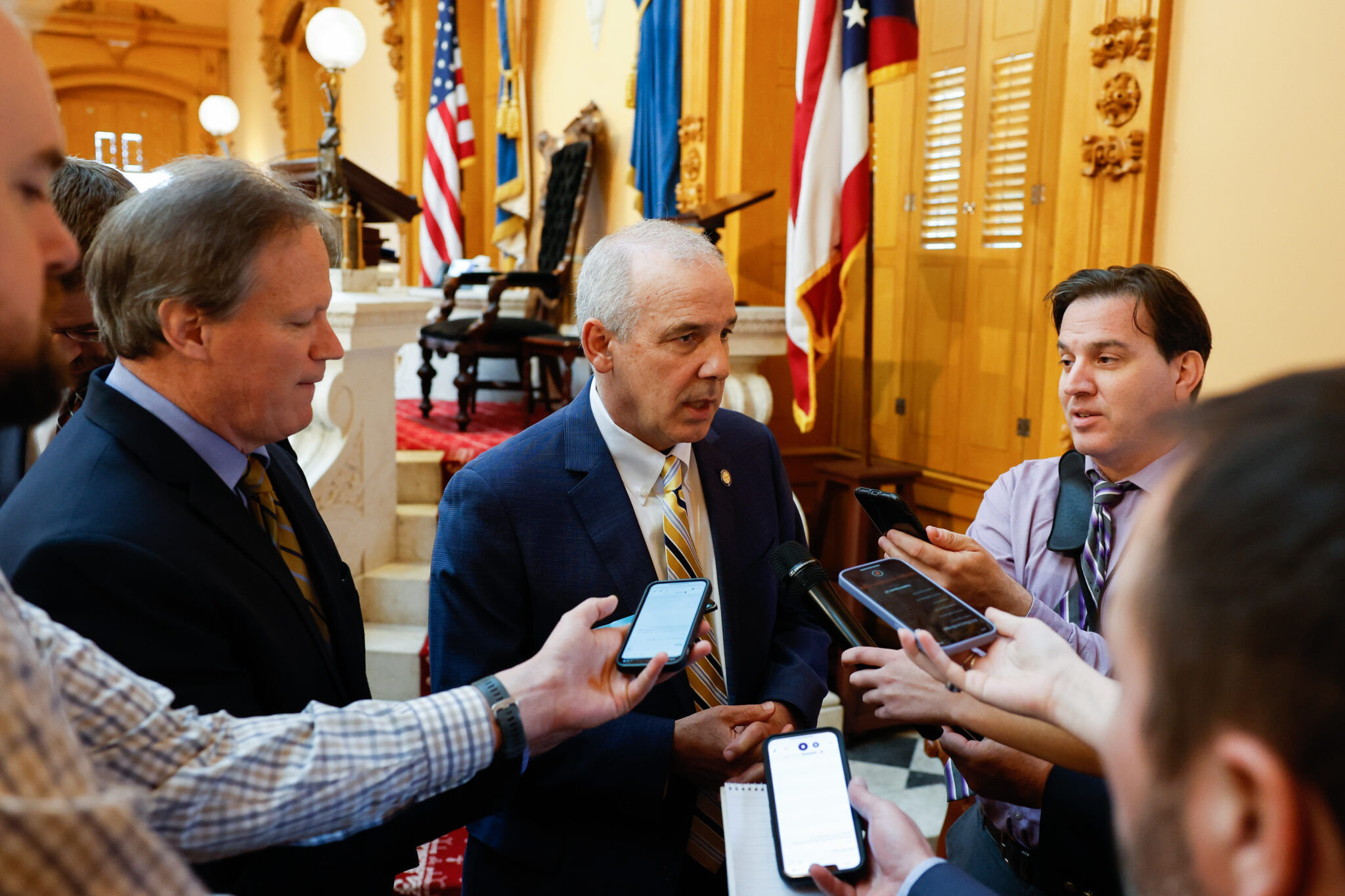
    Housing advocates are urging Ohio senators to remove an amendment from the state’s two-year operating budget that would significantly affect a source of funding for local homelessness and affordable housing programs.

    The Ohio House added language to their version of the budget that would change the Ohio Housing Trust Fund. The Ohio Senate is currently working on the budget and will send it back to Ohio Gov. Mike DeWine, who must sign it into law by June 30.

    GET THE MORNING HEADLINES.


    “The Ohio Housing Trust Fund is the primary source of state funding for local homelessness, emergency home repair and affordable housing development,” the Coalition on Homelessness and Housing in Ohio’s executive director Amy Riegel said during a press conference Thursday. “We see that making any type of change and overhauling it would be drastic and would make huge ripple impacts across the state.”

    The trust fund was created in 1991 and is administered by the Ohio Department of Development. It is funded by a portion of the fees collected by county recorders, with half of the fees staying with the county and the other half going back to the fund — which requires at least 50% of the funds be spent in non-urban areas.

    The House budget proposal would remove the requirement for county recorders to send the state Department of Development money to reallocate the funds, making it less effective across the state.

    “This would leave counties with only the funds that they are able to collect, which creates a drastic impact on communities where they might not be collecting as many revenues as other counties,” Riegel said. “Shifting to a county-by-county approach will negatively impact folks who are struggling to just keep her roof over their heads.”

    Robert Bender, CEO of the Provident Companies, is concerned counties could lose their leveraging ability and wouldn’t have the capacity to administer funds.

    “We have an easy solution: just don’t mess with it,” he said. “This is really elected officials who don’t have enough information trying to tinker with something to make it better when it’s going to make it worse.”

    The Housing Trust Fund provided emergency shelter for more than 27,000 Ohioans last year, Riegel said.

    “That’s just one year,” Riegel said. “Multiply that by the last 23 years, and you can see this has a huge impact across our state.”

    Housing advocates asked House lawmakers why the amendment was added, but Riegel said the rationale behind it remains unclear. Now, they are talking to Ohio senators about trying to remove the amendment.

    “We have heard from many of them that they do support removing the language … however, it is the decision of the entire body of how to move forward,” Riegel said.

    Habitat for Humanity of Ohio’s Executive Director Ryan Miller said they serve primarily populations of people who have paid off their homes, are living on fixed incomes and dealing with health issues.

    “They have no other option, and we must keep the current funding structure in place to let them live in dignity and peace,” he said.

    The trust fund is one of the most effective tools to reduce homelessness, said Becky Eddy, chief community development officer for the Integrated Services for Behavioral Health.

    “The current regional approach isn’t broken,” she said. “Shifting to a fractured county-by-county model would slow things down, drive the administrative costs and ultimately increase homelessness across the state.”

    Follow Capital Journal Reporter Megan Henry on Bluesky.


    Megan Henry
    Megan Henry

    Megan Henry is a reporter for the Ohio Capital Journal and has spent the past five years reporting in Ohio on various topics including education, healthcare, business and crime. She previously worked at The Columbus Dispatch, part of the USA Today Network.

    Ohio Capital Journal is part of States Newsroom, the nation’s largest state-focused nonprofit news organization.

    MORE FROM AUTHOR

  • Veteran’s Village planned for Clermont County

    Veteran’s Village planned for Clermont County

    Batavia, Ohio – The Board Clermont County Board of Commissioners and Clermont Metropolitan Housing Authority (CMHA) have announced plans for a Veteran’s Village in Clermont County to address gaps in housing and services for veterans.

    “We know of no other facility like this in the area,” said Bonnie Batchler, President, Board of County Commissioners. “We hope this will serve as an example for others around the county.”

    The facility is to include 28 cottages/houses and a community center offering wrap-around services from the Veteran’s Administration (VA) for county veterans who are homeless or living in substandard housing. There will be 22 one-bedroom units and six two-bedroom units for individuals and families. They will range from 700 to 1,100 square feet. They will be fully furnished, with a washer/dryer, broadband access, patio areas and parking spots.

    A community center will provide on-site clinical services to individuals who need them, on-site management to address issues that arise, a large gathering space, a kitchenette, and a computer/media area.

    Some units will be subsidized, depending on income. Others will be based on “fair market” rent.

    Plans call for the village to open in Franklin Township/Felicity in the spring of 2025.

    On May 17, the Board of County Commissioners gave their support to a proposed Veteran’s Village in Felicity or Franklin Township, reserving $1 million in federal HUD HOME funds for the $4-million project. Commissioners also expressed the board’s support for a Clermont Metropolitan Housing Authority (CMHA) request for $400,000 from the 2024-2025 State of Ohio Budget for the project.

    In Clermont County alone, there are 12,000 veterans, with more than 900 facing significant housing instability. The U.S. Department of Housing and Urban Development (HUD) estimates that veterans account for more than eight percent of all adults experiencing homelessness throughout the country.

    There simply isn’t enough affordable housing – and, besides high costs, veterans can face barriers such as drug and alcohol history, PTSD, and inconsistent rental history. That’s on top of normal barriers to low-income families such as higher rents, a limited landlord pool, and inability to get utilities, transportation, and deposits.

    Plans are being made to address these barriers. The Clermont County Veteran’s Administration has agreed to provide van services to veterans. Twenty-five percent of the units will be wheelchair accessible. Veterans will have the support of nearby VFW membership.

    While the CMHA has an allotment of 40 HUD-VASH vouchers to offer veterans, it has been a struggle to fully utilize them. Nationwide the number of landlords willing to participate in the Housing Choice Voucher (HHCV) program is dwindling, and the number of landlords willing to accept an individual with a poor police background check or without consistent rental history is nearly impossible.

    CMHA Executive Director Alicia Morlatt said plans originated from the mutual frustration shared by staff of the Veteran’s Administration and CMHA.

    “Our veterans have served us,” Batchler said. “Now, it’s our turn to serve them.”

  • Ohio Senate budget attacks poor people on food assistance, affordable housing, and other programs

    Ohio Senate budget attacks poor people on food assistance, affordable housing, and other programs

    COMMENTARY

    by Rob Moore – Ohio Capital Journal

    The Ohio Senate Republican budget passed last week put forth a new vision for social safety net spending in Ohio.

    The proposal suggests reduced spending on food banks, housing for pregnant women, affordable housing, and school meals for poor children. It also proposes making it harder for low-income people to get access to Medicaid, SNAP (formerly known as “food stamps”), and other public benefits.

    These changes to the budget are used to fund income and commercial activity tax cuts.

    When Senate President Matt Huffman was asked about this range of cuts to social services, his explanation was that he is trying to “stimulate” a conversation about sustainability of the Temporary Assistance for Needy Families fund. He expressed worry that the fund would be insolvent in five years if spending and revenue continues at current levels for years into the future.

    So let’s talk about it.

    Temporary Assistance for Needy Families (often shortened to “TANF”) is a relatively small program that mainly provides income to very poor Ohioans. It is the successor to the Aid for Families with Dependent Children (AFDC) program. This was the program that had gained the dreaded label of “welfare” in the early 90s.

    Many politicians did not like AFDC because it gave cash to low-income families. It became a massive dog whistle punching bag for the Reagan administration, who was able to vilify it to such effect that it was ultimately the Clinton administration that finished the program, following up on a campaign promise to “end welfare as we know it.”

    And he did. The new TANF program was a block grant given out to states to not only provide cash assistance, but also to pilot a range of different programs focused on getting people to work.

    Early on, this change was seen as a success. Poverty abated and employment, especially among single mothers, increased. But this was the 90s–a period of economic expansion.

    The subsequent recession of the early 00s followed by the Great Recession of 2007 to 2009 exposed how these changes to the social safety net had made it less resilient and kicked out many of the supports previously in place to hold struggling families up.

    While new programs from the 90s like the earned income tax credit are a good tool for supporting families who have work, they fail when structural problems make work unavailable on a massive scale.

    All this is to say Huffman has a little bit of a point here. Block granting TANF took one of the most straightforward and effective income support programs in U.S. history and capped it, limiting its potential effectiveness greatly. Now the dollars available for supporting low-income families need to come from somewhere else.

    Is the answer to this problem to cut social spending left and right and use that as a tool to fund income tax cuts and cuts to commercial activity? Probably not. If the plan put forth in the Senate is adopted, it will represent a massive transfer of income from the most needy Ohioans to those with the most resources already. Seems like a big cost to try to make a point.


    Rob Moore
    ROB MOORE

    Rob Moore is the principal for Scioto Analysis, a public policy analysis firm based in Columbus. Moore has worked as an analyst in the public and nonprofit sectors and has analyzed diverse issue areas such as economic development, environment, education, and public health. He holds a Master of Public Policy from the University of California Berkeley’s Goldman School of Public Policy and a Bachelor of Arts in Philosophy from Denison University.

    MORE FROM AUTHOR

  • White House Outlines Ohio’s Infrastructure Needs

    White House Outlines Ohio’s Infrastructure Needs

    Presidents Barack Obama and Donald Trump failed on promises to secure funding to repair the 50-year-old Brent Spence Bridge spanning the Ohio River at Cincinnati. (Atony-22/Wikimedia Commons)

    By Mary Schuermann Kuhlman, Public News Service – OH – Producer, Contact

    Nick Bates, outreach director for One Ohio Now

    The White House is detailing its goals for improving Ohio’s infrastructure through the American Jobs Plan.

    According to a fact sheet released Monday, Ohio has more than 1,300 bridges and nearly 5,000 miles of highway in poor condition that would benefit from the proposal’s $115 billion national investment road and bridge repair. A 2021 infrastructure report card gave Ohio a grade of “C-minus.”

    Nick Bates, outreach director for One Ohio Now, said the president’s proposal to include $85 billion for public transportation is a welcome investment.

    “So many people, in not just urban areas but rural areas as well, rely on public transit to go to and from work, to get to the grocery store and to be connected to their community,” Bates explained. “So those investments to make sure that people around the state can stay connected will be essential.”

    According to the White House, Ohio will benefit from $13 billion for drinking water infrastructure over the next two decades and a national investment of $200 billion to increase the availability of affordable housing.

    Critics question the use of corporate tax increases to pay for the $2.7 trillion plan, which they argue is too broad.

    Bates is also excited to see the plan will invest $100 billion to expand broadband, which is out of reach for 14% of Ohioans. 

    “Infrastructure is more than just bridges and roads,” Bates contended. “It has to include things like broadband access. I have two kids, and watching them and their classmates struggle to learn digitally with the pandemic, having spotty internet connections and no internet connections, made that task even more difficult.”

    Ohio passed an increase in the state fuel tax in 2019 for road and bridge repairs, which Bates argued was just the first of many steps needed to address the state’s crumbling infrastructure.

    He pointed out infrastructure often requires the federal government to step in.

    “Public projects of the 1930s and ’40s built up a lot of the infrastructure, expanding electricity into parts of the country that never had it before,” Bates recounted. “We can look at the original development of our interstate highway system.”

    The plan also invests in clean-energy jobs, manufacturing, home energy, child care and caregiving jobs.

    Reporting by Ohio News Connection in association with Media in the Public Interest and funded in part by the George Gund Foundation.Citation: American Jobs PlanCitation: Ohio fact sheetCitation: Infrastructure report cardCitation: Ohio broadband reportCitation: State fuel tax increase 2019

  • Sen Brown announces more than $21.1 million in affordable housing funds for Ohio

    Sen Brown announces more than $21.1 million in affordable housing funds for Ohio

    Investment is a Part of the Housing Trust Fund and Will Help Create and Preserve Affordable Housing for Ohioans

    Washington, D.C. – Today, U.S. Sen. Sherrod Brown (D-OH) – Chairman of the U.S. Senate Committee on Banking, Housing, and Urban Affairs – announced that the U.S. Department of Housing and Urban Development (HUD) has awarded Ohio $21,186,076 through the national Housing Trust Fund to help create and preserve safe, affordable housing for low-income households and families experiencing homelessness.

    U.S. Sen. Sherrod Brown (D-OH) (provided photo)

    “Even before the pandemic, one in four renters in Ohio were paying over half of their incomes on housing, leaving many to choose between buying groceries or paying rent,” said Brown. “This Housing Trust Fund grant will provide over $21 million to create and preserve affordable housing for Ohioans, and give more families a stable foundation for accessing healthcare, jobs, and educational opportunities.”

    Ohio’s affordable housing providers can use the funds from this investment for property acquisition, site improvements and development hard costs, demolition, relocation assistance, financing costs, and operating cost assistance for rental housing. The funds will be allocated by the Ohio Housing Finance Agency. 

    Brown has been a longtime supporter of the Housing Trust Fund, which was created by the Housing and Economic Recovery Act of 2008 and is funded by contributions from Government Sponsored Enterprises (GSEs) Fannie Mae and Freddie Mac. However, after its creation, the Housing Trust Fund was not consistently funded as intended, but, in December 2014, at Brown’s request, the Federal Housing Finance Agency (FHFA) directed Fannie Mae and Freddie Mac to begin regular contributions.   

    And in 2019, following inexplicable delays in the release of these funds by the Trump Administration’s acting GSE regulator, Brown demanded that the Administration quickly disburse the funds so they can be used to create and preserve affordable housing.

  • Supreme Court Lets Martin v. Boise Stand:  People Experiencing Homelessness Cannot Be Punished for Living in Absence of Adequate Housing or Sheler

    Supreme Court Lets Martin v. Boise Stand: People Experiencing Homelessness Cannot Be Punished for Living in Absence of Adequate Housing or Sheler

    Persons experiencing homelessness cannot be punished for sleeping outside on public property in the absence of adequate alternatives.


    Cincinnati, Ohio – This morning, the U.S. Supreme Court denied a petition by the city of Boise to review the case Martin v. Boise (formerly Bell v. Boise). This leaves in place earlier rulings by the 9th Circuit that persons experiencing homelessness cannot be punished for sleeping outside on public property in the absence of adequate alternatives.

    The Supreme Court’s decision, issued without comment, means the April 2019 ruling is binding in the 9th Circuit, covering nine states including most of the western states, and carries national influence.

    In a press release issued today, Josh Spring, Executive Director of the Greater Cincinnati Homeless Coalition said, “This is very important news, as our federal lawsuit filed last year by people experiencing homelessness and the Homeless Coalition continues to move forward here in the 6th Circuit.”  Their lawsuit aims to overturn City of Cincinnati policies criminalizing people experiencing homelessness outdoors and hopes to squash last year’s Common Pleas Court order making it an arrestable offense to experience homelessness outdoors anywhere in the Hamilton County including Loveland.

    The Law Center’s Executive Director, Maria Foscarinis, said, “Ultimately, our goal is to end homelessness through housing…so that no one has to sleep on the streets in the first place. We hope that the 9th Circuit decision will help communities find the political will to put that housing in place. Housing, not handcuffs, is what ends homelessness.”

    John Parvensky, Acting Executive Director of the National Coalition for the Homeless described this as a “victory”, saying, “…it will force communities to address homelessness proactively – through the development of an adequate supply of affordable housing, while providing safe and appropriate emergency shelter in the interim”.

    For the full text of the Law Center press release and links to documents from the case, click here.

    For the full text of the National Coalition press release click here.


    Oh Christmas Tree Oh Christmas Tree Why Not Give the Gift of Charity…


  • Cincinnati Hills Christian Academy Students Built Hope — In the Form of a House — in the Student Parking Lot

    Cincinnati Hills Christian Academy Students Built Hope — In the Form of a House — in the Student Parking Lot

    Symmes Township, Ohio – Affordable housing is the number one issue for people experiencing homelessness. The search for safe and quality housing is a tremendous stress to low income working families right here in our city.

    This fact is one which has compelled over 200 CHCA students, faculty, staff, and parents (led by 23 student leaders) to partner with Help Build Hope to build the walls of a new house, using only a hammer and nails, in CHCA’s school parking lot. The build took place on April 11, from 8 AM – 3:30 PM at 8283 East Kemper Road in Symmes Township. The home was then loaded onto a flatbed by students the next day, and was then transported to Walnut Hills that afternoon. The house was sold to a low income family in urban Cincinnati through the non-profit, Discover Jubilee.

    Throughout this process, the student leadership team planned for food, social media, music, and leading teams of 5-8 of their peers to build the walls. Classrooms were also engaged by discussing affordable housing and poverty issues.

    Karen Hordinski said, “We were incredibly excited to help end the cycle of poverty and provide a home for a low income working family in Cincinnati!”

    CHCA’s Student Organized Service (SOS) Director Karen Hordinski said, “We were incredibly excited to help end the cycle of poverty and provide a home for a low income working family in Cincinnati!”

    This event was all made possible by CHCA’s Teacher Innovation Fund, an initiative that empowers teachers to inspire innovation and engagement among students. Teachers are moving from the role of mostly delivering content to facilitators of engagement, creativity, collaboration, problem solving, and enlightenment. At CHCA, teachers are embracing this shift and the Teacher Innovation Fund is serving as an accelerator.


    15th Annual Plant Sale at the Loveland Primary & Elementary Schools

    Advertisement Join Granny’s Garden School on Saturday, May 5th from 7AM – 5PM and Sunday, May 6th from 9AM.