The places where significant African American history happened have been unrecognized for the important role they play in the fabric of Loveland society. Black history is our Loveland history. Though Loveland is rich in diverse history, our community pride has been absent when representing that history and in funding its protection.
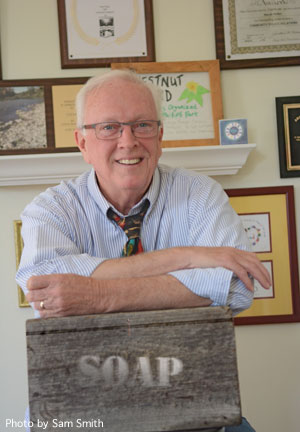
David Miller is the Editor and Publisher of Loveland Magazine
by David Miller
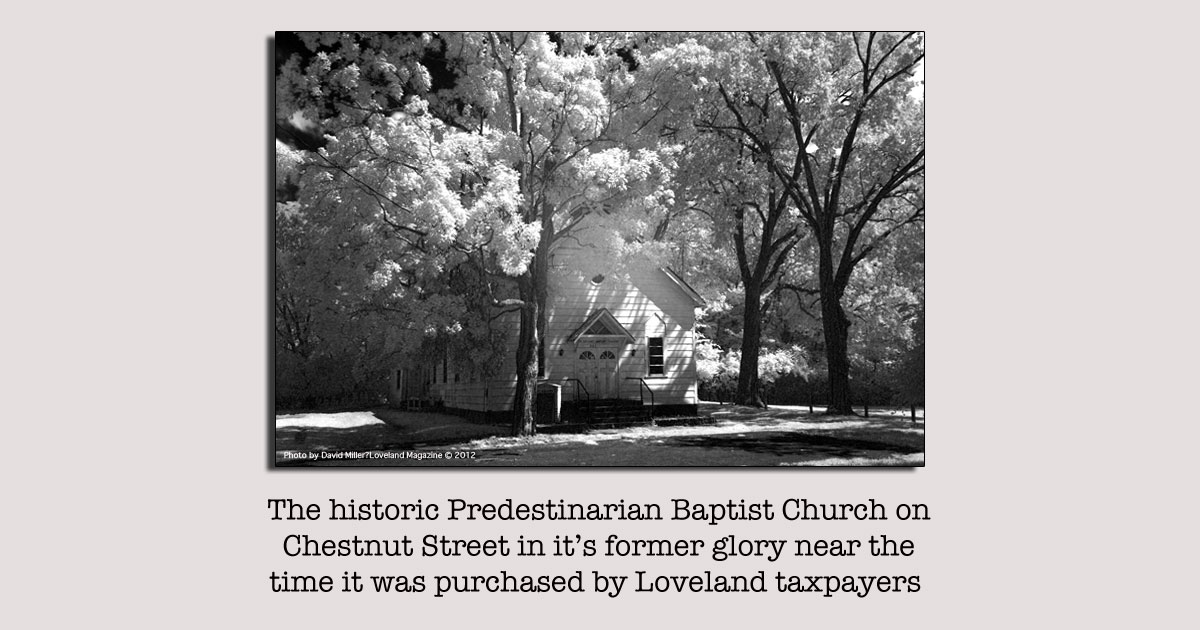
I made a proposal to City Hall in 2017 in the video below, with a vision of how the historic Predestinarian Baptist Church on Chestnut Street in the West Loveland Historic District could be restored. The vision received much support at the time, however, was not realized. In the last month, there has been a buzz around the community and beyond to revisit perspectives about the church’s future.
Loveland taxpayers own the 120 plus-year-old church. City hall acquired the church for back taxes, assessments, and liens owed on the property. The Predestinarian Baptist Church is located in the heart of what was the African-American residential neighborhood of Loveland. Cobb’s Grocery Store, a center of business and social exchange, was located nearby.
The historic Loveland landmark is at the end of Chestnut Street, behind the Loveland Artists Studios on Main Street and one block from the Loveland Post Office. The street address is 225 Chestnut Street.
The plan was to restore this cultural asset that holds exceptional cultural value for Loveland.
We’ve got to make sure our children know how they got here, and what this descendant community did to make a more excellent life for us all and how these earliest residents might inspire future ones.
The struggle over the physical local record is part of a larger, long-overdue national movement to preserve African-American history. We can absorb a revolutionary spirit of the era, their ideas of independence that were never meant for them in what was then a segregated community not of north vs south, but East and West divided by the Little Miami River.
Elizabeth Alexander, a poet and Mellon Foundation’s president, says, “That for a long time communities of color have had to ‘carry around knowledge and stories in our bodies,’ because resources were not devoted to preserving the spaces that held those stories.”
The depiction you will see in this video will not now happen, however, perhaps another appropriate “adaptive reuse” of the church that respects and reflects its cultural significance to our community will become a viable means of its preservation. What plan can come forward and be approved that will lead to an afterlife?
The building is currently being vandalized by the benign neglect of its owners and caretaker – us taxpayers and City Hall. There should be taken immediate and urgent steps to secure the historic site from any further ravages of weather and intruders – human, and rodents.
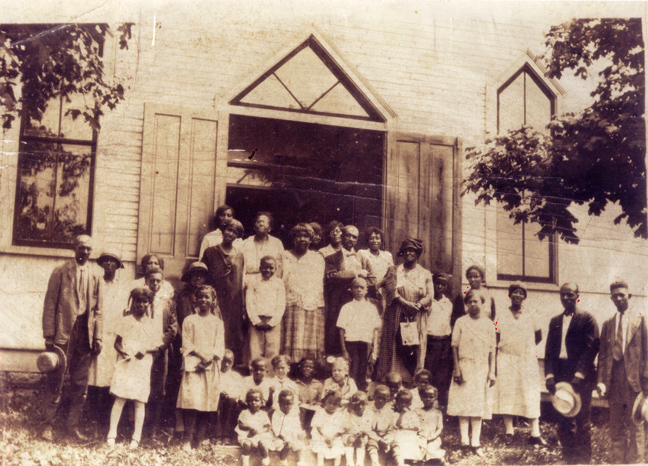
The congregation of the Loveland Predestinarian Baptist Church in 1926
What do you think it means to preserve it. Perhaps it means Loveland will experience as Brent Leggs phrases it in the New Yorker article The Fight to Preserve African-American History, a “powerful collision of culture, heritage, and public space”
Can we think in terms of the audacity – the bold risk of the arc of history and centuries? Do we need this place?
To paraphrase a question Leggs asks, “Can the Predestinarian Baptist Church on Chestnut Street be a place where the truth of history is told, visitors reflect, and where reconciliation and new history can happen.”
Can it be our predestination?
FOR MORE BACKGROUND ABOUT PAST EFFORTS TO SAVE THE CHURCH FROM BULLDOZERS READ THESE ARCHIVED STORIES FROM LOVELAND MAGAZINE
LOVELAND MOM’S LONG RACIAL AWARENESS JOURNEY AND WHY WHITE AMERICANS NEED TO FOLLOW HER PATH
by Daniel P. Finney
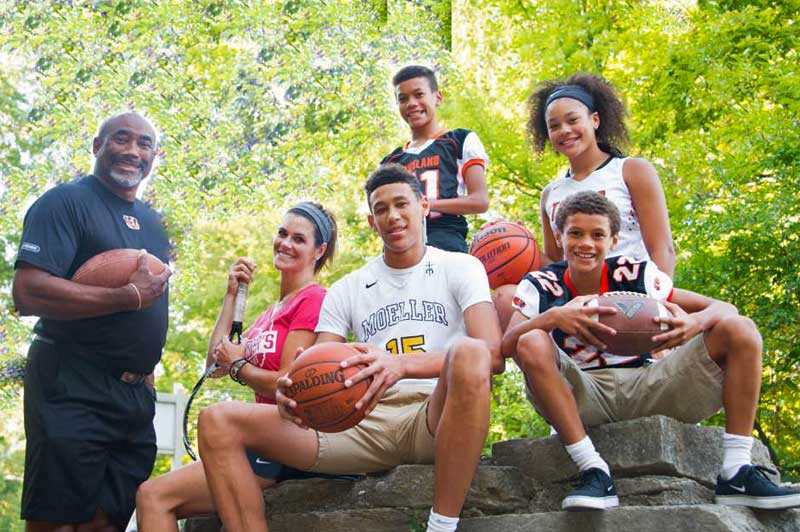
Kristi Kinne-Hayes grew up in Jefferson, a Green County, Iowa city made of 4,200 almost all white people. Kristi played six-on-six girls’ basketball and became one of the best players in the state.
A Guest Column by Independent journalist Daniel P. Finney who writes for paragraphstacker.com
She knew local police officers by their first names and thought of them as just another face in the crowd rather than law enforcement.
Kristi played college basketball at Drake University, leading the Bulldogs to an NCAA Tournament berth her senior season in 1995. She seldom thought about race even though she played alongside and was friends with people of different races.
She had a longtime friend who played softball at Drake who was mixed race and never knew until someone asked her friend about her race in a Kansas City bar.
But life, love and motherhood changed her perspective and her long journey from racial indifference, maybe even racial ignorance, to awareness and empathy is one all Americans — especially whites — need to take right now.
A background like Kristi’s makes it seem unlikely that she would comment on the ghastly death of George Floyd at the hands of Minneapolis police. But life, love and motherhood changed her perspective and her long journey from racial indifference, maybe even racial ignorance, to awareness and empathy is one all Americans — especially whites — need to take right now.
Kristi graduated from Drake, survived ovarian cancer and met and married Jonathan Hayes, a former University of Iowa tight end who played for the legendary Hayden Fry during the famed coach’s revitalization of the program in the early 1980s.
Hayes is also African-American. But a mixed-race relationship didn’t expose Kristi to the racial hatred the corrupts America’s soul.
The first time Kristi brought Johnathan home to Jefferson to watch a ballgame, fans swarmed the Hawkeye hero for autographs.
“That was so traumatic for me because when I was at the game, people came up for my autograph,” Kristi said. “I told Jonathan they only wanted his autograph because they already had mine.”
The couple settled in Cincinnati, where Jonathan served as tight ends coach for the NFL’s Bengals.
They had four children. Yet it wasn’t until their eldest daughter, the couple’s second child, turned 16 that evil racism finally struck the mother of four mixed-race children.
Kristi and Jonathan bought a new car and gave their older vehicle to their daughter. They put the old plates on their daughter’s vehicle and paid the fees, but Ohio Department of Transportation computers hadn’t yet processed the transaction.
One evening their daughter came home pale.
She said, ‘I was sure they were going to shoot me.
Kristi asked her what was wrong.
She had been pulled over by police. The car tags were wrong.
“She said, ‘I was sure they were going to shoot me,’” Kristi said. “I thought, ‘Why would you think they would shoot you?’”
And the privilege of being a white star athlete from small town Iowa evaporated. She was now the mother of four children whose facial characteristics most white people would identify as black.
“If there’s a little bit of brown, to other white people, you’re black,” Kristi said.
Living with racism did not limit her children’s success. Eldest son, Jaxson Hayes, was a first-round draft pick by the NBA’s New Orleans Pelicans last year.
Daughter Jillian is a highly prized women’s basketball recruit committed to the University of Cincinnati.
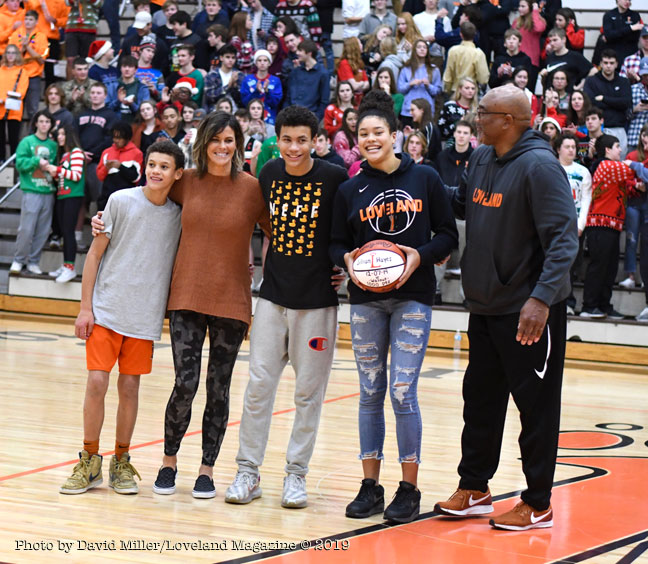
Jillian Hayes and her family on the night she accepted her commemorative 1,000th point ball.
Kristi reminds them that she doesn’t care if other people label them black only, just remember that their white mother and her family loves them just as much as their African-American father and his family.
“Your name is clean,” Kristi tells her kids, “keep it that way.”
Still, she worries. Jaxson is off in New Orleans, just turned 20 years old and having the time of his life as an NBA rookie despite the league shutdown due to coronavirus.
She tells her children that if they are pulled over, put their hands at 10 o’clock and 2 o’clock on the steering wheel.
“I never thought I would have to tell my children that,” Kristi said.
The true horror of this event: None of those officers moved to stop their fellow officer from committing a crime. It was depraved indifference.
Kristi saw the news reports and videos of a Minneapolis police officer putting his knee in the back of George Floyd, an African-American man suspected of forgery.
Three other police officers stood by and did nothing. They were all fired. As of this writing, it’s unknown if they will be criminally charged.
The killing of Floyd is a complete institutional failure by the Minneapolis police. That officer pressed his knee into the back of that handcuffed man’s neck as he pleaded for mercy, he could not breath and eventually lost consciousness and died.
He stared into the crowd almost as if he was daring someone to tell him he was wrong. The crowd pleaded with him to render aid, to check Floyd for injury or get him some water.
The officer refused.
A friend of mine made this observation a few years ago: “There’s two things we learned from everybody having cameras on their phone: There are no UFOs and police sometimes kill people for no reason.”
The true horror of this event: None of those officers moved to stop their fellow officer from committing a crime. It was depraved indifference.
Here in Des Moines, some of my police sources told me they were aghast at another cop so drunk on power that his defiance led to the death of a man.
“When you have him in cuffs, get him up and in a car and off to the station,” one cop told me. “That diffuses the situation right there.”
Another cop told me police administrators were circulating a video by a top training instructor illustrating the dangers of the knee in the back hold and all Des Moines cops will have to sign off on having watched it.
There’s been little local backlash at Des Moines police because of the Minneapolis killing, but the danger of using national stories to paint local pictures hangs over every police station.
Kristi saw that news and it moved her. She lives in Cincinnati, a city that saw race riots in 2001 after police shot an unarmed African American teenager. Kristi and her family moved to Cincinnati after that terrible period.
So what does all this have to do with Kristi Kinne-Hayes, the great Iowa basketball star?
But motherhood long ago took the woman from Jefferson’s ability to be color blind.
Moved by the story, Kristi posted to her Instagram a trending meme of the officer with his knee in the back of Floyd’s neck and former NFL quarterback Colin Kaepernick kneeling during the national anthem. The caption read: “This is why.”
So what does all this have to do with Kristi Kinne-Hayes, the great Iowa basketball star?
ESPN commentator Emmanuel Acho pleaded with white America in a video posted to his Twitter feed Tuesday.
“My white brothers and sisters, we need y’all’s help,” Acho said. African-Americans have been outraged as people continued to die unnecessarily, but white Americans have remained mostly indifferent or hesitant to raise their voice in protest.
We need to take the journey Kristi Kinne-Hayes took in her 46 years. She went from living blind to race because it never directly affected her to having a profound understanding of just how horrible racism is in this country.
I’m not saying you need to repost the meme or start hashtagging everything #blacklivesmatter.
But we must all do our very best to engage empathy for people who are not like us.
It’s very hard for anyone to see life through the perspective of someone who has lived so differently.
Our failure to do that is already too late for so many, the latest being George Floyd.
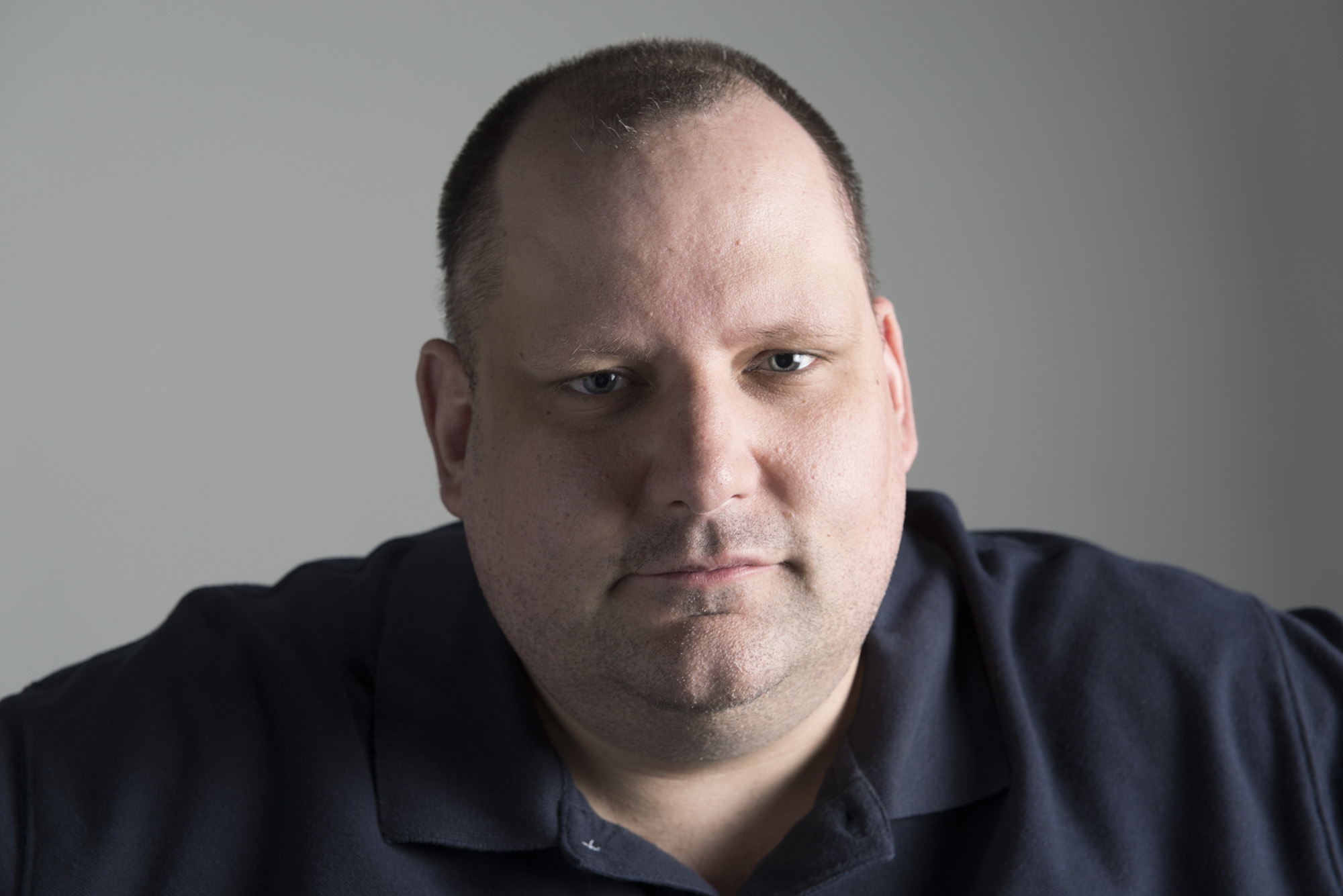
Daniel P. Finney, independent journalist – Cut loose and cashiered by corporate media, lone paragraph stacker Daniel P. Finney makes his way telling stories about his city, state and nation. No more metrics or Google trends, he writes stories about people and life ignored by the oligarchy. ParagraphStacker.com is reader-supported media. Please consider donating at paypal.me/paragraphstacker.


 A Guest Column by Independent journalist Daniel P. Finney who writes for