Tag: aging coal plants

  • Another private equity group is buying an Ohio coal plant. Will anything change?

    Another private equity group is buying an Ohio coal plant. Will anything change?

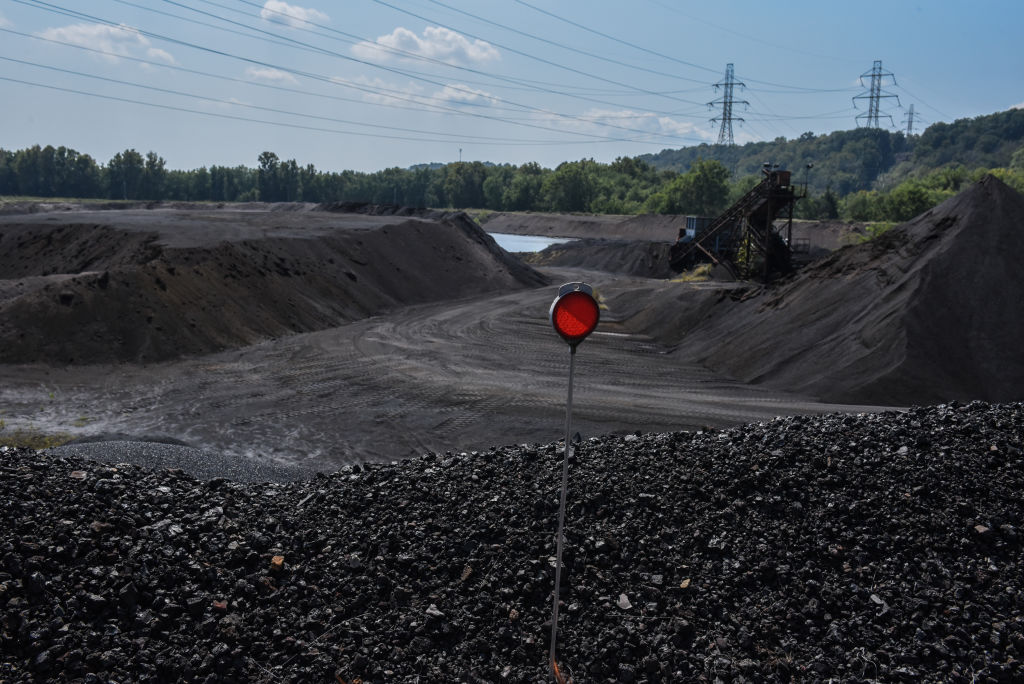
     A field of coal is seen near the Gavin Power Plant in Cheshire, Ohio. (Photo by Stephanie Keith/Getty Images)

    By:  Ohio Capital Journal

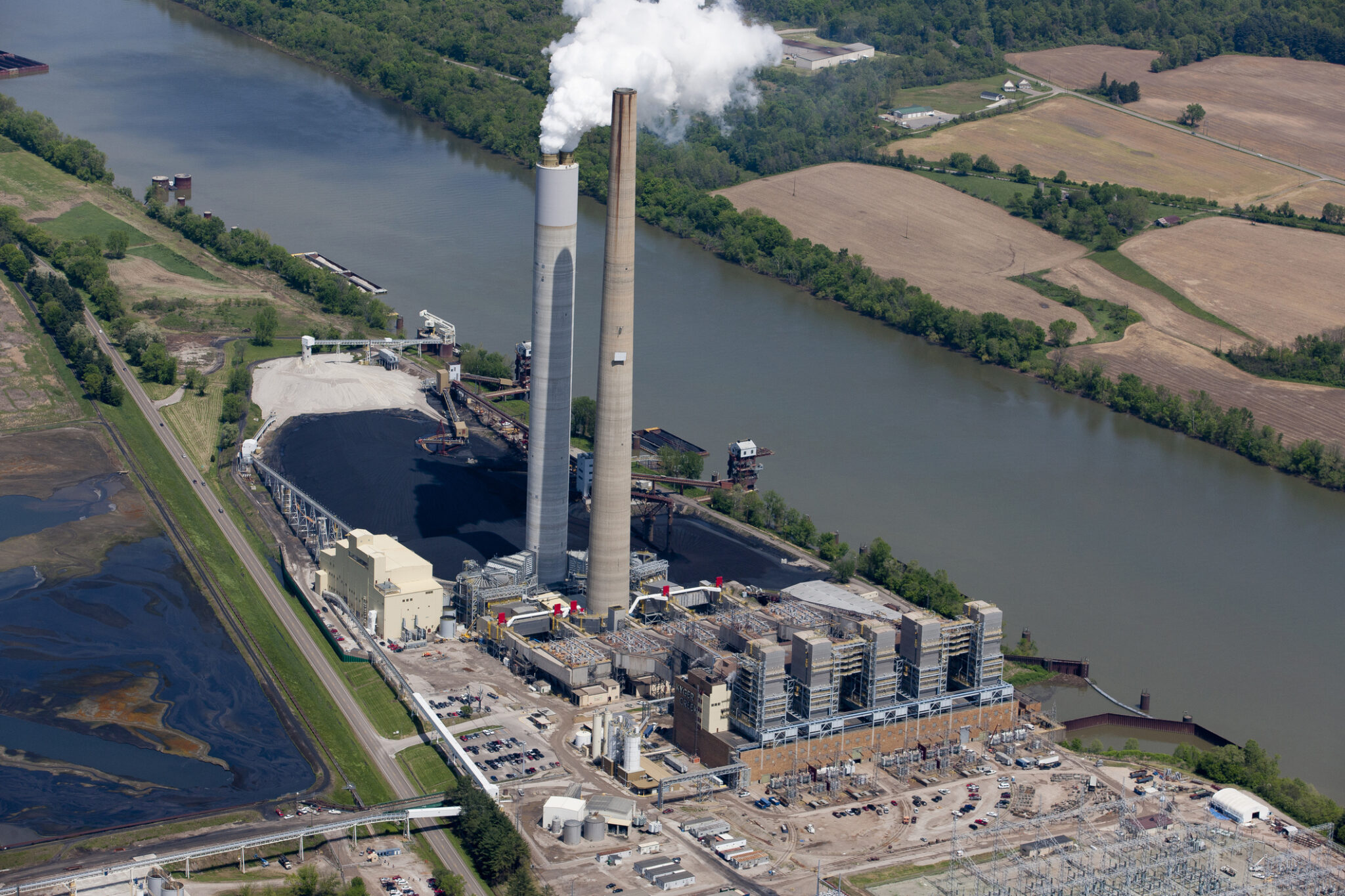
    Another private equity group is in the process of buying a coal-fired generation plant along the Ohio River that is estimated to be the nation’s most deadly via pollution.

    The prospective owners boast of a focus on helping fossil fuel plants make the transition to sustainability. But it’s unclear that anything will change at the 50-year-old facility.

    Presently owned by Blackstone and ArcLight Capital Partners, the 2,600 megawatt Gavin plant in Cheshire is in the process of being purchased by two other private equity firms, Energy Capital Partners and Javelin. Because the plant is estimated to produce the deadliest emissions in the United States — and because it has a $40 million liability to clean up toxic coal ash — watchdogs are concerned about ongoing health threats. They’re also worried that taxpayers will have to pay for any cleanup.

    Private equity groups have long been accused of the most ruthless moneymaking. They often buy assets in deals that quickly recoup their investments, then frequently sell off the most valuable parts of an enterprise, and then walk away either by selling or declaring bankruptcy. Whether people needlessly lose jobs or consumers lose choices is not a consideration, critics say.

    Such firms are heavily invested in fossil fuel-powered electricity generation.

    Earlier this month, Private Equity Climate Risks — a consortium of clean-energy advocates — published a scorecard. It said the annual emissions of private-equity owned fossil fuel plants exceed those of the global airline industry and is on a scale with the catastrophic Canadian wildfires of 2023.

    Ohio’s Gavin Plant is a particular polluter.

    A 2023 analysis by the Sierra Club looked at coal-plant emissions and weather patterns. It concluded that because it sends a plume of toxins over populous areas in the eastern United States, the Gavin plant is the deadliest in the country, killing an estimated 244 people a year.

    Blackstone, one of its current owners, has ties to the Republican presidential ticket. CEO Stephen Schwarzman in May endorsed former President Donald Trump, and it’s the 10th-largest contributor to Ohio Sen. J.D. Vance’s PAC, Working for Ohio, according to OpenSecrets.com.

    Blackstone in August disputed critics’ assertions that it was seeking political influence to avoid compensating for the harms caused by the plant. To the contrary, it said it had spent $1 billion on air quality improvements.

    But now that it appears poised to be sold to yet another private-equity group, critics continue to worry that the Gavin Plant will keep on spewing toxins and that its $40 million coal-ash problem will go unaddressed.

    “I think we’ve seen over the past several years how unpopular and deadly coal is,” said Alissa Jean Schafer, climate director of the Private Equity Stakeholder Project, a group critical of private equity practices. “You’ve certainly had a front-row seat to that in Ohio. Increasingly, coal is being seen as, A) a really bad investment, and B) a poisonous form of energy.”

    Indeed, companies are retiring coal-fired power plants or converting them to cleaner natural gas even faster than the federal government estimates, the Institute for Energy Economics and Financial Analysis reported on Tuesday.

    According to its research, 69,000 megawatts of coal generation will be retired or converted between 2025 and 2030 — nearly double the 36,000 megawatts estimated by the U.S. Energy Information Administration in September.

    “Blackstone wasn’t completely able to ignore that, so Blackstone now is following the typical (private equity) playbook where they swooped in, took (the Gavin Plant), tried to see what profit they could get out of it, didn’t respond to any of the pressure to retire the plant or invest in a clean-energy transition,” Schafer said. “Now Blackstone is passing the buck to the next firm. We’ll see what (Energy Capital Partners) does with it.”

    Schafer and her colleagues at the Private Equity Stakeholders Project said the sale of the Gavin Plant is under consideration by the Federal Energy Regulatory Commission, and details of the deal and its timeline for the deal to close are unknown.

    On its website, Energy Capital Partners says it focuses on converting facilities to cleaner generation.

    “Energy Capital Partners (ECP) is a leading credit and equity investor across energy transition infrastructure, with a focus on investing in electricity and sustainability infrastructure, providing reliable, affordable clean energy,” it says.

     A photo of the coal ash pond at the James Gavin Power Plant in Cheshire, Ohio included in documents to the EPA. 

    However, the firm didn’t respond when asked whether it planned to convert or retire Gavin, or what might be done about the plant’s coal ash.

    The scorecard published earlier this month by Private Equity Climate Risks said that ECP is invested in 14 energy companies and that 64% of them have fossil fuel generation. The consortium — which includes the Private Equity Stakeholders Project — gave ECP a grade of C when it comes to such things as transparency in disclosing emissions and political spending, having a clear plan to transition to clean energy, and plans to do its part to meet the global goal of limiting global warming to 1.5 degrees celsius by the end of the century.

    One of the major critiques of private equity firms is that they use average people’s money to invest in things like fossil fuels that harm those same people. That’s so, the argument goes, because much of the money comes from institutional investors such as public pension funds.

    According to data used in the Private Equity Climate Risks scorecard, at least six of Ohio’s public pensions are invested in private equity funds that support fossil fuels. By far the biggest investor is the State Teachers Retirement System at nearly $1.3 billion.

    Already under fire for paltry benefit increases, big staff bonuses and high-fee “alternative” investments, the pension system is invested in at least three private equity funds that support coal or natural gas:

    • $812 million with Ares Management, which owns 14 fossil fuel companies that spew 55 million tons of carbon dioxide equivalents each year. The scorecard gave it a grade of C, when it comes to meeting climate and transparency goals.
    • $450 million with Apollo Global Management, which owns three fossil fuel companies that emit 3.5M tons of carbon dioxide equivalents. It received a grade of B.
    • $10 million with EnCap Investments. It’s invested in 34 fossil fuel companies that emit 92 million carbon dioxide equivalents a year. It received a D grade on the Private Equity Climate Risks scorecard.

    At least one official is trying to end investments by public pensions in fossil fuels. On Tuesday, New York City Comptroller Brad Lander proposed ending investments by city employee pensions in fossil fuel infrastructure.

    ________

    Marty Schladen
    Marty Schladen

    Marty Schladen has been a reporter for decades, working in Indiana, Texas and other places before returning to his native Ohio to work at The Columbus Dispatch in 2017. He’s won state and national journalism awards for investigations into utility regulation, public corruption, the environment, prescription drug spending and other matters.

    Ohio Capital Journal is part of States Newsroom, the nation’s largest state-focused nonprofit news organization.

    MORE FROM AUTHOR

  • Ohio utilities’ efficiency programs among the worst in wake of corrupt utility law, report says

    Ohio utilities’ efficiency programs among the worst in wake of corrupt utility law, report says

    Getty Images

    BY:  Ohio Capital Journal

    House Bill 6 wasn’t only a bad law because it involved $61 million in bribes in exchange for a $1.3 billion utility bailout.

    Most of the bailout payments have been repealed, but somehow the law — the product of perhaps the biggest corruption scandal in Ohio history — remains on the books. And after it eliminated most efficiency programs, Ohio utilities have gone from above average to among the worst in the country, according to an analysis that was released last week.

    One of them, Columbus-based AEP, acknowledged that in the absence of the efficiency programs, acknowledged that the elimination of the programs has limited what it can offer customers to save electricity.

    The American Council for an Energy Efficient Economy, a Washington, D.C.-based non-profit, publishes an efficiency scorecard of the nation’s 53 largest electric utilities once every three years.

    It found that in 2018 — a year before the corrupt bailout was passed — Duke Ohio had the 18th-best score for efficiency programs. AEP Ohio had the 21st-best programs, according to the scorecard. Edison Ohio came in at 34th.

    But the scorecard published last week looked at data related to efficiency programs in 2021 — a year after HB 6 took effect. It found that AEP and Duke tied for 49th out of 53.

    In an email, AEP spokesman Scott Blake said “House Bill 6 ended energy efficiency requirements, which hampers our ability to offer programs to customers. AEP Ohio had implemented many successful energy efficiency programs prior to this change in state law. Our customers have expressed interest in energy efficiency, and we have proposed to offer a new menu of voluntary programs in our Electric Security Plan currently under consideration by the Public Utilities Commission of Ohio. They would need to approve those programs in order for us to offer them to customers.”

    Edison Ohio is a subsidiary of Akron-based FirstEnergy, which paid more than $60 million to finance the corrupt bailout law that gutted efficiency standards. It finished dead last in the most recent efficiency score.

    The 2019 law was ramrodded by former House Speaker Larry Householder, R-Glenford. The vast majority of the money it required from ratepayers went to prop up two failing nuclear plants in Northern Ohio. FirstEnergy wanted to prop them up so it could sell them and avoid liability for cleaning up the sites when they’re shut down.

    With global temperatures increasing at an alarming rate, HB 6 makes warming worse in at least two ways.

    It forces Ohio ratepayers to spend hundreds of millions propping up two aging coal plants — including one that isn’t even in Ohio. And it gutted energy-efficiency and renewable standards that utilities formerly had to adhere to.

    The efficiency standards were built into consumers’ bills to incentivize the use of technologies that save electricity and thus obviate the need for more carbon-spewing generation. For example, they enabled Ohio utilities to offer discounts on fluorescent light bulbs when they were relatively expensive, but much longer-lasting and efficient than incandescent bulbs.

    The idea was that with greater demand, manufacturers would scale up production and make them more cheaply. That approach helped to allow the federal government to completely phase out the sale of incandescent bulbs this year.

    The way efficiency standards worked, regulators set goals and offered “shared savings” to utilities and consumers once those goals were met. Rob Kelter, a senior attorney with the Environmental Law and Policy Center, conceded in an interview last month that the efficiency incentives weren’t perfect.

    “I think there were some legitimate concerns that legislators raised about the value of efficiency and whether the programs were well-run,” he said. “But the programs were always pretty good and they delivered good value to customers.Were we too generous with the incentives for utilities? Yeah. A little bit.”

    For example, Kelter said, when they were collecting money from incentives for fluorescent bulbs, utilities were slow to move to the next technology, LED bulbs, because they had a sure thing in fluorescents.

    Regardless of the programs’ merits, some Ohio officials have long opposed efficiency standards.

    Sam Randazzo — whom Gov. Mike DeWine in 2019 nominated to chair the Public Utilities Commission — had previously worked as a utility lobbyist to repeal efficiency and renewable standards.

    In a deferred prosecution agreement with the federal government, FirstEnergy said it bribed Randazzo $4.3 million to do its bidding as he was poised to become the state’s top regulator. The FBI searched his Columbus condominium a few months after the July 2020 arrests of Householder and four others in the HB 6 conspiracy, but Randazzo hasn’t been charged.

    During Householder’s federal court trial earlier this year, witnesses testified that even though he was supposed to be regulating utilities, Randazzo helped draft HB 6, the corrupt bailout legislation. Perhaps predictably, it eliminated efficiency and renewable standards and prompted the news organization Vox to call it “the worst energy bill of the 21st century.”

    One reason Randazzo and the HB 6 conspirators might have been so eager to eliminate the efficiency and renewable programs was to use the resulting savings as what government insiders call a “pay for.” The bailout that was going to FirstEnergy — and to a much lesser extent AEP and other utilities — was going to show up on ratepayers’ bills. So those pushing the legislation looked for other things to cut to pay for the new charges.

    On the witness stand, Householder, who was later sentenced to 20 years in prison, said he “wanted to do away with costly mandates.” He and other HB 6 supporters claimed that eliminating efficiency and renewable standards would save consumers more than $1 billion.

    But federal prosecutors smashed those claims, showing that the supporters’ math didn’t take the full cost of HB 6 into account. Householder and the others also failed to mention that through efficiency programs, ratepayers stood to save by using less electricity.

    The efficiency scorecard that found such precipitous drops among Ohio utilities in the wake of HB 6 scores them according to numerous metrics. But more than half of the available points are from three straightforward ones: net annual and lifetime electricity savings, and peak demand reduction.

    The latter measure is important because when electricity demand reaches a peak, system operators often have to fire up gas-powered generation facilities to meet it. By contrast, when customers use electricity during off-peak times, they’re pulling power that’s already on the grid.

    Mike Specian, lead author of the efficiency scorecard, praised the three big Ohio utilities for some of their offerings — including discounts to customers who use power at off-peak times.

    However, Specian said in an email, “the cancelation of utilities’ efficiency programs (in HB 6) had an adverse impact on nearly every other aspect of utility performance that we evaluated, including for low-income customers.”

    Duke didn’t respond to questions for this story.

    Lauren Siburkis, a FirstEnergy spokeswoman, said in an email that she isn’t “able to comment on the (efficiency) report itself.” But she said her company has numerous efficiency programs that it voluntarily offers customers.

    They include $100 rebates for energy-efficient appliances such as refrigerators, freezers and clothes dryers. The company also incentivizes efficiency among commercial and industrial customers through its commercial lighting program, Siburkis said.

    Blake, of AEP, said a bill is moving through the legislature that would allow ratepayers to voluntarily participate in efficiency programs.

    “The legislature is considering House Bill 79, a bipartisan effort sponsored by Bill Seitz and Bride Rose Sweeney, that would allow AEP Ohio and other utilities to offer energy efficiency programs while giving customers the option to participate,” Blake said.


    Marty Schladen
    MARTY SCHLADEN

    Marty Schladen has been a reporter for decades, working in Indiana, Texas and other places before returning to his native Ohio to work at The Columbus Dispatch in 2017. He’s won state and national journalism awards for investigations into utility regulation, public corruption, the environment, prescription drug spending and other matters.

    MORE FROM AUTHOR