

Tag: air pollution and health

  • Air Quality Alert EXTENDED for Saturday, June 3 and Sunday, June 4

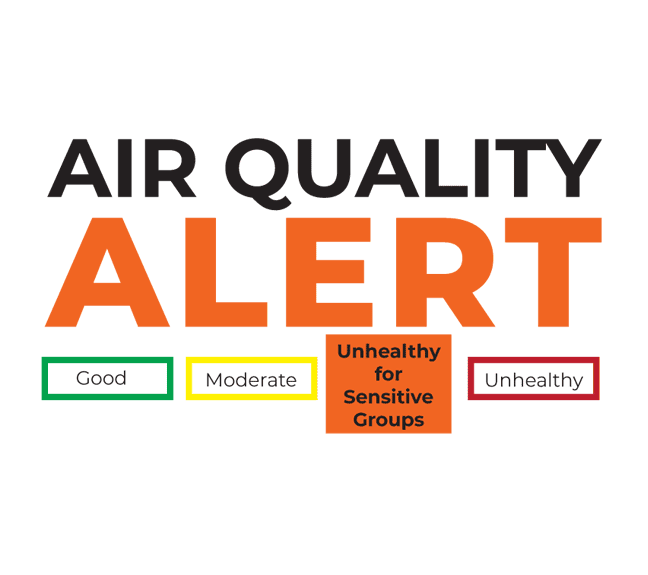
    Air Quality Alert EXTENDED for Saturday, June 3 and Sunday, June 4

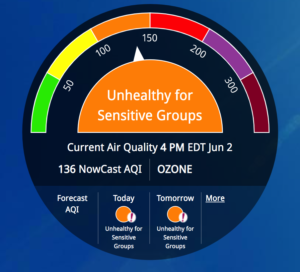
    The Loveland air quality was well into the “Unhealthy for Sensitive Groups” range at 4 PM Friday.

    Loveland, Ohio – The Southwest Ohio Air Quality Agency (Agency) has extended an Air Quality Alert for Saturday, June 3 and Sunday, June 4 through 11:59 PM for Butler, Clermont, Hamilton, and Warren counties in Ohio; Boone, Campbell, and Kenton counties in Kentucky; and Dearborn County in Indiana.

    The Agency expects to see levels of ozone in the “unhealthy for sensitive groups” range on the Air Quality Index (AQI).

    Use this SITE to track pollution levels in real time.

    “Sensitive Groups” refers to people with health issues that might be affected by pollution. This category includes:

      • Babies
      • Young children
      • Elderly people
      • People with respiratory disease
      • People with allergies
      • People with hypersensitivity

    For people with sensitivity issues, this could be bad enough to be affected. People with asthma will experience shortness of breath more often. Children and the elderly may suffer more coughing or allergic reactions. Long-term exposure may cause more serious damage.

    Children are at increased risk from air pollution primarily because they spend prolonged periods of time outdoors. What’s more, much of this time is spent playing sports or games, meaning children are not only exposed to unhealthy air for longer periods of time than adults, but also at higher rates. (The more strenuous the activity, the more air intake is required, thus the more unhealthy air that is breathed in.) Since kids’ lungs are still developing, high levels of pollutant exposure can go so far as to cause irreversible damage, including decreased lung-function growth. The fact that about 1 in 14 children (7%) have asthma also puts youth at increased risk. – Source: What “Unhealthy Air Quality for Sensitive Groups” Means (treehugger.com)

    On Air Quality Alert days, everyone can help reduce ozone formation by taking the following actions:

    • Take the bus, carpool, bike, or walk instead of drive.
    • Refuel your vehicle after 8 p.m.; do not top off when refueling and tighten the gas cap.
    • Do not idle your vehicle; exhaust contributes considerably to ozone formation.
    • Combine trips or eliminating unnecessary vehicle trips.
    • Keep your vehicle maintained with properly inflated tires and timely oil changes.
    • Avoid use of gasoline-powered lawn equipment on Air Quality Alert days.
    • Avoid use of oil-based paints and stains on Air Quality Alert days.
    • Never burn leaves or other yard trimmings.
    • Suspend use of fire pits, campfires and charcoal grills on Air Quality Alert days.
    • Conserve electricity by turning out lights and unplugging unused appliances and electronics.
  • Air pollution impacting maternal, infant health of Ohioans

    Air pollution impacting maternal, infant health of Ohioans

    BY: SUSAN TEBBEN Ohio Capital Journal

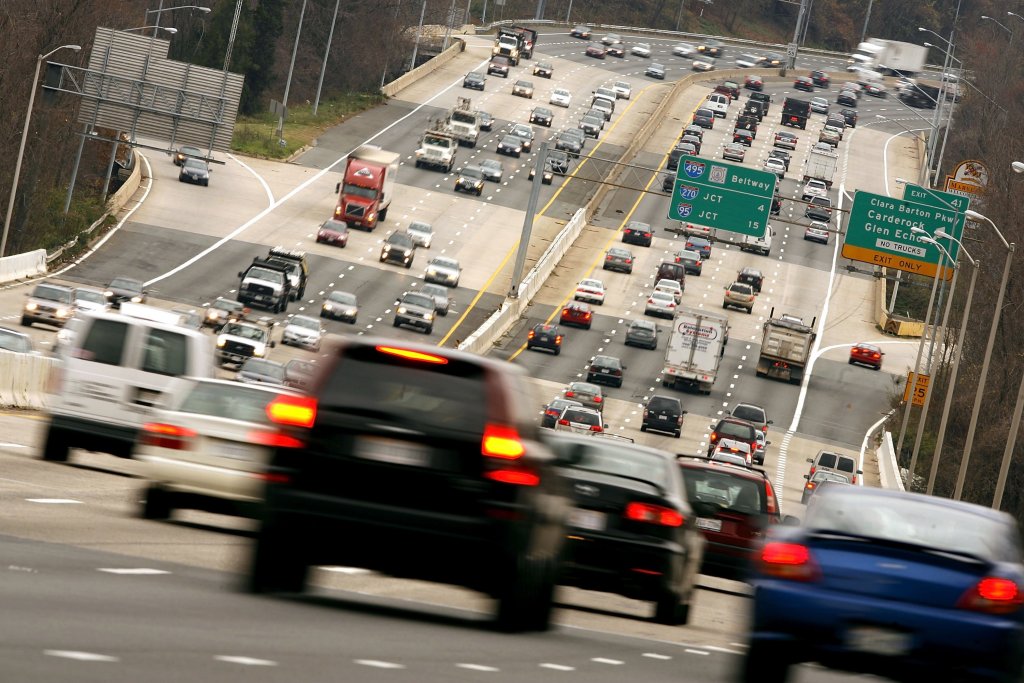
    Traffic on a highway. Photo by Chip Somodevilla/Getty Images.

    Improving air quality in the state would lead to better health for Ohioans, and could be done through policy changes, according to a policy think tank.

    In a recent examination of the connections between air pollution and health, the Health Policy Institute focused on maternal and infant health, lung and heart conditions and cognitive conditions, all of which could see better outcomes with increased monitoring and control of air pollutants.

    “Exposure to air pollution can also increase the severity, lethality and prevalence of COVID-19 due to its negative impact on cardiopulmonary diseases and immune responses,” the HPIO said in a policy brief on the issue.

    Sources of air pollution range from power plants to vehicle exhaust, and even natural sources like dust.

    Improvements have been made through the federal Clean Air Act in 1970, which sought to regulate emissions through EPA oversight, and through implementation of plans in each individual state.

    “The EPA can also take civil or criminal action against an entity that has violated environmental law, such as not installing a required air pollution control device,” the HPIO stated.

    But Ohio “ranks poorly on outdoor air quality” according to the institute’s research, and performs worse than most other states.

     Graph provided by the Health Policy Institute.

    More than 32% of Ohioans commute more than 30 minutes to work alone, verses 4.1% who walk, cycle or use public transportation, according to a 2021 Health Value Dashboard cited in the policy brief.

    But more than the choice of commute, some Ohioans are unwittingly in danger of air pollution effects based solely on where they live and the zoning policies in those communities. Even “redlining,” the use of discriminatory practice of denying mortgages and other financial services based on race or ethnicity, can cause minorities to end up in more polluted areas.

    “Historically, zoning policies and redlining placed industrial plants and highways closer to predominantly Black neighborhoods and prohibited Black people from living in areas that did not have these sources of pollution near them,” the HPIO stated.

    According to research from the National Equity Atlas, Black Ohioans face a risk of air pollution 1.5 times higher than white residents of the state.

    Part of the problem in Ohio was the passage of the scandal-ridden House Bill 6, a bailout of energy companies that led to, among other things, a bribery investigation and, beginning this month, the criminal trial of former House Speaker Larry Householder.

    Parts of the legislation were repealed in March 2021 related to the bailout, but measures that severely cut energy-efficiency programs and standards for renewable energy stayed in place.

    “By reducing the renewable energy benchmark, Ohioans are more likely to continue to use fossil fuel-based energy and be more at risk of air pollution exposure,” the HPIO policy brief stated.

    Ohio’s legislature also passed Senate Bill 52 in 2021, which hampers the development of energy sources such as wind farms and solar facilities and allows local governments to turn down wind and solar proposals.

    Local governments have done their part to reduce air pollution, however, with the Central Ohio Transportation Authority planning a fleet transition to non-diesel by 2025 after receiving federal funding for the effort.

    After a settlement between Volkswagen and the U.S. Environmental Protection Agency over an emissions scandal, Ohio is set to receive $75 million over 10 years to be used to fund emission-reduction projects.

    “The latest round of grants, awarded in November 2021, were estimated to remove 33 tons of nitrogen oxides and 16 tons of other air pollutants annually,” the HPIO stated.

    Moving forward, the policy institute said more legislation could set targets for “renewable energy procurement” and use air quality monitors to capture data on exposure. Increased funding for public transportation and an “environmental legislature review process” were also recommended by the HPIO.

    Follow Susan Tebben on Twitter.