

Tag: Akron-based FirstEnergy

  • Moreno blasted rivals over scandal. Now he’s welcoming a big player’s support

    Moreno blasted rivals over scandal. Now he’s welcoming a big player’s support

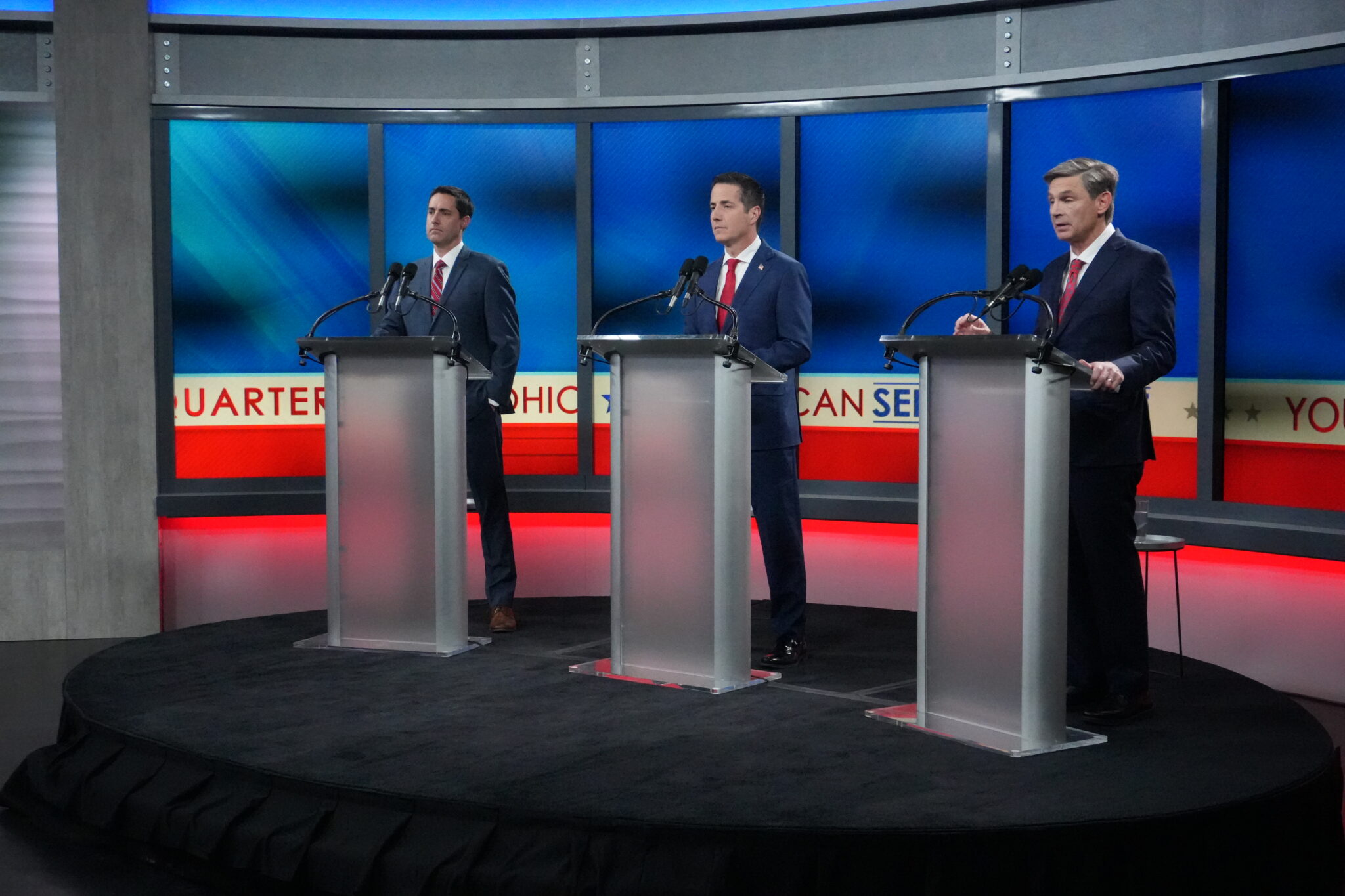
    (From left) Sec. of State Frank LaRose, Bernie Moreno, and state Sen. Matt Dolan, R-Chagrin Falls, on the debate stage before the March primary. (Debate pool photo courtesy of WCMH-TV.)

    BY:  U.S. Sen. Sherrod Brown

    During the GOP U.S. Senate primary, Cleveland businessman Bernie Moreno went after his opponents over their connections to the biggest bribery and money-laundering scandal in Ohio history.

    But now he’s welcoming the support of a man who brokered what was perhaps the key relationship in a scheme in which Akron-based FirstEnergy paid $61 million to purchase a $1.3 billion bailout that fell on the backs of ratepayers — which is to say everyday Ohioans.

    The supporter, Cleveland businessman Tony George, invited a now-convicted lawmaker to travel on FirstEnergy’s private jet to Donald Trump’s 2017 inaugural, and booked the lawmaker and FirstEnergy executives into the same hotel for days of events during which federal prosecutors say the conspiracy began. George was still communicating with the central players in 2020, when the FBI started making arrests.

    When asked to comment on the seeming hypocrisy, Moreno’s campaign didn’t respond directly. It instead attacked his Democratic opponent, incumbent Sen. Sherrod Brown.

    Crooked bailout

    A political newcomer, Moreno in March sailed past his more-experienced opponents buoyed by the endorsement of former President Donald Trump.

    Moreno was once a harsh Trump critic, calling him a “lunatic” and a “maniac.” But as with Ohio Sen. — and vice-presidential hopeful — J.D. Vance, Moreno got into politics and turned into an ardent supporter of Trump, who is now a convicted felon.

    Moreno might have experienced a similar conversion when it comes to 2019’s corrupt bailout law, House Bill 6.

    In a Spectrum News 1 debate on Feb. 19, Moreno went after his Republican opponents, State Sen. Matt Dolan and Secretary of State Frank LaRose.

    Dolan in 2019 voted for HB 6, but then later said he supported a full repeal.

    LaRose, Ohio’s top elections official, provided “private” information to FirstEnergy CEO Chuck Jones during a brutal-but-successful war to stop a repeal of the bailout, according to text messages from Jones that were presented during a criminal trial last year. LaRose at first refused to comment on the messages. Then last July, he said he didn’t recall conversations with Jones and others involved in the scandal.

    As a result of the bailout conspiracy, former House Speaker Larry Householder, R-Glenford, last year received a 20-year prison sentence and former Ohio Republican Party Chairman Matt Borges was sentenced to five years. Jones and former FirstEnergy Vice President Michael Dowling were charged by state authorities earlier this year.

    About 19-and-a-half minutes into February’s GOP Senate debate, LaRose attacked Moreno over what LaRose said was Moreno’s support for government subsidies of wind and solar energy. Moreno swung back with HB 6, the corrupt bailout law.

    “I was against HB 6,” Moreno said. “These guys weren’t. They’re going to have to answer for their involvement in that scandal to a different audience than the one that’s here tonight.”

    Moreno took another swing at Dolan on April 30, when he took to X to say.

    @dolan4ohio was the most helpful member to pass the CROOKED and CORRUPT FirstEnergy Bailout Bill! Matt is a GUARDIAN for the Left Woke Mob and the Swamp but not the people of Ohio,” he said.

    Support from “Individual B”

    That last sentence was an apparent swipe at the Dolan family’s ownership of Cleveland’s baseball team. In 2021 it changed its name from the Indians to the Guardians in response to Native American protests — to the fury of some of its fans.

    But as for Moreno’s problems with figures who were involved in the bailout scandal, they appear to extend only to his political opponents — not his supporters.

    On May 16, his campaign held a Bourbon With Bernie fundraiser in Mentor. Cleveland businessman Tony George was a host, a privilege for which George paid $2,500.

    In addition to being a Moreno supporter, George has had a long and lucrative relationship with FirstEnergy. Entities linked to George received nearly $11 million from FirstEnergy over the years, according to a state audit.

    Unlike FirstEnergy’s two top executives, Gov. Mike DeWine’s nominee to the Public Utilities Commission, Householder, Borges and three others, George has not been charged in the conspiracy, and there’s been no public indication that state or federal authorities plan to.

    But George’s role was substantial enough that he was called “Individual B” in FirstEnergy’s deferred prosecution agreement — a document in which the utility copped to its culpability for the bribery scandal, along with paying out $230 million. It lays out Individual B’s close relationship with FirstEnergy’s top executive and to Householder from the fall of 2016, when Householder was plotting his return to the House and then to regain the speaker’s gavel.

    During his trial, Householder implausibly testified that during the 2016 World Series, he randomly wandered into the FirstEnergy luxury box at Cleveland’s Progressive Field. Raising doubts that his visit was just happenstance, the deferred prosecution agreement includes a message from Jones, the FirstEnergy CEO, to George on Nov. 5, 2016 — just three days after Game 7 of the World Series.

    “Pass on to (Householder),” Jones said. “When we were talking on (Wednesday) I told him there was gonna be a sense of urgency (for a bailout) but couldn’t tell him all the details. If we don’t move on some type of supplant (sic) in (the) first half of 2017 it will be too late. These (nuclear) plants will be shut, sold, or bankrupt. I don’t have any contact info for him.”

    George responded, “He’s more than ready to craft something,” federal prosecutors said in closing arguments in Householder’s trial.

    Expensive junket

    The following January, George invited Householder — and flew with him, Householder’s son and FirstEnergy Vice President Michael Dowling — on the FirstEnergy jet to the Trump inaugural. George also booked Householder and then-CEO Jones into the same DC hotel.

    What followed were days of swanky steak dinners and other events during which prosecutors said the bailout scheme was hatched.

    FirstEnergy’s deferred prosecution agreement, or DPA, says that George continued as a conduit between Householder and Jones until 2020, when Householder was arrested.

    Before the feds brought the hammer down, Jones, George and Householder were plotting to change the Ohio Constitution so Householder could continue as speaker for another 16 years. That would have allowed them to continue to increase electricity rates and use the resulting dark money to dominate Ohio government in ways not calculated to benefit ratepayers, or the public at large.

    The DPA includes messages between Jones and George on Feb. 28, 2020. Jones referred to Householder as “an expensive friend,” but said it would be valuable to keep him in his position of power because, as Householder said, he could “get a lot done in 16 years.”

    George agreed, saying, “Probably more than 5 previous Speakers combined.”

    Then, George added, “He will make Ohio great again.”

    Response

    The Moreno campaign this week declined to answer questions about these matters on the record.

    It was asked whether Moreno was aware of George’s involvement in the HB 6 affair when Moreno accepted George’s support. It was also asked if Moreno would return George’s money and decline support in the future.

    Communications Director Reagan McCarthy responded by asking in an email, “When is Sherrod Brown going to return the donations made to his campaign over the years including when FirstEnergy admitted it was bribing public officials?”

    In fact, Brown donated the $21,000 he’d received from FirstEnergy over the years to Ohio food banks within 10 days of Householder’s 2020 arrest, according to Federal Election Commission records provided by the Brown campaign.

    “While Bernie continues to actively fundraise with key players of the FirstEnergy bribery scandal, days after the FirstEnergy scandal was revealed, the Friends of Sherrod Brown campaign donated FirstEnergy contributions to local food banks across the state,” a spokesperson said in an email.

    Marty Schladen
    MARTY SCHLADEN

    Marty Schladen has been a reporter for decades, working in Indiana, Texas and other places before returning to his native Ohio to work at The Columbus Dispatch in 2017. He’s won state and national journalism awards for investigations into utility regulation, public corruption, the environment, prescription drug spending and other matters.

    Ohio Capital Journal is part of States Newsroom, the nation’s largest state-focused nonprofit news organization.

    MORE FROM AUTHOR

  • Ohio Lt. Gov. Husted won’t say if he knew about $1M dark-money contribution

    Ohio Lt. Gov. Husted won’t say if he knew about $1M dark-money contribution

    Donation came from utility behind massive bribery scandal

    BY:  – Ohio Capital Journal

    Ohio Lt. Gov. Jon Husted is refusing to say whether he was aware of a $1 million contribution in 2017 to a political group that was supporting his bid for governor. Instead, his office is only reiterating that the group wasn’t affiliated with the Husted campaign.

    The massive donation came from Akron-based FirstEnergy, which over the next two years ponied up more than $60 million in bribes in exchange for a $1.3 billion ratepayer bailout — a law that Gov. Mike DeWine signed just hours after it passed.

    The donation was discovered among a trove of documents that a group of news organizations including the Capital Journal requested from the Office of Ohio Consumers’ Counsel.

    As reported last week by the Energy News Network and Floodlight, the documents also contained emails indicating that Husted was lobbying DeWine to support the bailout. The lobbying came just 11 days after Husted abandoned his gubernatorial bid and joined DeWine’s ticket on Dec. 1, 2017.

    “Jon Husted called me to say he was meeting with DeWine on our issue to try and get him aligned to help keep the plants open,” a Dec. 12, 2017 email by FirstEnergy lobbyist Joel Bailey said.

    The plants were money-losing nuclear and coal plants that FirstEnergy wanted to prop up with the bailout and then spin off.

    FirstEnergy in 2021 signed a deferred prosecution agreement in which it admitted to paying bribes to elect a friendly Republican majority to the state House, which would elect a friendly speaker who would pass and protect the corrupt bailout.

    The company also admitted to paying a $4.3 million bribe to Sam Randazzo, DeWine’s pick to chair the Public Utilities Commission of Ohio, who died by suicide last week. A state indictment said that FirstEnergy executives arranged the bribe with Randazzo the same night they discussed his suitability as a regulator at a dinner meeting with Gov.-elect DeWine and Lt. Gov.-elect Husted on Dec. 18, 2018.

    The ensuing scandal has landed former House Speaker Larry Householder, R-Glenford, in federal prison for 20 years, and former Ohio GOP Chair Matt Borges for five. Two others have pleaded guilty and await sentencing. Another defendant, lobbyist Neil Clark, also died by suicide — clad in a “DeWine for Governor” T-shirt.

    DeWine and Husted haven’t been charged in case, and they adamantly deny wrongdoing.

    However, they haven’t publicly discussed just what they knew about Randazzo’s long-standing relationship with FirstEnergy, or what they knew about the torrent of dark money flooding from FirstEnergy into Capitol Square to pass and protect the bailout. They also haven’t discussed what senior administration officials with close ties to FirstEnergy might have known.

    Among the documents turned over once FirstEnergy made its agreement with federal prosecutors was a spreadsheet listing 501(c)(4) political contributions the company made in 2017.

    Such donations are called “dark money” because recipients don’t have to disclose their sources. By law, dark-money contributions can’t go directly to candidates, but they can go to groups that support them, but aren’t supposed to directly coordinate with them.

    The FirstEnergy spreadsheet is only now becoming public because the FBI investigated the scandal and the U.S. Department of Justice brought a prosecution. During the battle over the bailout law in 2019, there were suspicions that FirstEnergy was bankrolling the effort, but the press and public couldn’t know because the money was being funneled through dark-money groups — without which U.S. Attorney David DeVillers said the conspiracy would have been impossible.

    Now that FirstEnergy’s 2017 donation to a Husted-aligned group is known, it raises new questions.

    Special interests sometimes piously claim that they spend millions on politics solely in the interests of “good government.” But as was shown in Householder’s lengthy trial last year, corporate political donations are often — if not usually — intended to buy influence with people in government.

    In order for that to happen, a government official would have to know that a special interest had contributed on his or her behalf. But Husted — who is eyeing a 2026 gubernatorial run — won’t say whether he knew that FirstEnergy in 2017 gave a million bucks to a group supporting his earlier bid.

    His spokeswoman, Hayley Carducci, was asked if Husted knew of the contribution and if he did, when he learned of it. She was also asked if Husted persuaded DeWine to support the FirstEnergy bailout; what Husted knew about Randazzo’s links to FirstEnergy when he was picked to regulate the company; and whether he knew that FirstEnergy was flooding Cap Square with dark money in its effort to pass and preserve the bailout.

    In an email, Carducci repeated her earlier statement: “The Husted campaign never received this donation and is not affiliated with any of these groups.”

    She added, “As for your other questions, we will not be commenting.”


    Marty Schladen
    MARTY SCHLADEN

    Marty Schladen has been a reporter for decades, working in Indiana, Texas and other places before returning to his native Ohio to work at The Columbus Dispatch in 2017. He’s won state and national journalism awards for investigations into utility regulation, public corruption, the environment, prescription drug spending and other matters.

    Ohio Capital Journal is part of States Newsroom, the nation’s largest state-focused nonprofit news organization.

    MORE FROM AUTHOR

  • Corruption tax? Policy expert says that’s basically what Ohio utility consumers have been paying

    Corruption tax? Policy expert says that’s basically what Ohio utility consumers have been paying

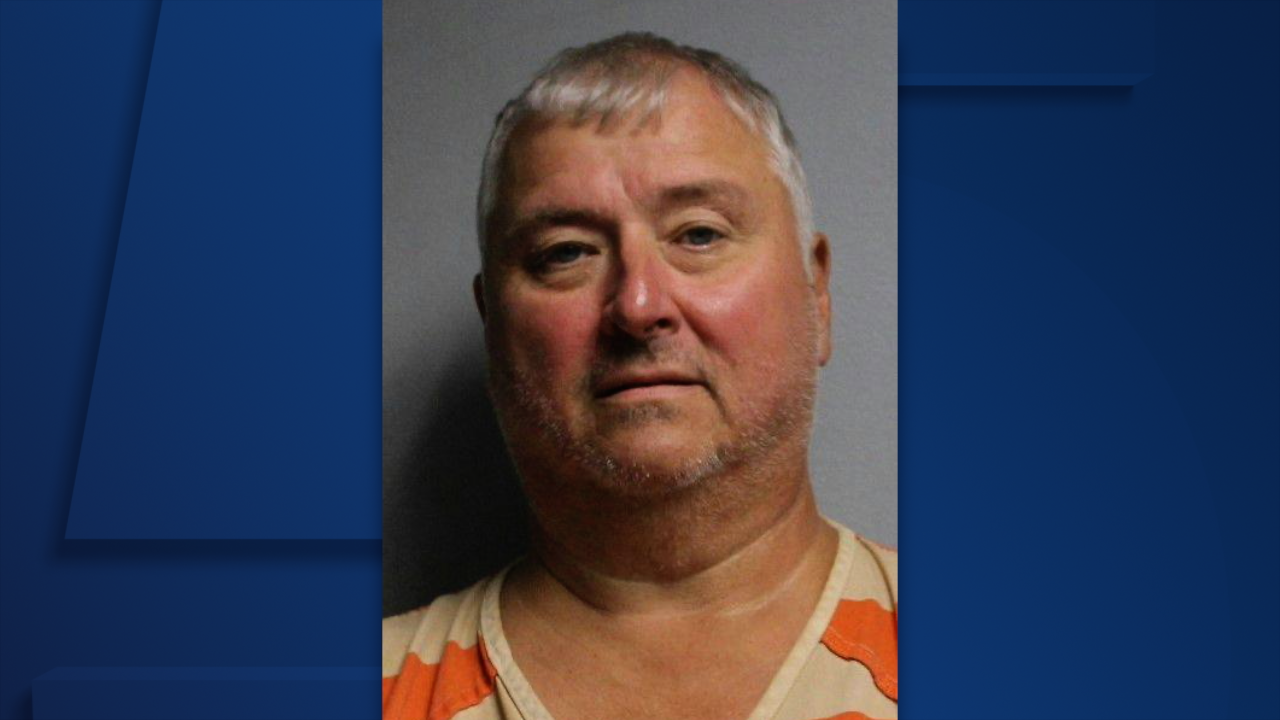
    Mugshot of former Ohio House Speaker Larry (Photo from the Butler County Jail.)

    BY:  Ohio Capital Journal

    Many politicians — especially conservatives — are loath to approve anything that could be construed as a tax increase.

    But since 2009, Ohio’s leadership has gone along with a number of questionable rate hikes demanded by regulated utilities. They’ve functioned in the same manner as tax increases — regressive ones with unsavory origins.

    There were new state charges earlier this month in Ohio’s massive FirstEnergy bribery scandal. They brought new attention to the issue, but that scandal is hardly the only time Ohio utilities have been able to impose questionable rate increases on their unsuspecting customers.

    In the scandal, Akron-based FirstEnergy paid more than $61 million in bribes in exchange for the 2019 passage and protection of a $1.3 billion ratepayer bailout. As a consequence, former House Speaker Larry Householder, R-Glenford, is serving a 20-year federal prison sentence.

    The state charges filed this month against two top FirstEnergy executives and the state’s top regulator pertain to those crimes. But they also describe more than a decade’s worth of additional shady increases in which payoffs played a central role.

    They accuse Sam Randazzo — whom Ohio Gov. Mike DeWine later appointed to be top regulator — of secretly helping FirstEnergy make huge, secret payments to powerful energy users. In exchange, the charges say, the industrial users dropped their opposition to rate increases FirstEnergy wanted to impose on all its customers.

    The payments might not have been illegal, but they functioned as kickbacks all the same.

    The Columbus Dispatch on Sunday reported that in 2008 then-Gov. Ted Strickland, a Democrat, tried to negotiate an end to the shady practice, but then-House Speaker Jon Husted killed the attempt, a former aide to Strickland told the paper. Husted is now DeWine’s lieutenant governor and is said to be planning a run in the 2026 Ohio Republican primary to be governor in his own right.

    Those increases are in addition to a whole slew of other rate hikes that Ohio’s erstwhile regulator has granted, but the state Supreme Court later ruled to be illegal. They total more than $1.5 billion worth altogether. Even though the gains have been ruled unlawful, utilities have gotten to keep them because the Public Utilities Commission of Ohio keeps granting such increases without building in a refund mechanism in the event they’re struck down.

    Jenifer French, DeWine’s appointment to replace the disgraced Randazzo, has repeated PUCO staff claims that such refund mechanisms are illegal. But the legal case seems dubious and watchdogs and lawmakers from both parties dispute it.

    So Ohio ratepayers have shelled out billions in illegal electric payments and untold millions more as the consequence of shady kickbacks to powerful companies. Those who allowed such payments are responsible for what is the functional equivalent of a tax increase, said Rob Moore, principal of Scioto Analysis, a Columbus firm that applies economics to questions of public policy.

    One reason they work the same as a tax is because one has little choice in 2024 about paying for electrical service, he said.

    “You can’t get away from it,” Moore said. “You’re going to have to pay something for electricity.” He later added, “That’s functionally no different from a tax.”

    And it’s one that falls extra-hard on the poor.

    Disconnected electricity and gas can destroy perishable food while also taking away the ability to cook it. For those who are struggling, finding money and getting to the store for one batch of food can already be a challenge. Having to do it again after arranging a reconnection can be even more difficult.

    Disconnection also can be used as a rationale for children’s services to break up a family, the Energy News Network reported in 2022.

    The news outlet reported that as part of a story about nearly 200,000 disconnections by Ohio electric utilities at the height of the coronavirus pandemic. Advocates asked the PUCO for relief, but the regulatory agency said it was powerless to act.

    Moore said that if you view utilities as the practical equivalent of a tax, it’s a regressive one.

    “In general, lower-income people pay more of their income on utilities than upper-income people,” he said.

    Moore cited a 2013 report by the U.S. Energy Information Agency saying that households in the bottom 20% of incomes made 6% of their total expenditures on home energy, while those in the top 20% paid half that.

    Energy-insecure households are likely to be poorer still. The agency last year reported that they paid 27% more in real terms than everybody else — $1.24 per square foot vs. 98 cents.

    As with the state and local tax burden, the extra costs Householder, the PUCO and others have imposed on Ohio seem to be falling most heavily on those least able to pay it.

    “Basically, he just levied a tax and lined his pockets with it,” Moore said of the former speaker.


    Marty Schladen
    MARTY SCHLADEN

    Marty Schladen has been a reporter for decades, working in Indiana, Texas and other places before returning to his native Ohio to work at The Columbus Dispatch in 2017. He’s won state and national journalism awards for investigations into utility regulation, public corruption, the environment, prescription drug spending and other matters.

    MORE FROM AUTHOR