• Take the bus, carpool, bike or walk instead of driving • Refuel your vehicle after 8 p.m.; do not top off when refueling and tighten the gas cap • Avoid idling your vehicle • Combine trips or eliminate unnecessary vehicle trips • Keep your vehicle maintained with properly inflated tires and timely oil changes • Avoid use of gasoline-powered lawn equipment on Air Quality Alert days • Avoid use of oil-based paints and stains on Air Quality Alert days • Never burn leaves or other yard trimmings • Always burn clean, seasoned wood in outdoor fire pits, fireplaces and wood stoves • Do not use fire pits or fireplaces for non-essential home heating on Air Quality Alert days • Conserve electricity
Part of being ready for school means making sure buildings and staff are prepared for what the new year holds. Over the summer, the Loveland City School District, like many other districts in our area, took several measures to improve safety and security for students and staff.
In Loveland, these safety updates include improved rapid room number identification on all exterior windows to assist first responders. We have also equipped all classrooms with an additional locking device. We have implemented the Raptor visitor management system, an on-the-spot legal identification sign-in software for all visitors – including parents – to our buildings. Using a legal form of identification, the Raptor system checks the visitor’s name and date of birth against a national database of registered sex offenders, and ensures that such individuals do not enter the school campuses without our knowledge.
A well-informed staff and student body is our first step toward the goal of a safe and secure campus. As part of our safety education, the district implements a schedule for practice of the ALICE model (Alert, Lockdown, Inform, Counter, Evacuate) for active shooter civilian response. The students at Loveland High School (LHS) have already attended an ALICE safety presentation this school year, focusing on the response in the event of a crisis situation. Several opportunities for follow-up presentations and training are scheduled for this year and will be accompanied by class discussions.
We have implemented the Raptor visitor management system, an on-the-spot legal identification sign-in software for all visitors – including parents – to our buildings. Using a legal form of identification, the Raptor system checks the visitor’s name and date of birth against a national database of registered sex offenders, and ensures that such individuals do not enter the school campuses without our knowledge.
Officer Jesse Moore is now a full-time, on-site school resource officer (SRO) at Loveland High School.
In partnership with the Loveland Police, we are also very excited to have been afforded the opportunity to add Officer Jesse Moore as an on-site, full-time school resource officer (SRO) at LHS. In addition to being available for the overall safety for students, staff and visitors on the LHS campus, Officer Moore will provide educational programs for students in areas such as social media awareness, Fourth Amendment rights, and general laws and driving regulations. With a unique ability to build positive relationships, he will also play an important role as a mentor for our high school students. Mr.Barnes, a retired policer officer, will continue to serve Loveland Middle School and Loveland Intermediate School as SRO. Mr. Almond also returns to support the safety of students at LHS. We are grateful to have the support of the Loveland Police and know this positively impacts the experience our students have in our schools and community.
Mental health and safety are also high priorities at Loveland. The district has entered a partnership with the Cincinnati nonprofit Grant Us Hope to implement Hope Squad, a school-based, peer-to-peer suicide prevention program empowering students and staff with knowledge to identify at-risk behaviors for suicide, as well as encouraging peers to seek help from a trusted adult. Advisor training, general staff training and student ambassador identification/training in Loveland will be completed this fall, with an anticipated launch of Hope Squad in January of 2019.
I am immensely grateful for the implementation of these safety measures and for the ongoing assessments and long-term planning by the Loveland District Safety Committee. Our work is continuous to ensure that we always strive for the most trusted and integrated school safety technologies to keep our Tigers safe. Comprehensive facility upgrades will be needed before we can approach some aspects of safety and security in our buildings, and they will be addressed in the Loveland City School District facilities master planning process as it unfolds over the coming months. As always, my number one priority as superintendent of Loveland City Schools is to provide a safe and nurturing environment to prepare each student for tomorrow, today.
In Service to Our Tigers.
Dr. Amy Crouse is Loveland City School District Superintendent
Loveland chiropractor Douglas Portmann, DC at Wards Corner Chiropractic & Sports Rehab is one of the best chiropractors in the Loveland area,
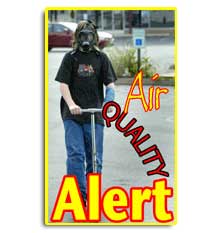
The Ohio EPA is predicting that the ozone level will be 120 on Friday.
Predicted Air Quality Index (AQI) for the Loveland Area
120
Unhealthy for Sensitive Groups on Saturday
Health Message:Active children and adults, and people with lung disease, such as asthma, should reduce prolonged or heavy exertion outdoors.
Steps you should take to protect you or your children’s health
Reduce prolonged or heavy outdoor exertion. Take more breaks, do less intense activities. Watch for symptoms such as coughing or shortness of breath. Schedule outdoor activities in the morning when ozone is lower.
People with asthma should follow their asthma action plans and keep quick relief medicine handy.
Do Your Share!
Carpool, bike or walk instead of driving.
Use your most fuel efficient vehicle and drive gently.
Keep your motorcycle in the garage. They don’t have the pollution controls modern passenger vehicles do.
Refuel your vehicle after 8 PM; do not top off when refueling and tighten the gas cap.
Avoid idling your vehicle. (Avoid drive-thru windows.)
Combine trips and eliminate unnecessary vehicle trips
Do not use of gasoline-powered lawn equipment
Do not use of oil-based paints and stains
Never burn leaves or other yard trimmings.
Do not use fire pits.
Conserve electricity by turning off unnecessary lights.
Turn your air conditioner thermostat up and use room fans for cooling.
Save the power boating for another day.
Initiate an Air Pollution Alert Day policy where you work; whether that be a company you own, an employee, a local government agency you work for, or a school district.
Sign up for Enviroflash and Start Receiving Your Air Quality Forecast
Children and Air Pollution
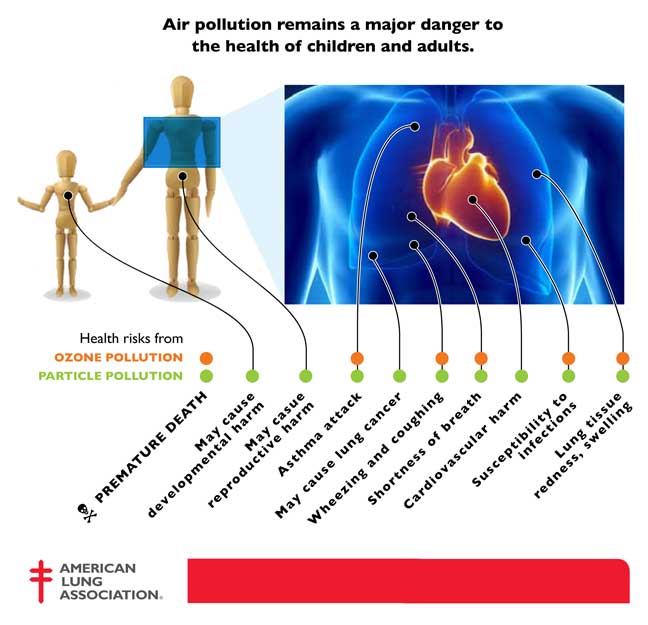
Children face special risks from air pollution because their lungs are growing and because they are so active and breathe in a great deal of air.
Just like the arms and legs, the largest portion of a child’s lungs will grow long after he or she is born. Eighty percent of their tiny air sacs develop after birth. Those sacs, called the alveoli, are where the life-sustaining transfer of oxygen to the blood takes place. The lungs and their alveoli aren’t fully grown until children become adults. In addition, the body’s defenses that help adults fight off infections are still developing in young bodies. Children have more respiratory infections than adults, which also seems to increase their susceptibility to air pollution.
Furthermore, children don’t behave like adults, and their behavior also affects their vulnerability. They are outside for longer periods and are usually more active when outdoors. Consequently, they inhale more polluted outdoor air than adults typically do.
The Ohio EPA is predicting that the ozone level will be 125 on Monday.
Predicted Air Quality Index (AQI) for the Loveland Area
125
Unhealthy for Sensitive Groups on Saturday
Health Message:Active children and adults, and people with lung disease, such as asthma, should reduce prolonged or heavy exertion outdoors.
Steps you should take to protect you or your children’s health
Reduce prolonged or heavy outdoor exertion. Take more breaks, do less intense activities. Watch for symptoms such as coughing or shortness of breath. Schedule outdoor activities in the morning when ozone is lower.
People with asthma should follow their asthma action plans and keep quick relief medicine handy.
Do Your Share!
Carpool, bike or walk instead of driving.
Use your most fuel efficient vehicle and drive gently.
Keep your motorcycle in the garage. They don’t have the pollution controls modern passenger vehicles do.
Refuel your vehicle after 8 PM; do not top off when refueling and tighten the gas cap.
Avoid idling your vehicle. (Avoid drive-thru windows.)
Combine trips and eliminate unnecessary vehicle trips
Do not use of gasoline-powered lawn equipment
Do not use of oil-based paints and stains
Never burn leaves or other yard trimmings.
Do not use fire pits.
Conserve electricity by turning off unnecessary lights.
Turn your air conditioner thermostat up and use room fans for cooling.
Save the power boating for another day.
Initiate an Air Pollution Alert Day policy where you work; whether that be a company you own, an employee, a local government agency you work for, or a school district.
Sign up for Enviroflash and Start Receiving Your Air Quality Forecast
Children and Air Pollution
Children face special risks from air pollution because their lungs are growing and because they are so active and breathe in a great deal of air.
Just like the arms and legs, the largest portion of a child’s lungs will grow long after he or she is born. Eighty percent of their tiny air sacs develop after birth. Those sacs, called the alveoli, are where the life-sustaining transfer of oxygen to the blood takes place. The lungs and their alveoli aren’t fully grown until children become adults. In addition, the body’s defenses that help adults fight off infections are still developing in young bodies. Children have more respiratory infections than adults, which also seems to increase their susceptibility to air pollution.
Furthermore, children don’t behave like adults, and their behavior also affects their vulnerability. They are outside for longer periods and are usually more active when outdoors. Consequently, they inhale more polluted outdoor air than adults typically do.
It will take action by each of us to lower the risk to our children
Loveland, Ohio– The Southwest Ohio Air Quality Agency has issued an Air Quality Advisory for Thursday, July 19for Loveland. and the surrounding counties of Butler, Clermont, Hamilton and Warren in Ohio, and Boone, Campbell and Kenton counties in Kentucky.
The Agency expects to see levels of ozone in the “unhealthy for sensitive groups” range on the Air Quality Index (AQI).
Health Message: Active children and adults, and people with lung disease, such as asthma, should reduce prolonged or heavy exertion outdoors.
On Air Quality Advisory days, everyone can help reduce ozone formation by taking the following actions:
Bike, or walk instead of drive.
Refuel your vehicle after 8 p.m.; do not top off when refueling and tighten the gas cap.
DON’T RIDE YOUR MOTORCYCLE
Do not idle your vehicle; exhaust contributes considerably to ozone formation.
Combine trips or eliminating unnecessary vehicle trips.
Avoid use of gasoline-powered lawn equipment on Air Quality Advisory days.
Avoid use of oil-based paints and stains on Air Quality Advisory days.
Never burn leaves or other yard trimmings.
Suspend use of fire pits, campfires and grills on Air Quality Advisory days.
Conserve electricity by turning out lights and unplugging unused appliances and electronics.
Children face special risks from air pollution because their lungs are growing and because they are so active
Just like the arms and legs, the largest portion of a child’s lungs will grow long after he or she is born. Eighty percent of their tiny air sacs develop after birth. Those sacs, called the alveoli, are where the life-sustaining transfer of oxygen to the blood takes place. The lungs and their alveoli aren’t fully grown until children become adults.1 In addition, the body’s defenses that help adults fight off infections are still developing in young bodies.2 Children have more respiratory infections than adults, which also seems to increase their susceptibility to air pollution.3
Furthermore, children don’t behave like adults, and their behavior also affects their vulnerability. They are outside for longer periods and are usually more active when outdoors. Consequently, they inhale more polluted outdoor air than adults typically do.
Air Pollution Increases Risk of Underdeveloped Lungs
A Southern California Children’s Health study looked at the long-term effects of particle pollution on teenagers. Tracking 1,759 children who were between ages 10 and 18 from 1993 to 2001, researchers found that those who grew up in more polluted areas face the increased risk of having underdeveloped lungs, which may never recover to their full capacity. The average drop in lung function was 20 percent below what was expected for the child’s age, similar to the impact of growing up in a home with parents who smoked.5
Community health studies are pointing to less obvious, but serious effects from year-round exposure to ozone, especially for children. Scientists followed 500 Yale University students and determined that living just four years in a region with high levels of ozone and related co-pollutants was associated with diminished lung function and frequent reports of respiratory symptoms. 6 A much larger study of 3,300 school children in Southern California found reduced lung function in girls with asthma and boys who spent more time outdoors in areas with high levels of ozone.
For 17 years, the American Lung Association has analyzed data from official air quality monitors to compile the State of the Air report. The more you learn about the air you breathe, the more you can protect your health and take steps to make our air cleaner and healthier.
Drive less. Combine trips, walk, bike, carpool or vanpool, and use buses, subways or other alternatives to driving. Vehicle emissions are a major source of air pollution. Support community plans that provide ways to get around that don’t require a car, such as more sidewalks, bike trails and transit systems.
Use less electricity.Turn out the lights and use energy-efficient appliances. Generating electricity is one of the biggest sources of pollution, particularly in the eastern United States.
Don’t burn wood or trash. Burning firewood and trash is among the largest sources of particle pollution in many parts of the country. If you must use a fireplace or stove for heat, convert your woodstove to natural gas, which has far fewer polluting emissions. Compost and recycle as much as possible and dispose of other waste properly; don’t burn it. Support efforts in your community to ban outdoor burning of construction and yard wastes. Avoid the use of outdoor hydronic heaters, also called outdoor wood boilers, which are frequently much more polluting than woodstoves.
Make sure your local school system requires clean school buses, which includes replacing or retrofitting old school buses with filters and other equipment to reduce emissions. Make sure your local schools don’t idle their buses, a step that can immediately reduce emissions.