Tag: All Voting is Local Ohio

  • New Analysis Reveals Exponential Increase of Rejected Provisional Ballots

    New Analysis Reveals Exponential Increase of Rejected Provisional Ballots

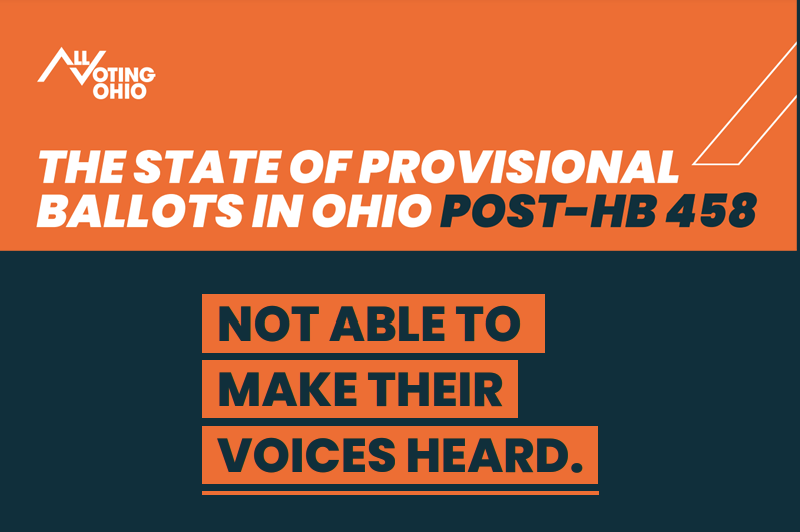
    On the heels of the 2024 primary election in Ohio, All Voting is Local Ohio has released The State of Provisional Ballots in Ohio Post HB 458. For the report, All Voting focused on provisional ballot rejection rates over the last several years in order to analyze the impact of House Bill 458, a bill that included a component that limits the number of acceptable IDs usable on Election Day. The report ultimately found that “there has been a substantial increase in provisional ballots being rejected due to voters failing to provide identification… In the November 2023 election alone, the percentage of provisional ballots rejected due to lack of identification jumped up to 28.4%. This is over 20 points higher than the year prior.”

     

    Kayla Griffin is All Voting is Local’s Ohio State Director

    “The data is clear: regressive ID laws negatively impact voters from all over the state and prevent their voices from being heard,” said All Voting is Local Ohio State Director Kayla Griffin. “Prior to the passing of HB 458, which has been dubbed one of the strictest voter ID laws in the nation, our elections were touted as being safe and secure, even by our Secretary of State Frank LaRose. This proves that not only did we not need a stricter voter ID law, but the one that passed has only created barriers to the ballot for Ohio voters.”


    The fact sheet can be read here.


    Background:
    On January 6, 2023, Gov. Mike DeWine signed HB 458 into law. The bill has severely restricted voting options for Ohioans by limiting the types of IDs being allowed to vote with, shortening deadlines for requesting and returning mail-in ballots, restricting access to ballot drop boxes, eliminating the day before Election Day for early voting, and more.


    After HB 458 was signed into law, voters are now required to use a state-issued driver’s license or state ID, U.S. passport, or military ID. Many other forms of identification that were once acceptable, such as bank statements and utility bills, are now banned from being utilized to prove voter identity while voting.


    For more information on voter ID access and voter ID-related barriers to the ballot, check out the Center for Democracy and Civic Engagement’s report: Who Lacks ID in America Today? An Exploration of Voter ID Access, Barriers, and Knowledge.


    ________________

    All Voting is Local (All Voting) is a 501(c)(3), nonpartisan, multi-state organization that fights against state and local voting policies that silence Americans’ voices, particularly for Black, Brown, Native American, and other historically marginalized communities — not just in election years, but every year. We were founded on the principle that the problems people face when trying to vote are solvable if state and local decision-makers are accountable to the communities they serve. All Voting is committed to working with our partners to advance fair, inclusive rules on voter registration, remove barriers that make it more difficult for people to vote, and ensure every vote counts. All Voting is on the ground in eight states: Arizona, Florida, Georgia, Michigan, Nevada, Ohio, Pennsylvania, and Wisconsin. Within these states, we are active in more than 60 counties that are home to over 21 million people of color. During the 2022 cycle, All Voting programs expanded access for more than 635,000 voters. Learn more at www.AllVotingisLocal.org 
  • Ohio State Leaders Must Allow Voter Education Collaboration

    Ohio State Leaders Must Allow Voter Education Collaboration

    CLEVELAND — In response to the Ohio Supreme Court’s rejection of the third proposed state map due to partisan gerrymandering, All Voting is Local Ohio State Director Kayla Griffin released the following statement: 

    Background: At the moment, state and local officials are preparing for a May 3 primary. On its face, Revised Code § 3501.054, known as the collaboration ban, purports to bar any public official responsible for administering or conducting an election from collaborating with any nongovernmental entity on activities related to voter registration, education, poll worker recruitment, or similar election-related activities.

    As there are no solidified maps at this time, elections officials are facing uncertainty while preparing for the upcoming primary, which is leaving voters in limbo. We are urging Senate President Matt Huffman and the Ohio Senate to allow elections officials and community groups to collaborate on voter education by repealing the collaboration ban immediately. Election officials and nongovernmental entities must not be held back from working together to mitigate the impact upon voters brought on due to the delay in finalizing congressional and state maps.  

    Voters all across the state could face last-minute poll consolidations, changes, and/or closures. As districts change, they will have little, if any, time to figure out what candidates are on the ballot. Our leaders and elections officials must allow for an all-hands-on-deck approach for accurate and fair preparation. This will only be possible if elections officials and community groups — including faith, service, and civic groups — are allowed to work together towards educating voters on last-minute changes and keeping voters up to date on information they may need to ensure they can accurately and fairly cast their ballot. 

  • Learn how voters with disabilities can still vote

    Learn how voters with disabilities can still vote

    AVIL Logo Press Release OH.jpg

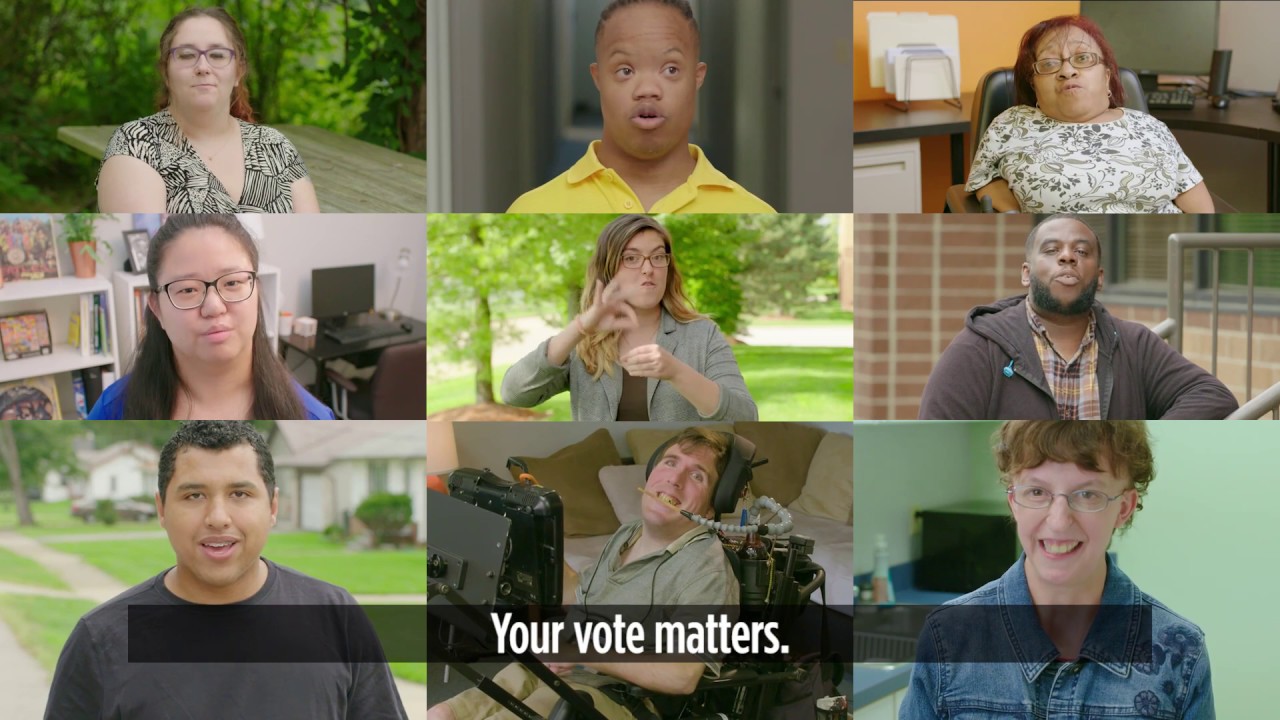
    “Voters with disabilities face very real barriers to the ballot and a critical piece of removing those obstacles is emphasizing that voters know they have the right to vote, regardless of their disability,” said Mike Brickner, State Director of All Voting is Local Ohio. “People may not realize that the law requires election officials to offer assistance and accommodations to any voter who needs it.”


    Disability Rights Ohio is mandated by the Help America Vote Act of 2002 (PL 107-252) to advocate for the rights of Ohio voters with disabilities and to assist the Secretary of State in fulfilling the Secretary’s obligations to those voters under the federal law. Through this program, Disability Rights Ohio:

    • educates individuals, communities, poll workers and boards of election about the voting rights of people with disabilities;
    • monitors and investigates complaints about polling place accessibility and privacy;
    • collaborates with other voting rights advocates for systemic change for people with disabilities;
    • participates in the implementation of provisions of the Help America Vote Act affecting people with disabilities; and
    • assists and represents individual voters in state-based administrative grievance processes.

    Resources

    The Ohio Secretary of State’s voter resource page: MyOhioVotes.com

    Forms to request to use Ohio’s remote absentee ballot marking tool for voters with vision impairments and other print disabilities: PDF version | HTML version

    Voter Rights and Assistance

    Early Voting

    Individuals with Disabilities and Voting: The Glancy Consent Order

    Is Your Polling Place Accessible?

    Protect Your Right to Vote

    Registering to Vote: Frequently Asked Questions

    Voting Rights: Frequently Asked Questions (February 2016)