Tag: Allison Russo

  • Ohio women lawmakers face misogyny, double standards when campaigning

    Ohio women lawmakers face misogyny, double standards when campaigning

    Despite challenges, they encourage more women to join the cause, ‘change the world’

    By:  Ohio Capital Journal

    When Kamala Harris was announced as the running mate for Joe Biden in the 2020 presidential campaign, the questions about her heritage, ethnicity and even eligibility for office came strongly from the opposition.

    Now that she’s running for the top job following President Joe Biden’s suspension of his reelection campaign, the emphasis on her skin color and her gender has come back fast and furious, just as swiftly as the enthusiasm for her campaign brings big fundraising numbers to the camp.

     A supporter holds a sign as members of the San Francisco Democratic Party rally in support of Kamala Harris. (Photo by Loren Elliott/Getty Images) 

    “The United States has conflicting traditions,” said Dr. Susan Burgess, distinguished professor emerita of political science at Ohio University. “One of rampant racism and misogyny, and another toward greater change and inclusion.”

    U.S. Sen. J.D. Vance of Ohio, the vice presidential candidate alongside former president Donald Trump, added to the rhetoric in a 2021 clip that has been brought back up in light of his new role. In the clip from a Fox News interview, he mentions the fact that Harris (and others) has not birthed any children of her own (she has two stepchildren with First Gentleman Doug Emhoff), and criticizes Democrats as “a bunch of childless cat ladies who are miserable at their own lives and so they want to make the rest of the country miserable, too.”

    The comments don’t surprise those who are a part of or study the history of political campaigns, where sexism and misogyny are “alive and well,” according to Ohio University history professor Dr. Katherine Jellison.

    “A man running for office, I’ve never heard comments about him being a childless cat/dog/fish person,” Jellison said. “These double standards are so blatantly on display and voiced whenever we have a prominent woman running.”

    ‘Attacks on the person, not the policy’

    For women currently in the state legislature, criticism based on gender and family is nothing new. Even in local campaigns, female politicians have been underestimated and questioned on their merits in ways they say they don’t witness in male campaigns.

    The Capital Journal contacted every female state representative and senator in the Ohio General Assembly to talk about their experience campaigning and working in politics. Included in the those who responded were the leaders of the minority side in both chambers, House Minority Leader Allison Russo and Senate Minority Leader Nickie Antonio.

    Consistently, those that responded said they have talked to constituents with all sorts of interests and issues, and worked with local campaigns or in favor of local issues before they worked their way up to state office. Also consistently, it was their community and their families that were their biggest advocates.

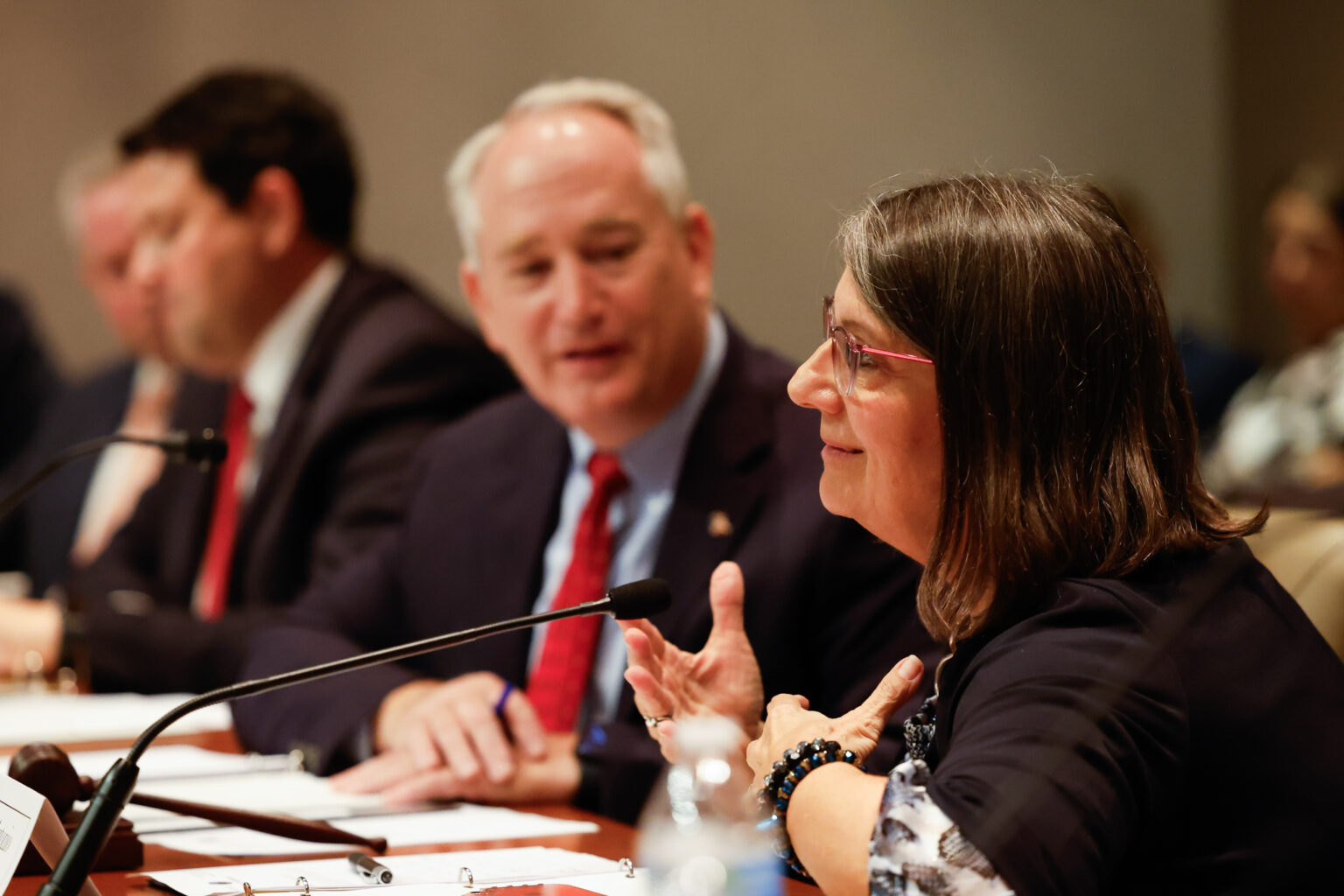
     House Minority Leader Allison Russo, left, talks with Senate Minority Leader Nickie Antonio, as they await the start of the Sept. 13, 2023, Ohio Redistricting Commission meeting.
    (Photo by Susan Tebben, Ohio Capital Journal.)

    Often, the women who are now representatives and senators didn’t intend to pursue politics until they were encouraged to or an issue motivated them to action. For most, misogyny wasn’t blatant, but the fact that they worked among a “boy’s club” was still highlighted.

    “People told me I couldn’t win because, you know,” Antonio told the Capital Journal. “And I would make them say what that was, and it was because I was a lesbian.”

    She faced the criticism of being a woman running for office, but called it a “false narrative that some people embrace, that I think they want to hang on to because frankly, I think we’re better at the job.”

    The first time state Rep. Sharon Ray, R-Wadsworth, campaigned back in the early 1990s, she said she knocked on the door of a man in her community. She explained that she was running for local office and had a conversation with him about local issues.

    “At the end he said, ‘You seem nice and all, but I would never vote for a woman,’” Ray said. “I had to tell him, ‘Well you’re in a bad way, because the two people going up for this are both women.’”

    State Rep. Bride Rose Sweeney fought against the fact that not only was she a woman running for office, but she was also a 25-year-old.

    “Most people, when I’d go to the door, thought I was selling Girl Scout cookies,” she said.

    Though she had worked as a staffer in the Statehouse and could point to quotes she’d written for elected officials, she still had to answer questions about her life experience.

    “I was shocked at how many times they didn’t think I was the candidate,” Sweeney said.

    As a single mom who had adopted her children from China, state Rep. Rachel Baker went through a similar struggle to other moms running for office, in that she balanced taking care of her family and campaigning.

    But when Chinese flags appeared around her campaigns signs in the yards of her supporters, put there anonymously in the dark of night, she saw a different side of campaigning.

    It’s such a paradox, (my children) are why I’m doing it, but it’s also why I’m scared to do it.

    – State Rep. Rachel Baker, D-Cincinnati

    Russo – who also ran for a congressional seat in the U.S. House in 2021 against U.S. Rep. Mike Carey – said when she talks to women who are contemplating running for office, putting themselves out there, and even more, putting their family in the public eye is high on the list of reasons not to.

    “It’s that piece that is the hesitation: Am I willing to open up my family for the level of scrutiny and potential for harassment,” Russo said.

    She and other moms who campaigned often had no choice but to bring their kids along as they talked to voters, because of partner work schedules or a lack of alternative child care. Sometimes, that worked to the candidate’s advantage.

    “Voters appreciated that because I’m a real person just trying to balance all the things in my life,” Russo said.

    Still, she was questioned about who would care for her children.

    “I’m pretty sure my male counterparts never got that question,” she said.

    Accidental advantages

    Dealing with heightened scrutiny as a woman in public office can be a struggle, but it can also be something that feels familiar to women who have faced challenges their entire lives and for which women already have coping mechanisms.

    “You can’t change your ethnicity or race or sex,” said state Sen. Paula Hicks-Hudson, D-Toledo. “I am who I am, and therefore you just have to deal with whatever those issues are.”

     COLUMBUS, Ohio — MAY 10: State Rep. Bride Rose Sweeney, D-Westlake, speaks during the Ohio House session, May 10, 2023, at the Statehouse in Columbus, Ohio. (Photo by Graham Stokes for Ohio Capital Journal)

    Nothing can prepare you for “people writing the most heinous things about you,” as Sweeney said of social media attacks, but for many woman public officials, life has prepared them to work harder than might be expected of others.

    “We think that we have to check certain boxes to run, and the reality is most of us are overqualified for office,” Russo said. “The woman candidates that I’ve worked with are incredibly good at putting together teams and networks, and that’s something that I think is very intuitive for women.”

    Antonio said women are often “auditioning long before we see ourselves in that role” as a leader in the community or in politics.

    State Rep. Beryl Brown Piccolantonio, D-Gahanna, feels like “it’s much more relevant that I’m a woman” with the issues in the political spotlight these days, including reproductive health.

    “I don’t think the legislature should be making decisions about people’s health, and the population that is directly impacted, I’m in it,” she said.

    The state representatives and senators who talked to the Capital Journal had their start in smaller ways, whether it be working in the Statehouse, opening their houses for local candidate meet-and-greets, knocking on doors for local campaigns or volunteering in their children’s events. It was those efforts that gave them the inside scoop on the issues that were important to their neighbors and melded them into the community to the point that they would be encouraged to make bigger moves.

    As a divorced young mom going to night school, one thing Ray liked to do with her free time was work on campaigns. In one Wadsworth race, the candidate left the race and after being encouraged to – and seeing an opportunity to help her son get his Boy Scout government badge – Ray decided to run.

    Antonio was miffed after a pitch for her daughter and other Lakewood kids to have a safe place to skateboard fell to an uninterested city council, when the opportunity occurred to her.

    “I came home and I said I’m sick of explaining what’s important in our community,” she said. “I could do that job, and I heard myself say I could do that job.”

    Looking forward, reaching back

    The road to November will be fast-paced for the Vice President and other women running for office, but there’s a sense of hope from public officials that more women will take up the cause, whether it be at a local, state or congressional level.

    The women of the Ohio legislature emphasized the need for anyone seeking the job of representing their community to meet with those constituents, whether at campaign events or at the residents’ front doors.

     State Rep. Beth Liston, D-Dublin, speaks at a rally to protect abortion rights. (Photo from General Assembly website.)

    “When you run for office, you’re often running to represent specific values, and you definitely learn the values of your constituents when you knock on doors,” said state Rep. Dr. Beth Liston, D-Dublin.

    Not only do you get to hear what the community needs from their legislators, but candidates get to explain their “why” when it comes to running.

    “I know because of the sacrifices that I’ve made to be in this position that some lives are better and people’s voices get heard because of the work that I do, and that gets me up and going everyday,” Sweeney said.

    Russo, Ray, Sweeney, Baker, Piccolantonio and Liston are all running for reelection to their districts in the November general election.

    And while the differences may be the focal point of campaigns against candidates in a political climate the public officials acknowledged is divisive and “terrifying” in some ways, those differences are reason enough for women to enter races.

    “I don’t think differences are deficiencies,” Hicks-Hudson said. “I think they add flavor.”

    It’s those who already hold office that can make the difference in whether or not more women come into the political space, too, according to Antonio.

    “I think it’s important for those of us who are in office to encourage it,” the minority leader said. “You have to reach back as you climb, and bring folks with you.”

    Comments like Vance’s “childless cat ladies” statement only serve as motivation for officials like Sweeney who see more women in office as the way to “change the world.”

    “To say that I have no stake in America, that I can’t contribute … (Vance) clearly hasn’t been around a lot of women and doesn’t respect them,” Sweeney said.

    Parsing through the messaging

    Throughout the next three months (and already this election cycle), voters will go through the process of making decisions about who and what they want to choose in the general election. That means parsing through the heavy load of information coming from all sides about how to feel about those candidates and issues.

    As elected officials who have read and distributed their fair share of campaign info, the legislators said it’s important to form opinions based on resources voters trust, and nonpartisan research like voting guides from the League of Women Voters of Ohio.

    But it’s also just as important to base decisions on the issues and values that matter most to each voter, and vet each candidate based on those specific values.

    “I personally think the voters should be able to interact with the people that are wanting to represent them,” Piccolantonio said.

    When it comes to the presidential race, self-reflection and a vision for the future come right along with diligent research.

    We are at a critical time for finding out what the integrity of candidates are. As we go forward with this presidential election, let’s look at what does this country need, what should we be looking for when it comes to our next leader.

    – State Sen. Paula Hicks-Hudson, D-Toledo

    While some people might be looking for parity in representation, Antonio said she thinks some are ready “for a majority of women to be running things to right the ship.”

    Right before Biden announced he would be abandoning his reelection bid, Antonio said she was pulled aside by a man who said, “Look, it’s time, can the women just … I know we’ve made a mess of this, could you just fix this for us?”

    The Senate minority leader said she smiled.

    “I looked at him and I said, ‘We’re working on it.”

    ______________

    Susan Tebben
    Susan Tebben

    Susan Tebben is an award-winning journalist with a decade of experience covering Ohio news, including courts and crime, Appalachian social issues, government, education, diversity and culture. She has worked for The Newark Advocate, The Glasgow (KY) Daily Times, The Athens Messenger, and WOUB Public Media. She has also had work featured on National Public Radio.

    Ohio Capital Journal is part of States Newsroom, the nation’s largest state-focused nonprofit news organization.

    MORE FROM AUTHOR

  • “Absurd and unnecessary,” Transgender Ohioans, allies react to House passage of bathroom ban bill

    “Absurd and unnecessary,” Transgender Ohioans, allies react to House passage of bathroom ban bill

    Getty Image

    The bill would require Ohio K-12 schools and colleges to mandate that students would only be able to use the bathroom or locker room that matches up with their gender assigned at birth.

    Jean Schmidt (R) who represents Ohio House District 62 is a co-sponsor of HB 183.
    Jennifer Gross (R) who represents Ohio District 45 is a co-sponsor of HB 183.
    Thomas Hall (R) who represents Ohio District 46 is a co-sponsor of HB 183.

    Bill Seitz (R) who represents Ohio District 30 is a co-sponsor of HB 183.

    Adam C. Bird (R) who represents Ohio District 63 is a Primary Sponsor of HB 183.

    BY:  – Ohio Capital Journal

    Transgender Ohioans and allies are outraged the Ohio House passed a bathroom ban bill at the 11th hour of a marathon session Wednesday night before going on summer break.

    The bill would require Ohio K-12 schools and universities to mandate that students only be able to use the bathroom or locker room that matches their gender assigned at birth.

    “Hate mongers in Columbus want to see trans and gender nonconforming Ohioans stripped of their right to exist in public spaces. They can make our lives harder, but they can’t make us not a part of this state,” TransOhio Executive Director Dara Adkison said in a statement.

    Sam Shim, the parent of two transgender high school students, said his biggest concern with the bathroom ban bill is how lawmakers don’t seem to be focused on students.

    “It seems like it’s a political stunt designed to help with their messaging when they go back out on the campaign trail,” Shim said. “My kids should be able to go to the bathroom without worrying about being accosted.”

    Honesty for Ohio Education said this bill would harm transgender students and families.

    “We are deeply disturbed that extremists in the state legislature prioritized the passing of this transphobic and hateful legislation over anything that would help Ohioans,” Christina Collins, Executive Director at Honesty For Ohio Education, said in a statement.

    Trans Allies of Ohio echoed comments House Minority Leader Allison Russo, D-Upper Arlington, said Wednesday night on the House floor.

    “We have school districts that can’t afford busses or find teachers, colleges that are losing students and closing their doors, and over 505,000 Ohio children going hungry every day,” Trans Allies of Ohio said in a statement. “But attacking less than 1% of the population has become a priority.”

    “HB 183 is absurd and unnecessary, and the passage of this bill through the Ohio House in the late hours of the night is nothing short of targeting and bullying behavior. Our legislators make it hard to feel proud of being an Ohioan,” Jennifer Kuhn, spokesperson for Kaleidoscope Youth Center, said in an email.

    Equality Ohio said the bill undermines the dignity and rights of transgender and gender diverse Ohioans.

    “Across races, backgrounds, and genders, we all deserve the dignity of safely existing in public life and using the most basic of public accommodations,” Morgan Zickes, Equality Ohio’s public policy manager, said in a statement. “We saw extremists in the General Assembly resort to eleventh-hour back door legislative efforts to ensure that transgender and gender expansive Ohioans are stripped of this fundamental decency.”

    Ten states have laws that limit bathroom access that correspond with gender identity in K-12 schools, according to the UCLA Williams Institute 2024 report on the impact of anti-transgender legislation on youth. An estimated 34,800 transgender students ages 13-17 live in those states.

    However, those laws have been challenged in Florida, Oklahoma, Idaho and Tennessee.

    How did the bill pass?

    The bathroom ban bill (House Bill 183) was favorably voted out of the House Higher Education Committee in April, but wasn’t on the agenda for Wednesday’s House session — the last one before lawmakers went on summer break.

    House Republicans used Senate Bill 104, which revises the College Credit Plus Program, as the vehicle to pass the transgender bathroom ban.

    Rep. Adam Bird, R-New Richmond, one of the sponsors of H.B. 183, introduced the amendment that ended up weaving his bill into S.B. 104. Because of the changes, the bill now goes back to the Senate to concur.

    TransOhio called adding H.B. 183 to S.B. 104 an “underhanded move” that  “undermines the legislative process.”

    Since the lawmakers are on summer break, the bill likely won’t go before the Senate until the fall.

    “When the Senate returns from summer recess we urge everyone to pressure the Senate to not concur, and for the Governor to veto,” Adkison said in a statement. “HB 183 is not law today, nor should it ever become so.”

    Transgender bills in Ohio

    There are a handful of transgender bills at various spots on the way to becoming a law.

    Ohio’s gender-affirming care ban for trans youth (House Bill 68) is the closest to becoming law, but is currently tied up in court. A Franklin County judge placed a temporary restraining order on the bill that will be in effect until the conclusion of a July hearing.

    House Bill 8 has also seen movement in the General Assembly lately and it would force educators to out a student’s sexuality to their parents, require public schools to inform parents about sexuality content materials ahead of time and give them the option to request alternative instructions.

    H.B. 8 passed the House last year and just had a fourth hearing in the Senate Education Committee.

    Follow OCJ Reporter Megan Henry on X.


    Megan Henry
    MEGAN HENRY

    Megan Henry is a reporter for the Ohio Capital Journal and has spent the past five years reporting in Ohio on various topics including education, healthcare, business and crime. She previously worked at The Columbus Dispatch, part of the USA Today Network.

    Ohio Capital Journal is part of States Newsroom, the nation’s largest state-focused nonprofit news organization.

    MORE FROM AUTHOR

  • Ohio Minority Leaders Nickie Antonio and Allison Russo are navigating a Republican supermajority

    Ohio Minority Leaders Nickie Antonio and Allison Russo are navigating a Republican supermajority

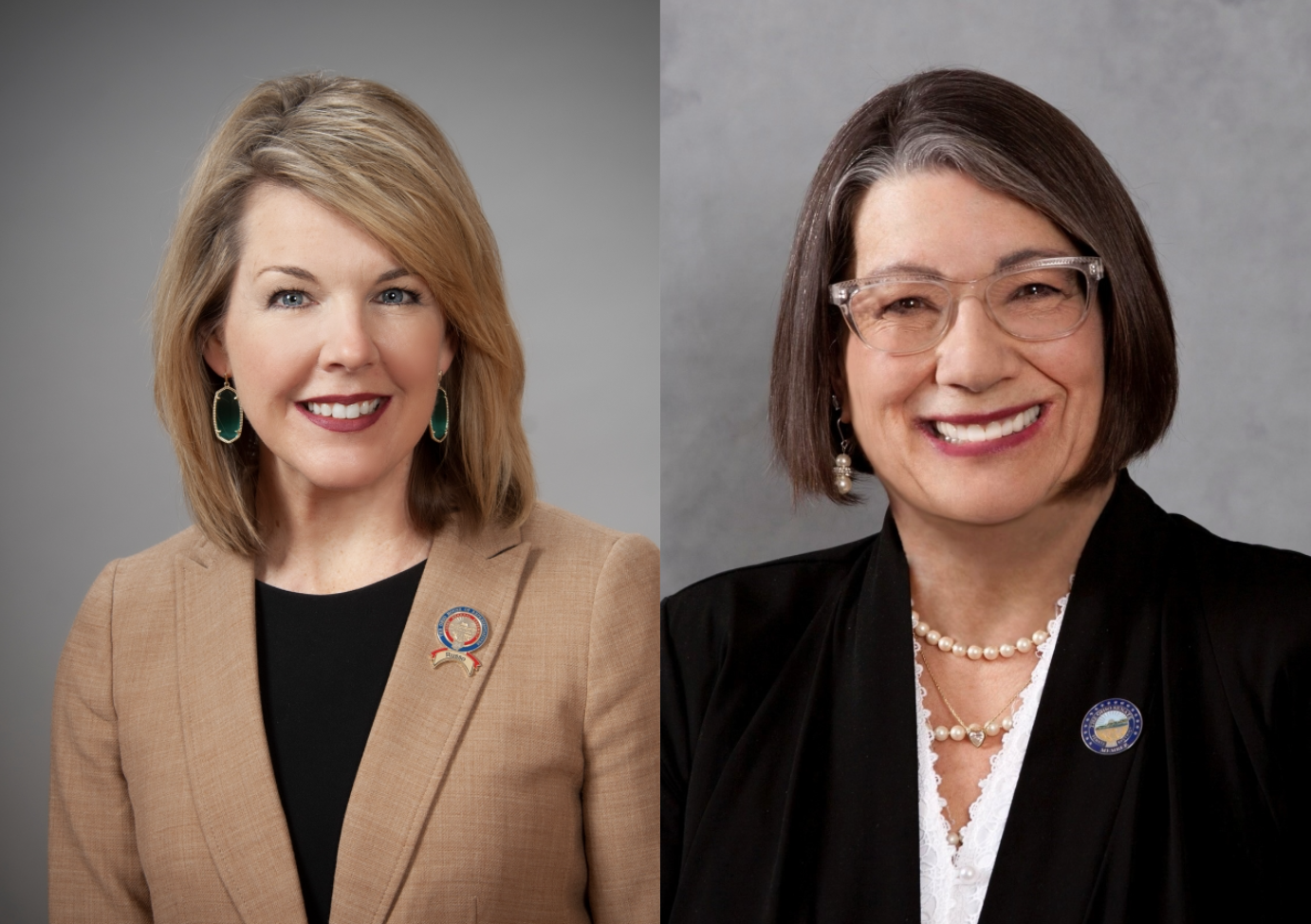
    Ohio House Democratic Leader Allison Russo, left, and Ohio Senate Democratic Leader Nickie Antonio, right. (Official photos from the Ohio Statehouse website.)

    Ohio Senate Minority Leader Nickie Antonio became leader in 2023 and Ohio House Minority Leader Allison Russo became leader in 2022.

    BY:  Ohio Capital Journal

    For the first time since 2008, two women are serving as the minority leaders of their caucuses in the Ohio Statehouse.

    Ohio Senate Minority Leader Nickie Antonio, D-Lakewood, became leader in 2023 and Ohio House Minority Leader Allison Russo, D-Upper Arlington, became leader in 2022.

    “I couldn’t be more proud to have two women leading the caucuses, but more importantly, beyond their gender, they’re just both really talented legislators and leaders,” said Ohio Democratic Chair Liz Walters. “They have different, but I think equally effective leadership styles that allow them to keep their caucuses together, and make sure the needs of all their members are met.”

    The last time two women served as minority leaders was during the 127th General Assembly (2007-2008) when then-state Representative Joyce Beatty and state Senator Teresa Fedor were the minority leaders.

    Antonio and Russo are navigating a Republican supermajority.

    “I think they really work well and balance each other, which goes a long way towards making the Democrats as a whole very effective,” Walters said. “When they work together, right across chambers, it helps overcome a lot more of the obstacles and make them a more formidable force.”

    But neither of them initially had political aspirations.

    Antonio’s path to Senate Minority Leader

    Antonio, 68, first got involved in politics at the local level when she advocated for a skatepark in Lakewood for her daughter. She went to city council, but was disappointed the council members didn’t seem to be paying attention to her.

    “I could do that job,” she remembered saying when she got home that night.

     COLUMBUS, Ohio — MAY 31: Senate Minority Leader Nickie Antonio, D-Lakewood, talks to reporters after the Ohio Senate session, May 31, 2023, at the Statehouse in Columbus, Ohio. (Photo by Graham Stokes for Ohio Capital Journal) 

    But she ultimately decided to run for office in 2004 after Ohio passed a constitutional amendment defining marriage as between a man and a woman.

    That caused many of their friends to move out of state, but Antonio and her now wife Jean committed to staying in Ohio to make it better.

    “We felt like LGBT folks were being attacked,” she said. “Certainly we were being marginalized and told that we were less than.”

    There was an opening on Lakewood City Council in 2005, so she ran and ended up serving two terms. Then the House seat for her district opened up in 2010 so she ran and got elected — making her the first openly gay person to be elected to the Ohio General Assembly.

    “A lot of people didn’t really know how to talk about it,” she recalled when she was elected in 2010.

    She married her long-time partner Jean in 2015 after the Supreme Court legalized same-sex marriage.

    Antonio served for eight years in the Ohio House of Representatives before being elected to the Ohio Senate in 2018, where she once again made history by being the first openly gay person to be elected Senate Minority Leader.

    “One of the things I appreciate most is her tenure as a public servant,” Walters said.

    People will often pull Antonio aside and tell her about a family member who is part of the LGBTQ community.

    “I’m happy that I’m able to have those conversations with folks because I think every conversation that’s had opens the door for some understanding and … I really do believe it makes a change in the long run,” she said.

    Ohio GOP lawmakers have introduced a slew of anti-LGBTQ legislation this General Assembly and Antonio will often speak up against those bills on the Senate floor. Notable among them is House Bill 68, which bans transgender minors from receiving gender-affirming medical care. Ohio Gov. Mike DeWine vetoed the bill, but the House and the Senate overturned it. The law is set to take effect on April 23, but the ACLU of Ohio will file a lawsuit in an attempt to stop the ban on gender-affirming care.

    “I’m definitely where I am supposed to be and doing what I’m supposed to be doing,” she said. “It’s really important to me in the room where it happens. And as the minority leader, I am in the room where it happens.”

    Some highlights of her career so far include working on bills that helped closed the loophole for people who are adopted to get original information, cut down on the response time for people experiencing a stroke and allowing pharmacies to give vaccines.

    Before launching her political career, she taught students with behavioral problems and learning disorders for 10 years in Cleveland.

    “I loved those kids and I always tell people that I learned everything I needed to know about the legislature and dealing with my colleagues in the legislature from troubled youth because you have to have a sense of humor, never show fear, really like people and make it part of your mission to find some kernel of commonality to start with to be able to communicate with them,” she said.

    Russo’s path to House Minority Leader

    Russo, 47, never intended to be in politics. She grew up in Mississippi and moved around quite a bit with her husband who was active duty military before deciding to put roots down in Ohio to be close to her in-laws.

    She worked in health policy for more than twenty years, but a couple key moments lead to her to run for office.

     COLUMBUS, Ohio — SEPTEMBER 20: House Minority Leader Allison Russo, D-Upper Arlington, speaks at the Ohio Redistricting Commission meeting, September 20, 2023, in the Lobby Hearing Room at the James A. Rhodes Office Tower in Columbus, Ohio. (Photo by Graham Stokes for Ohio Capital Journal) 

    The first was the 2016 Presidential Election where Donald Trump defeated Hillary Clinton.

    “2016 got those of us who had always been very active voters off the sidelines and into the arena in a way that probably no other election has,” she said.

    The following year, there were efforts to repeal the Affordable Care Act and freeze Medicaid expansion enrollments in Ohio, so she worked with folks doing advocacy work at the state and federal level. People encouraged her to pursue politics, but she brushed that aside since she was enjoying her career and her youngest child was less than a year old.

    But she ultimately decided to throw her hat in the ring when the House seat in her district opened for the 2018 election.

    “I thought, well, it’s now or never,” she said. “I knew absolutely nothing about running a campaign.”

    Russo, a mother of three, often had her children with her when she was campaigning and knocking on doors. She ended up not only winning the election, but flipping the district seat blue.

    She ran for Congress in 2021, but lost to U.S. Rep. Mike Carey 58% to 42%. The next year, she was elected House Minority Leader.

    Walters said Russo has “an aptitude and innate ability to lead her caucus and maneuver, playing chess every day rather than checkers.”

    As minority leader, Russo tells the members of her caucus they need to cultivate relationships and find common ground in order to be successful.

    “In a super minority, you are constantly having to figure out how to navigate this place, so that you can be effective and it’s not always in big ways, like you pass a big massive piece of legislation,” Russo said. “It can be in little ways— you get part of your legislation into a bill, you make bills better, you get things into the budget, you have wins there.”

    But sometimes finding common ground can be tricky.

    “You also don’t want to sacrifice your values,” she said. “You also want to be fearless in calling (things) out when needed. Don’t pull your punches.”

    Russo feels fortunate to live about 15 minutes away from the Statehouse, so she can run home to take one of her kids (ages 17, 14 and 7) to practice and then come back, if needed, for an event at the Statehouse later that night.

    “I realize that’s a luxury,” she said. “In some ways, it’s my proximity to the Statehouse that allows me to do this job with three kids at home and I know that that’s not normal for most people who are in these roles.”

    Advice for future women politicians

    Russo’s advice for women looking to get into politics is to not wait around for approval to run for office.

    “As women, we’re looking for someone to give us permission to take on these leadership roles or to run for office or whatever — you do not need that,” she said.

    Antonio’s suggestion to women who are in politics or who want to go into politics is to not take anything personal.

    “There are definitely things that make you feel like you get a gut punch some days,” she said.

    Something that can turn women away from politics is the lack of privacy, Russo said

    “Politics is an industry that’s tough for anyone, but it can be especially tough for women,” Walters said. “It’s a field that’s traditionally dominated by men with lots of strong opinions and feelings. … Leaders Russo and Antonio work twice as hard as their counterparts while overcoming unique obstacles. Even though they shouldn’t have to.”

    What’s next for Antonio and Russo?

    Antonio is term-limited and she’s not sure what she’ll do after her time in the Statehouse is up.

    “What I do know is I do not intend to go back to the House,” she said.

    Russo will be up for re-election for a fourth term this November. If she wins, she’ll be term-limited in the House. So what’s next after her time in the House is up?

    “To be determined,” she said. “There’s a lot of this that’s out of my control. And then a lot of this is about timing, and often many unknown factors.”

    And as for a potential run for Ohio Governor in 2026?

    “I know there’s been a lot of chatter in that space,” she said. “Let’s get through 2024 first and we’ll see what happens.”

    Follow OCJ Reporter Megan Henry on X.


    Megan Henry
    MEGAN HENRY

    Megan Henry is a reporter for the Ohio Capital Journal and has spent the past five years reporting in Ohio on various topics including education, healthcare, business and crime. She previously worked at The Columbus Dispatch, part of the USA Today Network.

    Ohio Capital Journal is part of States Newsroom, the nation’s largest state-focused nonprofit news organization.

    MORE FROM AUTHOR

  • Ohio Redistricting Commission co-chair defends Dem teamwork, despite process issues, criticism

    Ohio Redistricting Commission co-chair defends Dem teamwork, despite process issues, criticism

    BY:  – Ohio Capital Journal

    Redistricting concluded on Tuesday with the adoption of new Statehouse maps that had unanimous approval from all members of the Ohio Redistricting Commission.

    The vote represents the first bipartisan agreement on maps, though the bipartisan agreement was lopsided, with only two Democrats on the current seven-member commission.

    The maps give the GOP 61 of 99 seats in the Ohio House, and all but 10 of the 33 seats in the Senate. The maps show three Republican toss-ups and one Democratic toss-up in the Senate, and eight Dem-leaning toss-ups in the House, with the GOP seeing three toss-ups.

    Both of the Dem members, Senate Minority Leader Nickie Antonio and House Minority Leader Allison Russo maintained during the meeting and after receiving criticism for their “yes” votes on the maps that the votes represented support for a future without a commission led by elected officials, and toward more redistricting reforms.

    “I believe at the core of all this, the way we draw our district lines have to change,” Antonio, who was also a co-chair on the commission, told the OCJ on Thursday. “Because I do not believe even folks who are following the rules of a quorum should be doing it the way we’re doing it.”

    Antonio’s compatriot, House Minority Leader Allison Russo prefaced her “yes” vote on Tuesday night by saying she was voting not because she supported the maps, but more because she wanted to take the process out of the hands of the current commission.

    “Every step of this process has been nothing but political,” she said in a statement. “Every negotiating tactic has come with a political angle. Every district we’ve discussed has been viewed as a political pawn.”

    Antonio said there was unity within the two Democrats on the commission, and in her mind, she and Russo had to agree before Antonio would go forward with a “yes” vote.

    “I really believed that the only way I would consider a vote in the affirmative is if we were on the same page,” Antonio said.

    The Senate minority leader defended her decision to vote for the maps, because moving forward without the attempt at negotiations with the majority GOP party would have ended with a much worse set of Statehouse maps.

    “What we were presented … was a map that would have devastated us even more, and put us in a further minority than we are right now,” she said.

    Faced with the idea of an even worse set of districts in a broken redistricting system, Antonio said she and Russo set their sights on stemming the bleed.

    Negotiation for the two-person Dems versus the five-person GOP was admittedly unbalanced, but Antonio also said there was “an openness to sit down and talk” from the members on the other side of the aisle.

    “There was give and take,” Antonio said. “I do believe we were listened to.”

    What came from the negotiations was a change in lines in Cuyahoga County, something Antonio in particular pushed for, but also three Senate districts – 16, 6, and 24 – that she says are more competitive, and three more – 27, 18, and 3 – that she foresees as opportunities for Democrats in the future.

    “Right off the bat, I’m telling you, this advances our representation and our competitiveness,” she said.

    The Senate minority leader said she looks forward to returning to Ohio as a state where there is “a legislative body that swings with the pendulum of issues and population,” but with the system in place on Tuesday, she felt she had to play with the cards in her hand.

    “I had to deal with today, and today my job was to do the best that I could for the people of Ohio,” Antonio said.

    Map criticism

    The maps passed on Tuesday night received criticism similar to that of the previous maps, which did not have the support of the Democratic members of the commission.

    The Brennan Center for Justice at New York University’s law school, which has been a party in lawsuits challenging the previous maps, claim the maps once again violate the state constitution and “deny Ohioans fair representation.”

    “This set of maps and its predecessors say one thing: the politicians on the Ohio Redistricting Commission from both parties can’t be trusted, not to follow the state constitution or honor basic fairness in elections,” said Yurij Rudensky, who is senior counsel for the Brennan Center’s Democracy Program, in a statement following the map adoption.

    Members of the Ohio NAACP, the Ohio Organizing Collaborative and the Ohio Unity Coalition called out the maps for what they see as a lack of inclusion for communities of color, which leads to separated communities and voting districts that split common interests.

    “By ignoring the racial impact of these new maps on these citizens, the commission has done a grave disservice by not assuring that districts are drawn that do not disenfranchise some voters at the expense of others,” said Petee Talley, executive director of the Ohio Unity Coalition, in a statement.

    As yet, a plan for litigation hasn’t been confirmed by any advocacy group, though Freda Levenson, legal director for the ACLU of Ohio said the group is “considering all existing options to obtain fair maps for Ohioans, and litigation is not off the table.”

    Rudensky cited former Ohio Supreme Court Chief Justice Maureen O’Connor in saying “the solution requires removing the power to draw these maps from the people who benefit most from them.”

    “Litigation can only do so much if the politicians responsible for maps refuse to follow the law,” Rudensky said.

    Advocacy groups may end up suing over the maps, but for now they are still more focused on the effort to get more redistricting reform on the ballot.

    “We are working together on an amendment to ban politicians from map drawing so that Ohio voters get the impartial districts they fundamentally deserve, and lawmakers will be responsive to the people rather than mega-donors and lobbyists,” said Catherine Turcer, executive director of Common Cause Ohio.

    How long will the maps last?

    The potential ballot initiative could bring change by 2024, including an independent redistricting commission to redraw maps, but it will have to jump through a few hoops before it gets to voters.

    Ohio Attorney General Dave Yost has considered and rejected the proposed ballot initiative twice now, but a third version has been submitted to Yost, and is awaiting a decision.

    The maps that were passed most recently could be impacted if a ballot initiative were passed by voters, but there was confusion even among commission co-chairs as to whether the maps would last for the rest of the decade, even with bipartisan agreement.

    “There are people who believe that if both Democrats vote for the map it will be an eight year map, there are also people that believe that you can’t have any longer than a 2-year map no matter who votes for it, because that chance to have a longer map passed in the first sitting,” Commission co-chair and Auditor of State Keith Faber said on Tuesday morning.

    The chance of litigation also could throw the map’s future into uncertainty, but the Ohio Constitution’s current language, as much as it could regulate redistricting, matches the 8-year opinion.

    “My reading of Article XI sections 8 and 9 suggest that the maps passed will indeed be in operation until 2030,” Collin Marozzi, deputy policy director for the ACLU of Ohio, told the Capital Journal. “It is clear that the current Article XI did not contemplate the scale and scope of failure of the commission to follow the process as approved by Ohio voters, so admittedly it is a little gray.”


    Susan Tebben
    SUSAN TEBBEN

    Susan Tebben is an award-winning journalist with a decade of experience covering Ohio news, including courts and crime, Appalachian social issues, government, education, diversity and culture. She has worked for The Newark Advocate, The Glasgow (KY) Daily Times, The Athens Messenger, and WOUB Public Media. She has also had work featured on National Public Radio.

    MORE FROM AUTHOR

  • Dems push for legislation after OSU team doctor has charges dismissed for sexually assaulting hundreds of student athletes

    Dems push for legislation after OSU team doctor has charges dismissed for sexually assaulting hundreds of student athletes

    BY: SUSAN TEBBEN and Ohio Capital Journal

    Days after lawsuits against a former OSU team doctor were dismissed because of the statute of limitations, Democratic state representatives want action to extend time and help to sexual assault survivors.

    A federal judge didn’t dispute the facts of the case in which Dr. Richard Strauss was accused of sexually assaulting hundreds of student athletes, but said too much time had passed to continue the lawsuits.

    State Reps. Kristin Boggs, D-Columbus, and Allison Russo, D-Upper Arlington, say the Strauss case is a major example of why sexual assault laws in the case need to change.

    “Trauma — especially the kind of trauma experienced by those Strauss abuse—doesn’t have a statute of limitations,” Russo said in a statement. “Therefore, I fail to see why our legal system should have a statute of limitations or damages cap for such horrific acts.”

    Boggs and Russo are calling on the House to bring up legislation that has stalled after being introduced last April.

    House Bill 199 would create an exception to the legal deadline for filing lawsuits if the case involves instances of rape, felonious assault, aggravated assault, assault, or negligent assault.

    The bill is a reintroduction of a bill Boggs introduced in the last General Assembly, which failed with lack of support from the Republican majority. The current bill still only has Democratic support, making passage difficult in the sustained GOP supermajority.