Tag: Amanda Bcker

  • Trump’s ‘pause’ on government assistance could put early learning and nutrition programs in danger

    Trump’s ‘pause’ on government assistance could put early learning and nutrition programs in danger

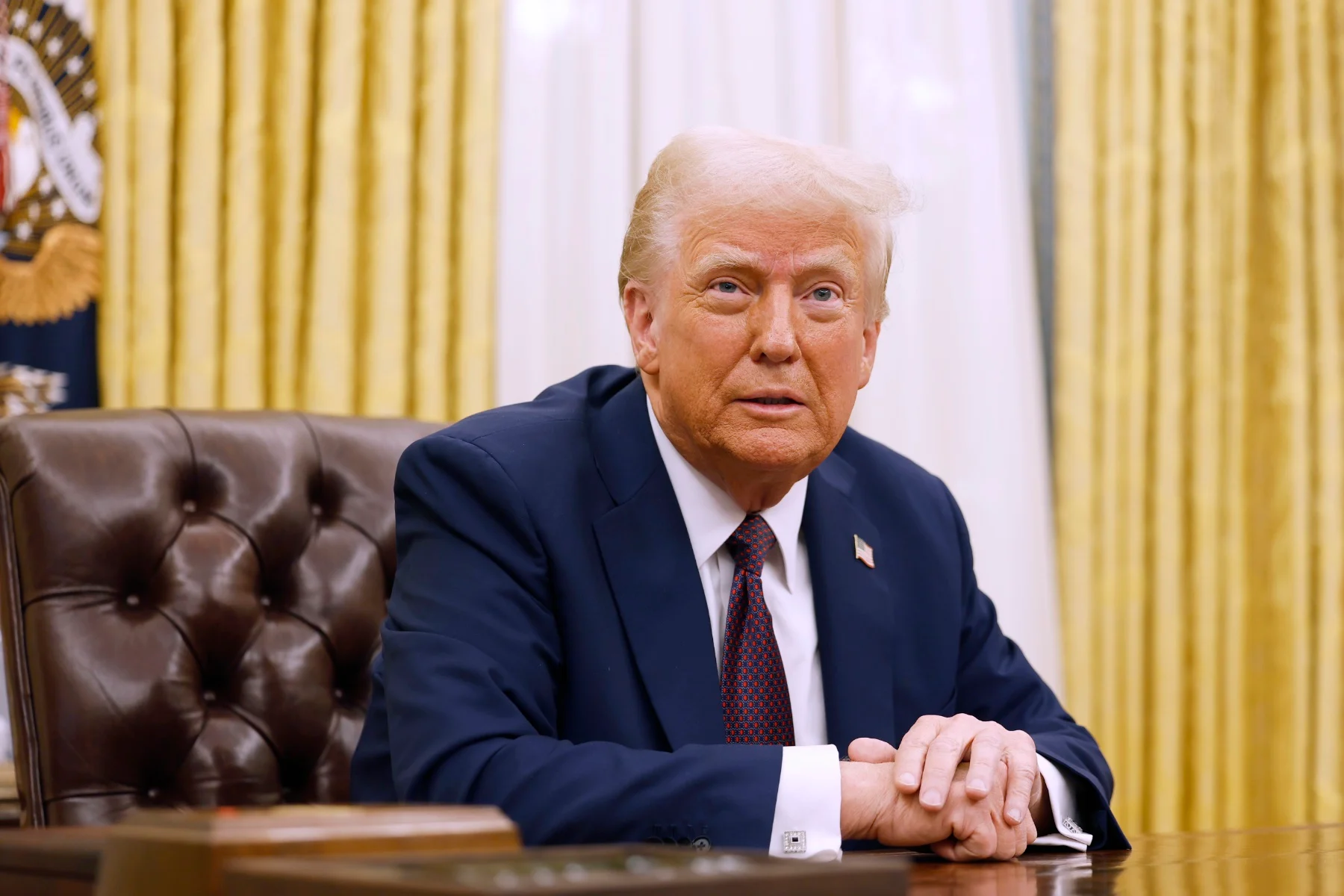
    (Photo by Anna Moneymaker/Getty Images)

    Originally published by The 19th

    As widespread confusion continues over the funding freezes, programs serving women and children could be hit particularly hard.

    Read Amanda Becker’s Loveland connection in her Bio below.

    by Amanda Becker

    Editor’s note: The Office of Management and Budget on Wednesday rescinded its memo directing a freeze on federal grants and loans, one day after a federal judge temporarily blocked it. White House Press Secretary Karoline Leavitt said on X of Wednesday’s OMB memo: “This is NOT a rescission of the federal funding freeze. It is simply a recession of the OMB memo. Why? To end any confusion created by the court’s injunction. The President’s EO’s on federal funding remain in full force and effect, and will be rigorously implemented.”

    The Trump administration tried to quell backlash on Tuesday to a directive that all federal agencies should “temporarily pause” all federal assistance, which advocates worried would hit social safety net programs like early learning and nutrition assistance programs.

    Programs serving women and children would be hit particularly hard by a funding pause, advocates said, since nearly all of them are part of the government’s discretionary spending and are frequently put on the chopping block by fiscal conservatives.

    Trump’s Office of Management and Budget (OMB) sent a letter Monday to federal agencies directing them to pause “all activities related to obligation or disbursement of all Federal financial assistance” by 5 p.m. Tuesday. The pause, the letter continued, “will provide the Administration time to review agency programs and determine the best uses of the funding for those programs consistent with the law and the President’s priorities,” specifically President Donald Trump’s initial executive orders, including those related to diversity, equity and inclusion (DEI) and “woke gender ideology.”

    6 ways you can positively impact your community. Read it now -->


    The OMB letter, which was first reported by independent journalist Marisa Kabas and later reviewed by The 19th, unleashed chaos across Washington. Calls flooded into Capitol Hill offices from both constituents and federal workers as agencies tried to sort out what the totality of its impacts might be in the coming weeks. On Tuesday, a second OMB memo, obtained by The Washington Post, attempted to clarify Monday’s letter but did little to reduce confusion.

    Tuesday’s memo stated that “the pause does not apply across the board. It is expressly limited to programs, projects and activities implicated by the President’s Executive Orders.” It stated that the Supplemental Nutrition Assistance Program  (SNAP), colloquially known as food stamps, will not be paused, nor will Medicaid, the government’s health insurance program for low-income people. The Tuesday memo was not signed, however, and experts told The 19th that agencies were still operating with a high degree of uncertainty, given that it also stated that “funds for small business, farmers, Pell grants, Head Start, rental assistance and other similar programs will not be paused” unless they related to Trump’s executive orders, which have wide-ranging application.

    Specifically, programs “implicated by the executive orders, including, but not limited to, financial assistance for foreign aid, nongovernmental organizations, DEI, woke gender ideology, and the green new deal,” according to Monday’s letter.

    The White House did not respond to a request to discuss which programs will be most affected by the pause or to confirm that Tuesday’s unsigned directive superseded Monday’s, which was signed by OMB’s acting director, Matthew Vaeth.

    Democrats are already preparing to challenge the pause directive in court. A coalition of nonprofit organizations that includes the American Public Health Association and SAGE, which advocates for older LGBTQ+ people, filed for a temporary restraining order.

    Any pause could have outsized impacts on some initiatives. Nutrition programs for women and kids, SNAP and WIC, are likely to run into funding issues within 60 to 90 days if subjected to the pause, experts said.

    Another program that could potentially be immediately impacted is Head Start, the early learning program for children from birth to age 5, experts said Tuesday.

    Federal funds go directly to specific Head Start programs, which provide early childhood education via public preschool programs, as well as at home by offering support for expectant parents. These programs are funded for a year at a time but staggered, typically tied to the start of each school year in a given state. If a program received its year’s worth of funding on January 1, it is good for 11 more months, but if a program is due to receive its yearly funding on February 1, that money will likely be delayed or not show up if there are funding pauses.

    At this point in the calendar year, states are also reporting back to the federal government, which partially funds the Head Start program, to balance their books by refunding unspent money or requesting reimbursement. A pause could impact those reimbursements, according to those familiar with the funding process. It is also the time of year when programs begin budgeting and hiring for the next school year, and having unfunded programs could lead to problems recruiting and retaining both educators and students.

    “Some facilities will be fine, others will have to shutter — unless a billionaire comes forward to help them out,” said Bobby Kogan, a senior director of federal budget policy at the liberal-leaning Center for American Progress, who worked at the OMB during the Biden administration.

    Amid the Trump administration’s attempt to clarify the scope of impact, Democratic Sen. Chris Murphy claimed the reimbursement system for the Head Start program in his home state of Connecticut had been shut down.

    “Preschools cannot pay staff and will need to start laying off staff very soon and sending little kids home,” he wrote on X.

    Some grantees under the federal Title X program, which supports family planning clinics that serve low-income people, are already preparing for a possible lapse in funding. Title X was created under President Richard Nixon and disburses hundreds of millions of dollars each year to fund clinics reaching millions of Americans, largely women.

    “We will rely on private resources for the time being, but this is not a long-term solution,” said George Hill, president of Maine Family Planning, the state’s sole Title X grantee. “If there is litigation on this matter, we will collaborate in whatever useful way we can.”

    Senate Minority Leader Chuck Schumer and other Democratic leaders called for their Republican colleagues in the Senate to hit pause on confirmation proceedings for OMB nominee Russell Vought, who helped Trump withhold congressionally appropriated funds during the Republican president’s first term. Vought has taken the position that presidents have the authority to redirect or refuse to spend funds appropriated by Congress, which under the Constitution holds the power of the purse.

    White House press secretary Karoline Leavitt said during a briefing Tuesday with reporters that she had spoken with Vought, “and he told me to tell all of you that the line to his office is open for other federal government agencies across the board, and if they feel that programs are necessary and in line with the president’s agenda, then the Office of Management and Budget will review those policies.”

    When a reporter at the briefing asked if any Medicaid recipient would see a cutoff because of the funding pause, Leavitt said: “I’ll check back on that and get back to you.”

    Medicaid was not expected to be immediately affected by the pause, even before Tuesday’s follow-up memo, because its funding mechanism makes it a de facto entitlement program like Social Security or Medicare, though the long-term impacts of the pause are unknown, experts said.

    Even still, Democratic Sen. Ron Wyden said that his staff had confirmed that Medicaid portals were down in all 50 states following the Monday night pause directive. The White House said they were aware of the outage and the portals should be back online shortly.

    “This is funding that communities are expecting and this memo is creating chaos and confusion about whether these resources will be available to them,” Democratic Sen. Patty Murray said during the news conference. “Entire budgets and payrolls across the country are carefully hinging on these resources, we’re talking about our small towns, our cities, our school districts, our universities and a lot more: Will local Head Start facilities get their funding?”

    Additional reporting by Shefali Luthra

  • Trump’s words changed Springfield, Ohio. Its Haitian community is bracing for what’s next.

    Trump’s words changed Springfield, Ohio. Its Haitian community is bracing for what’s next.

    (Emily Scherer for The 19th; Getty Images; AP)

    Originally published by The 19th

    Read Amanda Becker’s Loveland connection in her Bio below.

    by Amanda Becker

    SPRINGFIELD, OHIO — Several minutes into President Donald Trump’s inauguration speech on Monday, as he began talking about immigration, Yvena Jean François dug through a desk drawer for a notebook and pen.

    “We now have a government that cannot manage even a simple crisis at home … it fails to protect our magnificent law-abiding American citizens but provides sanctuary and protection for dangerous criminals, many from prisons and mental institutions that have illegally entered our country from all over the world,” Trump said, repeating a frequent 2024 campaign claim for which he has not offered evidence.

    Jean François jotted down a thought in the notebook on her lap, the words “FUN STUFF” printed on its colorful cover.

    Trump carried on: “I will declare a national emergency at our southern border. All illegal entry will immediately be halted and we will begin the process of returning millions and millions of criminal aliens back to the places from which they came.”

    Jean François wrote some more.

    Once Trump finished speaking, Jean François went over the main takeaways she planned to share on an upcoming episode of the podcast she hosts out of her home studio in Springfield, Ohio, a city of roughly 60,000 residents that became a household name during the 2024 presidential campaign as misinformation and lies spread about its Haitian residents.

    “The illegal people will be first to go in mass deportations,” she said.

    The exact words Trump used were important to Jean François, who is also a member of Springfield’s Haitian community. She heard “dangerous criminals,” “entering illegally,” “prisons and mental institutions” and “criminal aliens” — and she started to relax. “The president said the first people they’re going to put out are the criminal people who already have deportation papers,” she noted. And that, she said, does not describe her or most other Haitians she knows in this southwestern Ohio city between Dayton and Columbus.

    Like Jean François, Springfield’s Haitian migrants were drawn here by the potential for good-paying jobs in a place that had more jobs than workers who were able to do them. Many of these migrants have what’s called Temporary Protected Status, or TPS, which gives them the right to live and work in the United States legally and shields them from deportation for a set period of time. They arrived in Springfield as the country emerged from the worst of the COVID-19 pandemic, from states like Florida and New York, which are home to the largest communities of Haitian Americans in the United States.

    Yvena Jean François sits at her desk in her podcasting studio on Inauguration Day, January 20, 2024, in Springfield, Ohio. She wears a colorful patterned jacket and headphones while seated in front of a microphone and soundboard, with a vibrant studio backdrop featuring the logo of Radio Yvena TV.
    Yvena Jean François sits at her desk in her podcasting studio on Inauguration Day, January 20, 2024, in Springfield, Ohio.
    (Amanda Becker for The 19th)


    Established in 1990, TPS is a temporary status available to immigrants who come from countries facing exceptional circumstances, like environmental disasters, armed conflict and civil war. TPS was approved for Haitians in 2010 after a major earthquake decimated a large swath of the country. The Biden administration extended it last year until February 2026 amid an ongoing gang war that has cut off access to basic necessities like food and clean water for much of the island.

    Haitians are also eligible to ask for humanitarian parole, another temporary legal status available to citizens from certain countries and approved on a case-by-case basis. Some apply for asylum, which, when granted, allows them to remain in the United States indefinitely, become permanent legal residents and, sometimes, citizens. Unlike asylum, neither TPS nor humanitarian parole offers a path to citizenship, so Haitians and other immigrants living in the country under these designations cannot vote.

    The 2020 Census put the population of Springfield at 68 percent White, 18 percent Black and 5 percent Latinx, but by some estimates, Haitians now make up as much as a quarter of the city’s population. Many, like Jean François, have arrived since the census, lured by opportunity. While her twin brother moved to Chicago, she came to Springfield. A photographer and broadcast journalist in Haiti, she found work at an Amazon warehouse and saved up to open her in-home studio; she’ll soon move it to a new, professional space, she said.

    Jean François sees herself as an important part of a revival in this post-industrial, quintessentially American city, where recent Haitian arrivals have opened at least 10 new businesses — restaurants, groceries and a food truck. The creators of “The Simpsons” set the show in a fictional “Springfield” because there are at least 34 states with a Springfield, each of them in some way representative of “Anywhere, USA.” In Springfield, Ohio, the population dwindled for decades as auto and farm equipment manufacturers closed and jobs evaporated. Between 1999 and 2014, the city’s median income dropped 27 percent — more than any other metropolitan area in the country, according to analysis by the nonpartisan Pew Research Center. In 2012, the polling firm Gallup reported that Springfield was the country’s unhappiest city.

    Just over a decade ago, city officials and business leaders launched a campaign to recruit employers in the manufacturing, insurance and health care sectors, to inject new life into a sputtering economy. Soon, they started to see results. Between February 2020 and March 2024, Springfield reported the second-highest employment growth rate in Ohio, behind only the much larger Cincinnati, according to the Federal Reserve Bank of Cleveland. The rapid influx of Haitians, though a boon for employers who needed workers, also brought its own set of problems. Rental homes became harder to find and more expensive, classrooms got crowded and wait times for a doctor or an appointment at the motor vehicles office became longer.

    Then in July, with the 2024 elections underway, JD Vance, then a Republican senator for Ohio vying to be Donald Trump’s running mate, asked Federal Reserve Chair Jerome Powell in a banking panel hearing, “What role do you see illegal immigration driving up housing costs?” Vance continued: “In my conversations with folks in Springfield it’s not just housing.” Springfield Mayor Rob Rue and City Manager Bryan Heck, both fellow Republicans, fanned the flames when they went on the television program Fox & Friends to discuss Biden administration immigration policies. “It’s setting communities like Springfield up to fail,” Heck said, asking for additional federal support. As he spoke, footage played of a chaotic scene from a place thousands of miles away: the U.S.-Mexico border.

    Several days later, Trump picked Vance to join him on the GOP ticket, thrusting Springfield — and its Haitian community — squarely into the glare of an increasingly contentious presidential race and a national debate about who deserves to stay in the country.

    Trump, whose punitive and restrictive immigration stances have fueled his political rise, spread misinformation from social media accounts that said Haitian migrants were eating people’s pets in Springfield. In a high-profile presidential debate, he repeated the claims. Vance did, too, despite city officials saying there was no evidence to back them up. Trump promised to deport Haitian migrants with legal status. During a September news conference, he said, “They’ve destroyed the place.”

    Neo-Nazis and white supremacist groups amplified the lies about pet-eating and descended on Springfield. There were bomb threats. Employers of Haitian workers were harassed. The woman who initially spread the rumor recanted, horrified by what she had wrought. Still, the Trump-Vance ticket kept leaning on the Springfield fable to bolster their immigration stances. “If I have to create stories so that the American media actually pays attention to the suffering of the American people, then that’s what I’m going to do,” Vance told CNN.

    Republican local and state elected officials like Rue and Heck tried to quell the chaos. Ohio Gov. Mike DeWine, who was born in Springfield, implored: “Everybody needs to lower the rhetoric.” Meanwhile, the community rallied behind Haitian businesses and local law enforcement talked about Haitians as more likely to be victims than perpetrators of crime. A previously informal Haitian Community Alliance cemented its status as a legal nonprofit.

    Trump went on to win Clark County, where Springfield is the county seat, with more than 64 percent of the vote.

    In the two months since Trump’s victory, some Haitians have left Springfield, according to interviews with residents and community organizations there. They’ve returned to New York or Florida or moved to larger cities in Ohio like nearby Dayton or Columbus, where they might be less conspicuous — but where they lack the community they created in Springfield. Jean François knows some who tested the waters elsewhere only to return.

    Jean François sees little reason to leave; the same Trump administration immigration policies would apply anywhere else in the country, she said, because, “Florida, New York — you’re still in America.” Her goal is to continue using her podcast to urge fellow Haitians to stay calm, stay in Springfield and “do the best things for this city.”

    “I know Springfield, I love Springfield. Stay, stay here with me,” she told The 19th from her home studio. “Like the president said, ‘Make America Great Again.’ Make Springfield great.”

    Hours later, Trump terminated the humanitarian parole program that Biden launched, one that allowed more than half a million migrants from four countries to remain legally in the United States for a two-year period. One of the countries was Haiti.