Tag: Andrew Bateman

  • [Videos/Interviews/Photos] What does the new City Hall leadership look like?

    [Videos/Interviews/Photos] What does the new City Hall leadership look like?

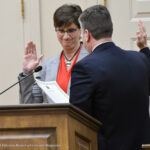
    In the photo above, newly elected Councilwoman Kathy Baliey takes the oath of office administered by Solicitor Joe Braun. Bailey will serve as Loveland’s Mayor for the next two years.

    Mihaela Manova

    by Mihaela Manova

    Loveland, Ohio – As 2019 ends, and 2020 resolutions arise, the Loveland City Hall renews its politicians. On a cold night on December 2nd, residents entered Loveland City Hall to witness the introduction and induction of their council members, and in turn, filled the hall to capacity. Rows of chairs were perfectly lined up and filled with family and active residents, time was passing and excitement fueled the room.

    The room was spacious enough to fill a crowd of a hundred, and it soon did.
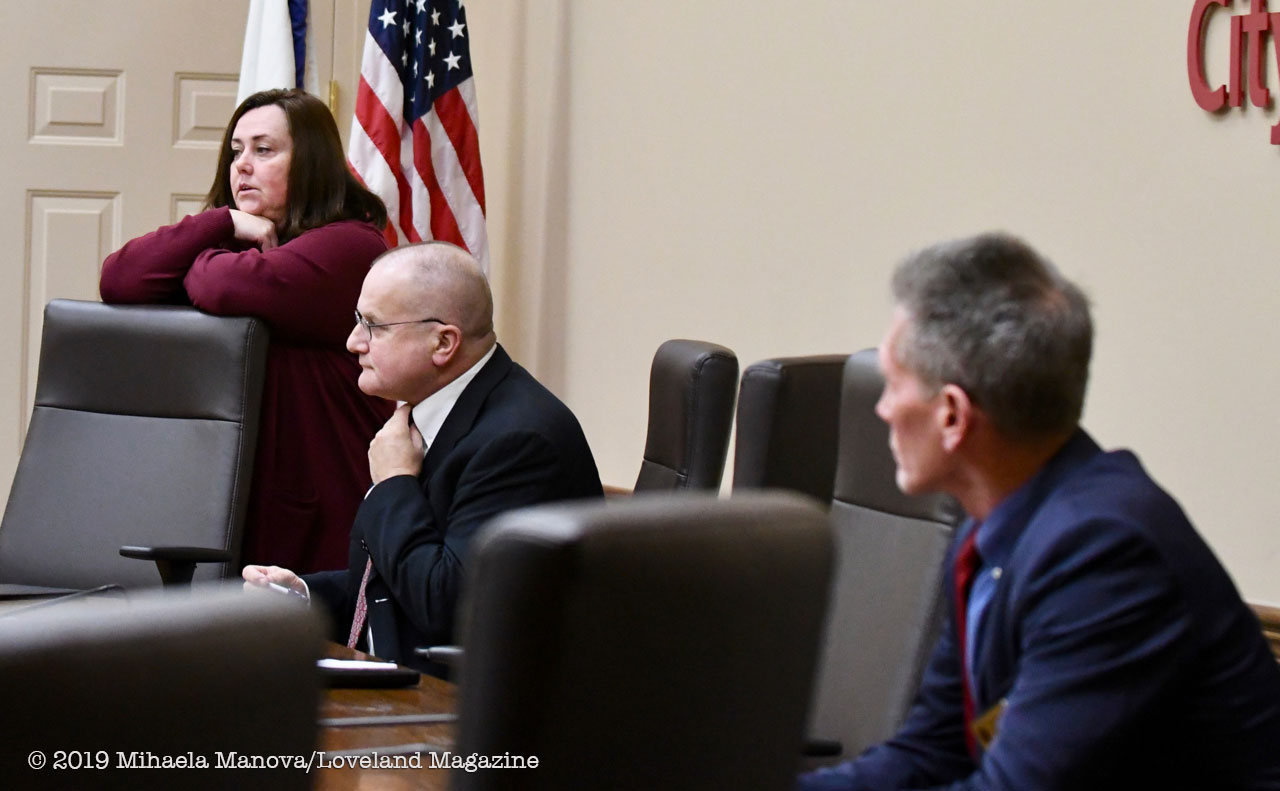
    Clerk of Council Misty Brents (on far left) chaired the start of the meeting. Brents, City Manager Dave Kennedy, and Councilmember Tim Butler waiting for the meeting to begin.

    Mixed feelings of anxiety and happiness permeated the room as council members lined up in their respective seats. On the far left side sat the Clerk of Council Misty Brents, followed by an empty seat that in moments would be occupied by Andrew Bateman. Councilmembers Neal Oury, City Manager David Kennedy, a re-elected Kathy Bailey, Rob Weisgerber, Tim Butler, a re-elected Kent Blair, Ted Phelps, and Solicitor, Joseph Braun filled the remainder of the high-backed, upholstered chairs.

    Throughout the audience, one can see campaign supporters and family members awaiting their loved ones to be inaugurated as others were standing quietly in the back admiring the process. As 7 PM passed and people sat in their seats, the room became quiet and then erupted in applause as the anticipated new council member, Andrew Bateman came through the doors with a smile. The clerk called the roll and meeting to order and led everyone in the Pledge of Allegiance. 

    Loveland Police and Loveland/Symmes Fire Department Chaplin, Pastor Bill Hounshell followed with an Invocation as the council inductions soon followed.
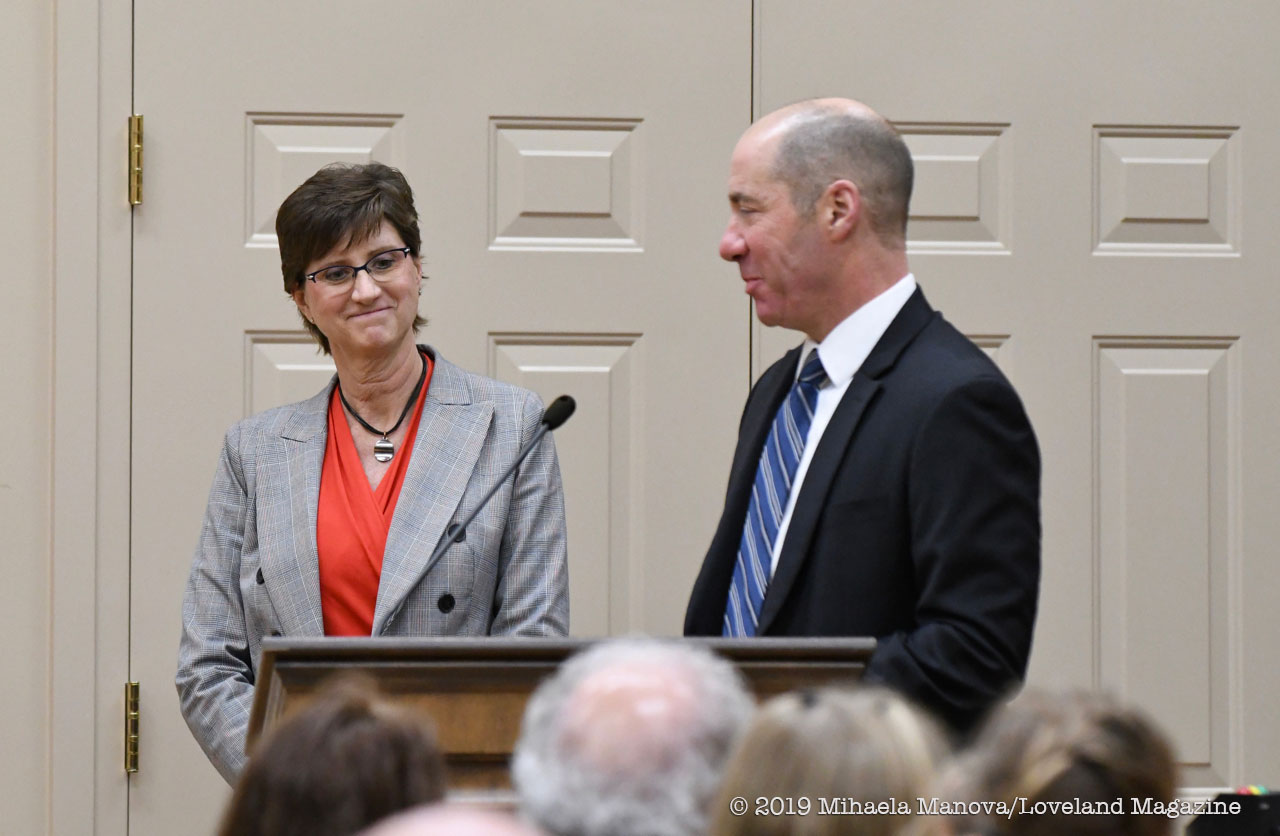
    Kathy Bailey was sworn into office by Hamilton County Judge Brad Greenberg, a former Loveland Mayor.

    Kathy Bailey was first to hit the podium with support as her family sat in the front row. Judge Brad Greenberg swore in Bailey as a council member for which she presented a speech in front of the audience. Bailey has been Loveland’s Mayor for the past four years and was re-elected to serve on Council on November 5 for another four-year term.

    “Four years ago, I didn’t necessarily know what I was getting into, or why, but I certainly know now. I ran again because I have come to love this city, the entire community, our residence, our community partners, (and) our business owners of this city,” Bailey said after taking her oath.

    Watch the LOVELAND MAGAZINE VIDEO below for the newly elected members’ speeches.
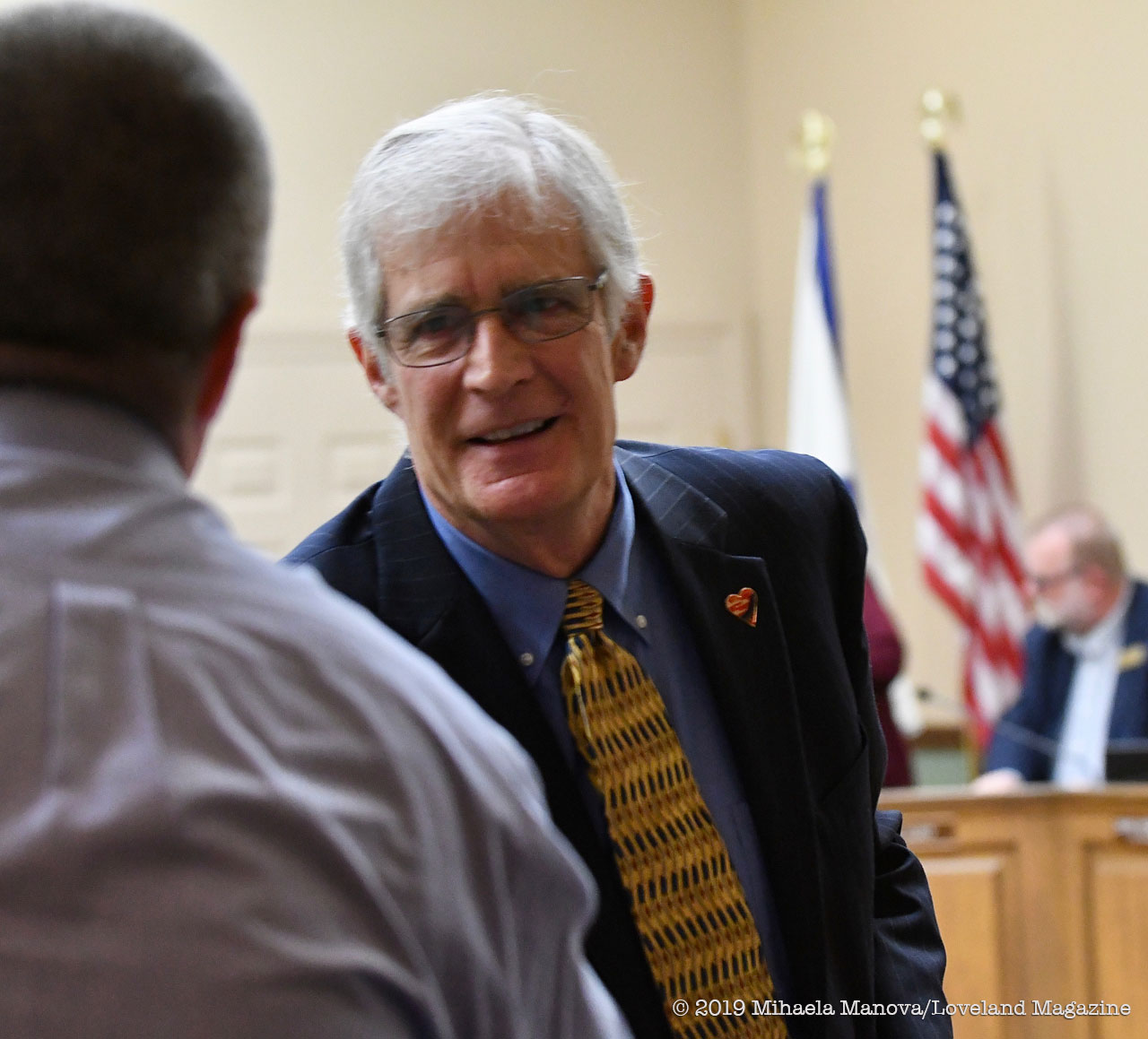
    Kent Blair received a congratulatory handshake from Police Chief Sean Rahe after taking his oath of office.

    Up next, Kent Blair was sworn in by Patricia Melson and Andrew Bateman was sworn in by Marla Simiele. Blair said, “The city of Loveland is a lot more than just a collection of buildings and a bunch of people who live in a certain place and work and go to the school in town, it’s an idea. And, I love the idea that is Loveland.”

    After taking the oath, Bateman expressed what he stands for and what he sees in Loveland’s future. “The City is really a special place and it’s because of the people that care about it. So, ‘us’ in government need to care about them no matter where they’re from, what they do, why they’re here. We’re all neighbors and nothing can be more needed in our society today than a return to neighborliness.” 
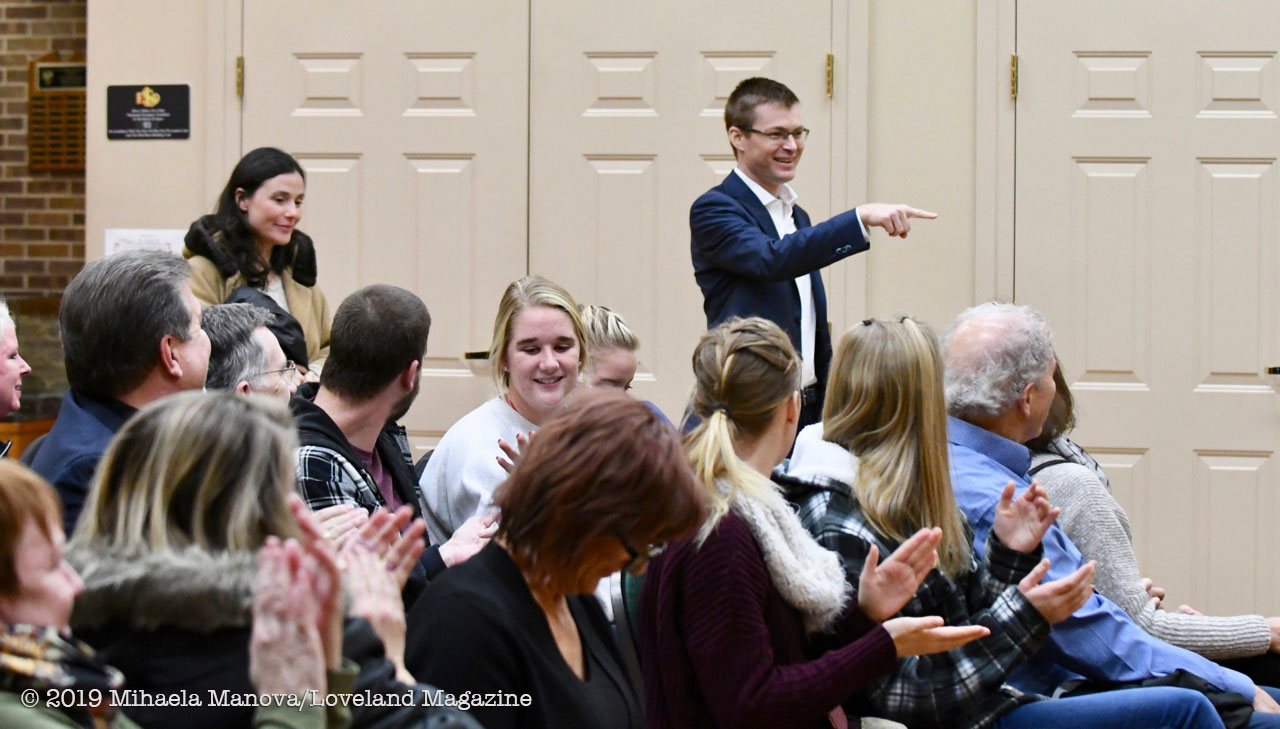
    First-time Councilmember Andy Bateman received an ovation when he entered the Council Chamber a few minutes late. He then laughed lightheartedly and pointed to the empty seat on the dais he was directed to occupy. As if saying, “For me?”

    After Bateman’s speech, the anticipated nominations for Mayor for the next two years were opened by Clerk Misty Brents. Blair nominated Bailey and no other nominations were made. After she received all seven votes, a round of applause proceeded her to the podium to take the oath as Mayor administered by Solicitor Braun.

    After a round of handshakes with each council member, Bailey returned to the center seat at the dais to run the remainder of the meeting.

    Bailey then asked for nominations for Vice Mayor.
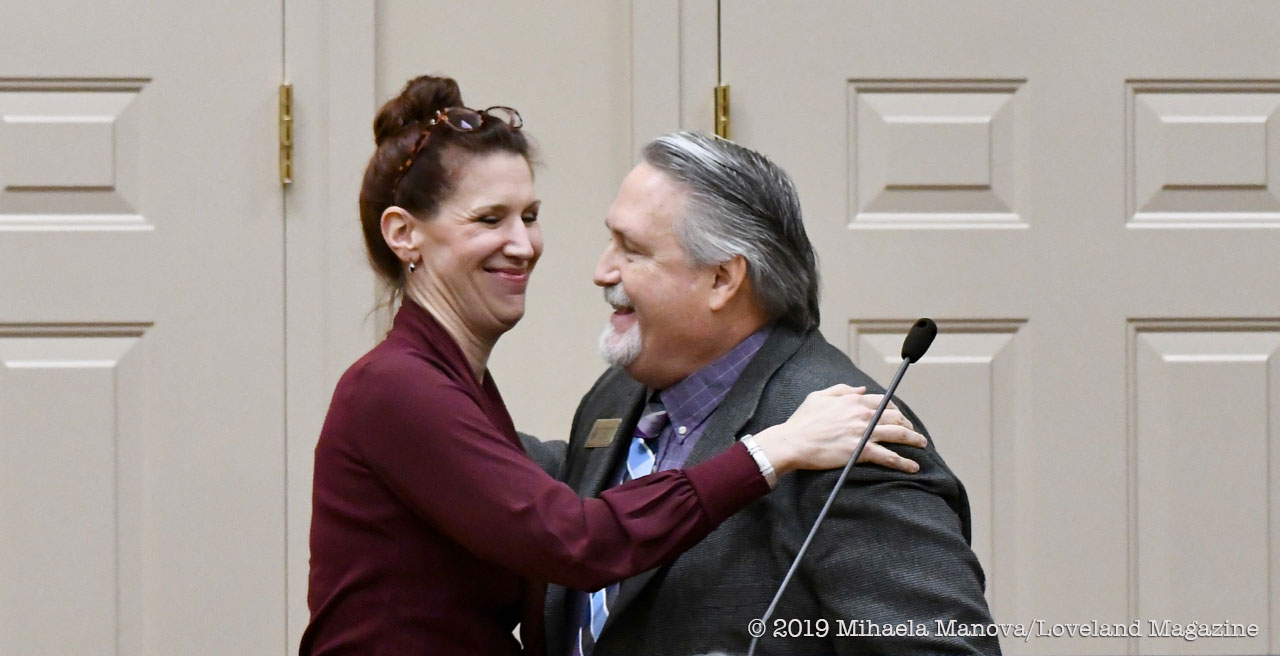
    Former City Solicitor Susan Allspach (nee Gertz) administered the oath of office to Rob Weisger after he was chosen to continue as Vice-Mayor for another two years.

    Rob Weisgerber was nominated by Neal Oury and Tim Butler nominated himself. The roll was called and with five votes against two, Rob Weisgerber became reelected as Vice Mayor. In his speech, he said, “The commitment to the community at large has been a passion of mine. I have no interest in being at other levels, it’s near and dear to my heart to be with the residents in a community that I share.”

    The evening ended as Pastor Bill closed the ceremony with another prayer and the council meeting was adjourned. The once anxious room became one of congratulations and handshakes, as we will now witness the changes that the council has in store.

    After the meeting came to a close I interviewed Mayor Baily and Councilmembers Blair and Bateman.

    The photos in this slide show are © Mihaela Manova 2019/Loveland Magazine (Photos can be purchased lovelandmagazine@cinci.rr.com)



  • Who has thrown their political hats

    Who has thrown their political hats

    Editor’s Note: This story has been corrected to explain that, “Current Loveland School Board Vice-President Kathryn Lorenz has picked up a packet of petitions to run for one of two open seats, however, she had not yet submitted petitions.”


    Loveland, Ohio – As of June 6, the local election for elected offices may only be a popularity contest. Neither school board or council races have competition for the number of seats open. There are 3, four-year council at large seats open, and 2 open, four-year terms for the Loveland Board of Education.

    Current Loveland Mayor Kathy Bailey and current councilmember Kent Blair have submitted nominating petitions to the Hamilton County Board of Elections (BOE) with sufficient signatures to qualify for the ballot.

    Andrew Bateman who ran an unsuccessful race in 2017, picked up nominating petitions, however, he has not yet submitted them to the BOE.

    Current Loveland School Board Vice-President Kathryn Lorenz has picked up a packet of petitions to run for one of two open seats, however, she had not yet submitted petitions. No one else had picked up petitions as of June 6.

    The election is on November 6.

    The Loveland School District is expected to place a bond issue to build new schools and renovate current buildings on the ballot. The City of Loveland is expected to ask voters to approve a revised Charter.


    Firecracker Festival 2019 June 28, 2019 – June 29, 2019   Celebrate Your Independence at the Firecracker Festival at Home of the Brave and Symmes Park! Read more…
  • Andrew Bateman: Well-meaning Issue 1 obscures harmful unintended consequences

    Andrew Bateman: Well-meaning Issue 1 obscures harmful unintended consequences

    by Andrew Bateman,

    The November 6th election, with all its national implications, is fast approaching. Ohio Issue 1, a proposed state constitutional amendment to reduce drug possession offenses from felonies to misdemeanors, is frequently used as a barometer of sorts amid ongoing coverage of state campaign races. The barrage of 30-second campaign ads are hyperbolic at best, and some feature fear tactics to persuade a no vote on Issue 1. What follows is my practice at a more reasoned case against the issue with hopes you come to the conclusion that Ohio Issue 1 hurts Clermont County and other local governments more than it helps.

    What follows is my practice at a more reasoned case against the issue.

    On its surface, Issue 1 has its merits. Given that the United States is the world leader in incarceration, 5 states have already passed similar legislation aimed at reforming the current criminal justice system. Ohio Issue 1 intends to reduce the state’s incarceration rate by reclassifying penalties for drug offenses such as possession, purchasing, and the use of illicit drugs or drug paraphernalia from a felony to a misdemeanor. The resulting reduction of over 50,000 prisoners would generate savings to the state. Money saved would go back into the system for addiction treatment and rehabilitation services as well as crime victim funds.The initiative places additional value on treatment by incentivizing prisoners that participate in rehabilitation services with a potential 25% sentence reduction.The reclassification would not apply to drug trafficking offenses, preventing drug dealers from dodging hard time.

    Ohio Issue 1 misses the mark on two interrelated key points.

    For all the big concepts of saving money and improving public safety, the ballot initiative over-simplifies the nuances of the criminal justice system and disregards the true state of addiction services within local governments. Ohio Issue 1 misses the mark on two interrelated key points: Access to money and access to treatment.

    The amendment would immediately reduce the prison population. First, by granting prisoners with previous applicable felony convictions the right to appeal for a reduced sentence. Secondly by prohibiting jail or prison time for the same offenses, provided it is not the offenders third time in 24 months. Only 15 percent of inmates in state prisons across the United States are incarcerated for drug offenses. A sentence reduction of the approximately 7,500 eligible prisoners in Ohio would be a limited, one-time savings

    Ohio Issue 1 places an undue burden on local governments to process repeat offenders up to three times before sentencing them to jail.

    Not all of Ohio’s counties and municipalities have the same needs; but many face similar problems of overcrowded jails and ever-tightening budget crunches. And while inaccurate to say Ohio Issue 1 decriminalizes drugs, it certainly won’t deter people from buying and using drugs, which if the initiative passes, would shift sole responsibility of processing drug offenders to local governments. Ohio Issue 1 places an undue burden on local governments to process repeat offenders up to three times before sentencing them to jail.

    Issue 1 is a major threat to the progress that has been made by county governments and agencies to address the opioid crisis in Ohio. Drug courts, which mandate treatment as an alternative to prison, are among the most effective methods of rehabilitation for addicts, many of whom would otherwise not seek treatment on their own. Issue 1 removes that authority from the judicial system and puts vulnerable offenders back in harm’s way. The treatment funding mechanism proposed by Ohio Issue 1 is not well-defined and could be distributed through grants. This complicates local government’s ability to allocate funds year-over-year and create stable infrastructure for addiction treatment programs and services.

    In recent years national and state politics have been more cognizant of the opioid crisis, but the most significant positive impacts are made through collaboration between local government agencies and law enforcement. Effective programs such as quick-response teams and recovery coaches could be on the chopping block when local law enforcement and jails absorb more of the state’s cost.

    Andy Bateman is a resident of Loveland, Ohio and serves as a member of the Clermont County Mental Health and Recovery Board.

    As complex as Ohio Issue 1 is, it is understandable that the easier argument against it is to say that it normalizes drug use and puts dangerous criminals out on the streets. In my opinion it is more interesting to evaluate it in practical terms. One major concern with Ohio Issue 1 is, as a constitutional amendment, it does not pertain to an individual’s rights or freedoms and would be more difficult to repeal once approved.

    One major concern with Ohio Issue 1 is that it is a constitutional amendment.

    The choice is ours on November 6th. Please take the time to read for yourself the ​full language of the Statewide Issue​. My intent is to vote against it and I urge others to do the same.