

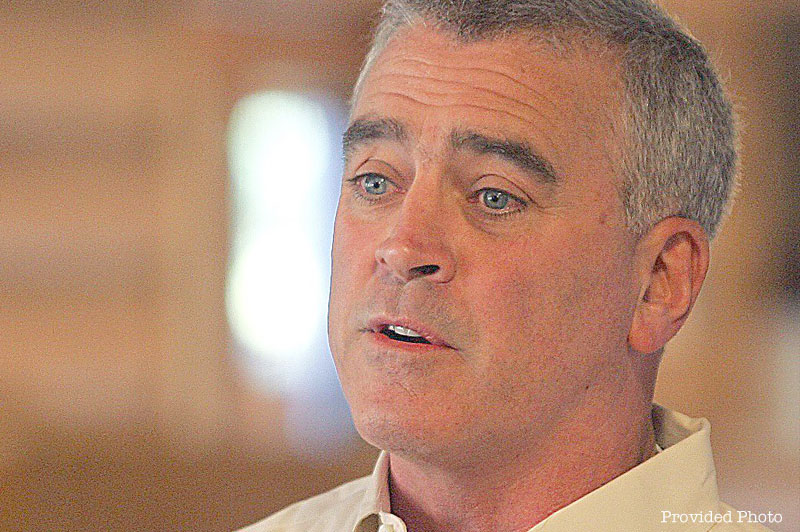
Republican Rep. Brad Wenstrup currently represents the 2nd Congressional District, but he announced that he would not seek reelection in 2024
Democrat Samantha Meadows is going up against Republican David Taylor and neither candidate has held office before.
A political newcomer will represent Ohio’s 2nd U.S. Congressional District starting in 2025.
Democrat Samantha Meadows is going up against Republican David Taylor and neither candidate has held office before.
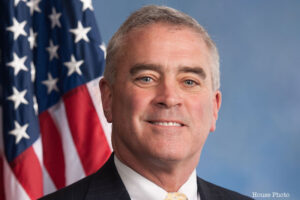
Republican Rep. Brad Wenstrup currently represents the 2nd Congressional District, but he announced at the end of last year that he would not seek reelection in 2024 after serving six terms.
The 2nd Congressional District covers 15 southern Ohio counties: Clermont, Clinton, Pike, Adams, Brown, Highland, Ross, Scioto, Pickaway, Hocking, Vinton, Jackson, Lawrence, Gallia, and Meigs counties, and part of Fayette County.
The 2nd Congressional District historically leans Republican and President Donald Trump won in all of those counties during the 2020 election.
Meadows
This is Meadows’ second time running for the 2nd congressional district. She lost against Wenstrup in 2022 — receiving only 25% of the vote — but she thinks her odds of winning have increased since Wenstrup is retiring.
“I am beating down doors … I’m doing everything that I can to let people know that I, personally, as a candidate, care about them,” she said.
Meadows doesn’t feel intimidated running as a Democrat in Republican-dominated counties.

“I know that a lot of folks down here are Republicans by anger rather than policy,” she said. “I have faith in our region that, no, this isn’t about Republican or Democrat. This is actually about a person that’s going to help us.”
She grew up in McDermott in Scioto County, attended Shawnee State University and Ohio Christian University and went on to work as an EMT.
“I’ve always felt compelled to be of service to my community,” she said. “… I always felt compelled to help others.”
Through her work as an EMT, Meadows has seen firsthand the devastation of the opioid epidemic and she remembers the first Oxycontin overdose patient she helped treat. They administered Narcan and were able to revive the patient.
“At that time, this was new to us,” she said.
That same patient overdosed again a couple weeks later, but didn’t make it this time.
“Addiction was one of the catalysts that made me run for office,” she said. “Everybody knows somebody that’s either addicted or a family that’s going through those things.”
Meadows said she never had any aspirations to be in politics, but decided she had to do something when she saw drug overdoses increase during COVID-19.
“I had a moment where I literally looked at the TV and said, somebody’s got to do something about this. And so I was like, I’ll do it,” she said.
Taylor
Wenstrup retiring, how most of the 2nd District is Appalachian and “the laundry list of national crises we have going on both inside and outside our borders” is what led to Taylor to run for office.
“The needs of the Appalachian community has been something that’s been in the front of my mind my whole life,” he said. “The opportunity to see this overlooked, underserved community that is the 2nd District of Ohio get the attention it deserves is what compelled me to get into politics.”
Taylor had to endure a competitive primary against ten other Republicans — including state Sens. Shane Wilkin and Niraj Antani — to get on the November ballot. Taylor came out on top with 25% of the vote.

“People don’t want career politicians right now,” he said. “They want somebody from the outside. I think actually, for the voters in the 2nd District, not being a person with a political background was actually a plus.”
Even though the second district leans Republican, Taylor said he is treating the race as if the district was split 50-50 and has been traveling the district to meet people.
“We’re running the tires off my pickup truck and going to all corners of the district,” he said.
Taylor has lived a majority of his life in Clermont County, graduated from Miami University and the University of Dayton School of Law and worked for a prosecutor’s office.
“In criminal law, you’re getting to the nitty gritty on every word in the law, because sometimes somebody’s freedom is at stake,” Taylor said. “So that will serve well in dealing with the legislation that’s written and passed or repealed.”
He now owns his own concrete business Sardinia Ready Mix and said his experience of operating within a budget could help him in D.C.
“Those are things that the government could use a large dose of so more people with that mindset, I think, would lead to better outcomes in Washington, D.C. and those returns come here to Ohio, specifically the second district,” he said.
On the issues
Taylor wants to defund and dismantle the U.S. Department of Education.
“It’s another federal agency that overreaches the federal government’s mandate under the Tenth Amendment,” he said. “We have so many federal bureaucracies that are overstepping the mandate of the Constitution.”
Meadows wants to better fund public schools.
“We don’t have enough private schools in our district to take on an influx of public school kids,” Meadows said, referring to the voucher program.
Meadows wants to protect reproductive rights.
“The ability to have body autonomy and make our own decisions, that is absolutely terrifying that we don’t have that type of freedom, or that we’re trying to be denied that kind of freedom,” she said.
Taylor is anti-abortion, but doesn’t support a total ban on abortion.
“The issue is going to be a state issue from state to state, and that’s where it needs to stay,” he said.
Both candidates support the Second Amendment.
“But I also believe at the very least, we need to have a moratorium on the sale of assault rifles,” Meadows said. “I do believe that they are not necessary in the hands of an average American. They belong on the battlefield.”
Taylor said he would fight against infringements on the Second Amendment.
“Every time you have one of these incidents that causes (people) to call for gun control, multiple laws have been broken, so I’m not sure what law they think can be written that’s going to stop that,” Taylor said.
Follow OCJ Reporter Megan Henry on Twitter.

![[Commentary] Suicide is on the rise in Ohio](https://lovelandmagazine.com/wp-content/uploads/2024/02/988-suicide-prevention-2-1024x791-1-700x541-1.jpg)
 by Rob Moore –