Tag: Attorney General Mike DeWine

  • Attorney General DeWine Offers Consumer Tips Following Marriott Starwood Hotels Breach

    Attorney General DeWine Offers Consumer Tips Following Marriott Starwood Hotels Breach

    Affecting as many as 500 million guests

    Columbus, Ohio – Ohio Attorney General Mike DeWine today offered tips for consumers following Marriott’s recent announcement of a data breach affecting as many as 500 million guests who made a reservation at a Starwood brand hotel, which includes Sheraton Hotels & Resorts and Westin Hotels & Resorts, among others.

    Marriott has reported it believes hackers gained unauthorized access to the Starwood guest reservation database in 2014 and that people who made a reservation on or before Sept. 10, 2018, at a Starwood property may have been affected.

    The company has reported that for approximately 327 million guests, the information breached included some combination of name, mailing address, phone number, email address, passport number, Starwood Preferred Guest account information, date of birth, gender, arrival and departure information, reservation date, and communication preference. It also said some payment card numbers and expiration dates may have been affected.

    “Any time there is a breach that has gone undetected for this long and affected this many people, it’s very concerning,” Attorney General DeWine said. “We’re hoping Marriott will step up to help those affected. We’re also encouraging individuals to take steps to protect themselves.”

    Tips for consumers include:

    • Monitor your accounts. Look for suspicious activity. If you find errors, immediately notify your bank or credit card provider.
    • Beware of scams related to the breach. Con artists may pretend to have information about the breach or they may falsely claim to want to help you. Some calls or messages may be scams designed to steal your money or personal information. Don’t give out personal information to those who contact you unexpectedly (even if they say they want to help you) and be wary about clicking on links or downloading attachments in messages.
    • Check your credit report. Monitoring your credit report can help you identify signs of potential identity theft. You are entitled to one free credit report per year from each of the three major credit reporting agencies. Visit www.AnnualCreditReport.com to access those reports. You can pull all three at once, or you can stagger pulling your reports throughout the year.
    • Place an initial fraud alert on your credit report. Contact one of the three major credit reporting agencies — Experian, Equifax, or TransUnion — to place an initial fraud alert, which will stay on your credit report for one year. The alert is free of charge and will make it more difficult for someone to open credit in your name.
    • Consider placing a security freeze on your credit report. A security freeze (or credit freeze) essentially puts a lock on your credit so that most third parties can’t access your report. This helps protect you from unauthorized accounts being opened in your name. Security freezes are permanent until you lift them, and they are now free to place or to remove. Contact each credit reporting agency separately to place a freeze.

    Consumers should keep in mind that even if their information is compromised in a data breach, it doesn’t necessarily mean it will be used by an identity thief to open accounts or commit other fraud. However, consumers should watch for warning signs that their information may have been used fraudulently.

    Signs of possible identity theft may include:

    • Unexpected mail about accounts you did not open.
    • Unexpected collection calls or letters.
    • Another person’s name showing up in your background check or credit report.
    • Credit reporting errors or a lower-than-expected credit score.

    Consumers who want help correcting the effects of identity theft should contact the Ohio Attorney General’s Office at 800-282-0515 or www.OhioProtects.org. Attorney General DeWine created an Identity Theft Unit in 2012 to help victims repair the damage caused by identity theft, such as by clearing fraudulent debt in a victim’s name. The unit has eliminated over $2 million in fraudulent charges since its creation.



      Accounting Plus–Bingaman Accounting and Tax Service, LLC is a tax preparation, payroll and bookkeeping company locally based in Loveland, OH.


  • School safety training grants available for schools in Ohio

    School safety training grants available for schools in Ohio

    Schools will have the flexibility to use these grants for things like training for school resource officers, safety and security materials, and programs to identify and help students who may be struggling with their mental health.

    Ohio Attorney General Mike DeWine has announced that he is awarding $12 million in grants to help enhance safety and security at schools across the state.

    All of Ohio’s public schools, chartered nonpublic schools, and schools operated by county boards of developmental disabilities will receive the greater of $2,500 or $5.65 per student to spend toward school safety programs and training.

    “Schools will have the flexibility to use these grants for things like training for school resource officers, safety and security materials, and programs to identify and help students who may be struggling with their mental health,” said DeWine

    The grants are funded with appropriations made by the Ohio legislature as part of House Bill 318. The bill, which was sponsored by state representatives Sarah LaTourette (R-Chesterland) and John Patterson (D-Jefferson), appointed the Ohio Attorney General’s Office to develop the school safety training grant program in consultation with the Ohio Department of Education and the Ohio Department of Mental Health and Addiction Services.

    The law requires that participating schools and county boards work with law enforcement in their jurisdictions to determine the best use of the grant funding.

    A full list of grant awards can be found on the Ohio Attorney General’s website.

    Other Resourses

    • Active Shooter Response: An Educator’s Guide: This 25-part video series was produced by the Attorney General’s Ohio Peace Officer Training Academy (OPOTA) to aid educators in preparing for and reacting to a potentially violent school incident, such as a school shooting. The brief videos are an update to the training offered by OPOTA beginning in 2013 that provided guidance to nearly 15,000 educators on how to intervene with students who could pose a danger and how to respond in a crisis situation.
    • Emergency Management Plan Aerial Photographs: Special agents with the Attorney General’s Ohio Bureau of Criminal Investigation (BCI) are available to take free aerial photographs of school buildings for inclusion in school emergency management plans. BCI currently has six drones that are used primarily to document crime scenes and assist in missing persons cases, but BCI is offering to use its drones to take aerial photos of school campuses to help law enforcement plan for and respond to an emergency. School administrators, in coordination with local law enforcement, can request photographs by calling 855-BCI-OHIO (855-224-6446).

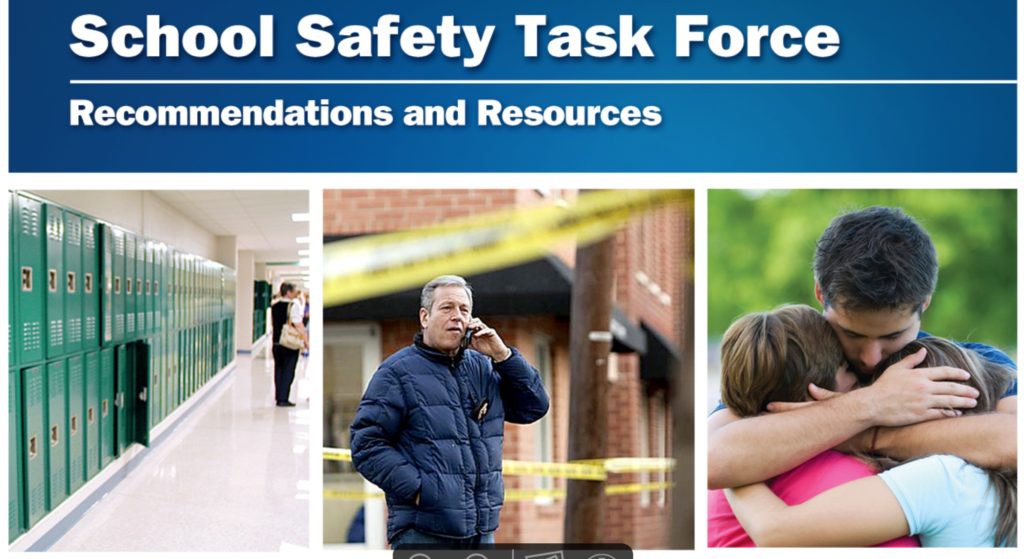
    Attorney General DeWine also worked with schools across the state to achieve greater compliance on school safety plans and convened a School Safety Task Force that issued dozens of school safety recommendations. The task force recognized that mental health awareness was essential for schools to identify and intervene with students who may be at risk.

  • DeWine announces development of new sexual assault kit tracking system

    DeWine announces development of new sexual assault kit tracking system

    The “Ohio Attorney General’s Sexual Assault Kit Tracking System” will give those who have undergone a sexual assault forensic examination the option to track the status of their rape kit evidence online.

    Columbus, Ohio – Attorney General Mike DeWine announced Thursday that his office is developing a statewide system that will increase transparency surrounding the collection, submission, and analysis of sexual assault kit evidence in Ohio.

    The “Ohio Attorney General’s Sexual Assault Kit Tracking System” will give those who have undergone a sexual assault forensic examination the option to track the status of their rape kit evidence online.

    “Sexual assault survivors have already gone through unimaginable trauma, and not knowing where their cases stand can be agonizing,” said DeWine. “This new system will empower survivors by giving them the ability to instantly and anonymously find out where their evidence is located and whether or not it has been submitted for testing.”

    By entering a barcode number into the free, online program, survivors who choose to use the system will be able to follow their evidence as it proceeds from collection at a medical facility, to inventory at a law enforcement agency, to analysis at a crime lab, and to storage or destruction.

    By entering a barcode number into the free, online program, survivors who choose to use the system will be able to follow their evidence as it proceeds from collection at a medical facility, to inventory at a law enforcement agency, to analysis at a crime lab, and to storage or destruction.

    New legislation introduced by State Senator Stephanie Kunze (R-Hilliard) and State Representative Dorothy Pelanda (R-Marysville) seeks to require all agencies involved in the chain-of-custody of sexual assault kits to participate in the tracking program.

    “As we continue to help and encourage victims of sexual assault to rebuild their lives, it is imperative that we provide them the ability to check the status of the testing of their rape kits quietly and discreetly,” said Senator Kunze. “Affording them the opportunity to do so in a safe, secure manner ensures their privacy. We can allow survivors to continue moving forward with the option to check on the progress to help with the emotional healing and journey to moving forward from their horrific experience.”

    “Attorney General DeWine and his office have demonstrated tremendous leadership and diligence when it comes to this issue. The bills introduced this week in the House and Senate represent a crucial next step in the process,” said Representative Pelanda. “I look forward to working with Attorney General DeWine, my great colleague Senator Kunze, and my brothers and sisters in the House of Representatives as we move forward with this legislation.”

    The advisory group will include victim advocates, sexual assault nurse examiners, law enforcement, prosecutors, and representatives from hospital associations and crime laboratories.

    DeWine is also creating an advisory group to study best practices and provide advice on how Ohio’s tracking system should operate. The advisory group will include victim advocates, sexual assault nurse examiners, law enforcement, prosecutors, and representatives from hospital associations and crime laboratories. The members of the advisory group, who will be announced at a later date, will give special consideration to protecting the privacy of survivors who use the system.

    “We are excited to see this initiative coming from the Ohio Attorney General’s Office,” said Rosa Beltre, executive director of the Ohio Alliance to End Sexual Violence. “It is important to reform how rape kits are handled and tracked in the state of Ohio, despite the many challenges and difference of opinion. We collectively can choose to do nothing because of funding and road blocks, or as we have done today, we can choose to take steps within our circle of influence to make a difference. We owe this to every survivor in our state.”

    The development of the program, as well as any maintenance and equipment, will be financed through Victim of Crime Act (VOCA) funding. VOCA funds, which are administered by the Ohio Attorney General’s Office, are from federal settlements, fines, and fees and must be used to enhance victim rights and services.

    “This new tracking system will also help ensure that an accumulation of untested rape kits never happens in Ohio again,” said Attorney General DeWine. “Survivors expect their kits to be submitted for analysis in a timely manner, and this new program will increase accountability and transparency throughout the entire process.”

    To date, Attorney General DeWine’s SAK Testing Initiative has led to 5,071 hits in the Combined DNA Index System (CODIS), and hundreds of attackers have been prosecuted according to DeWine’s office. In response to the success of the initiative, new law was enacted in 2015 requiring that law enforcement agencies in Ohio submit sexual assault kit evidence to a crime laboratory within 30 days.


  • DeWine, 49 Attorneys General Reach $45 Million Settlement with PHH Mortgage Corporation

    DeWine, 49 Attorneys General Reach $45 Million Settlement with PHH Mortgage Corporation

    Columbus, Ohio – Ohio Attorney General Mike DeWine, along with the attorneys general of 48 other states and the District of Columbia, has reached a $45 million settlement with New Jersey-based mortgage lender and servicer PHH Mortgage Corporation.

    The settlement, which also was joined by more than 40 state mortgage regulators, resolves allegations that PHH, a non-bank residential mortgage originator and servicer, improperly serviced mortgage loans between 2009 and 2012.

    “Mortgage servicing abuses harmed thousands of Ohioans and put numerous families into foreclosure,” said Attorney General DeWine. “This settlement continues our work to help affected borrowers receive compensation and to prevent further abusive conduct through new servicing standards.”

    Over $30 million of the settlement is designated for payments to affected borrowers, and about 2,000 Ohio borrowers are expected to qualify for payments totaling more than $1.2 million. 

    Borrowers who were subjected to PHH foreclosures during the eligible period will qualify for a minimum $840 payment, while eligible borrowers who faced PHH-initiated foreclosures but did not lose their home will qualify to receive a minimum $285 payment. A settlement administrator will contact eligible payment recipients at a later date.

    The agreement requires PHH to follow comprehensive mortgage servicing standards, conduct audits, and provide audit results to a committee of states. The settlement does not release PHH from liability for any conduct that may have occurred since 2013.

    The Ohio Attorney General’s Office was part of the executive committee that helped lead the investigation and negotiations, which resulted in the settlement.

    Participating in the settlement are the attorneys general of Alabama, Alaska, Arizona, Arkansas, California, Colorado, Connecticut, Delaware, Florida, Georgia, Hawaii, Idaho, Illinois, Indiana, Iowa, Kansas, Kentucky, Louisiana, Maine, Maryland, Massachusetts, Michigan, Minnesota, Mississippi, Missouri, Montana, Nebraska, Nevada, New Jersey, New Mexico, New York, North Carolina, North Dakota, Ohio, Oklahoma, Oregon, Pennsylvania, Rhode Island, South Carolina, South Dakota, Tennessee, Texas, Utah, Vermont, Virginia, Washington, West Virginia, Wisconsin, Wyoming, and the District of Columbia.

    The agreement, through a proposed consent judgment, is being filed in the U.S. District Court for the District of Columbia.


  • BCI Facial Reconstruction Created of Summit County John Doe

    BCI Facial Reconstruction Created of Summit County John Doe

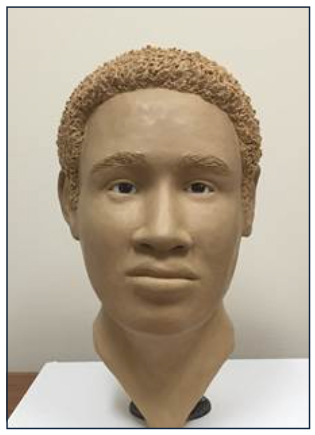
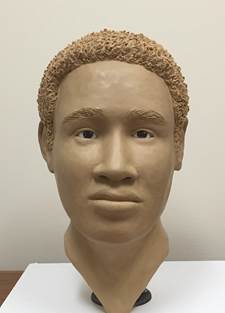
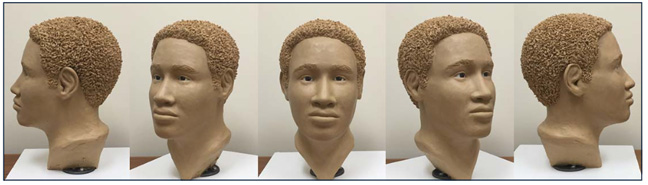
    Columbus, Ohio – Ohio Attorney General Mike DeWine, Summit County Medical Examiner Dr. Lisa Kohler, and Twinsburg Police Chief Christopher J. Noga today unveiled the forensic facial reconstruction of a man whose skeletal remains were found more than 20 years ago.

    The clay model was created by a forensic artist with the Attorney General’s Ohio Bureau of Criminal Investigation (BCI) in an effort to help Summit County authorities identify the man.

    Summit County John Doe

    “This person is someone’s son, and there is a family out there who loved him.  Now we need the public’s help to find this person’s loved ones some answers,” said Attorney General Mike DeWine. “This facial reconstruction we recently started doing at BCI is a new tool we hope will lead to positively identifying remains in cases like this one.”  

    His remains were found on February 18, 1982 behind a business at 3047 Cannon Road in Twinsburg. He is believed to be an African American male between 20 and 30 years old and approximately 5’6″ tall. Additional details such as weight, hair, or eye color are unknown.

    Items such as hairstyle are the artist’s estimations to complete the reconstruction and should not be considered significant markers for identification. 

    More than 900 law enforcement agencies today received this bulletin in an effort to bring widespread attention to the case.

    “While his remains were discovered in 1982, we believe that his death occurred approximately a year and half before that,” said Chief Christopher J. Noga. “We are really hoping people take a good look at this BCI facial reconstruction.  It may lead to us being able to finally identify him.”  

    BCI’s forensic artist is available to assist local law enforcement with the creation of forensic facial reconstruction models to help identify unidentified skeletal remains. This is the second facial reconstruction created by BCI in northeast Ohio, and the fifth reconstruction statewide. A Greene County Jane Doe was identified as a Florida woman following BCI’s creation of a clay model in December 2016.  A Jane Doe reconstruction and John Doe reconstruction were created for two separate, still-unidentified decedents in Marion County earlier this year, and the clay model of a John Doe in an unsolved Akron investigation was created in July.

    Missing Persons Unit analysts can also provide case review, investigative assistance, link charts, and mapping.

    BCI also offers the Ohio LINK (Linking Individuals Not Known) Program, a free service to police, coroners, and families of missing individuals. The LINK Program was established through the Attorney General’s Office in 1999 to help match DNA taken from family members of missing individuals to DNA from unidentified remains.  Samples of DNA submitted by family members as part of the LINK Program are compared only to DNA samples of unidentified remains submitted through similar programs nationwide. There are currently 194 open cases in the Ohio LINK database.

    For tips about this Summit County John Doe case or for information about BCI’s Missing Persons Unit call 855-BCI-OHIO (855-224-6446).


  • Claims now accepted for $586 million Western Union Fund for fraud victims

    Claims now accepted for $586 million Western Union Fund for fraud victims

    Columbus, Ohio – Ohio Attorney General Mike DeWine today announced that Ohioans who sent money to scammers using Western Union’s wire service may now apply for compensation from a $586 million fund held by the U.S. Department of Justice’s victim asset recovery program.  

    The fund is related to a multistate settlement Attorney General DeWine announced in January

    Consumers may be eligible to receive compensation if they sent a fraud-induced wire transfer through Western Union between Jan. 1, 2004, and Jan. 19, 2017.

    “It’s not often that scam victims have a chance to recover some of their money, so we want people to know about this opportunity,” Attorney General DeWine said. “If you think you’re eligible, file a claim.”   

    A settlement administrator is sending claim forms to over 500,000 consumers. Ohioans may receive a form in the mail if they reported to Western Union or to the Ohio Attorney General’s Office that they had been the victim of a scam using Western Union. The form will contain instructions on how to file a claim. 

    Consumers who do not receive a claim form but believe they may have a valid claim should visit www.WesternUnionRemission.com or call 844-319-2124 for details on filing a claim. 

    Completed claim forms must be submitted online or mailed back to the settlement administrator by Feb. 12, 2018.