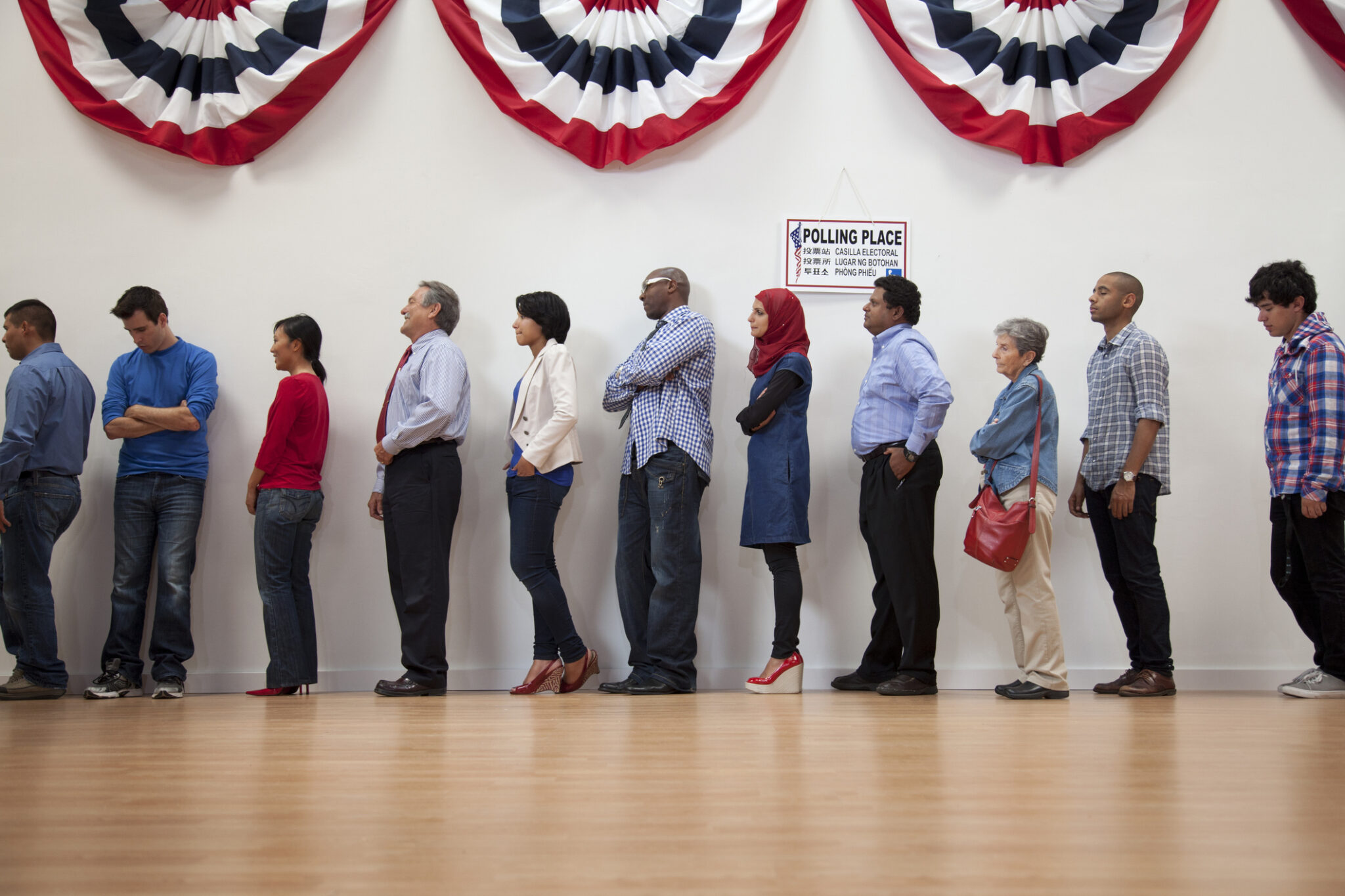
People enter a voting precinct to vote in the Michigan primary election at Trombly School Aug. 7, 2018 in Grosse Pointe Park, Michigan. (Photo by Bill Pugliano/Getty Images)
Deadlines are coming up quick for Ohio voters participating in the Aug. 8 special election over State Issue 1, which seeks to make it harder for voters to amend the Ohio Constitution by raising the threshold from 50% to 60%, and increases the number of counties ballot signatures for citizen initiatives must be collected, from 44 to 88.
July 10: Voter registration deadline for the Aug. 8 primary
July 11: First day of early in-person voting
July 15: Certification for independent candidates
Aug. 1: Absentee ballot applications must be turned in
Aug. 8: Polls are open from 6:30 a.m. to 7:30 p.m., and absentee ballots are due by close of polls.
If State Issue 1 passes, its provisions making it harder for voters to bring forward and pass proposed amendments would impact future ballot initiatives, including some that are already in the works, such as the abortion ballot measure, set to go before voters in November, along with initiatives to change marijuana regulation and minimum wage.
Republicans who are in support of Issue 1, including Ohio’s elections chief Secretary of State Frank LaRose, have pointed to the abortion proposal as a main reason they’d like to see the voter threshold amendment pass in August, as it would cause significant challenges for the amendment, for which signature gathering has been well under way.
Critics of Issue 1 have said the measure would roll back more that 112 years of Ohio majority voter powers and give even more power to an already gerrymandered GOP supermajority legislature.
Issue 1 had to get through a few challenges of its own to get to the ballot, with the Ohio Supreme Court giving it the official go ahead just last week, after a lawsuit sought the court’s intervention. This was because Ohio lawmakers passed a law in December outlawing August elections before brining back this August election in defiance of the new law.
The Ohio Supreme Court in a split decision sided with Republican lawmakers, after the court asked that the Ohio Ballot Board rewrite some of the language in the ballot measure, including the title and explanations of the term “electors.”
The ballot board, led by LaRose, did just that on June 14, though the changes were approved on partisan lines.
SUSAN TEBBEN
Susan Tebben is an award-winning journalist with a decade of experience covering Ohio news, including courts and crime, Appalachian social issues, government, education, diversity and culture. She has worked for The Newark Advocate, The Glasgow (KY) Daily Times, The Athens Messenger, and WOUB Public Media. She has also had work featured on National Public Radio.
The organization One Person One Vote has filed a new Supreme Court case related to an August amendment proposal looking to make it more difficult to change Ohio’s constitution. The organization has already challenged lawmakers’ attempt to place the question, which would raise the bar for voters to pass amendments from 50% to 60%, on the August special election ballot. The latest complaint has to do with the ballot language Ohioans will see when they cast their vote.
The filing claims the ballot board adopted “a misleading, prejudicial ballot title and inaccurate, incomplete ballot language that improperly favor the Amendment in flagrant violation Ohio’s Constitution and laws and this Court’s jurisprudence.”
The plaintiffs want to court to order revisions or substitute the full text of the amendment as the ballot language.
The Ballot Board’s language
It’s the board’s job to cut through the legalese and craft a neutral, easily understood description of what a given proposal will do. The secretary of state leads the five-member body, and due to constraints on members’ partisanship, the secretary effectively holds the deciding vote.
At a hearing last week, an attorney for One Person One Vote brought up numerous critiques of the proposed language. The drafts made no mention of existing constitutional standards, employed words like “elevate” to cast the changes in a positive light, and even included factual inaccuracies about signature gathering.
Nevertheless, the majority Republican board approved the language along party lines without any changes.
The court challenge
In its complaint, One Person One Vote elaborated on the shortcomings it identified in the ballot board hearing. Again, the group’s chief complaint had to do with the language identifying only the end result, rather than how the amendment changes existing law.
Instead of explaining the threshold for approving constitutional amendments would rise from a simple majority to a 60% supermajority, the ballot board’s language only identifies the 60% threshold.
“As a consequence, a voter might take the ballot language to mean that the people of Ohio do not presently get to vote on proposed amendments at all,” the complaint reads, “and might even understand the amendment itself to create that right in the first instance.”
“Such a blatantly misleading omission contravenes fifty years of this Court’s precedents,” it adds.
In addition to setting a higher threshold for passage, the amendment requires organizers collect signatures from all 88 counties instead of the 44 required now. It also eliminates a period in which organizers can collect additional signatures if their first submission falls short.
The complaint found fault in how the ballot language explains both of those provisions, as well.
One Person One Vote criticized the ballot language for saying the amendment “specif(ies)” that there won’t be a cure period, rather than explaining the amendment would eliminate it.
On signature collection, the group argued the ballot language “does not clear even the minimal bar of factual accuracy.” It describes the requirement as 5% of a county’s eligible voters instead of the 5% who voted in that county in the previous gubernatorial election.
“This is a considerable difference,” the complaint noted, “amounting in Hamilton County, for example, to a difference of nearly 15,000 signatures using 2022 figures.”
Ask and outlook
The plaintiffs want the court to direct the board to come up with new ballot language. They argue the new version must “must fully and accurately describe the status quo,” including that it has been the standard since 1912. Alternatively, they argue, the board could submit the proposed amendment’s text in full to voters.
They also call on the court to direct Secretary LaRose to come up with a new title. “Elevating the standards,” they argue “implies that Ohio’s standards to amend its Constitution are currently too low.” The choice of ‘elevating’ rather than value neutral words like change or modify creates a “prejudicial” impression among voters.
One Person One Vote claims they’re entitled to a rewrite because state law prohibits the ballot title and language misleading voters. The group notes the court’s case law establishes a three-part test. Voters have a right to know what they’re voting on, language that would persuade for or against the proposal is prohibited and the cumulative effect of any deficiencies dictates whether the language is valid.
A spokesman for Secretary LaRose declined to weigh in on the lawsuit, saying only that “we don’t comment on litigation.”
Nick Evans has spent the past seven years reporting for NPR member stations in Florida and Ohio. He got his start in Tallahassee, covering issues like redistricting, same sex marriage and medical marijuana. Since arriving in Columbus in 2018, he has covered everything from city council to football. His work on Ohio politics and local policing have been featured numerous times on NPR.
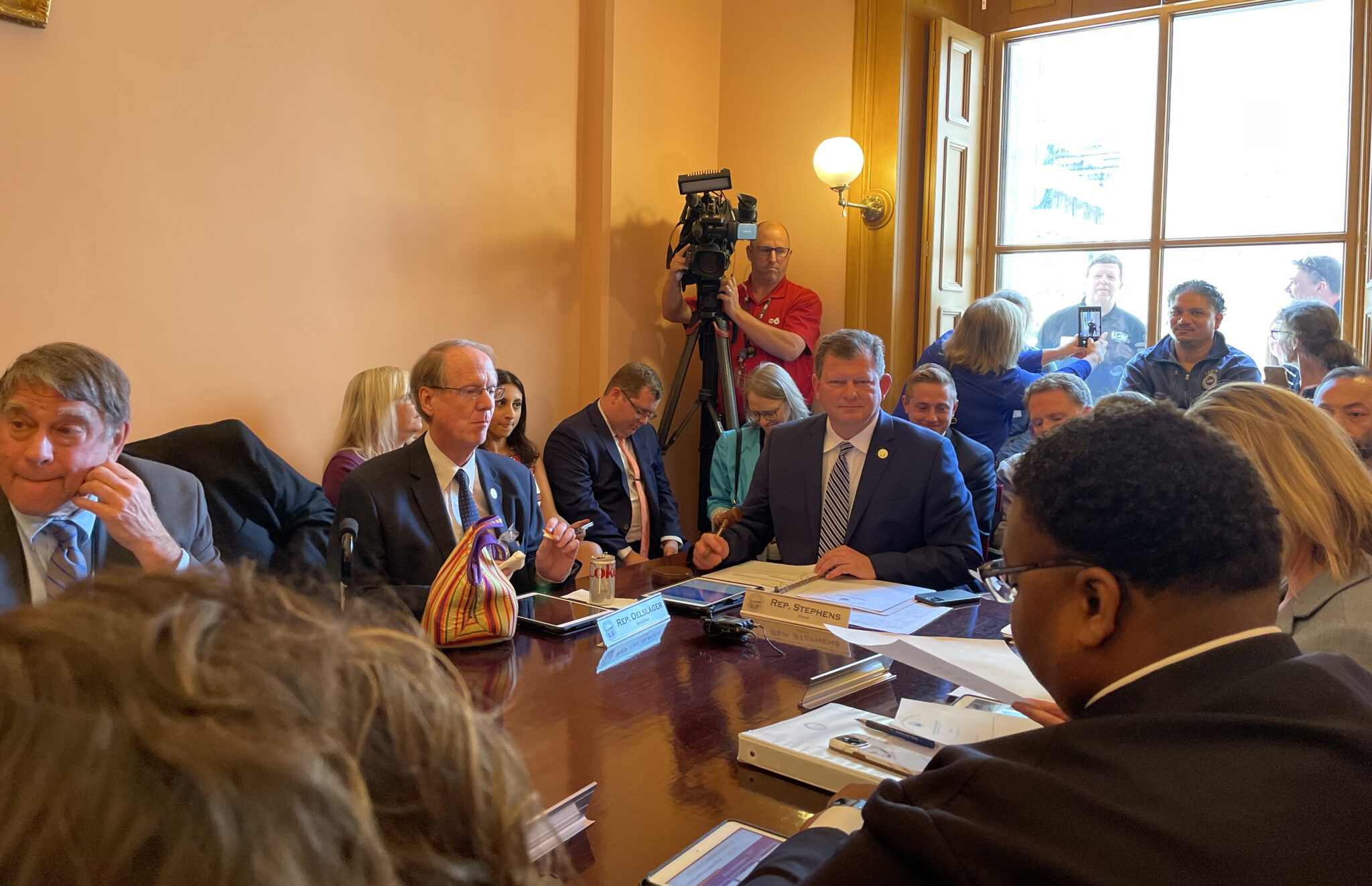
House Speaker Jason Stephens presiding over an uncharacteristically packed Rules Committee hearing. Some members of the public forced to leave, watched through the windows from outside. (photo by Nick Evans)
It remains an open question, however, just when voters might weigh in on the issue
The stage is set for a long-awaited House vote on SJR 2. The resolution would ask voters whether the threshold for amending the constitution should be 60% rather than a simple majority.
But lawmakers pushing the plan may not be celebrating yet. A parallel effort to send the question to voters before they consider an abortion rights amendment seems to have fallen short.
Supermajority amendment backers are now left to decide whether to accept half a loaf, or to try some last-minute maneuver to set up an August special election.
Speaking after the vote to place SJR 2 on the House calendar, the House speaker and the minority leader said they expected the latter. But it’s not clear what that gambit might look like, or if it would succeed.
Killing August
Placing the 60% amendment on the ballot in August was never part of the plan. Lawmakers voted to get rid of those elections around the same time the first attempt at imposing a supermajority threshold fell apart. They only thought to revive August elections after the latest supermajority effort missed the deadline for the May primary.
Lawmakers pursued a May and then an August election to ensure an abortion rights amendment would have to clear a higher bar. But that argument didn’t move everyone in the Republican caucus.
Rep. Sharon Ray, R-Wadsworth, offered an amendment to SJR 2 stripping out reference to August elections.
“When we did away with August special elections last year after we put our precinct election officials through a very difficult year, you know, we said we were not going to do this anymore,” Ray explained.
She added the upcoming calendar is a bit of a disaster for boards of elections. In addition to conducting a special election, they have to manage filings for local candidates running for school board, city council or mayor this November.
Election day in August would be August 8. The deadline for those local filings? August 9.
“In addition to two different election calendars that are overlapping they’ll have all these filings and I just don’t think it’s fair,” Ray said.
Still, Ray said her reticence only extends to the August elections—not the underlying supermajority proposal.
“I think August, to spend $20 million for an election that’s going to have probably an 8% turnout is really not our best option,” Ray said. “A November election, I will vote to put it on the ballot so people can decide then.”
Rep. Sharon Ray, R-Wadsworth, arguing for her amendment. (photo by Nick Evans)
The Rules committee
Ray’s amendment is unusual for its timing, coming up in the Rules and Reference Committee. It’s typically the last stop for legislation before going to the House floor. It gives House Speaker Jason Stephens, who leads the committee, significant control over when and if a proposal goes before the chamber.
But while the Rules committee sets the agenda, it rarely deals with policy amendments. Tuesday, after a two-and-a-half-hour delay, the committee met, and approved Ray’s changes. Every Republican on the committee – with the exception of state Rep. Jay Edwards, R-Nelsonville – voted to advance the proposal to the floor.
“We’re close to this being jammed down our throats and I think it’s wrong, and I don’t think there was enough discussion had on this entire premise,” Edwards argued.
Every Democrat voted against advancing SJR 2.
Notably, if the House approves changes to SJR 2, the Senate would have to agree before it makes the ballot.
Shenanigans
Despite Ray’s amendment excising August election provisions, Republican and Democratic leaders had no illusions about the issue being dead. House Minority Leader Allison Russo said she expects an amendment when the resolution comes up for a floor vote.
“Well, certainly they can get on the floor tomorrow and take that language right back out and amend it, which I wouldn’t be surprised if that happens,” Russo said. “So, you know, some of this is theatrics, I think.”
Russo argued that even if Republicans are successful, the proposition is a loser at the ballot box — regardless of when it goes before voters.
She also criticized Speaker Stephens for letting the resolution advance. Stephens only won the speakership with the support of Democrats, and his reluctance to advance a supermajority measure was a big reason why. But Russo sidestepped questions of whether Stephens had violated a deal with Democrats.
“This isn’t about reneging on Democrats,” she said. “It’s about reneging on the people of Ohio and taking away a right that they have had for over a century.”
For Stephens’ part, he echoed Russo’s expectations about last minute floor amendments.
“There will probably be more than one amendment, I guess, on this resolution tomorrow, one of the amendments will probably be for an August election,” Stephens said. “So, we’ll have that debate tomorrow.”
And the August election is not a problem, Stephens said. He offered the dubious assertion they can hold one without passing any additional legislation at all.
“Yeah, the legislature has the constitutional authority to create an election day,” Stephens argued.
This despite lawmakers passing a bill just months ago limiting August elections to municipalities in fiscal emergencies or primaries for Congressional vacancies. And despite lawmakers working, and eventually failing, to pass legislation this session to explicitly allow special elections for amendments offered by the general assembly.
Can he do that?
Steven Steinglass, dean emeritus at Cleveland State’s law school and one of the foremost experts on the Ohio Constitution, flatly rejected Stephens’ contention.
“The answer is they do not have that power, and if that is what he said he’s getting bad advice from his lawyers or whoever he seeks advice from,” Steinglass said.
The problem, he explained, is that recent legislation restricting the circumstances under which an August election can happen. Those restrictions are in statute, and a joint resolution doesn’t change statutes. In the end it boils down to a separation of powers issue.
“It’s been clear for 125 years that you cannot add statutory type language to a joint resolution,” Steinglass explained. “They’re two different legal instruments, if you will. The point is that the governor has no role regarding joint resolutions, but the governor could veto a statutory change.”
He cited the relevant case law from 1897, as well.
“The Ohio Supreme Court said, and I quote, the statute law of the state can neither be repealed nor amended by a joint resolution of the General Assembly,” Steinglass said.
Nick Evans has spent the past seven years reporting for NPR member stations in Florida and Ohio. He got his start in Tallahassee, covering issues like redistricting, same sex marriage and medical marijuana. Since arriving in Columbus in 2018, he has covered everything from city council to football. His work on Ohio politics and local policing have been featured numerous times on NPR.
NEW ALBANY, OH — MAY 03: Roster judge Jeff Greenberg checks a voter during the Ohio primary election, May 3, 2022, at the Grace Life Nazarene Church voting location, New Albany, Ohio. (Photo by Graham Stokes. Republish photo only with original story.)
An Ohio House committee took up two measures Wednesday aimed at re-establishing an August special election. Lawmakers eliminated nearly all such contests in the waning days of the last session, just a few short months ago.
But with an abortion amendment looking likely to appear on the November ballot, Republicans are pulling out all the stops in a bid to raise the threshold for constitutional amendments first.
That threshold resolution has already passed the Senate. If Republicans in the House can cobble together enough votes, voters will soon decide whether it should take a 60% supermajority to amend the state constitution. The two elections measures in the House would settle the question of when.
Non-sequiturs and counting noses
At the outset of Wednesday’s hearing, committee chair Rep. Bob Peterson, R-Washington Court House, admonished members and witnesses to stick to the substance of the August election bills. Throughout the hearing he tried — valiantly — to maintain that separation, but it proved a losing effort.
In the end, the move to reinstate August elections has only arisen as an counterpart of the feverish bid to raise the constitutional threshold.
That became clear in the testimony offered by the bill’s sponsors and supporters. Instead of presenting a case for an August election’s necessity, they often offered non-sequiturs.
“Our hopes were to get SJR 2 or HJR 1 to the ballot in May, but things didn’t work out in time,” Sen. Theresa Gavarone, R-Bowling Green, argued.
Later, in a back and forth with Rep. Dani Isaacsohn, D-Cincinnati, Sen. Rob McColley, R-Napoleon, added that a May election would’ve been preferable “because it was already scheduled.”
“Did you know that we have an election scheduled already for November?” Isaachson asked.
Separately, McColley acknowledged the reasoning behind Republicans’ effort to bring back the August election date. Again, their logic boils down to a political calculation inextricable from raising the constitutional threshold.
“In order to get 60 votes for this, there are other considerations that needed to be made for enough members to get us over the 60-vote threshold I had to be on in August,” McColley explained.
Some members, notably former chair of the House constitutional resolutions committee, Scott Wiggam, R-Wayne County, flatly rejected allowing the constitutional threshold question on the same ballot as an abortion rights measure. In a letter for House Speaker Jason Stephens, after his ouster from the committee, Wiggam elaborated.
“If that initiative and HJR 1 were both to pass we could see the very real scenario of abortion on demand placed in Ohio’s constitution with a 50% plus 1 vote and then it be protected with the 60% threshold because of HJR 1’s passing,” he wrote. “It is well known that this scenario is not acceptable to the Republican Caucus.”
Low turnout
Democrats repeatedly hammered the sponsors about timing because August elections typically involve far lower voter turnout. In the most recent August election, turnout averaged just 8% statewide.
Rep. Susan Manchester, R-Waynesfield, however, argued back that low turnout isn’t “a forgone conclusion.”
She pointed to her own election in 2022.
“I’m proud to say that my district had the highest voter turnout in the entire state, and it was equal if not similar to what the turnout is during a November or May election.” Manchester argued. “So let’s not underestimate the voice of our citizenry and wanting to participate in this process.”
At best, however, Manchester’s boast is a bit of an exaggeration. The 18.23% turnout in Auglaize County in 2022’s August election was the most in the state, but it was not quite in line with prior elections. It was four percentage points behind the 2020 primary, marred by COVID-19 and more than eight percentage points behind the 2018 primary.
When it comes to general elections, the August 2022 turnout is a pittance. The 2022 general election saw 58.47% turnout — more than three times the turnout in August. In 2020, Auglaize turnout was nearly 80% and in 2018 it cleared 60%.
The problem, as critics of August elections — many of them Republicans — have consistently noted, is that the contests are an inconsistent grab bag of local issues like school or construction levies. They aren’t the sort of issues the average voter spends an enormous amount of time thinking about, and they come up at a time most voters aren’t thinking about heading to the polls.
To that end, Rep. Richard Brown, D-Canal Winchester, asked Manchester if she’d voted in any recent August elections. Manchester admitted she couldn’t recall. But aside from the 2022 primary, Auglaize County hasn’t had an August election in at least ten years.
Still, for all her optimism about turnout, even Manchester isn’t immune from sitting out a sleepy election or two. According to the Auglaize County board of elections, her even-year voting record is basically flawless, save missing a primary in 2014. But when it comes to odd-year elections where posts like city council, mayor and school board get decided, she’s only shown up once since casting her first ballot in 2006.
Nick Evans has spent the past seven years reporting for NPR member stations in Florida and Ohio. He got his start in Tallahassee, covering issues like redistricting, same sex marriage and medical marijuana. Since arriving in Columbus in 2018, he has covered everything from city council to football. His work on Ohio politics and local policing have been featured numerous times on NPR.
Less than half a year after proclaiming August elections to be too expensive for the turnout they attract, the Senate Republican majority expanded the use of a special election this year, complete with $20 million in funding.
“This is legislative whiplash, and we do it really well here in Columbus,” said state Sen. Kent Smith, D-Euclid.
In a mostly party-line vote, Senate Bill 92 was passed Wednesday by the body. The only Republican to vote against SB 92 was state Sen. Nathan Manning, R-North Ridgeville.
The vote came immediately after the state senate also passed an increase in the threshold for passing a constitutional amendment from 50% to 60% along party lines.
The threshold bill, SJR 2, is a companion bill to HJR 1, which has been making its way through the Ohio House, but has yet to come up for a floor vote. The House resolution passed its committee after three hours of testimony on Wednesday, most of which spoke in opposition to the bill.
Both bills could lead to a ballot measure where voters would approve or deny a constitutional amendment to raise that threshold.
With the approval of SB 92, August special elections will now be held “for consideration of a General Assembly proposed constitutional amendment,” to fill a congressional vacancy or hold a special primary for congressional party candidates.
The bill also appropriates $20 million to conduct “a one-time August special election on August 8, 2023,” a funding influx made while the bill was in committee.
That August election would be to send a constitutional voter threshold to the ballot for voters to approve an legislature-initiated amendment to raise the threshold from 50% to 60%.
Republicans pushed back on comparisons between previous August elections, including last year’s that saw an abysmal 8% turnout, with the argument that this time around, voters will care.
“With this being a bonafide, statewide question, and with it being an important question … I would say the turnout is going to be markedly higher in this August election,” McColley told his colleagues on the Senate floor.
The legislative measures seem to be direct hits at a potential constitutional amendment that would codify abortion rights if it makes it to the ballot box and is approved by voters in November. Abortion rights advocates are currently collecting the needed signatures. State law currently requires more than 400,000 in 44 of the 88 states.
One of the pro-abortion rights groups helping with the ballot measure, Pro-Choice Ohio, called the passage of SB 92 “both expected and incredibly disappointing” in a post on Twitter.
Last year, after redistricting confusion rocked the legislature, Republicans all-but eliminated the August election in a move that they said would save the state money and get rid of an unneeded annual election date that historically had low voter turnout.
In August of last year, the special primary election included statehouse races because the redistricting maps were rejected by the Ohio Supreme Court before they could be included in the May election. A U.S. District Court then intervened in the legal snarl that swept up the redistricting process, and allowed the state to use a map previously deemed unconstitutional by the Ohio Supreme Court as the map for the August primary.
That map is still in effect currently.
Speaking in opposition for SB 92, state Sen. William DeMora, D-Columbus, quoted Ohio Secretary of State Frank LaRose who spoke in support of reducing August special election usage last year, when he said they “aren’t good for taxpayers, election officials, voters or the civic health of our state.”
“(SB 92) is so bad that (LaRose) Secretary LaRose couldn’t even find the time to come and testify about it in committee,” DeMora said.
State Sen. Theresa Gavarone, R-Bowling Green, said claims that the August special elections were eliminated last year was an exaggerated claim.
“We’re not reinventing the wheel on this legislation,” Gavarone said, pointing out that certain occasions allowed for an August special election.
SB 92 now moves to the House for consideration.
_____________________
Susan Tebben is an award-winning journalist with a decade of experience covering Ohio news, including courts and crime, Appalachian social issues, government, education, diversity and culture. She has worked for The Newark Advocate, The Glasgow (KY) Daily Times, The Athens Messenger, and WOUB Public Media. She has also had work featured on National Public Radio.
Columbus, Ohio – In a narrow 7-6 vote, the Ohio House Constitutional Resolutions Committee passed a resolution allowing HJR 1 — a bill that seeks to increase the ballot threshold for amending the constitution from a simple majority to 60% — to a floor vote.
Following the resolution’s passage, a denial of 111 years of direct democracy right, Catherine Turcer, executive director of Common Cause Ohio, made the following statement representing a coalition of 227 organizations in opposition to a 60 percent threshold and an August special election for special interests.
“Since 1912, Ohioans from across the political spectrum have utilized the right to amend our Constitution via the petition process. Direct democracy gives voters the ability to make a real impact and has helped engage Ohioans in the political process. There is no justifiable reason, after over 100 years, to make this already challenging process even harder.
“Today, a sham committee shut down public testimony in opposition. This is not what democracy should look like. Extreme lawmakers turned away over 100 Ohioans who took time from their day to show up and testify in opposition. Committee Chair Phil Plummer clearly did not want to hear from voters. He and an ultra-slim margin of his anti-voter colleagues had already made up their minds, and they bullied this bad idea out of committee.
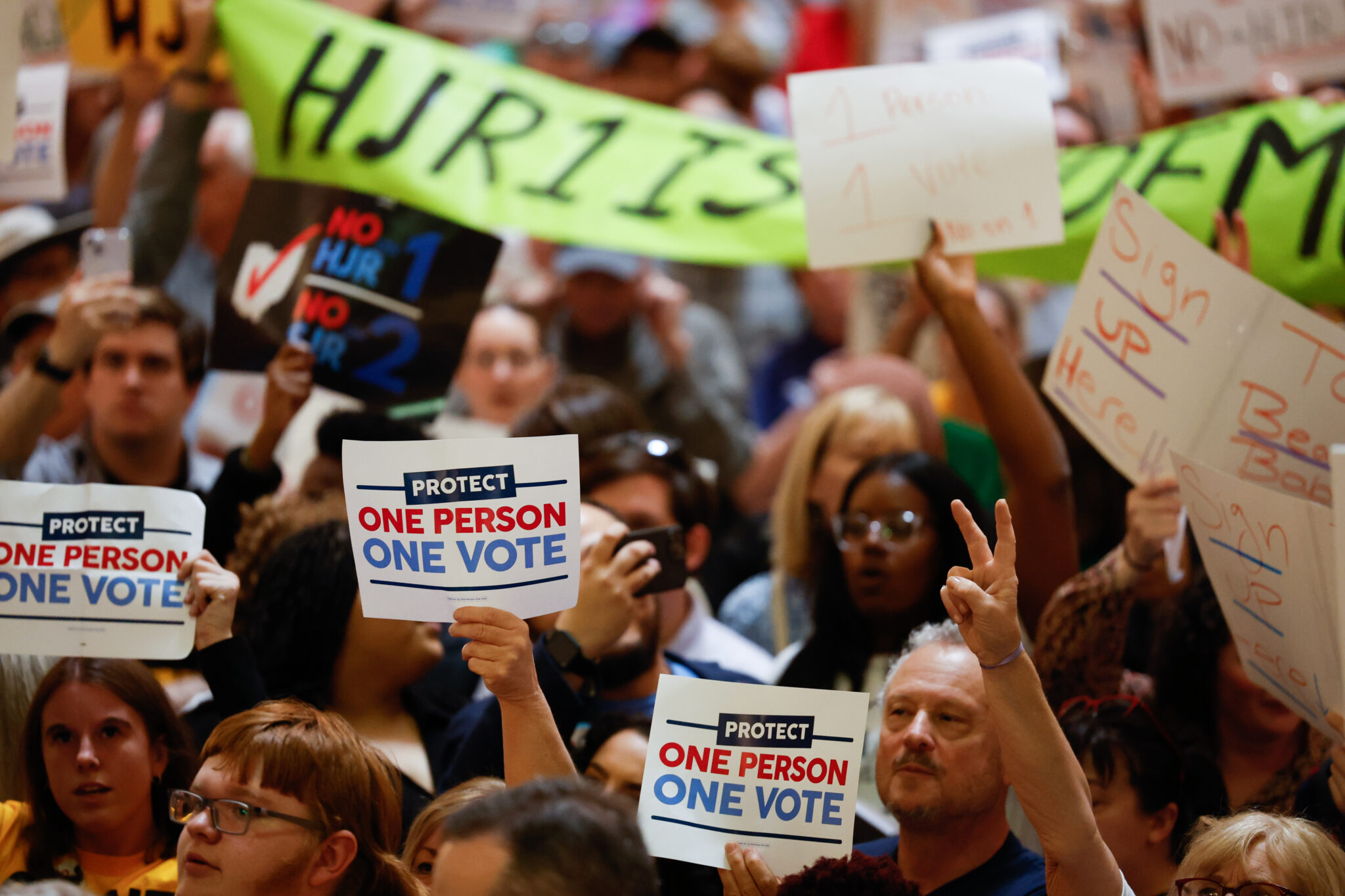
“We have a growing coalition of 227 organizations representing hundreds of thousands of voters who will not compromise the sacred principle of one person, one vote. In Ohio and this country, a simple majority means 50 plus one equals democracy. We will not allow this undemocratic, unfair, unnecessary, and unpopular attack on voting rights and freedom to stand.”
Additionally, the Ohio Senate passed Senate Joint Resolution 2 this afternoon, which also changes the threshold for passage of amendments to the Ohio Constitution to 60 percent. Similar to HJR 1, this measure makes the citizen initiative process more difficult by requiring 5% of the gubernatorial vote in all 88 counties. These proposals also remove the “cure period” for collecting additional signatures if a campaign falls short.





 NICK EVANS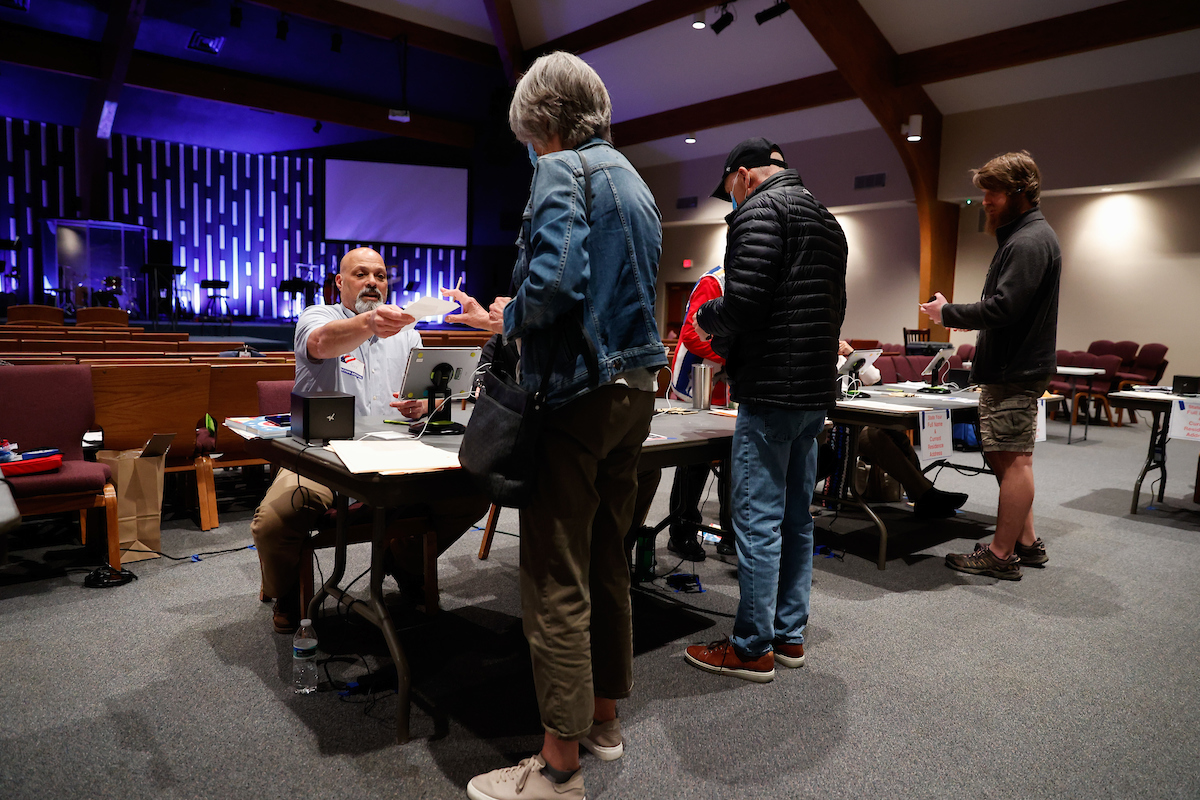
 Susan Tebben is an award-winning journalist with a decade of experience covering Ohio news, including courts and crime, Appalachian social issues, government, education, diversity and culture. She has worked for The Newark Advocate, The Glasgow (KY) Daily Times, The Athens Messenger, and WOUB Public Media. She has also had work featured on National Public Radio.