Tag: bailout

  • Ohio AG Yost is prosecuting others in utility scandal, but he won’t discuss his own involvement

    Ohio AG Yost is prosecuting others in utility scandal, but he won’t discuss his own involvement

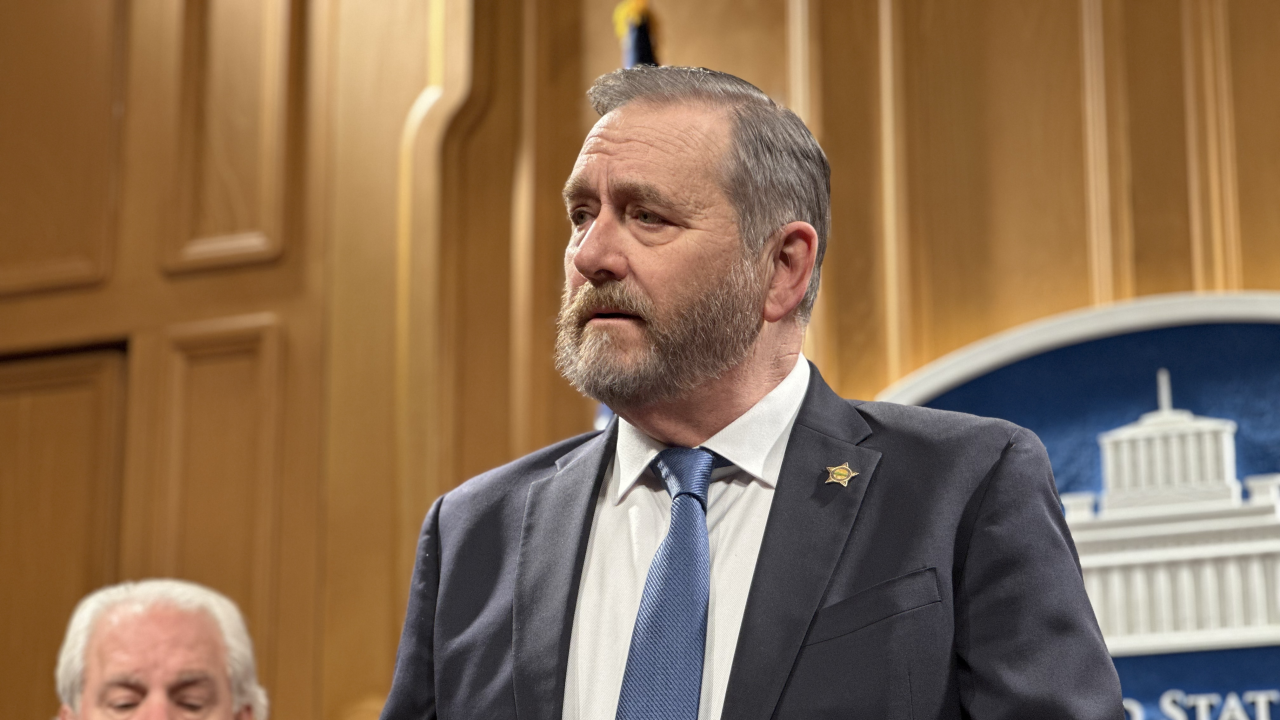
    Ohio Attorney General Dave Yost. (Photo by Morgan Trau, WEWS.)

    BY:  Ohio Capital Journal

    Ohio Attorney General Dave Yost this year brought criminal charges against four figures who were involved in the biggest bribery scandal in state history.

    Many thought they were long overdue. That’s especially true of cases filed against men accused of funding the conspiracy, but who still hadn’t been charged by federal prosecutors four years after the last of the alleged wrongdoing took place — and almost a year after two others began lengthy prison sentences.

    But Yost’s own name came up several times in the federal trial and his office last week again ignored detailed questions about the matter.

    The attorney general played an important role in the defeat of an attempted repeal of the corrupt bailout. And there were claims that he believed that the bailout was a bad law, but kept his mouth shut out of loyalty to one of the conspirators — and to the law’s major beneficiary.

    The issue is politically fraught for Yost because the state charges he filed this year have raised new questions about Lt. Gov. Jon Husted’s involvement in the scandal. Yost and Husted are widely expected to face each other in the 2026 race to be Ohio’s Republican nominee for governor.

    New charges

    Former House Speaker Larry Householder, R-Glenford, was sentenced to 20 years in federal prison last June for his role in a scheme in which Akron-based FirstEnergy paid more than $60 million to make him speaker in 2018 and to pass and protect a $1.3 billion ratepayer bailout the following year. It’s one of the biggest scandals in Ohio history, and so far it has also sent former GOP Chairman Matt Borges to prison for five years, resulted in two more guilty pleas — and seen two defendants die by suicide.

    But U.S. Attorney Kenneth Parker sidestepped a pretty important question last June when he stood in front of the federal courthouse in Cincinnati and boasted to the press about the convictions and sentences his assistants had just won. He was asked, what about the people who paid the bribes? Would they be charged? If so, when?

    All Parker would say was that the investigation was ongoing.

    In December, his team indicted Sam Randazzo, Gov. Mike DeWine’s nominee to be Ohio’s top utility regulator. In a deferred prosecution agreement, FirstEnergy said it paid Randazzo a $4.3 million bribe just before he became regulator. From that post, he did a number of lucrative favors for the company related to the bailout and he improperly helped with other matters as well, according to the indictment.

    But still uncharged by the feds are former FirstEnergy CEO Chuck Jones and Vice President Michael Dowling, the executives alleged to have directed truckloads of company money into 501(c)(4) dark money groups that financed the scandal.

    In February, a team of state prosecutors led by Yost stepped into the void by securing a grand jury indictment against Jones, Dowling and Randazzo. The charges relate to the bailout scandal, and also to a decade’s worth of shady dealings that allegedly paid Randazzo more than $10 million and ripped off industrial energy users and residential customers alike.

    In April, Randazzo died by suicide.

    Other questions

    The state indictment also raised new questions about the cozy relationships between the DeWine/Husted administration, FirstEnergy and Randazzo.

    Weeks before they were inaugurated, DeWine and Husted had dinner in downtown Columbus with Jones and Dowling — FirstEnergy’s top leadership — and discussed whether Randazzo would be acceptable to regulate the company. Jones and Dowling then drove about a mile to Randazzo’s German Village residence and negotiated the $4.3 million payoff, according to text messages that are being used in multiple court proceedings.

    The state indictment alleges that DeWine’s chief of staff, Laurel Dawson, knew about the payoff before the governor appointed Randazzo to chair the Public Utilities Commission of Ohio. But Dawson — whose husband was a FirstEnergy lobbyist who allegedly received a $10,000 loan from Randazzo — isn’t talking publicly about what she knew or what she told her boss.

    DeWine also continues to stand behind his former governmental affairs director, Dan McCarthy, who lobbied the legislature on DeWine’s behalf to pass the bailout law.

    Just before taking that job, McCarthy, too, was a FirstEnergy lobbyist — a job in which he set up a dark-money group that became a conduit for tens of millions in funding for the scandal. In last year’s trial, the prosecution presented evidence that FirstEnergy VP Dowling in 2019 ordered a subordinate to keep the then-DeWine aide’s name off of a $10 million infusion into the corrupt bailout even after being told that it would violate IRS rules to do so.

    DeWine and his staff haven’t explained what McCarthy and Dawson knew about the corrupt machinations as the bailout law was in the works — or when DeWine signed it mere hours after its passage.

    DeWine, Husted and their administration also haven’t explained what they knew about the long, shady relationship between Randazzo and FirstEnergy described in the state indictment. The governor’s spokesman has tried to suggest that it was common knowledge, but extensive evidence shows that Randazzo and FirstEnergy went to great lengths to conceal it.

    DeWine also has said he didn’t know about millions in dark money contributions FirstEnergy made in 2018 to support his gubernatorial bid. But a University of Cincinnati political scientist said it’s simply not believable that a company would make that kind of an expenditure and not make sure the beneficiary knew about it. That seems especially true for a company that subsequently admitted that it paid millions more in outright bribes.

    For his part, Husted won’t comment on the $1 million in dark money FirstEnergy spent supporting his 2018 bid for governor, or whether he  promoted Randazzo for the regulatory job when he dropped his bid and joined DeWine’s ticket.

    The two had history. As House speaker in 2007, Husted appointed Randazzo to the PUCO Nominating Council — a position he held until DeWine nominated him to chair the agency.

    Questions for the Attorney General

    Husted and Yost, the attorney general, are widely regarded as the frontrunners for the 2026 GOP gubernatorial nomination in a state that hasn’t elected a Democrat to that job since 2006.

    There hasn’t been any suggestion that Yost brought charges in the bailout scandal as a way of embarrassing his likely opponent. But at the same time, Yost’s office has avoided questions about his own involvement in the bailout controversy.

    According to text messages presented at last year’s federal court trial, Yost was drawn into the fight at a critical time. The bailout passed the Householder-run House at the end of May 2019, but a month later, opposition was growing in the state Senate.

    Borges, the former GOP chair who had run some of Yost’s political campaigns, had a June 26, 2019 text conversation with Juan Cespedes, who was also being paid to push the corrupt bailout law. Borges intimated that Yost believed that the law was a bad one.

    The AG “‘would be out front (in opposition) if not for (FirstEnergy) support and your involvement,’” Borges quoted Yost as saying.

    A spokesperson for Yost declined to comment at the time, citing the fact that he’d been subpoenaed in the case.

    Regardless of the AG’s view, so many people agreed that the bailout was a horrible law that an effort to undertake the cumbersome repeal process was getting underway even before it passed. Borges noted to Cespedes that Yost would have to give his approval before a repeal could get on the ballot. The AG would try to help them there, too, Borges said.

    If there’s any way the law will allow him to reject the language, he will do it,” Borges texted.

    Regardless of why, Yost ended up doing just that.

    Crucial lost time

    DeWine signed the bailout, House Bill 6, the day the Senate passed it — July 23, 2019. Six days later, repeal advocates had gathered 1,000 signatures from registered voters and submitted a summary of the repeal to Yost for his approval.

    Time was of the essence because under Ohio law, repeal advocates had to gather another 265,000 voters’ signatures within 90 days of the law’s passage to get it on the ballot. But first they had to wait for Yost to approve the ballot summary.

    The attorney general waited the full 10 days allotted him and then issued a rejection letter that seems at odds with any concept of “summary.”

    It was a six-page, 1,535-word document that picked apart the summary in excruciating detail.

    “He listed a lot of different things,” said Rachael Belz, CEO of Ohio Citizen Action, which was strongly opposed to the bailout. “It seemed like a lot to overcome. It didn’t seem very neutral.”

    The repeal was a referendum — the only one for which Yost has considered summary language since he’s been attorney general. Of the 26 other summaries he’s rejected, the vast majority were for proposed constitutional amendments and the rest were for initiated statutes.

    His rejection of the summary for the bailout repeal stands out for its length. It’s more than twice as long as his other rejections are on average, according to information available on the attorney general’s website.

    In the event, Yost’s initial rejection did heavy damage to the repeal effort.

    Proponents on Aug. 16, 2019 submitted a new summary, which Yost certified on Aug. 29, 2019. But by that time, the repeal team had only 54 days left of the original 90 to gather and submit more than a quarter-million valid signatures. Their time to complete the gargantuan task was cut almost in half, in other words.

    What followed was a lying, xenophobic and sometimes-violent campaign to defeat the repeal into which FirstEnergy plowed $36 million in dark money. Perhaps unsurprisingly, the repeal couldn’t get enough signatures and parts of the corrupt bailout law are still on the books.

    Yost’s office didn’t respond to questions about his role in the repeal — or Borge’s statements that were presented at the former political boss’s criminal trial. But for Belz of Citizen Action, there’s plenty of blame to spread among Ohio’s statewide leaders.

    “I don’t think Yost’s hands are clean,” she said. “I don’t think Husted’s hands are clean. I don’t think DeWine’s hands are clean. I don’t know whose hands are clean. Frankly, that’d be a shorter list.”

    Marty Schladen
    MARTY SCHLADEN

    Marty Schladen has been a reporter for decades, working in Indiana, Texas and other places before returning to his native Ohio to work at The Columbus Dispatch in 2017. He’s won state and national journalism awards for investigations into utility regulation, public corruption, the environment, prescription drug spending and other matters.

    Ohio Capital Journal is part of States Newsroom, the nation’s largest state-focused nonprofit news organization.

    MORE FROM AUTHOR

  • FirstEnergy gave $1 million to boost Ohio Lt Gov Husted’s campaign before scandal, document shows

    FirstEnergy gave $1 million to boost Ohio Lt Gov Husted’s campaign before scandal, document shows

    Records show Jon Husted worked behind the scenes to bail out the company’s nuclear power plants. The million dollar donation was secret — until now.

    BY:  AND 

    Versions of this story were published by Floodlight, Energy News Network and the Ohio Capital Journal.

    A surge in FirstEnergy political spending ahead of the utility’s push to secure a legislative bailout for its nuclear power plants included a $1 million dark money contribution to support the campaign of Ohio Gov. Mike DeWine’s eventual running mate.

    The previously unreported gift linked to Lt. Gov. Jon Husted’s 2017 primary bid was revealed as part of a raft of documents obtained under Ohio’s public records law by a coalition of news organizations, including Floodlight, Energy News Network, and the Ohio Capital Journal.

    Among the documents are company emails describing behind-the-scenes efforts by Husted to persuade DeWine to support House Bill 6, the utility-backed legislation at the heart of the state’s ongoing $60 million public bribery scandal.

    Neither Husted nor DeWine, whose campaign also benefited from a previously reported $1 million in dark money from the utility, has been implicated in the scheme in which eight people, including the state’s former House Speaker Larry Householder, have been indicted.

    Two of those charged in the multi-million-dollar scandal surrounding the passage of HB 6 may have taken their own lives, including Sam Randazzo, the former chairman of the Public Utilities Commission of Ohio, who was found dead earlier this week of an apparent suicide.

    ‘Confidential’ email details campaign gift

    One of the documents from the Office of the Ohio Consumers’ Counsel Office is a spreadsheet attached to a January 2020 message labeled “confidential.” It shows $1 million went from FirstEnergy to the conservative group Freedom Frontier in 2017, with “Husted campaign” noted as the reason.

    That group backed Husted during his 2017 primary campaign for governor. The group then supported DeWine after Husted dropped out of the race to become his running mate.

    Husted is considered among possible front runners for the Republican nomination for governor in 2026. A January report by the Jon Husted for Ohio campaign committee shows it got roughly $1.7 million last year.

    Husted was also dubbed the “‘Golden Boy’ for FirstEnergy” by lobbyist Neil Clark, a co-defendant with Householder and others in the federal government’s criminal corruption case. Clark died by suicide in 2021.

    In several of the recently released records, Husted is mentioned in the same breath as Householder, the convicted House speaker, and Randazzo, the former PUCO commissioner, by FirstEnergy leadership as they sought to pass and then defend HB 6, the nuclear and coal bailout law at the heart of Ohio’s ongoing corruption scandal.

     FirstEnergy records released via public records request show how executives at the power company relied on Ohio Lt. Gov John Husted and convicted former House Speaker Larry Householder to help them pass a $1.3 billion nuclear bailout bill. 

    Husted has maintained that his support for the 2019 law stemmed from his belief that nuclear energy is an important part of Ohio’s energy portfolio. Parties in HB 6-related shareholder litigation have subpoenaed Husted to answer questions under oath, although a new date needs to be set.

     FirstEnergy records released via public records request show how executives at the power company relied on Ohio Lt. Gov John Husted and convicted former House Speaker Larry Householder to help them pass a $1.3 billion nuclear bailout bill. 

    “The Husted campaign never received this donation and is not affiliated with any of these groups,” said spokesperson Hayley Carducci. By law, candidate campaigns are not supposed to coordinate with groups like Freedom Frontier, which can spend unlimited amounts to support or attack them.

    The document and others reflect a major commitment by FirstEnergy to Husted’s political future. Before 2017, the company’s reported political spending to support Husted was less than $25,000 per campaign, according to data from OpenSecrets.

    Dark money spending rises sharply

    More broadly, the document also indicates a major increase in FirstEnergy’s political spending through nonprofit groups exempt from taxes under Section 501(c)(4) of the Internal Revenue Code. Those, along with privately held corporations, are common structures for dark money organizations — groups that aren’t required by law to disclose the ultimate source of their funding.

    The company’s giving to such groups jumped to more than $12 million in 2017, after much lower levels of $200,000 in 2016 and $100,000 in 2015, according to the spreadsheet.

    Starting in 2014, FirstEnergy had sought bailouts for noncompetitive coal and nuclear plants. And in late 2016, regulators approved a $456 million consumer surcharge that ultimately was held unlawful. Yet the company claimed it needed more.

    The document details once-secret contributions to groups supporting “everyone from the mayor of Akron to President Trump that FirstEnergy made to secure bailouts for its soon-to-be bankrupt coal and nuclear plants and to gain influence on other key issues,” said Dave Anderson, policy and communications manager for the Energy and Policy Institute.

     A spreadsheet details dark money expenditures by northeastern power company FirstEnergy as it sought to secure a $1.3 billion bailout for its struggling nuclear power plants. The sheet reveals a previously unreported $1 million donation to benefit the candidacy of Ohio Lt. Gov. Jon Husted. 

    Anderson added that the spreadsheet also “provides some key new evidence for utility regulators and consumer advocates to use to ensure that every dollar of ratepayer money that FirstEnergy misused to fund its secret political spending is publicly disclosed and refunded, with interest and ideally serious financial penalties.”

    At the time, the author of the document that details the donations, Kristina Housley, was executive assistant to FirstEnergy’s Mike Dowling, who is now a defendant in a state criminal case along with former CEO Chuck Jones.

    Finding out all the details about the dark money spending behind HB 6 is like peeling back the layers of an onion, said Catherine Turcer, executive director of Common Cause Ohio.

    “The reason that transparency matters so much is that money that is spent in the shadows influences elections, and it influences really important policy decisions that impact us every day,” Turcer said. “And we have the right to know what is going on in government and how decisions are being made and who’s attempting to influence those decisions.”

    The ‘Golden Boy’ for FirstEnergy

    A December 2017 email from former FirstEnergy lobbyist Joel Bailey said Husted was working to get DeWine on board with FirstEnergy’s “issues.” FirstEnergy also supported other pro-DeWine/Husted efforts during the election cycle.

     Former FirstEnergy CEO Chuck Jones (top left), former FirstEnergy VP Michael Dowling (top right), former PUCO Chair Sam Randazzo (bottom middle). Graphic by WEWS. 

    After the election, Husted and DeWine dined with Jones and Dowling on December 18, 2018. Later that night, FirstEnergy agreed to pay $4.3 million to energy lawyer Randazzo, who went on to become DeWine’s first pick for chair of the Public Utilities Commission of Ohio. FirstEnergy later identified Jones and Dowling as the two people responsible for paying alleged bribes.

    Husted’s office has been evasive about his recollections, despite Jones noting in texts to Randazzo that the PUCO chair position was discussed in at least general terms. Another text by Jones in 2019 said the DeWine/Husted team was forced “to perform battlefield triage” to secure Randazzo’s nomination after a 198-page dossier provided to DeWine’s staff threatened to derail it.

    Evidence from last year’s criminal trial of Householder, the former Ohio House speaker, and lobbyist Matt Borges also included messages between former FirstEnergy executives Jones and Dowling about Husted working behind the scenes to build support for the bill. Among the actions were efforts to extend the bailout period for the company’s former nuclear power plants in Ohio.

    Husted long a friend of utilities

    Husted had been Ohio’s secretary of state immediately before becoming lieutenant governor. Before that, he served as House speaker in the General Assembly. In that role, he played a pivotal part in securing passage of another major energy bill, Senate Bill 221.

    At the time, Husted supported the law’s clean energy standards that were ultimately gutted by HB 6. However, SB 221 set the stage for so-called electric security plans. Those have let FirstEnergy and other utilities avoid full rate cases for more than a decade, while allowing cross-subsidies and adding multiple additional charges to consumers’ bills.

    “That bill upset the balance” of energy regulation in Ohio, said Ashley Brown, a former PUCO commissioner. “It was a humongous gift for the utilities.”

    Lawmakers repealed HB 6’s $1 billion-plus in subsidies for FirstEnergy’s former nuclear power plants and its recession-proofing provisions in 2021, eight months after the arrests of Householder and others.

    Earlier this year, Husted told NBC4 in Columbus the rest of HB 6 “needs to be completely removed.” He did not respond to Energy News Network questions this week about whether that includes both the law’s subsidies for two 1950s-era coal plants and its gutting of Ohio’s renewable energy and energy efficiency standards.

    FirstEnergy spokesperson Jennifer Young declined to comment on the company’s 2017 donation to Freedom Frontier due to ongoing litigation. However, she added, “FirstEnergy will post information regarding its support of 501(c)(4) social welfare organizations on the company’s website on a quarterly basis.”

    Those disclosures are currently required under the company’s July 2021 deferred prosecution agreement. That agreement expires later this year.

    Meanwhile, FirstEnergy still has not disclosed its dark money spending for the years 2018 through 2020. And proposals for reforms that would require such disclosures from all electric utilities remain stalled in the General Assembly.

    “It’s incredibly frustrating that Ohioans can be aware that dark money impacted decision-making at the statehouse,” Turcer said, “and yet we still haven’t gotten the legislators to create greater transparency.”

    The Energy News Network is a nonprofit news site dedicated to keeping influencers, policymakers and citizens informed of the important changes taking place in the transition to a clean energy system. Floodlight is a nonprofit newsroom that investigates the powerful interests stalling climate action. 

    This article first appeared on Energy News Network and is republished here under a Creative Commons license.

    _____________

    Mario Alejandro Ariza, Floodlight
    MARIO ALEJANDRO ARIZA, FLOODLIGHT

    Mario Alejandro Ariza is an investigative reporter and a Dominican immigrant. His byline has appeared in publications like the South Florida Sun Sentinel, The New Republic, and The Atlantic. Mario wrote a book called “Disposable City: Miami’s Future on the Shores of Climate Catastrophe,” which was published by Bold Type Books. His essays have been featured in The Believer and selected for Best American Essays. He lives in South Florida with a cat, a dog, and a sturdy pair of waterproof boots.

    MORE FROM AUTHOR

    Kathiann M. Kowalski, Energy News Network
    KATHIANN M. KOWALSKI, ENERGY NEWS NETWORK

    Kathi is the author of 25 books and more than 600 articles, and writes often on science and policy issues. In addition to her journalism career, Kathi is an alumna of Harvard Law School and has spent 15 years practicing law. She is a member of the Society of Environmental Journalists and the National Association of Science Writers. Kathi covers the state of Ohio.

    MORE FROM AUTHOR

  • On the stand, former House speaker confronted by prosecutors with inconsistencies

    On the stand, former House speaker confronted by prosecutors with inconsistencies

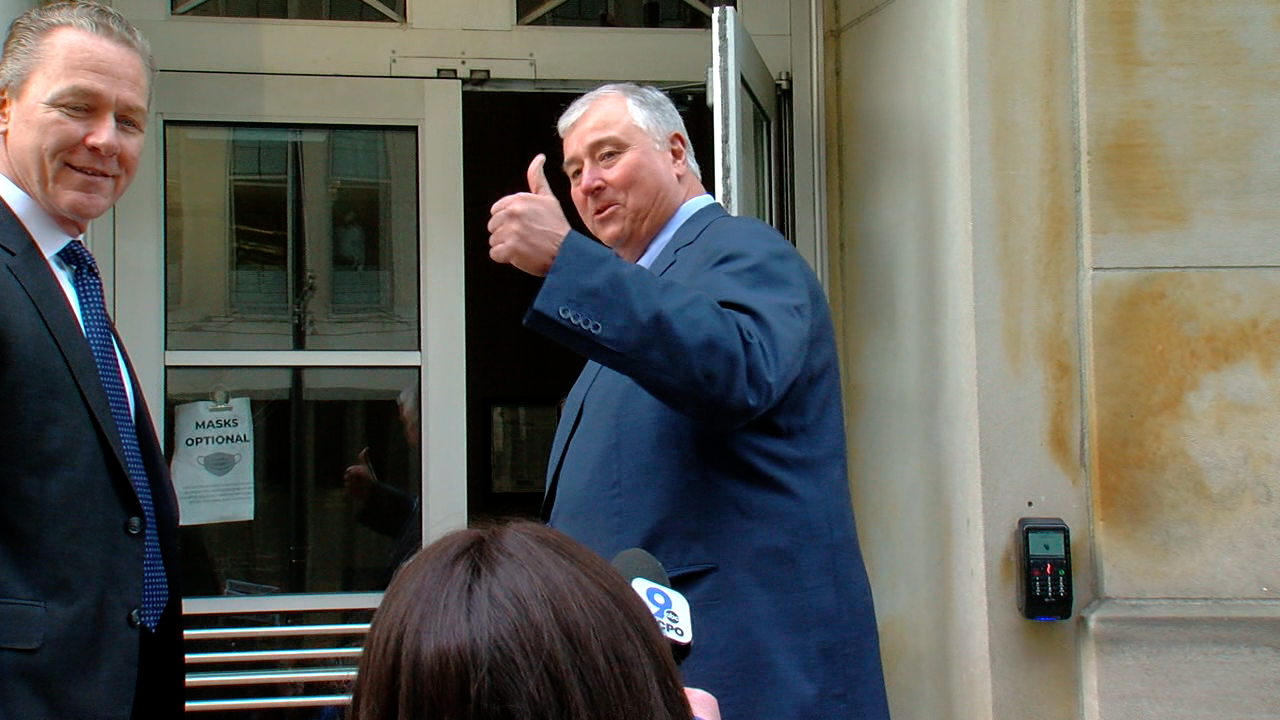
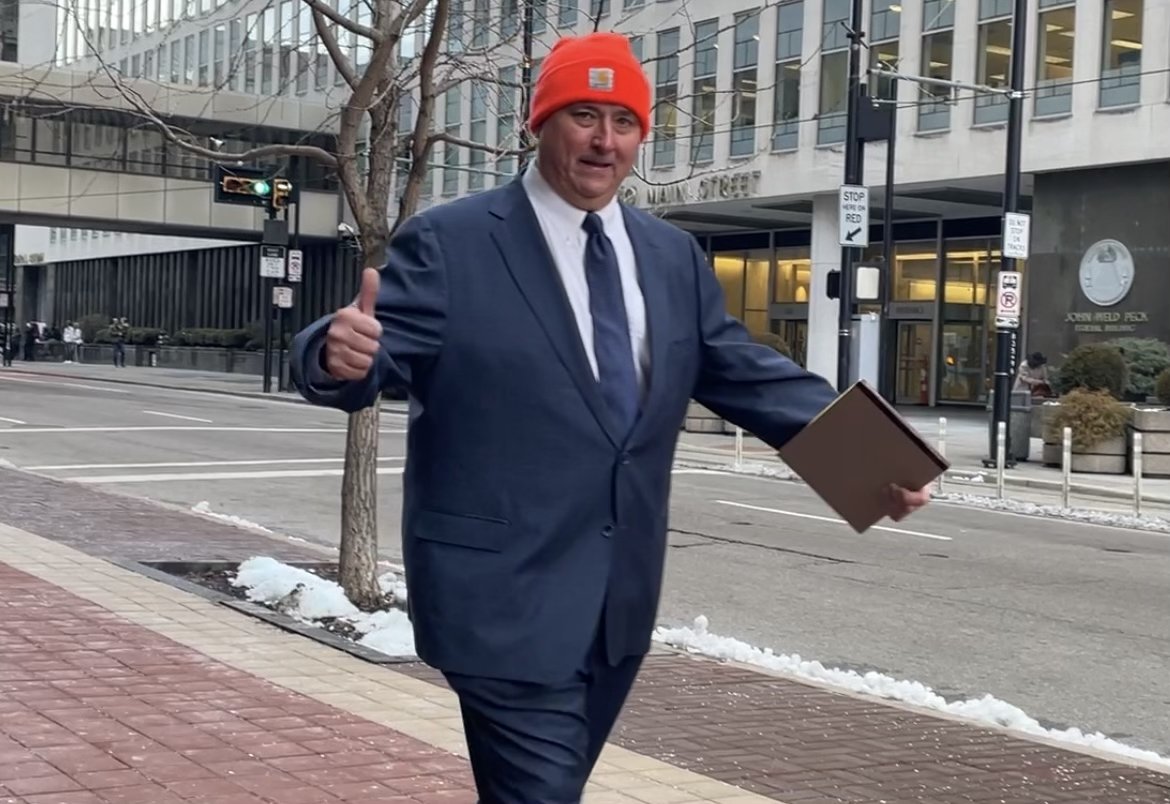
    Former Ohio House Speaker Larry Householder gives the thumbs up as he enters the courthouse where he is expected to testify Wednesday, March 1, 2023. Photo from WEWS.

    BY: MARTY SCHLADEN – Ohio Capital Journal

    The cross examination prompted some observers to say Householder badly damaged his defense against federal racketeering charges by using the risky tactic of testifying in his own defense. It marked the end of the evidentiary phase of the trial. Closing arguments will begin Tuesday.

    Householder and former Republican Party Chairman Matt Borges are accused in a scheme to use $61 million in funds mostly from Akron-based FirstEnergy to make Householder speaker and then to pass and protect a $1.3 billion bailout that primarily went to prop up a subsidiary’s failing nuclear plants.

    Over more than five weeks of testimony, prosecutors have put on evidence they say proves Householder passed the bailout in return for massive 501(c)(4) “dark money” contributions and for more than $500,000 in personal benefits. Perhaps as a sign that they didn’t believe things were going well, Householder and his defense team took the controversial step of putting him on the witness stand on Wednesday.

    Defense attorneys are usually reluctant to put their clients on the stand because prosecutors can use cross examination to catch them in lies. That seemed to be Assistant U.S. Attorney Emily Glatfelter’s goal as she cross-examined Householder on Thursday.

    Hardball

    Glatfelter played secret recordings of conversations that jarringly contradicted Householder’s claims that as speaker, he wanted to be a peacemaker. Under its earlier leadership, Householder said, the House Republican Caucus was too “divisive.”

    “I didn’t want enemies. I wanted friends,” Householder said Wednesday, trying to refute claims that he was an autocratic leader who demanded unstinting loyalty from lawmakers and contributors.

    Glatfelter played a wiretap recording of a conversation between Householder and Neil Clark, a lobbyist who was charged in the conspiracy and later died by suicide.

    “We like war and you know that Neil,” Householder told Clark. Then referring to Republican Reps. Dave Greenspan and Scott Lipps, whom Householder considered insufficiently supportive, he said, “If you f**k with me, I’ll f**k with your kids.”

     Former House Speaker Larry Householder, R-Glenford. Source: Ohio General Assembly.

    The former speaker had earlier denied being involved in using dark, or “C4” money to make attack ads, but when Clark asked “You’re talking about C4 money?” Householder responded, “Yeah.”

    When Glatfelter asked Householder if he punished contributors and lawmakers who supported his foes instead of him, Householder said, “I can’t think of any consequences” he had meted out to non-supporters.

    Then Glatfelter played a recording between Householder and Clark in which they discussed what to do about non-supporters.

    “We can f**k them over later,” Householder said.

    In the dark about dark money

    The prosecutor also didn’t buy Householder’s claim of general ignorance about the operations of Generation Now, a 501(c)(4) dark money group into which FirstEnergy pumped scores of millions to pass and protect the bailout legislation. The entity was created and controlled by Jeffrey Longstreth, Householder’s underling, a few weeks after Householder flew with FirstEnergy Vice President Michael Dowling to Donald Trump’s 2017 inauguration aboard FirstEnergy’s corporate jet.

    Householder claimed that he was so new to the dark money game that Longstreth had to explain how such groups worked.

    And, as he did through much of the cross examination, Householder answered questions repetitively and seemingly grudgingly. When asked by Glatfelter what the former speaker thought the purpose of Generation Now was, Householder responded, “To educate the public on important issues and support candidates who support those issues.”

    Records and testimony from Longstreth — who pleaded guilty in the case — indicated that dark money from Generation Now was used to make and run ferocious attack ads against opponents of “Team Householder.” Then it was used to claim without evidence that an effort to repeal the bailout was really a Chinese effort to take over the Ohio energy grid. 

    Because such groups don’t have to disclose their contributors, FirstEnergy was able to keep its fingerprints off its involvement in passing and protecting legislation of such interest to the company.

    Prosecutors also played recordings and showed written messages indicating that Householder was involved in planning Generation Now-funded messages. But asked by Glatfelter several times on Thursday what he believed the dark money group actually did, Householder tried not to move far from his initial answer.

    The group was for “educating the public on issues that are important to Ohio and me and supporting candidates who support those issues,” he said.

    Champagne travel for a “country Republican”

    The former speaker and the prosecutor also clashed over Householder’s flight to the Trump inaugural. Householder and his son were invited to do so by Cleveland businessman Tony George.

     Former FirstEnergy CEO Charles “Chuck” Jones. Source: FirstEnergy, via Flickr

    Glatfelter asked what George’s relationship with FirstEnergy was. Householder said George “knew Chuck” — referring to FirstEnergy CEO Chuck Jones.

    Incredulous, Glatfelter said, “There’s a difference between knowing somebody and having access to his company jet, right?”

    Householder said that the only reason Dowling, the FirstEnergy vice president, flew with the group is because George said someone from the company had to be on the flight. The implication, apparently, was that the trip wasn’t part of the plan for a FirstEnergy bailout.

    Householder said he agreed to take the flight to save time. But traveling by private jet might not fit with  his explanation earlier in the day of the difference between him and Borges.

    “He’s a country club Republican and I’m more of a country Republican,” Householder said.

    The former speaker also claimed that he didn’t intend to fly free. 

    “From day 1, I was going to pay for that flight,” he said.

    More than two months later, Householder paid FirstEnergy $2,647. He said he paid then because that’s how long it took for FirstEnergy to send him a bill — not because the Dayton Daily News had written a story about the flight and the questionable appearance that it made.

    That Householder would take a private jet without knowing what the cost would be is difficult to square with another statement he made about himself when he testified a day earlier.

    “Anybody who’s been around me knows I’m cheap,” Householder said. “I drive a 2001 GMC Sonoma and I don’t like to spend money.”

    Glatfelter punched other holes in Householder’s attempts Wednesday to distance himself from FirstEnergy executives on the trip to the Trump inaugural. She showed that George reserved rooms at the same hotel for Householder and CEO Jones within a minute of each other and paid the same amount for both — $1,500. 

    Householder said he believed the Ohio Republican Party paid for his room.

    Personal payments, questionable sources

    Observers have said that one of the most damning kinds of evidence against Householder is that Longstreth had paid more than $500,000 to settle a lawsuit against the speaker, repair a house he owned in Florida, and to retire credit card debt. Longstreth said he had papers drawn up to formalize the payments as loans, but Householder never would sign them.

    Householder said his plan was to pay Longstreth when the Florida house was sold. When it finally did sell — for nearly $700,000 — Householder said he couldn’t pay Longstreth because both had been arrested in July 2020 and he believed any payments to a co-defendant could be used against him. The former speaker said he planned to pay Longstreth when the case is over.

    Householder also showed a curious lack of interest in the sources of Longstreth’s money. 

    Longstreth testified that he received millions in FirstEnergy money through Generation Now and into a separate account that he used to pay Householder’s debts, hire contractors, pay himself, and the like.

    Glatfelter asked Householder where Longstreth got the money to pay Householder’s debts and to run the sweeping political operation.

    “His business wasn’t my business,” Householder said of the man he hired to recruit candidates, get them elected, and then get them to vote to make him speaker.

    Lack of disclosure

    Glatfelter also took Householder to task for not disclosing debts and gifts in compliance with state ethics laws. 

    He didn’t disclose a $1.89 million judgment against him over a failed Alabama coal mine. Nor did he disclose 2016 World Series tickets that were given him at a discount from the going rate of $2,500 apiece, Glatfelter said. And he failed to report the $1,500 hotel room George got him for Trump’s inauguration.

    Householder testified that his attorney filed the disclosures and that he had only “glanced over” them. 

    Glatfelter pointed him to the portion of the disclosures in which the filer says he or she knows the contents of the disclosure and has to swear it’s accurate — a legally binding attestation similar to the one Householder made before testifying. She asked Householder if the documents bore his electronic signature.

    “I don’t even know what an electronic signature is,” he replied.

    Pressed, Householder responded with several versions of, “I relied on the advice of my attorney.”

  • Ohio utility regulator front and center in massive bailout scandal

    Ohio utility regulator front and center in massive bailout scandal

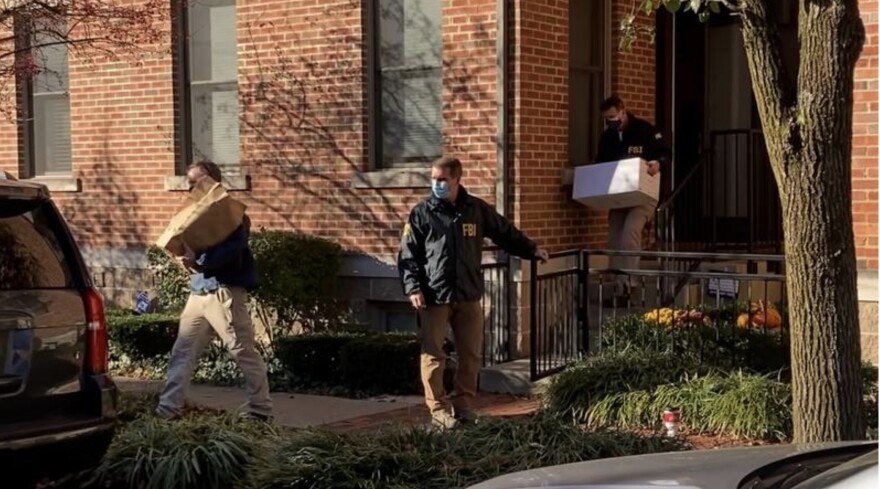
    FBI agents remove boxes of materials from PUCO Chairman Sam Randazzo’s condo in Columbus Nov. 17, 2020. Photo courtesy of Daniel Konik/Statehouse News Bureau.

    BY: MARTY SCHLADEN – Ohio Capital Journal

    CINCINNATI — Ohio’s utility regulator is at the center of a massive bribery and money laundering scandal that has been the focus of a trial here since late last month. In 2019, its chairman and a very recent senior official played a central role in writing corrupt bailout legislation that would give more than $1 billion in subsidies to companies the Public Utilities Commission of Ohio was supposed to be regulating.

    But did their role in the process violate any PUCO rules? The answer is unclear.

    When it comes to being a consumer watchdog, the PUCO doesn’t have the best track record. 

    Since 2008, it has granted more than $1 billion in electric rate increases that were later declared illegal by the Ohio Supreme Court. But, thanks to the way the increases — or “riders” — were written, there’s no way to force utilities to return those ill-gotten gains to ratepayers.

    In at least one of those instances, a regulator might have known the rate hike was illegal when he voted to grant it.

    In June of 2019 — as Akron-based FirstEnergy was funneling millions through dark-money groups to pass the bailout that is the subject of the trial here — the Supreme Court struck down an increase that had already paid the company a non-refundable $460 million. Asim Haque, who months earlier was chairman of the PUCO, sent a FirstEnergy executive a text suggesting that Haque knew the increase was illegal when he voted for it. Haque then said he was just kidding.

    Then, just last month, the PUCO approved an increase of more than 50% in fixed rates for Columbia Gas without making the company go through a formal process to show that it needs the money. That means that after five years throughout much of Ohio, it likely will cost nearly $60 a month just to have gas service  — regardless of whether you live in a 500 square-foot apartment or if you live in a mansion on a five-acre lot. Any payments for gas itself will be in addition to that amount.

    It doesn’t appear that Columbia owner NiSource needed the money. Last year, before the PUCO allowed the rate hike, NiSource’s profits came in $217 million — or 41% — higher than expected. Then, a month after the increase was granted, NiSource announced it was increasing its profit forecast for 2023.

    In a press release, the company boasted of “strong regulatory execution” — including by winning the fixed-rate increase from the PUCO.

    And then there’s House Bill 6, the 2019 law that is the subject of the trial in federal court here that has been ongoing since Jan. 23.

    Former Ohio House Speaker Larry Householder and former Ohio Republican Party Chairman Matt Borges are on trial for their participation in what prosecutors say is likely the biggest bribery and money laundering scandal in Ohio history. They allege that $61 million that mostly came from FirstEnergy was used to make Householder speaker in 2019, and then to pass and protect the $1.3 billion bailout. Most of that money was intended to prop up FirstEnergy’s failing nuclear and coal plants.

    No current or former PUCO employees have been charged in the scandal. But, to put it charitably, the conduct of at least two of them was puzzling — given that the agency’s mission is to protect ratepayers who don’t have a choice about buying the utilities’ products.

    In January 2019, Householder won the speakership and was beginning his push for a FirstEnergy bailout. At the same time,  FirstEnergy lobbyist Ty Pine sent PUCO senior advisor Pat Tully’s resume to Jeff Longstreth, Householder’s right-hand man, according to testimony in the trial. Within weeks, Tully had moved from his PUCO job to one as senior advisor for energy policy in the House Republican Caucus.

    Sam Randazzo, a former FirstEnergy consultant, was confirmed as Gov. Mike DeWine’s nominee to chair the utility commission in April 2019. When he nominated Randazzo, DeWine brushed off warnings that his nominee had “opaque and undisclosed” ties to FirstEnergy.

    In the Householder trial, Tully testified that while Randazzo was still a nominee, he met with Tully, Householder and Rep. Nino Vitale R-Urbana. From there, Tully worked with Randazzo to help draft the utility bailout, HB 6, and to reconcile it with draft legislation submitted by FirstEnergy. The bill secured final passage in July 2019 — months after Randazzo had taken the helm at the utility commission.

    In other words, Ohio’s top utility regulator helped write a law that gave a billion-dollar bailout to a company he was supposed to be regulating on the ratepayers’ behalf. And he was heading an agency that over the previous decade had awarded electric utilities more than $1 billion in illegal, non-refundable rate hikes.

    Randazzo would later resign after the FBI in 2020 raided his Columbus condo. And in a deferred prosecution agreement, FirstEnergy admitted that it paid him $4.3 million just before he became PUCO chairman.

    But does the PUCO have any rules against the role Randazzo played in drafting HB 6? 

    Asked if the agency had a policy prohibiting a commissioner from helping write legislation affecting a utility he or she is supposed to be regulating, spokesman Matt Schilling initially seemed to say that it did not.

    “The PUCO is a state agency and will always be responsive to requests for information or technical assistance to the Ohio General Assembly on matters related to utilities and commercial transportation,” Schilling said in an email last week.

    But in answer to a follow-up, Schilling seemed to say something different. He was asked if that means PUCO believes there was nothing inherently improper about its chairman helping to draft legislation creating subsidies for utilities the agency regulates.

    “No, I never stated anything like that,” Schilling replied. “The PUCO does not comment on ongoing proceedings or court cases.”

    So what about commission employees doing as Tully did when he had a FirstEnergy lobbyist passing out his resume? After all, you might pull punches as a regulator if you’re hoping to land a job with one of the companies you’re supposed to be regulating.

    Schilling’s response might not be very reassuring. He cited a law that “prohibits Commission employees from seeking employment with utilities regulated by the Commission.”

    But Schilling also sent along agency guidance that contains a pretty big loophole.

    “Although this law prohibits Commission employees from soliciting Commission-regulated utilities for employment, it does not prevent employees from considering employment opportunities with these utilities in instances in which the utility approaches the employee,” it said.

    It seems that, after the fact, it might be difficult for the PUCO to figure out who approached whom when an employee jumps ship for a well-paid utility job. And its protections against conflicts of interest during the hiring process don’t seem ironclad.

    “However, if you are contacted by a utility concerning a possible job offer, you must immediately advise your supervisor of the contact so that your supervisor can limit your duties to matters which do not involve the utility in question while any discussions are taking place,” the guidance said.

    In Tully’s case, he didn’t end up directly on FirstEnergy’s payroll. But he did help write a law that the company paid more than $60 million for.

  • Corruption trial witness: Householder called them “loans” but wouldn’t sign documents

    Corruption trial witness: Householder called them “loans” but wouldn’t sign documents

    Former Ohio House speaker Larry Householder arrives for day two of his racketeering trial. Photo by Morgan Trau, WEWS.

    Former House speaker received $500K in bailout scandal and called them loans, but never paid any of it back

    BY: MARTY SCHLADEN Ohio Capital Journal

    CINCINNATI — In Washington, D.C. during Donald Trump’s January 2017 inauguration, then-Ohio Rep. Larry Householder had a dinner meeting with the top executives with Akron-based FirstEnergy. The executives stressed their likely need for a state bailout — and their need for a way to make unlimited, untraceable contributions to Householder’s bid for speaker, Householder’s top lieutenant testified Wednesday.

    By late 2019, scores of millions in FirstEnergy dollars had passed through the 501(c)(4) “dark money” account that had been set up at the executives’ request. Householder had won the speaker’s gavel. And the state had passed a $1.3 bailout that mostly benefited a FirstEnergy subsidiary. 

    In addition, Householder had gotten more than $500,000 for personal expenses that had originated with the utility. The speaker agreed to call them “loans,” but he never quite got around to signing legal documents that were prepared — much less to paying back any of the money, the witness, Jeffrey Longstreth, testified Wednesday.

    If true, it and other events described Wednesday illustrate widespread ratepayer-financed malfeasance that threatened to make Householder speaker in alliance with Ohio utilities almost indefinitely.

    Four weeks into the blockbuster corruption trial, Longstreth’s testimony could prove crucial. Because he set up the dark money group and handled much of Householder’s political business, Longstreth is likely to have had one of the best views into whether the former speaker enriched himself in exchange for championing the bailout.

    Showing that Householder personally enriched himself as he rammed through an unpopular corporate bailout could go a long way to convincing the jury that the former speaker participated in an illegal conspiracy. 

    He and former Ohio Republican Party Chairman Matt Borges are being tried on charges of racketeering. Federal prosecutors have said the $61 million in utility money that was used to pass the billion-dollar bailout is likely the largest bribery and money laundering scandal in Ohio history.

    Longstreth, who functioned as Householder’s political strategist and general fixer, has pleaded guilty and is cooperating with prosecutors in exchange for a favorable sentencing recommendation. On Wednesday, he explained to jurors that by the time of the dinner meeting during Trump’s inauguration, it was clear to him that Householder was well familiar with then-FirstEnergy CEO Chuck Jones and what Jones wanted for his company.

    Meetings with FirstEnergy executives

    In late 2016, as Householder captured a House seat that he held in the early 2000s, FirstEnergy was drowning in debt from its money-losing nuclear and coal plants. The company was laying the groundwork to send the subsidiary that owned the plants into bankruptcy, and executives calculated that state or federal subsidies would make it attractive to buyers.

    In December 2016, the newly elected Householder hired Longstreth to spearhead his plan to elect enough sympathetic Republicans in 2018 that they would make Householder speaker at the start of 2019.

    A month later, Householder and Longstreth were in D.C. for Trump’s inaugural — and to meet with Jones and FirstEnergy Vice President Michael Dowling. At one steakhouse dinner, Longstreth was seated at the end of a long table with Dowling, and Jones and Householder were seated at the other.

    Dowling “said they were going to get going, get your organization set up,” Longstreth testified, explaining that he understood “organization” to mean a limited liability corporation or a dark money group that could receive FirstEnergy money. “He said (the money) needed to be undisclosed and unlimited contributions.”

    The next night, the dinner at another D.C. steakhouse was more intimate, with just Householder, Jones, Dowling, Longstreth and maybe one other in attendance. Jones, the FirstEnergy CEO, explained the company’s financial woes and that they were working on a federal solution to them.

    “They said, ‘If not, we’re going to need something on the state level,’” Longstreth quoted Jones as saying.

    He added that Householder mostly sat quietly through that part of the discussion because he “already knew everything that was being said, it seemed to me.”

    Longstreth said he didn’t know about all of Householder’s previous dealings with Jones, but said the men were well enough acquainted that they attended a World Series game together in Cleveland the previous October.

    The political strategist testified that it was clear to him that FirstEnergy’s enormous contributions were expressly in exchange for a bailout.

    “I knew their donations were (predicated) on the expectation that something like House Bill 6 would happen,” Longstreth said.

    Money for Householder

    Householder didn’t just get money from FirstEnergy to advance his political ambitions, Longstreth said.

    In spring of 2017, Householder called Longstreth into his office to complain of financial problems. He was head of a group of investors in an Alabama coal mine that had defaulted on a loan, he was having problems with his Perry County farm and he had a house in Florida that was badly in need of repair.

    Longstreth said Householder told him that he needed to solve some of those problems or he’d be forced to drop his bid for speaker. And, he said, because Householder was his only client, that would be a big problem for Longstreth, too.

    Using money out of an account that was funded by the dark money group that FirstEnergy paid into, Longstreth said he paid lawyers, settled the Alabama lawsuit and financed the repair of Householder’s Naples, Fla., home.

    Longstreth had a loan agreement drawn up, but Householder never signed the papers, he said.

    “We had multiple discussions, but it was a kick-the-can-down-the-road type of scenario,” Longstreth said.

    In late 2019 when the issue came up, Householder “asked me in the course of our conversation, ‘Are you whole?’” Longstreth said, explaining that he interpreted the question to mean that Householder wanted to know if somebody other than Longstreth had ultimately paid Householder’s debts. 

    “It was one of those hair-on-the-back-of-your-neck situations,” Longstreth said, adding they both knew the arrangement the speaker was suggesting was illegal. 

    At another meeting at the Buckeye Lake AMVETS post, Householder requested help with credit card bills, Longstreth said. Earlier in the trial, prosecutors displayed bank records showing that the debt was about $20,000.

    Longstreth said he stressed to Householder that they needed to stay on the right side of the law. 

    “I said it had to be something we can do legally because you can’t get something for nothing,” Longstreth said.

    Testimony on widespread corruption

    Wednesday’s testimony about Householder’s loans was against a backdrop of widespread corruption that threatened to become endemic.

    Before Longstreth took the stand, Pat Tully testified that within weeks he moved from a senior position at the state’s utility regulator, the Public Utilities Commission of Ohio, to being a senior advisor to the House Republican Caucus. In early 2019, Tully said, Householder met with him, Rep. Nino Vitale, R-Urbana, and Sam Randazzo, Gov. Mike DeWine’s nominee to chair the PUCO — and who around that time received a $4.3 million payment from FirstEnergy.

    Tully described how he worked with Randazzo to help draft the utility bailout, House Bill 6, and to reconcile it with draft legislation submitted by FirstEnergy. He wasn’t asked about the propriety of a current and very recent regulator writing a law in which one of the state’s largest utilities had such an obvious interest.

    In Longstreth’s testimony, he said that after HB 6 passed in 2020, he and Householder mounted an effort that could make him speaker for the foreseeable future in a kind of permanent alliance with Ohio’s big utilities.

    Earlier in the trial, prosecutors played recordings of Householder ally Neil Clark saying that thanks to dark money, utilities like FirstEnergy could contribute vast sums to politicians and keep their origin secret. In that way, Clark said, supposedly regulated utilities could exercise huge influence behind the scenes.

    Ohio law currently limits lawmakers to eight years in either house, but they’re free to run for the other chamber after that — and can do so as long as they like. So Householder’s speakership would at least have been interrupted in 2024.

    But Longstreth found that the idea of passing a law limiting lifetime service to 16 years polled well. And it had a huge silver lining for Householder — it would reset the clock so the speaker was free to stay in the House and be its leader for the next 16 years if he could keep getting the votes.

    Longstreth estimated that it would cost $15 million to $20 million to buy ads selling the idea to voters. For the money, Householder and Longstreth decided to turn to utilities FirstEnergy and AEP, both of which reaped millions from the bailout. Their interest in keeping Householder in the speaker’s chair was clear, Longstreth said.

    “It kind of went without saying that they would support anything that was good for the speaker because anything that was good for the speaker was good for them,” Longstreth said.

    After meetings with top executives with both companies in February 2020, Householder secured pledges of support from each, Longstreth said. Then reality intervened.

    “COVID started in March and then we were arrested in July,” Longstreth said.

  • Texts, calendars, emails link DeWine to FirstEnergy’s bribery scandal

    Texts, calendars, emails link DeWine to FirstEnergy’s bribery scandal

    BY: JAKE ZUCKERMAN – Ohio Capital Journal

    Gov. Mike DeWine and his administration played a hands-on role passing an allegedly pay-for-play nuclear bailout and appointing an industry-friendly regulator who has since been accused of taking a $4.3 million bribe, documents and messages show.

    Calendar records show DeWine, a Republican, met repeatedly to discuss energy policy with FirstEnergy Corp. officials and at least once with GOP House Speaker Larry Householder, who has been criminally accused of taking a separate, multimillion-dollar bribe from the company to pass the bailout.

    Despite a cautionary letter from environmental groups and a 198-page dossier from his former campaign staffer warning against the move, DeWine appointed Sam Randazzo in 2019 to the head of the Public Utilities Commission of Ohio. FirstEnergy last summer admitted it paid Randazzo a $4.3 million bribe. Randazzo has not been charged with a crime and denies wrongdoing.

    Newly released text messages show FirstEnergy executives describing an open line with the administration on the selection and inside support from Ohio’s chief executive.

    “When the Gov Elect asked me about attributes, I listed integrity, work ethic, creativity, thick skin, circumspection in public statements,” FirstEnergy’s then CEO texted Randazzo about the open PUCO seat in December 2018, just before DeWine took office.

    “You fit all of those.”

     Former FirstEnergy CEO Charles “Chuck” Jones. Source: FirstEnergy, via Flickr

    In one text, FirstEnergy executive Mike Dowling credits DeWine and Lt. Gov. Jon Husted with performing “battlefield triage” to save Randazzo’s appointment before a key vote. Both DeWine and Husted have previously denied that a redacted version of the text message that appeared in criminal documents referred to them.

    Federal prosecutors accused House Speaker Larry Householder of secretly controlling a nonprofit that took $60 million from FirstEnergy. He allegedly used the money to enrich himself personally and politically and to ensure the passage of House Bill 6, which provided a massive bailout to two nuclear plants owned at the time by FirstEnergy. Householder was charged with racketeering and awaits trial. Two alleged conspirators pleaded guilty.

    FirstEnergy admitted last summer to the $60 million payment as well as a separate $4.3 million bribe to Randazzo just before he started as Ohio’s top utility regulator. The payment topped off $22 million in consulting fees to Randazzo since 2010 from the company.

    Court documents from prosecutors reveal no focus on DeWine, who has not been charged with any crime. However, a review of records turned over in subpoenas, public records requests for his official calendars by the Energy and Policy Institute, text messages attached to regulatory filings, and others show DeWine and his staff repeatedly influencing and shepherding HB 6 into law.

    On the campaign trail in July 2018, DeWine visited one of the nuclear plants that would receive a bailout, his official calendar shows. A month later, he met with FirstEnergy executives at their Akron headquarters. In October of that year, DeWine met with FirstEnergy at a fundraiser for Republican governors.

    FirstEnergy contributed about $1 million in total to DeWine’s campaign, political organizations supporting it, and to another nonprofit supporting his daughter’s campaign for county prosecutor, according to the Dayton Daily News.

    After winning a close race, DeWine, Husted, Jones and Dowling celebrated over dinner at The Athletic Club in Columbus. The next day, Jones sent Randazzo the text message (above) indicating they discussed the open PUCO seat.

    In January of 2019, the FirstEnergy officials texted one another trying to fill not just one but two open PUCO seats, all the while mentioning phone calls with “DeWine guys” about it.

    “That’s their plan but nothing certain until Sam’s [Randazzo’s] meeting [with DeWine],” Jones texted Dowling. “Four people in DeWine world, you, Sam, and I know about this.” The PUCO seats would eventually be filled by Randazzo with another commissioner renewed.

    Dowling relayed to the other two men a message from Josh Rubin — a DeWine 2018 campaign adviser and a FirstEnergy lobbyist. He said once Randazzo takes office, DeWine will “lean on him on everything.”

    Several texts focus on HB 6. The bill (and eventual law) would bail out FirstEnergy’s nuclear plants, subsidize two coal plants owned by other Ohio utility companies, and create a “decoupling” mechanism that effectively put ratepayers on the hook to guarantee certain revenue streams of FirstEnergy’s. Prosecutors estimate the bill as worth about $1.3 billion to the company.

    Two days before the bill was introduced, DeWine’s calendar shows a slot for an “Energy Discussion” at the governor’s residence. Later that month, after the bill was repeatedly criticized during an opponent testimony hearing at the statehouse, DeWine, Husted, Randazzo and various staffers all met up at 5 p.m. for what the governor’s calendar calls a “Nuclear Bailout Bill Discussion.”

    Over the next month, DeWine’s calendars show two entries for energy policy meetings, plus a call with Householder about HB 6, and another call on the bill.

    On June 9, 2019, DeWine showed signs of wavering.

    “Sam, what do we know about whether nuclear plants need this boost?” DeWine, using his personal email, wrote to Randazzo. “One editorial suggested testimony was not conclusive.”

    Dowling paid a visit to the governor’s residence the next day. Randazzo responded to DeWine’s email on June 11, casting doubt on the studies referenced in the editorials.

    On July 1, Dowling texted Jones.

    “Just had a long conversation with JHusted just now,” he said, going on to explain that Husted sought to extend the length of the bailout. “All is well.”

    Court records contain another text from Jones stating that “State Official 2,” later confirmed to be Husted, joined with others in “fighting to the end” for a beefier bailout.

    After a long slog, lawmakers passed HB 6 on July 23, 2019. DeWine signed it into law mere hours later.

     FBI agents remove boxes of materials from PUCO Chairman Sam Randazzo’s condo in Columbus Nov. 17, 2020. Photo courtesy of Daniel Konik/Statehouse News Bureau.

    Loyalty to staff and HB 6

    As the FBI made its first arrests, DeWine began a pattern of defending HB 6 on the merits and showing unflinching loyalty to his staffers, some of whom have ties to FirstEnergy.

    Householder, his political strategist, a prominent GOP lobbyist, and two FirstEnergy lobbyists were arrested and charged with racketeering in connection with HB 6 on July 21, 2020. The next day, DeWine stood by the law he signed.

    “Because people did bad things does not mean that the policy is not a good policy,” he said.

    He reversed himself the next day and called for a repeal of the bill.

    In October, FirstEnergy fired Jones, Dowling, and fellow executive Dennis Chack as it waged an internal investigation. The company fired another two executives days later “due to inaction and conduct that the Board determined was influenced by the improper tone at the top.”

    At this point, the public remained unaware of the multimillion-dollar financial arrangement between the embattled FirstEnergy and Randazzo. However, on Nov. 16, 2020, FBI agents were seen raiding Randazzo’s condo and removing boxes of material from inside. The next day, FirstEnergy submitted a little-noticed securities filing outlining the $4.3 million payment.

    Despite the images of FBI agents entering Randazzo’s condo, DeWine publicly defended his appointee.

    “We have no indication he’s under investigation or he’s the target of an investigation. We’ll wait until we find additional facts,” he said in a Nov. 17, 2020 news conference. “Look, the FBI many times will indicate if someone is a target. They have not indicated he’s a target. I have no reason to think he’s a target. I don’t know. So, we’re waiting for additional information, quite candidly. I hired him. I think he’s a good person. If there is evidence to the contrary, then we’ll act accordingly, but not going to act without facts.”

    Randazzo would resign three days after that statement.

    Mid-summer 2021, FirstEnergy signed a deferred prosecution agreement with the U.S. Department of Justice. The company agreed to pay a $230 million penalty and cooperate with investigators to avert a charge of honest services wire fraud.

    The agreement contained a lengthy set of facts from the company, stating it paid the $64 million in bribes in exchange for official action from Householder and Randazzo.

    Days after the agreement was announced, DeWine held a press conference on anti-hazing legislation. Reporters asked questions afterward about the agreement, including a line that refers to “State Official 1” and “State Official 2” lobbying to ensure Randazzo’s appointment. DeWine said he’s “not aware” of anyone in his administration, including himself, appearing in the document. Husted, in a statement, said he too “does not believe” he’s referenced in the document.

    Texts obtained by the Ohio Consumers’ Counsel from FirstEnergy and attached to a regulatory filing contain the unredacted version of the text, identifying DeWine and Husted by name.

    In 2017, a lobbyist named Dan McCarthy created a nonprofit entity called Partners for Progress to engage in “advocacy in support of nuclear power,” tax records show. FirstEnergy would later admit to paying $25 million to Partners for Progress, some $15 million of which went to Householder’s nonprofit.

    DeWine hired McCarthy as his legislative director in 2019, around the time McCarthy stepped down from the organization’s board. In February 2021, after media reports identified McCarthy’s role with Partners for Progress, DeWine defended McCarthy.

    “As far as I know, Dan McCarthy has been well-respected for many, many years, long before he started working for me as our legislative director, and I have faith in his integrity,” DeWine said.

    McCarthy resigned in September 2021.

    DeWine response

    In a phone interview, DeWine spokesman Dan Tierney said the OCC-obtained text messages and meetings listed by the Ohio Capital Journal contain no new information.

    The texts, he said, in fact show the lack of a role from DeWine and Husted within the scandal. He said prosecutors have not subpoenaed him or any of his employees.

    “This all along has been a Larry Householder scandal and a FirstEnergy scandal,” he said.

    When asked whether DeWine, a former prosecutor and attorney general, detected any sense of impropriety during all his contacts with Householder and FirstEnergy leading up to the passage of House Bill 6, he declined comment.

    Husted offered a similar comment through a spokeswoman, stating that “there is nothing new here” in the texts, emails and meetings.

    “This kind of advocacy is well within his responsibilities as a public official, and, as we know, the bill was ultimately passed with bipartisan support,” he said.

  • Never needed? Senate president predicts little opposition to nuclear bailout repeal

    Never needed? Senate president predicts little opposition to nuclear bailout repeal

    By Marty Schladen and Ohio Capital Journal

    A billion-dollar nuclear subsidy was the subject of an intense fight in 2019 and great controversy since. But the president of the Ohio Senate this week predicted that a repeal will make it through the House, Senate and that Gov. Mike DeWine will sign it.

    The reason: The company that owns the nuclear reactors no longer wants the money, he said. And that raises serious questions about whether the subsidies were needed in the first place.

    The subsidy was the product of House Bill 6. The legislation was passed in 2019 after a nasty fight which led to federal criminal charges against then-House Speaker Larry Householder, four associates and a dark-money group. 

    Prosecutors said $61 million from Akron-based First Energy and associated groups was used in the corrupt effort to pass the bailout. Two of Householder’s associates and the dark money group have pleaded guilty, FirstEnergy’s CEO was fired and Gov. Mike DeWine’s appointee to chair the Public Utility Commission of Ohio has resigned as part of the scandal. 

    Despite intense calls for a full repeal of HB 6, it remains in place — although a Franklin County Judge has temporarily stopped collection of the money by the owner of the nuclear plants, FirstEnergy successor Energy Harbor.

    DeWine and others have said they want a repeal, but they want to continue to subsidize the Northern Ohio nuclear plants for environmental reasons.

    “We were for nuclear power,” he said Tuesday, referring to his initial support for HB 6. “Nuclear power was the only way in this state, today, that we can have very much non-carbon production. It’s the only way we can do it.”

    But early this month, Sens. Jerry C. Cirino, R-Kirtland, and Michael Rulli, R-Salem, introduced legislation, Senate Bill 44, to get rid of the subsidies. On Wednesday it received a hearing by the Senate Energy and Public Utilities Committee.

    Despite the governor’s statements, Senate President Matt Huffman, R-Lima, said he expects the repeal legislation to become law.  

    “I think that provision will likely get passed out of the Senate and I think it will pass out of the House and get signed by the governor,” Huffman told the governing board of the Ohio Consumers’ Counsel, the state’s official utility watchdog. “When I say the House and the governor, I’m not speaking for them, nor have I spoken to them about this. But if a large company that got a subsidy in a dubious way… says ‘We don’t want it,’ that seems to me to be a pretty easy call.”

    Energy Harbor, the owner of the plants, didn’t respond to requests for comment on Wednesday. But Huffman was apparently referring to a December 2019 ruling by the Federal Energy Regulatory Commission and Energy Harbor’s response to it. 

    The ruling said, in essence, that the company that would become Energy Harbor would have to cut its prices if it was going to sell its subsidized nuclear energy onto the massive grid that serves all or part of 13 states, including Ohio. 

    It would “threaten the competitiveness” of the long-term, or “capacity,” marketplace if companies like Energy Harbor could sell subsidized power on the same basis as power that wasn’t subsidized. So Energy Harbor and the others have to discount it according to a formula, the ruling said.

    Recent developments appear to be a sharp reversal from 2019.

    As proponents pushed HB 6, they threatened that closure of the Ohio nuclear plants was imminent if they didn’t get a bailout — and quickly. But Huffman’s statements on Tuesday indicate that Energy Harbor has no plans to shutter the plants even now that it isn’t getting the money. 

    “I don’t want the nuclear power plants to close,” he said. “However, it’s been made clear to me that the plants will not close if this subsidy is removed. In fact, they’re better off because of machinations at another level. In fact, these subsidies will likely harm these power plants.”

    There’s other evidence that Energy Harbor’s pre-bankruptcy predecessor, FirstEnergy Solutions, might not have been as broke as it claimed in 2019. 

    Shortly after emerging from bankruptcy in early 2020, it did an $800 million stock buyback. Such buybacks typically raise stock values, in this case enriching shareholders just months after pleading poverty and winning a $1 billion bailout from Ohio ratepayers.

    The federal ruling also raises questions about whether it was wise even to start the bailout fight, which has caused so much damage in Ohio. On June 29, 2018, more than a year before DeWine signed HB 6 into law, FERC issued a ruling strongly foreshadowing what it later did: effectively erase the subsidies bailout supporters had gained if they wanted to sell power into the long-term market.