The Biden administration plans to remove marijuana from a list of the most dangerous and highly regulated drugs, the Department of Justice said Tuesday night.
The Drug Enforcement Administration will propose moving the drug from a Schedule I substance, which also includes heroin and methamphetamine, to Schedule III, which is the category for regulated-but-legal drugs including testosterone and Tylenol with codeine.
“Today, the Attorney General circulated a proposal to reclassify marijuana from Schedule I to Schedule III,” DOJ spokesperson Xochitl Hinojosa said in a statement to States Newsroom. “Once published by the Federal Register, it will initiate a formal rulemaking process as prescribed by Congress in the Controlled Substances Act.”
Cannabis has been listed as a Schedule I drug under the Controlled Substances Act since 1971, even as many states have moved to legalize recreational use for more than a decade and medicinal use for even longer.
State-legal marijuana businesses make up a multibillion-dollar industry, but the illegal status of the drug under federal law creates barriers unseen by other industries, including a lack of access to banking and the inability to deduct business expenses from taxes.
Social justice advocates have also noted that prosecutions for marijuana-related crimes have hurt communities of color. Many of those convicted for offenses related to marijuana have not benefited from the recent decriminalization in many states.
Moving cannabis to Schedule III would allow a more permissive approach to the drug, including permitting greater study of medicinal uses and allowing related businesses to use a common tax deduction.
Schumer praises development
Congressional leaders on the issue and other advocates of changing marijuana’s status welcomed the news Tuesday afternoon, even as they called for further action.
“It is great news that DEA is finally recognizing that restrictive and Draconian cannabis laws need to change to catch up to what science and the majority of Americans have said loud and clear,” Senate Majority Leader Chuck Schumer said in a statement.
The New York Democrat added that other legislation, including bills to provide cannabis businesses with greater access to banking and to completely delist the drug, is still needed.
“Congress must do everything we can to end the federal prohibition on cannabis and address longstanding harms caused by the war on drugs,” he said.
Sen. John Hickenlooper, a Democrat from Colorado who was the state’s governor when it and Washington became the first states to legalize recreational use in 2012, said the news was welcome but did not go far enough.
“Rescheduling marijuana is a step in the right direction. But – just a step,” he posted to X. “Marijuana should be DEscheduled altogether.”
The state’s current Gov. Jared Polis, also a Democrat, cheered the move in a written statement.
“I am thrilled by the Biden Administration’s decision to begin the process of finally rescheduling cannabis, following the lead of Colorado and 37 other states that have already legalized it for medical or adult use, correcting decades of outdated federal policy,” Polis said.
“This action is good for Colorado businesses and our economy, it will improve public safety, and will support a more just and equitable system for all.”
The U.S. Cannabis Council, a business group, applauded the expected change.
The move was based on U.S. Department of Health and Human Services research and would have myriad benefits for business, Executive Director Edward Conklin said in a written statement.
The update would put marijuana on a path to full legalization and make it easier for state-legal businesses to run profitable operations, he said.
“Moving to Schedule III represents a tectonic shift in our nation’s drug laws. The US Cannabis Council is committed to ending federal cannabis prohibition, and we believe that reclassification is a necessary and critical step toward that goal,” he wrote. “In the coming days, we will submit comments to the DEA in support of the proposed rule.”
Jennifer Shutt contributed to this report.
JACOB FISCHLER
Jacob covers federal policy as a senior reporter for States Newsroom. Based in Oregon, he focuses on Western issues. His coverage areas include climate, energy development, public lands and infrastructure.
Ohio Capital Journal is part of States Newsroom, the nation’s largest state-focused nonprofit news organization.
Jennifer covers the nation’s capital as a senior reporter for States Newsroom. Her coverage areas include congressional policy, politics and legal challenges with a focus on health care, unemployment, housing and aid to families.
Ohio Capital Journal is part of States Newsroom, the nation’s largest state-focused nonprofit news organization.
The EPA announced that it will be conducting a new review of ozone standards, delaying action until as late as 2025.
The American Lung Association is “deeply disappointed” in this decision.
On Aug. 21, the EPA publicized that it will be conducting a new review of the National Ambient Air Quality Standard for ozone, meaning the current outdated national limit on this pollution may be in place until as late as December 2025.
This announcement caused both the American Lung Association and the American Thoracic Society to publicly express their disappointment in the EPA’s decision.
As Healio previously reported, the 2023 State of the Air report found that the number of people exposed to ozone pollution went down by 19.3 million people; however, with the EPA’s recent announcement, lung experts wonder how this statistic will be impacted.
Healio spoke with Laura Kate Bender, national assistant vice president of healthy air at the American Lung Association, to learn more about ozone pollution, how the EPA’s delay will backtrack recent progress and the journey to achieving environmental justice.
Healio: What are some of the dangers associated with ozone pollution? What factors make individuals more susceptible to these dangers?
Bender: Ozone can harm anybody’s health at high levels, but many people are particularly at risk. This includes people who have lung disease such as asthma, people who are pregnant, children or older adults, people with other underlying conditions and people who spend a lot of time outdoors working or exercising.
Additionally, the effects of ozone pollution are not distributed equally. Communities of color tend to have polluting sources located nearby more often. We know according to the Lung Association’s own State of the Air report that people of color are more likely to breathe polluted air than white people.
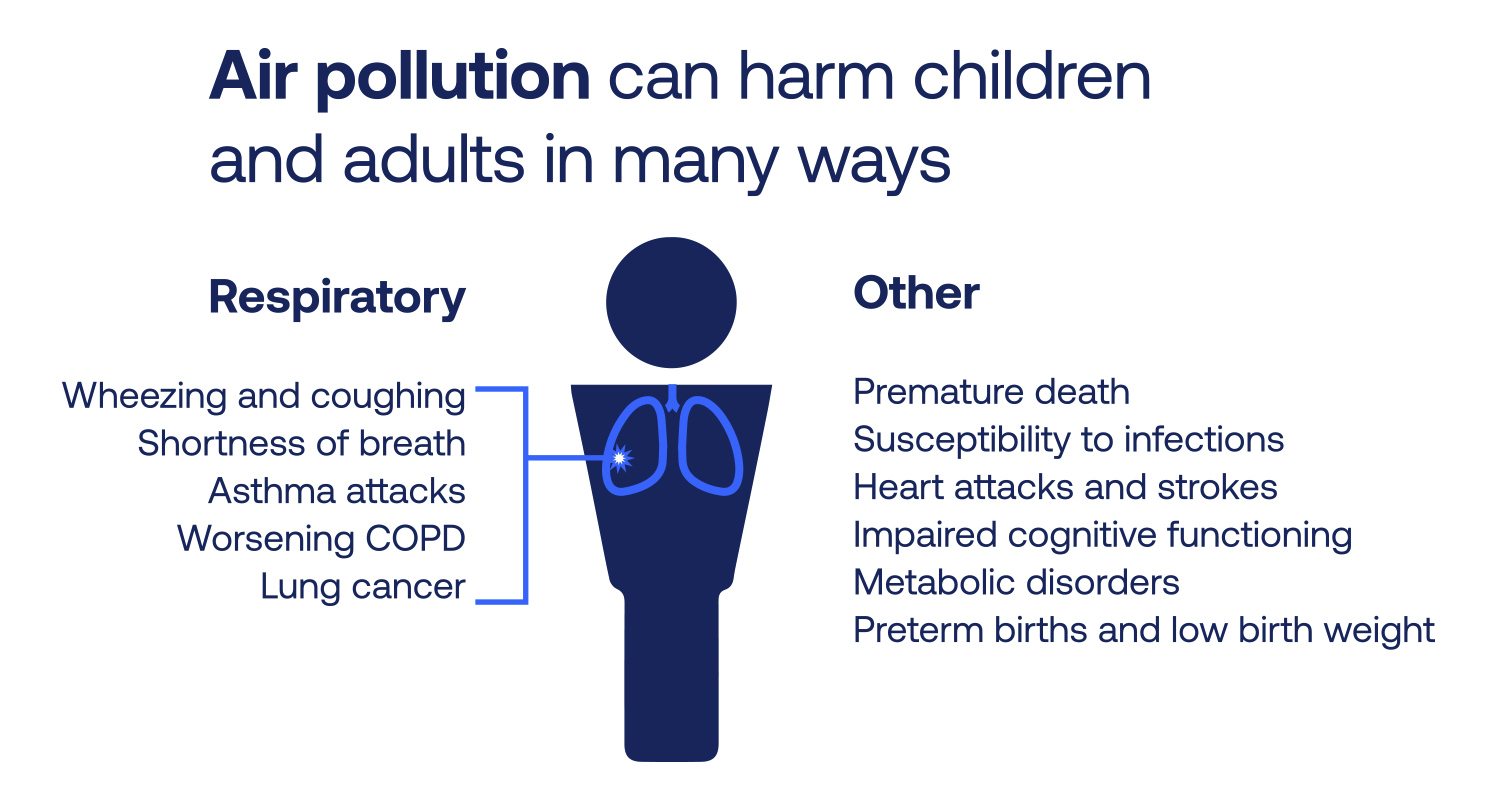
Both short- and long-term exposure can cause health harm. In the immediate term, high levels of ozone can cause shortness of breath, wheezing and coughing. If an individual has asthma, it can give them an asthma attack. It can also send people, particularly those with lung disease, to the hospital. Ozone exposure is also bad for you over the long term. Long-term exposure is linked to a whole host of health impacts including premature death, increased respiratory harm, lower birth weight and decreased lung function in newborns, an increased risk for metabolic disorders and a link with cardiovascular health.
There are a lot of commonalities between the harms of particle pollution and ozone pollution. In both cases, they can cause immediate harm, particularly to breathing, and long-term harm if you’re exposed day after day.
Healio: What conditions make ozone pollution levels stronger/more harmful? What are some ways individuals can protect themselves when faced with these conditions?
Bender: Ozone isn’t emitted directly from sources of air pollution. It’s formed when different emissions react in the atmosphere. For example, emissions from gas/diesel vehicles, power plants, industry and a whole host of sources mix in the presence of heat and sunlight and can react to form ozone. That means a couple of things. One, it means that ozone can show up a long way downwind from where the original pollutants were emitted. Two, it means that on warmer days, we’re more likely to see unhealthy levels of ozone pollution because those reactions take place in the presence of heat. This also means that climate change in many places has been and is projected to continue to drive increasing ozone levels because again, more heat tends to mean more ozone.
On days with unhealthy levels of ozone, which individuals can check by going to airnow.gov for their air quality forecast, people should take steps to protect themselves. The level of the air quality alert determines how bad ozone is for the day. As a person with asthma, I tend to check and take this pretty seriously. On an orange alert day — a day with elevated levels of ozone — I would not make plans to go for a run outdoors. I would spend that time indoors especially because exercising increases the rate at which you’re inhaling air.
Healio: How will the delay of the EPA’s standard for ozone pollution backtrack recent progress that has been made in reducing this type of pollution?
Bender: The American Lung Association is deeply disappointed by the delay the EPA recently announced. The EPA sets national limits on ozone pollution — the National Ambient Air Quality Standards — and the Clean Air Act, the law that governs those standards, requires that they be based on health science. They need to be based on what the science shows is safe to breathe. The science has shown for years that the current ozone standard is not safe to breathe; it allows levels of pollution that are unhealthy and can cause health harms. So, the fact that the EPA announced that rather than moving forward with updating the standard through their reconsideration process, they’re essentially going back to square one is a huge disappointment because it means potentially years of delay in getting a stronger standard that the science shows is needed.
Healio: How would stronger ozone standards impact public health?
Bender: The Clean Air Act and the ozone standards under it have a long track record of success. The reason that they work so well is because the law requires the EPA to set standards based on what the science says is healthy, not how much it’s going to cost to clean up. Once the EPA sets the standards, it implements them working with states and other entities across the country. They figure out where there is too much ozone based on measurements and modeling and then what communities are going to do to clean up that ozone. This leads to places taking concrete steps to reduce emissions that form ozone to help those communities have air that’s safe to breathe and attains the standards.
This important and deliberate process takes a long time, so the sooner the EPA sets more protective ozone standards in keeping with what the science shows is necessary, the sooner those protections can end up resulting in emissions reductions that will help people in places where there are unhealthy levels. It’s a long process and the EPA setting the standard is just the first step.
The other thing that we want to emphasize about the EPA’s recent announcement is that the Clean Air Act has requirements for how often it has to do this. The law actually requires that the EPA review the ozone standards and standards for similar pollutants every 5 years. That’s important because the science is always changing. Time and research show that pollutants such as ozone are more dangerous than we thought previously in more ways than we thought previously. The clock is ticking because the EPA has a legal obligation to finish its review of the ozone standards by Dec. 31, 2025. This new process that they announced, where they basically have to go back to square one and do a full review of the standards rather than moving forward with something more protective now, has to be done under the law by the end of 2025.
Healio: Why are stronger national air standards important for achieving environmental justice?
Bender: Getting stronger ozone standards across the finish line isn’t just about public health, it’s also about environmental justice and health equity because ensuring that these tighter standards are in place and that they lead to actual cleanup is critical for the communities that have been waiting for decades to have polluting sources near them reduce their emissions.
In pushing the EPA to propose, strengthen and finalize a suite of things, environmental justice has been a recurring theme. With these standards, the administration has a huge opportunity to promote environmental justice and ensure cleanup in the communities that have been dealing with air pollution for far too long. This is a real opportunity to promote environmental justice and meet the administration’s goals in terms of ensuring that communities have equitable access to healthy air, but if not, then it perpetuates the injustices that have been in place for too long already.
Healio: As an American Lung Association representative, what is your message to the EPA regarding this delay and the lack of finalization for other critical regulations?
Bender: With regard to the ozone standard, we are profoundly disappointed. The ozone standards are critical, they’re outdated and the fact that communities now have to wait longer for lifesaving protections from ozone pollution is simply unacceptable.
The Lung Association will continue to push and to make sure that stronger ozone standards get across the finish line as fast as possible. We will also work to make sure that these standards are at the levels that the science shows are needed, which is a range of 55 parts per billion to 60 parts per billion — significantly stronger than the current standards.
With regard to the other rules, there are a lot of things that the EPA has proposed. We’ve been calling for a suite of clean air protections that are urgently needed, including protections from methane from the oil and gas industry, protections that make our cars and trucks less polluting, and measures to limit air toxics and carbon pollution from power plants. The administration had proposed all these standards, and now they need to get them across the finish line. This is really an inflection point for the administration’s goals of improving health equity, reducing air pollution and addressing climate change. They have a suite of regulations that they need to finalize, and they need to make them as strong and as health-protective as possible. Urgently finalizing these proposals and strengthening them so that they maximize the protection for public health is critical; it’s more important now than ever.
Most immediately, the EPA is also considering updating the national limits on particle pollution. Just like with ozone, the same requirements are in place for the national limits on particle pollution: They need to be reviewed every 5 years and based on health. The good news is the EPA has proposed tighter limits on particles. The bad news is those limits did not go far enough. The Lung Association is urgently calling on the administration to finalize updated particle pollution standards this fall at the levels that the science shows are safe to breathe, which is 8 µg/m3 annually and 25 µg/m3 for the daily standard.
Even though generally speaking, the air is much cleaner than it used to be, not every community has experienced that cleanup and climate change is driving increased air pollution. The need to ratchet down on these standards further is urgent so more protections can come into place.
Lung Association deeply disappointed with EPA’s failure to update ozone pollution standard; Calls on EPA to follow the science and the Clean Air Act to protect vulnerable populations. https://www.lung.org/media/press-releases/fy24-ozonestandards-statement. Published Aug. 21, 2023. Accessed Aug. 22, 2023.
The Biden administration Wednesday announced its plans to extend the pause on federal student loan repayments until the end of August.
“I recognized in recently extending the COVID-19 national emergency, we are still recovering from the pandemic and the unprecedented economic disruption it caused,” President Joe Biden said in a statement.
“If loan payments were to resume on schedule in May, analysis of recent data from the Federal Reserve suggests that millions of student loan borrowers would face significant economic hardship, and delinquencies and defaults could threaten Americans’ financial stability.”
The White House will extend the deadline for student borrowers to pause on federal loan repayments, interest, and collections until Aug. 31. The announcement also provides a “fresh start” on loan repayments by removing any prior defaults to allow those borrowers to re-enter repayment in good standing.
The current pause would have ended on May 1.
“The Department of Education is committed to ensuring that student loan borrowers have a smooth transition back to repayment,” U.S. Secretary of Education Miguel Cardona said in a statement.
“This additional extension will allow borrowers to gain more financial security as the economy continues to improve and as the nation continues to recover from the COVID-19 pandemic.”
Cristina Tzintzún Ramirez, the president of NextGen America, an organization that mobilizes young voters, released a statement calling the announcement “another short-term fix to a crisis that demands a long-term solution.”
“Young voters feel frustrated with President Biden’s failure to fulfill his promise on student debt cancellation,” Tzintzún Ramirez said. “While borrowers surely appreciate the help paying rent and making ends meet, what they really need is a debt cancellation that will allow them to buy a house and build a future.”
During Biden’s campaign for the presidency, he pledged to cancel student loan debt during a town hall in Miami.
“I’m going to eliminate your student debt if you come from a family (making less) than $125,000 and went to a public university,” he said, according to Black Enterprise.
Biden has since called on Congress to pass legislation to cancel up to $10,000 of student debt, but many congressional Democrats argue that Biden could reduce debt through an executive order. They’ve pushed him to cancel up to $50,000 in student loan debt.
The Federal Reserve estimates that the total U.S. student loan debt is more than $1.75 trillion. The Department of Education owns about 92% of that student loan debt.
Democrats push for debt cancellation
A handful of U.S. Senate and House Democrats released a joint statement that said they welcomed the extension, but stressed the need to cancel student loan debt.
“While the extension is welcome, a looming restart of student loan payments in September underscores the importance of swift executive action on meaningful student debt cancellation,” they wrote. “We continue to implore the President to use his clear legal authority to cancel student debt, which will help narrow the racial wealth gap, boost our economic recovery, and demonstrate that this government is fighting for the people.”
Those lawmakers include Sens. Elizabeth Warren of Massachusetts, Chuck Schumer of New York, Alex Padilla of California and Raphael Warnock of Georgia, as well as Reps. Ayanna Pressley of Massachusetts, Ilhan Omar of Minnesota, Pramila Jayapal of Washington, and James E. Clyburn of South Carolina.
The chair of the House Education and Labor committee, Rep. Bobby Scott, released a statement in which he did not call for the cancellation of student debt, but praised the administration for its decision to continue the pause.
“By extending the pause on student loan repayments, collections, and interest accrual, the Biden-Harris Administration has demonstrated that it remains committed to helping borrowers get back on their feet,” the Virginia Democrat said.