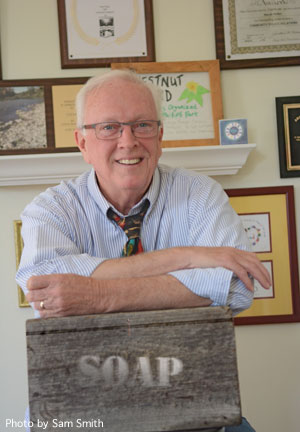
David Miller is the Publisher and Editor of Loveland Magazine
by David Miller
Loveland, Ohio – On Sunday, March 20, the First Missionary Baptist Church on Main Street invited Loveland native and historian Larry Hamilton, Jr. to lecture on the historical importance of the Black Women of Loveland. The occasion was to honor International Woman’s Day and Women’s History Month.
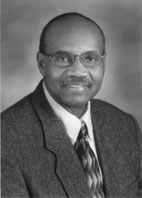
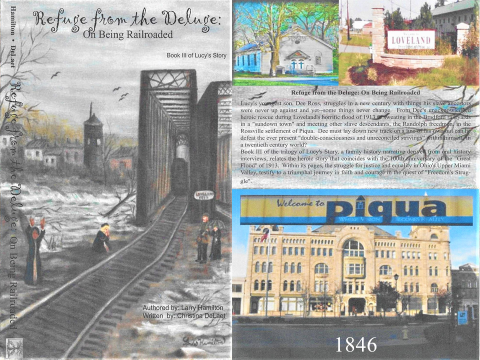
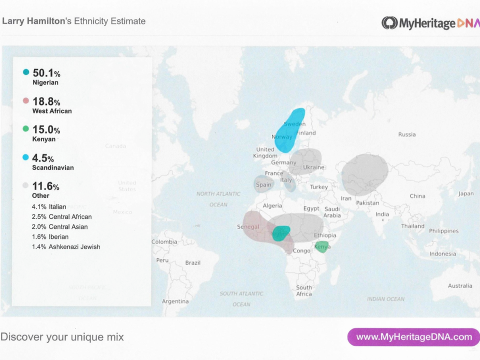
Hamilton now lives in Piqua, Ohio. He is a retired high school teacher and a member of the Loveland Schools Foundation “Hall of Fame”. He is the author of three books and graduated from Loveland High School in 1967.
Larry Hamilton
Hamilton taught courses in African American History, World Studies, and Current Events at Piqua High School. His tenure of teaching African American History for 30 straight years may be the longest consecutive period of teaching the subject at a predominately white high school anywhere in the country. He was selected for Who’s Who Among America’s Teachers, was awarded the Ohio Tri-County NAACP’s Martin Luther King Outstanding African American Award, as well as the state of Ohio’s MLK Cultural Awareness Award in 2005.
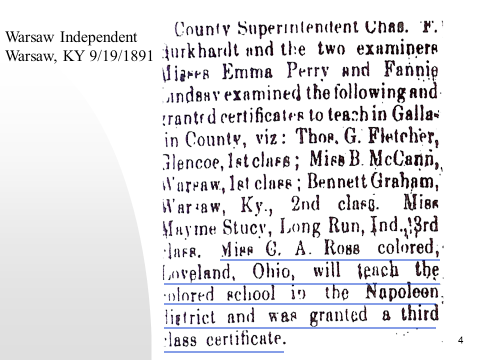
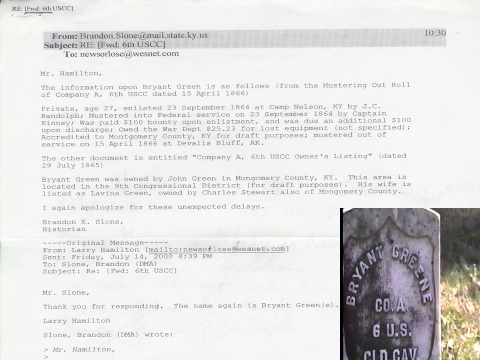
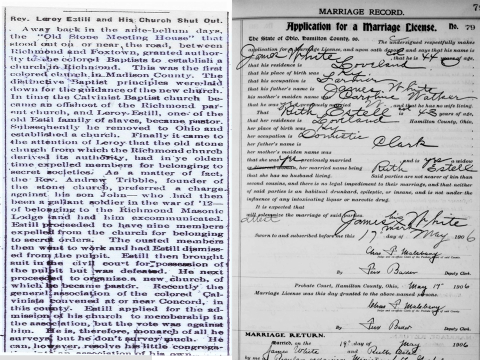
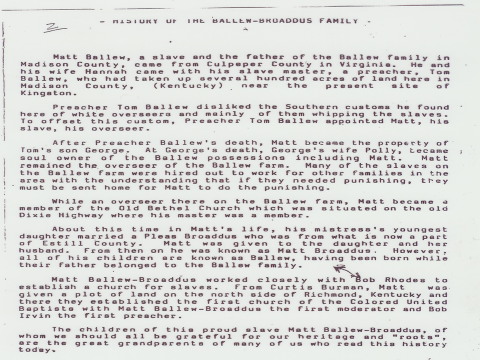
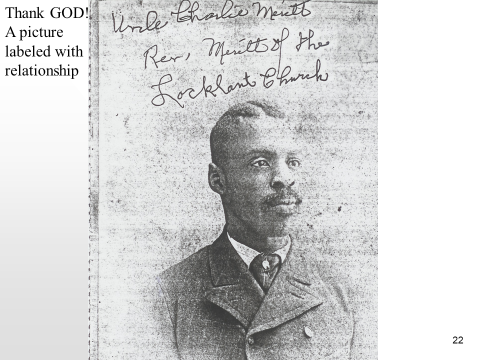
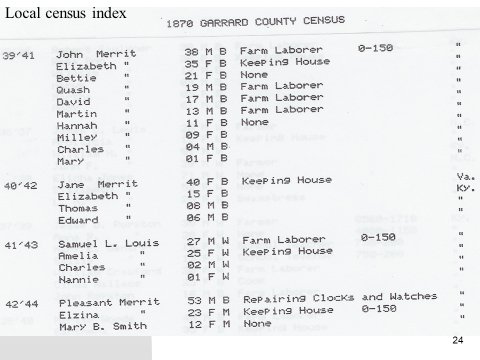
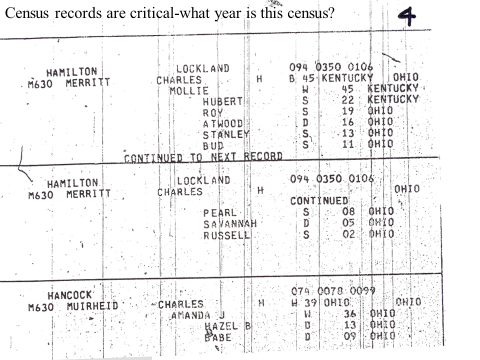
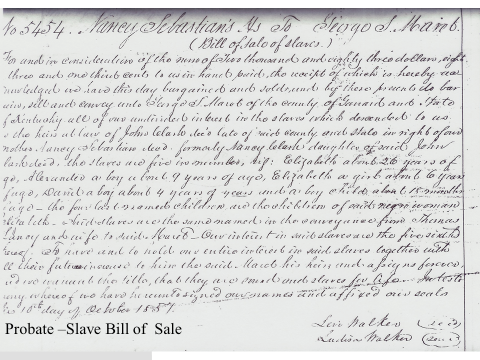
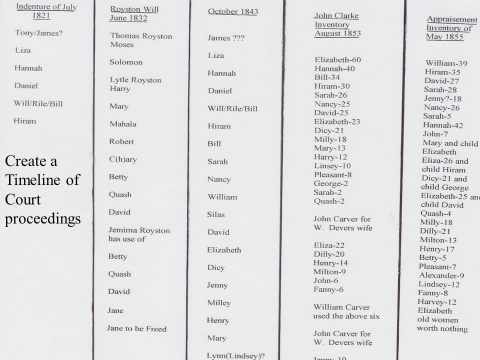
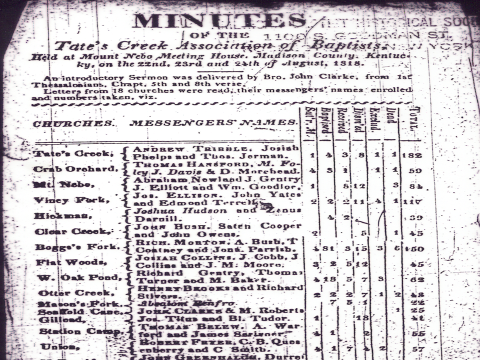
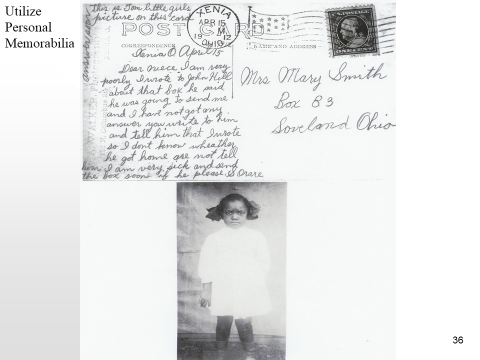
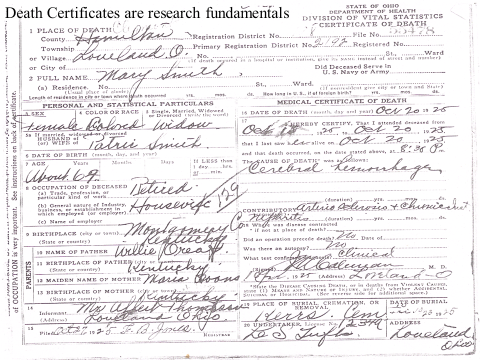
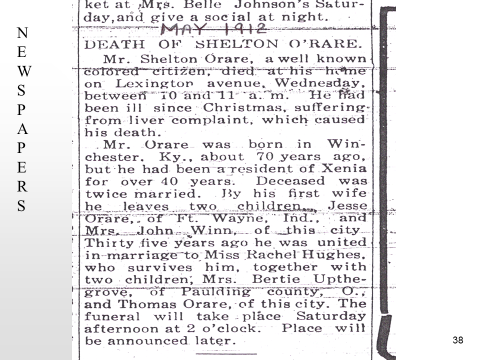
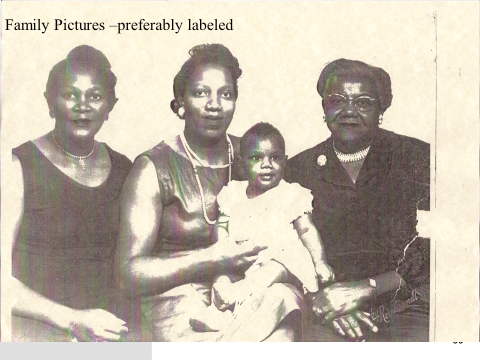
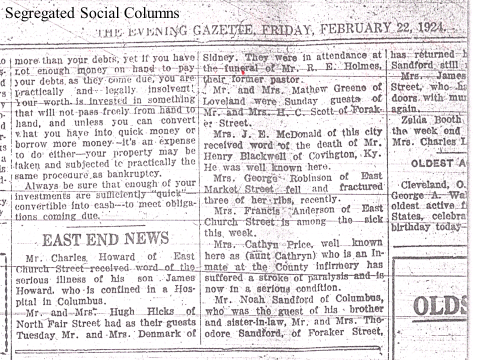
In his talk, Hamilton traces the path of African American women from slavery to their migration to Loveland. Hamilton presented slides of “Bill of Sale of Slaves” and an appraisement inventory from court proceedings of May, 1855 that lists Elizabeth (age 60) as “old woman worth nothing”.
Loveland Magazine attended the Sunday morning service that was devoted to Hamilton’s presentation to record the event so this important history lesson could be archived on our pages. As Hamilton said, “Our Black history is Loveland’s history.”
At the end of the service, Deanna Todd, who is the Assistant Principal of the Mason Middle School sings the Lift Every Voice and Sing, the Black National Anthem.
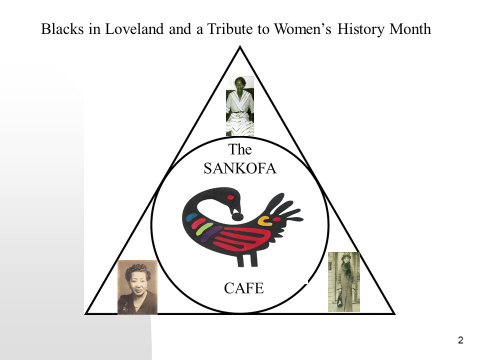
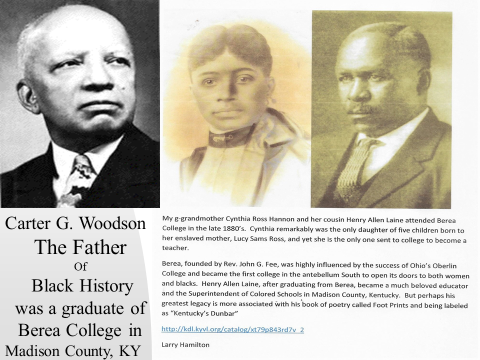
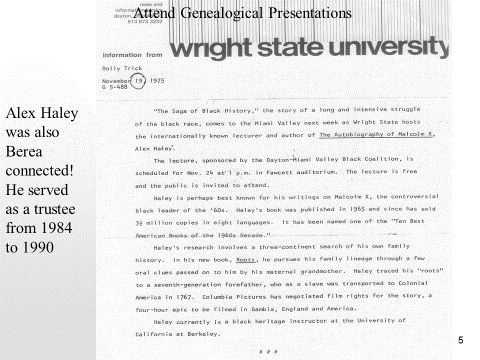
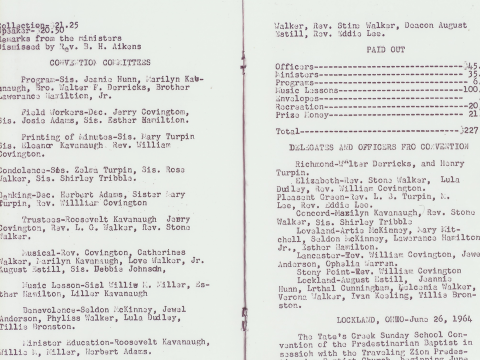
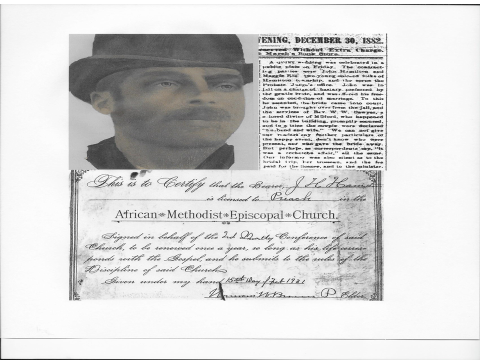
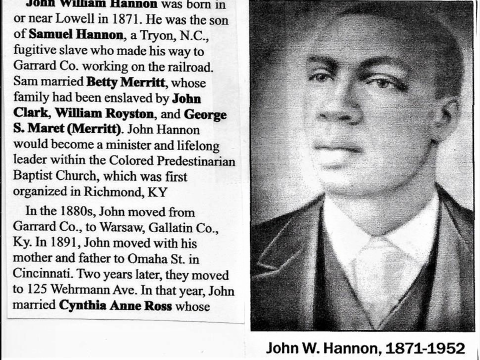
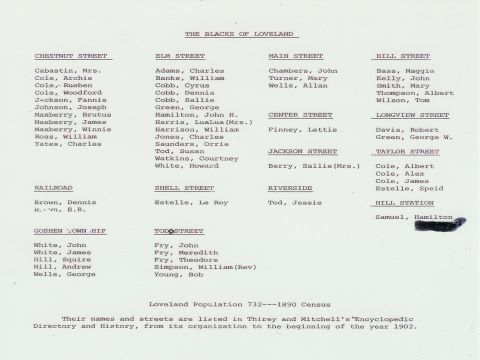
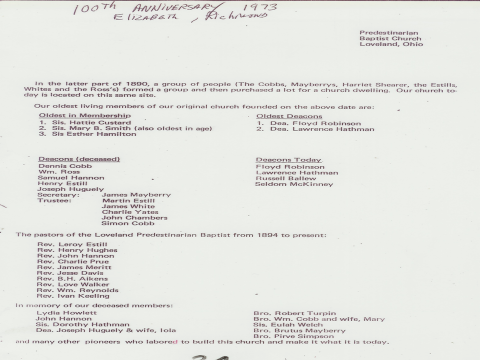
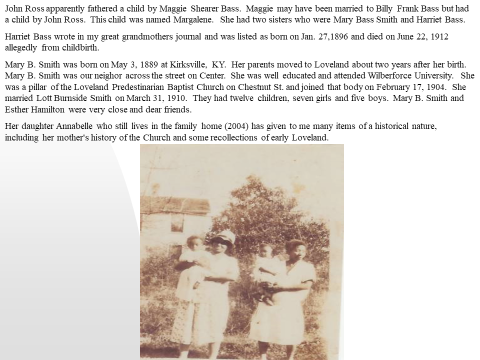
View slides used in the Hamilton’s lecture Video
Right click an image to open a new tab and see a larger view
To learn more about Black History in Loveland
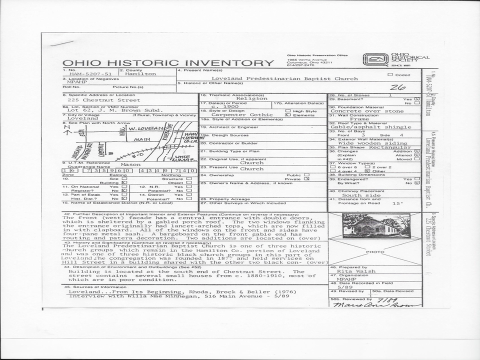
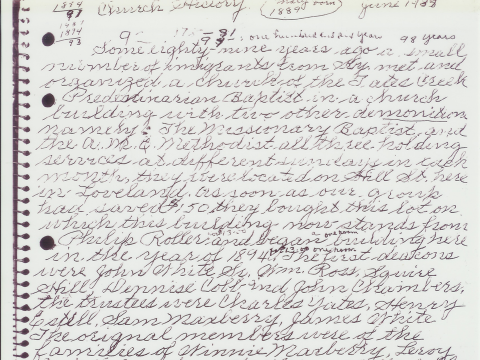
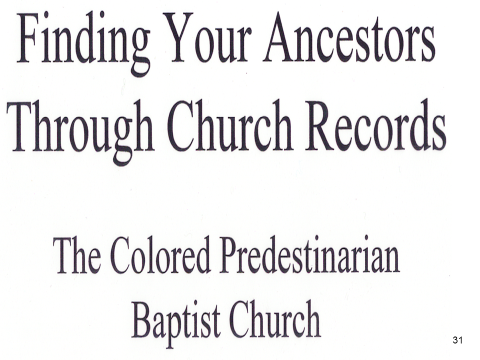
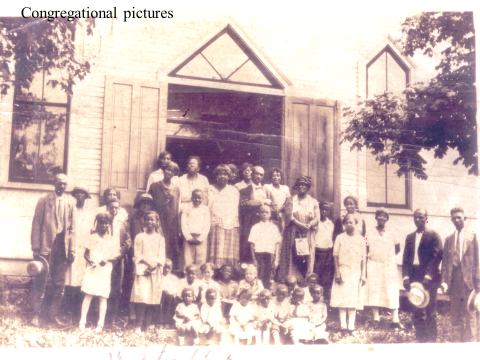
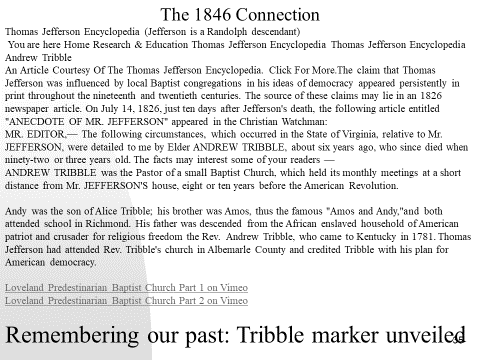
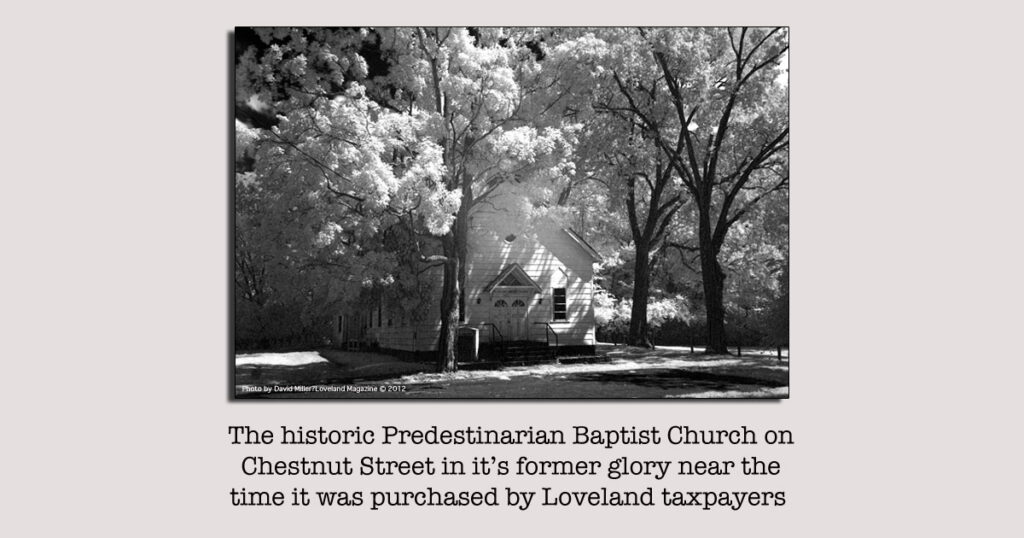
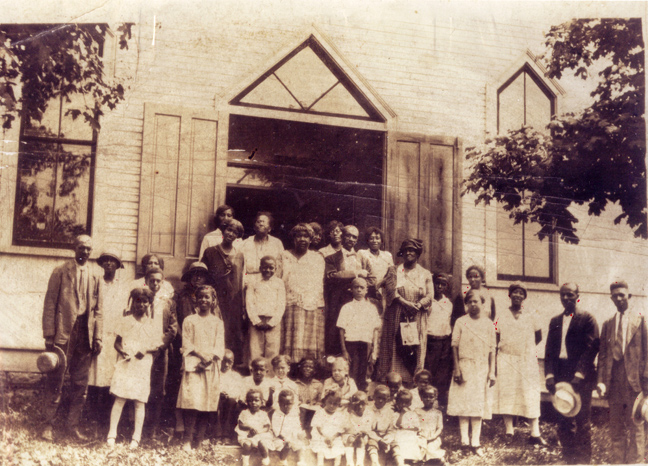
These LOVELAND MAGAZINE HD VIDEOSare from a conversation between Paula Oguah, and Larry Hamilton about the early history of the Loveland Predestinarian Baptist Church (LPBC). The conversation took place in the Loveland Magazine TV Studio.
This STORY and accompanying videos represent 3 months of study, interviews, and research into the chronological record of this historic Loveland landmark.
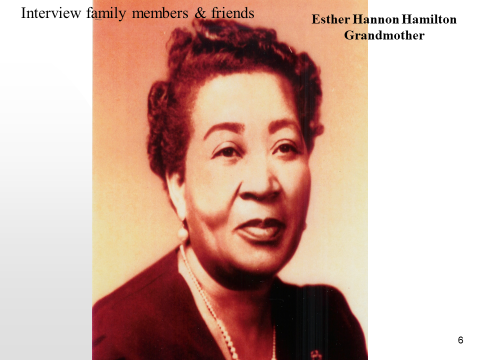
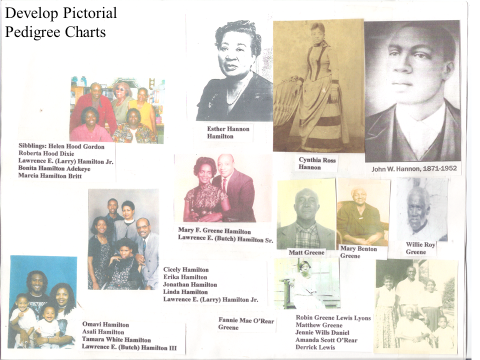
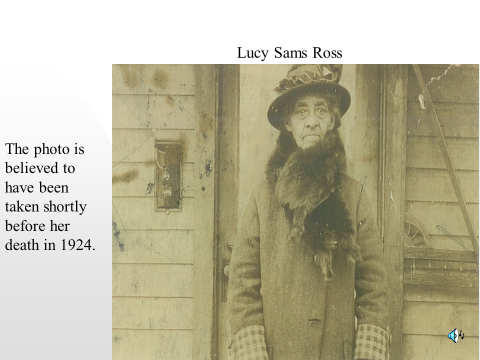
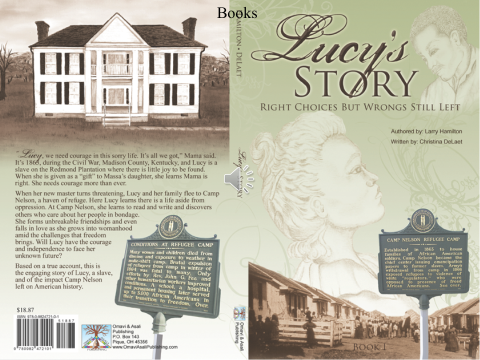
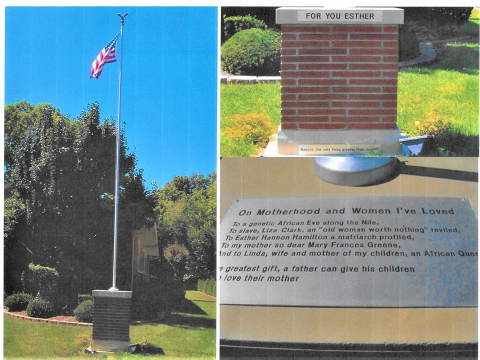
Hamilton a native of Loveland is a retired teacher of African American History, World Studies, and Current Events who now lives in Piqua, OH. His family was intimately involved in the founding of LPBC and the construction of the church building. He is the author of Lucy’s Story – Right Choices But Wrongs Still Left, the historical account of his great-great-grandmother — a slave during the Civil War, who later lived and died in Loveland. Hamilton was a baptized member of LPBC and his grandmother Esther Hannon Hamilton taught his Sunday school class.
Oguah is “Forth Generation Loveland” and a former resident, livied only one block from the Church. She travels often to Africa, and was an attorney with a private practice in Loveland. She grew up in Loveland, and her familiy, the Cobbs, were also intimately involved in the earliest of the Church’s history. Oguah’s family at one time was considered a backbone of the Loveland social and business community. Oguah’s great-grandfather Dennis Cobb reportedly helped lay the stone foundation to the church, and she was married in the church.
I know that place and year well. As is the case with Fletcher – who is one of the last living survivors of the massacre, which took place when she was 7 – the terror of the Tulsa race riot is something that has been with me for almost as long as I can remember. My grandfather, Robert Fairchild, told the story nearly a quarter-century ago to several newspapers.
Here’s how The Washington Post recounted his story in 1996:
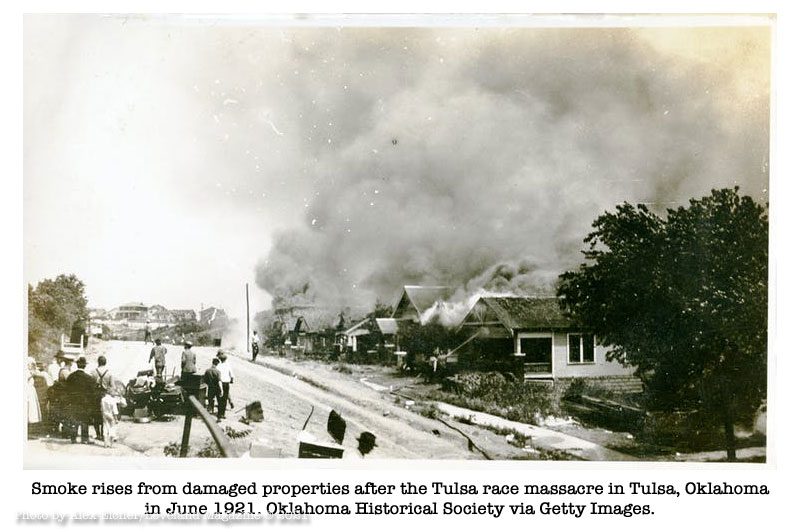
“At 92 years old, Robert Fairchild is losing his hearing, but he can still make out the distant shouts of angry white men firing guns late into the night 75 years ago. His eyes are not what they used to be, but he has no trouble seeing the dense, gray smoke swallowing his neighbors’ houses as he walked home from a graduation rehearsal, a frightened boy of 17.
His has since been a life of middle-class comfort, a good job working for the city, a warm family life. But he has never forgotten his mother’s anguish in 1921 as she fled toward the railroad tracks to escape the mobs and fires tearing through the vibrant Black neighborhood of Greenwood in north Tulsa.”
His has since been a life of middle-class comfort, a good job working for the city, a warm family life. But he has never forgotten his mother’s anguish in 1921 as she fled toward the railroad tracks to escape the mobs and fires tearing through the vibrant Black neighborhood of Greenwood in north Tulsa.”
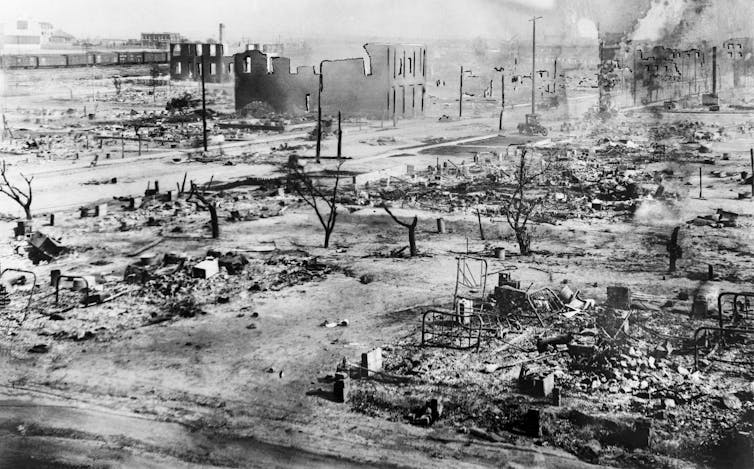
The Washington Post article said the Tulsa race riots of 1921 were among the “worst race riots in the nation’s history.” It reported: “The death toll during the 12-hour rampage is still in dispute, but estimates have put it as high as 250. More than 1,000 businesses and homes were burned to the ground, scores of Black families were herded into cattle pens at the fairgrounds, and one of the largest and most prosperous Black communities in the United States was turned to ashes.”
During the Tulsa race riots in 1921, Black businesses and homes in the Greenwood District in Tulsa, Oklahoma, were destroyed at the hands of white residents. Bettmann Archive/Getty Images.
Riots began after a white mob attempted to lynch a teenager falsely accused of assaulting a white woman. Black residents came to his defense, some armed. The groups traded shots, and mob violence followed. My family eventually returned to a decimated street. Miraculously their home on Latimer Avenue was spared.
Disturbing history
Hearing about these experiences at the family table was troubling enough. Reading a newspaper account of your ancestors’ fleeing for their lives is a surreal pain. There’s recognition of your family’s terror, and relief in knowing your family survived what “60 Minutes” once called “one of the worst race massacres in American history.”
In spite of my grandfather’s witness, this same event didn’t merit inclusion in any of my assigned history texts, either in high school or college. On the occasions I’ve mentioned this history to my colleagues, they’ve been astonished.
In 1996, at the 75th anniversary of the massacre, the city of Tulsa finally acknowledged what had happened. Community leaders from different backgrounds publicly recognized the devastation wrought by the riots. They gathered in a church that had been torched in the riot and since rebuilt. My grandfather told The New York Times then that he was “extremely pleased that Tulsa has taken this occasion seriously.”
“A mistake has been made,” he told the paper, “and this is a way to really look at it, then look toward the future and try to make sure it never happens again.”
That it took so long for the city to acknowledge what took place shows how selective society can be when it comes to which historical events it chooses to remember – and which ones to overlook. The history that society colludes to avoid publicly is necessarily remembered privately.
Economically vibrant
Even with massive destruction, the area of North Tulsa, known as Greenwood, became known for its economic vitality. On the blocks surrounding the corner of Archer Street and Greenwood Avenue in the 1930s, a thriving business district flourished with retail shops, entertainment venues and high-end services. One of these businesses was the Oklahoma Eagle, a Black-owned newspaper. As a teenager in the early 1940s, my father had his first job delivering the paper.
Without knowing the history, it would be a surprise to the casual observer that years earlier everything in this neighborhood had been razed to the ground. The Black Wall Street Memorial, a black marble monolith, sits outside the Greenwood Cultural Center. The memorial is dedicated to the entrepreneurs and pioneers who made Greenwood Avenue what it was both before and after it was destroyed in the 1921 riot.
Although I grew up on military bases across the world, I would visit Greenwood many times over the years. As I grew into my teenage years in the 1970s, I recognized that the former vibrant community was beginning to decline. Some of this was due to the destructive effects of urban renewal and displacement. As with many other Black communities across the country, parts of Greenwood were razed to make way for highways.
Some of the decline was due to the exit of financial institutions, including banks. This contributed to a decrease in opportunities to build wealth, including savings and investment products, loans for homes and businesses, and funding to help build health clinics and affordable housing.
And at least some was due to the diminished loyalty of residents to Black-owned businesses and institutions. During the civil rights movement, downtown Tulsa businesses began to allow Black people into their doors as customers. As a result, Black residents spent less money in their community.
Historical lessons
At the end of my father’s military career in the 1970s, he became a community development banker in Virginia. His work involved bringing together institutions – investors, financial institutions, philanthropists, local governments – to develop innovative development solutions for areas like Greenwood. For me, there are lessons in the experiences of three generations – my grandfather’s, father’s and mine – that influence my scholarly work today.
On the one hand, I study how years after the end of legal segregation Americans remain racially separate in our neighborhoods, schools and workplaces and at alarmingly high levels. My research has shown how segregation depresses economic and social outcomes. In short, segregation creates closed markets that stunt economic activity, especially in the Black community.
On the other hand, I focus on solutions. One avenue of work involves examining the business models of Community Development Financial Institutions, or CDFIs, and Minority Depository Institutions, or MDIs. These are financial institutions that are committed to economic development – banks, credit unions, loan funds, equity funds – that operate in low- and moderate-income neighborhoods. They offer what was sorely needed in North Tulsa, and many other neighborhoods across the nation – locally attuned financial institutions that understand the unique challenges families and businesses face in minority communities.
Righting historical wrongs
There are interventions we can take, locally and nationally, that recognize centuries of financial and social constraint. Initiatives like the 2020 decision by the Small Business Administration and U.S. Treasury to allocate US$10 billion to lenders that focus funds on disadvantaged areas are a start. These types of programs are needed even when there aren’t full-scale economic and social crises are taking place, like the COVID-19 epidemic or protesters in the street. Years of institutional barriers and racial wealth gaps cannot be redressed unless there’s a recognition that capital matters.
The 1921 Tulsa race riot began on May 31, only weeks before the annual celebration of Juneteenth, which is observed on June 19. As communities across the country begin recognizing Juneteenth and leading corporations move to celebrate it, it’s important to remember the story behind Juneteenth – slaves weren’t informed that they were emancipated.
After the celebrations, there’s hard work ahead. From my grandfather’s memory of the riot’s devastation to my own work addressing low-income communities’ economic challenges, I have come to see that change requires harnessing economic, governmental and nonprofit solutions that recognize and speak openly about the significant residential, educational and workplace racial segregation that still exists in the United States today.
This is an updated version of an article originally published on May 21, 2020.
Do you know that Cochrane exhibited her invention at the 1893 World’s Columbian Exposition in Chicago? She won the highest prize for “best mechanical construction, durability, and adaptation to its line of work”.
Take a look at this story and read more from Mr. Imhotepr…
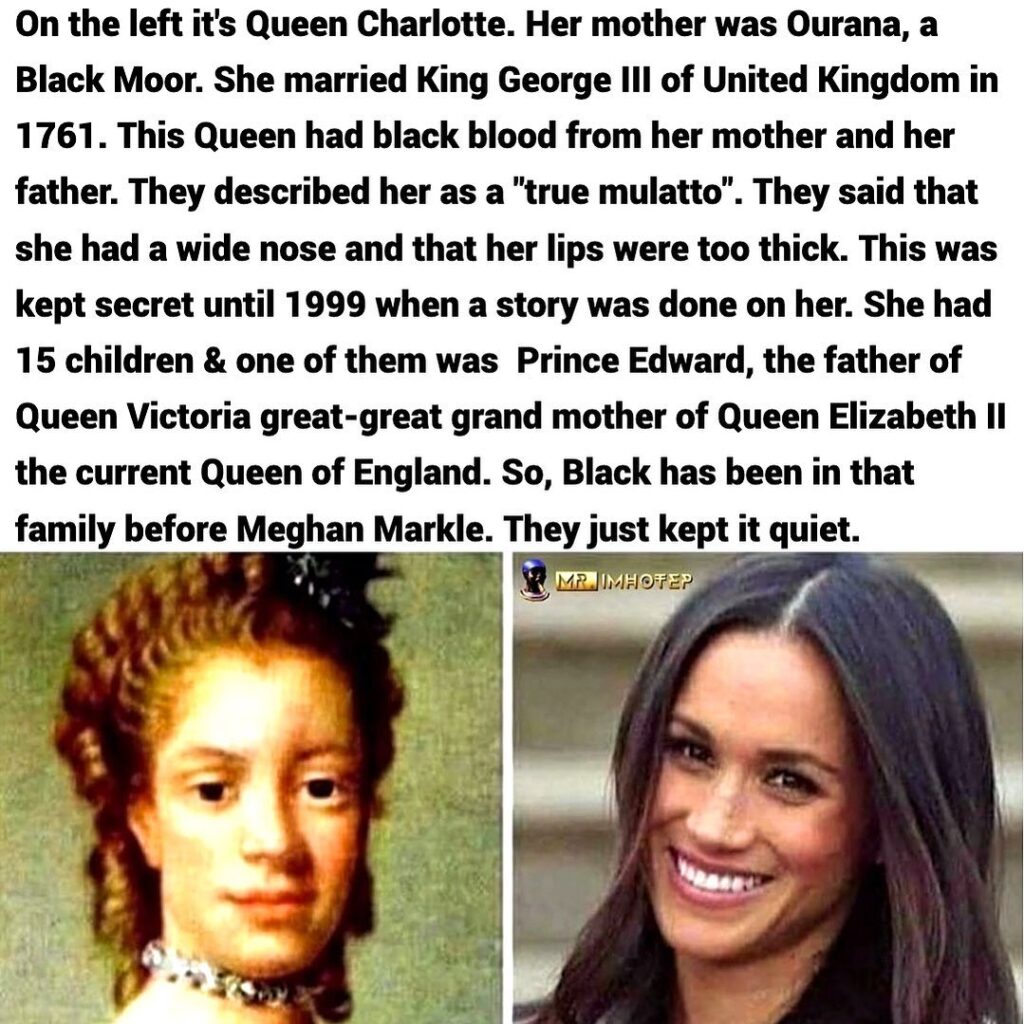
Charlotte of Mecklenburg-Strelitz, originally named Sophie Charlotte was born on May 19, 1744. Queen Charlotte also held the titles of Electress of Hanover and Queen Consort of Hanover. Mecklenburg-Strelitz was a minute north German dukedom in the Holy Roman Empire.
Queen Charlotte was the youngest daughter of Princess Elizabeth Albertine Saxe-Hildburghausen and Duke Charles Louis Frederick of Mecklenburg-Strelitz, otherwise known as Prince of Mirow.
Queen Charlotte is a descendant of a black branch of the Portuguese royal family; more specifically, Alfonso III and his concubine, Madragana, a black moor.
This fact makes Queen Elizabeth II, Prince Charles and Prince William technically mixed race. Many historians have tried to cast doubt on the nature of Queen Charlotte’s heritage. But her personal physician has noted her “true mulatto face” and the public report released before Queen Elizabeth II’s coronation in 1953 acknowledges the monarchy’s African heritage.
Africans don’t beg for royalty. We know we are the originals and we’ve been there before anyone else. They just hide it but we remember and we will teach it to our children. Don’t forget to get your copies of My African Icons, I Love Africa and The Black Samurai to teach your children that their ancestors are the original royals and that they civilized the whole planet.
The Harlem Renaissance was an intellectual and cultural revival of African American music, dance, art, fashion, literature, theater and politics centered in Harlem, Manhattan, New York City, spanning the 1920s and 1930s.
Do you know about the black inventor of traffic lights, gas masks & more…?
The African History tells us that Garrett Morgan “was a groundbreaker for African American inventors with his patents, he invented many including hair straightening product, a breathing device, a revamped sewing machine and an excellent traffic signal.”
A local judge, William Martin Dickson, visited the various regiments’ camps and removed the black men who had been seized. Organizing the men along military lines and christening them the Black Brigade.
“Total Fighter,” is a narrative, nonfiction podcast about Ezzard Charles, Cincinnati’s heavyweight champion, and hosted by Loveland native Ricky Mulvey. The podcast shines a new light on the underrated Cincinnati Cobra; the “greatest light-heavyweight of all time”. The series follows Charles to his match against Joe Louis, and the characters who followed him– his family and the mafia.
“Total Fighter” features interviews and stories from Buddy LaRosa, founder of LaRosa’s Pizza, William Dettloff, author of “Ezzard Charles: a Boxing Life,” Frank Wettencamp, one of Ezz’s high school classmates, and more. This show explores his complex character; why the name “Ezzard Charles” became an insult by Frank Sinatra and an inspiration to the composer George Russell.
Mulvey found archived sound bites of some announcers that will take you ringside.
You can listen to episode one below.
Total Fighter available wherever you listen to podcasts.


![[A Video Archive] Celebrating the Black women of Loveland, Ohio](https://lovelandmagazine.com/wp-content/uploads/2022/04/larry-black-history-lecture.jpg)