

Tag: Black students

  • BROWN HONORS LIFE OF SOUTHWEST OHIO CIVIL RIGHTS PIONEER, ELSIE STEWARD YOUNG, ON SENATE FLOOR

    BROWN HONORS LIFE OF SOUTHWEST OHIO CIVIL RIGHTS PIONEER, ELSIE STEWARD YOUNG, ON SENATE FLOOR

    In Case You Missed It: Last night, U.S. Sen. Sherrod Brown (D-OH) honored the life and memory of Ohio civil rights champion, Elsie Steward Young, on the Senate floor.

    “Miss Elsie is a legend in Southwest Ohio. Her courage and her leadership made a difference for children not only in her community, but all over the country.” said Brown on the Senate floor. “Our thoughts are with her three surviving daughters and two surviving sons, her 36 grandchildren, and all her family and friends and loved ones. We know her legacy will live on, through both the lives of all the students whose education she made possible, and through the future generations of young people she inspires to stand against injustice, wherever they see it.”

    Brown’s full remarks, as prepared for delivery, can be found below.

    Last week, we lost an Ohio champion for civil rights, Miss Elsie Steward Young, of Highland County, Ohio, just after her 105th birthday.

    Miss Elsie is a legend in Southwest Ohio. Her courage and her leadership made a difference for children not only in her community, but all over the country.

    In 1954, after the Supreme Court issued its landmark Brown v. Board of Education decision and ordered an end to segregation in America’s schools, the two all-white primary schools in Hillsboro, Ohio refused to integrate.

    The district continued to send Black students to a single all-Black school, which was in shambles.

    I remember the stories my mother would tell me, of growing up in Mansfield, Georgia – she said she knew all about busing.

    They would bus the Black students past the newer, better-kept white schools, to the segregated Black schools that were falling apart.

    That’s what was going on in Hillsboro, Ohio.

    And Elsie Steward Young wouldn’t stand for it.

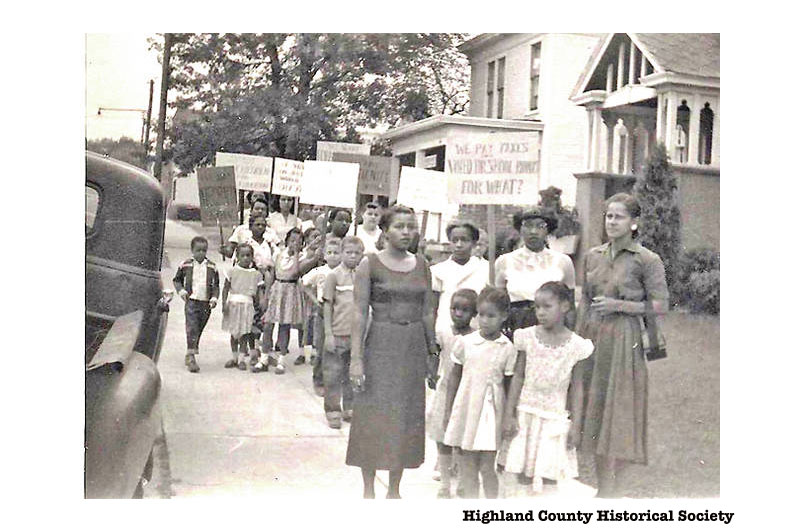
    Miss Elsie and a group of mothers took matters into their own hands, and became the Marching Mothers of Hillsboro.

    Every single day for two long years, they marched for miles to the town’s all-white primary school.

    Every day, they were sent home.

    But they carried on, and eventually, the community and the state and the country noticed. They joined with the NAACP to file a lawsuit against the Hillsboro Board of Education, which made it all the way to the Supreme Court – and they won.

    Because of Miss Elsie and her fellow mothers’ advocacy, the Court ordered the schools to integrate, and paved the way for integration in other northern cities.

    Her activism shows us what ordinary citizens can achieve, when they join together to fight for justice.

    It’s a reminder of how far we have come – and how much work we still have to do, to achieve justice and opportunity for ALL children in our country.

    Three years ago, Elsie Steward Young was inducted into the Ohio Civil Rights Hall of Fame. And that fall, we honored the Marching Mothers of Hillsboro and the children—now adults—who marched with our office’s Canary Award, at our annual Ohio Women’s Conference.

    Then-Senator Harris, now Vice President Harris, was supposed to speak, and we were going to present Miss Elsie with the award. But we both had to stay in Washington at the last minute, because of Supreme Court votes.

    So many Ohioans at the conference told me later that, frankly, I’m not sure I was missed that much – not with Miss Elsie there. She not only filled the void, she provided so much energy with her forceful, inspiring words.

    And that was at 102 years old.

    Throughout the conference, people were lining up to get pictures with her. When a video played, depicting the bravery and determination of the marchers, and when Miss Elsie spoke accepting the award, there was scarcely a dry eye in the audience.

    She talked about how she and the other mothers only did what any mother would have done for their children.

    So many Ohioans will miss Elsie Steward Young. Our thoughts are with her three surviving daughters and two surviving sons, her 36 grandchildren, and all her family and friends and loved ones.

    We know her legacy will live on, through both the lives of all the students whose education she made possible, and through the future generations of young people she inspires to stand against injustice, wherever they see it.

    I ask all my colleagues to join me in honoring Miss Elsie Steward Young – Ohioan, mother, determined champion for civil rights.

  • Honoring Black history and fighting for the future of education in Ohio

    Honoring Black history and fighting for the future of education in Ohio

    A Guest Column by Melissa Cropper and Ohio Capital Journal

    On Feb. 1, as Black History Month began in Ohio’s classrooms and virtual classrooms, Gov. Mike DeWine unveiled his proposed budget for the next two years, which continues the education funding policies that systematically underfund public schools that educate Black students and even shift some of that funding away toward unaccountable, for-profit private schools. 

    Black History Month is an important time for our nation’s educators to focus their curriculum around the contributions that African Americans have made in government, industry, art, science, literature, and every field of human endeavor. However, we do a disservice to our students if we don’t also teach about the harder, more painful history of slavery, segregation, disenfranchisement, and racist violence, and if we do not weave it into our everyday curriculum as deeply as it is woven into the fabric of our country.

    Even then, we are not telling the full story if we teach about these topics as relics of the past, as dark chapters of our country’s past that have ended. Racist structures in our society didn’t cease to exist when the Thirteenth, Fourteenth and Fifteenth Amendments were ratified following the Civil War, or after Brown vs. the Board of Education desegregated schools, or after the 1964 Civil Rights Act, or even after Barack Obama’s historic election. 

    Each of those events has been an important step along the way, but as we are reminded all too often, the vestiges of white supremacy live on in our current institutions. We see it in the over-policing and incarceration of Black, brown, and immigrant communities, we see it in our city neighborhoods that were shaped by redlining, and we see it in Ohio’s school funding system. 

    When we teach Black history, educators can make the connections about how the racial injustices of the past have turned into the systemic racial disparities of the present, and how we can demolish the underpinnings of injustice. There is no better place to start than with our broken school funding policies which underfund and segregate schools with large populations of Black students.

    In Ohio, we underfund schools in Black communities with a school funding formula that was found unconstitutional by the Ohio Supreme Court more than 20 years ago because it relied so heavily on local property taxes that it denied an equitable and adequate education to students in low-income areas. 

    We segregate schools in Black communities with voucher and charter policies that divert students and drain funding from local public schools. Often cloaked in the language of racial justice, vouchers and charter schools have the opposite effect when put into practice. The NAACP has often opposed these policies because they “divert much needed funding for public education to private or charter schools, thereby further dismantling the viability of the public education system and limiting the number of children who would be afforded the opportunity of an adequate and effective education.”

    This vicious cycle of underfunding schools in communities of color, and then punishing them for not being able to meet their students’ needs by underfunding them further, must end. We must stop pitting parents and communities against one another, and instead renew our commitment for high quality public schools for all Ohio students. 

    Last year, the Ohio House passed the Fair School Funding Plan with an overwhelming bipartisan majority, yet the Senate refused to take the issue up. The Plan would have put Ohio on a six-year path toward equitable funding of public schools in Ohio, and would have immediately ended punitive and harmful deductions for vouchers and charter schools from local public school funds. 

    This would ensure that public school districts receive money only for the students who are enrolled to attend but without the added penalty of deducting money due to students opting for private or charter schools. These changes would strengthen schools in Ohio’s cities and in our rural areas, giving students from all backgrounds increased opportunities. Despite the Fair School Funding Plan receiving an 84-8 vote in the House, the Ohio Senate allowed the bill to die without even receiving a vote. 

    DeWine had the opportunity to take the hard work and bipartisan agreement for this new school funding formula and insert it as a framework into his budget proposal. Instead, his proposal continues the status quo which is actively undermining our ability to provide an equitable education.  

    As educators, we can not teach Black History without also being activists in our own realm, fighting for an education system that gives every child, no matter their race or where they live, equal access to a high quality, free public education.