Tag: #blacklivesmatter

  • Solutions to the Climate Crisis Must Be Rooted in Justice and Equity/Covering Climate Now

    Solutions to the Climate Crisis Must Be Rooted in Justice and Equity/Covering Climate Now

    Loveland Magazine is one of the 400 news outlets worldwide, with a combined audience of over 2 billion people “Covering Climate Now”, a global journalism initiative committed to bringing more and better coverage to the defining story of our time.
    The initiative, was co-founded by The Nation and Columbia Journalism Review

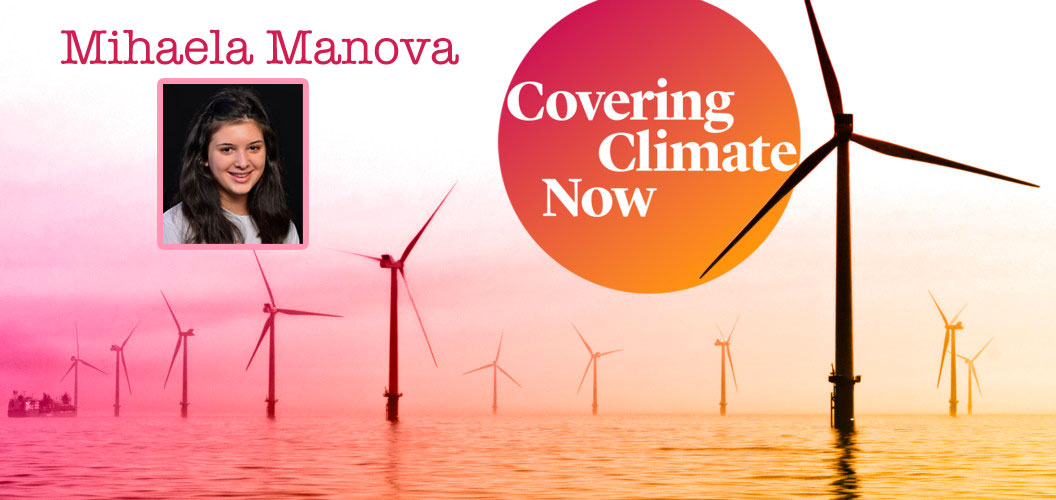
    Mihaela Manova is “Covering Climate Now” in Loveland, Ohio as an editor for Loveland Magazine


    S

    Equity and justice have to be the lens through which we solve [the climate] problem,” Prakash has said. “If it does not work for and benefit the most disadvantaged among us … it will not fix the problem.” The climate problem, in the eyes of this new generation of activists, is systemic and rooted in privilege. The poor, people of color, and women suffer first and worst from the heat waves, droughts, and storms unleashed by global warming, though they did little to cause that warming. The rich, the white, and the comfortable whose investments and lifestyles drive global warming are often shielded from its impacts. The same social systems that drive the climate crisis also perpetuate the racism that killed George Floyd and countless other people of color, and it is those systems that need replacing.

    Days after the Democrats gained control of the US House of Representatives in the 2018 midterm elections, Prakash and dozens of Sunrise members occupied the office of incoming House Speaker Nancy Pelosi, demanding that Democrats back policies that matched the scale and urgency of the climate emergency. After rising Democratic star Representative-elect Alexandria Ocasio-Cortez joined the protesters and applauded their efforts, a handful of articles appeared in Politico and other Washington-focused news outlets. Three months later, after extensive consultations with the Sunrise Movement and others, Ocasio-Cortez and Senator Ed Markey introduced a congressional resolution calling for a Green New Deal. Suddenly, the Green New Deal was national news, with stories running in leading newspapers, magazines, and even network TV news programs.

    Now, Prakash and Ocasio-Corte, along with Vermont Senator Bernie Sanders, are attempting to make a Green New Deal part of the official platform of the Democratic party in the 2020 campaign. Prakash is serving on a task force established by Sanders and former Vice President Joe Biden, the Democrats’ presumptive nominee, to try to devise a climate policy all Democrats can support in November. Biden and Sanders each nominated  members to the task force, including one co-chair: Ocasio-Cortez for Sanders, and John Kerry—who, as Secretary of State under president Barack Obama, helped negotiate the Paris Climate Agreement—for Biden.

    Media coverage of the Green New Deal has been scanty since Ocasio-Cortez and Markey introduced their resolution in February 2019, even as Sanders and most other Democratic candidates endorsed various versions of a Green New Deal during the primaries. Now, as Democrats debate whether to make a Green New Deal part of their argument for defeating Trump, newsrooms have an opportunity to catch up with the story. Americans deserve to know before they vote in November what a Green New Deal is, how it would work, what it would cost, what position the contending political parties and candidates take on it, and what difference it could make in the effort to preserve a livable planet.

    The work of the Biden-Sanders task force is a good place to start. Like most climate activists during the primaries, the Sunrise Movement blasted candidate Biden’s climate proposals as much too weak. Yet after the task force completed its second meeting, Prakash tweeted a video message saying she was “cautiously optimistic” that she and her new colleagues would agree to “a national mobilization this decade that creates tens of millions of good paying jobs with access to a union.” She added that at a time “when we have 30 million unemployed in this country, we can take this opportunity to rebuild from the horrific impacts of COVID-19 stronger, more resilient and more sustainable than before.” And she made a point of praising the contributions of two Biden appointees, including Gina McCarthy, Obama’s former Environmental Protection Agency chief, who reportedly told the task force that the benefits of any climate policy “need to get to people today and tomorrow, not by 2050.”

    The debate around the Green New Deal offers an abundance of news angles. Whether Biden and the Democrats go all in on a Green New Deal is unquestionably a big political story. It’s also a major business story: Which sectors of the economy stand to benefit from a Green New Deal? Which will resist, and why? Local coverage can ask what the mayors, governor, and other key public and private officials in a given region think a Green New Deal would mean for jobs and investment within their jurisdiction. International stories can explore how a justice-centered Green New Deal compares to the green stimulus programs the European Union, the International Monetary Fund, and other pillars of the global establishment have urged to revive coronavirus-battered economies. And looming over everything is a final question: how would a Green New Deal affect our civilization’s chances of surviving what remains, even amid this pandemic, the gravest threat of our time?

    **Covering Climate Now is looking for stories about the intersection of climate and racial and economic justice. If you have recent or evergreen stories on the subject of climate justice that you are willing to share with the CCNow collaboration for republication, please send the links to sharing@coveringclimatenow.org. We will distribute a package of stories in a later email.**

    Important Notice: Covering Climate Now’s interview with the UN Secretary General, like the G7 summit, is being rescheduled. Therefore, CCNow’s planned coverage of green stimulus spending June 5 to 12 will also be delayed. But both items remain on our agenda, and we’ll be in touch soon with more information.

    Now, here’s your weekly sampling of the latest in climate news, from across the Covering Climate Now collaboration.

    • As America grapples with systemic racism, environmental groups are foregrounding climate justice and also confronting their own racist pasts. Many green groups remain overwhelmingly white and focused on such affluent issues as land conservation rather than ensuring clean drinking water for communities of color—but things are beginning to change, Grist reports.

    • On a similar note, ICYMI, in April HuffPost reported on the solar industry’s persistent diversity problem—and the companies fighting to change it.

    • Vox details how Joe Biden’s campaign and the climate movement are finding an unlikely but hopeful union, after candidates who were viewed as stronger on climate failed to win the primary. On the one hand, an appeal to climate voters can help deliver Biden the left, activists say; on the other, Biden’s Main Street appeal, coupled with his focus on jobs and investment, may finally shepherd political centrists to the climate cause. In the words of one environmental group leader: “Joe Biden isn’t the climate champion that the movement wanted, but he may be the champion they need.”

    • In 2020, America consumed more renewable energy than coal for the first time since the 1800s, when wood was used to power ships and trains, Bloomberg Green reports. “This shows us the trend toward renewables is clearly well underway,” said one expert. “We see it speeding up.”

    • Per The Guardian: COP26 talks, originally scheduled for November in Glasgow, will be delayed by a year, due to travel concerns associated with coronavirus. Some country’s representatives expressed concern that the delay  could hinder emissions reductions. The UN climate chief, Patricia Espinosa, however, expressed optimism: “If done right, the [economic] recovery from the Covid-19 crisis can steer us to a more inclusive and sustainable path.”

    Thanks for reading, stay safe, and see you next week!
  • For Kristi Kinne-Hayes it wasn’t until their eldest daughter turned 16 that evil racism finally struck

    For Kristi Kinne-Hayes it wasn’t until their eldest daughter turned 16 that evil racism finally struck


    LOVELAND MOM’S LONG RACIAL AWARENESS JOURNEY AND WHY WHITE AMERICANS NEED TO FOLLOW HER PATH

    by Daniel P. Finney

    Kristi Kinne-Hayes grew up in Jefferson, a Green County, Iowa city made of 4,200 almost all white people. Kristi played six-on-six girls’ basketball and became one of the best players in the state.

    A Guest Column by Independent journalist Daniel P. Finney who writes for paragraphstacker.com

    She knew local police officers by their first names and thought of them as just another face in the crowd rather than law enforcement.

    Kristi played college basketball at Drake University, leading the Bulldogs to an NCAA Tournament berth her senior season in 1995. She seldom thought about race even though she played alongside and was friends with people of different races.

    She had a longtime friend who played softball at Drake who was mixed race and never knew until someone asked her friend about her race in a Kansas City bar.

    But life, love and motherhood changed her perspective and her long journey from racial indifference, maybe even racial ignorance, to awareness and empathy is one all Americans — especially whites — need to take right now.

    A background like Kristi’s makes it seem unlikely that she would comment on the ghastly death of George Floyd at the hands of Minneapolis police. But life, love and motherhood changed her perspective and her long journey from racial indifference, maybe even racial ignorance, to awareness and empathy is one all Americans — especially whites — need to take right now.

    Kristi graduated from Drake, survived ovarian cancer and met and married Jonathan Hayes, a former University of Iowa tight end who played for the legendary Hayden Fry during the famed coach’s revitalization of the program in the early 1980s.

    Hayes is also African-American. But a mixed-race relationship didn’t expose Kristi to the racial hatred the corrupts America’s soul.

    The first time Kristi brought Johnathan home to Jefferson to watch a ballgame, fans swarmed the Hawkeye hero for autographs.

    “That was so traumatic for me because when I was at the game, people came up for my autograph,” Kristi said. “I told Jonathan they only wanted his autograph because they already had mine.”

    The couple settled in Cincinnati, where Jonathan served as tight ends coach for the NFL’s Bengals.

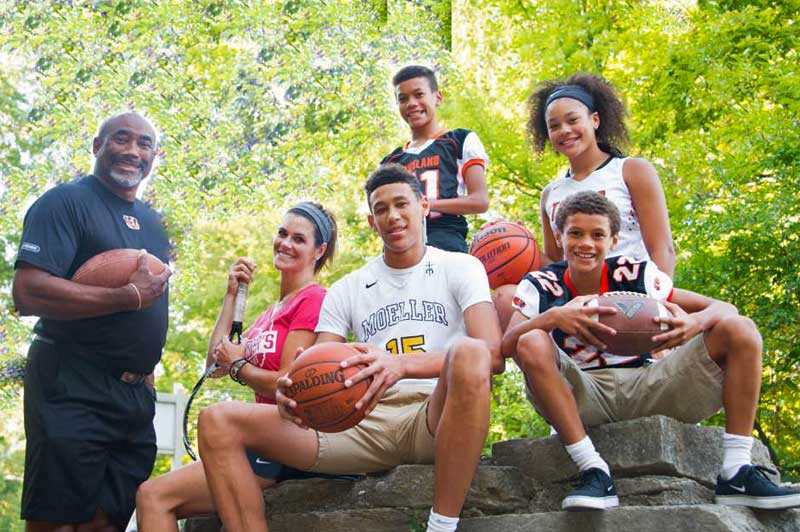
    They had four children. Yet it wasn’t until their eldest daughter, the couple’s second child, turned 16 that evil racism finally struck the mother of four mixed-race children.

    Kristi and Jonathan bought a new car and gave their older vehicle to their daughter. They put the old plates on their daughter’s vehicle and paid the fees, but Ohio Department of Transportation computers hadn’t yet processed the transaction.

    One evening their daughter came home pale.

    She said, ‘I was sure they were going to shoot me.

    Kristi asked her what was wrong.

    She had been pulled over by police. The car tags were wrong.

    “She said, ‘I was sure they were going to shoot me,’” Kristi said. “I thought, ‘Why would you think they would shoot you?’”

    And the privilege of being a white star athlete from small town Iowa evaporated. She was now the mother of four children whose facial characteristics most white people would identify as black.

    “If there’s a little bit of brown, to other white people, you’re black,” Kristi said.

    Living with racism did not limit her children’s success. Eldest son, Jaxson Hayes, was a first-round draft pick by the NBA’s New Orleans Pelicans last year.

    Daughter Jillian is a highly prized women’s basketball recruit committed to the University of Cincinnati.

    Jillian Hayes and her family on the night she accepted her commemorative 1,000th point ball.

    Kristi reminds them that she doesn’t care if other people label them black only, just remember that their white mother and her family loves them just as much as their African-American father and his family.

    “Your name is clean,” Kristi tells her kids, “keep it that way.”

    Still, she worries. Jaxson is off in New Orleans, just turned 20 years old and having the time of his life as an NBA rookie despite the league shutdown due to coronavirus.

    She tells her children that if they are pulled over, put their hands at 10 o’clock and 2 o’clock on the steering wheel.

    “I never thought I would have to tell my children that,” Kristi said.

    The true horror of this event: None of those officers moved to stop their fellow officer from committing a crime. It was depraved indifference.

    Kristi saw the news reports and videos of a Minneapolis police officer putting his knee in the back of George Floyd, an African-American man suspected of forgery.

    Three other police officers stood by and did nothing. They were all fired. As of this writing, it’s unknown if they will be criminally charged.

    The killing of Floyd is a complete institutional failure by the Minneapolis police. That officer pressed his knee into the back of that handcuffed man’s neck as he pleaded for mercy, he could not breath and eventually lost consciousness and died.

    He stared into the crowd almost as if he was daring someone to tell him he was wrong. The crowd pleaded with him to render aid, to check Floyd for injury or get him some water.

    The officer refused.

    A friend of mine made this observation a few years ago: “There’s two things we learned from everybody having cameras on their phone: There are no UFOs and police sometimes kill people for no reason.”

    The true horror of this event: None of those officers moved to stop their fellow officer from committing a crime. It was depraved indifference.

    Here in Des Moines, some of my police sources told me they were aghast at another cop so drunk on power that his defiance led to the death of a man.

    “When you have him in cuffs, get him up and in a car and off to the station,” one cop told me. “That diffuses the situation right there.”

    Another cop told me police administrators were circulating a video by a top training instructor illustrating the dangers of the knee in the back hold and all Des Moines cops will have to sign off on having watched it.

    There’s been little local backlash at Des Moines police because of the Minneapolis killing, but the danger of using national stories to paint local pictures hangs over every police station.

    Kristi saw that news and it moved her. She lives in Cincinnati, a city that saw race riots in 2001 after police shot an unarmed African American teenager. Kristi and her family moved to Cincinnati after that terrible period.

    So what does all this have to do with Kristi Kinne-Hayes, the great Iowa basketball star?

    But motherhood long ago took the woman from Jefferson’s ability to be color blind.

    Moved by the story, Kristi posted to her Instagram a trending meme of the officer with his knee in the back of Floyd’s neck and former NFL quarterback Colin Kaepernick kneeling during the national anthem. The caption read: “This is why.”

    So what does all this have to do with Kristi Kinne-Hayes, the great Iowa basketball star?

    ESPN commentator Emmanuel Acho pleaded with white America in a video posted to his Twitter feed Tuesday.

    “My white brothers and sisters, we need y’all’s help,” Acho said. African-Americans have been outraged as people continued to die unnecessarily, but white Americans have remained mostly indifferent or hesitant to raise their voice in protest.

    We need to take the journey Kristi Kinne-Hayes took in her 46 years. She went from living blind to race because it never directly affected her to having a profound understanding of just how horrible racism is in this country.

    I’m not saying you need to repost the meme or start hashtagging everything #blacklivesmatter.

    But we must all do our very best to engage empathy for people who are not like us.

    It’s very hard for anyone to see life through the perspective of someone who has lived so differently.

    Our failure to do that is already too late for so many, the latest being George Floyd.


    Daniel P. Finney, independent journalist – Cut loose and cashiered by corporate media, lone paragraph stacker Daniel P. Finney makes his way telling stories about his city, state and nation. No more metrics or Google trends, he writes stories about people and life ignored by the oligarchy. ParagraphStacker.com is reader-supported media. Please consider donating at paypal.me/paragraphstacker.


    Ricky Mulvey’s new Podcast: “Total Fighter,” about Cincinnati’s Ezzard Charles

    Listen to the Latest Episode…