Tag: board of education

  • School Board calls special meeting to rescind appointment of new member

    School Board calls special meeting to rescind appointment of new member

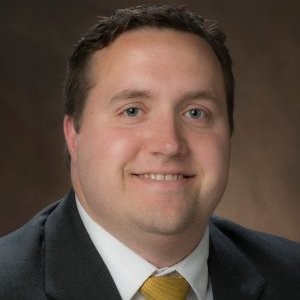
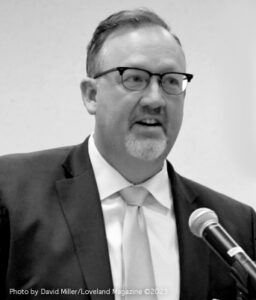
    Dr. Brad Goldie

    Loveland, Ohio – In a special meeting on July 17, the Loveland City School District voted to appoint Dr. Brad Goldie to fill the unexpired term of  Kevin Daugherty. According to a news release by the District on Monday, the Board will hold a special meeting on Wednesday, July 26th, at 5 PM to rescind the appointment because the front door of the building was locked to the public.

    For background: School Board appoints Dr. Brad Goldie to vacant position.

    The new special meeting will be held in the LIS/LMS Media Center at 757 South Lebanon Road. Hearing from the public will not be included in the agenda for this meeting.

    The recommended action on the agenda for the meeting is only to “rescind its appointment of a candidate to the vacant Board seat.” Nothing in the communications revel when the Board might again vote to make an appointment to the vacant seat. Daugherty’s resignation was effective, June 30th.

    Below is the statement released Monday by Board President, Dr. Kathryn Lorenz:

    July 24, 2023

    The Loveland City School District Board of Education held a Special Meeting on July 17, 2023, to fill a vacancy on the Board. After interviewing all interested candidates, the Board voted unanimously to appoint Dr. Brad Goldie.

    All public portions of the July 17 Special Meeting were recorded and are available to view on the Board’s YouTube page. Due to an oversight, the front door of the building was not unlocked to allow public access. Because of this procedural error, I have called a Special Meeting of the Loveland Board of Education for this Wednesday, July 26, 2023, at 5 pm in the Media Center of the Loveland Intermediate School.

    During this week’s Special Meeting, the Board will consider a motion to rescind the action taken during the July 17 Meeting. I will be bringing forward this motion in the interest of transparency and following proper procedure – it is no reflection on Dr. Goldie or any of the candidates who indicated an interest in the Board vacancy. I want to thank Dr. Goldie for his interest and willingness to serve.


    1. Opening Items
    Subject
    1.1 Call to Order
    Meeting
    Jul 26, 2023 – Special Board Meeting
    Category
    1. Opening Items
    Type
    Action
    Recommended Action
    Board President to call the meeting to order.

    Dr. Lorenz calls the meeting to order at __________ p.m. by asking the Treasurer to call the roll.

    ROLL CALL:

    ____ Rev. Eilert

    ____ Dr. Lorenz

    ____ Dr. Schwetschenau

    ____ Mrs. Washburn

    Subject
    1.2 Adoption of Agenda
    Meeting
    Jul 26, 2023 – Special Board Meeting
    Category
    1. Opening Items
    Type
    Action
    Recommended Action
    Board to adopt the July 26, 2023, agenda as presented/amended.

    ________________moved and ____________________ seconded a motion to adopt the agenda for the Special Board Meeting held Monday, July 26, 2023.

    ROLL CALL VOTE:

    ____ Rev. Eilert

    ____ Dr. Lorenz

    ____ Dr. Schwetschenau

    ____ Mrs. Washburn

    2. Board Resolutions
    Subject
    2.1 Rescension of Appointment to Vacant Board Seat
    Meeting
    Jul 26, 2023 – Special Board Meeting
    Category
    2. Board Resolutions
    Type
    Action
    Recommended Action
    The Board is to rescind its appointment of a candidate to the vacant Board seat.

    ___________________ moved and  _____________________ seconded a motion to rescind its appointment of Dr. Brad Goldie to the vacant Board seat due to a procedural error.

    ROLL CALL VOTE:

    ____ Rev. Eilert

    ____ Dr. Lorenz

    ____ Dr. Schwetschenau

    ____ Mrs. Washburn

    3. Meeting Closing
    Subject
    3.1 Adjournment
    Meeting
    Jul 26, 2023 – Special Board Meeting
    Category
    3. Meeting Closing
    Type
    Action
    Recommended Action
    Board President will ask for a motion and second to adjourn the meeting.

    ________________moved and ____________________ seconded a motion to adjourn the meeting.

    ROLL CALL VOTE:

    ____ Rev. Eilert

    ____ Dr. Lorenz

    ____ Dr. Schwetschenau

    ____ Mrs. Washburn

  • Loveland school levy passes

    Loveland school levy passes

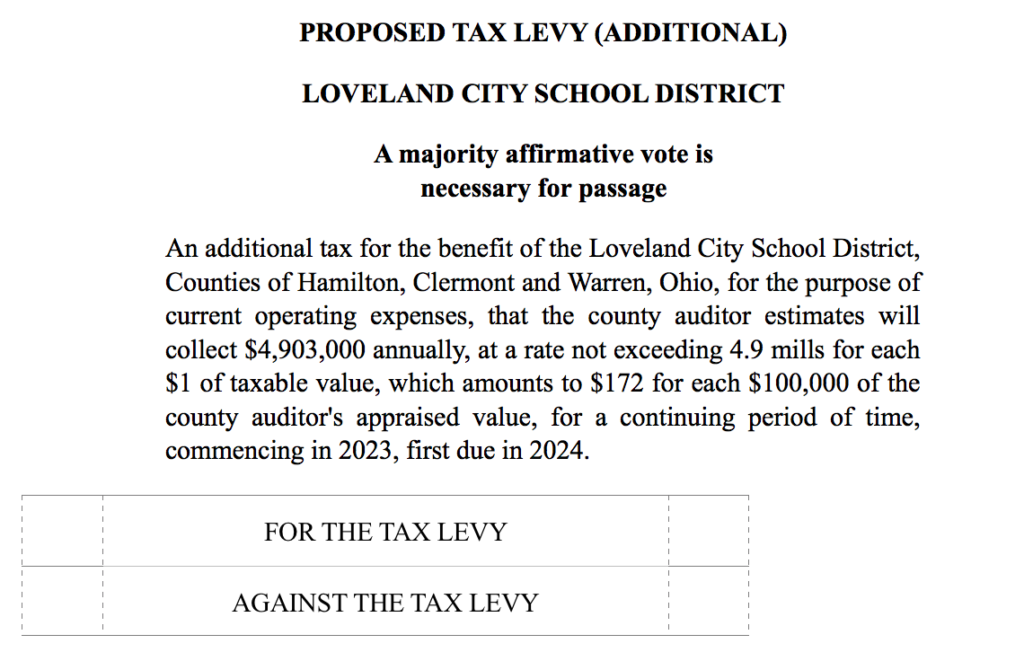
    Loveland, Ohio – The Loveland City School District asked voters to approve an additional 4.9 mills permanent operating levy on May 2nd. Here are the accumulated results reported as of 10:56 PM from all 3 of the county BOE’s. These numbers are “Unofficial Results” until several weeks have passed and the Boards meet to certify results.

    TOTAL

    YES – 5,707

    NO – 4,473

    _________________________

    CLERMONT COUNTY

    YES – 2,933

    NO – 2,027

    HAMILTON COUNTY

    YES – 2,704

    NO – 2,384

    WARREN COUNTY

    YES –  70

    NO – 62

  • Town Hall called to discuss 4.9 mill Loveland operating levy

    Town Hall called to discuss 4.9 mill Loveland operating levy

    Superintendent Mike Broadwater (Loveland Magazine file photo)

    Loveland, Ohio – The Loveland City School District will hold a Town Hall Meeting on Tuesday, April 25, at 6 PM in the Media Center at Loveland Intermediate School. In his April 19 “Schools Update” Superintendent Mike Broadwater said, “The purpose of this Town Hall is to provide a forum for our Loveland City Schools community to ask questions about the upcoming 4.9 mill operating levy on the ballot on May 2.”

    The Town Hall will include the Superintendent, Treasurer Rob Giuffre’ and two members of the Board of Education. It will not be an official meeting of the Board. The Superintendent’s newsletter did not specify which board members will participate in the discussions.

    If you cannot attend, you can watch a live stream by following this link.

    Only in-person attendees can participate with questions or comments. After the meeting, the live stream recording will be available on the Board of Education YouTube channel.

    During the Town Hall, Broadwater said, “We will work to take questions or comments from as many participants as possible to foster conversation around these important issues.”

  • Urgent! Loveland Community Needs School Levy Passed

    Urgent! Loveland Community Needs School Levy Passed

    Ellen Main, is a stay-at-home mom of two boys in Loveland Schools: one kindergartener and one first grader. Her family lives in the Belle Meade subdivision.

    by Ellen Main

    Loveland City School District has an operating levy on the May 2 ballot this year. Because Loveland has not passed a school levy in nine years, they are in desperate need of these funds to maintain their current high quality of education. If the levy is not passed, they will move towards State minimum services. Our students and future students deserve better than this. As a mom of two young Loveland students, I am witness to the outstanding and dedicated faculty, staff, and administration in our community. My experience at a recent school event illustrates this perfectly.

    Waiting anxiously for the show to begin, I looked around at all the other parents, siblings, grandparents, and other family members sitting in the Loveland Primary School gym and thought how grateful I am to live in this community. After the heartwarming show, during which the look of pride on my son’s face almost made me tear up, we walked through a gallery of children’s art—vibrant paintings, oil pastel drawings, and construction paper weavings covered the hallways from floor to ceiling. My son showed such confidence in finding his art on the walls and explaining it to his family. Then, he led us to his classroom (Ms. Miller, Room 9), where he showed us two beautiful books, one created by him (about koalas) and one created by his classmate, a biography about what makes my son special (my son created one about his classmate too). He proudly showed us all his work, which had an Australian theme (each class had a different country). All of this thanks to the hard work, energy and creativity of Lauren Alten (music teacher) and Kayla McClary (art teacher) as well as the classroom teachers, custodians, administration—too many people to mention.

    The “Around the World” Showcase is an example of what makes Loveland Schools such a special place to be. Music, theatre, art, athletics, physical education, robotics and so many other programs we may take for granted won’t be possible much longer if we don’t pass a school levy. Think about the most memorable and important moments of your elementary and secondary education—most likely they were made possible because of school levies being passed.

    I was lucky enough to have some extraordinary teachers in the Perrysburg School District in Northwest Ohio. My most memorable experiences had to do with music and theatre, which would not have been available without teachers having the freedom to use their creativity to benefit students both in the classroom and through extracurricular activities. Maybe yours have to do with sports, science club, art, student government, none of which would be possible without our talented educators, who would slowly be cut due to lack of funds. We cannot deny future generations these experiences.

    Right now, the employees at Loveland Schools are doing amazing work despite not having the money—92 percent of all Ohio school districts receive more money per student yet we are in the top 2 percent in the state on the Ohio Department of Education scorecard. We cannot keep the talented and hard-working people we have in Loveland Schools now if they feel stressed that they may lose their jobs or if the class sizes are so big they are spending all of their time managing student behavior rather than teaching.

    With the passing of the levy on May 2, we can keep not only our schools strong but our community as well. Voting yes for Loveland Schools on May 2 is a vote for our students and future students and also for the well-being of our entire community.

    _________________________

  • Loveland Tiger’s Spring Break begins Friday afternoon

    Loveland Tiger’s Spring Break begins Friday afternoon

    [vc_row][vc_column width=”2/3″][vc_column_text]

    Photo by Ron Lach/pexels.com

    Loveland, Ohio – Loveland Schools begin their Spring Break this Friday afternoon March 31, and classes will resume on Monday, April 10.[/vc_column_text][/vc_column][vc_column width=”1/3″][vc_widget_sidebar sidebar_id=”td-default”][/vc_column][/vc_row]

  • Loveland City School District Board of Education votes to place 4.9 mill levy on the May 2nd

    Loveland City School District Board of Education votes to place 4.9 mill levy on the May 2nd

    Loveland, Ohio – Last night in a unanimous vote, the Loveland City School District Board of Education voted to place a 4.9 mill operating levy on the May 2nd ballot.

    The discussion about the levy begins at the 19:12 minute mark of the meeting video.


  • Public school funding set for court battle in 2023

    Public school funding set for court battle in 2023

    BY: SUSAN TEBBEN – Ohio Capital Journal

    While the trial of former Ohio House speaker Larry Householder will hold the attention of many this year, the battle over public school funding will also be subject to court drama.

    Public school districts, some individual students in public schools, and the Ohio Coalition for Equity and Adequacy of School Funding, spent the last year fighting to keep a lawsuit on the books in Franklin County Common Pleas Court. That lawsuit aims a direct hit at Ohio’s EdChoice private school voucher program, which plaintiffs say takes away needed funding from the public schools attended by a vast majority of Ohio students.

    The private school voucher system goes against the Ohio Constitution’s demand for a “thorough and efficient system of common schools throughout the state,” the schools and their advocates say.

    Late in 2022, Franklin County Common Pleas Judge Jaiza Page denied attempts by the Ohio Department of Education, the state Board of Education, and a group of “Catholic school family intervenors” and other individuals, hoping to quash the lawsuit.

    “Plaintiffs have adequately pleaded that the difference in funding levels has resulted in students in the public-school districts being denied adequate facilities and learning supports,” Page wrote in denying the private school advocates’ request to end the case.

    The ODE and the state board argued the public school group didn’t have standing to sue, but Page rejected that argument as well, saying the problem in the case is “unique to students within the districts and is not experienced by the general public,” and could be rectified by the state.

    EdChoice, first implemented in 2005, has been a point of contention for the state legislature and public/private school advocates across the state for decades, since the first time the Ohio Supreme Court deemed the state’s education funding system unconstitutional.

    That case, DeRolph v. State of Ohio, was ruled on multiple times by the state’s highest court, but the rulings were the same: the state’s public school funding system doesn’t meet the requirements of the state constitution.

    While both the public school advocates who filed the suit and private school supporters who discredit the case use DeRolph to argue their sides, Page found the private school supporters’ interpretation that a court does not have the authority to establish per pupil funding without merit.

    “This ignores the fact that the DeRolph court held that the level of funding was unconstitutional and was a violation of the ‘thorough and efficient system’ clause,” Page wrote.

    In all the decisions, the General Assembly was ordered to come up with a new system of education funding. Ohioans have yet to see a plan come to full fruition.

    Another former House speaker, Bob Cupp, worked with fellow legislator John Patterson to put together an education plan that would later be called the Fair School Funding Plan. But the plan requires a six-year phase-in, something legislative leadership wasn’t willing to do when the budget came up in the last General Assembly.

    “For the 2023 school year, only 33% of the Fair School Funding Plan will be funded,” Page wrote in her most recent decision in the case.

    Public school students in the districts represented in the case are funded at $340, $1,700 and $2,800 per pupil, based on their grade level, in core funding from the Ohio Department of Education.

    Currently, the vouchers allow students who choose to attend private schools instead of their public school district to receive $5,500 for kindergarten through eighth grades and $7,500 for high schoolers.

    The program has seen expansions over the years, and with the passage of House Bill 110 in 2021, private school vouchers were directly funded through the state, rather than filtered through adjacent public school districts.

    A new expansion was proposed last month, though it didn’t make it through the end of the General Assembly, and will have to be reintroduced. That could be possible in the new year with a bolstered GOP supermajority full of “school choice” advocates.

    With a new budget cycle upcoming, public school advocates are hopeful more funding for the plan may be ahead, though Senate President Matt Huffman has said one priority on the topic of education for this General Assembly will be an overhaul of the entire education system in the state.

    That overhaul could include a restructuring of the Ohio Department of Education and a changing of roles for the state Board of Education, which could add a layer of fog to the state’s educational future and delay funding changes as the potentially brand new department finds its footing.

    The 134th General Assembly saw the legislation in the waning hours of their term, but the legislation ultimately fell short as amendments and the 2,000-page volume of the bill tripped up its success.

    Meanwhile, the department and the other state education leaders named in the lawsuit have until Jan. 20 to file responses in the case.

  • School district will hold a Town Hall Meeting to discuss “ongoing funding challenges”

    School district will hold a Town Hall Meeting to discuss “ongoing funding challenges”

    Loveland, Ohio – In his weekly Superintendent’s Message, Mike Broadwater described the importance of a planned town hall meeting to discuss, “…our ongoing funding challenges”. He said, “The district is currently in deficit spending, which means that we are spending more money to pay for staff and services than the federal, state, and local tax revenue that is coming in. Our Five Year Forecast shows deficit spending for the current fiscal year of $3.7 million and projects a $3.8 million deficit in the following fiscal year.”

    To that end, at the Board of Education meeting on December 10, it was decided that the District will hold a Town Hall Meeting on Thursday, January 5, at 6 PM in the Media Center at the Loveland Intermediate School.

    “The purpose of this Town Hall is for district leaders to hear from our Loveland City Schools community about issues facing the school district, including the financial future of Loveland City Schools.”

    Two members of the Board of Education and the Superintendent will attend.

    If you cannot attend, you can watch the live stream by following this link. Only in-person attendees can participate with questions or comments. A recording of the meeting will be available to watch for those who are interested.

    [Watch Now] Loveland City School District Town Hall Meeting

  • Education sees some funding boosts, some missed opportunities in 2022

    Education sees some funding boosts, some missed opportunities in 2022

    BY: SUSAN TEBBEN – Ohio Capital Journal

    Next year is sure to be a busy one when it comes to education in Ohio, with potential state agency overhauls and funding changes still on the agenda for the state legislature.

    The end of 2022 was capped by an 11th-hour push and ultimately failure for an attempted overhaul of the Ohio Department of Education and the state Board of Education. Senate Bill 178 was never passed in an Ohio House committee, so it was folded into another bill with controversial provisions, House Bill 151.

    House Bill 151 included bans for trans youth in participating in sports based on their gender identity, and after SB 178 was included, the bill came in at more than 2,000 pages. But despite delaying the vote until after 2 a.m. on the last day of the legislative session, the bill and its many provisions failed to garner enough votes in the House.

    LGBTQ advocates hailed the failure of House Bill 151, which still would have required the use of birth certificates to prove a student’s gender, despite the elimination of a provision that would have required a genital exam.

    “I can not begin to express my gratitude to the hundreds of community members and advocates who stood up for the rights of all transgender youth to participate in all parts of life as whole people, including sports, just like everyone else,” said Alana Jochum, executive director of Equality Ohio, after the bill failed to pass.

    Dr. Rhea Debussy, director of external affairs for Equitas Health and former facilitator for the NCAA’s Division III LGBTQ OneTeam Program, said the thrill of seeing the legislation voted down was tempered by concern that the bill even existed.

    “It’s very alarming that a group of legislators thought bullying gender expansive and intersex youth was an urgent need for the final hours of Ohio’s 134th General Assembly,” Debussy said in a statement.

    Senate Bill 178

    Education officials not only celebrated the failure of HB 151’s anti-trans legislation, but the downfall of the rapid-fire education overhaul they overwhelmingly said needed more time and more vetting.

    “OEA believes it is worth taking a hard look at how Ohio’s schools are governed and supported at the state level,” said OEA President Scott DiMauro in a statement. “However, collaboration is key.”

    Senate President Matt Huffman said he was “disappointed that our school reform bill and our attempt to do something about girls’ sports … I’m disappointed that those things failed.”

    But Huffman maintained the stance he took after the Senate passed HB 151 on to the House for a vote earlier this month, that if the education overhaul part of the bill didn’t pass during the 134th GA, it would move on to the 135th.

    “I’m glad we took the vote because we kind of have on the record who’s where, and there probably is a lot more due diligence that needs to be done on that issue,” Huffman said.

    Some ups, more downs

    While some funding changes were implemented — such as $56 million in state funding for Disadvantaged Pupil Impact Aid, increases in Elementary and Secondary School Emergency Relief funds and federal monies for school security and safety — public schools are still looking for full funding of the Fair School Funding Plan (formerly called the Cupp-Patterson plan, after Speaker Bob Cupp and former state Rep. John Patterson, the legislators who created it). The plan was previously funded for the two years of the current General Assembly, but needs another four-year commitment of funds to be fully phased in.

    That plan, according to the OEA, “represents the first constitutional school funding system in the state in decades.”

    The effort for better public school funding is flanked by a lawsuit moving forward in Franklin County Common Pleas Court that seeks to nullify the EdChoice private school voucher system in the state. A coalition of school districts and individuals joined together to file the lawsuit, and Franklin County Judge Jaiza Page recently ruled against the Ohio Attorney General’s Office, who argued the lawsuit should not be allowed to continue.

    “This means we will put vouchers on trial in a court of law,” the coalition behind the lawsuit, Vouchers Hurt Ohio, wrote in an email newsletter, though the timeline for the court case could go on for some time.

    Private school vouchers are on the minds of congressional Ohioans as well, with U.S. Sen. Sherrod Brown pushing for more investment in federal Head Start programs and more funding for public schools.

    “We have a state government, one of whose major aims seems to be to privatize public schools,” Brown said in a press call. “They have moved more and more money out of public education into religious schools and other private schools … and really undermined what state government should be doing and that is funding public education for the great majority of students in our state.”

    Teachers unions and public officials alike wanted to see efforts to stem the state’s teacher shortage, a rise in the teacher wages that have stagnated over the last 25 years and changes to the third-grade reading guarantee, both of which saw action in the legislature, but did not come to fruition.

    As the state’s Board of Education awaits the fate of the department and the board itself, they still have a decision to make: the search for a superintendent of public instruction.

    The board spent months on issues such as a resolution condemning racism in education, then a resolution repealing that racism measure, and finally a resolution urging the federal government not to include gender identity in anti-discrimination language that would impact education policy.

    But in their December meeting, they decided to punt on the issue of hiring a search firm to select candidates to fill the open position that heads the department.

    The board voted to wait until SB 178 was passed or rejected by the legislature, for fear that candidates for the position might change their minds once they found out how the roles of superintendent would change under the new bill.


  • Apply Now – School district appointee to Loveland Planning and Zoning Commission

    Apply Now – School district appointee to Loveland Planning and Zoning Commission

    Loveland, Ohio – The Loveland City School District Board of Education is seeking a person to be appointed to the City of Loveland Planning and Zoning Commission. The successful candidate would serve as a City of Loveland Planning and Zoning Commission member, attend necessary meetings, and communicate with the Board of Education.

    Those interested in serving must be a resident of the City of Loveland for at least one year before their appointment to the Commission. Candidates should submit a resume and a brief narrative explaining why they would like to serve.

    Documents can be submitted via email to treasurer@lovelandschools.org or delivered to the Board of Education offices during regular business hours. All documents should be received by noon on Wednesday, December 14, 2022.

    Loveland Charter

    SECTION 9.03 PLANNING AND ZONING COMMISSION.
    There shall be a City Planning and Zoning Commission consisting of five (5) members.
    One (1) member shall be a member of Council, to be selected by Council. One (1) member shall
    be selected by the Board of Education who may or may not be a member of the Board. Council
    shall select three (3) members who are not Council members. Members of the Commission shall
    be residents of the City for at least one year prior to their appointment. If the Board of Education
    and/or the Council shall fail in these appointed duties, for a period of forty-five (45) days, after a
    vacancy occurs, the Mayor shall make such appointments. The terms of office of a Commission
    member, who is also a member of Council shall be concurrent. The remaining four (4) members
    shall be appointed to staggered and overlapping terms of three (3) years each. Any incumbents, as
    of this Charter’s adoption, shall serve out their respective unexpired terms.
    (Amended 11-6-01)

    SECTION 9.03a POWERS AND DUTIES OF PLANNING AND ZONING
    COMMISSION.
    The Commission shall act as the City’s platting commission and shall provide for planning
    and regulations covering the platting of all lands controlled by the City and may require an official
    map of such territories to be made. The Commission shall carry out the City planning functions,
    which includes preparing a master plan, to be updated a minimum of every ten (10) years, and
    investigate, and make such reports and recommendations relating to planning and zoning, and the
    physical development of the City; and shall have all the powers granted to and shall perform all
    the duties imposed on planning commissions by Ohio law, and such other powers and duties as
    established by Council by ordinance. Meetings of the Commission shall be held as needed but not
    less than every two (2) months.
    (Amended 11-6-01)

    Loveland Code of Ordinances

    1109.03 RESPONSIBILITIES OF THE PLANNING AND ZONING COMMISSION.

       (a)    The Planning and Zoning Commission shall have the following responsibilities and powers as they relate to this Zoning Code:

          (1)   Initiate advisable official zoning, district map changes, or changes in the text of the Zoning Code where same will promote the best interest of the public in general through recommendation to the City Council.

          (2)    Review all proposed amendments to the text of this Zoning Code and the official zoning district map and make recommendations to the City Council.

          (3)    Review all Special Planning District applications and make recommendations to the City Council as provided in this Zoning Code.

          (4)   Review all conditional uses as identified in the respective zoning districts according to provisions and criteria stated in this Zoning Code.

          (5)   Carry on a continuous review of the effectiveness and appropriateness of this Zoning Code and recommend such changes or amendments as it feels would be appropriate.

          (6)   Review and act on site plans pursuant to Section 1111.09.

       (b)   The Planning and Zoning Commission shall also have the responsibilities as set forth in the City Charter.