Tag: Board of Zoning Appeals

  • [WATCH] Board of Zoning Appeals rejects John Hill’s request to build 3-story townhome development

    [WATCH] Board of Zoning Appeals rejects John Hill’s request to build 3-story townhome development

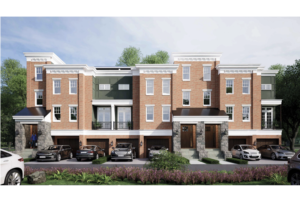
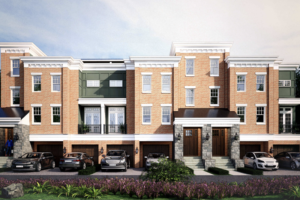
    Loveland, Ohio – On March 5, a six-unit, 3-story townhome development proposed by local builder John Hill Construction, to be located at 200 Railroad Avenue within the Historic Preservation District Boundaries, was determined to be “inappropriate” for the neighborhood. The proposed townhomes were to be adjacent to existing cottage-style homes and Nisbet Park on the Loveland Bike Trail in Historic Downtown Loveland. The proposed project encompasses two vacant parcels consisting of .229 acres.

    The Historic Preservation and Planning Commission (HPPC) voted unanimously to reject Hill’s proposal.

    John Hill then appealed the denial to the Board of Zoning Appeals (BZA). The case was heard on Monday, April 21, and the three-member board upheld the HPPC decision that the proposal was not appropriate for Historic Downtown.

    Despite the City not notifying the HPPC that their decision had been appealed and thus not being in attendance to defend their position, the Board of Zoning Appeals upheld the rejection of the Hill proposal.

    BACKGROUND: The Historic Preservation and Planning Commission voted unanimously to reject Hill’s proposal. (3-story townhome development proposed for historic district deemed not “appropriate”)

    In these LOVELAND MAGAZINE TV videos you can watch the open forum testimony, John Hill’s testimony, and the deliberation of the BZA.


  • [TONIGHT] Agenda and details of BZA hearing on six-unit, 3-story townhome

    [TONIGHT] Agenda and details of BZA hearing on six-unit, 3-story townhome

    A six-unit, 3-story townhome that is proposed by local builder John Hill Construction

    Loveland, Ohio – On March 5, a six-unit, 3-story townhome development proposed by local builder John Hill Construction, to be located at 200 Railroad Avenue within the Historic Preservation District Boundaries, was determined to be “inappropriate” for the neighborhood. The proposed townhomes were to be adjacent to existing cottage-style homes and Nisbet Park on the Loveland Bike Trail in Historic Downtown Loveland. The proposed project encompasses two vacant parcels consisting of .229 acres.

    The Historic Preservation and Planning Commission voted unanimously, to reject Hill’s proposal. (3-story townhome development proposed for historic district deemed not “appropriate”)

    The developer has now appealed the denial, to the Board of Zoning Appeals. The case will be heard tonight at City Hall at 5:30 PM.

    In the below agenda for tonight’s meeting you can read the details of the development proposal and the reasons John Hill believes the planning commission erred in ruling his request to build the townhomes was “inappropriate” for the neighborhood.

    FOR BACKGROUND:

    3-story townhome development proposed for historic district deemed not “appropriate”

    [pdf-embedder url=”https://lovelandmagazine.com/wp-content/uploads/2025/04/Agenda-Monday-April-21-2025.pdf” title=”Agenda – Monday, April 21, 2025″]

  • A Call for Transparency in Loveland City Government

    A Call for Transparency in Loveland City Government

    Dear Editor,

    I am writing to express my deep concern regarding the recent decision by Loveland City to deny the validity of case #2024-03: 200 Railroad Avenue HPPC Appeal based upon a 3rd party filing by a concerned Loveland resident. (Demolition of home in Loveland Historic District causing uproar)

    Ironically, as we debate the future of historic buildings and the little yellow house on Railroad Avenue, a ten year anniversary of the groundbreaking on Loveland Station Apartments approaches (November 12, 2014).

    Just barely a decade ago, Loveland residents woke up to a massive three-story apartment complex near the train crossing in our historic two-story whistle stop town, constructed even at the expense of losing our iconic train whistle. Transparency was nowhere to be found, and residents were left angered and baffled how it happened. Some even called to tear the buildings down.

    As elected officials, Loveland City Council members are entrusted with the responsibility of representing the interests of all Loveland residents, especially when they show up at public meetings. We vote for them; at the very least, we expect transparent processes.

    However, in the instance of the Board of Zoning Appeals Meeting on October 30th, we left silenced and frustrated, feeling fooled by the process. (BZA dismisses appeal making way for demolition of historic home)

    We asked only for an appeal to a zoning decision to demolish this historic house in question. Yet the City, under solicitor Joe Braun, denied several concerned citizens at the scheduled public appeal meeting an opportunity to contribute factual evidence as to the historic value of the home. From our perspective, the process failed.

    It is crucial that our elected officials remain responsive to the concerns of their constituents. By actively listening to the community and considering their input on historical and architectural significance of buildings to the city, the City Council can make informed decisions that benefit both present and future generations. But they didn’t listen at all.

    The City’s decision to allow the appeal to precede so far as to set a specific date for the appeal review and then, at that meeting, subsequently invalidate the appeal on technical grounds was not only unfair but suggests strategic timing to obstruct an open process.

    This action effectively limited the opportunity for other residents to submit further appeals prior to the deadline, undermining the very essence of a transparent and democratic processes.
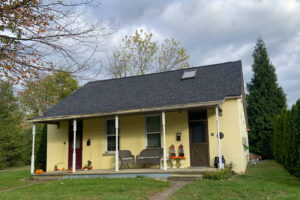
    Residents showed up prepared because they believe the 200 Railroad Avenue building is a significant piece of Loveland’s history. Indeed, it was acknowledged by Council Member Neal Oury at the October 22nd Loveland City Council meeting that the original brick structure remains standing and sound.

    In fact, it is the only remaining brick structure just a few yards from the Little Miami Railroad tracks on Railroad Avenue.

    Residents who showed up to the appeal meeting wanted to know what we’re demolishing of our remaining history as a whistle stop town. They want thoughtful deliberation as part of a transparent process. Instead, the City appeared non-responsive.

    It is essential that the City conducts public meetings in a fair and impartial manner. By disregarding the concerns of residents and limiting public participation in a zoning appeal process, the City has once more set itself up for hard questions reminiscent of seven years past.

    This public doubt stems from the Loveland Station Apartments development followed by the era of Mayor Mark Fitzgerald and the attempt to replace the current Loveland City Hall with a FOUR story, multipurpose building in a public-private deal, as much as we would like to forget. Residents were angry, yes, and the city hall project was kicked aside—for now.

    The maneuver to deny the appeal on October 30th, while deft, was strangely reminiscent of 2017 when failure of transparent process went so far that (then) resident Neal Oury called for a public recall of mayor Fitzgerald before announcing his own candidacy for a Loveland City Council seat. But it didn’t stop there. Transparent process failed so miserably that in 2017, a resident filed a sunshine lawsuit against the City of Loveland.

    How can we take a step back?

    A better way forward than denying the appeal process would have included 1) any council members with longterm friendship with the owner or developer recuse himself from votes on the question of demolition, and 2) residents given an actual opportunity to present their research findings at a newly scheduled Zoning Appeals Meeting.

    Why not slow down and get it right? I urge the City Council to not dig in but instead to reverse its decision to deny the appeal on October 30th before razing the historic house.

    Moving forward, I hope this latest pubic disappointment serves as a reminder to Council to prioritize transparency and open communication with residents, especially when making special zoning decisions that involve any plans for multi-unit buildings. (Six, three-story apartments proposed adjacent to Nisbet Park on Loveland Bike Trail)

    By fostering a more inclusive and participatory decision-making process, Loveland City Council can better ensure that residents remain mutually supportive of their many hours of earnest public service.

    Sincerely,

    Halie Rebeccaschild

  • BZA dismisses appeal making way for demolition of historic home

    BZA dismisses appeal making way for demolition of historic home

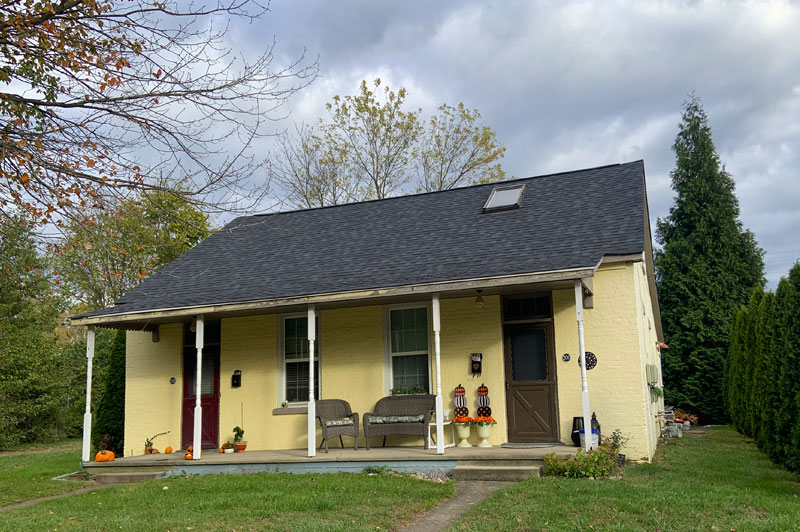
    The Loveland’s Board of Zoning Appeals has voted to allow the demolition of this home at 200 Railroad Avenue.

    Loveland, Ohio – The Loveland Board of Zoning Appeals (BZA) dismissed an appeal by resident Deidre Hazelbaker attempting to prevent the demolition of a home in Loveland’s Historic Downtown last night.

    After the Loveland Historic Planing Commission gave a approval to demolish the house,  Hazelbaker appealed the decision to the BZA. She was not allowed to make her case before the Board. Nine residents had signed up to speak about the demolition and were not allowed the opportunity to speak.
    BZA members David Black, Sean Kiehl, and Tim Marsh voted unanimously to dismiss the case after City attorney Joe Braun told them that Hazelbaker did not have “standing” and was not eligible to file the appeal. Tim Marsh chairs the BZA and presided over the meeting.

    This video is Hazelbaker responding after the meeting about the BZA decision:

    This video is a recording of the BZA meeting:

    Scroll to see the full agenda before the Board.

    [pdf-embedder url=”https://lovelandmagazine.com/wp-content/uploads/2024/10/2024-10-30-Board-of-Zoning-Appeals-Full-Agenda-1866.pdf” title=”2024-10-30 Board of Zoning Appeals – Full Agenda-1866″]

    Read Background Stories:

    Board of Zoning Appeals will meet Wednesday to decide fate of home in Historic Downtown

    Demolition of historic home in Loveland’s Historic District under appeal

    Demolition of home in Loveland Historic District causing uproar

  • Demolition of historic home in Loveland’s Historic District under appeal

    Demolition of historic home in Loveland’s Historic District under appeal

    This story was updated on 10-17 and now includes the feasibility report of the house being restored that was submitted by John Hill.

    Loveland, OhioThe demolition of a historic home in Loveland’s Historic District is under appeal by resident Deidre Hazelbaker. The home is at 200 Railroad Avenue. The Historic Preservation and Planning Commission voted on October 2 to allow John Hill, through his Infuse Holdings LLC to demolish the building with a history dating to at least 1915. The demolition request comes as part of a six-unit, 3-story apartment development Hill has proposed facing Loveland, Nisbet park along the Loveland Bike Trail.

    Hazelbaker  filed her appeal on October 4 to the Loveland Board of Zoning Appeals. Her appeal will be heard at City Hall on October 30 at 5:30 PM.

    The building at 200 Railroad Avenue, constructed on or before  1915, is designated a “Contributing” structure within Loveland’s historic district because it “holds significant historical value and is representative of the early 20th-century architecture typical of the area.” Any building constructed within the period of significance of the Historic Preservation and Planning District that contributes to its historic associations and architectural qualities qualifies for special consideration before a demolition permit can be considered.

    One of the reasons Hazelbaker cited in her appeal is that the, “…decision to approve the demolition did not include a comprehensive feasibility study to explore alternatives such as rehabilitation or adaptive reuse. Without a detailed analysis of potential preservation options, the decision to demolish was made prematurely and without fully understanding the preservation potential of this historic structure.”

    The appeal Hazelbaker filed continues by saying, “Granting this appeal and reversing the demolition decision would preserve the essential character of the neighborhood. The current structure, with its historical details and architectural elements, contributes to the visual appeal and heritage of Loveland. Its loss would alter the district’s character significantly and detract from the community’s identity.”

    The governing document of the Preservation Commissions states in its preamble, “Unfortunately, Loveland has lost a number of downtown buildings over the years; consequently it is imperative every effort is taken to preserve the remaining historic buildings to allow future generations to experience the character of Loveland’s rich history.”

    ___________

    BACKGROUND STORY

    Six, three-story apartments proposed adjacent to Nisbet Park on Loveland Bike Trail


    ___________

    Hazelbaker cites:

    The building at 200 Railroad Avenue is listed as a “contributing” building within Loveland’s historic district. Built on or before 1915, this multi-family home shows early 20th-century architectural styles and reflects Loveland’s development as a railroad town. As noted in the June 26, 2024, meeting, the building’s historical value is documented and adds to the character and heritage of the district. Demolishing this building would remove a piece of Loveland’s history and could set a bad precedent for other historically important structures.

    During the previous Commission meeting, many community members shared concerns that tearing down this building would disrupt the look and feel of Railroad Avenue. The proposed new construction does not fit in with the scale and style of the surrounding historic homes, which could hurt the overall feel of the district. Allowing this demolition would send the wrong message to future developers that upkeep and preservation don’t matter, leading to a slow loss of the district’s unique character.

    The Commission did not present a thorough study exploring ways to fix or restore 200 Railroad Avenue. A study by an independent group could have offered clear options for repairing and preserving the building instead of tearing it down. Without this information, the decision to approve demolition was made too soon and without understanding the potential to save this historic property.

    ___________

    Below is the report John Hill submitted, intended to detail the condition of the structure and mechanical systems in relation to the feasibility of this house being restored to a habitable domicile that is current with modern building codes.

    Hazelbaker believes the Commission should undertake an independent and impartial review and not rely on one prepared by the person who wants the demolition to proceed.

    [pdf-embedder url=”https://lovelandmagazine.com/wp-content/uploads/2024/10/John-Hill-Report.pdf” title=”John Hill Report”]

    ______________

    The purpose of the Loveland Historic Preservation Regulations is to preserve, protect and perpetuate places, buildings, structures and other objects having special historical, community or aesthetic interest or value, all for the following reasons:

    • a) To safeguard the heritage of the City by preserving sites and structures which reflect elements of the City’s cultural, social, economic, political, archaeological history or architectural history;
    • b) To stabilize and improve property values;
    • c) To protect and enhance the City’s attractions to residents, tourists and visitors, and serve as a support and stimulus to business and industry;
    • d) To enhance the visual, aesthetic, historic character, diversity and interest of the City;
    • e) To foster civic pride in the beauty and notable accomplishments of the past;
    • f) To promote the use and preservation of historic and archaeological sites and structures for the education and general welfare of the people of the City;
    • g) To strengthen the economy of the City;
    • h) To take whatever steps as may be necessary to safeguard the property rights of the owners whose
      property is declared to be a Historic Structure or is located in the area designated as a Loveland Historic District, and act in an advisory role to city officials and departments of Loveland’s governmental system.
    • i) Review all certificates of appropriateness application as defined by the Secretary of the Interior’s Standards’ for Rehabilitation

    READ: HISTORIC PRESERVATION & PLANNING DISTRICT DESIGN REVIEW GUIDELINES

    The Historic Preservation and Planning Commission approves the appropriateness of the demolition, construction, preservation, restoration, and rehabilitation of any home, commercial structure, or new construction within the designated historic district.

  • Symmes Township Board of Zoning Appeals to Hear Short Term Rental Cases

    Symmes Township Board of Zoning Appeals to Hear Short Term Rental Cases

    Symmes Township, Ohio – The Board of Zoning Appeals will meet on Monday, October 3 at 7 PM at the Township Administration building to review the use of short term rentals at the following addresses:

    The property owners, through their attorney, are challenging the determination of the Zoning Inspector that a conditional use permit is required for the use of short-term rental property.  The Board of Trustees recently amended the Zoning Resolution to determine that a term for short term rental is 30 days or less.  You can view the appeals by clicking on the addresses.  

  • Opportunity to serve at City Hall

    Opportunity to serve at City Hall

    Loveland, Ohio – City boards, commissions, and committees offer Loveland citizens opportunities to serve their community. Anyone with interest in serving should submit an application to the Clerk of Council by December 1.

    Current Opportunities: Beautification Committee, Board of Zoning Appeals, Civil Service Commission, Fifty Forward Committee, Finance Committee, Community Improvement Corporation, Law and Ordinance Committee, Planning and Zoning Commission, Public Relations and Communications Committee, Recreation Board, Storm Water Committee, Tax Board of Review, Tree and Environment Committee, and Veterans Memorial Committee.

    Click here to learn more each committee and to download an application.


    513-683-1052
    215 Loveland-Madeira Rd

    Loveland, Ohio 45140