Tag: bribery and money laundering scandal

  • Ohio Attorney General Dave Yost settles with FirstEnergy for $20 million

    Ohio Attorney General Dave Yost settles with FirstEnergy for $20 million

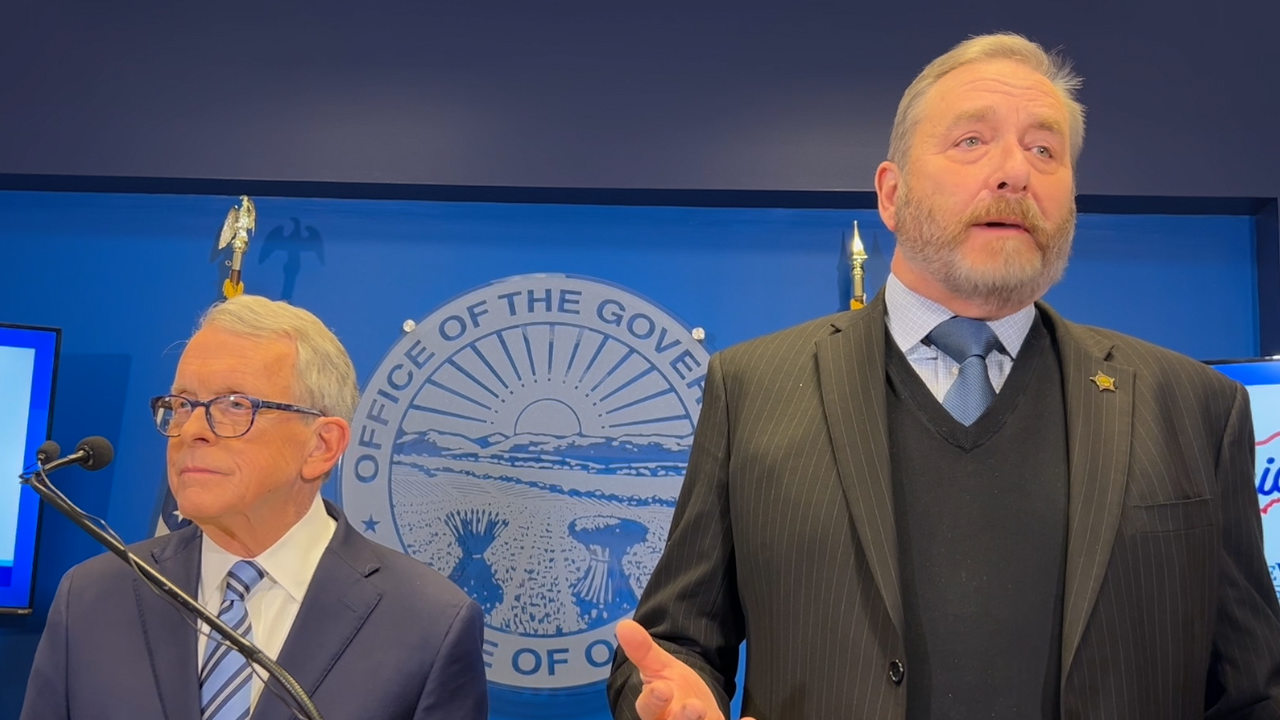
    Ohio Governor Mike DeWine (left) and Ohio Attorney General Dave Yost (right) answer questions during a press conference. (Photo by WEWS).

    Unannounced amount dwarfed by scale of epic utility ripoff that featured more than $61 million in bribes and a $1.3 billion bailout

    By:  Ohio Capital Journal

    Ohio Attorney General Dave Yost has agreed to settle the largest bribery and money laundering scandal in state history with the massive utility that funded it.

    At just $20 million, the settlement amounts only to less than a third of the bribes Akron-based FirstEnergy paid and it is dwarfed by the benefits Ohio utilities have received from ratepayers as a consequence of the corrupt legislation those bribes paid for.

    Yost’s office sends out frequent press releases, but not one regarding Monday’s settlement, which was first reported by the Cincinnati Enquirer, citing an SEC filing by FirstEnergy.

    In response to questions, his office said Yost had “voluntarily walled himself off from the case months ago to avoid any suggestion that the case was politically driven or any outcome was influenced by politics or political decision making.” But it didn’t explain how.

    The statement comes after more than a year of questions about the attorney general’s own involvement in the fight to pass and protect the $1.3 billion ratepayer bailout that mostly went to FirstEnergy.

    Yost’s office added that the company was cooperating in state prosecutions of two former executives, and that the company had reformed in the years since the scandal.

    “The non-prosecution agreement signed between FirstEnergy, the Ohio Attorney General’s Office and the Office of the Summit County Prosecuting Attorney requires FirstEnergy to provide evidence, access to witnesses and testimony in the ongoing criminal cases against (former CEO) Chuck Jones and (former Vice President) Michael Dowling, as well as in civil proceeding relating to the passage of” the corrupt bailout bill, spokesman Steve Irwin said in an email.

    By agreeing to the pact, FirstEnergy won’t be charged criminally. The company paid the federal government $230 million in 2021 to get criminal charges dropped in that instance.

    In dropping the charges, the state and federal governments allowed FirstEnergy to dodge a big financial hit. Consultants told the company it could face nearly $4 billion in fines if indicted, the Cleveland Plain Dealer reported Tuesday.

    According to weeks of testimony in federal court in Cincinnati last year, FirstEnergy executives began wooing Larry Householder and other state leaders in late 2016. The executives had bet heavily on coal and nuclear generation that was losing money because they failed to anticipate that the fracking boom would make gas-fired electricity generation cheaper.

    So the executives — CEO Jones and Vice President Dowling — undertook a frantic search for a bailout.

    They flooded $61 million in corporate money into 501(c)(4) dark money groups. From there, the money went to elect friendly Republicans who would vote to make Householder speaker of the Ohio House at the start of 2019.

    From that perch, Householder shepherded the corrupt bailout, House Bill 6.

    Sam Randazzo, Gov. Mike DeWine’s pick to chair the Public Utilities Commission, helped write and lobby for the bailout even though he was supposed to be a neutral regulator. FirstEnergy later said it paid a $4.3 million bribe to Randazzo, who died by suicide in April.

    DeWine, whose administration had several senior officials connected to FirstEnergy, signed the bill the same day that it passed. But it ran into instant opposition in the form of a fierce campaign to repeal the bailout.

    The FirstEnergy executives — who are now under state indictment — were so alarmed at the repeal effort that they put up $36 million to stop it. The resulting campaign included false, xenophobic TV commercials, bullying people gathering signatures to put a repeal on the ballot and even allegations of assault.

    Yost gave HB 6 supporters a big assist in the heat of the repeal fight.

    Before a repeal could go on the ballot, supporters had to gather 1,000 valid signatures from registered voters and submit a ballot summary to the attorney general. Yost had to approve that before repeal advocates could start gathering the necessary 265,000 additional voter signatures. And they had just 90 days after DeWine signed the corrupt bailout on July 23, 2019 to do it.

    The summary and 1,000 signatures were submitted within 10 days. But then Yost rejected the ballot language on the first go-round. By the time they had submitted different language and more signatures — and Yost approved it — their time to gather more than a quarter-million signatures had been cut by 40% and the repeal failed.

    While Yost — a hopeful to become governor in 2026 — hasn’t commented on his conduct during this period, some of the conspirators did.

    During last year’s trial, federal prosecutors presented messages between former Ohio GOP Chairman Matt Borges, who is serving a five-year prison sentence for his involvement, to Juan Cespedes, who has pleaded guilty to his.

    In one, Borges said the attorney general told him that he thought the bailout was a bad law, but he wasn’t speaking publicly as a favor to Borges and FirstEnergy. Yost “‘would be out front (in opposition) if not for (FirstEnergy) support and your involvement,’” Borges quoted Yost as supposedly saying.

    In another, Borges — who had run some of Yost’s past campaigns — said of the repeal summary, “If there’s any way the law will allow him to reject the language, he will do it.”

    Irwin, Yost’s spokesman, justified the settlement by saying FirstEnergy had reformed.

    “FirstEnergy today is not the company it was five years ago – the corporation has undertaken, and continues to undergo, reforms to strengthen its internal ethics programs, to increase transparency, and promote reporting of questionable conduct by its employees and leadership,” Irwin said. “It has also restructured its board and leadership to remove the individuals responsible for the conduct that gave rise to the House Bill 6 scandal. This is an important step in bringing the disgraced corporate leaders who used their positions of power to betray FirstEnergy’s ratepayers and employees and the people of Ohio to account for their crimes.”

    However, institutional investors are in court arguing that FirstEnergy is trying to limit the blast radius of the scandal. They accuse the company of trying to protect other executives and board members who might have been culpable — or at least might have known of the scheme.

    Indeed, the company is battling furiously not to turn over an internal investigation it commissioned in the wake of the scandal. After being denied an attempt to appeal an order to turn it over, the company filed a risky petition for a writ of mandamus on July 30.

    After the HB 6 scandal broke in 2020, Yost donated $24,000 in contributions from FirstEnergy and Cespedes to charity. It’s an open question when he’ll explain what he knew and did in a scandal that imprisoned Householder for 20 years and led to two suicides — including that of indicted lobbyist Neil Clark.

    Meanwhile, ratepayers are still paying big money as a consequence of HB 6. Its provisions solely benefitting FirstEnergy were repealed after the scandal broke. But the state’s leadership has refused to repeal the rest of the bill.

    It includes a measure that has so far paid $343,000,000 to subsidize two aging coal plants owned by a group of Ohio utilities. One’s not even in Ohio.

    Marty Schladen
    Marty Schladen

    Marty Schladen has been a reporter for decades, working in Indiana, Texas and other places before returning to his native Ohio to work at The Columbus Dispatch in 2017. He’s won state and national journalism awards for investigations into utility regulation, public corruption, the environment, prescription drug spending and other matters.

    Ohio Capital Journal is part of States Newsroom, the nation’s largest state-focused nonprofit news organization.

    MORE FROM AUTHOR

  • Ohio Gov. Mike DeWine and Lt. Gov. Jon Husted subpoenaed in civil suit over bailout scandal

    Ohio Gov. Mike DeWine and Lt. Gov. Jon Husted subpoenaed in civil suit over bailout scandal

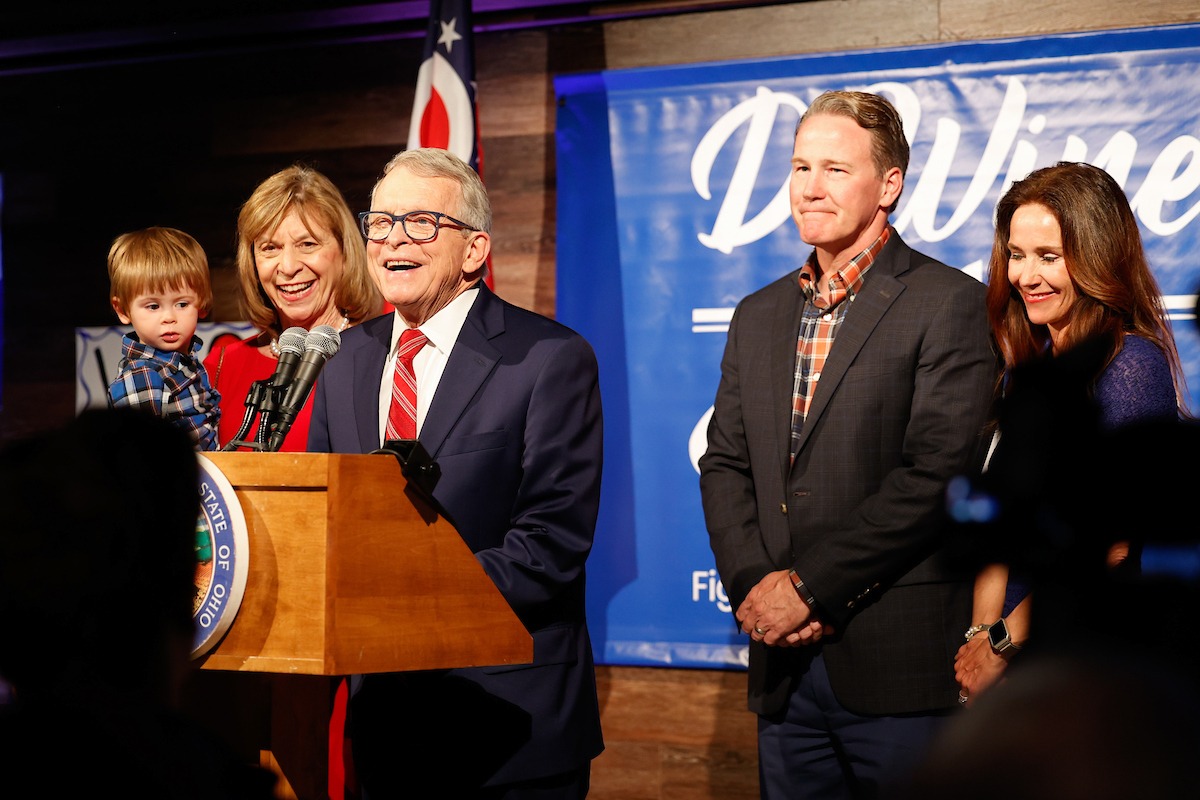
    COLUMBUS, OH — MAY 03: Ohio Gov. Mike DeWine joined on stage by First Lady Fran DeWine, grandson Calvin, Lt. Gov. Jon Husted and Second Lady Tina Husted to celebrate DeWine winning the Republican Party nomination for governor in the Ohio primary election, May 3, 2022, at the DeWine-Husted campaign headquarters, Columbus, Ohio. (Photo by Graham Stokes for the Ohio Capital Journal. Republish photo only with original article.)

    BY:  

    Plaintiffs in a civil suit related to a massive bribery and money-laundering scandal have subpoenaed documents from Ohio Gov. Mike DeWine and they’re scheduling a sworn deposition with Lt. Gov. Jon Husted.

    There have been four criminal convictions so far in the scandal and U.S. Attorney Kenneth L. Parker has said the investigation is continuing. However, there is no indication that DeWine or Husted is an object of it.

    Even so, members of the DeWine-Husted administration were significant players in the scandal and DeWine’s nominee to head up the Public Utilities Commission of Ohio could be a target of the probe.

    The demands for documents and testimony come in a class-action suit that big investors in Akron-based FirstEnergy filed against the company over its involvement in the scheme. Between 2017 and 2020, the company paid out more than $60 million to gain a $1.3 billion ratepayer bailout that was mostly intended to prop up two failing nuclear plants in Northern Ohio.

    Among those already convicted are former Ohio House Speaker Larry Householder, R-Glenford, who was sentenced to 20 years in prison for his role in what federal authorities said might be the biggest bribery and money-laundering scheme in Ohio history. Former state Republican Chairman Matt Borges in June was sentenced to five years for his role.

    However, others who played prominent roles in the scandal are yet to be charged.

    They include former FirstEnergy CEO Chuck Jones and former Vice President Michael Dowling, who directed the money to make Householder speaker in 2018 and then pass and and protect House Bill 6, the corrupt bailout legislation. They also include Sam Randazzo, DeWine’s first nominee to chair the Public Utilities Commission of Ohio.

    Jones, Dowling and Randazzo deny wrongdoing, but in a deferred prosecution agreement, FirstEnergy said Jones and Dowling paid Randazzo a $4.3 million bribe just as DeWine was selecting Randazzo to be FirstEnergy’s top regulator. In that post, Randazzo helped write the corrupt bailout bill and he helped FirstEnergy avoid a scheduled audit known as a “rate case” that was slated for 2024.

    Large investors such as pension and investment funds are suing FirstEnergy over the scandal, arguing that the company violated securities laws by not disclosing its reckless conduct. And then, when the feds made arrests in July 2020, its stock value plummeted — as did their investments.

    The plaintiffs in the civil case have been battling with Randazzo — who is not a defendant — since April over whether he has complied with judges’ orders to produce documents relevant to the $4.3 million in FirstEnergy money he received just before he began regulating the company.

    A magistrate judge and a special master in the case have consistently rebuked Randazzo for not cooperating more fully, with the most recent instance coming last week. Randazzo appealed up the food chain, asking Magistrate Judge Kimberly Jolson not to hold him to a disclosure order from the special master, Shawn K. Judge.

    The plaintiffs in the civil case asked Jolson to make Randazzo comply with Judge’s order to cough up more information. As part of the filing, they provided a table of depositions they’ve scheduled or are in the process of scheduling. To prepare for some, they presumably could use the information and documents they’re demanding of Randazzo.

    One deposition they’re scheduling is of Randazzo himself, which has a “target period” of March 4 to March 29.

    Another is of Husted, the lieutenant governor, which has a target period of Feb. 28 to March 19. Dave Anderson of the Energy and Policy Institute first flagged the document that listed Husted’s deposition.

    Hayley Carducci, Husted’s spokeswoman, on Tuesday said Husted is cooperating.

    “We’re aware of the civil investor lawsuit against First Energy,” she said in an email. “The Lt. Governor has already provided public records pertaining to this, and we will continue to comply as we have done in the past. There’s no new information to disclose.”

    As with Randazzo, Husted is not a defendant in the civil case.

    DeWine also has recently received a subpoena for documents in the civil case.

    “We’re reviewing it with counsel for what can be provided,” Press Secretary Dan Tierney said in an interview. “Our office is subject to the public records act and in a sense this is no different.”

    Tierney pointed out a distinction between the class-action suit and the case which has already convicted Householder and Borges and proceedings that could charge others.

    “This is a civil case and anybody has a right to bring a civil case if they want,” Tierney said of the proceeding in which the governor’s documents had been subpoenaed. “The civil process is where people say they’ve been damaged and they want the court to award damages. That is far different than the criminal case in which the federal government said public integrity laws had been violated.”

    He added, “It still remains in the criminal case that nobody in our office or the lieutenant governor’s office has been questioned or subpoenaed or had any legal filings like that.”

    Even in the absence of such requests, DeWine and his administration were involved several ways in the drafting and passage of the corrupt utility bailout:

    • He nominated Randazzo to head up the PUCO a day after it was publicly revealed that FirstEnergy had paid a group controlled by Randazzo millions of dollars over the years. “Forced DeWine/Husted to perform battlefield triage,” FirstEnergy CEO Jones said in a text message to Dowling. “It’s a rough game.”
    • While he was still a FirstEnergy lobbyist, Dan McCarthy set up Partners for Progress, a 501(c)(4) “dark money” group through which Jones, Dowling and others funneled millions into the conspiracy. DeWine hired McCarthy as his legislative affairs director and kept him in that post for a year after Householder and the others were arrested.
    • HB 6, the bailout legislation, was highly controversial as Householder jammed it through the legislature, other lawmakers testified at his trial. Even so, DeWine signed it the day it passed and when Householder was arrested, the governor’s first position was to keep the law in place — and part of it still is. DeWine reversed himself a day later, calling to repeal and replace the subsidies.

    Morgan Trau contributed to this report.


    Marty Schladen
    MARTY SCHLADEN

    Marty Schladen has been a reporter for decades, working in Indiana, Texas and other places before returning to his native Ohio to work at The Columbus Dispatch in 2017. He’s won state and national journalism awards for investigations into utility regulation, public corruption, the environment, prescription drug spending and other matters.

    MORE FROM AUTHOR

  • AEP doesn’t have much to say about its support for corrupt utility bailout

    AEP doesn’t have much to say about its support for corrupt utility bailout

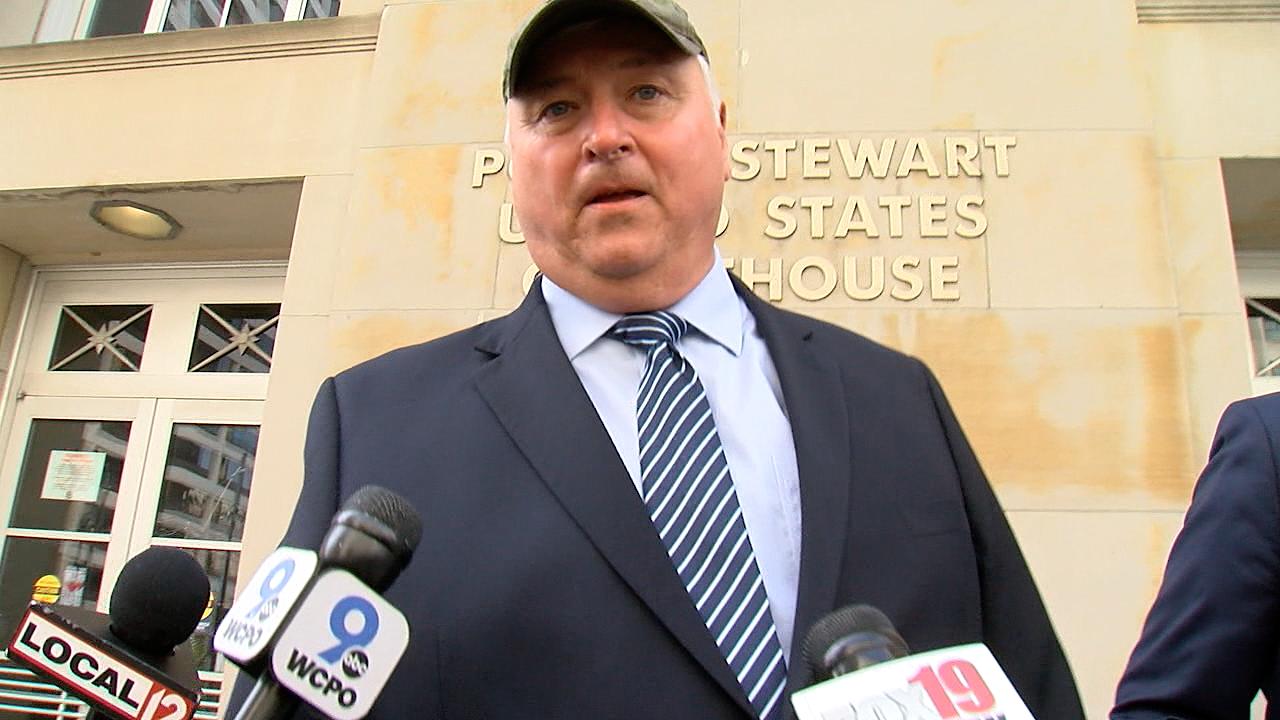
    Larry Householder speaks after guilty verdict. Photo by: WEWS/WCPO.

    BY:  Ohio Capital Journal

    Columbus-based utility giant AEP wasn’t at the epicenter of a historic bribery and money-laundering scandal in 2019. But it also wasn’t very far away as a corrupt deal was hatched in the Ohio Capitol to use $61 million in bribes to pass a $1.3 billion bailout.

    The name of the nation’s sixth-largest electric utility came up repeatedly in the seven-week criminal trial that ended earlier this month in the racketeering convictions of former Ohio House Speaker Larry Householder and former state GOP Chairman Matt Borges.

    Through its dark-money group, AEP provided more than $900,000 that was used to help pass the bailout. And to date, it has received more than $60 million to subsidize aging coal plants that belong to a consortium in which it owns a 40% stake.

    Just after the utility bailout was passed and a repeal attempt was thwarted, AEP spent another $500,000 through the same dark money group on an effort that stood to keep Householder in the speakership well into the 2030s. During the trial, a federal prosecutor asked a Householder co-defendant who had pleaded guilty why AEP would spend so much to keep the speaker in power.

    “It kind of went without saying that they support anything that’s good for the speaker because anything that’s good for the speaker is good for them,” the aide, Jeffrey Longstreth, testified.

    But everything changed when Householder and four others were arrested in July of 2020. Now AEP doesn’t seem interested in talking about its actions prior to that.

    Mysterious money

    Lobbyists and other wired-in parties on Capitol Square knew that as the battle heated up over the 2019 bailout measure — House Bill 6 — a geyser of cash was financing the effort to pass and protect it from repeal.

    It was logical to suspect that the money was coming from a utility industry that stood to benefit. But there was no way to be sure because it was coming through 501(c)(4) dark money groups that don’t have to disclose their donors.

    But then the FBI got involved.

    Acting on a tip, it launched an investigation. Using subpoenas, wiretaps, confidential informants, forensic accountants and undercover agents, investigators were able to grope their way through the dark money smokescreen and determine who was really behind the push for an unpopular corporate bailout.

    By far and away the biggest donor was the biggest beneficiary — Akron-based FirstEnergy. Starting in 2017 it ponied up what would become about $60 million to elect representatives who would vote to make Householder speaker in 2019 and then to pass and protect HB 6. In return, it stood to get about $1 billion of the benefit of the bailout — a return of more than $16 on each dollar it invested.

    But AEP is getting an even better return — more than $66 for every one of its dollars that made their way into the dark money group that fueled the HB 6 scheme. And, because the part of the bailout that benefits AEP is the only part of HB 6 that hasn’t been repealed, AEP is continuing to collect that money. That means returns from its dark money expenditure will only improve over time.

    AEP hasn’t been accused of wrongdoing in the scandal, and a spokesman denied that it acted improperly.

    “AEP participates in legislative and regulatory processes ethically and in compliance with the laws of the states where we operate,” the spokesman, Scott Blake, said in an email. “As we have previously stated, we do not believe that AEP was involved in any wrongful conduct.”

    And a board member of the dark money group AEP solely funded, Empowering Ohio’s Economy, claimed it didn’t know its dollars were used for nefarious purposes — even though it was at least partly in on the secret of HB 6’s mysterious funding.

    “Obviously, knowing what we know now, we wouldn’t have made the donations,” the board member, J.B. Hadden, told the Dayton Daily News in December 2020.

    The company is, however, being investigated by the U.S. Securities and Exchange Commission about its involvement in the passage of HB 6.

    Belated transparency

    However, AEP didn’t seem all that eager week to discuss its contributions which, until Householder was arrested, were secret. In the wake of the scandal, the company decided to start disclosing what dark money groups it contributes to, but only going forward.

    “We adopted a revised political engagement policy in 2021, which is available at ​https://aep.com/investors/governance/politicalengagement,” Blake said. “Under that policy, beginning with contributions made in 2020, AEP has disclosed its contributions of $5,000 or more to 501(c)(4) social welfare organizations as part of AEP’s annual disclosures. Organizations that receive contributions from AEP are subject to their own disclosure requirements.”

    But since the company started making such disclosures, Empowering Ohio’s Economy hasn’t appeared on them. AEP was the group’s sole contributor and its top lobbyist, Tom Froehle, was on its board.

    The dark money group gave $700,000 to Generation Now, a dark money group controlled by Householder, that has since pleaded guilty to its role in the scandal. It gave another $200,000 to the Coalition for Opportunity and Growth, which ran TV ads supporting House candidates who would back Householder for speaker.

    During the Householder trial, two of Householder’s co-defendants and other witnesses testified how money from Generation Now financed savage attacks on opponents of Householder candidates. And, when the recall campaign got underway, it paid for false, anti-China commercials, private eyes and “blockers” — people who harassed and even assaulted petition circulators, witnesses testified.

    In an early 2019 text message presented to the jury, Borges described efforts to get AEP on board with a bailout that primarily benefited FirstEnergy.

    “Lots of pressure from FE, AEP, renewable standards, setbacks… so thought is to move a comprehensive package and let everyone get a little (bit) of what they want,” Borges said.

    Then in testimony, Householder’s fixer, Longstreth, described what AEP got.

    “They received a benefit of… there were two coal plants in southwest Ohio,” Longstreth testified. “I’m not exactly sure where. One of them is actually just over the line in Indiana. I’m not sure where the other one is. They had to be created because of the U.S. Department of Defense needed them created 50 years ago (it was actually 68.) I don’t really know all of the details on it, but they received some benefit for running those plants on a continuing basis.”

    Longstreth, who pleaded guilty to his involvement in the conspiracy, was referring to the Ohio Valley Electric Corporation, or OVEC, in which AEP holds a 40% interest. According to the Office of Ohio’s Consumers’ Counsel, the corporation so far has received about $152 million in ratepayer subsidies as a consequence of the corruptly passed HB 6.

    But Blake, the AEP spokesman, didn’t respond directly when asked if the HB 6 arrests in July 2020 had anything to do with its decision to report dark-money contributions going forward.

    “The decision to list contributions over $5,000 to 501(c)(4) organizations was made in the second half of 2020, and the reporting began with contributions made that year,” he said. “AEP has not made a contribution to Empowering Ohio’s Economy since 2019.”

    In addition, Blake wouldn’t comment on the misleading way Empowering Ohio’s Economy described itself in 2019 as it made huge, secret contributions of AEP money that ended up being used in a bribery and money-laundering scandal. On its IRS Form 990, the group blandly described its purpose as:

    “Promoting Ohio as well-suited to host and support major conventions or similar events and as an attractive destination for travel, business meetings and vacations. The methods of achieving these purposes include funding and hosting major conventions and meetings via internet, professional organizations, and social media education to the general public.”

    Even though AEP was the dark money group’s sole contributor and its top lobbyist sat on its board, Blake said it wasn’t AEP’s job to answer for the misleading description.

    “501(c)(4) organizations are subject to their own reporting requirements and any questions about what they reported would need to be addressed by them,” he said.

    Subsidizing coal in a warming world

    The Intergovernmental Panel on Climate Change earlier this month warned that greenhouse gas emissions must be cut swiftly and dramatically to spare future generations from the worst consequences of global warming. So subsidizing two coal plants built during the Eisenhower administration might not seem the best use of ratepayer resources.

    It also might seem important to avoid rewarding corporate attempts to secretly buy ratepayer subsidies for their regulated monopolies.

    But legislative attempts to end the HB 6 coal subsidies so far have been unsuccessful and Blake cited last year’s jumps in natural gas prices as a reason for keeping the $130,000-a-day subsidies in place.

    “The recent increase in natural gas prices has shown that (the Ohio Valley Electric Corporation) offers customers price stability,” he said. “As we transition to cleaner resources, power from the OVEC plants offer security from rising natural gas prices and can provide power when renewables like wind and solar are unavailable.

    Blake added, “Having reliable generation resources is critical to providing the reliable power our customers need. Customers receive a credit when OVEC outperforms the energy market. The current mechanism supports only the actual costs of providing secure, reliable energy.”

    Indeed, default rates for customers of AEP, FirstEnergy and other Ohio utilities are all jumping this month to reflect high wholesale rates last year, when gas prices were high — partly as a consequence of disruptions caused by war in Ukraine. But keeping the dirty, coal-fired plants spinning now might make less sense because natural gas prices are down dramatically, and closer to their 10-year average.

    Householder’s friend

    While AEP might have wanted to distance itself from secret spending supporting Householder just after his arrest, it showed no such compunction in the months immediately before the feds broke up the racketeering scheme.

    Householder’s fixer, Longstreth, testified how — fresh off his HB 6 success — the speaker turned his sights to even bigger game. He’d used tens of millions in secret utility dollars to create a political juggernaut that made him speaker and that enabled him to pay off his financial backers. Now he sought to keep his juggernaut dominating Ohio politics — possibly until 2036.

    Longstreth had discovered that the idea of reforming Ohio’s legislative term limits polled well and he and his boss figured they could push one with an important catch. It would limit lifetime service to 16 years, but if it would reset the clock on everybody. That would mean the then-61-year-old Householder could serve until he was 77.

    To fund the scheme, Householder and his aides again turned to businesses that stood to gain the most from having close allies in the government — the utilities whose monopoly subsidiaries’ revenues were controlled by it.

    After he was approached in early 2020, then-First Energy CEO Chuck Jones in a text message described Householder as “an expensive friend.” But FirstEnergy quickly agreed to secretly spend $2 million on Householder’s tenure-enhancement scheme.

    On the witness stand in the Householder trial, Longstreth described a similarly warm reception from AEP’s then-CEO Nick Akins. Longstreth said he attended a meeting in early 2020 at AEP’s Columbus headquarters with Householder, Akins and two lobbyists.

    Longstreth testified that Akins’ reception to the plan that stood to make Householder speaker well into the next decade was “very positive.”

    “It was probably a 30-minute meeting,” Longstreth said, according to a transcript of the trial. “Fifteen minutes of it, you know, exchanging pleasantries and talking about anything that they had going on and then 15 minutes of us explaining it, and they said sounds great, we’ll get back to you and they did get back to us and said they would be supportive.”

    Shortly thereafter, AEP contributed $500,000 to the dark money group Householder set up for the initiative through AEP’s own dark money group, Empowering Ohio’s Economy.

    But then forces struck that were beyond the control of even Householder and Ohio’s largest utility companies. Neither can be counted on to intervene in the future.

    Asked why the term-limits initiative didn’t get off the ground, Longstreth referred to a Feb. 29, 2020 email he sent to FirstEnergy providing instructions on how to wire money into Householder’s new dark money organization.

    “COVID hit like two weeks later, and then we were arrested in July,” Longstreth testified. “So it never happened.”

    _______________________________

    Marty Schladen
    MARTY SCHLADEN

    Marty Schladen has been a reporter for decades, working in Indiana, Texas and other places before returning to his native Ohio to work at The Columbus Dispatch in 2017. He’s won state and national journalism awards for investigations into utility regulation, public corruption, the environment, prescription drug spending and other matters.

    MORE FROM AUTHOR

  • Ohio utility regulator front and center in massive bailout scandal

    Ohio utility regulator front and center in massive bailout scandal

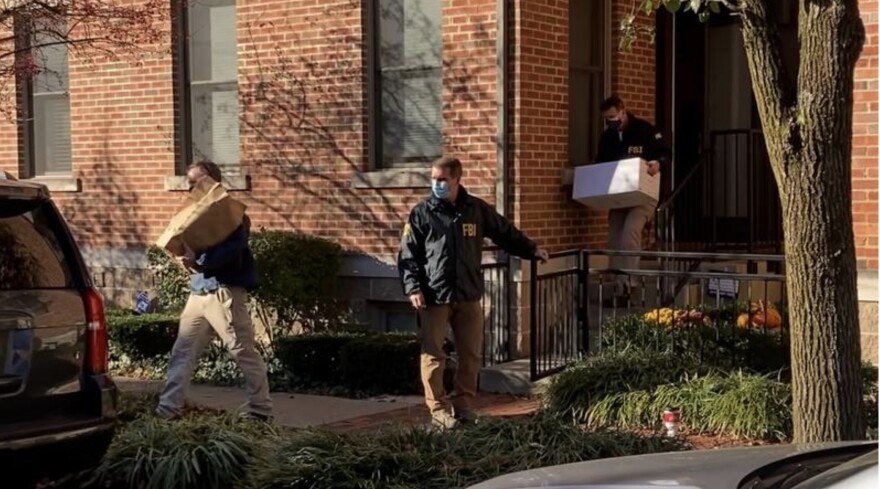
    FBI agents remove boxes of materials from PUCO Chairman Sam Randazzo’s condo in Columbus Nov. 17, 2020. Photo courtesy of Daniel Konik/Statehouse News Bureau.

    BY: MARTY SCHLADEN – Ohio Capital Journal

    CINCINNATI — Ohio’s utility regulator is at the center of a massive bribery and money laundering scandal that has been the focus of a trial here since late last month. In 2019, its chairman and a very recent senior official played a central role in writing corrupt bailout legislation that would give more than $1 billion in subsidies to companies the Public Utilities Commission of Ohio was supposed to be regulating.

    But did their role in the process violate any PUCO rules? The answer is unclear.

    When it comes to being a consumer watchdog, the PUCO doesn’t have the best track record. 

    Since 2008, it has granted more than $1 billion in electric rate increases that were later declared illegal by the Ohio Supreme Court. But, thanks to the way the increases — or “riders” — were written, there’s no way to force utilities to return those ill-gotten gains to ratepayers.

    In at least one of those instances, a regulator might have known the rate hike was illegal when he voted to grant it.

    In June of 2019 — as Akron-based FirstEnergy was funneling millions through dark-money groups to pass the bailout that is the subject of the trial here — the Supreme Court struck down an increase that had already paid the company a non-refundable $460 million. Asim Haque, who months earlier was chairman of the PUCO, sent a FirstEnergy executive a text suggesting that Haque knew the increase was illegal when he voted for it. Haque then said he was just kidding.

    Then, just last month, the PUCO approved an increase of more than 50% in fixed rates for Columbia Gas without making the company go through a formal process to show that it needs the money. That means that after five years throughout much of Ohio, it likely will cost nearly $60 a month just to have gas service  — regardless of whether you live in a 500 square-foot apartment or if you live in a mansion on a five-acre lot. Any payments for gas itself will be in addition to that amount.

    It doesn’t appear that Columbia owner NiSource needed the money. Last year, before the PUCO allowed the rate hike, NiSource’s profits came in $217 million — or 41% — higher than expected. Then, a month after the increase was granted, NiSource announced it was increasing its profit forecast for 2023.

    In a press release, the company boasted of “strong regulatory execution” — including by winning the fixed-rate increase from the PUCO.

    And then there’s House Bill 6, the 2019 law that is the subject of the trial in federal court here that has been ongoing since Jan. 23.

    Former Ohio House Speaker Larry Householder and former Ohio Republican Party Chairman Matt Borges are on trial for their participation in what prosecutors say is likely the biggest bribery and money laundering scandal in Ohio history. They allege that $61 million that mostly came from FirstEnergy was used to make Householder speaker in 2019, and then to pass and protect the $1.3 billion bailout. Most of that money was intended to prop up FirstEnergy’s failing nuclear and coal plants.

    No current or former PUCO employees have been charged in the scandal. But, to put it charitably, the conduct of at least two of them was puzzling — given that the agency’s mission is to protect ratepayers who don’t have a choice about buying the utilities’ products.

    In January 2019, Householder won the speakership and was beginning his push for a FirstEnergy bailout. At the same time,  FirstEnergy lobbyist Ty Pine sent PUCO senior advisor Pat Tully’s resume to Jeff Longstreth, Householder’s right-hand man, according to testimony in the trial. Within weeks, Tully had moved from his PUCO job to one as senior advisor for energy policy in the House Republican Caucus.

    Sam Randazzo, a former FirstEnergy consultant, was confirmed as Gov. Mike DeWine’s nominee to chair the utility commission in April 2019. When he nominated Randazzo, DeWine brushed off warnings that his nominee had “opaque and undisclosed” ties to FirstEnergy.

    In the Householder trial, Tully testified that while Randazzo was still a nominee, he met with Tully, Householder and Rep. Nino Vitale R-Urbana. From there, Tully worked with Randazzo to help draft the utility bailout, HB 6, and to reconcile it with draft legislation submitted by FirstEnergy. The bill secured final passage in July 2019 — months after Randazzo had taken the helm at the utility commission.

    In other words, Ohio’s top utility regulator helped write a law that gave a billion-dollar bailout to a company he was supposed to be regulating on the ratepayers’ behalf. And he was heading an agency that over the previous decade had awarded electric utilities more than $1 billion in illegal, non-refundable rate hikes.

    Randazzo would later resign after the FBI in 2020 raided his Columbus condo. And in a deferred prosecution agreement, FirstEnergy admitted that it paid him $4.3 million just before he became PUCO chairman.

    But does the PUCO have any rules against the role Randazzo played in drafting HB 6? 

    Asked if the agency had a policy prohibiting a commissioner from helping write legislation affecting a utility he or she is supposed to be regulating, spokesman Matt Schilling initially seemed to say that it did not.

    “The PUCO is a state agency and will always be responsive to requests for information or technical assistance to the Ohio General Assembly on matters related to utilities and commercial transportation,” Schilling said in an email last week.

    But in answer to a follow-up, Schilling seemed to say something different. He was asked if that means PUCO believes there was nothing inherently improper about its chairman helping to draft legislation creating subsidies for utilities the agency regulates.

    “No, I never stated anything like that,” Schilling replied. “The PUCO does not comment on ongoing proceedings or court cases.”

    So what about commission employees doing as Tully did when he had a FirstEnergy lobbyist passing out his resume? After all, you might pull punches as a regulator if you’re hoping to land a job with one of the companies you’re supposed to be regulating.

    Schilling’s response might not be very reassuring. He cited a law that “prohibits Commission employees from seeking employment with utilities regulated by the Commission.”

    But Schilling also sent along agency guidance that contains a pretty big loophole.

    “Although this law prohibits Commission employees from soliciting Commission-regulated utilities for employment, it does not prevent employees from considering employment opportunities with these utilities in instances in which the utility approaches the employee,” it said.

    It seems that, after the fact, it might be difficult for the PUCO to figure out who approached whom when an employee jumps ship for a well-paid utility job. And its protections against conflicts of interest during the hiring process don’t seem ironclad.

    “However, if you are contacted by a utility concerning a possible job offer, you must immediately advise your supervisor of the contact so that your supervisor can limit your duties to matters which do not involve the utility in question while any discussions are taking place,” the guidance said.

    In Tully’s case, he didn’t end up directly on FirstEnergy’s payroll. But he did help write a law that the company paid more than $60 million for.