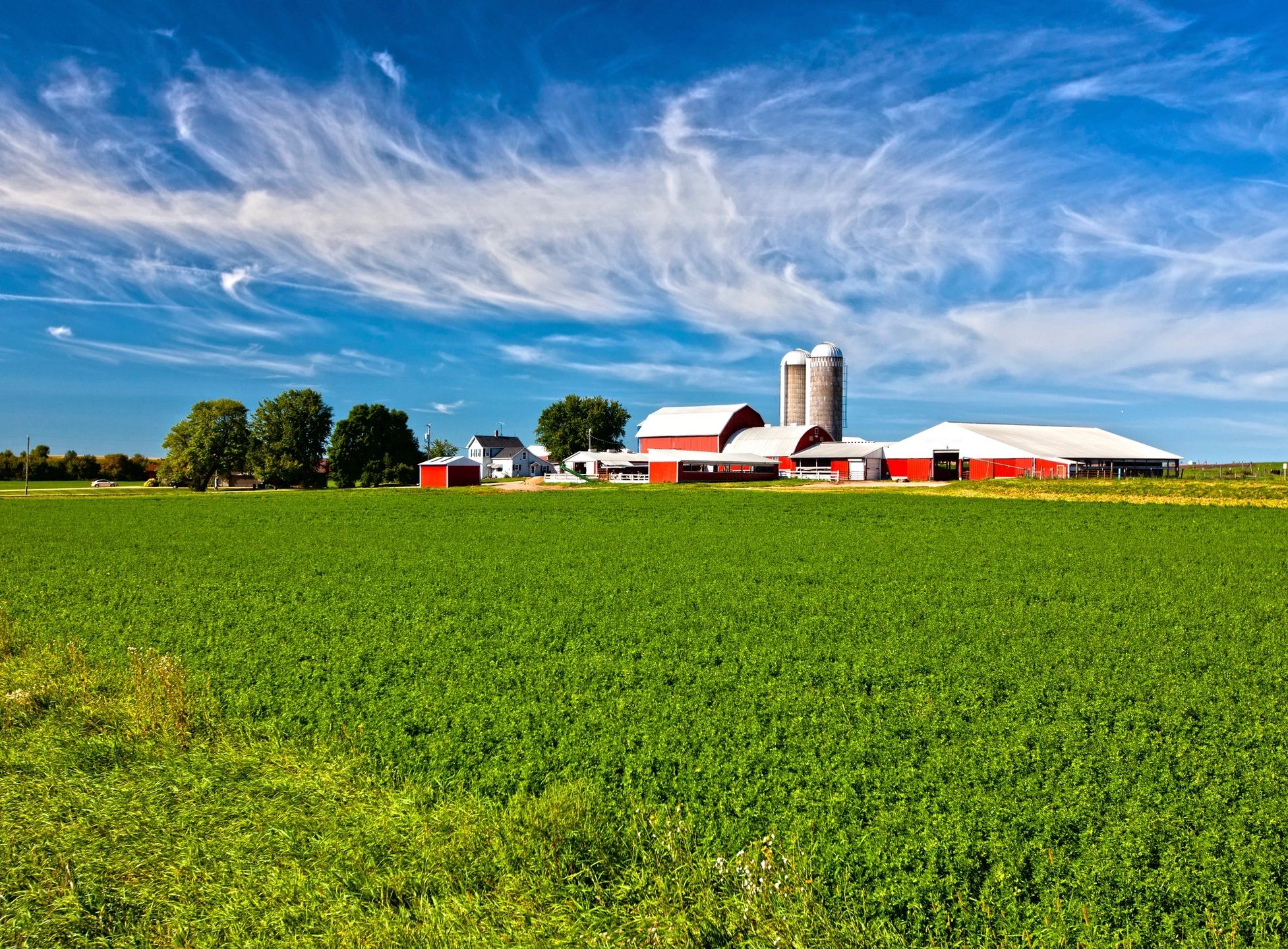
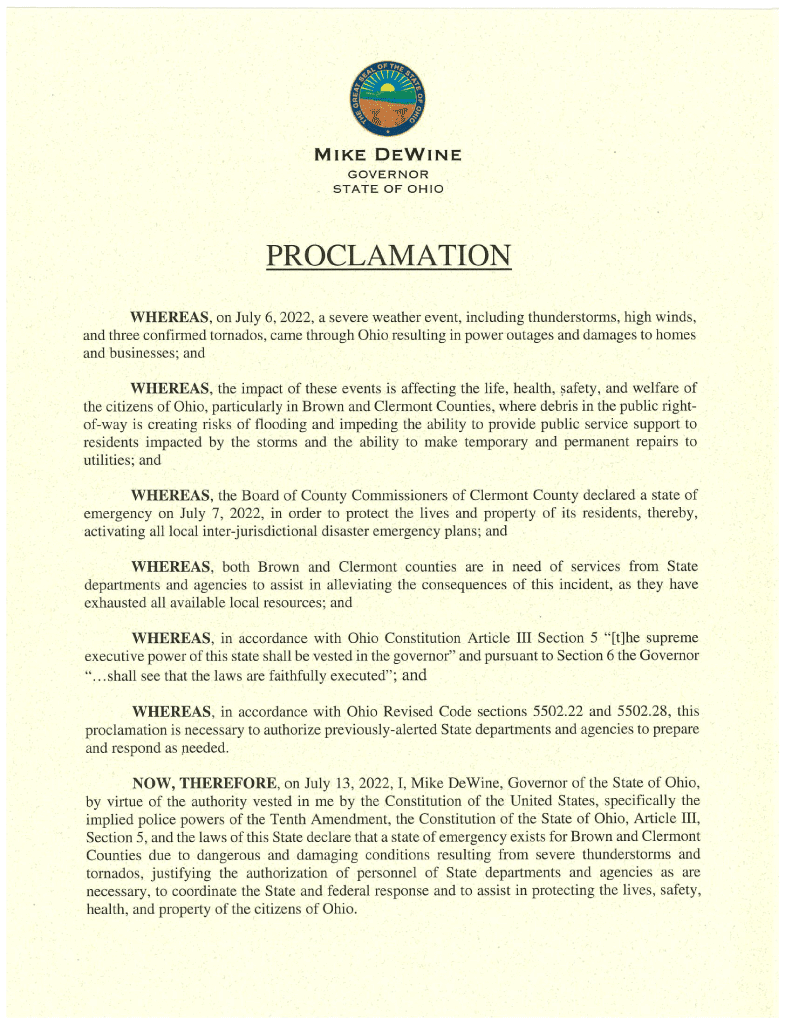
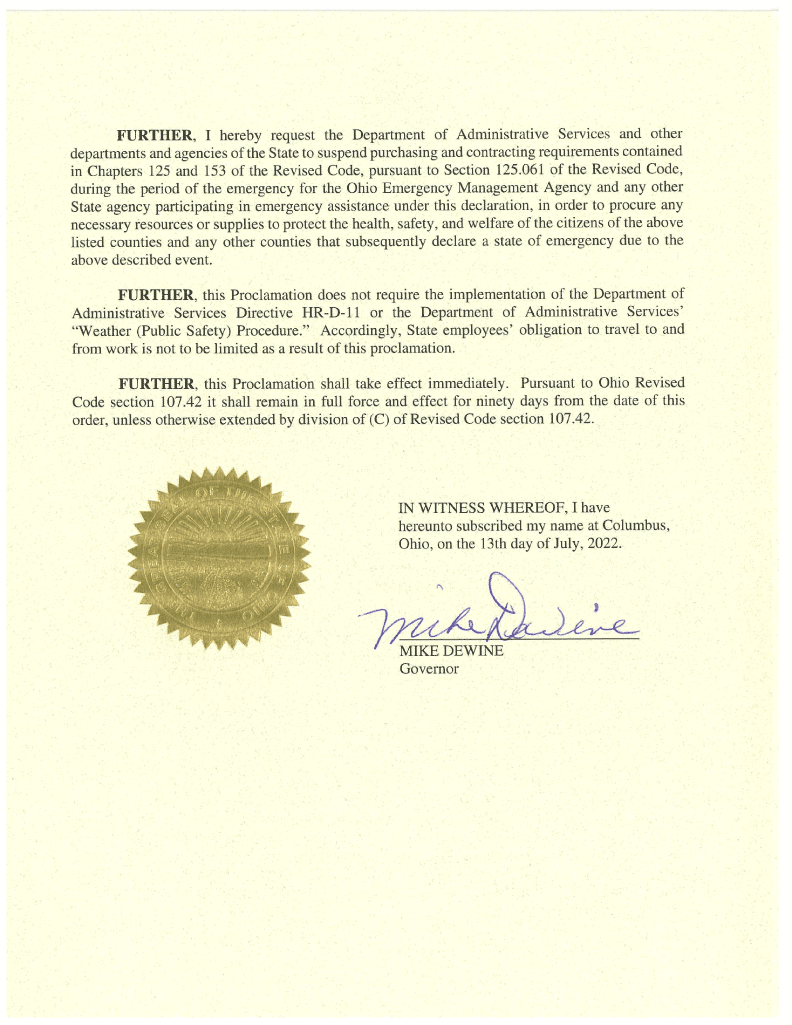
Clermont County, Ohio – Governor Mike DeWine issued a proclamation today declaring a state of emergency in Brown and Clermont counties due to the damaging conditions caused by last week’s severe summer storms and tornadoes that resulted in power outages and damages to homes and businesses.
“Brown and Clermont counties were hit with severe storms and three confirmed tornadoes that affected the life, health, safety, and welfare of many residents. We’re blessed that no one was killed in this storm, but it truly brings home to us how fragile life is, and how in one minute, the world can fundamentally change,” said Governor DeWine. “By declaring this state of emergency, we will ensure that Brown and Clermont counties continue to receive the state resources they need.”
The agency that has been called on to provide assistance is the Ohio Department of Transportation.
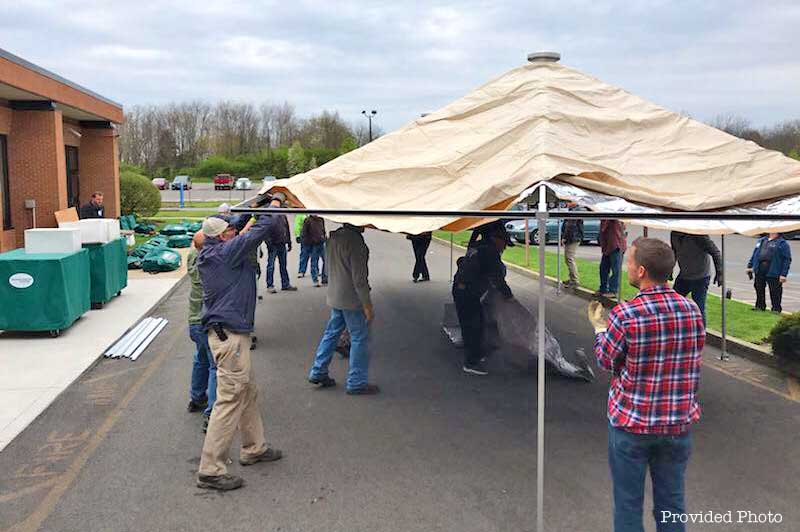
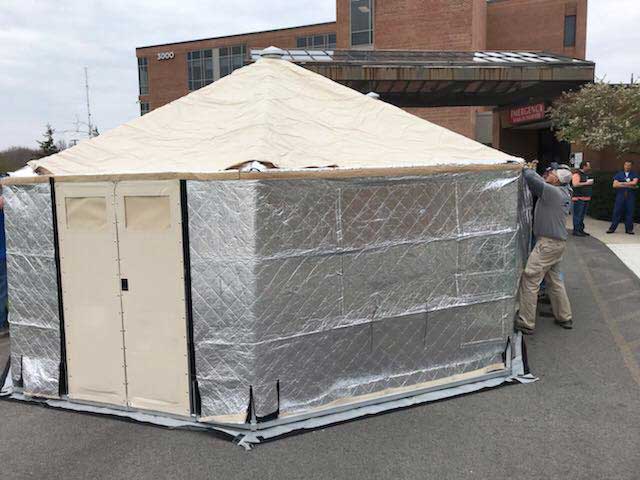
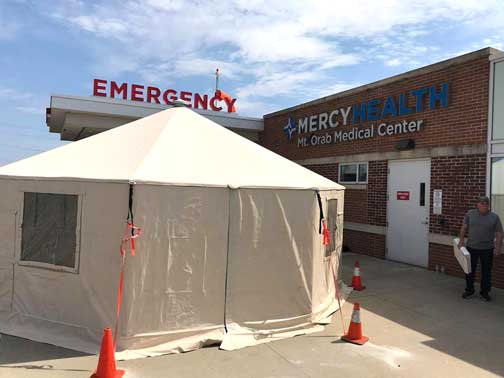
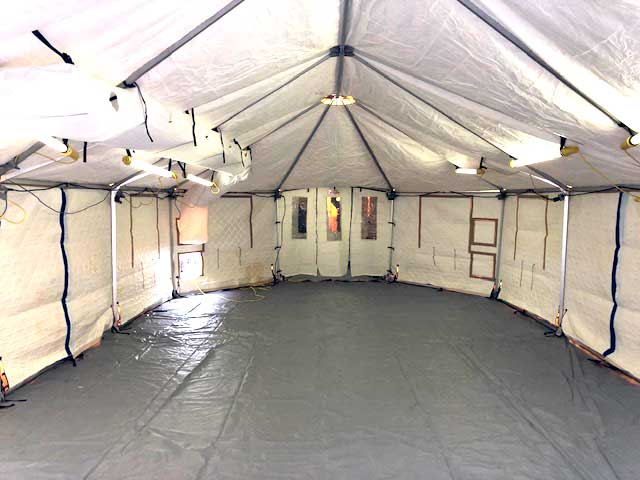
The Clermont County Engineer’s staff partnered with the Greater Cincinnati Health Collaborative, Clermont County Public Health, Mercy Hospital staff, and the Central Joint Fire-EMS District Saturday morning to construct “Alternative Care Centers” in Brown, Clermont, and Hamilton County.
Lori Lenhart is the NRSC district conservationist for Brown and Clermont Counties.
Batavia, Ohio – The USDA Natural Resources Conservation Service (NRCS) is now accepting Conservation Stewardship Program (CSP) applications to be considered for funding in fiscal year 2019. Applications must be submitted by May 10.
Lori Lenhart, NRSC district conservationist for Brown and Clermont Counties, said, “This program is a great way for agricultural producers to take conservation activities on their farm to the next level. While this program has not been as popular as other NRCS programs in the past, the 2018 Farm Bill made several changes to CSP which should increase interest.”
The 2018 Farm Bill authorizes NRCS to accept new CSP enrollments from now until 2023, and made some important improvements to the program. These updates include:
NRCS now enrolls eligible, high-ranking applications based on dollars rather than acres. For fiscal 2019, NRCS can spend up to $700 million in the program, which covers part of the cost for producers implementing new conservation activities and maintaining their existing activities.
Higher payment rates are now available for certain conservation activities, including cover crops and resource conserving crop rotations.
CSP now provides specific support for organic and for transitioning to organic production activities and a special grassland conservation initiative for certain producers who have maintained cropland base acres.
CSP is offered in Ohio through continuous sign-ups. The program provides many benefits including increased crop yields, wildlife habitat improvements, and increased resilience to weather extremes. Eligible land uses for CSP enrollment include cropland, pastureland and forested land.
While applications are accepted throughout the year, interested producers should submit applications to their local NRCS office by May 10 to ensure consideration for 2019 funding. For more information, contact Lenhart atlori.lenhart@oh.usda.gov, or (513) 732-2181 ext. 3.



 REQUEST APPOINTMENT