Just over half of us have made New Year’s resolutions. The most common ones revolve around physical and mental wellbeing. Topics like exercise, fitness, and losing weight weigh heavy on our minds. Just as important are issues such as socializing, de-stressing, finding life’s balance, inner peace and others that fall under the mantle of mental health.
Living in or visiting Loveland, Ohio can mean you are in the perfect place to help you live up to the promises you’ve made to yourself on January 1st.
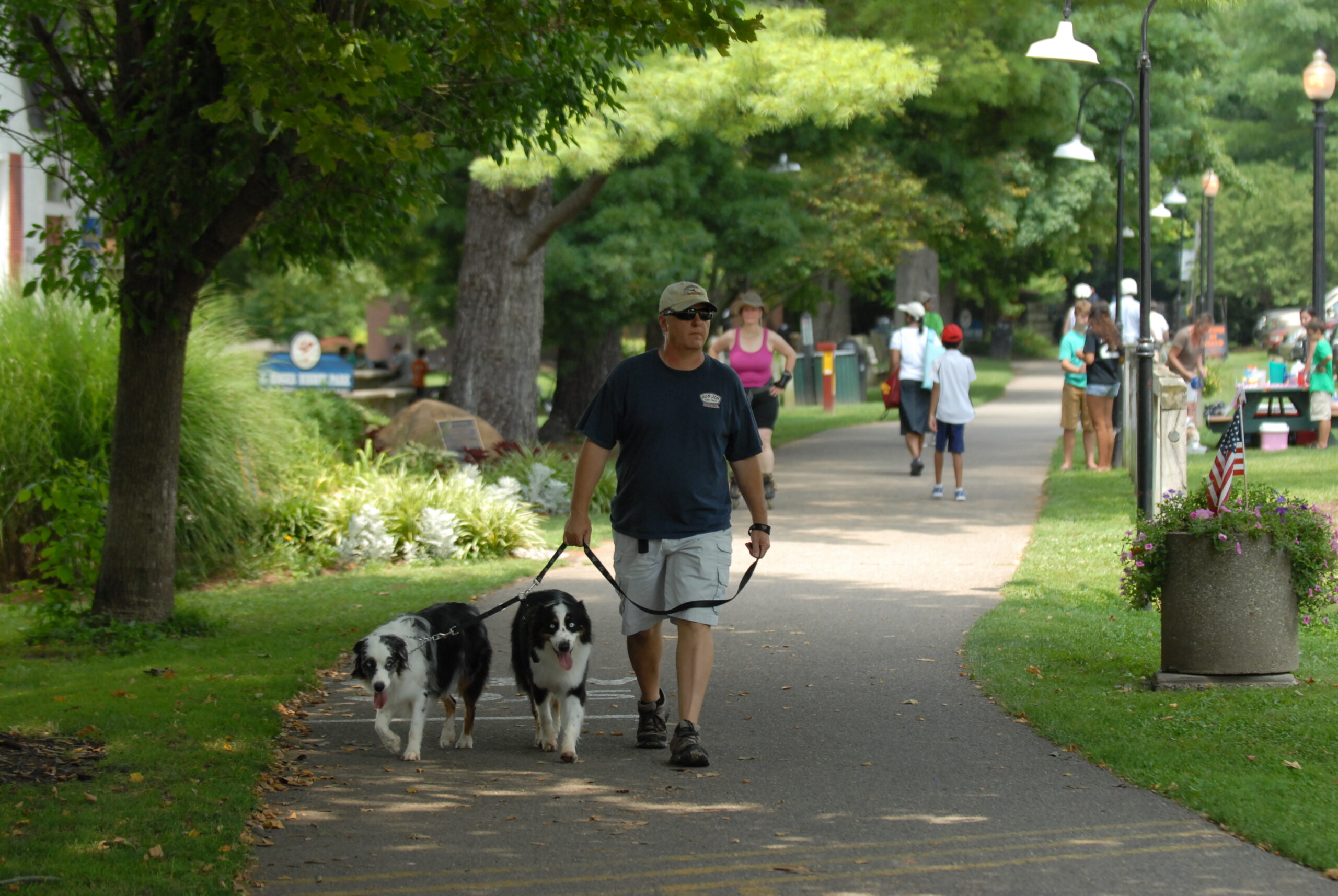
If you’ve made a personal health related resolution or goal for 2025, there is a simple and free way to accomplish what you’ve set out to do. I’m talking about nature.
Research shows that spending even short amounts of time in nature can have positive effects on both mental and physical health. The American Psychological Association purports that spending time in nature can improve mood, and attention while at the same time lowering stress levels. They even claim reduced risk of psychiatric disorders and increased empathy and cooperation. Studies show that exposure to green spaces like parks and trails can increase cognitive development and promote self-control.
Hiking, walking, kayaking, canoeing, and jogging are great ways to get some exercise while spending time outdoors. Don’t forget about taking in deep breaths of fresh air which promotes better sleep.
So how much time do we need to spend in nature to start seeing benefits? One study found that two hours of nature exposure per week led to significant upticks in both mental and physical health. The best part is that the breakdown of those two hours didn’t matter. In other words, the benefits are the same whether the two hours were spent in one block of time or several shorter blocks of time.
Southwest Ohio residents have easy access to many free, fine parks and trails. Check out city, county, and state parks (https://ohiodnr.gov) as well as The Loveland Bike Trail (The Loveland Bike Trail Map Home – The Loveland Bike Trail Map). This trail is paved and offers users over 70 miles of safe exercise. It also connects the Ohio to Erie Trail which connects the Ohio River to Lake Erie. Lake Isabella is a Hamilton County park right on the outskirts of Loveland. Lake Isabella is a quiet 74-acre park on the bank of the State and National Scenic Little Miami River.
As you can see, opportunities to reach your health and fitness goals for 2025 are plentiful. So, get out into nature for a better you.
Some tips for enjoying all the benefits that nature can offer this winter:
• Be sure to check the weather forecast.
• Dress appropriately. Light thin layers that can be removed as you warm up are best.
• When temperatures dip, keep sensitive skin like fingers and ears covered.
• Wear good shoes or boots to keep your feet supported and dry.
• Beware of snow and ice. Slow down. Invest in walking cleats that slip on over shoes or boots (think Yaktrax).
• If there is snow and the sun is out, wear polarized sunglasses to help you see while preventing snow blindness.
• Drink plenty of liquids. It’s easy to get dehydrated in the winter so be sure to drink enough.
• Prevent chapped lips and hands by using lip balm and lotions that contain sunblock.
• When possible, go with a friend, not only for safety reasons, but also for accountability.
• Be sure your cell phone is fully charged. Cold air causes batteries to drain more quickly.
Wallace Keck, Public domain, via Wikimedia Commons
by Julie Watson
If you’ve been noticing a foul odor in the air recently, you’re not alone. Unpleasant as it may be there is a natural cause for your nose to be offended. In Ohio, February is breeding season for skunks.
During this time of year, male skunks will visit several females, and each female may mate with multiple males. A litter of 2-10 kits are typically born furless and blind between April and June. At around six weeks old the young ones are weaned and will accompany their mother on hunts. The young will go their own away at about a year of age when they are mature and ready to breed on their own.
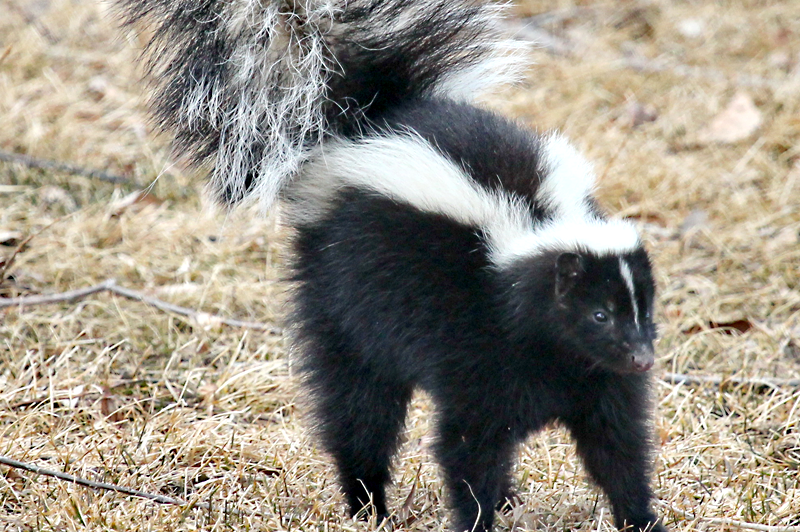
Although there are several species of skunk throughout the world, only one, the striped skunk (Mephitis mephitis) is native to Ohio. Striped skunks are about the size of a house cat and are easily recognized by their black bodies marked with a white ‘cap’ and two white stripes running down the length of their back. However, there are color variations that exist including, all black, cream, cinnamon, and albino.
Skunks have five slightly webbed toes on each foot and their front toes are equipped with long, curved claws that allow them to dig. When the ground is soft, they dig for grubs, roots and insects. They also dig dens.
Claws aren’t the only tool that skunks are equipped with. They have sharp teeth, although skunk bites are rare. They also have thick fur that protects them from stings. But the most infamous tool at a skunk’s disposal is its musk. Although there are other mammals that have musk glands, skunks are the only ones that can project their musk into a spray. Skunks have good aim and can hit their target from about 15 feet away. The musk is oily which makes it persistent and very pungent. Besides the strong odor, a direct hit to the eyes can cause temporary blindness.
Because a skunk’s anal glands carry only a small amount of musk, spraying is used as a last resort. At the first sign of danger, a skunk will hold up it’s tail as a warning flag. Even if its aggressor is color blind, the black and white contrast is an effective attention getter. Skunks will flee when possible. If either of these tactics don’t work, a threatened skunk will stomp its front feet as another warning. When all else fails, a skunk’s last and most effective line of defense is to spray.
Great Horned Owl (Wikipedia Creative Commons)
Most animals learn to leave them alone after an encounter. However, skunks do have natural predators. The most common skunk predator here in Ohio is the great horned owl. Fishers, which are making a comeback in the Buckeye State are also effective skunk predators.
Skunks are omnivorous meaning they eat both plants and animals. They often eat pests that are harmful to gardens and crops. They will dig up and consume underground yellow jacket nests as well.
Here are some fun, skunk facts:
Because of its staying power, skunk musk was once used in making perfume
Striped skunks are found in all 88 Ohio counties
Skunks are not true hibernators but may stay in their winter dens for long periods
Skunk tracks resemble bear tracks only much smaller
Skunks can spray when they are only 1 month old
Skunks are very adaptable and can live in several different habitats from farms to urban neighborhoods
Skunks make a variety of sounds including chirps, growls, grunts, and squeals
Skunks are excellent swimmers
Striped skunks are not great climbers, unlike their cousins, spotted skunks who climb trees to raid nests
In Ohio it is illegal to release a captured skunk onto another property
It is legal in Ohio to own a domesticated skunk as a pet. However, additional permits may be required, and they demand a lot of attention and time.
An analysis of state data shows that 11 months into the vaccine rollout, the ground is still fertile for outbreaks all around Ohio. Of 88 counties in the Buckeye State, only Delaware (71% vaccinated) surpasses the national vaccination rate of 68.5%. In 58 counties, less than half the population is vaccinated, according to data as of Sunday.
Ranked by state, Ohio (56% vaccinated) is the 10th least-vaccinated in the country, according to data from The New York Times.
In Henry County, a rural swath of northwest Ohio, COVID-19 is spreading at more than twice the statewide rate of about 400 infections per 100,0000 residents. About 52% of residents are vaccinated. Health Commissioner Joy Ermie said the spread is not specific to any outbreak or location, it’s just swimming through homes and social events of mostly unvaccinated people.
“The quicker we turn this around, the quicker we’ll see a decrease in our cases,” she said. “It will be a forever cycle if we cannot increase our overall vaccination rates.”
Public health workers in coronavirus-sieged counties said in interviews for this article that it’s time to start accepting that COVID-19 is likely here to stay in some form or fashion, absent a paradigm shift on vaccination.
Several indicated a circular pattern in vaccination; the unvaccinated, by and large, are staying unvaccinated. The vaccinated are fortifying their immune system with booster doses.
“I would absolutely love to say COVID is over in X [number of] months,” Ermie said. “But I feel much more confident that we should take our energy away from, ‘How is this going to end?’ to ‘How can we learn to live with it?’”
Gavin Smits receives a first dose of the Pfizer COVID-19 vaccine. (Photo by David Ryder/Getty Images)
Federal authorities approved the use of vaccines on children aged 5-11 earlier this month, which will likely jumpstart vaccination rates to some extent. In north-central Ohio’s Seneca County, a population of roughly 55,000 people, about 47% of residents are vaccinated. The county’s case rate is nearly twice the statewide average.
About 20 children were vaccinated at a clinic last Tuesday night, according to county health commissioner Anne Goon. She said there hasn’t been any mad rush on vaccines, but she was happy with Tuesday’s crowd.
She said adults in the community have bristled with vaccines, masks, and assorted infection control policy responses to the pandemic. Some parents have refused to have their kids tested after they’re exposed to the coronavirus at school, she said, even if it’s required for an after-school sport.
“We have a portion of our population that just doesn’t think COVID is real,” Goon said. “That it’s just a hoax.”
To Dr. Bruce Vanderhoff, Ohio’s top doctor and director of the state health department, the state is “approaching” a point in the pandemic where coronavirus becomes more of a nuisance than threat to the public welfare. We’re not there yet though as the extra-transmissible delta variant of the coronavirus “relentlessly” seeks out the unvaccinated, he said.
“In some circumstances, what is driving what we’re seeing is low vaccination rates in some communities,” he said. “So we have to continue to focus on the importance of vaccination.”
Vanderhoff, speaking to reporters Friday, offered a more optimistic take on Ohio’s vaccination rate. Among Ohio adults, more than 2 in 3 have now received at least one dose of vaccination. The COVID-19 vaccination rate, he said, has surpassed the rate of Ohioans who get their annual flu shot. It pales in comparison to vaccination against disease like measles or polio, but those vaccines have been around longer and are (mostly) legally required to enroll in school.
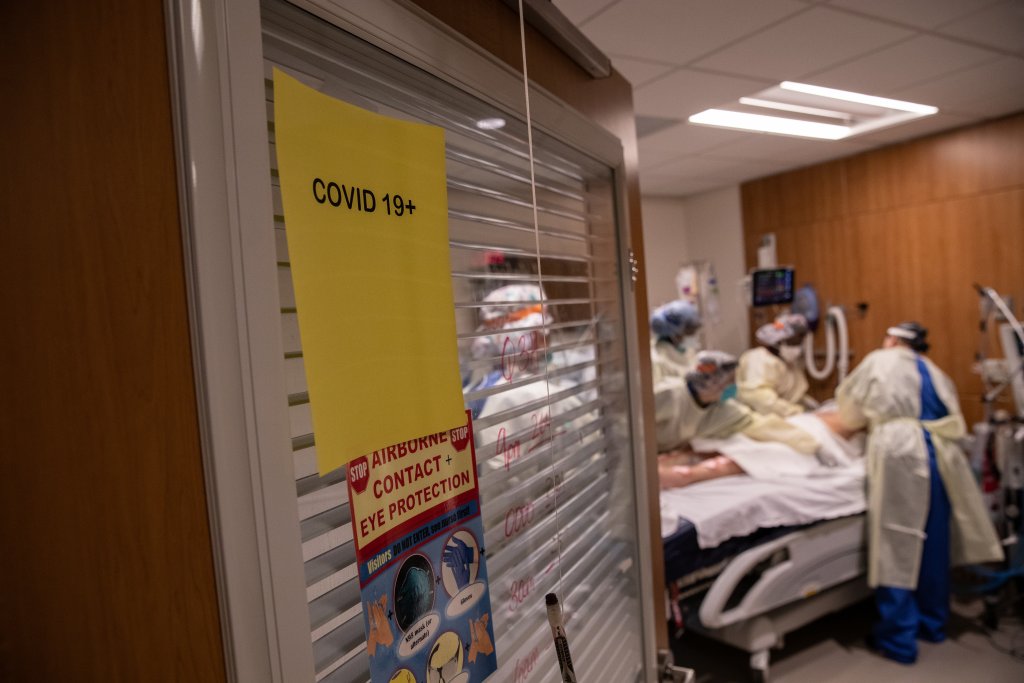
Despite Vanderhoff’s optimism, hospitalizations for COVID-19 have increased across every age group over the last week. For people aged 30-39, who are less vaccinated than their elder counterparts, hospitalizations leapt 48% in that time frame. More than 2,700 Ohioans are currently hospitalized with COVID-19, up from less than 2,200 earlier this month.
John Palmer, a spokesman for the Ohio Hospital Association, said the statewide COVID-19 patient census has been increasing by about 60 patients daily as of late.
“Hospitals are operating at high-capacity levels with workforce challenges and any surge will have a devastating impact leading to disruption of health care access for communities,” he said. “Despite three safe, approved and effective vaccines available today to stop this virus we continue to see spread and it’s frustrating to respond to a virus that is preventable.”
All told over about 20 pandemic months, more than 25,600 Ohioans have died from COVID-19, part of the U.S.’ 762,000 dead. More than 82,000 Ohioans have been hospitalized, including more than 10,000 who required ICU care. A staggering 1.6 million Ohioans have been infected with COVID-19.
Mark Cameron, an immunologist at Case Western Reserve University, is not surprised by COVID-19’s resurgence. Even highly vaccinated states like Vermont (82% vaccine started) are wrestling with outbreaks. In Ohio, cold weather makes respiratory viruses more spreadable and drives humans to gather inside instead of outside.
“It’s absolutely unacceptable to operate in a space in which 50-60% of the people are unvaccinated,” he said.
He expressed frustration with a sense of complacency from the public whenever the coronavirus ebbs, and an unwillingness to acknowledge the predictable patterns of disease spread based on low vaccine coverage, weather and human behavior.
“I don’t know what unique to say at this point,” he said. “Here we are risking another impact on our holiday season through sickness, hospitalization and death.”
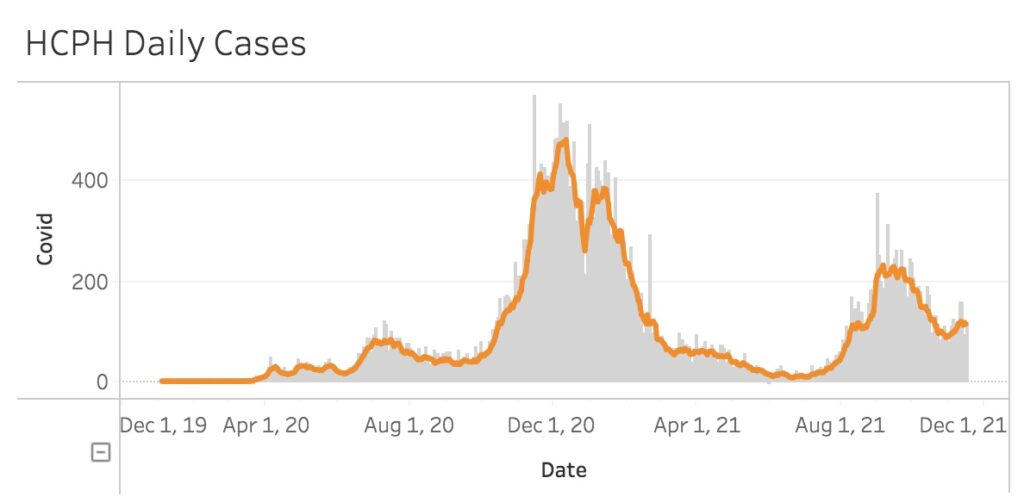
Hamiolton County Public Health 11-16-2021
November 16
Warren County Health Services reported 62 additional COVID-19 cases on Tuesday, along with 60 recoveries.Health Services is monitoring 493 active COVID cases as of Tuesday, 471 of them involving mild illness.
Thirteen (13) people are hospitalized as of Tuesday, one (1) fewer than Monday. One (1) is critically ill, and the remainder have moderate illness. Nine (9) others are moderately ill outside of the hospital.
All but two (2) of Tuesday’s cases involved community spread of COVID-19, as two (2) were reported in a skilled nursing facility.
Warren County Health Services continues to see a significant spike in COVID-19 transmission, with the majority of its new cases arising from workplace exposures, family/household exposures and indoor events/gatherings as the highly transmissible Delta variant remains involved with virtually all local cases.
Sixteen (16) of Tuesday’s cases involved individuals who had been fully vaccinated. Cumulatively as of Tuesday, 1,086 of 44,513 fully vaccinated Warren County residents have tested positive for COVID-19. To date, 1,027 of 1,086 had mild illness, while 41 became moderately ill, two (2) seriously ill and one (1) critically ill. Fifteen (15) passed away, all of them elderly and/or with extensive health issues, seven (7) of them at nursing homes.
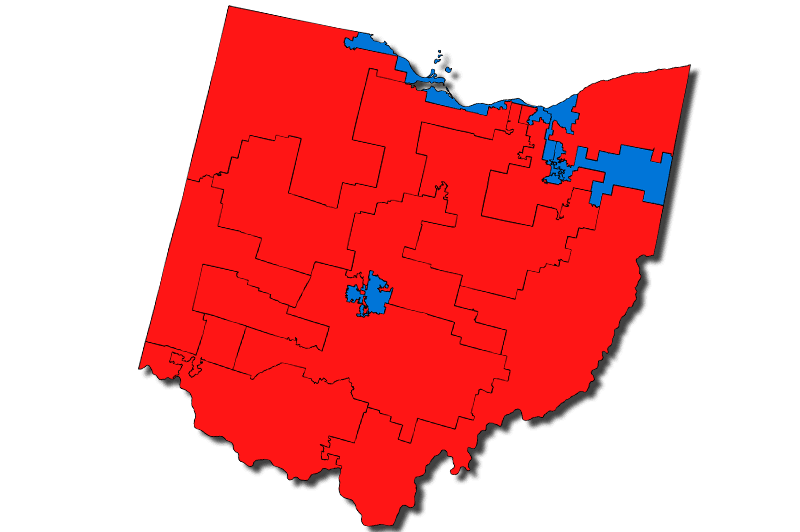
The Buckeye State will lose one congressional seat when the map is redrawn ahead of the 2022 elections, the U.S. Census Bureau announced Monday. Ohio will go from 16 seats to 15.
The U.S. House of Representatives has 435 total seats that are divided up among the 50 states based on population. Maps are redrawn and seats are reapportioned every 10 years to reflect the latest census data.
Ohio’s population grew slightly between the 2010 census and the one conducted in 2020, but is still losing a seat because other states’ populations grew at much larger levels.
A few years ago, Ohioans voted to reform the mapmaking system with an eye on transparency:
Delays in the release of detailed census data may cause some issues with this timeline. Some of the data used toward mapping out new districts is not scheduled to come until the fall, right around when Ohio is supposed to have its proposed maps drafted and voted upon. State legislative leaders are reportedly working on a suggested solution.
Ohio once had as many as 24 seats in the U.S. House of Representatives, but has slowly lost seats since the 1970s. The 15 seats that will be up for election in 2022, 2024, 2026, 2028 and 2030 cycles are the fewest Ohio has had since the 1830s.
Ohio Gov. Mike DeWine outlined his administration’s proposed state budget on Monday, calling his plan “truly an investment into our future.”
Acknowledging this as being an “extremely challenging time in Ohio,” DeWine nevertheless offered an optimistic view of the coming two years and said 2021 in particular would be a year of recovery.
The governor emphasized the need for targeted investments toward Ohio businesses, communities and workers as the state continues to deal with a pandemic that has left thousands dead and more than a million seeking unemployment aid at some point in the past year.
“We see a bright future ahead,” said Kimberly Murnieks, the state’s chief budget officer, in helping to roll out the budget plan.
The proposal kicks off months of negotiating with the Ohio legislature, which is tasked with approving a state budget this summer.
Here are some main takeaways of how the budget affects everyday Ohioans and some details about the next steps in the budget process:
Big investments in small businesses, expanding broadband access
At the centerpiece of DeWine’s budget proposal is a new economic recovery plan referred to as the “Investing in Ohio Initiative.”
The one-time spending plan includes more than $1 billion toward business grants, community infrastructure projects and workforce development.
A total of $460 million in grants would go toward bars, restaurants, entertainment venues and other small businesses hit hard by the pandemic, DeWine said. Of this money, $20 million would be specially allocated for new businesses started since the beginning of 2020.
Lt. Gov. Jon Husted outlined a number of proposed investments toward improving the state’s workforce training opportunities, benefiting high school students and adult workers alike:
TechCred Investment/Individual Microcredential Assistance Program: ▪️$5M to fund an additional 5,000 credentials in 2021. ▪️$25M for 20,000 tech-focused credentials in 2022/23. ▪️$15M dollars in workforce development efforts in economically distressed rural and urban communities.
Another major component of the Investing in Ohio Initiative is $250 million for broadband expansion throughout the state of Ohio. This is an “incredibly important” priority, Husted said, noting that Ohioans without adequate internet access at home have fewer education, health care and telework opportunities.
This proposed spending is made available, DeWine said, due to money saved by the state government during the pandemic as well as increased federal spending in Ohio that has freed up additional money.
There is one other aspect of the Investing in Ohio Initiative plan.
DeWine wants $50 million public relations campaign
This is a component of the governor’s proposed recovery plan that turned some heads.
DeWine hopes to see the state embark on a $50 million marketing campaign to promote the virtues of Ohio to the rest of America.
The idea, he said, is to convince residents and entrepreneurs living elsewhere to relocate to the Buckeye State.
“We want to position Ohio as the place to be,” DeWine said, saying the campaign should highlight the state’s cultures, cities, universities and workplace opportunities.
No new taxes, but some new fees
The governor and chief budget officer repeatedly made note of the effort to not propose any new taxes with this budget.
It does, however, call for increasing some fees that Ohio residents have to pay at the Bureau of Motor Vehicles. The budget proposes a $10 increase on motor vehicle registration fees and a $2 increase on title fees.
This would raise millions of dollars benefitting the Ohio State Highway Patrol, which Murnieks said is in need of additional funding to pay for its operations and security responsibilities. (The Patrol provides security at the Ohio Statehouse.)
Health and Education
Public health should remain a major funding priority going forward as Ohio navigates the COVID-19 pandemic, DeWine said.
He mentioned a particular need to invest in better data systems for health departments to process and report public health information.
The governor will talk in future detail about the proposed public health spending in his Tuesday pandemic press conference, Murnieks told reporters.
Gov. DeWine said his budget would allocate funding toward improving Ohio health departments’ ability to process data and information. The Ohio Department of Health’s COVID-19 dashboard is seen in a screenshot from Monday afternoon.
The budget proposes a notable increase in state Medicaid spending. Murnieks said this is due to a rise in the number of Ohioans relying on Medicaid during the ongoing health crisis and an expected decrease in federal funding.
Regarding education, DeWine did not include any changes with the K-12 funding formula in his budget proposal, noting that lawmakers are still debating the issue.
Throughout the pandemic, DeWine has said the state would not tap into its $2.7 billion “rainy day fund” unless it was absolutely necessary.
The state opted against doing so for all of 2020, even while instituting hundreds of millions of dollars in cuts to public education last May.
Likewise, the state evidently has no intention of using that money in 2021. DeWine did not propose any funds be used from the rainy day fund in his budget proposal.
Murnieks told reporters that it’s beneficial for Ohio to continue saving it for any future budget catastrophe. She said the state likely would have relied on this money had it not been for the funding assistance provided by the federal government.
What’s next?
The state legislature will now start reviewing the budget proposal.
The negotiating process begins in the two chambers’ Finance Committees. Eventually, the budget will come to a full vote in the Ohio House of Representatives and the Ohio Senate. Members from both chambers will then hash out any differences before a final budget bill heads to the governor’s desk for approval.
The budget must be approved by the start of the new fiscal year (July 1), though it’s not uncommon for negotiations to continue past that date with a temporary budget in place.
More information about the budget proposal is available online at budget.ohio.gov, with information about current state spending available at checkbook.ohio.gov.
Read about the local ramifications and : “ORIGINS OF REPULSIVE BILL”
Vindicator Editorial
July 19, 2019
The Ohio Senate’s passage Wednesday night of one of this state’s most odious anti-consumer bills in history toward almost certain passage in the state House deals a mean blow to Ohioans in their pocketbooks and sets the Buckeye State on a regressive path toward environmental irresponsibility.
Eligible Students May Apply for the U.S. Air Force Academy, Naval Academy, Merchant Marine Academy, and Military Academy at West Point
Washington, D.C.– U.S. Senators Sherrod Brown (D-OH) and Rob Portman (R-OH) today encouraged Ohioans interested in 2019 admission to U.S. Military Service Academies to apply to each senator’s office for a congressional nomination.
“Ohio’s students have the integrity, courage, and knowledge needed to enroll in our nation’s prestigious military academies and I am honored to nominate students for this high honor,” said Brown. “These academies develop the next generation of leaders who will serve our country as military officers and national leaders.”
“I am particularly honored as a United States Senator to have the privilege every year of nominating a number of Ohio’s top young achievers for entry into one of our nation’s service academies,” said Portman. “Our nation has never had to look further than the Buckeye State to find those individuals who exhibit the sterling qualities of leadership, daring, and the sense of adventure needed to turn the biggest dreams into reality, and to rise to any occasion.”
Each year, Brown and Portman nominate up to 10 students for each service academy: the U.S. Air Force Academy, the U.S. Naval Academy, the U.S. Military Academy at West Point, and the U.S. Merchant Marine Academy.
Interested students who meet the eligibility requirements should send their completed application packet to Brown’s Cleveland office and to Portman’s Columbus office no later than September 21, 2018. The application process is time-intensive. Applicants should plan well in advance.
RP Diamond is the exclusive retailer of LOVELAND HIGH SCHOOL SPIRIT WEAR Welcome to RP Diamond Printing & Embroidery located at 370 Loveland Madeira Road
For more information or to request an application, please visit Brown’s website here or Portman’s website here. Inquiries can also be directed to Brown’s Academy Coordinator at the Cleveland office (888) 896-6446 and to Portman’s Academy Coordinator at the Columbus office 1-800-205-OHIO.
Brown and Portman will co-host 12 United States Service Academy Seminars throughout the state for students who are interested in learning about the application processes. A list of locations can be found below:
Monday, April 23, 2018
Symmes Township Branch Library
11850 Enyart Road
Loveland, Ohio 45140
6:00 – 8:00p.m.
Tuesday, March 27, 2018
Lorain County Community College
Spitzer Conference Center, Room 114
1005 North Abbe Road
Elyria, Ohio 44035
6:00p.m. – 8:00p.m
Thursday, April 5, 2018
North Central State College
Kee Hall, Rooms 128A & 128B
Main Campus
Mansfield, Ohio 44901
6:00 – 8:00p.m.
Tuesday, April 10, 2018
Zane State College
Advanced Science & Tech Center
Room 224
1555 Newark Road
Zanesville, Ohio 43701
6:00p.m. – 8:00p.m.
Monday, April 16, 2018
Athens Public Library
30 Home Street
Athens, Ohio 45701
6:00p.m. – 8:00p.m.
Thursday, April 19, 2018
Walsh Jesuit High School, Library
4550 Wyoga Lake Road
Cuyahoga Falls, Ohio 44224
6:00p.m. – 8:00p.m.
Tuesday, April 24, 2018
The Mills Morgan Tower
3500 Pentagon Boulevard, 1st Floor
Beavercreek, Ohio 45431
6:00 – 8:00p.m.
Thursday, April 26, 2018
East High School
1500 East Broad Street
Columbus, Ohio 43205
6:00 – 8:00p.m.
Tuesday, May 1, 2018
Youngstown State University
Kilcawley Center
Ohio Room
One University Plaza
Youngstown, Ohio 44555
6:00 – 8:00p.m.
Thursday, May 3, 2018
Bowling Green State University
Bowen Thompson Student Union Alumni Meeting Room 314


 by Julie Watson