Tag: cannabis

  • ‘We are going to push pause’ on Ohio marijuana legislation, says Republican lawmaker

    ‘We are going to push pause’ on Ohio marijuana legislation, says Republican lawmaker

    By:  Ohio Capital Journal

    Ohio lawmakers will likely go on summer break without making any changes to the state’s marijuana law, a Republican state representative said Tuesday.

    For the second week in a row, Ohio Senate Bill 56 was up for a possible vote out of the Ohio House Judiciary Committee, but both times the vote did not take place.

    Once the bill is voted out of committee, it can be brought to the House floor for a vote. The Senate passed the bill in February.

    GET THE MORNING HEADLINES.


    Last week, the bill was removed from the committee agenda and this week the committee meeting — which only had S.B. 56 on the agenda — was canceled.

    “We are going to push pause,” state Rep. Brian Stewart, R-Ashville, said when asked about the marijuana bill. “We’re going to take the summer and come back and potentially take another crack at it.”

    Ohio House Speaker Matt Huffman, R-Lima, said the Senate raised more than a dozen issues related to S.B. 56 last week.

    “I just told my caucus, ‘We’re not going to just say, OK, because we’re so anxious to pass the marijuana bill, which I’d like to get it done, but we’re not going to give up House priorities to do that,’” he said last week.

    The lawmakers are currently working on the state’s two-year operating budget, which Ohio Gov. Mike DeWine must sign before July 1. The lawmakers will go on summer break after the budget is finished.

    S.B. 56 would reduce the THC levels in adult-use marijuana extracts from a maximum of 90% down to a maximum of 70%, limit the number of active dispensaries to 400 and prohibit smoking in most public places.

    It would keep Ohio’s home grow the same at a limit of six plants per person and 12 plants per residence. State Sen. Steve Huffman, R-Tipp City, introduced the bill in January and the bill originally would have limited Ohio’s home grow from 12 plants down to six.

    Ohioans passed a citizen-initiated law to legalize recreational marijuana in 2023 with 57% of the vote, and sales started in August 2024. Ohio lawmakers can change the law since it passed as a citizen initiative not a constitutional amendment.

    “The people of Ohio spoke very clearly on this issue,” said Ohio House Minority Leader Dani Isaacsohn, D-Cincinnati. “They knew what they were voting on, and they voted to pass adult-use cannabis recreationally here in the state of Ohio.”

    Intoxicating hemp products

    The House has made significant changes to S.B. 56, most notably adding regulations to intoxicating hemp products.

    As the bill currently stands, only a licensed marijuana dispensary would be able to sell intoxicating hemp products that have been tested and complied with packaging, labeling and advertising requirements.

    The Ohio Department of Commerce would regulate intoxicating hemp products and drinkable cannabinoid products. Grocery stores, carryout stores, bars, and restaurants would continue to be able to sell drinkable cannabinoid products.

    Isaacsohn agrees there should be regulations around intoxicating hemp products, but wants it to happen through a “clean bill.”

    “It is so tied up in trying to overturn the will of the voters,” he said. “If we had a clean bill to fairly regulate intoxicating hemp, we could have voted on it months ago, years ago. … There are so many common sense things that we agree on, and when the majority brings forward a clean bill, we would be happy to vote for it.”

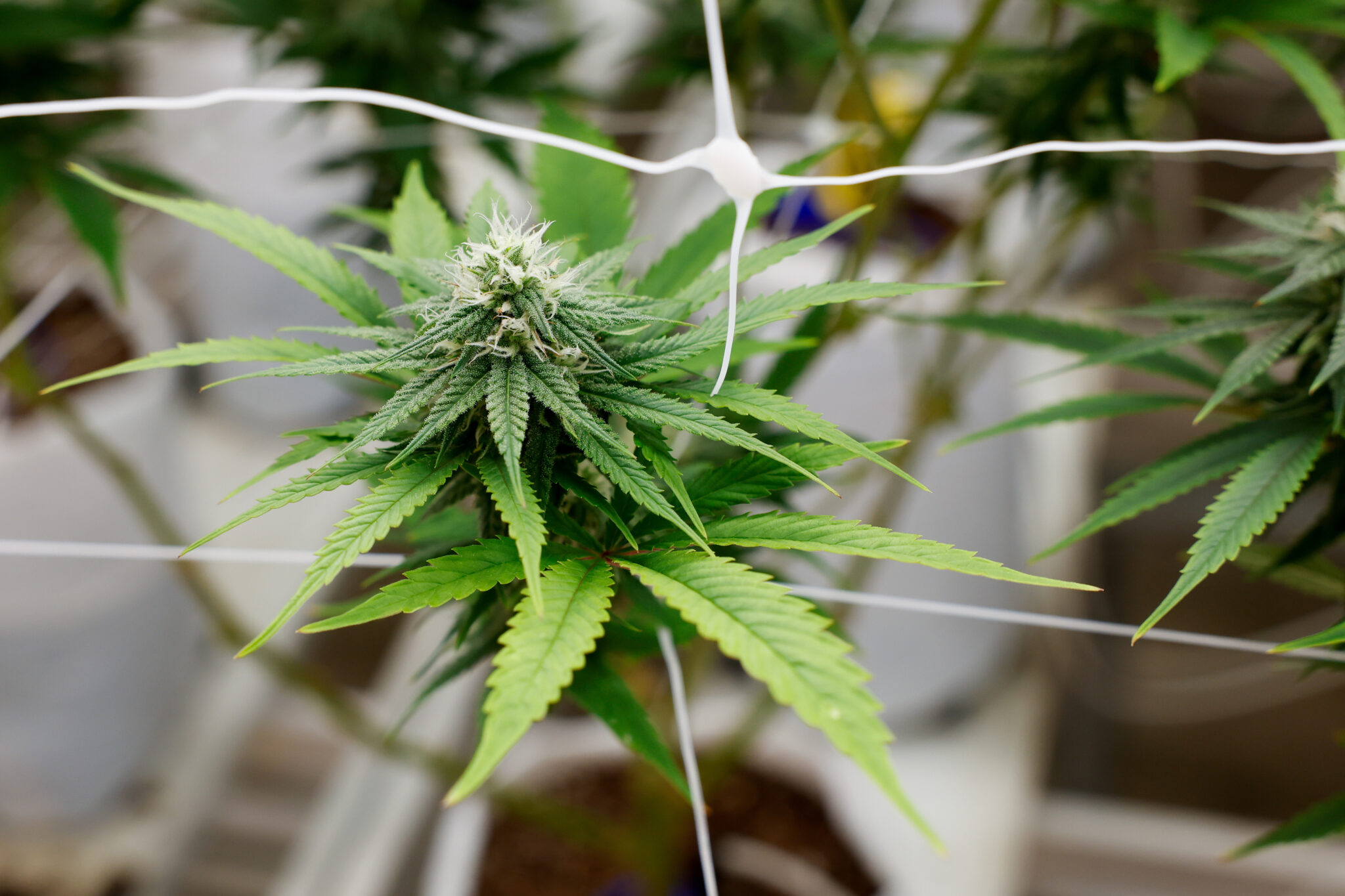
     Flowers of hemp plants that contain less that 0.3 percent tetrahydrocannabinol (THC) the primary psychoactive substance in marijuana. (Photo by Graham Stokes for Ohio Capital Journal. Republish photo only with original article.) 

    The 2018 Farm Bill says hemp can be grown legally if it contains less than 0.3% THC.

    State Rep. D.J. Swearingen, R-Huron, was planning on introducing amendments to the bill’s hemp provisions during Tuesday’s committee meeting, but that didn’t happen since the meeting was canceled.

    The American Republic Policy worked with Swearingen on the amendments which would have allowed licensed hemp companies in Ohio to continue to operate their retail stores and create a unified regulatory framework for hemp and marijuana products, said Dakota Sawyer of American Republic Policy.

    “The same regulations that would apply to marijuana under the Ohio administration code would apply to hemp products as well,” he said. “We are ensuring that we do not have state-sanctioned monopolies in the state of Ohio, that federally legal hemp products can be accessed through independent businesses, and that they would not be forced to go into dispensaries.”

    Sawyer said forcing hemp products into only dispensaries would eliminate market competition.

    “We want to ensure that there are options out for people, to ensure that they are able to purchase what they love, what they would want … and to ensure that we do not have state-sanctioned monopolies,” he said.

    State Rep. Jennifer Gross, R-West Chester, said 3,000 hemp businesses would close if S.B. 56 passes as it currently stands — with hemp products only being sold in dispensaries.

    “We need to reward the good actors,”  she said. “We need to ID check our hemp products when it is consumable. We also need to allow these businesses to stay open.”

    Wesley Bryant, company owner of 420 Craft Beverages in Cleveland, said he already does many of the things that are outlined in the proposed amendment.

    “Every square inch of my facility is fully covered by cameras,” he said. “We have a full track and traceability of everything that comes into my facility. We even go so far as to double check IDs. And my doors stay locked throughout the day. You have to be buzzed in order to enter the facility.”

    DeWine and various lawmakers have expressed safety concerns for children when it comes to hemp products, but Sawyer said the average age of an Ohio hemp customer is 40 years old.

    “It’s not geared towards children,” Sawyer said. “What some legislators have done is created this mystical boogeyman that says that all these hemp people are doing all these crazy things that are attracting minors. And essentially we’re saying, let’s punish the bad actors that are doing that, but let’s not punish the good guys for that.”

    But Adrienne Robbin, deputy executive director of Ohio Cannabis Coalition (OHCANN), said Ohio children are being put at risk by intoxicating hemp products.

    “It’s a sad day for all Ohioans that we’re going to continue to see these illicit products be sold in our state over the summer,” she said. “These products are being marketed to (children) specifically,” she said. “I think the hemp industry is really good at pulling a few good actors out and highlighting them, but the reality is, the majority of these products are illicit.”

    Sawyer said he would prefer to see the legislation as two separate bills — one with marijuana regulations and a separate one with hemp regulations.

    “Marijuana and hemp are totally separate in terms of the industry and products,” he said.

    Follow Capital Journal Reporter Megan Henry on Bluesky.


    Megan Henry

    Megan Henry

    Megan Henry is a reporter for the Ohio Capital Journal and has spent the past five years reporting in Ohio on various topics including education, healthcare, business and crime. She previously worked at The Columbus Dispatch, part of the USA Today Network.

    Ohio Capital Journal is part of States Newsroom, the nation’s largest state-focused nonprofit news organization.

    MORE FROM AUTHOR


  • Marijuana backers criticize Ohio bills attempting to change state law

    Marijuana backers criticize Ohio bills attempting to change state law

    Stock photo from Getty Images

    By:  Ohio Capital Journal

    Marijuana advocates called bills to change Ohio’s weed laws “a slap in the face” to voters.

    The National Organization for the Reform of Marijuana Laws hosted a webinar last week about two bills that are trying to change Ohio’s marijuana laws.

    “Whether one believes that cannabis ought to be legal or not is almost a secondary issue,” said NORML Deputy Director Paul Armentano. “The primary issue ought to be that elections have consequences, and the results of elections should matter.”

    Ohioans voted to legalize recreational marijuana in 2023 by passing a citizen-initiated law, meaning Ohio lawmakers can change the law. Marijuana sales started in August 2024 and the state’s total recreational marijuana sales were $376,482,070 as of Saturday, according to the Ohio Department of Commerce Division of Cannabis Control.

    GET THE MORNING HEADLINES.


    “Ohio looks like it has been rolling along very smoothly, and implementation has been going well,” said NORML Political Director Morgan Fox. “There have been no major complaints from Ohioans, and it’s premature for the legislature to try to interfere with it.”

    There are bills in both chambers trying to rewrite Ohio’s marijuana laws — Senate Bill 56 and House Bill 160.

    “It’s not as if this pushback is coming because there have been negative or adverse consequences of Issue Two being implemented,” Armentano said. “The law is working just fine, and Ohioans are happy with it. Lawmakers are trying to meddle with it and act as if there are issues with the law, when in fact, we’re seeing the laws playing out the way voters intended.”

    These bills would be dangerous for cannabis users in Ohio, said Cat Packer, director of drug markets and legal regulation at Drug Policy Alliance.

    “There are so many ways that if you are a cannabis consumer in Ohio, with either of these bills passed, you should consider that the law will consider you a criminal,” she said.

    S.B. 56 would cut the number of Ohio’s home grow plants in half from 12 plants down to six, reduce the THC levels in adult-use marijuana extracts from a maximum of 90% down to a maximum of 70%, and require marijuana can only be used in a private residence.

    THC potency caps are a solution in search of a problem, Armentano said.

    “Voters, by and large, don’t like potency caps for cannabis,” he said. “If we simply remove these products from the market, we’re not going to get rid of the demand, but what we’re going to do is drive the production of these products to the unregulated market.”

    S.B. 56 does allow someone to apply to the sentencing court to have their record expunged, but they would have to pay a $50 filing fee. The bill would require marijuana to only be transported in the trunk of a car when traveling and would limit the number of active dispensaries to 350.

    The Ohio Senate passed S.B. 56 last month, which would ban Ohioans from using marijuana that is not either from a licensed Ohio dispensary or cultivated at a consumer’s home — meaning it would be illegal for Ohioans to drive up to Michigan to buy marijuana and bring it back over state lines. The bill has yet to have a hearing in the House.

    “If you were to pass a joint or share your home grown cannabis, or share your cannabis with your spouse or your roommate, you would be a criminal again,” said Karen O’Keefe, director of state policies at Marijuana Policy Project.

    House Bill 160 would keep home grow and tax levels the same, but reduce THC levels and redirect most of the tax revenue to the state’s general fund.

    The current tax revenue is divided up in several ways — 36% to the cannabis social equity and jobs fund, 36% to the host community cannabis fund, 25% to the substance abuse and addiction fund and 3% to the Division of Cannabis Control and Tax Commissioner Fund.

    “My concern is we wouldn’t be dedicating those monies where voters decided that the money should go,” Packer said.

    Ohio Gov. Mike DeWine’s budget proposal would increase the tax on marijuana from 10% to 20%. The Ohio House is currently working on the budget, which is due July 1.

    Follow Capital Journal Reporter Megan Henry on Bluesky.

    YOU MAKE OUR WORK POSSIBLE.

    ________________
    Megan Henry
    Megan Henry

    Megan Henry is a reporter for the Ohio Capital Journal and has spent the past five years reporting in Ohio on various topics including education, healthcare, business and crime. She previously worked at The Columbus Dispatch, part of the USA Today Network.

    Ohio Capital Journal is part of States Newsroom, the nation’s largest state-focused nonprofit news organization.

    MORE FROM AUTHOR

  • Ohio recreational marijuana sales exceed $76 million in less than 50 days

    Ohio recreational marijuana sales exceed $76 million in less than 50 days

    Amplify Dispensary in Columbus. (Ohio Capital Journal photo.)

    By:  Ohio Capital Journal

    Ohio recreational marijuana sales have surpassed $76.2 million in less than two months.

    The state’s total recreational marijuana sales was $76,280,490 as of Sept. 21, according to the Ohio Department of Commerce Division of Cannabis Control. Ohio has a 10% tax at the point of sales for every non-medical marijuana transaction.

    Recreational marijuana sales started in Ohio on Aug. 6 and sales topped $11.5 million in less than a week. Fifty-seven percent of Ohioans voted to legalize marijuana last November through the passage of Issue 2, which also legalized home grow for Ohioans 21 and older with a cap of six plants per person and 12 plants per residence.

    There have been 8,813 pounds of plant materials sold and 1,187,395 units of manufactured products, according to the DCC.

    There are 124 dual-use marijuana dispensaries in Ohio, meaning they can sell both medical and non-medical marijuana, according to the division. Columbus has 13 dual-use marijuana dispensaries, Cincinnati has 10, Dayton has six and Cleveland has five.

    Ohio has more than 107 local moratoriums prohibiting adult-use cannabis business as of Monday, according to Ohio State University’s Moritz College of Law.

    Follow OCJ Reporter Megan Henry on X.


    Megan Henry
    Megan Henry

    Megan Henry is a reporter for the Ohio Capital Journal and has spent the past five years reporting in Ohio on various topics including education, healthcare, business and crime. She previously worked at The Columbus Dispatch, part of the USA Today Network.

    Ohio Capital Journal is part of States Newsroom, the nation’s largest state-focused nonprofit news organization.

    MORE FROM AUTHOR

  • Biden administration to greatly ease marijuana regulations

    Biden administration to greatly ease marijuana regulations

    BY:  Ohio Capital Journal

    The Biden administration plans to remove marijuana from a list of the most dangerous and highly regulated drugs, the Department of Justice said Tuesday night.

    The Drug Enforcement Administration will propose moving the drug from a Schedule I substance, which also includes heroin and methamphetamine, to Schedule III, which is the category for regulated-but-legal drugs including testosterone and Tylenol with codeine.

    “Today, the Attorney General circulated a proposal to reclassify marijuana from Schedule I to Schedule III,” DOJ spokesperson Xochitl Hinojosa said in a statement to States Newsroom. “Once published by the Federal Register, it will initiate a formal rulemaking process as prescribed by Congress in the Controlled Substances Act.”

    Cannabis has been listed as a Schedule I drug under the Controlled Substances Act since 1971, even as many states have moved to legalize recreational use for more than a decade and medicinal use for even longer.

    State-legal marijuana businesses make up a multibillion-dollar industry, but the illegal status of the drug under federal law creates barriers unseen by other industries, including a lack of access to banking and the inability to deduct business expenses from taxes.

    Social justice advocates have also noted that prosecutions for marijuana-related crimes have hurt communities of color. Many of those convicted for offenses related to marijuana have not benefited from the recent decriminalization in many states.

    Moving cannabis to Schedule III would allow a more permissive approach to the drug, including permitting greater study of medicinal uses and allowing related businesses to use a common tax deduction.

    Schumer praises development

    Congressional leaders on the issue and other advocates of changing marijuana’s status welcomed the news Tuesday afternoon, even as they called for further action.

    “It is great news that DEA is finally recognizing that restrictive and Draconian cannabis laws need to change to catch up to what science and the majority of Americans have said loud and clear,” Senate Majority Leader Chuck Schumer said in a statement.

    The New York Democrat added that other legislation, including bills to provide cannabis businesses with greater access to banking and to completely delist the drug, is still needed.

    “Congress must do everything we can to end the federal prohibition on cannabis and address longstanding harms caused by the war on drugs,” he said.

    Sen. John Hickenlooper, a Democrat from Colorado who was the state’s governor when it and Washington became the first states to legalize recreational use in 2012, said the news was welcome but did not go far enough.

    “Rescheduling marijuana is a step in the right direction. But – just a step,” he posted to X. “Marijuana should be DEscheduled altogether.”

    The state’s current Gov. Jared Polis, also a Democrat, cheered the move in a written statement.

    “I am thrilled by the Biden Administration’s decision to begin the process of finally rescheduling cannabis, following the lead of Colorado and 37 other states that have already legalized it for medical or adult use, correcting decades of outdated federal policy,” Polis said.

    “This action is good for Colorado businesses and our economy, it will improve public safety, and will support a more just and equitable system for all.”

    The U.S. Cannabis Council, a business group, applauded the expected change.

    The move was based on U.S. Department of Health and Human Services research and would have myriad benefits for business, Executive Director Edward Conklin said in a written statement.

    The update would put marijuana on a path to full legalization and make it easier for state-legal businesses to run profitable operations, he said.

    “Moving to Schedule III represents a tectonic shift in our nation’s drug laws. The US Cannabis Council is committed to ending federal cannabis prohibition, and we believe that reclassification is a necessary and critical step toward that goal,” he wrote. “In the coming days, we will submit comments to the DEA in support of the proposed rule.”

    Jennifer Shutt contributed to this report.


    Jacob Fischler
    JACOB FISCHLER

    Jacob covers federal policy as a senior reporter for States Newsroom. Based in Oregon, he focuses on Western issues. His coverage areas include climate, energy development, public lands and infrastructure.

    Ohio Capital Journal is part of States Newsroom, the nation’s largest state-focused nonprofit news organization.

    MORE FROM AUTHOR

    _____________
    Jennifer Shutt
    JENNIFER SHUTT

    Jennifer covers the nation’s capital as a senior reporter for States Newsroom. Her coverage areas include congressional policy, politics and legal challenges with a focus on health care, unemployment, housing and aid to families.

    Ohio Capital Journal is part of States Newsroom, the nation’s largest state-focused nonprofit news organization.

    MORE FROM AUTHOR


  • Recreational marijuana backers submit signatures

    Recreational marijuana backers submit signatures

    BY: NICK EVANSOhio Capital Journal

    A group pushing for recreational marijuana in Ohio is one step closer to the ballot after the Coalition to Regulate Marijuana Like Alcohol submitted 200,000-plus signatures to state officials. Now county boards of elections begin the work of verifying signatures.

    The coalition’s plan would allow Ohioans over 21 possess, use, and purchase cannabis. They propose a 10% tax on sales that would fund social equity and addiction programs. Another portion of that revenue would bolster the general funds of cities that choose to allow dispensaries within their borders. The plan would even allow adults to grow a limited amount of cannabis at home.

    “The success of our petition drive shows just how eager Ohioans are to end prohibition and legalize the adult use of marijuana,” coalition spokesman Tom Haren said in a press release. “We look forward to receiving the results of the Secretary of State’s review, and are eager to begin working with legislators on this important issue.”

    Signature gatherers overshot the required threshold of 132,877 by about 70,000 to provide a buffer for any signatures that get thrown out. So long as they meet the required overall number and get a designated portion from at least 44 of the state’s counties, the proposal goes to state lawmakers. If lawmakers choose not to approve the measure, the coalition has the chance to get another round of signatures to put their proposal on the ballot.

    At this point, the ballot seems like the most likely path to approval, but that doesn’t mean the GOP-controlled legislature is blind to the shortcomings in Ohio’s existing marijuana program. Sen. Steve Huffman, R-Tipp City, has shepherded a measure through the Senate that would make significant under-the-hood changes to the state’s marijuana policy while leaving the overall structure intact. That bill passed the Senate last week.

    But provisions like allowing homegrown marijuana are a non-starter for Huffman.

    “Because that’s recreational marijuana,” Huffman said in a November interview about his bill. “If you’re going to grow five for your medical purpose, you know, the neighbor kids going to steal one, [and] you’re going to sell a couple.”

    And Huffman isn’t alone. A recent poll conducted by Gongwer News Service shed light on how much the ground is shifting when it comes to marijuana — 43% of Republican lawmakers supported adult use, dead even with those who oppose it.  But when it comes to homegrown marijuana, the GOP is far more unified in its opposition. When it comes to personal use, 64% of GOP members registered opposition and 86% said they are against people growing cannabis for commercial use.

    Assuming the coalition’s signatures meet requirements, lawmaker have four months to act on their proposal.

  • State gives OK for petitions for recreational marijuana in Ohio

    State gives OK for petitions for recreational marijuana in Ohio

    “Coalition to Regulate Marijuana Like Alcohol” wins out at Ballot Board

    BY: JAKE ZUCKERMAN and Ohio Capital Journal

    Columbus, Ohio – A state board gave the green light for organizers to begin gathering tens of thousands of signatures to inch closer to legalizing the sale of marijuana for recreational use in Ohio.

    Should they gather the roughly 133,000 signatures needed, the so-called “Coalition to Regulate Marijuana Like Alcohol” organizers would give their proposal to the Ohio General Assembly. Lawmakers would then have four months to act on the proposed law legalizing marijuana use for those 21 and up.

    On Monday, the Ohio Ballot Board unanimously agreed the proposal only spans a single-issue, the final regulatory hurdle before signatures can be amassed.

    Thomas Haren, a spokesman for the coalition and Cleveland attorney who practices cannabis law, said he and other organizers are “laser focused” on getting the initiative through the Statehouse in lieu of a ballot referendum.

    “The name really says it all,” he said. “We want to regulate marijuana like alcohol. By that, we mean restrict sales to people under 21 years of age. We want to make sure every product is tested, it’s produced here in Ohio by licensed cultivators or processors, [and] sold at licensed dispensaries.”

    The coalition is trying to legalize marijuana by a process called an “initiated statute” in which they gather enough signatures to force lawmakers to consider their proposal. If lawmakers fail to act for four months after the signatures are submitted, the coalition could then move to place the initiative on the ballot for the 2022 election.

    Under the proposal, marijuana would be taxed at 10% at the point of the sale. Proceeds would be split between fighting substance abuse (25%); a community host fund for localities with dispensaries (36%); the “cannabis social equity and jobs program,” aimed to remedy harms resulting from the “disproportionate enforcement of marijuana related laws;” and paying program costs (3%).

    The idea can be lucrative for the state. Colorado, roughly half the population of Ohio, levies a 15% sales tax on retail marijuana, plus a 2.9% sales tax on marijuana sold in stores and a 15% wholesale sales tax. The state earned $387 million in marijuana tax revenue from calendar year 2020, according to state data. Michigan, which launched its recreational program in late 2019, received $45.7 million in tax revenue in fiscal year 2020.

    Photo by Kindel Media from Pexels

    Research from Ohio State University’s Drug Enforcement and Policy Center within its law school estimated that Ohio could drive $625 million in revenue from recreational marijuana sales, assuming the state taxes and its residents consume marijuana at even levels as Colorado.

    Under the proposal, adults would be able to grow up to six plants (maximum of 12 per household). Local governments could vote to limit the number of cannabis operators within their borders but cannot prohibit existing medical marijuana businesses.

    Haren said a program could launch as soon as nine months after the effective date of the new law.

    “It’s time for Ohio to take the next step. We think this is something Ohioans support and are in favor of,” he said. “We think it’s wildly popular among the voting public.”

    Ohio law is comparatively lax on marijuana. People convicted of possessing less than 100 grams are guilty of a minor misdemeanor — no jail time and a maximum fine of $150. However, courts can still choose to suspend the driver’s license of those convicted for anywhere between 6 months and five years, according to the OSU research.

    Eighteen states, plus Washington D.C., have legalized marijuana for adult recreational use, according to July research from the National Conference of State Legislatures. Thirty-six, including Ohio, have legalized marijuana for medicinal use.

    Twelve Democrats in the state House of Representatives have signed onto separate legislation — sponsored by Reps. Casey Weinstein and Terrence Upchurch — that would legalize the sale of recreational marijuana. No Republicans have signed onto the proposal.