Tag: #capital&main

  • Small Towns Get Ready to Fight Big Oil Over Air Quality in Central Valley

    Small Towns Get Ready to Fight Big Oil Over Air Quality in Central Valley

    Loveland Magazine is one of the 400 news outlets worldwide, with a combined audience of over 2 billion people “Covering Climate Now”, a global journalism initiative committed to bringing more and better coverage to the defining story of our time.

    The initiative, was co-founded by The Nation and Columbia Journalism Review

    Mihaela Manova is “Covering Climate Now” in Loveland, Ohio as an editor for Loveland Magazine

    In today’s Covering Climate Now story, Ingrid Lobet for Capital & Main writes about the current fight in preservation of the air quality in Central Valley.

    According to their website,Capital & Main is an award-winning journalism nonprofit that reports from California on the most pressing economic, environmental and social issues of our time.”  Permission for republishing from the Covering Climate Now newsletter.


    Published on 

    By Ingrid Lobet in Capital & Main

    Oil and gas producers could find themselves increasingly on the defensive in California now that two communities near the heart of the state’s largest concentration of oilfields have won inclusion under its community air protection law on Thursday.

    Residents of Arvin and unincorporated Lamont, both in rural Kern County, have been organizing for three years with the goal of gaining status under Assembly Bill 617, a law intended to force California’s regional air pollution districts and Air Resources Board to share power with communities and reckon with their priorities. All members of the Board save one voted for the inclusion of Arvin and Lamont after hours of public testimony Thursday night.
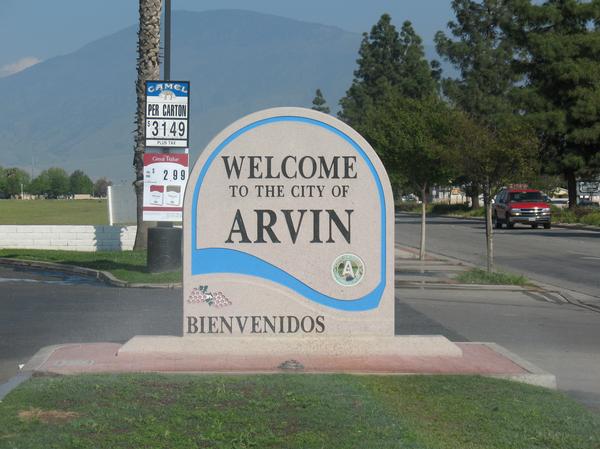
    The prospect of having a voice in the environmental protection of her community is gratifying to Estela Escoto, president of the Committee for a Better Arvin. “We have a lot of respiratory illness,” she said in Spanish. “I’m really pleased, especially for all those who are sick with cancer.”

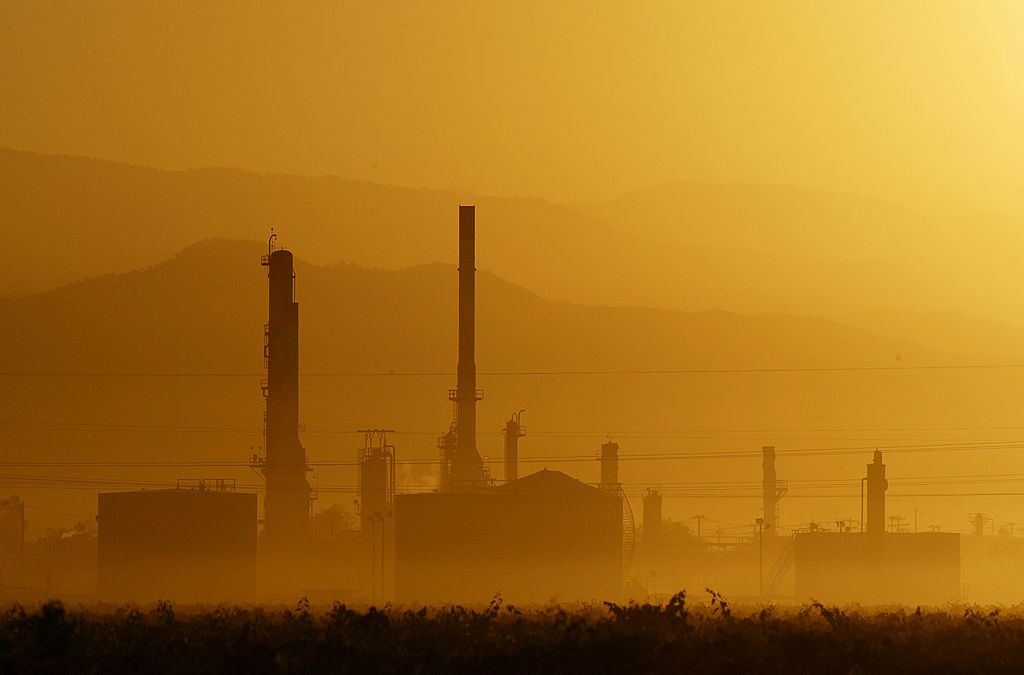
    Arvin and Lamont suffer some of the worst air pollution in a state that routinely tops the list nationally for smog and soot, elevating their candidacy for the special designation above more than 200 other communities in the state. The pollution comes from oil and gas wells, refineries, agriculture, heavily trafficked highways and cities upwind.

    “Oil will be a top priority,” said Byanka Santoyo, a community steering committee member, organizer with the Center on Race, Poverty & the Environment and resident of Arvin. She estimates she has attended more than 100 meetings held for neighboring communities who are two years ahead in the process. Santoyo recently took a meeting outside and panned her phone across the horizon to show officials the mountain landscape she loves, but often cannot see due to the smog.


    “This is huge. If the Legislature and Air Resources Board are serious, then we are going to tackle the issue of oil and gas. But exactly how?”

    — Juan Flores, Central Valley community organizer


    The process for setting community priorities can be grueling, with long hours in night meetings after work. But leaders with the Committee for a Better Arvin and Comité Progreso de Lamont and other groups have been putting in those hours so they can learn how best to use the law when their own turn comes. “We have people ready to work in Arvin and Lamont,” Santoyo said.

    The fact that a community in the heart of California’s oil country will have a say in how money is spent to address pollution is significant. “This is huge,” said Juan Flores, who has been organizing in the Central Valley for eight years on climate, oil and gas. “That is where the community gets excited. If the Legislature and Air Resources Board are serious, then we are going to tackle the issue of oil and gas. But exactly how? Are we going to get setbacks of no less than 2,500 feet, or does it mean we are going to shut them all down? What exactly is it going to look like?”

    Flores is referring to an effort to put greater physical distance between residents and oil and gas wells. This setback issue is playing out statewide, and Arvin has already been at it for years. Oil wells can leak carcinogenic chemicals like benzene, and some wells are powered by internal combustion engines that give off exhaust.

    The Committee for a Better Arvin was originally focused on clean water, pesticides and manure. But in 2014, it shifted to oil and gas after people were sickened by a leaking pipeline. The group has fought the oil industry several times since.

    *   *  *

    The California Independent Petroleum Association says it is not an adversary in these communities. Sabrina Lockhart, vice president for communications, said companies pay millions of dollars in fees each year that are reinvested in programs that advance California’s priorities for clean air and greenhouse gas emissions reductions. “Other AB 617 community monitoring programs in oil and natural gas bearing areas have shown no adverse impacts as a result of responsible production, proving that California’s strictest on the planet environmental protections are working,” she said in a statement.

    Oil in Kern County goes back 150 years, if you count the kerosene and asphalt that preceded the gushers. It is the center of California production, accounting for 70% to 80%. But production has been falling for years, and money for local government with it. Declining assessed value of oil properties means that where oil companies contributed 33% of all property taxes in 2010, that fell to 16% in 2019.


    Central Valley residents expect Kern County to push back against oil industry regulation. When Shafter residents proposed a 2,500 foot distance between people and wells, the county opposed it.


    Despite the production declines, oil companies remain the largest contributors to Kern County discretionary spending, according to the assessor’s office. Chevron was its highest taxpayer in 2019, with $64 million paid on assessed value of $5.6 billion on oil land.

    Now the county is lurching into the energy transition. A 2018 article in the Bakersfield Californian called Kern the Wind Turbine Capital of the World. The county website says it is “quickly becoming the renewable energy center for California.”

    But Valley residents expect the county to push back against regulation of the oil industry. When residents of Shafter advocated for the 2,500 foot distance between people and wells, the county submitted a letter opposing it. The county is currently engaged in a fight over a blanket permit it granted to drill up to 70,000 more wells.

    Arvin and Lamont will not be the first communities located near oil facilities to gain negotiating power under AB 617. Richmond in the Bay Area is a refinery community. And the Wilmington-Carson-West Long Beach area is close to four refineries plus still active oil wells. That community negotiated a 50% reduction in volatile organic compounds — a type of pollution — in 10 years. Residents of Shafter raised concerns about the issue of air pollution from oil production and related processing, but much of their time was spent in a lengthy fight at several levels of government over whether the law protected them from pesticides, which were also a community priority.


    “The entire month of January all you see is smoke” from burning vineyard and orchard waste, says Jesus Alonso, who grieves that he often can’t take his son outside.


    If the aim of AB 617 is to give residents a seat at the table, across from them at that table will be employees of the San Joaquin Valley Air Pollution Control District. They will spend many dozens of hours in meetings together. Jaime Holt, chief of communications for the district, said her agency backs the addition of Arvin and Lamont, “assuming there are resources to support the programs,” as there have been for the three other communities under its jurisdiction — Shafter, Stockton and South Central Fresno. The air agency has received $12 million per community to initially implement the law, plus $35 million to carry out the air pollution actions the community decides on.

    Arvin and Lamont are beset by other kinds of air pollution as well, which might even surpass fossil fuel production and refining among the communities’ priorities. The towns are surrounded by agricultural fields, increasingly almonds. Growers use special machines that grab the trunks of the almond trees at harvest time and sharply vibrate them, sending up clouds of ash, soot and dust — whatever has fallen from the Valley’s blurred sky over the last year.

    Then there is the burning. “The entire month of January all you see is smoke,” Jesus Alonso, a lifelong resident of Lamont said. It grieves him that he often can’t take his son outside, describing a persistent, nauseating stench from the refinery nearby. “What I am most excited about is that our children in the community will be able to spend more time outside without increasing their risk of lung or cardiovascular issues.”


    This story has been updated to reflect the results of Thursday’s Air Resources Board meeting.

    Copyright 2021 Capital & Main
  • New Mexico Families in Oil and Gas ‘Waste Zone’ Seek Help

    New Mexico Families in Oil and Gas ‘Waste Zone’ Seek Help

    Loveland Magazine is one of the 400 news outlets worldwide, with a combined audience of over 2 billion people “Covering Climate Now”, a global journalism initiative committed to bringing more and better coverage to the defining story of our time.

    The initiative, was co-founded by The Nation and Columbia Journalism Review

    Mihaela Manova is “Covering Climate Now” in Loveland, Ohio as an editor for Loveland Magazine

    In today’s Covering Climate Now article written by Jerry Redfern for Capital & Main, Redfern tells the story of a New Mexico family stuck in a “waste zone.”

    “Something just blew up!”

    Cora Gonzales was in her room on Jan. 4 when she heard her father yell. In the evenings he watches TV while sitting by the living room window, and that’s where she found him, looking outside and not at the tube. The rest of the family quickly joined them and they stared through the picture window as flames shot into the night sky from a nearby well pad.

    Co-published by the New Mexico Political Report

    This particular fire was uncommon. That’s because it was quiet. “Usually whenever things blow up,” she says, “we can feel the house shake and also hear a boom.”

    Gonzales and her family live on a 160-acre ranch outside Loving, New Mexico. Their land is dotted with drilling pads and tank batteries that hold and pump oil and natural gas. A couple of times a year, she says, the whole house shakes when one of those pumps or batteries catches fire and goes “boom.”

    “It’s just the normal thing around here … just another day,” Gonzales says. “We look and watch and we get tired of watching it and then go back to our normal program.”


    State regulations require operators to report accidents, what triggered them, and how much oil, gas and water were lost or spilled, but it’s not clear operators always file those reports.


    It’s unclear how common these explosions are here in the Permian Basin in southeastern New Mexico. About 129,000 people live amid more than 20,000 wells actively churning out oil and gas in this panthecake-flat stretch of the Chihuahuan Desert. Despite state regulations that require operators to report accidents, what triggered them, and how much oil, gas and water were lost or spilled, it’s not clear operators always file those reports. Furthermore, the state of New Mexico still lacks comprehensive regulations covering leaks, spills and other accidents in the oil and gas production process. That leaves families like the Gonzaleses scratching their heads.

    *   *   *

    A security camera on the front of the Gonzales home caught the explosion and subsequent fire. In stark black and white it shows the darkness explode into a burning white light. Caza Petroleum of Texas operates the facility and filed an incident report with New Mexico’s Oil Conservation Division (OCD).

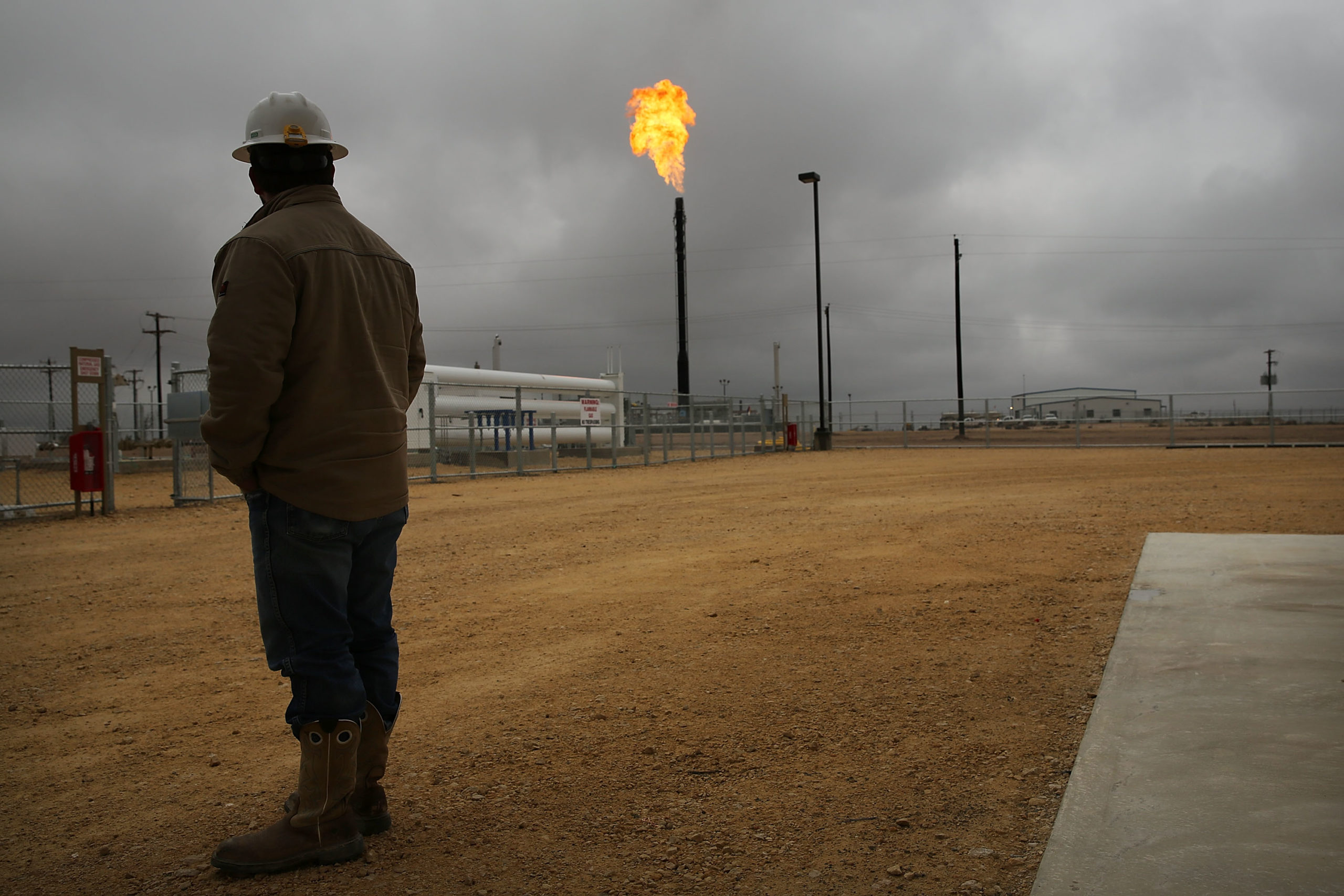
    In a phone call, Tony Sam, vice president of operations at the company, says that he doesn’t know exactly what happened that night or why, but he thinks it was a stack fire – when a flare that burns off natural gas and impurities from a well malfunctions and burns out of control. According to the OCD report, the fire was considered a “major release” since it included a fire or explosion. It also spilled 47 Mcf of natural gas, two barrels of oil and two barrels of produced water. Sam did not respond to follow-up questions about the accident.

    There are approximately 80 large-scale wells, as defined by OCD, within a two-mile radius of the Gonzales family ranch. In the past five years, operators have reported 20 facility fires in the surrounding OCD district, which covers thousands of wells across half of New Mexico’s portion of the Permian Basin. The Jan. 4 fire was the only one listed close to their home, even though Gonzales says they see fires at nearby drilling and tank sites a couple of times a year.


    When a pipe burst one night in 2020, briny ‘produced water’ rained down on the home of Penny Aucoin and Carl Dee George. Their chickens, a dog and a goat were all drenched — and had to be euthanized.


    When they see these fires, she says they call 911. “We usually see the emergency lights head (out) but then they always get lost and turn around” in the local maze of country roads winding across the desert. She tries to find out what happened from the local newspaper or by searching online “but we never hear anything of it.”

    Not only that, but OCD’s regulators may not be hearing about explosions and leaks either.

    It’s up to operators to file emergency reports. Susan Torres, public information officer at OCD, notes that major releases must be reported within 24 hours. If OCD finds out they didn’t, the operator risks daily penalties of several thousand dollars, up to a maximum possible fine of $200,000. Sometimes, she says, first responders notify OCD, but the obligation still rests with the operators.

      *   *   *

    Oilfield work is inherently dangerous. Extraction, heavy construction and transportation all play integral parts in the oil and gas industry, and all rank among the country’s most dangerous jobs according to the U.S. Bureau of Labor Statistics. In March 2020, two men were electrocuted and died while working with a forklift in the rain on a pad site south of Malaga. COG, a subsidiary of Concho Resources – which was recently purchased by ConocoPhillips for $13.3 billion – operates the site.

    But the dangers don’t end at the edge of the drilling pad.

    Throughout the Permian Basin, there are many families like the Gonzaleses, whose homes and ranches are surrounded by drilling operations. Sometimes the pipes carrying gas and oil and contaminated water run right through people’s yards.


    “In the oilfield, it’s your property. But they do as they please.”

    — Cora Gonzales


    Gonzales says that her family no longer runs cattle on their ranch. Instead they charge producers to run pipes across the land. But that brings other problems, like broken water lines from the heavy trenching machinery. And in another instance, a contract company digging a trench was fired mid-job and left behind a “big, gaping hole.”

    “In the oilfield, it’s your property,” she says, “but they do as they please.”

    When oilfield workers enter a wellsite, drilling pad or tank farm, they know and expect the serious risks involved with bringing toxic and highly flammable oil and gas up from the bowels of the earth. But they often don’t live there. Families like the Gonzaleses live among the dangers year after year, and they are often closest when things go wrong.

    In January 2020, for example, a pipe carrying so-called produced water ruptured near Carlsbad in the middle of the night. Produced water is the briny solution that comes up with oil and gas in a well. Heavy in salts, it also has varying amounts of oil and grease, chemicals from the fracking process and, often, naturally occurring radioactive minerals.

    When the pipe burst, that water rained down on the home of Penny Aucoin and Carl Dee George. Their chickens, a dog and a goat were all drenched — and had to be euthanized. The family developed rashes and pustules from the water that soaked them as they tried to save their animals.


    To a certain extent, the state government’s hands are tied by New Mexico’s lack of regulations and a lack of funding.


    WPX, the company that operates the pipeline, eventually dug up and carted off 40 barrels of contaminated soil from the yard.

    Aucoin says she called state officials repeatedly about the incident, but says their response was slow.

    Ironically, the day that Aucoin and her husband announced a settlement with WPX was the same day that the well stack near Cora Gonzales caught fire. And the next day, WPX was bought by Devon Energy – another major producer in the Permian – in a deal worth about$2.6 billion. Aucoin and George wouldn’t say how much they received in their settlement, but they are using the money to move away from the area, to Clovis.

    In a January press conference announcing the family’s settlement with WPX, Aucoin said, “We need our government to stand up to the big oil and gas … There should be someone standing up for the victims.”

    But to a certain extent, the state government’s hands are tied by New Mexico’s lack of regulations and a lack of funding.

    While the New Mexico Environment Department normally regulates and monitors water and air pollution across the state, produced water is different. Maddy Hayden, public information officer at NMED, explains that this type of water, while it is “under the control of owners and operators” like WPX, falls under the purview of the OCD, in accordance with the 2019 Produced Water Act, which clarified jurisdiction between the two agencies.

    She continues, “We recognize the need for enforceable requirements and increased oversight of this industry.”

    Torres at OCD points out that spills in and of themselves are not violations under current OCD rules. The violation occurs if the company doesn’t report the spill. So when the ruptured pipeline sprayed the Aucoin/George home with contaminated water, and WPX filed a report, there was no OCD violation. Torres adds that the authority to levy fines was only reinstated at the end of February 2020.

    This lack of regulatory teeth for the OCD stems from a 2009 New Mexico Supreme Court ruling that sided in favor of oil and gas companies against the state, saying the division doesn’t have the authority to assess penalties and sanctions against companies without backing legislation.

    In light of these gaps in spill regulation, state Sen. Antoinette Sedillo López (D-Albuquerque) has introduced Senate Bill 86, which adds new prohibitions and penalties for spills under the state Oil and Gas Act. It provides a penalty schedule for spills of all types, requires producers to track produced water and disclose the chemicals found in it, creates a data collection fund and controls the use of produced water outside the oil field, among many other proposals. Torres says the agency is analyzing the bill, but that “additional regulations could be difficult to enforce effectively without additional funding tied to the mandate.”


    “We’re in a battle with our country fields and our nature. And the oilfields are winning.”

    — Ervie Ornelas


    When she heard of the accident at the Aucoin/George residence, Sedillo López said, “See? I told you. There is no regulation down there and this is the kind of thing that happens.”

    According to Sedillo López, a fellow legislator who owns an oil and gas company told her the chemicals used in fracking were no different from the bottles of chemicals under her sink. “And I said, you know, ‘Would you drink that stuff?’”

    When Sedillo López introduced a bill to pause fracking so the state could study its effects and possible legislation, “The oil and gas industry just went crazy,” she says. But she says she also received calls at her office from people across the Permian Basin telling her stories of explosions, smoke, spills and smells. They wanted her to know what they had seen, and “It was just stunning,” she says.

    “In every single case I said, ‘Would you be willing to testify on behalf of my bills?’ and in every single case they said, ‘Absolutely not.’” Sedillo López says they were afraid of angering the oil and gas companies. “They’re so scared.”

    Sedillo López, whose district in Albuquerque is many hours’ drive from the Permian, says legislators from the basin have asked why she cares. She says a fellow legislator told her the area is “already a waste. All we can do is make sure it just doesn’t spread.”

    She says, “We should not have any corner of the planet that is a waste zone.”

    *   *   *

    Ervie Ornelas grew up on the outskirts of Loving and has lived in the Permian Basin for all his 49 years. When he was a kid, he would run around the sage fields in the wide-open vistas surrounding his home, hunting rabbits in the gullies, watching for burrowing owls and catching fish in a nearby pond.

    Then in the 1990s, oil wells started popping up. The rabbits and owls slowly disappeared. The pond was fenced in and a “KEEP OUT” sign posted. All of the open vistas were rimmed with machinery.

    “We’re in a battle with our country fields and our nature,” he says today. “And the oilfields are winning.”

    Ornelas says he understands people need to make a living, and oilfield work pays good money. But “Loving just isn’t Loving anymore.”

    These days he works at a children’s day care in Carlsbad and, until November, he would visit his mother at his childhood home on weekends.

    From his mother’s place, he can see four tank farms. “And from the very beginning you can smell it from the front yard,” he says. “My mother used to get dizzy, dizzy with the smells.” A search of the online OCD Oil and Gas Map shows 15 wells within a mile of the house.

    Ornelas’ mother lived in that house until she died of COVID-19 in November. Pervasive air pollution – the kind produced by the oil and gas industry and monitored in the Permian – is tied to increased risks of dying from COVID-19. A peer-reviewed study published in October estimates that “about 15% of deaths worldwide from COVID-19 could be attributed to long-term exposure to air pollution.” Hearing that “made my heart drop just thinking it could have added more to her problem,” he says.

    Just before his mother died, Ornelas’ 24-year-old son Zach died from brain cancer. Zach was diagnosed just after graduating from high school, and he fought off the disease for six years before succumbing in October.

    For the last three months of his life, Ervie and his wife wouldn’t let him outside.

    “My wife is a registered nurse, and she was afraid that the (air pollution) would mess up his breathing.”

      *   *   *

    Pastor Nick King moved to Carlsbad eight years ago to preach at the Mennonite Church. In his spare time, he looks at his corner of the state from space, courtesy of Google Maps. “Miles and miles and miles,” he says, “all you see is oil wells all over the place.”

    “That’s how we care for the Earth God’s given us.”

    King sees the spread of oil and gas wells and the problems associated with them as the antithesis of the Christian beliefs trumpeted by people in the area. In fact, he calls the thinking “a kind of religious blasphemy.”

    “We don’t worry about the environment,” he says. “We don’t worry about the future. If it’s money for me – now – then we do it.”

    For his part, Ornelas still roams the country around his childhood home. Now, instead of hunting and fishing, he’s taking photos, trying to capture on silicon what remains of his memories made outdoors. But that isn’t going so well, either.

    “When we were kids, we’d see maybe one or two oilfields,” he says. “Now, It’s like a blanket of them. And that’s what hurts.

    “That’s what hurts.”


    Copyright 2021 Capital & Main