by Cindy Kessler
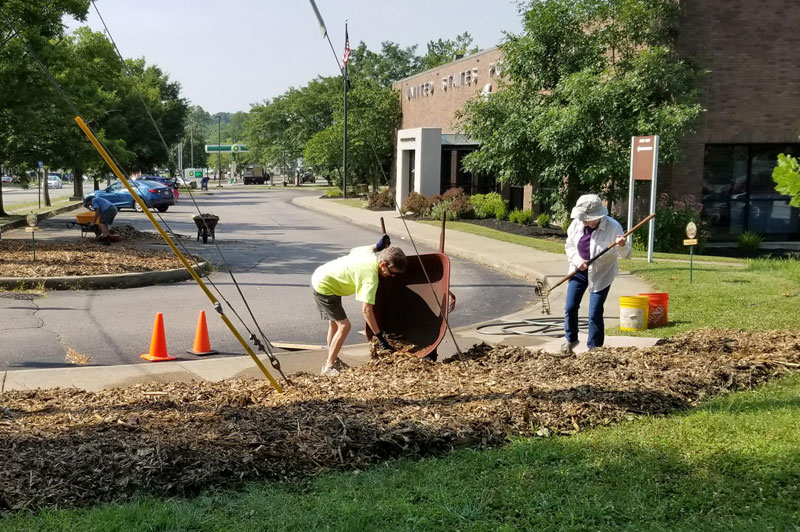
We’re laying the groundwork for pollinator gardens! Next spring these mulched areas will be planted with native flower seedlings that will benefit pollinators and beautify the community.
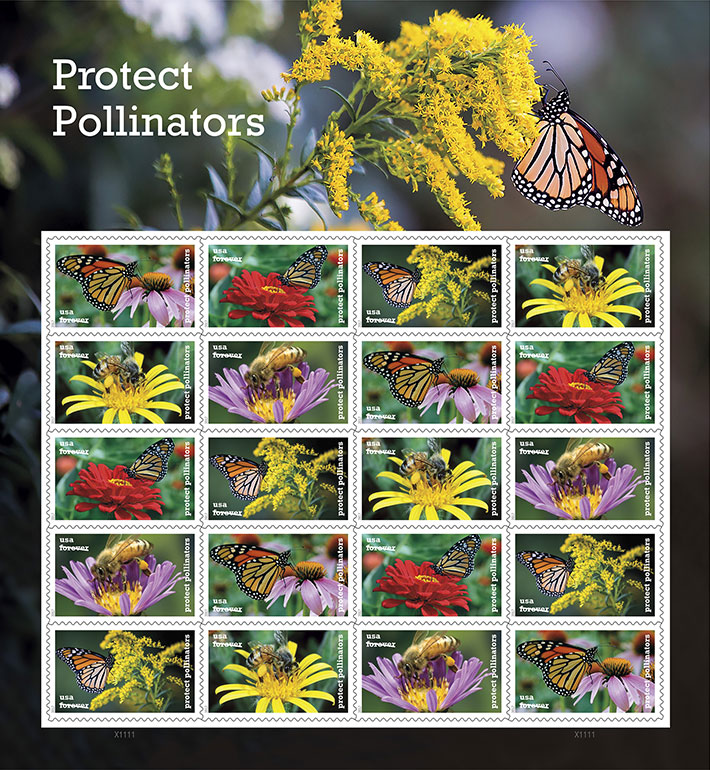
In 2017, the U.S. Postal Service recognized the beauty and importance of pollinators with their Protect Pollinators stamps. Now, with the help of volunteers, the Loveland Post Office is putting that concept into action by turning swaths of grass, with their constant need for mowing, into flower gardens and reforested meadow areas.
Natural areas provide many benefits over mowed grass. The Loveland Post Office will see lower labor and fuel costs, while also reducing their carbon footprint. The gardens will provide food and habitat for pollinators (to whom we owe our very existence). And the community gets to enjoy the beauty of colorful flowers every time they drive past the Post Office. Now that’s an all-round Win-Win!
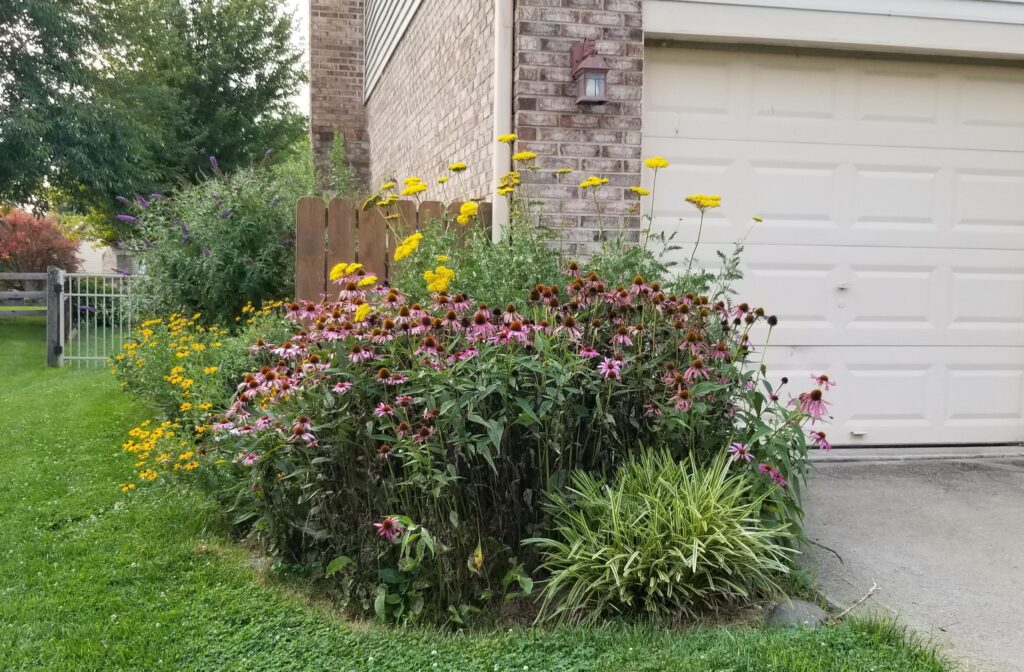
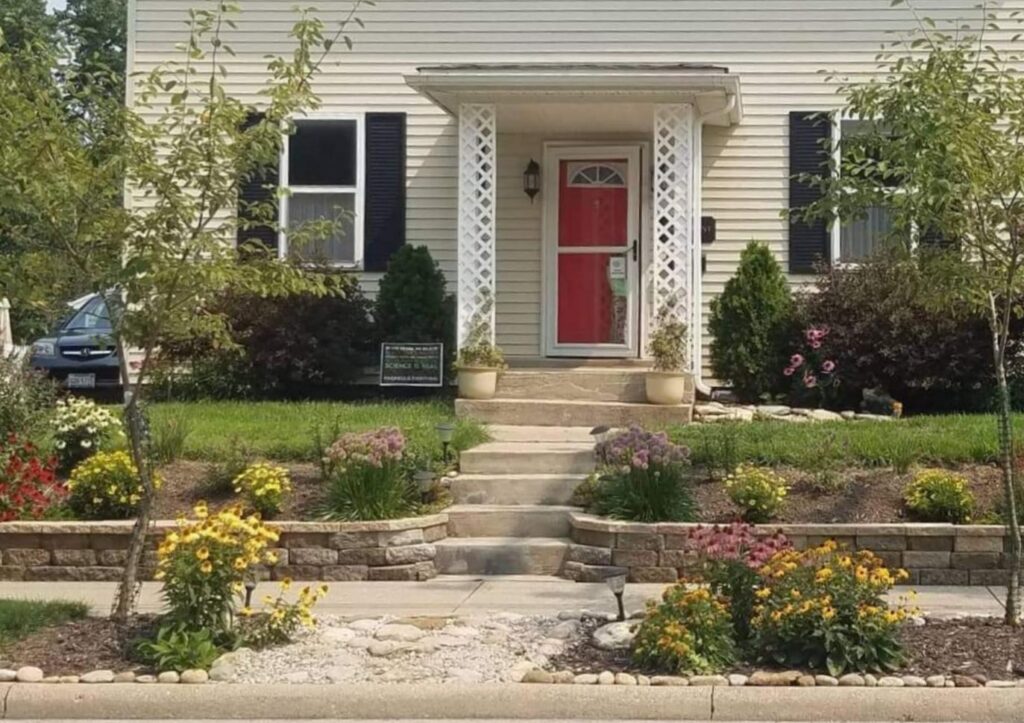
Small pollinator gardens provide much-needed habitat islands.
Did you know that insects pollinate 80% of the world’s plants, including 90 different food crops? One out of every 3 or 4 bites of food we eat is pollinated by an assortment of bees, beetles, moths, wasps, and butterflies. WOW — These small creatures, so often taken for granted, are vitally important to human survival! Unfortunately, many pollinators are threatened for a variety of reasons: habitat loss, fragmented habitat (with huge gaps between habitat ‘islands’), non-native plants that fail to serve pollinator needs, and (worst of all) the use of pesticides and herbicides on our lawns and landscapes. Pollinators need our help, and the Loveland Post Office is stepping up-to-the-plate.
What about those “Naturalized Area” signs you see? They identify areas where young trees and shrubs will be planted this fall. Initially, those areas will resemble meadows, but once the plants mature they will become a natural woodland. Trees are crucial for pollinator survival because they bloom so early in the spring, long before summer flowers ‘break bud’. Have you ever noticed reddish clusters on the bare branches of a maple tree in early spring? Those are tiny flowers that are buzzing with bees — if only you could get close enough to see them.
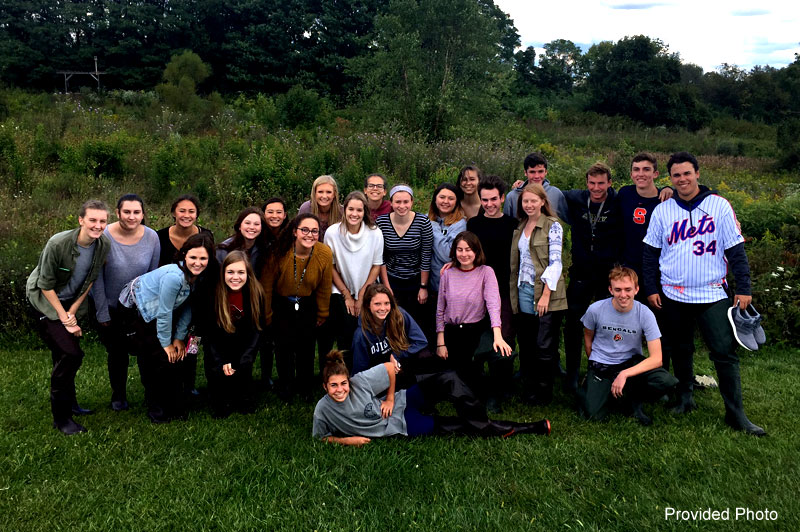
This pollinator garden project is a unique collaboration between the Post Office, community volunteers, and Loveland High School Transition Program students. Community volunteers are currently prepping the garden beds by spreading a thick layer of mulch over cardboard, to eliminate the grass without using herbicides. Seeds are being gathered from locally grown, native flowers, to ensure those seeds are pesticide-free. (Did you know commercially available seeds are often coated with pesticides that can make their way into the nectar which can sicken, or even kill, pollinators?) The high school students will grow the flowers from the seeds being collected now, and the flower seedlings will be planted at the Post Office next spring. This terrific partnership is a wonderful example of Loveland’s abundant community spirit!
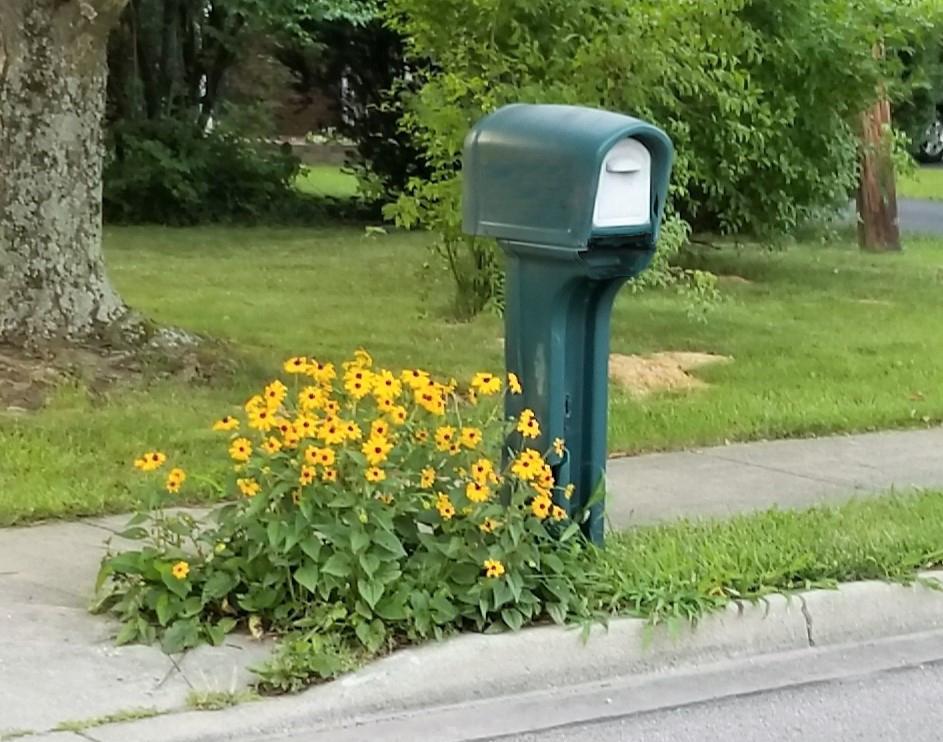
The Post Office gardens and naturalized areas will provide a much-needed pollinator habitat, but to survive and thrive pollinators require many such ‘habitat islands’ scattered widely across a community. So, why not create your own pollinator garden? Whether large or small, every garden has a huge impact on the well-being of our pollinators. Just be sure to buy native plants that are organically grown, avoid the use of pesticides and herbicides, and include a few old logs, or attractive pieces of driftwood, for nesting purposes (yes, bees need nesting places, too).
If you have any questions, comments, or want to get involved, send an email to Cindy Kessler at ckessler@fuse.net.
Happy (Pollinator) Gardening!