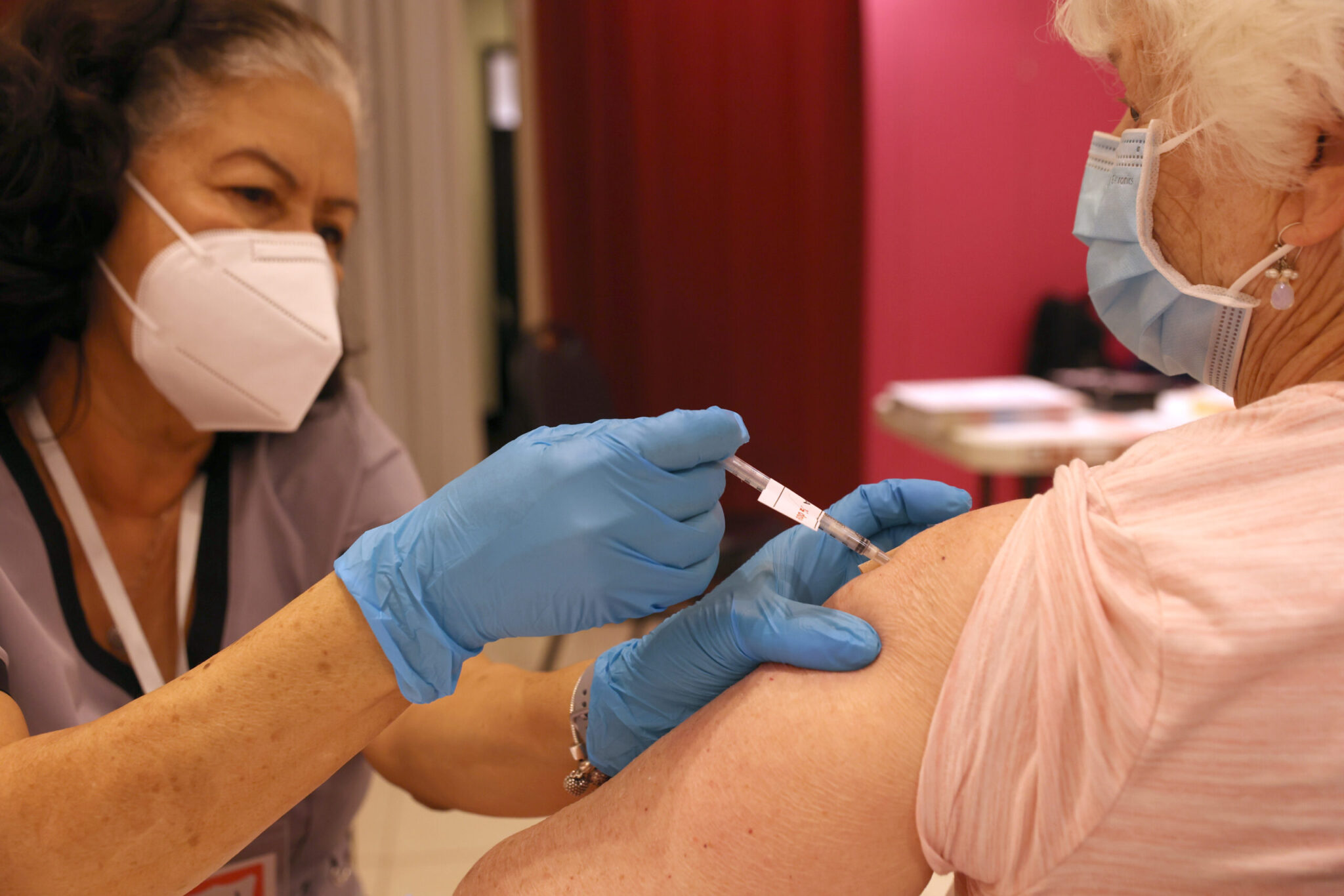
WASHINGTON — The U.S. Food and Drug Administration on Monday approved the latest round of COVID-19 boosters, as public health officials brace for another cold and flu season.
An advisory panel at the Centers for Disease Control and Prevention is scheduled to vote on recommendations Tuesday, the final step in the process before people will be able to get the shots.
“Vaccination remains critical to public health and continued protection against serious consequences of COVID-19, including hospitalization and death,” said Peter Marks, director of the FDA’s Center for Biologics Evaluation and Research.
“The public can be assured that these updated vaccines have met the agency’s rigorous scientific standards for safety, effectiveness, and manufacturing quality,” Marks added. “We very much encourage those who are eligible to consider getting vaccinated.”
The updated COVID-19 booster shots are made by Moderna and Pfizer.
The FDA said in a statement that people 5 and older can get one dose of the updated mRNA COVID-19 vaccine as long as it’s been at least two months since their last dose of the vaccine.
Vaccinated children between six months and 4 years old can get one or two doses of the updated vaccine. Unvaccinated children in the same age range are eligible for three doses of the updated Pfizer-BioNTech vaccine or two doses of the updated Moderna shot.
“The updated vaccines are expected to provide good protection against COVID-19 from the currently circulating variants,” the FDA said in a statement. “Barring the emergence of a markedly more virulent variant, the FDA anticipates that the composition of COVID-19 vaccines may need to be updated annually, as is done for the seasonal influenza vaccine.”
Hospitalizations and deaths from COVID-19 have been trending upward in recent weeks, though officials aren’t expressing alarm at the rise in severe illness.
The number of hospitalizations has risen by nearly 16% while deaths increased by almost 11%, according to data from the CDC.
The percentage of Americans getting COVID-19 shots has steadily decreased since the first round of vaccinations rolled out in the last weeks of 2020.
More than 81% of the country got at least one dose of the original vaccine, but 70% completed the primary two-dose series. Just 17% of the U.S. population decided to get the bivalent vaccine that was approved last year, according to CDC data.
JENNIFER SHUTT
Jennifer covers the nation’s capital as a senior reporter for States Newsroom. Her coverage areas include congressional policy, politics and legal challenges with a focus on health care, unemployment, housing and aid to families.
Yesterday, the U.S. Food and Drug Administration amended the emergency use authorizations (EUAs) for both the Pfizer-BioNTech COVID-19 Vaccine and the Moderna COVID-19 Vaccine to allow for the use of an additional dose in certain immunocompromised individuals, specifically, solid organ transplant recipients or those who are diagnosed with conditions that are considered to have an equivalent level of immunocompromise. The Centers for Disease Control and Prevention’s Advisory Committee on Immunization Practices is scheduled to meet Friday to discuss further clinical recommendations regarding immunocompromised individuals. Today’s action does not apply to people who are not immunocompromised.
Read more from the announcement…
“The country has entered yet another wave of the COVID-19 pandemic, and the FDA is especially cognizant that immunocompromised people are particularly at risk for severe disease. After a thorough review of the available data, the FDA determined that this small, vulnerable group may benefit from a third dose of the Pfizer-BioNTech or Moderna Vaccines,” said Acting FDA Commissioner Janet Woodcock, M.D. “Today’s action allows doctors to boost immunity in certain immunocompromised individuals who need extra protection from COVID-19. As we’ve previously stated, other individuals who are fully vaccinated are adequately protected and do not need an additional dose of COVID-19 vaccine at this time. The FDA is actively engaged in a science-based, rigorous process with our federal partners to consider whether an additional dose may be needed in the future.”
People who are immunocompromised in a manner similar to those who have undergone solid organ transplantation have a reduced ability to fight infections and other diseases, and they are especially vulnerable to infections, including COVID-19. The FDA evaluated information on the use of a third dose of the Pfizer-BioNTech or Moderna Vaccines in these individuals and determined that the administration of third vaccine doses may increase protection in this population. These patients should be counseled to maintain physical precautions to help prevent COVID-19. In addition, close contacts of immunocompromised persons should get vaccinated, as appropriate for their health status, to provide increased protection to their loved ones.
It is recommended that immunocompromised individuals discuss monoclonal antibody treatment options with their health care provider should they contract or be exposed to COVID-19. The FDA has authorized monoclonal antibody treatments for emergency use during this public health emergency for adults and pediatric patients (ages 12 and older weighing at least 40 kilograms or about 88 pounds) with positive results of direct SARS-CoV-2 viral testing, and who are at high risk for progressing to severe COVID-19 and/or hospitalization. One authorized product includes use for preventative (prophylaxis) treatment after being exposed to SARS-CoV-2; however, this product is not a substitute for vaccination.
The Pfizer-BioNTech COVID-19 Vaccine is currently authorized for emergency use in individuals ages 12 and older, and the Moderna COVID-19 Vaccine is authorized for emergency use in individuals ages 18 and older. Both vaccines are administered as a series of two shots: the Pfizer-BioNTech COVID-19 Vaccine is administered three weeks apart, and the Moderna COVID-19 Vaccine is administered one month apart. The authorizations for these vaccines have been amended to allow for an additional, or third, dose to be administered at least 28 days following the two-dose regimen of the same vaccine to individuals 18 years of age or older (ages 12 or older for Pfizer-BioNTech) who have undergone solid organ transplantation, or who are diagnosed with conditions that are considered to have an equivalent level of immunocompromise.
The EUA amendments for the Pfizer-BioNTech COVID-19 Vaccine and the Moderna COVID-19 Vaccine were issued to Pfizer Inc. and ModernaTX Inc., respectively.
The Centers for Disease Control issued new guidance Tuesday for back to school protocol.
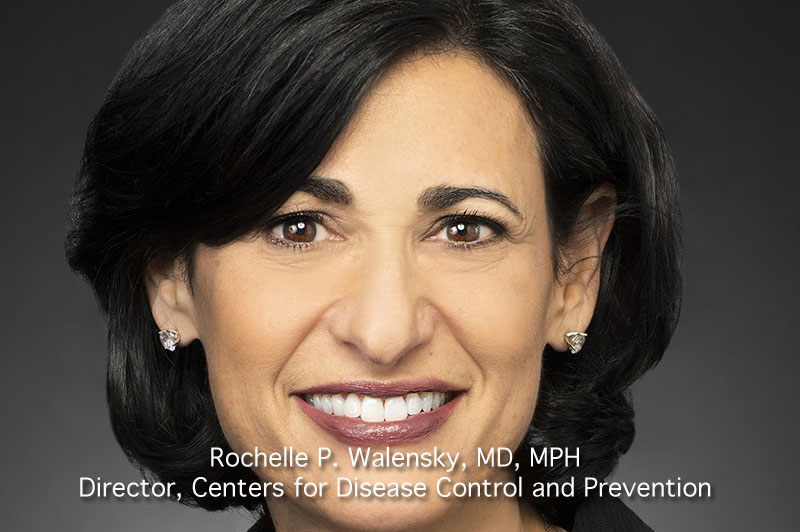
Rochelle P. Walensky, MD, MPH, Director, Centers for Disease Control and Prevention said in a news conference that new scientific data from recent outbreak investigations show the Delta Covid-19 variation is uniquely, differently from past strains of the virus. Even those who are fully vaccinated may become contagious and spread the Delta variant to others.
Walensky recommended:
1) Everyone should get vaccinated and continue masking until fully vaccinated. In high transmission areas of the country, vaccinated individuals should wear masks indoors. This includes schools.
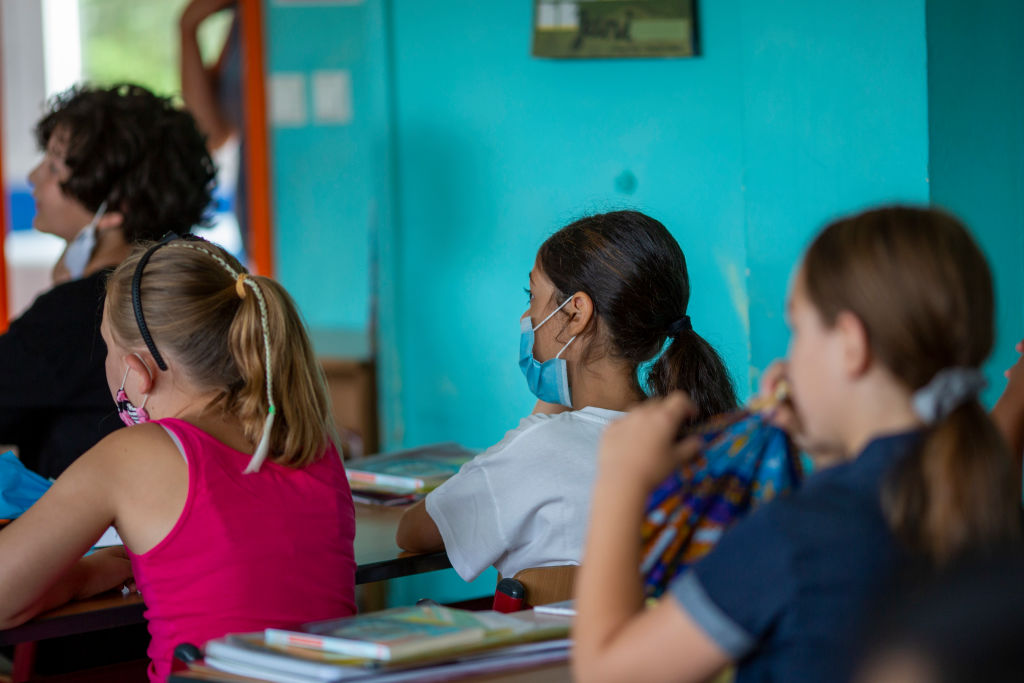
2) Everyone in K-12 schools wears a mask indoors including students, teachers, staff, and visitors regardless of vaccination status.
3) Children should return to full-time/in-person learning in the Fall with proper prevention strategies in place.
4) Community leaders should encourage vaccination and universal masking to prevent further outbreaks in areas of substantial and high transmission.
Washington, DC – The Centers for Disease Control and Prevention on Friday released updated guidance to provide educators a science-based plan for reopening K-12 schools.
The agency said it cannot force schools to reopen but can only stress that steps such as wearing masks and physical distancing of at least six feet are key to mitigating the spread of coronavirus.
CDC Director Dr. Rochelle Walensky
“CDC is not mandating that schools reopen,” CDC Director Dr. Rochelle Walensky said during a briefing with reporters.
Walensky added that educators should be considered front-line workers in any vaccine rollout. Teachers unions have made similar demands before returning to the classroom.
“We strongly encourage states to prioritize teachers and other school staff to receive vaccinations,” she said.
Walensky said that the agency found that in-school learning can take place when proper measures are taken such as mask wearing and social distancing. The agency also said that frequent hand washing, proper cleaning of classroom surfaces and ventilation, along with contact tracing and available rapid testing, are all steps that schools can take to limit outbreaks.
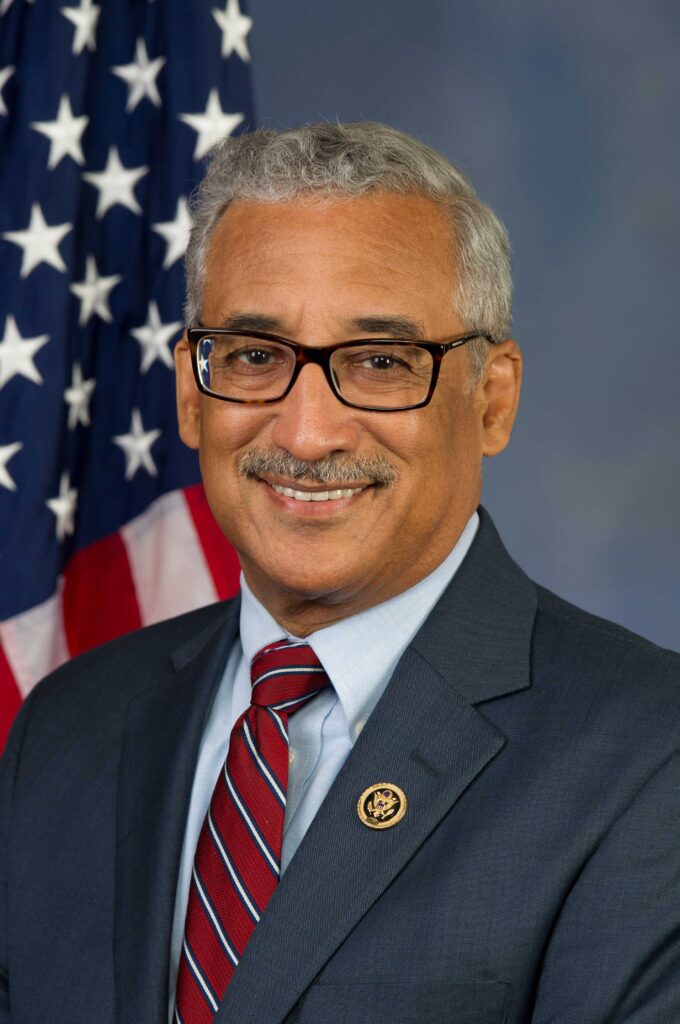
House Education and Labor Chairman Bobby Scott (D-Va.)
House Education and Labor Chairman Bobby Scott (D-Va.) said in a statement that in order for schools to implement the CDC guidance, they need funding from the Biden administration’s $1.9 trillion coronavirus relief package. Congress is working to pass the plan and Scott’s committee has included $130 billion for schools to safely reopen.
“Maintaining physical distancing, updating and repairing ventilation systems, purchasing personal protective equipment, and other important safety measures all cost money that schools do not have,” Scott said. “This is particularly true for schools in low-income areas that lacked adequate funding well before the pandemic.”
Similarly, the Department of Education released a handbook to coincide with the guidance released by the CDC.
Walensky said that most COVID-19 clusters that occurred in school settings occurred because there was a breach in wearing a mask.
The CDC stressed that the safest way for schools to reopen is for there to be a low level of coronavirus infection in the community. The guidance uses a color-coding system to recommend if schools should reopen or continue remote learning.
Schools are recommended to open if they are in blue areas, which means there are low transmission rates of the virus, and yellow areas, which means there is moderate transmission.
If the community is in an orange zone, then the CDC recommends that schools implement a hybrid model or reduce attendance. And a red zone indicates that schools should consider virtual learning for middle and high school students.
In red zones, elementary schools can continue with a hybrid learning model, the CDC said.
The recommendations follow President Joe Biden’s efforts to get K-8 students back to in-person learning within his administration’s first 100 days.
In a statement, Biden acknowledged his ambitious goal of reopening K-8 schools and said those schools will need funding to follow the guidance laid out by the CDC.
“To meet these guidelines, some schools will need more teachers and support staff to ensure smaller class sizes, more buses and bus drivers to transport our kids safely, more spaces to conduct in-person instruction, and more protective equipment, school cleaning services, and physical alterations to reduce the risk of spread of the virus,” he said.
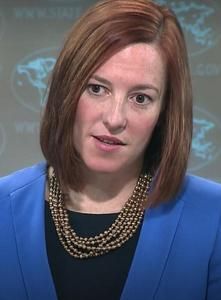
White House Press Secretary Jen Psaki
At a Friday briefing, White House Press Secretary Jen Psaki said that Biden’s nominee to lead the Education Department will work to reopen schools. Miguel Cardona, a longtime educator is waiting for a full Senate vote for his confirmation.
“When Secretary Cardona is confirmed, you know, this will be his top priority and we will leave it to him and his team at the Department of Education, working in close partnership with the CDC and others, to determine how quickly and efficiently” schools can be reopened, Psaki said.
American Federation of Teachers President Randi Weingarten said in a statement that she felt confident the CDC’s guidance will help schools safely reopen.
“For the first time since the start of this pandemic, we have a rigorous road map, based on science, that our members can use to fight for a safe reopening,” she said.
“Students and teachers exposed to a COVID-positive person in school are no longer required to quarantine as long as the exposure occurred in a classroom setting and all students/teachers were wearing masks and following other appropriate protocols.”
by David Miller
Loveland, Ohio – Governor Mike DeWine announced Wednesday that Ohio is changing its guidance regarding quarantines following an in-classroom exposure in K-12 schools. The Ohio Department of Health said, “Moving forward, students and teachers exposed to a COVID-positive person in school are no longer required to quarantine as long as the exposure occurred in a classroom setting and all students/teachers were wearing masks and following other appropriate protocols.”
Loveland Magazine has reached out to Loveland Superintendent, Dr. Amy Crouse and the District health team to inquire whether the District will adopt DeWine’s newest protocol, however, neither are available for immediate response. (Thank you for your email. Our offices are closed through Sunday, January 3, 2021. I am out of the office with limited access to email.)
Loveland school students return to the classroom on Monday, January 4.
“This evaluation confirms for us that Ohio’s classrooms are a safe place for our students and that the commitment our schools have made to keeping kids safe in the classroom is working,” said DeWine.
Schools should continue to require quarantines for exposed students in situations where masking and distancing protocols were not followed. The updated quarantine guidance does not apply to after-school activities, including sports, according to the new guidelines.
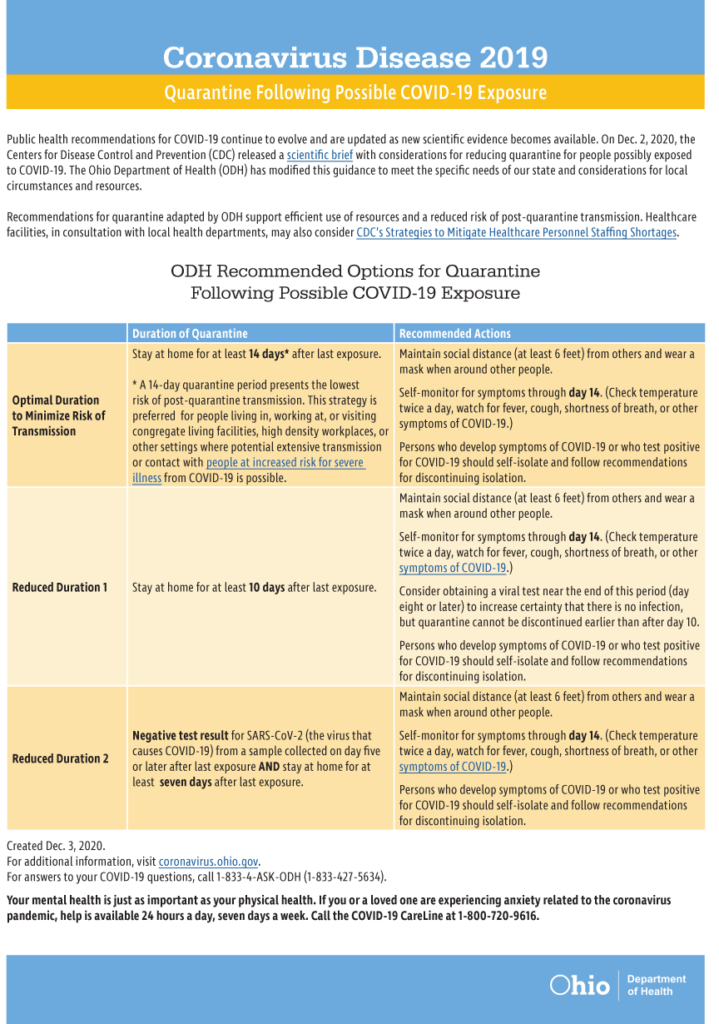
The Centers for Disease Control and Prevention announced in early December new quarantine guidelines for people who were exposed to coronavirus, reducing the length of time from 14 days to 10 days without symptoms or seven days with no symptoms and a negative test. The Loveland School District announced on December 4 that they would implement these less stringent quarantine requirements.
Meanwhile: The Associated Press reports that California has the nation’s 2nd confirmed case of a new and apparently more contagious variant of the coronavirus. Read on…
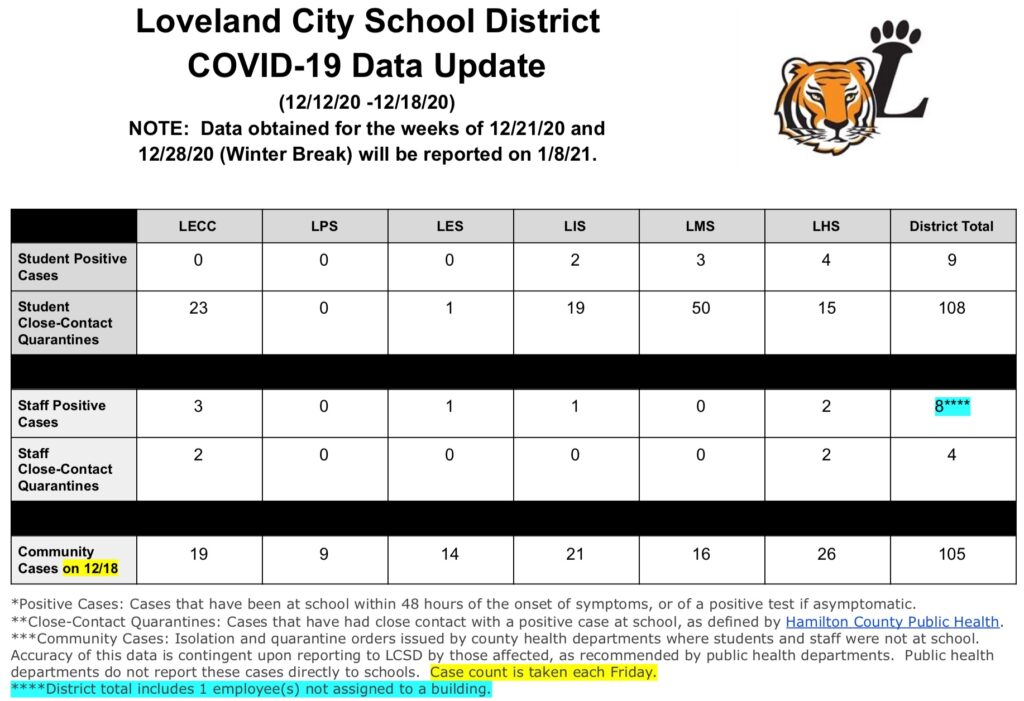
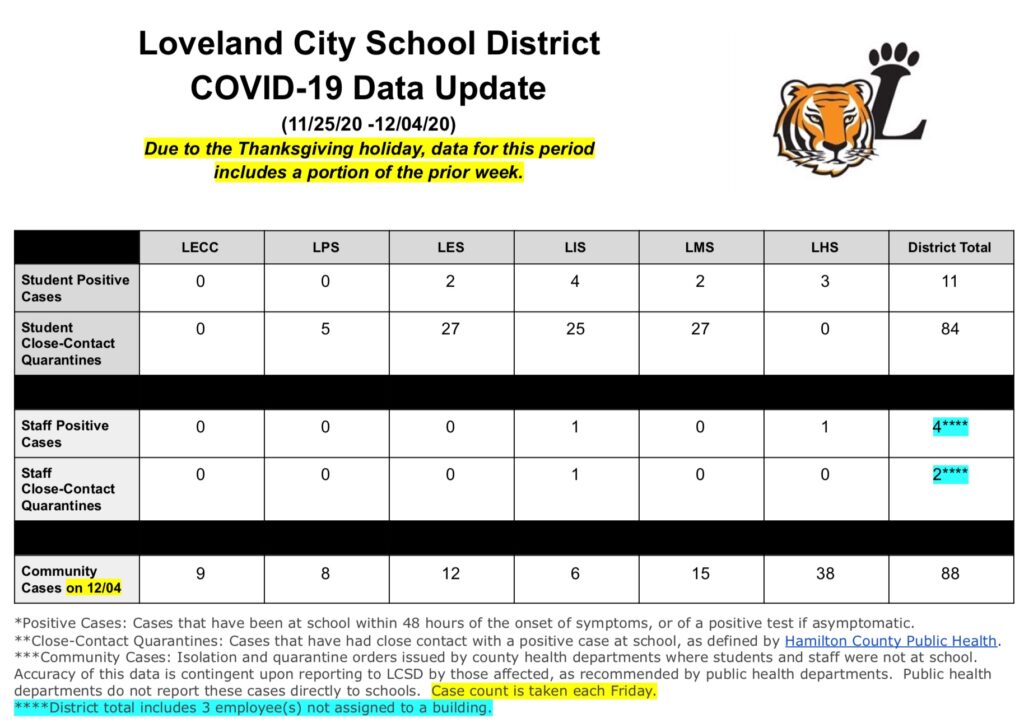
Here is the last Covid 19 Dashboard that was published by the District (12/12/20 -12/18/20) right after classes dismissed for Winter Break:
Because of the data we now have, we’re changing our guidance and are no longer recommending that students who have been exposed to another COVID+ student quarantine – as long as all students have been wearing masks and the exposure took place in a classroom setting.
The Ohio Department of Health is extending the 10 PM to 5 AM statewide curfew for another three weeks until January 23. Governor Mike DeWine said, “This is b/c we don’t yet know what effect the holidays may have on our hospitals and health care systems, so we must continue to be cautious.”
As a reminder, the curfew does not apply to those:
✅ going to and from work ✅ who have an emergency or need medical care
The curfew is not intended to stop anyone from getting groceries/going to the pharmacy.
Picking up carry-out or a drive-thru meal and ordering for delivery is permitted, but serving food and drink within an establishment must cease at 10:00 p.m.
Loveland District says staff absences may cause last-minute notice of school closing
Loveland, Ohio – In a news release issued this afternoon, the Loveland School District said that during the next few weeks, some school buildings may have to temporarily switch to remote learning because of staff absences.
The District said in the release, “This year it has become challenging to find substitute teachers, and we may run short on staffing due to COVID-19 cases or quarantines.” If this happens, a switch to remote learning will happen on a school-by-school basis. The District said they are trying to plan ahead so that families can plan ahead, however, these changes may happen as late as the morning of scheduled attendance.
They suggest that parents and caregivers should begin considering how they might handle a possible late-notice class cancelation.
The District said they will notify families as “quickly as possible” about closings through their alert notification system, the website, Facebook (Loveland City Schools), and Twitter (@lovelandtigers) pages.
CDC still recommends 14 days however District adopts a less restrictive “acceptable alternative” quarantine period
The Centers for Disease Control and Prevention (CDC) announced a change in guidance for quarantines. The new guidance shortens the quarantine period for someone who has been exposed to a positive COVID-19 case. The Ohio Department of Health has also adopted the new CDC guidelines, as has Hamilton County Public Health.
The District said in the release that the new less restrictive guideline notification came to them late today. They will begin implementing those directives and will personally notify families affected.
The Centers for Disease Control and Prevention announced new quarantine guidelines for people who were exposed to coronavirus, reducing the length of time from 14 days to 10 days without symptoms or seven days with no symptoms and a negative test. Officials said the shorter time period is intended to encourage more people to quarantine.
Ohio Department of Health Chief Medical Officer Dr. Bruce Vanderhoff said today, “Staying home for 14 days after contact is still the safest way to limit possible spread of COVID-19. We continue to recommend this time period for people in congregate living facilities, such as nursing homes; in workplaces with a large number of employees; and in other settings in which COVID-19 could spread extensively.”
Dr. Andy Thomas, chief clinical officer at The Ohio State University Wexner Medical Center, yesterday warned that “Ohio is not yet seeing the impact of gatherings that took place over Thanksgiving because hospitalizations are a lagging indicator. Symptoms generally develop within 10 days of transmission, and hospitalizations typically occur a week after diagnosis.”
According to CBS News the CDC rationale for the less restrictive guidelines is:
“Reducing the length of quarantine may encourage more people to do so, especially when they may not be able to work during quarantine time,” CDC’s COVID-19 Incident Manager, Dr. Henry Walke, told reporters on a call Wednesday. He said the agency still recommends 14 days, but is now offering two “acceptable alternative quarantine periods.”
According to the District, “We are pleased with these new recommendations from an educational perspective. Our goal is to keep students learning in our school buildings and shortening the required quarantine time is key.”
This is the District’s COVID 19 Dashboard published today:
On 12/03/20, the district was notified that a non-teaching, non-school-based staff member tested positive for COVID-19. This staff member was last at work on 11/30/20.
On 12/03/20, the district was notified that a student at Loveland Intermediate School tested positive for COVID-19. This student was last at school on 11/18/20.
On 12/03/20, the district was notified that a student at Loveland Middle School tested positive for COVID-19. This student was last at school on 11/18/20.
On 12/04/20, the district was notified that a student at Loveland Elementary School tested positive for COVID-19. This student was last at school on 11/30/20.
On 12/04/20, the district was notified that a student at Loveland Intermediate School tested positive for COVID-19. This student was last at school on 12/02/20.
On 12/03/20, the district was notified that a student at Loveland Intermediate School tested positive for COVID-19. This student was last at school on 12/01/20.
On 12/02/20, the district was notified that a teaching staff member at Loveland Intermediate School tested positive for COVID-19. This staff member was last at school on 11/24/20. No close contacts were identified for this confirmed case.
On 12/02/20, the district was notified that a student at Loveland Elementary School tested positive for COVID-19. This student was last at school on 11/30/20.
On 12/1/20, the district was notified that a non-teaching staff member at Loveland High School tested positive for COVID-19. This staff member was last at work on 11/18/20. No close contacts were identified for this confirmed case.
Advocates from the Coalition on Homelessness and Housing in Ohio are advising tenants facing eviction to act immediately to get protection under the Centers for Disease Control and Prevention’s new eviction moratorium.
The CDC recently issued the first ever nationwide order temporarily banning the eviction of tenants who are unable to pay rent in order to help prevent the spread of coronavirus, a news release this week from COHHIO said. While the moratorium applies to many cases where people have fallen behind on their rent payments, tenants must follow specific steps in order to qualify, it emphasized.
“This so-called moratorium is not automatic. Tenants need to submit a declaration demonstrating that they are eligible for the moratorium to cover them,” said COHHIO Executive Director Bill Faith. “If you’re behind on rent, don’t wait. See if local emergency rental assistance is available in your community, and file a declaration to make sure you don’t get evicted during this public health crisis.”
Tenants earning less $99,000/year, or $198,000/year for joint tax filers, who are unable to pay full or partial rent due to a loss of income or extraordinary medical expenses are eligible for the CDC’s eviction moratorium, the release said. However, they must file a form certifying that they have tried to obtain government assistance to pay rent and will likely have to move in with another household or become homeless if they are evicted, it noted.
Diane Yentel, president and CEO of the National Low Income Housing Coalition, noted that tenants still have to pay rent each month and could still get evicted when the order expires.
“The very least the government ought to do in the middle of a global pandemic is assure each of us that we’re not going to lose our homes,” she said. “The CDC moratorium keeps people in their homes today, but the rent is still due and the debt that renters owe will build each month until the moratorium expires on Dec. 31. And at that point all the back rent and late fees will be due.”
The release also noted that several communities have allocated funds to help at-risk residents pay the rent during this crisis, but assistance is limited and not available in many areas.
“Furthermore, demand for emergency rental assistance will soon outstrip local resources as the pandemic-induced recession continues into the winter,” the release said, noting that neither U.S. Congress nor the Ohio General Assembly have created an emergency rental assistance program.
Carlie Boos, executive director of the Affordable Housing Alliance of Central Ohio, said the CDC moratorium highlights the need for the state and federal governments to provide emergency rental assistance.
“Allowing tenants to fall deeper and deeper into debt not only ruins Ohioans’ future – it puts the entire housing market at risk,” she said. “Our state and federal leaders must prioritize emergency rental assistance to stabilize both vulnerable families and our vulnerable economy.”
The release advised that tenants who are behind on rent should immediately seek rental assistance and send a declaration form to their landlord, and the court if they have already received an eviction notice.
If you need legal help fighting an eviction, contact your local legal aid. For a directory of legal aid organizations in your community, go to: http://ohiolegalaidalliance.org/
Columbus, Ohio – Lance D. Himes, interim director of the Ohio Department of Health (ODH), is calling on Ohio teens and young adults to take precautions to protect themselves and others against the dangers of COVID-19.
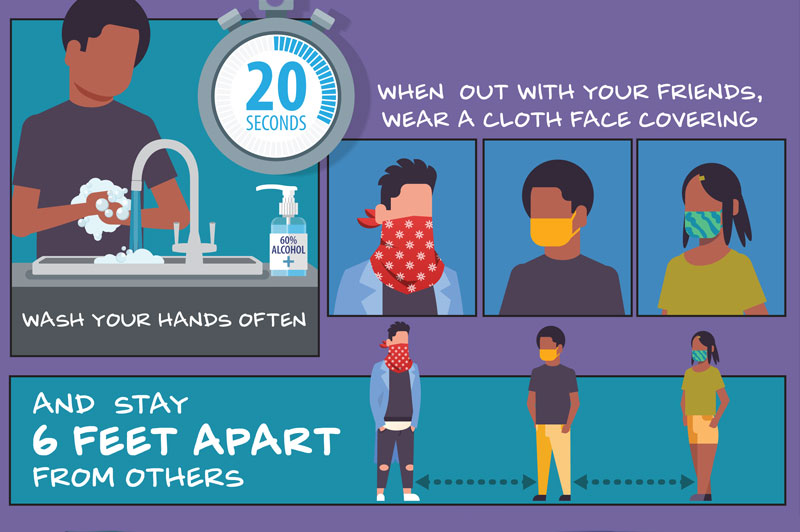
Himes said it is essential that young people stay home and away from others if they are sick, adhere to 6-foot social distancing, and wear facial coverings when they go out. Avoid gathering in large crowds, huddling in groups, and sharing hugs or drinks.
“Young people have given up a great deal since this pandemic first hit and are eager to get back to normal,” Himes said. “I thank them for their sacrifices and urge them to create a new normal in which they find ways to safely socialize, wear masks, keep a safe distance, and look out for one another.”
ODH has prepared guidelines for parents and others for talking with young people about COVID-19. The guidelines include tips for preventing the spread and navigating new social norms. The Centers for Disease Control and Prevention also has produced a series of fact sheets for young adults:
The average age of people with COVID-19 in Ohio has been steadily decreasing, showing that more and more young people are being exposed, and have become ill. Even those who don’t experience symptoms or only mild ones can unknowingly carry the disease and pass it to parents, grandparents, or other family and friends who may become seriously ill.
“Teens and young people must do everything in their power to protect themselves, their families and friends, and all Ohioans against this very real and very serious threat,” Himes said.
Taking steps to prevent COVID-19 also shows appreciation and offers protection for essential workers who provide healthcare and deliver food, packages, and other items. Further, reducing the spread of the pandemic is critical to prevent hospitals from becoming overcrowded. Overcrowded hospitals and overburdened healthcare workers make it more difficult to care for patients in critical need—a grandparent suffering from COVID-19, an aunt having complications delivering a baby, a father with chest pain, or a friend hurt in a car crash.
“Teens and young people must do everything in their power to protect themselves, their families and friends, and all Ohioans against this very real and very serious threat,” Himes said. “You will save lives, prevent suffering, and help tame a pandemic that places all of us at risk.”
On Saturday, Governor DeWine urged Ohioans to begin wearing cloth masks while in public, as recommended by the Centers for Disease Control and Prevention (CDC).
“The community wants to help and we have an opportunity for them,” according to interim Hamilton County Health Commissioner Greg Kesterman. “We have been receiving calls and notes from folks who sew, participate in craft clubs and other hands-on activities. We’d love their help.”
Community members can drop the masks into a collection box in the lobby of Hamilton County Public Health, 250 William Howard Taft, Cincinnati, 45219, Monday – Friday, 8 a.m. – 4 p.m. Park in the rear of the building, enter in the marked doors where you will find the drop box.
“We’re truly appreciative of the effort,” Kesterman said. “It’s encouraging to see Hamilton County citizens step up to help others.”
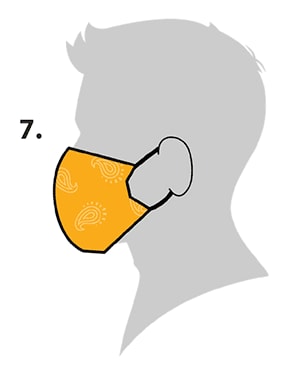
CDC recommends use of cloth face coverings to help slow the spread of COVID-19
How to Wear a Cloth Face Covering
Cloth face coverings should—
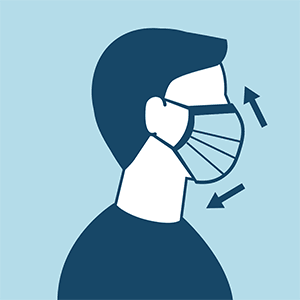
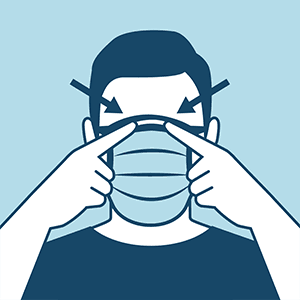
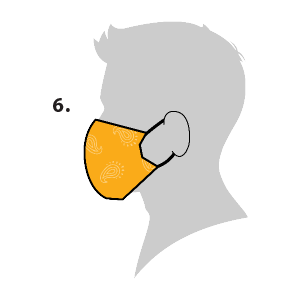
fit snugly but comfortably against the side of the face
be secured with ties or ear loops
include multiple layers of fabric
allow for breathing without restriction
be able to be laundered and machine dried without damage or change to shape
CDC recommends wearing cloth face coverings in public settings where other social distancing measures are difficult to maintain (e.g., grocery stores and pharmacies), especially in areas of significant community-based transmission.
CDC also advises the use of simple cloth face coverings to slow the spread of the virus and help people who may have the virus and do not know it from transmitting it to others. Cloth face coverings fashioned from household items or made at home from common materials at low cost can be used as an additional, voluntary public health measure.
Cloth face coverings should not be placed on young children under age 2, anyone who has trouble breathing, or is unconscious, incapacitated or otherwise unable to remove the mask without assistance.
The cloth face coverings recommended are not surgical masks or N-95 respirators. Those are critical supplies that must continue to be reserved for healthcare workers and other medical first responders, as recommended by current CDC guidance.
Should cloth face coverings be washed or otherwise cleaned regularly? How regularly?
Yes. They should be routinely washed depending on the frequency of use.
How does one safely sterilize/clean a cloth face covering?
A washing machine should suffice in properly washing a face covering.
How does one safely remove a used cloth face covering?
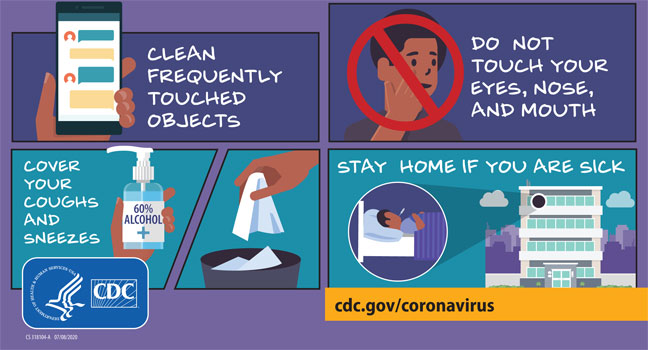
Individuals should be careful not to touch their eyes, nose, and mouth when removing their face covering and wash hands immediately after removing.
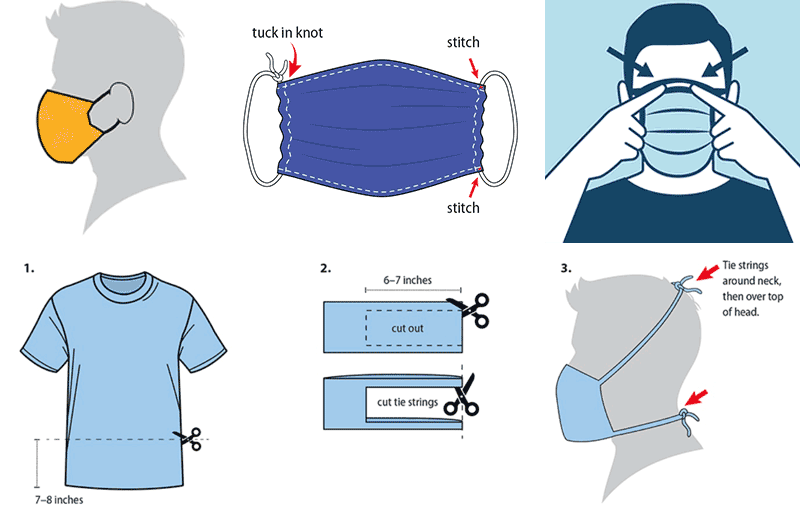
Sew and No Sew Instructions
Sewn Cloth Face Covering
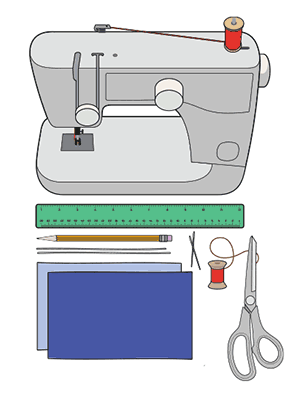
Materials
Two 10”x6” rectangles of cotton fabric
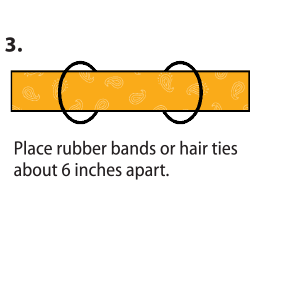
Two 6” pieces of elastic (or rubber bands, string, cloth strips, or hair ties)
Needle and thread (or bobby pin)
Scissors
Sewing machine
Tutorial
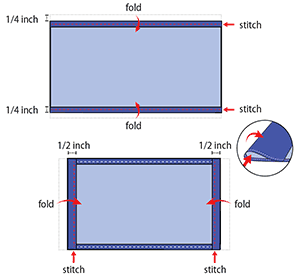
1. Cut out two 10-by-6-inch rectangles of cotton fabric. Use tightly woven cotton, such as quilting fabric or cotton sheets. T-shirt fabric will work in a pinch. Stack the two rectangles; you will sew the mask as if it was a single piece of fabric.
2. Fold over the long sides ¼ inch and hem. Then fold the double layer of fabric over ½ inch along the short sides and stitch down.
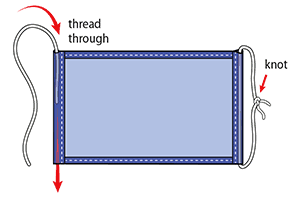
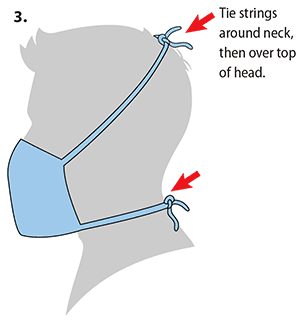
3. Run a 6-inch length of 1/8-inch wide elastic through the wider hem on each side of the mask. These will be the ear loops. Use a large needle or a bobby pin to thread it through. Tie the ends tight.
Don’t have elastic? Use hair ties or elastic head bands. If you only have string, you can make the ties longer and tie the mask behind your head.
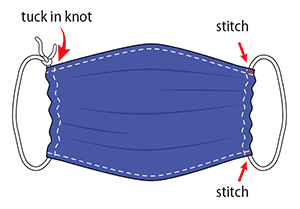
4. Gently pull on the elastic so that the knots are tucked inside the hem. Gather the sides of the mask on the elastic and adjust so the mask fits your face. Then securely stitch the elastic in place to keep it from slipping.
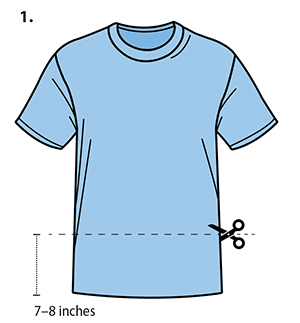
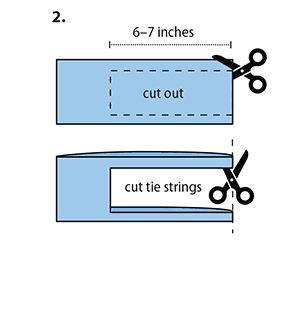
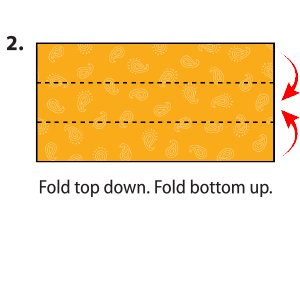
Quick Cut T-shirt Face Covering (no sew method)
Materials
T-shirt
Scissors
Tutorial
Bandana Face Covering (no sew method)
Materials
Bandana (or square cotton cloth approximately 20”x20”)
Locally you can donate Personal Protective Equipment HERE
Columbus, Ohio – A critical part of our state’s effort to contain and stop the spread of coronavirus disease 2019 (COVID-19) is to ensure our healthcare providers, Emergency Medical Services, law enforcement, and long-term care workers have the equipment they need to protect themselves and those they serve.
“The supplies we received, and the state’s reserve will not meet the immediate or future needs of Ohio’s healthcare providers and first responders,” said ODH Director Amy Acton, M.D., MPH.
The increase in people with respiratory symptoms visiting hospitals and needing care is straining our healthcare system’s supply of Personal Protective Equipment (PPE). Ohio requested early and has received our shipment of PPE from the Strategic National Stockpile (SNS). PPE includes gowns, gloves, goggles, and masks. Ohio’s allocation of materiel to the locals was informed by the Centers for Disease Control and Prevention guidance on the allocation of critical resources during a pandemic.
All shipments have been received by ODH and all will be sent to county locations to ensure local PPE needs are met. Here are the total numbers from the SNS:
Gowns
Coveralls
Gloves
Face
Shields
Surgical
Masks
N95
Masks
SNS Ohio supplies
107,670
552
493,575
131,808
672,100
271,450
“The supplies we received, and the state’s reserve will not meet the immediate or future needs of Ohio’s healthcare providers and first responders,” said ODH Director Amy Acton, M.D., MPH. “This shortage is why our message has been to conserve. Industries with PPE are encouraged to donate what they have to their local Emergency Management Agencies.” (Click on link at the top of this story)
PPE supply inventory is never static as there is always stock coming in and stock going out from different vendors. As a result, these numbers can constantly change.