Tag: Cincinnati

  • ‘It’s proof of our existence:’ This Cincinnati lesbian archive is recording history as it’s erased

    ‘It’s proof of our existence:’ This Cincinnati lesbian archive is recording history as it’s erased

    Crazy Ladies Bookstore in Northside was once brushed off as “crazy”.

    by Amanda Becker

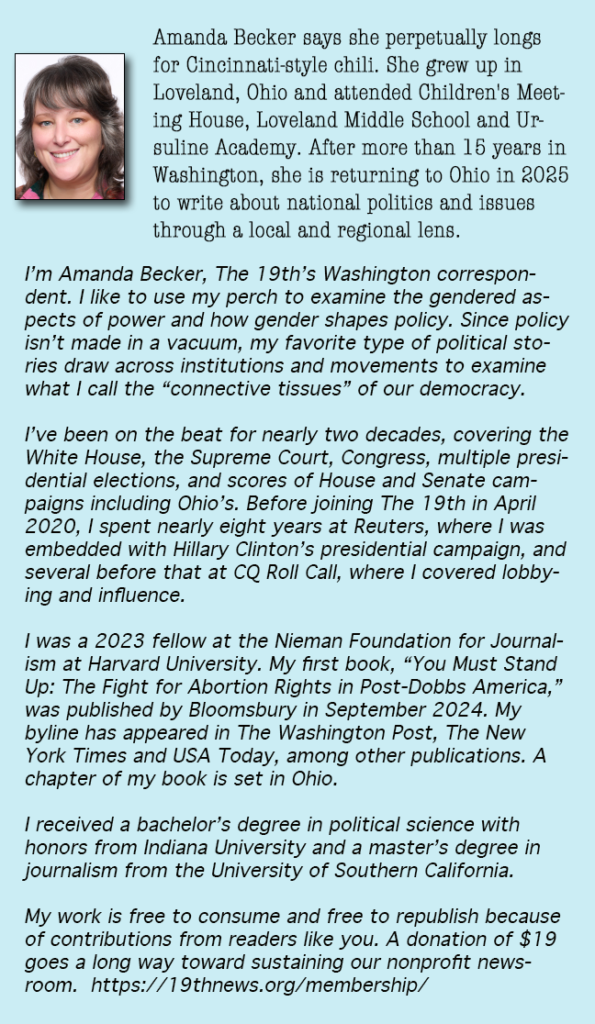
    Read Amanda Becker’s Loveland, Ohio connection in her Bio below.

    This story was originally reported by Amanda Becker of The 19thMeet Amanda and read more of her reporting on gender, politics and policy.

    ___________

    As programs recognizing LGBTQ+ people are cut, an Ohio archive is doing what queer Americans always have: preserving their own history.


    Cincinnati, Ohio – The Ohio Lesbian Archives in Cincinnati’s Over-the-Rhine neighborhood started with a friendship.

    Phebe Beiser said that when she and co-founder Victoria “Vic” Ramstetter met in the 1970s, they bonded over being “hidden, secret, teenage lesbians,” growing up in what was then a conservative city and region where there were few gay role models. For a time in their 20s, they shared group houses in Clifton, where they now joke that they “survived the lesbian commune together.” They were young and idealistic. They wanted to “turn being an activist lesbian into something fun and interesting, and maybe help change the world.” Beiser, now in her mid 70s, told The 19th that they had a mantra: “We never wanted to be invisible again.”

    When the Crazy Ladies Bookstore, named for the women who history brushed off as “crazy,” opened in Northside in 1979, it became the center of gravity in the Cincinnati lesbian community of which Beiser and Ramstetter were a part. Women bought homes in the neighborhood, gathering at the feminist bookstore for coffee, tea and conversation about being women, and about being gay. In 1989, the Archives opened on an upper floor.

    POGO 970x250

    It seemed that the visibility of the Crazy Ladies Bookstore and the Ohio Lesbian Archives — and of the women who made them happen — would be cemented in history in 2023, when the Ohio History Connection, the state’s nonprofit historical society, “embarked on a three-year project to diversify Ohio’s historical markers to include ten new stories of LGBTQ+ Ohioans” via its Gay Ohio History Initiative, or GOHI. At the time, there were roughly 1,800 historical markers in Ohio’s program, but only two commemorated places, events or people from the state’s queer history. A third, recognizing Summit Station, a lesbian bar in Columbus that operated from 1970 to 2008, was dedicated during Pride Month that year. The Archives and bookstore were selected for joint recognition.

    That long-overdue acknowledgement has been derailed by the Trump administration’s sweeping war on DEI, which extends beyond diversity, equity and inclusion programs to seemingly include anything that acknowledges the country’s diversity of experience. But the archives — and the volunteers who sustain it — are undeterred, carrying on as the queer community has throughout history, documenting their existence.

    “We never wanted to be invisible again.”

    Phebe Beiser
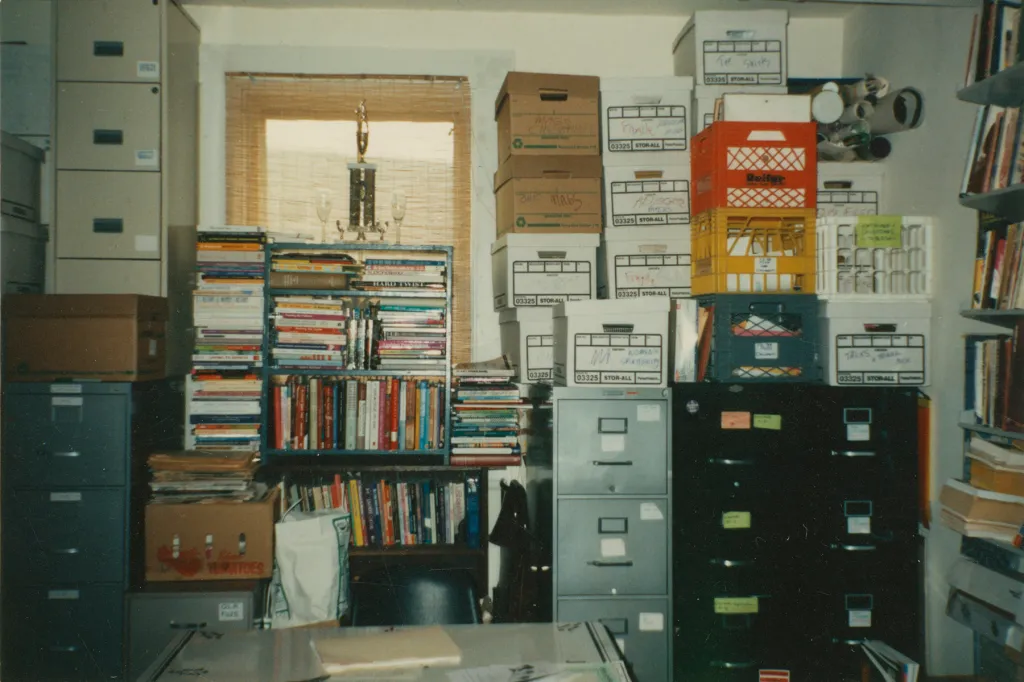
    Archival image of filing cabinets and boxes
    The Ohio Lesbian Archives first began in 1989 in a small room on the third floor above the Crazy Ladies Bookstore in Cincinnati, Ohio. (Cincinnati & Hamilton County Public Library)


    The Marking Diverse Ohio program was financed by a $250,000 grant from the Institute of Museum and Library Services, an independent agency created by a Republican-led Congress in 1996 that is the main source of federal funding for libraries and museums. Beiser and Branstetter were interviewed for an oral history. Ohio History Connection researchers visited the Archives to peruse the collection. A location was secured in a city park near where the since-shuttered Crazy Ladies Bookstore once was. By early this year, preparations to forever commemorate the Archives and bookstore with a plaque were all but complete. Its installation was expected in June, Pride Month.

    Then, in late March, President Donald Trump issued an executive order regarding “The Continuing Reduction of the Federal Bureaucracy,” singling out seven agencies for elimination — including the Institute of Museum and Library Services, or IMLS. Nearly all of its employees were put on leave and their emails were disconnected. Days later, his administration’s Department of Government Efficiency, or DOGE, canceled $25 million worth of  already-awarded IMLS grants, including the $250,000 for Ohio History Connection’s Marking Diverse Ohio program. The federal agency’s seemingly final Instagram post stated: “The era of using your taxpayer dollars to fund DEI grants is OVER.” The last photo listed erecting “LGBTQIA+ historical markers across Ohio” among the alleged government excesses that would be cut.


    A portrait of Jim Obergefell
    Read Next: 10 years after winning marriage equality, Jim Obergefell wants to aim higher

    Svetlana Harlan, a former project coordinator for Marking Diverse Ohio, recalled that when she looked at the list, and saw the program with other projects she admired,  “it almost seemed like a positive thing, I was like, ‘Oh yeah, these are nice initiatives!’”

    “And it turns out that [DOGE] was just taking over the account. So then I was like, ‘Oh, they’re cutting those. Oh, our name is on the list,’” she said.

    DOGE’s cancellation of the $250,000 IMLS grant to Ohio History Connection threw into question the future of the markers that were supposed to ensure that Ohio’s public displays of its history include LGBTQ+ people. Along with the Ohio Lesbian Archives and the Crazy Ladies Bookstore, there were markers in the works for an LGBTQ+ district in Akron; the first professor of gay and lesbian studies at Kent State University; 19th-century sculptor Edmonia “Wildfire” Lewis; LGBTQ+ journalism in Ohio; Toledo’s first LGBTQ+ member of city council; a Columbus hospice care center for HIV and AIDs patients; an open lesbian pastor in Athens; the screen-printing company Nightsweats and T-Cells in Lakewood; and the Rubi Girls, a Dayton-area drag group that has raised more than $3 million for HIV/AIDs and LGBTQ+ causes since the 1980s.
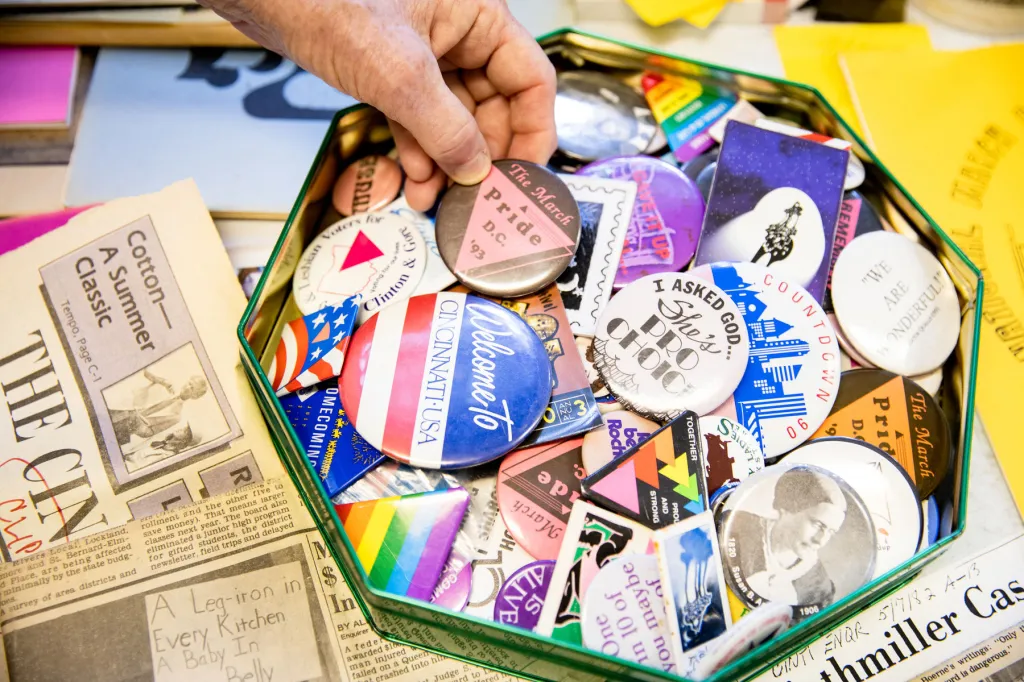
    Buttons and other archival materials spread out.
    Ephemera collected at the Ohio Lesbian Archives include buttons from past Pride marches, political campaigns and other symbols of lesbian life.
    (Courtesy Ohio Lesbian Archives)

    Preservation on hold

    Marking Diverse Ohio and other programs recognizing specific communities weren’t the only programs impacted in the state when DOGE cut IMLS grants and the federal agency essentially shuttered. And, given that more than $250 million is granted annually to libraries and museums nationally, the economic chaos at the country’s museums, libraries and historical institutions wasn’t confined to Ohio.

    In Ohio, other entities that received recent IMLS funding include the Frank Lloyd Wright-designed Westcott House in Springfield, for post-pandemic, on-site programming; the Cincinnati Zoo for a big cat breeding program; Dayton Metro Library programs that helped low-income Ohioans secure Internet access; and Cincinnati’s Contemporary Arts Center, which lost $175,000 slated for programming aimed at the 3,000 or more teens it serves each year.

    Institutions in Pennsylvania warned the economic upheaval could scuttle the digitization of The Rosenbach museum’s collection of rare books and manuscripts; the Woodmere Art Museum was mid renovation on a building to house its collection and expected to be reimbursed. In Wisconsin, small-town libraries said without the $3 million from the IMLS they’d received the year before they would have to reduce staff and therefore services. The American Library Association, or ALA, and the American Federation of State, County and Municipal Employees, or AFSCME, the labor union representing government workers, sued the Trump administration. ALA President Cindy Hohl said at the time that, “Libraries play an important role in our democracy, from preserving history to … offering access to a variety of perspectives.” AFSCME President Lee Saunders added: “Libraries and museums contain our collective history and knowledge.”

    Earlier this month, a federal judge ruled that the Trump administration could continue dismantling the Institute of Museum and Library Services as the case continues.

    People dance and laugh together at an outdoor day party.
    Read Next: A look inside the pop-up parties reimagining queer joy

    For now, Ohioans who want LGBTQ+ history represented among the 1,800 markers in the state will not get the federal funding that was granted and must search for alternative resources in their communities. A couple of the markers look poised to move forward with outside funding from community foundations and other organizations. Others, like the Ohio Lesbian Archives and the Crazy Ladies Bookstore, are still waiting. The remaining cost to install the marker would likely be $3,000-$5,000.

    When The 19th reached out to Ohio History Connection to ask if any alternative funding sources were being explored to install the Archives’ marker, spokesperson Neil Thompson said that he was “not able to provide any additional information for an Ohio Historical Marker application that is not in the public domain” and that it is only considered in the public domain once “the markers are finalized, cast and ready to be installed and dedicated.”
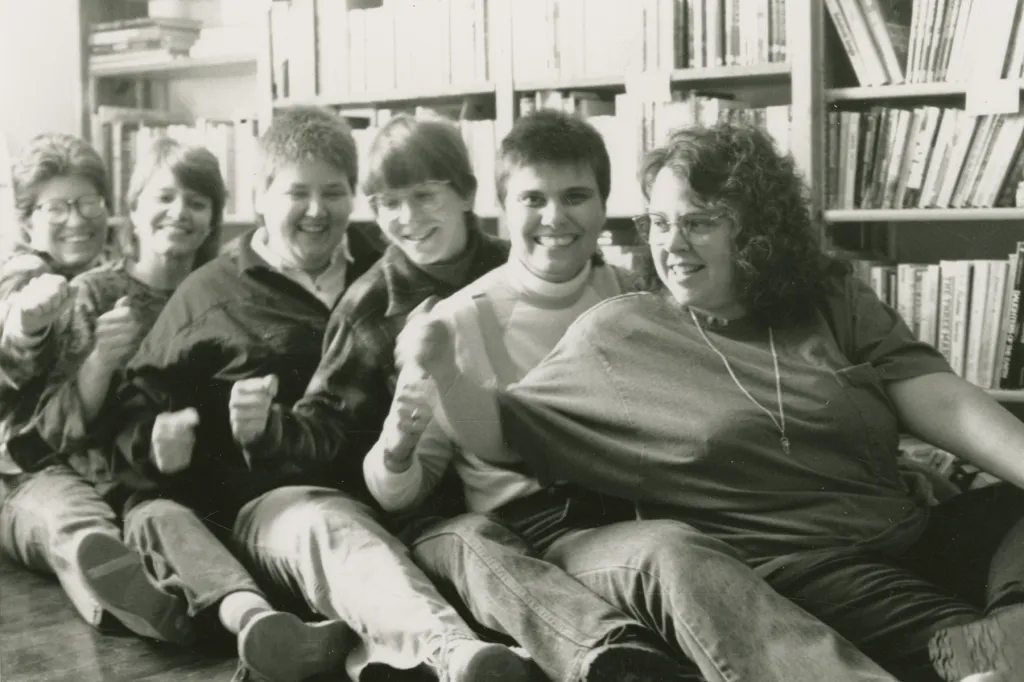
    A row of people lean into each other while seating on the floor in front of stacks of books.
    Phebe Beiser (far left), who co-founded the Ohio Lesbian Archives with her longtime friend Victoria ‘Vic’ Ramstetter, with Janice Uhlman, Elizabeth Van Dyke, Cathy McEneny, Morgan Kronenberger, and Ruth Rowan (left to right) at the Ohio Lesbian Archives in 1989. (Cincinnati & Hamilton County Public Library)

    ‘A reflection of themselves’

    The Ohio Lesbian Archives has always been a DIY endeavor, powered by a group of passionate volunteers.

    When the Crazy Ladies Bookstore’s founder, Carolyn Dellenbach, moved out of the area, she handed it over to its patrons to be run as a feminist collective. A lesbian newsletter called Dinah operated out of the upper floor — they referred to the National Organization for Women’s Task Force on Sexuality and Lesbianism, established in 1973, as FOSAL, or fossil, and Dinah was a play on dinosaur. Beiser laughed explaining the name: It was the 1970s; maybe there were drugs involved. For a time she wrote for Dinah and loved interviewing famous arrivals from the “women’s music circuit” when they came to town.

    At some point, the women working shifts at the bookstore, writing for Dinah and organizing talks and other events related to feminist and lesbian issues, realized that the community they had built, and the ephemera they were collecting and creating, were an important part of history — theirs, lesbians,’ Ohioans,’ and women’s.

    “We held on to them because we knew they could not be replaced,” Beiser said of the collection. “It’s proof of our existence …  so we held on to these things to never be invisible again.”

    We held on to them because we knew they could not be replaced. It’s proof of our existence.”

    Phebe Beiser

    Bookshelves crammed with books
    Books on lesbian history line the shelves of the Ohio Lesbian Archives. (Courtesy Ohio Lesbian Archives)


    In a 1991 issue of Dinah, letters to the editor included one from “Ma” who updated the “wimmin” in the community — they often spelled variations of their gender in ways that did not include “man” — that she was homesteading outside the city with her partner and building a log cabin. Another was from a woman who said she was “shocked” to find out that her being fired for being a lesbian was not a violation of civil rights laws and she was disappointed that the LGBTQ+ community did not come out to support her recent picket, writing: “I hope that in my lifetime I will see the gay and lesbian community get off their asses and together start fighting for their rights.”

    Across from the metal filing cabinet at the Archives that houses the Dinah issues, a modern-looking poster from before the Supreme Court decided Bostock v. Clayton County in 2020, which extended employment protections to LGBTQ+ Americans, reminded Ohioans that it was still legal for them to be fired for their sexual orientation or gender identity. Today, Trump’s Equal Employment Opportunity Commission is aiming to curtail those hard-won workplace protections established by Bostock.

    Lüdi Rich, a 27-year-old librarian, was working a recent Sunday afternoon at the Archives’ twice-weekly open hours, organizing books and research materials while the space was open to members of the community to drop in.

    Illustration of a couple in a shopping mall in progress and transgender Pride flag colored shirts. Behind them, other people shop, some wearing pride shirts.

    Read Next: How the ‘Everywhere is Queer’ app is helping LGBTQ+ people find queer-owned businesses

    When Rich moved to Cincinnati nearly two years ago, she didn’t know anyone in the area, so she looked online for queer spaces so she could start building her community. When she attended a panel on local queer history, one of the speakers was Beiser, a longtime librarian herself in the country’s second-largest public library system.

    Beiser mentioned at the panel that the Ohio Lesbian Archives would be having an open house that night at its new location next to Over-the-Rhine’s Washington Square Park, where Beiser was among those who met to march in Cincinnati’s first Pride Parade in April 1973. Rich asked Beiser how she could volunteer.

    A couple months later, Rich showed up for her first shift, “And I’ve been here working ever since,” she said.

    Nancy Yerian, the 34-year-old president of the Archives’ board, said that when she graduated from college in Massachusetts, she didn’t know if she could return to Cincinnati, where she grew up — until she discovered the Archives. “I thought that to live the kind of life I wanted to lead, I had to get out of what I thought was a very conservative place,” said Yerian, who has been volunteering at the Archives in some capacity since shortly after she finished school.

    “Finding the Archives and the people I’ve met through the organization and the community we’re creating, as well as the history we’re preserving — it gave me a lot of hope that I could create a life for myself here,” she added.

    It really is just us, preserving our history.”

    Lüdi Rich
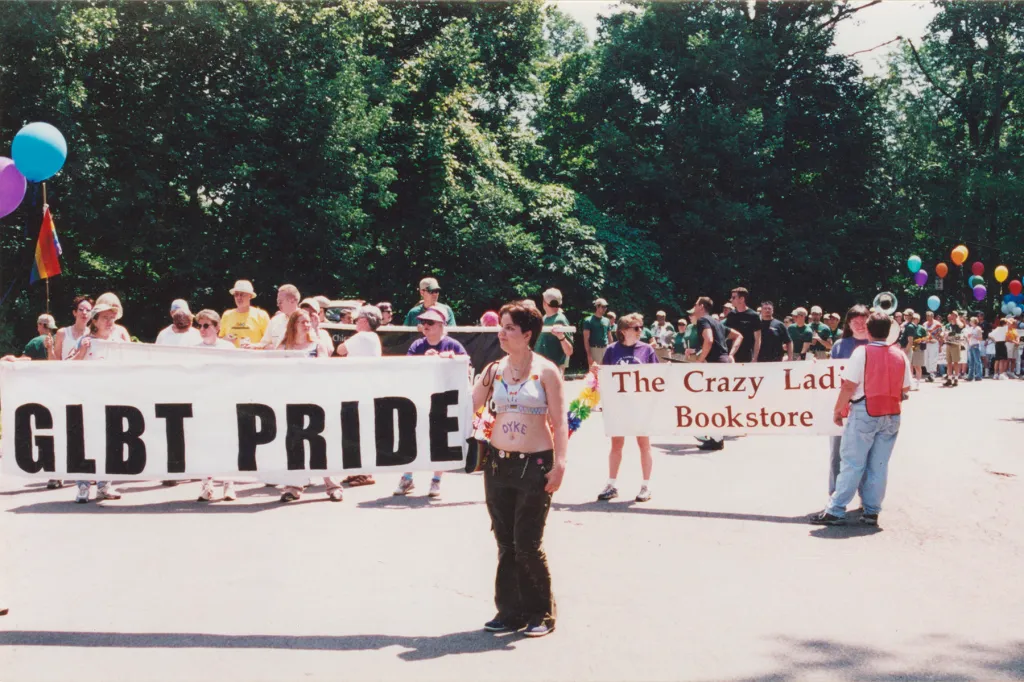
    Archival image of people marching down the street for Pride.
    The Crazy Ladies Bookstore marched in a Cincinnati, Ohio Pride parade. (Cincinnati & Hamilton County Public Library)


    The Archives’ volunteers have helped digitize old photos, some of which are now in a collection at the Cincinnati Public Library. They organize the books, arranged by first names instead of last, since so many women, especially in those early years, published works after taking on their husbands’ surnames. There are filing folders of Dinah newsletters. A cabinet holds multiple VHS and DVD copies of the early aughts television drama “The L Word.” A collection of buttons includes those from past Pride marches; supporting Hillary Clinton’s presidential campaigns; and one with “REMEMBER” and an inverted pink triangle, the Nazi symbol that Adolf Hitler used to identify gay and trans people. There is also one with the logo of the Crazy Ladies Bookstore, the silhouette of a woman reading while reclined in a chair, a cat by her side.

    “Many people who are coming to the archives are looking for a reflection of themselves and in many ways that’s why Vic and Phebe started it. It shows models of ways to be in the world and a feeling of not being alone and not being the first queer person or lesbian,” Yerian said.

    The Ohio Lesbian Archives, marker or not, is and will keep doing what it always has: making sure that lesbian Americans are visible in the country’s historical record.

    “It really is just us, preserving our history,” Rich said.

    Feeling overwhelmed by the news? The 19th is considering new ways to keep you informed. But we need your input! Fill out this quick survey to share your thoughts.
    https://19thnews.org/membership/

  • De La Cruz Goes Deep But The Reds Fall Short Again

    De La Cruz Goes Deep But The Reds Fall Short Again

    by Chris Ball

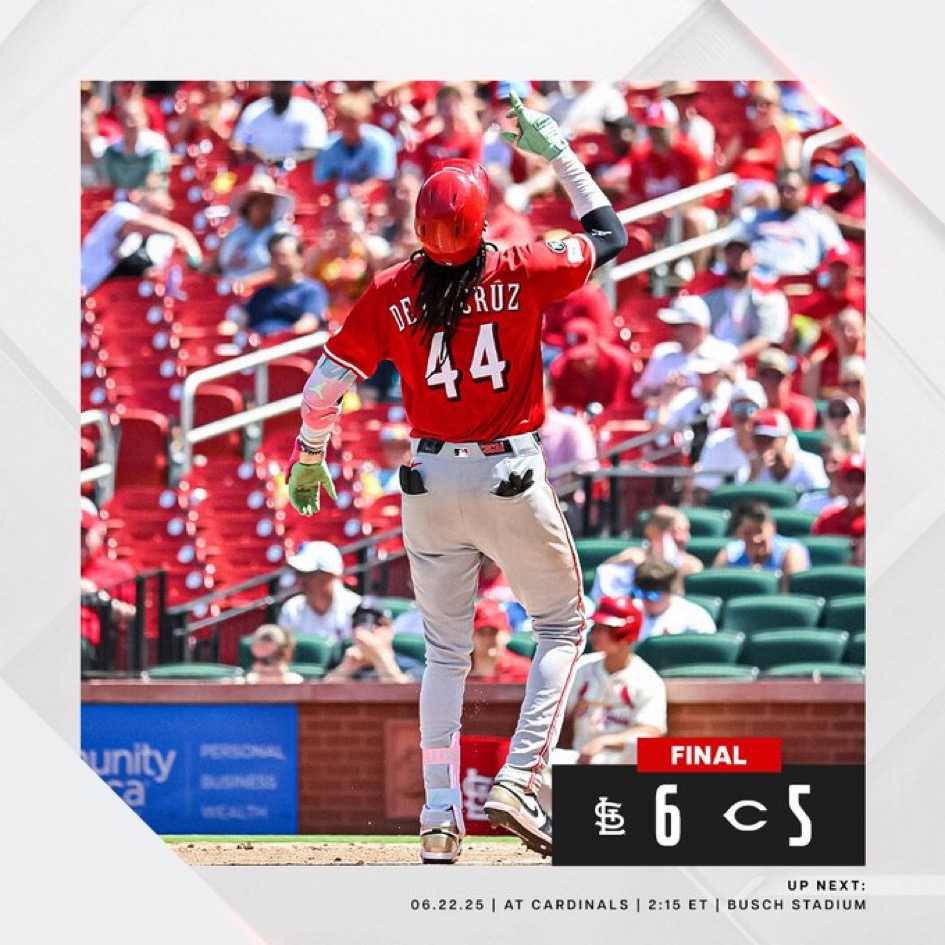
    Loveland, Ohio – When a big time athlete like Elly De La Cruz throws up on the field, you know just how hot it is. On a blazing June day in St. Louis, the Reds looked to bounce back after a series opening loss last night. And for a shining moment, it looked like they just might pull it off. But once again, Cincinnati found themselves on the wrong side of an infuriating close loss against a division rival.

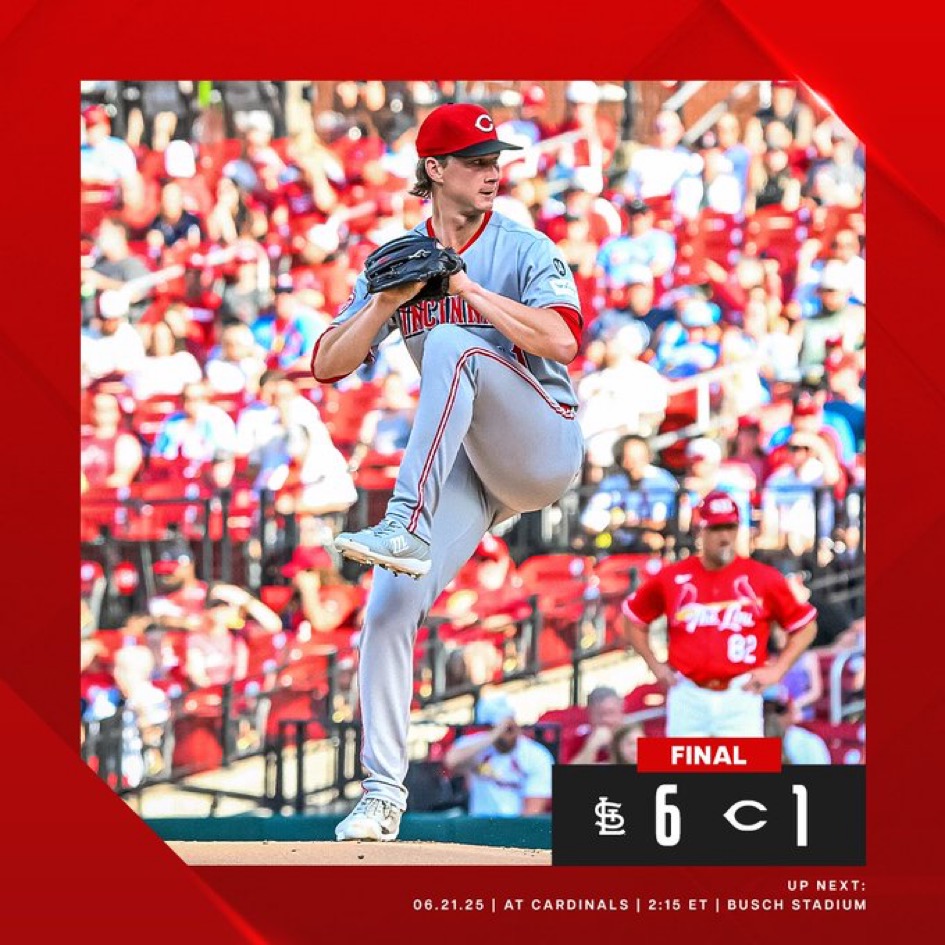
    After Wade Miley’s recent injury, Terry Francona opted for a bullpen day on Saturday, and Brent Suter took the mound to open things up. He went two innings and gave up a two run shot to Cardinals first baseman Alec Burleson. After that it was time for Nick Martinez.

    And to his credit, the Reds’ Swiss Army Knife did everything that Francona asked of him by entering the game in a relief role after getting rocked in his last start two days ago against Minnesota. He’s shown time and again that he will do whatever is necessary to help this team win, and he did that again. Martinez tossed two perfect innings and threw just 18 pitches to get it done.

    Ian Gibaut then entered in the fifth inning with the game still within a run. He issued three walks, demonstrating another frustrating lack of command. But the Reds made it out of the inning unscathed thanks to a wonderful back-pick by Tyler Stephenson and a double play on a sharply hit line drive that was caught by De La Cruz.

    After mustering just one run in the first game, Cincinnati had chances aplenty in this one to break out. In the third, after the Reds got a run after Gavin Lux grounded into a double play, De La Cruz hit a monster 110 MPH shot into center field and got to third. But the speedy shortstop was cut down trying to score after the Cardinals had some trouble with the relay throw.

    But Cincinnati buckled down and played some power ball to plate big runs. Matt McLain once again showed how much he’s improving with time. His ground rule double in the seventh was a part of a three hit day for the Reds second baseman. He’s now hitting .281 in his last ten games and has raised his season average to .209, after it had been down around .180 for a sizable portion of the year.

    But more importantly, that double paved the way for Elly De La Cruz’s 17th long ball of the year, a 435 foot shot that went off the bat at 107 MPH. The two run stroke put the Reds up 4-2.

    Lyon Richardson followed Nick Martinez’s example with two clean innings of his own. His 21 pitches were extremely efficient and well placed. He now has a 1.99 ERA on the season and is looking better and better with each outing.

    Things did not go so well for Tony Santillan unfortunately. In the eighth he secured the first two outs before surrendering a bevy of singles that brought St. Louis to within one. The four singles were the most that the Reds reliever allowed in one inning. That forced closer Emilio Pagan out of the pen an inning early, but he punched out  Wilson Contreras with a bully style 97 MPH heater to close the inning and keep the Reds ahead.

    But in ninth inning Pagan made a tough mistake to Nolan Arenado who launched a 383 foot home run to tie it and send the game to extra innings. Neither the Reds nor Cardinals excel. While Cincinnati managed to magnificently escape a bases loaded jam in the bottom of the tenth, only to fall in the bottom of the eleventh to a Yohel Pozo single to drop the second straight game.

    The most frustrating thing is how the Reds have failed to perform in extras this year. They have now failed to score the “ghost runner” in 7 of 8 total extra innings played this year (this is their sixth extra-inning game). The same issues came into play again today. Spencer Steer advanced to third on a wild pitch with no one out in the eleventh but he was stranded there to waste yet another opportunity.

    The Reds now fall to 10-15 against the National League Central. They desperately need to win games like this one to get back to relevance in the division, and today’s implosion certainly doesn’t help. For all the momentum Cincinnati has generated they must now avoid the sweep tomorrow, and with Andrew Abbott on the mound they are in a great position to get it done.

    ———

    Hey readers… have an opinion about sports? How about a topic you’d like to see written about in Loveland Magazine or a thought about one of our articles?

    Just need to vent and get out your frustration about the Reds, Bengals, or any other sports issues?

    Feel free to share with an email to lovelandmagazinesports@gmail.com!

    We would love to hear from our readers, and we thank you for your support and engagement.

    Also, don’t forget to follow us at The Loveland Sports Desk at the below links:

    For Facebook, click here.

    For X, click here.

    For Instagram, click here


    Christopher Ball is a longtime Loveland resident and an attorney. He graduated from Loveland High School in 2003 and was a member of the football team before going on to become a coach’s assistant at DePauw University in Greencastle, Indiana. He has been following and rooting for the Reds and Bengals since the early 1990s and has been through the many ups and downs that fandom has wrought over the years.

  • The Reds Bats Go Quiet In Series Opening Loss to the Cardinals

    The Reds Bats Go Quiet In Series Opening Loss to the Cardinals

    by Chris Ball

    Loveland, Ohio – The Reds offensive struggles in St Louis on Friday night brought back a lot of unpleasant memories. But it happens to even the best and most expensive lineups, as the New York Yankees found out this month. Still, with the way the Reds had been efficiently hitting the ball in their past four series, the hope was that they’d keep that momentum going in their crucial three games against the Cardinals.

    But St. Louis starter Andre Pallante put a quick stop to any positivity Reds fans may have had. Over six innings he dominated Cincinnati hitters, giving up just a pair of hits and striking out four. He’s had the Reds’ number for some time now, and his latest outing was no exception.

    Gavin Lux had a game he’d likely prefer to forget. His error allowed two runs to cross the plate and he was 0/4 at the plate, stranding two men on base. It’s important to remember that Lux has barely played a handful of  games at third base though, but his throw in the bottom of the seventh was a big part of a bad inning for Cincinnati.

    The only run came on a Jose Trevino double in the top of the eighth. But that was all they could muster in a night where the bats were frustratingly impotent. They managed just four hits on the night and stranded five men on base.

    When all is said and done, the Reds simply can’t allow this offensive hiccup to become a long term trend. And based on how they bounced back from adversity in the entire month of June, there’s no reason to believe it will. Tonight they just ran into a good pitcher who had their number.

    Additionally, the bullpen picked an inopportune time to self destruct. It was a relatively close game until the bottom of the seventh when Scott Barlow, Taylor Rodgers and Tony Santillan let the Cardinals break the floodgates wide open and put the game out of reach, allowing five crippling runs.

    Brady Singer deserves a lot of credit for his tenacity tonight, as he matched a lot of the fire that Pallante brought. Singer struck out seven over six strong innings as well. This is his second great outing in a row with 12 innings pitched and 11 strikeouts, while allowing just two earned runs.

    This series opener is one that we should learn from, but quickly move on from. Against the Guardians and Tigers, Cincinnati had some ugly games, but stayed focused to, on balance, have a great stretch run.

    That’s exactly what we need to see in the next two games of this road trip in St. Louis. 


    ———

    Hey readers… have an opinion about sports? How about a topic you’d like to see written about in Loveland Magazine or a thought about one of our articles?

    Just need to vent and get out your frustration about the Reds, Bengals, or any other sports issues?

    Feel free to share with an email to lovelandmagazinesports@gmail.com!

    We would love to hear from our readers, and we thank you for your support and engagement.

    Also, don’t forget to follow us at The Loveland Sports Desk at the below links:

    For Facebook, click here.

    For X, click here.

    For Instagram, click here


    Christopher Ball is a longtime Loveland resident and an attorney. He graduated from Loveland High School in 2003 and was a member of the football team before going on to become a coach’s assistant at DePauw University in Greencastle, Indiana. He has been following and rooting for the Reds and Bengals since the early 1990s and has been through the many ups and downs that fandom has wrought over the years.

  • The Reds Fall But Win Their Fourth Straight Series

    The Reds Fall But Win Their Fourth Straight Series

    by Chris Ball

    Loveland, Ohio – The Reds may have fallen to the Twins on Thursday afternoon, but they have absolutely turned their season around these past four series. They are 9-3 over that span, batting .276 and they’ve averaged almost 6 runs per game. Cincinnati has swept the Diamondbacks and taken the series against two of the American League’s best (on the road) against the Tigers and Guardians.

    They’ve gotten plenty of help from the usual suspects. Elly De La Cruz is hitting .295 in his last 12 and he is slugging .636. TJ Friedl is getting on base at a .389 clip.

    But it’s some struggling Reds who are beginning to raise some eyebrows and show some signs of a turnaround. None more so than Matt McLain who is hitting .308 during this 12 game window, with two home runs and seven RBIs. He’s hit safely in 10 of those last 12 and he’s seeing the ball better, walking five times. And McLain’s defensive skills have been on prime display as well, in addition to his offensive renaissance.

    Spencer Steer has had his issues this year but this little run has seen him hit .268 with 11 hits in those 12 games. He’s collected seven RBIs of his own.

    And no Reds recap would be complete without a dive into the dominant year Andrew Abbott is having. He’s 6-1 on the year with a miniscule ERA of 1.84. His command has been exceptional this season and he is a stabilizing force for this rotation.

    All of this has been accomplished with key players out due to injury. Imagine what this team can accomplish when we see the return of Hunter Greene, Austin Hays, Noelvi Marte, and Graham Ashcraft? Their talents combined with the improving play of McLain, Steer, and others could be the boost this team needs to make a playoff push in 2025.

    After the offensive difficulties this club had earlier in the year, such hope seemed like a fool’s errand. But to their credit the Reds never folded and kept their composure through it all. They are 39-36, three games over .500 and with a crucial series against bitter rival St. Louis on the horizon.

    They don’t have to win every game going forward, they simply need to do what they’ve been doing: win the series, play consistent complimentary baseball, and stay the course.

    If they can keep doing that, the dog days of summer are going to be much easier to bear. 

    ———

    Hey readers… have an opinion about sports? How about a topic you’d like to see written about in Loveland Magazine or a thought about one of our articles?

    Just need to vent and get out your frustration about the Reds, Bengals, or any other sports issues?

    Feel free to share with an email to lovelandmagazinesports@gmail.com!

    We would love to hear from our readers, and we thank you for your support and engagement.

    Also, don’t forget to follow us at The Loveland Sports Desk at the below links:

    For Facebook, click here.

    For X, click here.

    For Instagram, click here


    Christopher Ball is a longtime Loveland resident and an attorney. He graduated from Loveland High School in 2003 and was a member of the football team before going on to become a coach’s assistant at DePauw University in Greencastle, Indiana. He has been following and rooting for the Reds and Bengals since the early 1990s and has been through the many ups and downs that fandom has wrought over the years.

  • Design for new Brent Spence companion bridge announced

    Design for new Brent Spence companion bridge announced

    Cincinnati, Ohio – Ohio Governor Mike DeWine and Kentucky Governor Andy Beshear unveiled Tuesday the design of the new companion bridge to be built as part of the 8-mile Brent Spence Bridge Corridor Project in Cincinnati and Northern Kentucky.

    The press release said, “Today’s announcement marks a major milestone in one of the nation’s most significant transportation investments that will improve safety and strengthen economic development opportunities.”

    “As we went through the designs, we wanted this bridge to be cost effective, functional, and safe, but we also wanted it to look good,” DeWine said. “This bridge will become an iconic part of the Cincinnati skyline and create a landmark gateway that honors our states’ excellence in engineering, transforms the daily commute, and keeps commerce moving.”

    The selected design is described as a cable-stayed independent deck bridge. Instead of using a traditional steel truss to support the bi-level bridge’s lower deck, both decks will be supported by a cabling system similar to those used in other modern bridges, such as the Abraham Lincoln Bridge in Louisville and Veterans Glass City Skyway in Toledo. Unlike other double-deck bridges, no steel work will connect the two decks.

    “The new companion bridge will be a game-changer for commuting families and it’ll revolutionize a crucial economic corridor,” Beshear said. “This is a project that has been dreamed of for years and that many said would never happen. But we are getting it done by working together — and we’re doing it without tolls.”

    Northbound drivers crossing the Ohio River from Kentucky into Ohio will use the top level of the new bi-level companion bridge, which showcases an unobstructed view of the Cincinnati skyline and the bridge’s unique design.

    According to the release by The Brent Spence Bridge Corridor Project, “The design team, managed by the Ohio Department of Transportation (ODOT) and Kentucky Transportation Cabinet (KYTC), evaluated multiple concepts against key visual and aesthetic criteria, including how well they fit the surroundings, their visual connection to the existing bridge and their potential to become a recognizable regional landmark. The design also underwent extensive technical review and wind testing. Ultimately, cost, constructability, and schedule were the deciding factors in the selection of the bridge type. Compared to the other options considered, this design is lower in cost and easier to build.”

    “This is more than just a bridge — it’s a long-overdue investment in the future of our region,” said ODOT Director Pamela Boratyn. “For decades, communities have waited for a safer, more efficient crossing that not only eases traffic and improves safety but also strengthens one of our most critical freight corridors. This new bridge will unlock economic opportunities, support regional growth, and better connect people and commerce for generations to come.”

    “This companion bridge reflects the values of the communities it connects — practical, forward-looking and built to last,” said KYTC Secretary Jim Gray. “With the bridge design selected, our expert teams continue to work hard behind the scenes on activities to help us march toward construction.”

    The Brent Spence Bridge Corridor Project spans eight miles of I-71/I-75 in Kentucky and I-75 in Ohio. Beyond the new companion bridge, the project includes improvements to the existing Brent Spence Bridge to carry local traffic, redesigned ramp configurations throughout the corridor, new pedestrian and bike paths connecting communities to transit and employment centers, and “aesthetic improvements designed to create walkable, urban environments.”

    With the design selection complete and acknowledgement from the Federal Highway Administration (FHWA) concurring with the bridge type, the design-build team will continue to advance the project toward final engineering and construction phases.

    The existing Brent Spence Bridge, which has served the region since 1963, currently carries traffic volumes exceeding its original design capacity. It will be reconfigured to three lanes on each deck with emergency shoulders on each side to improve safety and carry local traffic between Covington and Cincinnati. The new companion bridge will carry traffic on I-71 and I-75.

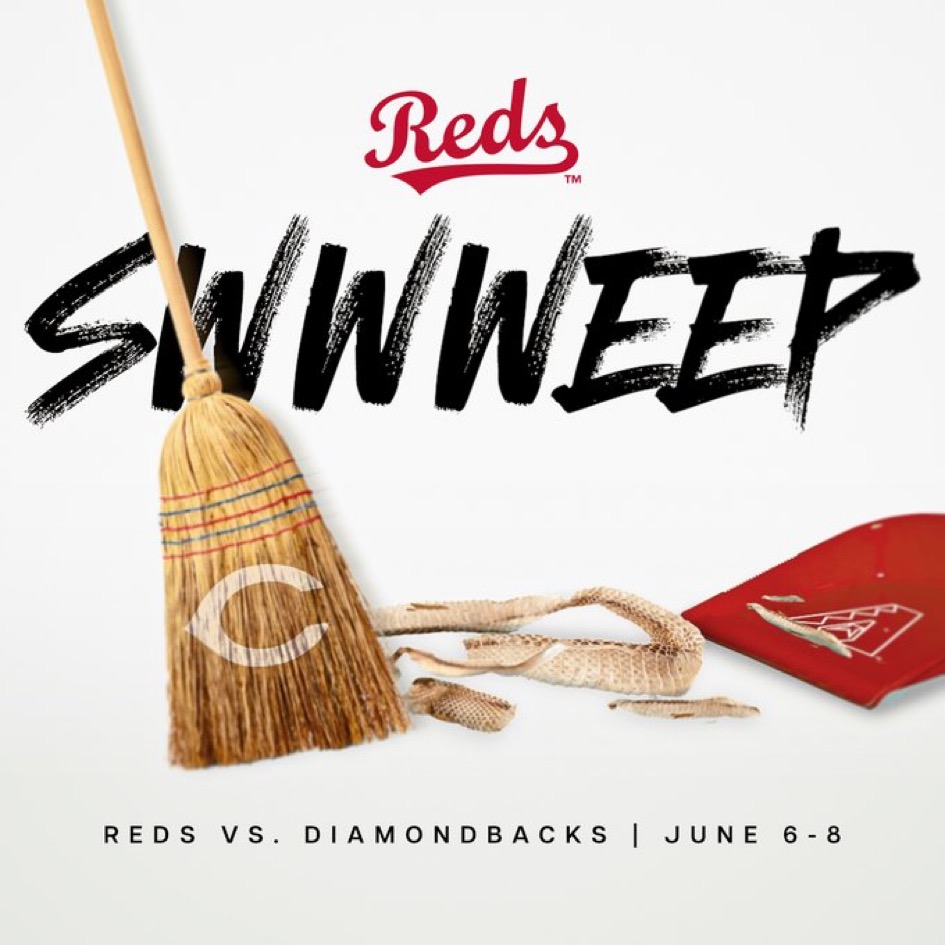
  • Bring Out the Brooms: Reds Take Three From the Diamondbacks

    Bring Out the Brooms: Reds Take Three From the Diamondbacks

    by Chris Ball

    Loveland, Ohio – The Reds completed their sweep of the Arizona Diamondbacks on Sunday afternoon with a 4-2 win at Great American Ballpark. The victory got Cincinnati back to .500 at 33-33, and came complete with a long ball show from a couple key players.

    Christian Encarnacion Strand hit his fourth home run of the year, and his third in as many games after returning to the lineup. His rocket to center field in the 11th inning in the second game of the series proved to be the game winner, the Reds’ first win in extra innings all season and their first walk-off win. CES’ return to the lineup has appeared to galvanize the Reds’ bats, and he is absolutely leading by example.

    A Red following that example is Matt McLain. Cincinnati’s second baseman also had a very respectable series. He had four hits against Arizona with three runs batted in. On Sunday McLain smashed the game winner: a two run homer in the bottom of the seventh inning. That shot broke a 67 at bat homerless streak

    The Reds are a team in desperate need of a spark. CES’ return to the lineup has all of the hallmarks of being just what this club needs to make a push to climb (and stay) even further above .500. And with Austin Hayes on the cusp of retuning, and Noelvi Marte starting to swing the bat again, the prospect of a fully healthy Cincinnati lineup is closer to becoming a reality.

    Even though ace Hunter Greene may be sidelined for a not insignificant period of time, the other starters in the rotation have been solid. The bullpen has been on lockdown recently. If the bats can score runs consistently and continue to flash some power, then perhaps there is room to hope for the rest of this year.

    But .5oo has been the boogeyman for this team all year. Cincinnati has shown that they can get to that mark, but they’ve struggled mightily to remain there for any length of time. But with key players returning to the lineup, and with some others beginning to play better, perhaps this time will be different.

    Up next for the Reds is another Battle of Ohio series with the Guardians, and this series will tell a lot about just how ready this club is to maintain their winning ways. Cleveland sits at 34-30 and but have lost four of their last six games. Recently re-signed pitcher Wade Miley is set to take the bump for the Reds, and he will face the Guardian’s Luis Ortiz (3-6, 4.02 ERA). The first pitch is at 6:40 on Monday from Cleveland.

    ———

    Hey readers… have an opinion about sports? How about a topic you’d like to see written about in Loveland Magazine or a thought about one of our articles?

    Just need to vent and get out your frustration about the Reds, Bengals, or any other sports issues?

    Feel free to share with an email to lovelandmagazinesports@gmail.com!

    We would love to hear from our readers, and we thank you for your support and engagement.

    Also, don’t forget to follow us at The Loveland Sports Desk at the below links:

    For Facebook, click here.

    For X, click here.

    For Instagram, click here


    Christopher Ball is a longtime Loveland resident and an attorney. He graduated from Loveland High School in 2003 and was a member of the football team before going on to become a coach’s assistant at DePauw University in Greencastle, Indiana. He has been following and rooting for the Reds and Bengals since the early 1990s and has been through the many ups and downs that fandom has wrought over the years.

  • Thousands show up again on Saturday to protest Trump in Ohio

    Thousands show up again on Saturday to protest Trump in Ohio

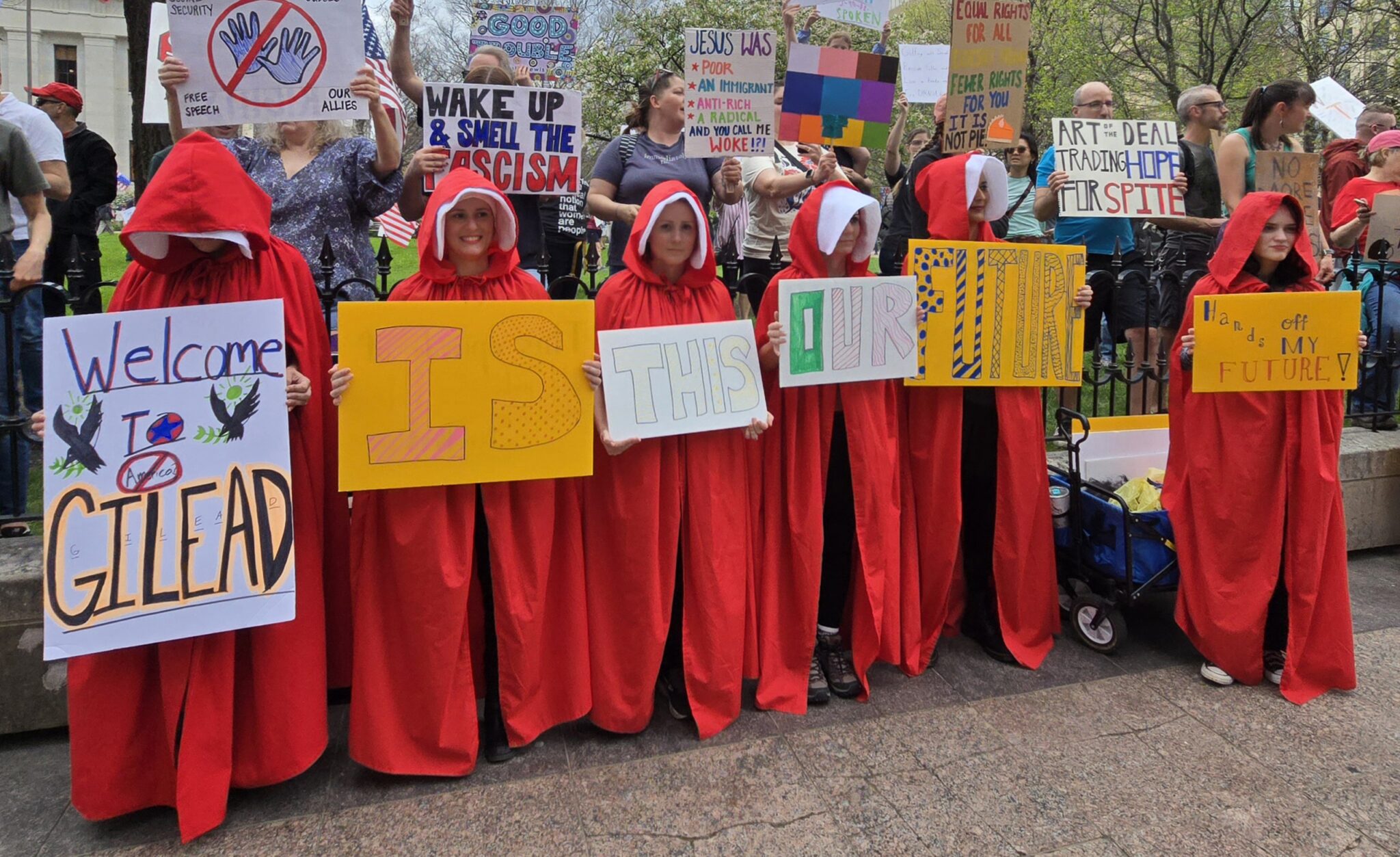
    Protesters dressed as characters in “The Handmaid’s Tale,” a dystopian novel about life under a totalitarian regime. They were protesting President Donald Trump at the Ohio Capitol on April 19. (Photo by Marty Schladen, Ohio Capital Journal.)

    By: Ohio Capital Journal

    A larger-than-expected crowd went to the Ohio capitol on Saturday to protest President Donald Trump and the many controversial actions of his young administration. It was one of at least 47 across Ohio and more than 700 across the United States.

    Columbus police said that the crowd appeared to approach 3,000. That was smaller than the roughly 5,000 who turned out on April 5, when millions protested nationwide. But with the Easter holiday and fewer sponsoring organizations, smaller crowds were expected on Saturday.

    Large crowds also gathered in Cincinnatirainy Akron, and other cities across the Buckeye State. They were sponsored by the group 50501.

     Photo by Marty Schladen, Ohio Capital Journal. 

    Organizers chose April 19 to protest in part for its symbolic value. On that day in 1775, the first battles of the Revolutionary War were fought in Lexington and Concord, Mass.

    Playing off of that theme, many carried signs Saturday denouncing Trump and accusing him of trying to be a king.

    Trump has been raising such concerns in several ways. They include by trying to gut the independent federal antitrust watchdog, and by empowering the world’s richest man to fire tens of thousands from the Social Security and Veterans administrations, the National Park Service, and numerous other agencies.

    But perhaps more concerning is that his administration has been invoking a law not used in 80 years, accusing some migrants of membership in gangs, and deporting them to a notorious Salvadorean prison. He has defied court orders — including one to bring back a man whom the administration admitted was deported in error.

    The U.S. Supreme Court early Saturday morning ordered a temporary halt to the deportations. So the stage seems to be setting for a confrontation between the judiciary — which has no army to enforce its orders — and an executive who sometimes has been disinclined to heed them.

    That was on the minds of many at the Columbus protest. Chuck Ardo of Lancaster said that his family migrated to the United States from Slovakia when he was a child, and that his parents survived the Holocaust.

    “Fascism is something I’ve always been aware of,” he said. “Due process and the Constitution, that’s what matters. I don’t know if these people are deportable or not. But they all deserve due process and that’s what’s missing here. They’ve labeled them ‘terrorists,’ but on what grounds? What proof have they shown?”

    Sen. Chris Van Hollen, D-Md., last week visited the wrongly deported man, Kilmar Armando Abrego Garcia, at the Salvadorean prison. He said that if Trump has evidence that Abrego Garcia is in a gang, he needs to present it court — not just claim it on social media.

    For Ardo, Trump’s actions have a disturbing historical echo.

    “Donald Trump is doing many of the things Hitler did as he rose to power,” he said. “Hitler attacked the courts. He attacked the universities. I’m not accusing anybody of being a Nazi here, but while history doesn’t repeat itself, it rhymes.”

    Debbie Wood of Powell said the president has been acting like a king in other ways as well.

    “Trump did not win in a landslide,” she said. “More people voted for someone else than for him. He does not have a mandate. Even the people who voted for him did not vote to ruin the VA. They didn’t vote to fire people who do cancer research. They didn’t vote to take food out of the mouths of hungry people. Ruining the national parks. Nobody voted for any of that stuff.”

    She added, “People are getting more and more angry. He’s sending people away to concentration camps without due process. Ignoring court orders. Who does that? We would be in jail.”

     Photo by Marty Schladen, Ohio Capital Journal. 

    Gary Bennett of St. Clairsville stood at the base of a monument to former President William McKinley holding a sign that mocked Trump and slammed him for gutting the staff at the National Park Service. He said that’s just one problem among many he has with the new administration.

    “We could make signs every day of the week and there would still be signs to make,” he said. “Me and my wife just retired, and we don’t want him to take away our Social Security. That’s just one thing.”

    Chris Glass of Delaware said she’s also upset about many things Trump is doing, and that protesting helps.

    “There is something very nice about the camaraderie,” she said. “It’s a sense that people do care. I think we represent the country better than our current government does.”

    Last updated 5:03 a.m., Apr. 21, 2025


    Marty Schladen
    Marty Schladen

    Marty Schladen has been a reporter for decades, working in Indiana, Texas and other places before returning to his native Ohio to work at The Columbus Dispatch in 2017. He’s won state and national journalism awards for investigations into utility regulation, public corruption, the environment, prescription drug spending and other matters.

    Ohio Capital Journal is part of States Newsroom, the nation’s largest state-focused nonprofit news organization.

    MORE FROM AUTHOR

  • Cincinnati’s bid for Sundance Film Festival rejected

    Cincinnati’s bid for Sundance Film Festival rejected

    Cincinnati’s bid to become the new home to the festival rejected in favor of Boulder, Colorado.

    A Press Release from the Sundance Institute

    Boulder’s Vibrant Community of Artists, Enthusiastic Audiences, and Breathtaking Rocky Mountains Will Provide the Setting for the Future of Independent Film

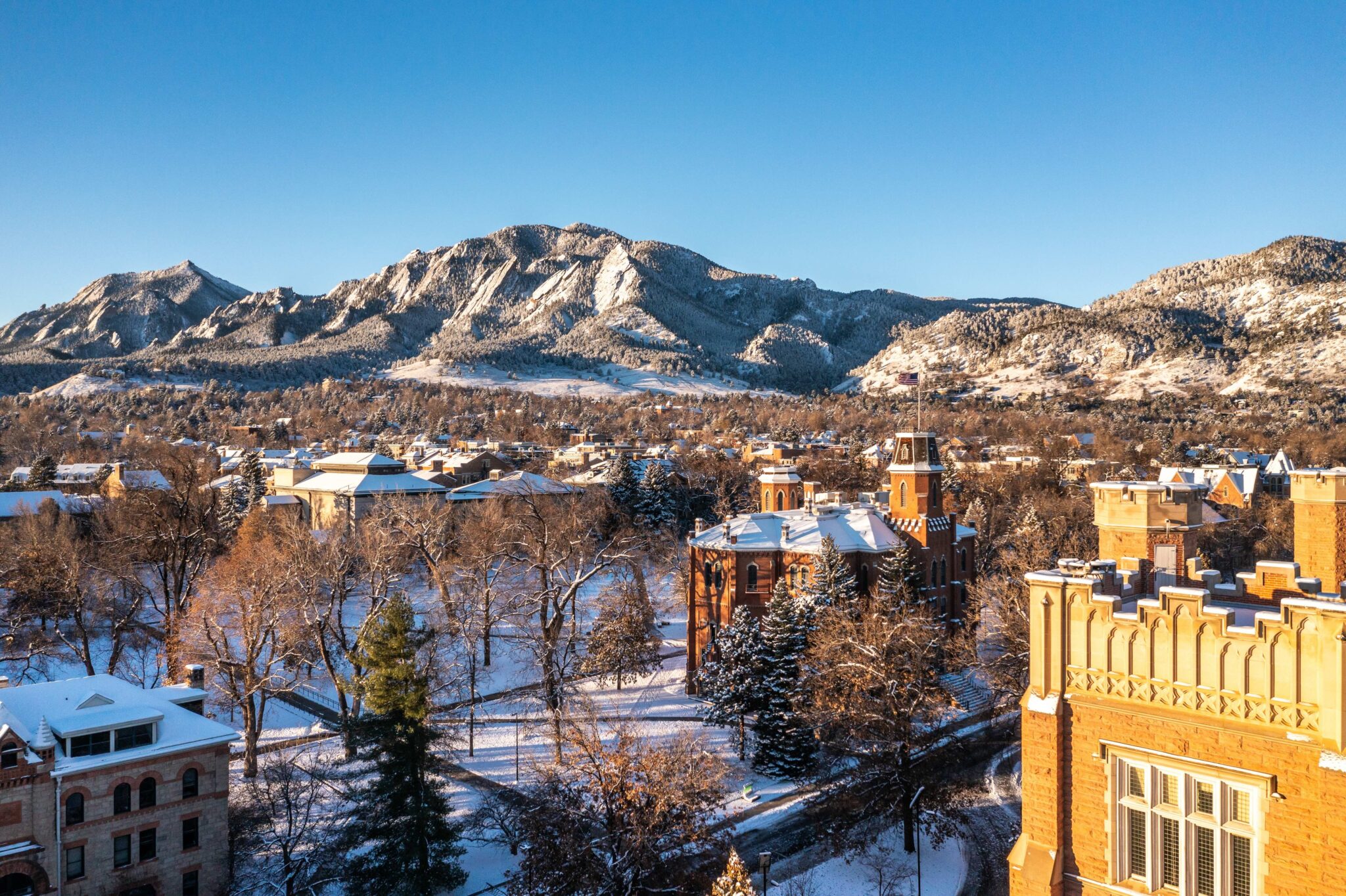
    After a thoughtful and thorough process to identify the future location of the Sundance Film Festival, today the nonprofit Sundance Institute’s Board of Trustees is proud to announce that Boulder, Colorado, will become the Festival’s home beginning in 2027.Boulder offers small-town charm with an engaged community, distinctive natural beauty, and a vibrant arts scene, making it the ideal location for the Festival to grow. The Sundance Film Festival is the largest artist program of the nonprofit Sundance Institute. Its Artist Programs cultivate a vibrant ecosystem, supporting artists and connecting their work with audiences. The Festival stands as the pre-eminent gathering of original storytellers and audiences seeking new voices, fresh perspectives, and a celebration of independent film and storytelling.

    “This decision was informed by a detailed evaluation of the key components essential to creating our Festival. During the process, it became clear that Boulder is the ideal location in which to build our Festival’s future, marking a key strategic step in its natural evolution,” said Ebs Burnough, Sundance Institute Board Chair. “We have a profound appreciation for the finalist cities and their communities — including Boulder, Colorado, Cincinnati, Ohio, and Salt Lake City, Utah — who presented overwhelmingly strong proposals and dedicated their time, passion, and commitment every step of the way. We have deep respect and gratitude to these communities for their hard work and partnership throughout the past year. Additionally, we sincerely value the steadfast support from our staff and board as we have ventured on this exploration together.” 

    “The Sundance Film Festival is a catalyst for innovation, creative expression, and the discovery of groundbreaking independent films that inspire and shape the future of storytelling. This process provided the opportunity to imagine how we design the Festival while staying true to our programming and mission. We extend our appreciation to the staff, artists, partners, volunteers, and audiences who have and continue to support that mission,” said Amanda Kelso, Sundance Institute Acting CEO. “Boulder is an art town, tech town, mountain town, and college town. It is a place where the Festival can build and flourish. This is the beginning of a bold, new journey as we invite everyone to be part of our community and to be entertained and inspired. We can’t imagine a better fit than Boulder.” 

    Together with the Boulder host committee, the Institute envisions the heart of the Festival centered in downtown Boulder utilizing a wide array of theaters and venues, and incorporating spaces around the Pearl Street Mall, a pedestrian-only street. Nearby spaces will offer dedicated locations for our community to gather, including select spots on the University of Colorado (CU) Boulder campus. The majestic Rocky Mountains will frame the horizon for festival goers. The Festival will work with the host committee to enhance infrastructure and accommodation options, ensuring that attendees can gather and celebrate independent storytelling in an affordable and sustainable way — key to allowing independent films to shine and maintaining access for our community.

    Boulder’s storied and vibrant community of audiences, artists, and filmmakers allows the Sundance Institute to lay the foundation for a strong future for the Sundance Film Festival. Robert Redford founded the nonprofit Institute with a commitment to championing the creation of unique work by storytellers, with the Festival consistently offering a space for artists to share their stories with the world and audiences to discover them. This evolution will preserve the experience that attendees and the global independent film community recognizes and values. 

    “I founded the Sundance Institute with a commitment to discovering and developing independent artists, with the Sundance Film Festival serving as the platform for stories to help expand audiences and broaden the landscape,” said Robert Redford, Sundance Institute President and Founder. “That mission remains even more critical today and will continue to be our core principle. Words cannot express the sincere gratitude I have for Park City, the state of Utah, and all those in the Utah community that have helped to build the organization. What we’ve created is remarkably special and defining. As change is inevitable, we must always evolve and grow, which has been at the core of our survival. This move will ensure that the Festival continues its work of risk taking, supporting innovative storytellers, fostering independence, and entertaining and enlightening audiences. I am grateful to the Boulder community for its support, and I look forward to seeing what the future holds for the Festival there.”

    Boulder’s welcoming environment aligns with the ethos the Sundance Film Festival developed in Park City — growing with a community rooted in independent thought, artistic exploration, and social impact. The city’s convergence of arts, technology, music, food, entrepreneurship, and education presents unique and exciting programming opportunities for future iterations of the Festival. 

    “The Sundance Film Festival’s move to Boulder, Colorado in 2027 preserves and builds on its four decade journey. Together we continue to create a Festival that acts as a vibrant space for independent films and filmmakers to shine. A place where each January, a community of artists, industry, and audiences can gather to discover what’s new in global storytelling,” said Eugene Hernandez, Sundance Film Festival Director and Head of Public Programming. “This city is ready to embrace emerging and established global storytellers, our staff and volunteers, and, of course, global audiences. Whether you are a Sundance Film Festival regular, or someone who has dreamed of experiencing the Festival in person, we invite you to join us in January 2026 in Utah and then come along to nearby Colorado in 2027.”

    “Colorado is thrilled to welcome the Sundance Film Festival to its new home in Boulder starting in 2027,” said Governor Jared Polis. “Here in our state we celebrate the arts and film industry as a key economic driver, job creator, and important contributor to our thriving culture. Now, with the addition of the iconic Sundance Film Festival, we can expect even more jobs, a huge benefit for our small businesses including stores and restaurants. Thank you to the Sundance Institute and all of the partners like the City of Boulder, Visit Boulder, the Boulder Chamber of Commerce, and I also want to thank the bipartisan legislators and leadership who have worked tirelessly to make this possible.” 

    “We are deeply honored that Boulder has been selected to host the Sundance Film Festival starting in 2027,” said Charlene Hoffman, Visit Boulder CEO. “Creativity, innovation, and expression are at the heart of what makes Boulder special, and we’re ready to welcome storytellers and cinema lovers from around the world. Our walkable downtown, iconic venues, and beautiful landscape at the base of the Rocky Mountains sets the stage for the Sundance Film Festival to flourish in its next chapter. It’s been a remarkable experience getting to share our vibrant community with the Sundance Institute and we eagerly await the Festival’s debut in beautiful Boulder, Colorado with excitement and gratitude.”

    The Institute and its Board of Trustees want to thank the Festival’s current home and beating heart for more than 40 years — Park City together with the state of Utah. Park City and Utah will always be a formative part of the Festival. The 2026 Sundance Film Festival will take place in Park City and Salt Lake City, Utah, from January 22 to February 1, 2026, with acknowledgment and profound respect for the roots that the community has laid in the Wasatch Mountains. Park City and Utah’s independent spirit continues to inspire the Institute, and the beloved communities are invited to celebrate the Festival in Utah.

    Sundance Institute’s Board also would like to acknowledge and thank the finalist cities of Cincinnati, Ohio, and Salt Lake City, Utah, for their tremendously comprehensive and compelling proposals, as well as their commitment to collaboration and discussion during this exploration. Each of the cities presented dynamic and engaging visions for encapsulating opportunities to imagine and continue to invigorate the Festival both for artists and audiences. After deep analysis and extensive spirited and constructive conversations, the Board of Trustees enthusiastically supports making Boulder the place to experience the incomparable Sundance Film Festival in the years ahead.

    The Sundance Institute’s year-long process included a request for information (RFI) on locations, request for proposals (RFPs), meetings and site visits of finalists. The process included a comprehensive evaluation of finalists’ infrastructure, ethos and equity values, event capabilities, and how each finalist could sustainably serve and support the Festival’s ever-growing community of independent artists and audiences. Each finalist demonstrated how they would welcome and continue to foster the diverse Festival community and culture of independent creativity. 

    Sundance Institute, which is based in Utah, was founded by Robert Redford in 1981 to support, sustain, and discover independent filmmakers and storytellers. The Sundance Film Festival, which celebrated its 41st edition earlier this year, serves as an essential space to introduce unique voices and transform careers. Each January, audiences at the Festival are the first to discover and celebrate bold, creative visions, and exciting emerging independent talent.

    #

    Statements from Boulder, Colorado Host Committee: 

    “Colorado has long been known for its culture of collaboration, and that spirit was on full display throughout the proposal process,” said Eve Lieberman, OEDIT Executive Director. “Recognizing the opportunity to strengthen our creative economy, create new jobs for Coloradans, boost tourism and elevate Colorado on the global stage, a diverse group of partners came together to showcase Colorado as the ideal next home for the Sundance Film Festival. The relationships we have built and strengthened, especially our partnership with the Sundance Institute, will ensure the Festival’s next act is a tremendous success.”

    “We are thrilled to welcome the Sundance Film Festival to Colorado and work with our new partners at the Sundance Institute to ensure a smooth transition to Boulder in 2027,” said Donald Zuckerman, Colorado Film Commissioner. “We can think of no better partner to elevate filmmaking and storytelling in Colorado and look forward to celebrating the many creative milestones that lie ahead.”

    Sundance Institute

    As a champion and curator of independent stories, the nonprofit Sundance Institute provides and preserves the space for artists across storytelling media to create and thrive. Founded in 1981 by Robert Redford, the Institute’s signature labs, granting, and mentorship programs, dedicated to developing new work, take place throughout the year in the U.S. and internationally. Sundance Collab, a digital community platform, brings a global cohort of working artists together to learn from Sundance advisors and connect with each other in a creative space, developing and sharing works in progress. The Sundance Film Festival and other public programs connect audiences and artists to ignite new ideas, discover original voices, and build a community dedicated to independent storytelling. Through the Sundance Institute artist programs, we have supported such projects as Beasts of the Southern WildThe Big SickBottle RocketBoys Don’t CryBoys StateCall Me by Your NameClemencyCODADìdi (弟弟), Drunktown’s FinestThe FarewellFire of LoveFleeFruitvale StationHalf NelsonHedwig and the Angry InchHereditaryThe InfiltratorsThe Last Black Man in San FranciscoLittle WoodsLove & BasketballMe and You and Everyone We KnowMudboundNanny, One Child NationPariahRaising Victor VargasRequiem for a DreamReservoir DogsRBGSin NombreSorry to Bother YouStrong IslandSummer of Soul (…Or, When the Revolution Could Not Be Televised)Swiss Army ManA Thousand and OneTop of the LakeWon’t You Be My Neighbor?, and Zola. Through year-round artist programs, the Institute also nurtured the early careers of such artists as Paul Thomas Anderson, Wes Anderson, Gregg Araki, Darren Aronofsky, Lisa Cholodenko, Ryan Coogler, Nia DaCosta, The Daniels, David Gordon Green, Miranda July, James Mangold, John Cameron Mitchell, Kimberly Peirce, Boots Riley, Ira Sachs, Quentin Tarantino, Taika Waititi, Lulu Wang, and Chloé Zhao. Support Sundance Institute in our commitment to uplifting bold artists and powerful storytelling globally by making a donation at sundance.org/donate. Join Sundance Institute on Facebook, InstagramTikTokX, YouTube, and Bluesky.

    Sundance Film Festival®

    The Sundance Film Festival, a program of the nonprofit Sundance Institute, is the pre-eminent gathering of original storytellers and audiences seeking new voices and fresh perspectives. Since 1985, hundreds of films launched at the Festival have gone on to gain critical acclaim and reach new audiences worldwide. The Festival has introduced some of the most groundbreaking films and episodic works of the past three decades, including Dìdi (弟弟), A Real Pain, Daughters, ThelmaWill & HarperPast Lives, 20 Days in Mariupol, The Eternal Memory, Still: A Michael J. Fox MovieA Thousand and OnePretty Baby: Brooke ShieldsRye LaneNavalnyFire of LoveFleeCODAPassingSummer of Soul (…Or, When the Revolution Could Not Be Televised)MinariClemencyNever Rarely Sometimes AlwaysZolaO.J.: Made in AmericaOn the RecordBoys StateThe FarewellHoneyland, One Child NationThe SouvenirThe InfiltratorsSorry to Bother YouTop of the LakeWon’t You Be My Neighbor?HereditaryCall Me by Your NameGet OutThe Big SickMudboundFruitvale StationWhiplashBrooklynPreciousThe CoveLittle Miss SunshineAn Inconvenient TruthNapoleon DynamiteHedwig and the Angry InchReservoir Dogs, and sex, lies, and videotape. The program consists of fiction and nonfiction features and short films, series and episodic content, innovative storytelling, and performances, as well as conversations, and other events. The Festival takes place in person in Utah, as well as online, connecting audiences to bold new artists and films. Be a part of the Festival at festival.sundance.org and follow the Festival on Facebook, InstagramTikTokX, YouTube, and Bluesky.

  • A Look At Loveland Spring Sports

    A Look At Loveland Spring Sports

    by Chris Ball

    Loveland, Ohio – It is going to be a busy weekend for Loveland Tiger Athletes. Let’s catch up on how the spring sports teams are doing, and highlight some great individual performances!

    Loveland Softball

    Going into their game this evening against West Clermont, the Tigers sit at 1-1. They won their opener 11-9 over Anderson but dropped their next contest to little Miami 8-6.

    Boys Volleyball

    Loveland Boys Volleyball got off to a hot start at 2-1, beating both Fairfield and Turpin. They fell in five sets to Milford on the road in a very tough game. Their next game comes April 2 against Princeton.

    Carter Lucas leads the ECC in Kills with 37 while Freshman Gavin McWaters is fourth in the conference with 30. Clay Bebout and Colton Baker are 1-2 in the league in blocks, so the Tigers are well represented on the leaderboards for the ECC.

    (photo courtesy of Loveland Varsity Photo)

    Loveland Boy’s Lacrosse

    Loveland Boy’s Lacrosse lost its first three games out of the gate this year. But they bounced back in a big way against Anderson with a 12-0 victory. Luke Daugherty (So) and Adam King (Jr) paced the Tigers with three goals apiece. They take on Little Miami on April 2nd.

    Other Spring Sports

    Loveland Baseball’s first game is March 29th against Brecksville-Broadview. Girl’s Lacrosse has played one game, a close 10-7 loss to Anderson. Track and Field gets going in earnest in early April, and Boy’s Tennis will open their season against Elder on the 31st.

    We will be sure to bring you all the coverage of these sports and the great work all of our Tiger athletes are doing.

    (featured image courtesy of LHS Varsity Photo and Chase Dahlke)


    Hey readers… have an opinion about sports? How about a topic you’d like to see written about in Loveland Magazine or a thought about one of our articles?

    Just need to vent and get out your frustration about the Reds, Bengals, or any other sports issues?

    Feel free to share with an email to lovelandmagazinesports@gmail.com!

    We would love to hear from our readers, and we thank you for your support and engagement.

    Also, don’t forget to follow us at The Loveland Sports Desk at the below links:

    For Facebook, click here.

    For X, click here.

    For Instagram, click here


    Christopher Ball is a longtime Loveland resident and an attorney. He graduated from Loveland High School in 2003 and was a member of the football team before going on to become a coach’s assistant at DePauw University in Greencastle, Indiana. He has been following and rooting for the Reds and Bengals since the early 1990s and has been through the many ups and downs that fandom has wrought over the years.

  • Child’s car seat help available locally

    Child’s car seat help available locally

    Across the Tri-State area, there are child passenger safety technicians available to assist with fitting or checking your child’s car seat.

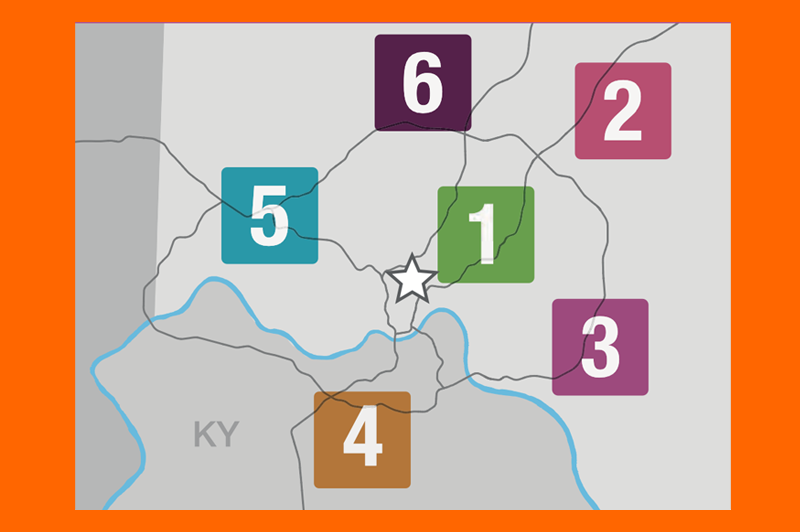
    The Comprehensive Children’s Injury Center at Cincinnati Children’s provides this list of places where you can find qualified help installing or checking the installation of your child’s car seat.

    Car Seat Fitting Locations

    [pdf-embedder url=”https://lovelandmagazine.com/wp-content/uploads/2025/03/safety-car-seat-fitting-station-map.pdf”]