Loveland, Ohio – The Little Miami River Chamber Alliance held public forums this week for candidates for city council and school board. Both events were live-streamed on the Chamber’s Facebook page and can still be viewed.

News and Events from the Loveland, Ohio Area
Without fear or favor
Since 2004

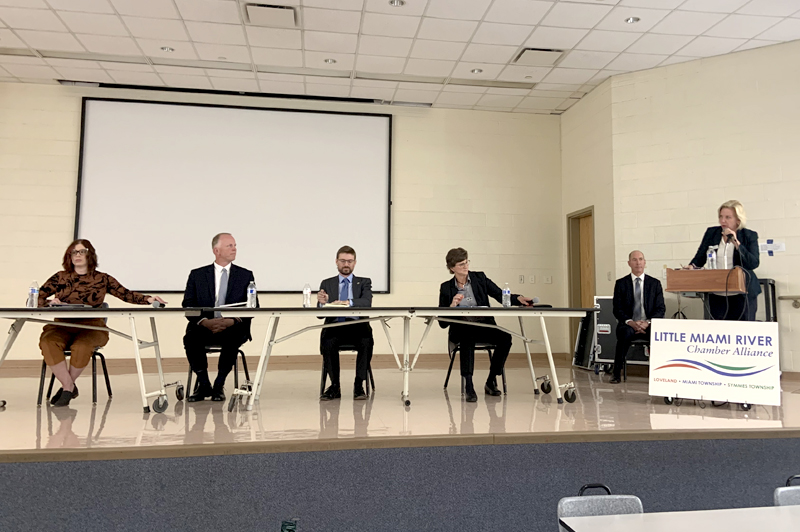
Loveland, Ohio – The Little Miami River Chamber Alliance held public forums this week for candidates for city council and school board. Both events were live-streamed on the Chamber’s Facebook page and can still be viewed.


Dear City Hall,
I ask you to install directional signs in our Historic District that point to accessible parking spaces.
To honor National Developmental Disabilities Awareness Month I decided to revisit the draft of a proposal I worked on from 2014 until 2016. Most of the proposal was eventually approved by Loveland City Council and the Loveland Planning and Zoning Commission and is now adopted law in the City. I started the project in 2014 when resident, Amy Clawson raised concerns to me. Amy said that unfortunately, a very common problem for people who have different needs is in finding good, appropriate parking that can accommodate their physical or health issues. She pointed me to several instances of inadequate and poorly marked parking spaces in the Historic District. After taking an inventory around town, I published this story: Accessible parking; out of sight, out of mind, neglected and abused.
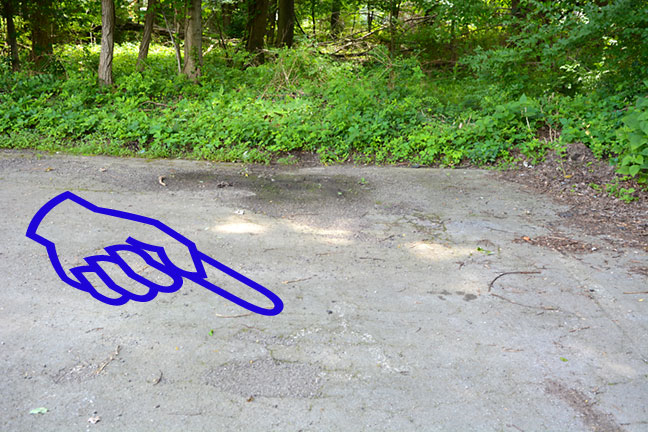
Because most spaces in Loveland in 2016, whether on public or private parking lots were not in compliance with either Ohio or Federal law, the proposal was to mark all accessible parking spaces in the City in a consistent manner and for City Hall to choose a deliberate pathway to bring them all into lawful compliance.
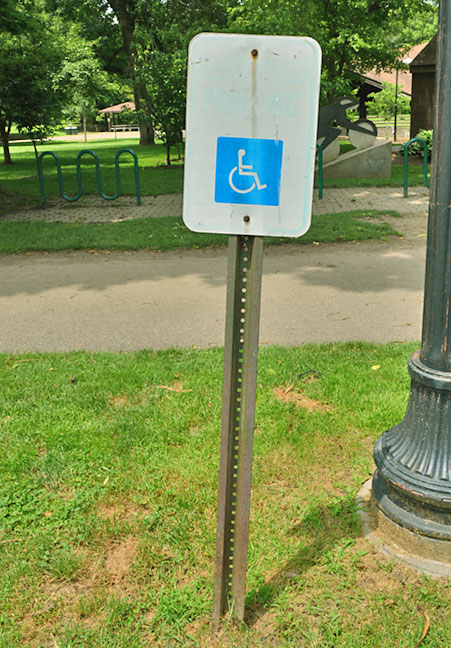
It’s intuition that leads you to rather easily locate the accessible parking spaces at Kroger or shopping centers, however, since most businesses in Historic Downtown do not provide their own parking, directional signs as well as signage at the parking spots themselves are needed.
At the time I started my research, accessible parking was out of sight, out of mind, neglected, and abused. During special events, they are still mostly out of sight and mind.
I received the full support and helpful suggestions from both City Manager Dave Kennedy and City Engineer Cindy Cindy Klopfenstein as I crafted and illustrated the plan. Kennedy from his end ensured that the planning commission and city council gave careful thought to the plan and secured their approvals.
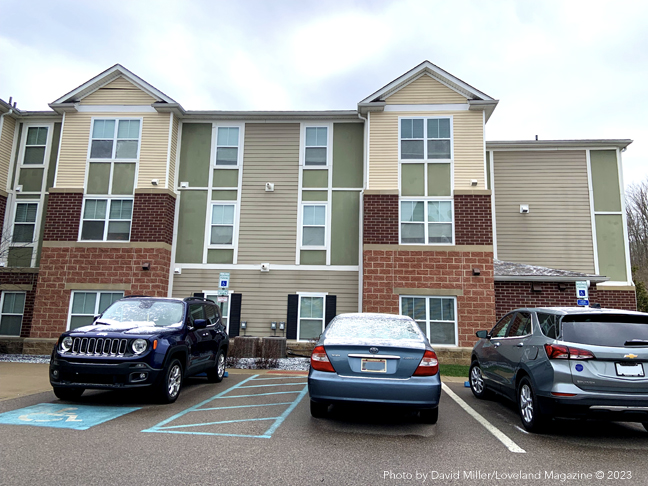
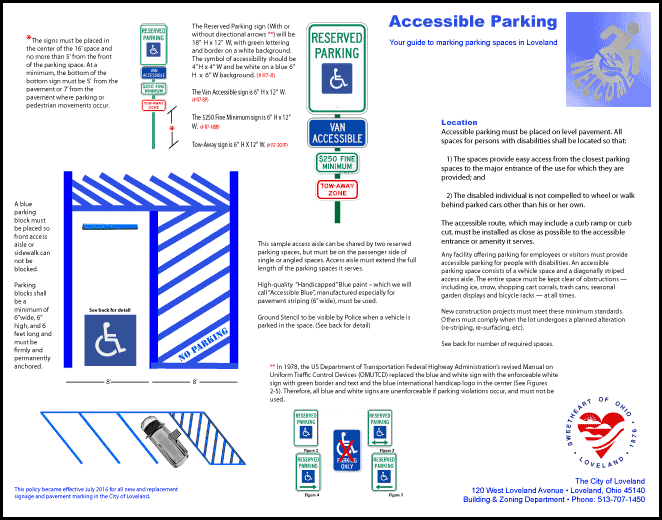
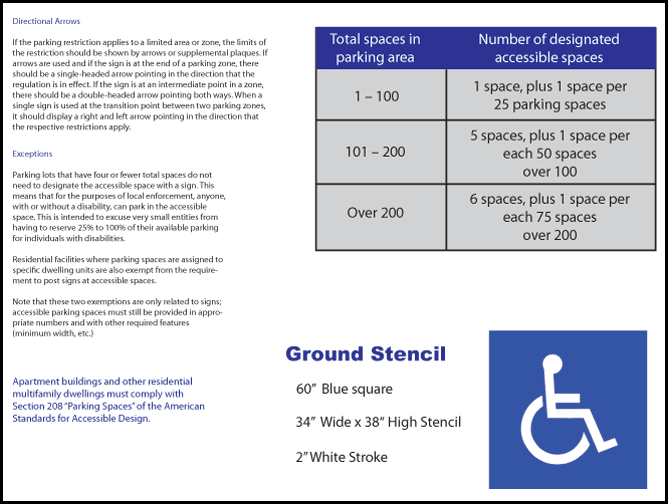
The plan as adopted requires that all new parking spaces from new development must tell the Planning and Zoning Commission how they intend to comply with the new requirements. Any repaving, recoating, or new stripping of existing parking lots must now also use the guidelines.
Also adopted at the time was a policy requirement that all applications, whether from private groups or City Hall who filled out an application for special events describe on the application how they will provide the number of accessible parking spaces based on their anticipated attendance.

The original plan I proposed was to use a new universal design that at the time was being adopted around the country, but through research of Ohio Department of Transportation law, I discovered that although they were considering the new design they had not yet made it their design of choice. The newer “fluid movement” design is meant to accentuate a more positive image of accessible needs rather than an expression of one using the parking spot as being “handicapped”.
Also, one idea I had in 2016 was to have directional signs placed throughout our Downtown Historic District pointing to where a person could find accessible parking, without driving around looking for them.
Thus, in light of it being National Disabilities Awareness Month I have revisited my earlier proposal and now suggest “wayfinding” directional signs in the Historic District so people can find the hidden gems closest to where they want to go.
I propose permanently mounted signs as well as portable ones that would be brought out for special events such as Christmas in Loveland, parades, and the Independence Day event.
Thank you for considering my suggestion.
Best regards,
David Miller

Response to September 27th City Council Meeting Comments
A guest column by Lauren Enda
At the city council meeting on September 27th, a Loveland resident voiced concern regarding an invasive removal event held at the West Loveland Nature Preserve on September 10th. In her speech, she compared the sanctioned, supported, and fully vetted work done by volunteers with hypothetical residents who may wish to rip out playgrounds and clearcut trees. Examples that she herself said were “outrageous”. After her speech, Loveland’s city officials did not reassure the resident that the city sanctioned the work, that the Nature Preserve was in safe and competent hands throughout the project, and that they were grateful for the work the volunteers had done. They remained silent on all these truths. The mayor seemed to confirm the resident’s concerns by stating, “For all the reasons you mentioned, steps have already been taken and that project has been put back where it belongs, which is Tree and Environment and that will be the only entity that will be taking those steps forward.”
Anyone listening to the speech and the mayor’s reply might be led to think the speaker’s concern was that the volunteers did something inappropriate or incorrect. No. The speaker in fact stated that the volunteers did a good job removing invasives in the Nature Preserve. The speaker’s concern is that city officials sanctioned this type of project in the first place. She asked later in her speech that the city rethink future projects like this one.
A quick call to the city manager would have informed her that city officials had already cancelled future projects, not because of the professionalism or work of the volunteers, but because the city solicitor stepped in. From the city solicitor on September 20th, “While the City appreciates the work you performed, please be advised that the City is not willing to allow… non-city contracted entity, to do further work in the West Loveland Nature Preserve. Any work performed by the City, or on the City’s behalf, must be done through a contracting process that includes certain insurance, liability and other requirements we expect of all contractors.”
In the end, by approving the project 53 man-hours of labor jumpstarted the arduous process of removing invasives from Loveland’s green spaces. Fantastic! And that is something we can all be proud of.
So, if there was a lapse in judgement it was not by the volunteers. What the volunteers did on September 10th was an act of concern and respect for Loveland’s green spaces.
To clarify things that should have been clarified at the city council meeting on the 27th, below is timeline for the event. This should clear up any remaining concerns about how the event came to be, who was involved, and who gave permission. It shows that insurance and liability issues had been handled. In the timeline are approvals from the Tree and Environment Committee, the City Manager, and the Public Works Director. There is support from Public Works in supplying tools and clearing up the cut debris and from the Marketing and Communications Coordinator for publicity.
If you are interested in joining future invasive removal days on privately-owned land, please contact me at lauren_enda@hotmail.com. The work continues!
8 July – After receiving approval from them to remove invasives in the West Loveland Nature Preserve (WLNP), the Tree and Environment Committee sent a waiver so high school students could help in the project
July – Conducted multiple dates of invasive removal in the WLNP with volunteers and members of the Tree and Environment Committee
End of July – City Manager approved the project to hire a contractor, at my own expense, to speed the clearing of invasives
1 August – Contractor insurance document was emailed to City Manager
15 August – Emailed project details to the City Manager and Public Works Director, indicating that written approval would be necessary to finalize the plans
19 August – Loveland’s Public Works Director sent email, approving the project, stating that “…this is a great project and really do appreciate your lead in this.”
21 August – Emailed Tree and Environment Committee about the September 10th date for invasive removal at WLNP
24 August – Met with invasive removal contractor at WLNP to discuss project
24 August – Received email from Tree and Environment Committee stating, “We are all working for the betterment of our environment – and that is what matters. We look at you as a hero in many ways for the way you have researched and pursued issues.”
30 August – Met with the Reforestation Program Manager at the Ohio River Foundation to discuss project
30 August – Spoke with the Director of Land Stewardship at the Arc of Appalachia to discuss project
6 September – After phone conversations with Loveland’s Marketing and Communications Coordinator, sent her event details and she posted them on Loveland’s social media; the post encouraged residents to join the event
8 September – Contract for work sent to me from contractor. I called City Manager to ask about how to proceed. He said that he does not need to see it or sign it since I am paying the contractor’s bill
8 September – Loveland Public Works brought work gloves, eye protection, loppers, and the key for the WLNP in preparation for the event
10 September – Event is held; a huge success with approximately 1000 invasive plants removed, painted with herbicide, and stacked in the manner dictated by Public Works
12 September – Public Works Department chipped all stacked invasives in the WLNP
13 September – Marketing and Communications Coordinator posted summary of the event on Loveland’s social media pages
13 September – As a show of respect for the support and encouragement from Loveland officials, I reported to city council about the event, the outcomes, and thanked the city for their help in making the project possible. The Mayor thanked me for my work stating, “Thank you Mrs. Enda. We appreciate your efforts and that of all the volunteers.” Other city members chimed in with “thanks” as well.
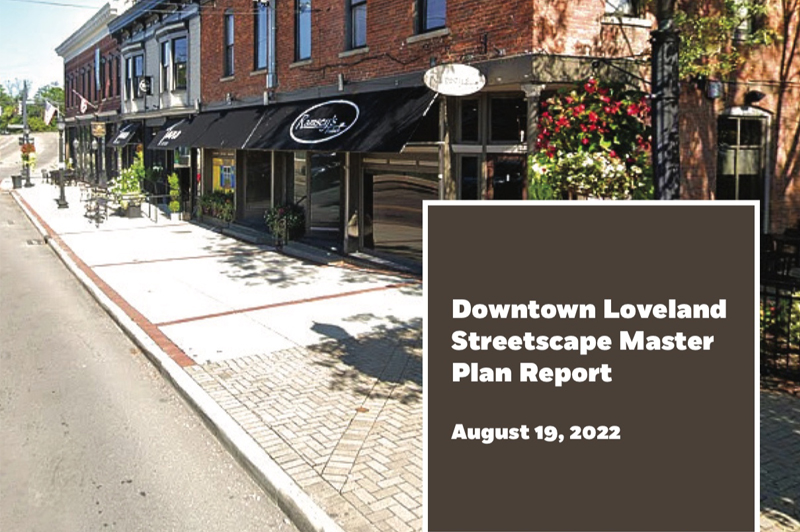
Loveland, Ohio – City Council will hold a public hearing (at or about) 7 PM in the council chambers at City Hall on September 27 to review and receive public input on a proposed Downtown Loveland Streetscape Master Plan.
The project aims to, “Create a planning document that will guide both short- and long-term infrastructure and streetscape investments in the city’s downtown business district.”

Introduction by Kevin Kiley
What’s going on in Loveland this week?
The City of Loveland is currently reviewing an application for a large housing development on the east side of Loveland. This 111 acre parcel of land, a historic property currently owned by Grailville, was recently annexed into Loveland and is under contract to Drees Homes “with an option to buy” for $7.3 million. Drees has requested that Loveland re-zone the site to a special planning district (SPD) and approve an exception to build more than twice the number of homes permitted by current zoning. This same property was offered to Loveland Schools but failed to pass levies in the months preceding the pandemic.
Why does this matter?
Several concerns have been addressed to the Loveland Planning and Zoning Comission on how this new development will impact Loveland, including its effect on traffic, parking, schools, and other taxpayer expenses. This proposed new housing development borders 100 acres of nature preserve now owned by the Clermont County Parks District. A growing number of forward-thinking residents see this additional 111 acres as an incredible opportunity for Loveland to build something amazing for all who live in Loveland, not just a select few.
How can I get involved?
The next Loveland Planning and Zoning meeting is Wednesday, May 4th at 7 PM at Loveland City Hall. Please attend to learn more and show support—help us pack the room. There will be a sign-in sheet in the room for anyone who wishes to speak.
To residents and elected decision makers of Loveland
by Laurie Kiley

As I sit to put my feelings about the development of the Grailville property into writing, Joanie Mitchell’s lyrics are stuck in my head…
Don’t it always seem to go
That you don’t know what you got ’til it’s gone
They paved paradise and put up a parking lot
While I am a tree hugger in my soul I am also realistic that as humankind continues to evolve nature will always be at risk. We must be diligent to make personal choices—and choices as a community—that result in the greatest legacy for those who come after us. We cannot be shortsighted.
That being said, my biggest concern here today is actually about accountability. Loveland residents elect our Council to have privileged access to information on our behalf. We expect that they are making decisions holistically and with the future in mind well beyond their tenure.
As accountable Council members, we implore you to not make easy compromises today that lead to deeper issues for our community tomorrow. The full impact of every rezoning decision, every parking garage, and every field that is eliminated must be considered.
In our personal lives, it is irresponsible to spend beyond our means or to act now and think later.
Likewise, it would be irresponsible for our Council to make decisions that put Loveland’s future at risk.
The Grail is entitled to sell the property they cannot afford to hold. Drees is entitled to request an exception to maximize its profits and create a space to benefit 209 new households. Loveland Council, however, is not obligated to create new laws to make it possible.
I want to go back to my previous point about encouraging holistic decision-making. Here is a summary of inter-related concerns from my point of view:
If Council is contractually obligated to respond to this SPD then the answer must be “no” until we can thoughtfully consider the big picture.
Yes, “something must be built here”. Let’s build something that benefits the entire community. Let’s build something that will make Loveland even more cherished by its citizens and inspires hope for its future.
Please don’t cite failed levies of the past. There’s no need for blame in any direction. Those levies only indicate that the expectations of the planners and the voters were not in line. Time has certainly moved on, so must we. We need to learn from those experiences and move forward together.
Loveland needs to stand up for itself. We need to be bold and brave and involved in order to maintain our character and identity as a community. By NOT approving this SPD our elected Council would give Loveland a huge opportunity to help The Grail and Loveland find an optimal solution to the benefit of all.

Dear Fellow Loveland Residents,
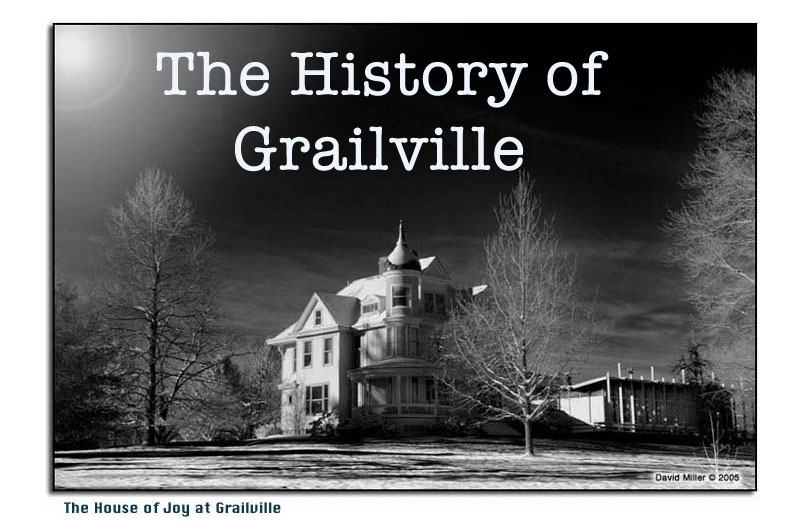
It is important that you are aware of a process that is now ongoing involving 110 acres of Grailville land between State Rt. 48 and O’ Bannonville Road. Loveland City Council and the Zoning Board will have to make a decision on the Drees Homes’ request for a change in the zoning status to allow them to build 209 homes on that land.
The initial public hearing drew a standing-room-only crowd. Everyone who spoke, with the exception of the Drees representatives and one real estate agent, requested that the Zoning Board say NO to the Drees proposal. There are important long-term reasons why it is best for our community that the Drees proposal does not go forward.
We all know the traffic situation in downtown is bad now. The construction of a large subdivision on this Grail land will initially cause several years of construction trucks and dirt funneling into town from State Rt. 48 and O’Bannonville Road. As the houses are built and sold regular traffic of several thousand car “trips” through town will phase in. This will never stop.
Our school system is currently overflowing recommended capacity. Extra trailers are needed for space. It is estimated that 4-5 additional classrooms of children are likely to be added by this subdivision. We are all painfully aware of the costs that would be incurred to build new schools, as well as the stresses on children and teachers involved in overcrowding. Again, once this increase is allowed to happen it is unlikely to be reversed.
There are also serious general infrastructure issues relating to water. The Loveland water system is a series of wells which when run at high demand can drop the water table in a significant way. One must ask at what point will this become a problem. Water pressure has at times been an issue and more homes drawing water cannot but aggravate this.
The other end of this problem is the management of the additional sewage. The sewer line under East Loveland Avenue is outdated, and fragile, and it is questionable whether it is adequate to handle a large new neighborhood. The receiving Polk Run sewage treatment plant has no more room to expand. There has been no confirmation of sewer availability, capacity, or access compliant with MSD standards. Will the City of Loveland be put in a position of providing this infrastructure at Loveland residents’ expense? With the Little Miami River so nearby it is crucial that there be no chance of contamination.
Natural rainwater run-off must also be considered. The land that White Pillars and Grailville are on slopes to the northwest. The existing homes along O’Bannonville Road are all in the path of this natural drainage and vulnerable to surface flows or overflowing of Bares Run Creek in times of heavy rain. The new roads and houses will eliminate acreage which currently absorbs the rainwater and so more will continue on downhill.
The final thing I need to speak of is the special quality of this particular piece of land. For about 80 years women of The Grail have lived or worked there. They have tended the land, holding it, knowing the sacred nature of this place. As the Grail has shared access to their land with others for walking and connecting with nature, many have become aware of the spiritual calm which it provides. In today’s world, we need this more than ever.
In conclusion, I would encourage everyone who feels that we do not need another big subdivision on this Grailville land, with all the negative side-effects, to please make your views known. Attend the public meetings (the next is on May 4), write to or call members of the Zoning Board and City Council.
In our country, we have a government of citizens for citizens. Our officials have a duty of honor to listen to the members of the community they serve. They are us; and therefore, we must speak so they may be guided.
Sincerely,
Elizabeth Murphy

by David Miller
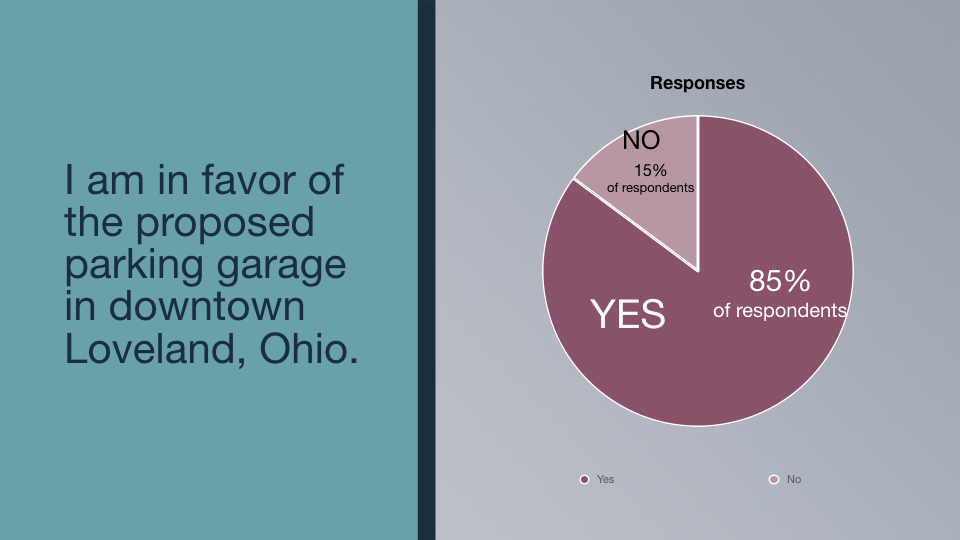
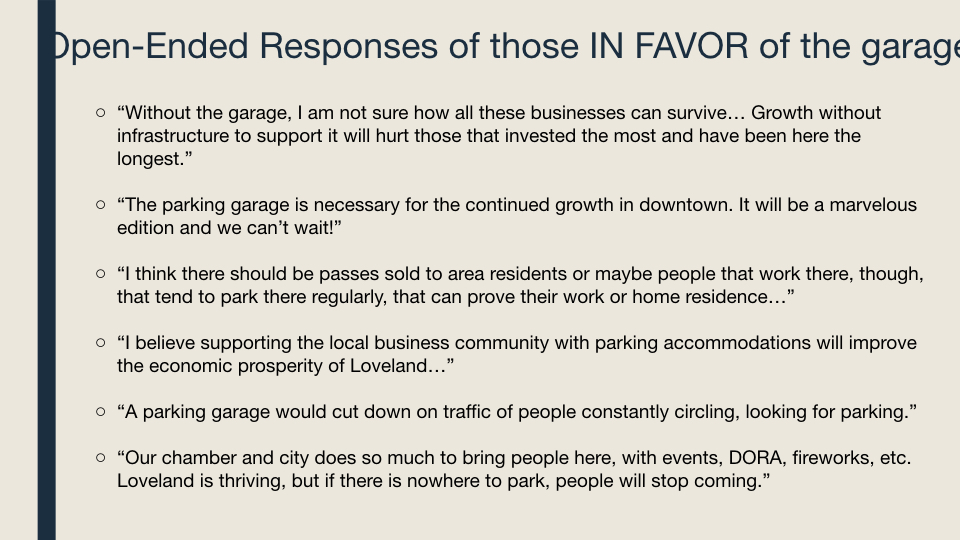
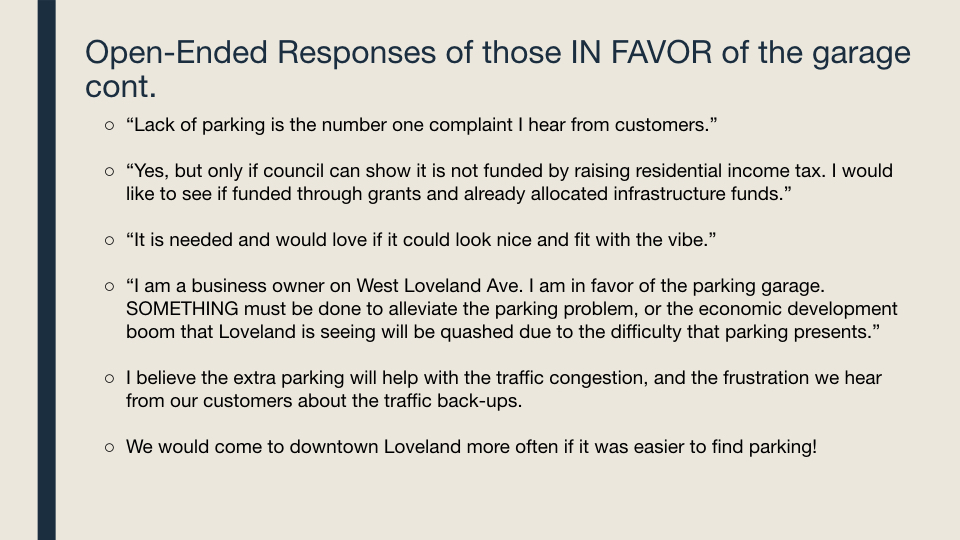
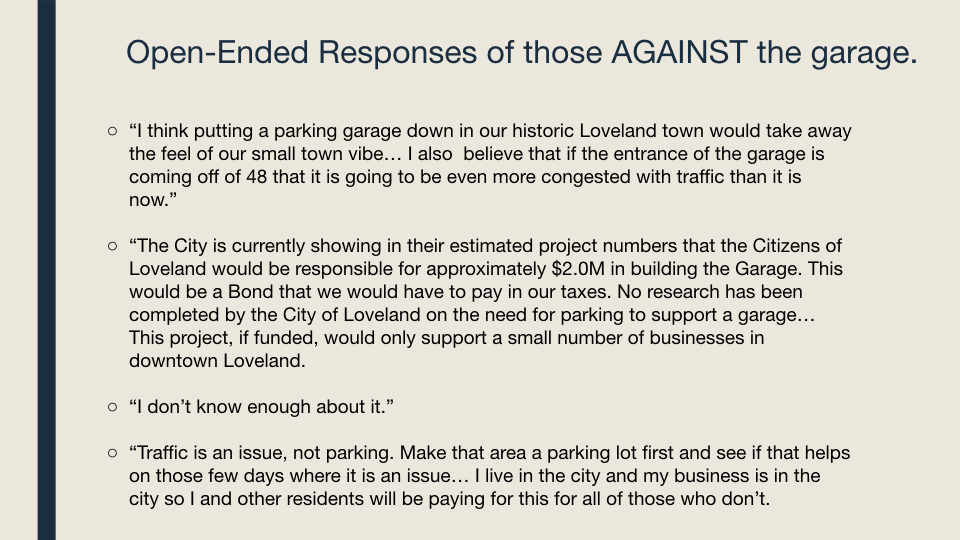
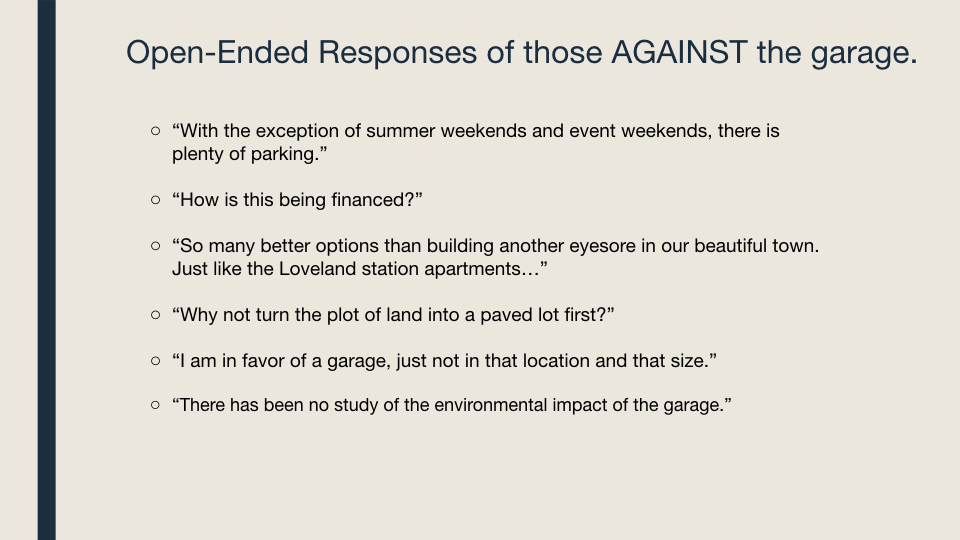
Loveland, Ohio – At Tuesday’s council meeting CeeCee Collins released the results of a parking garage survey recently conducted by the Little Miami River Chamber Alliance. Collins is the President of the Chamber.
by David Miller
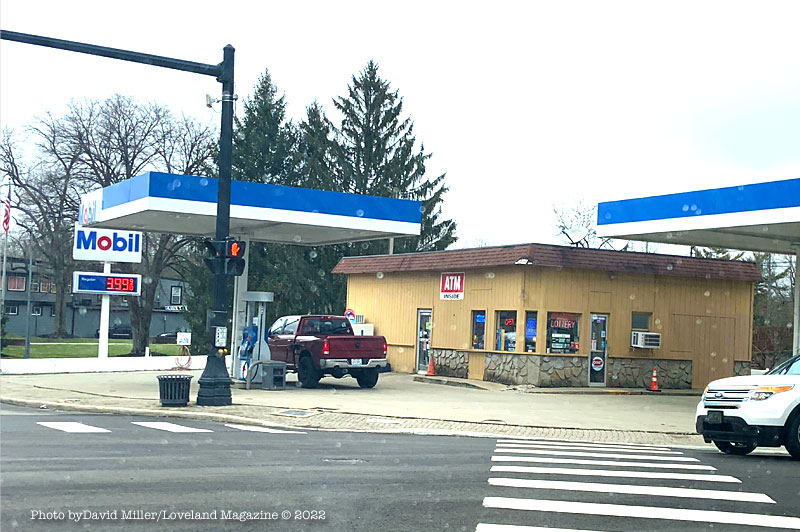
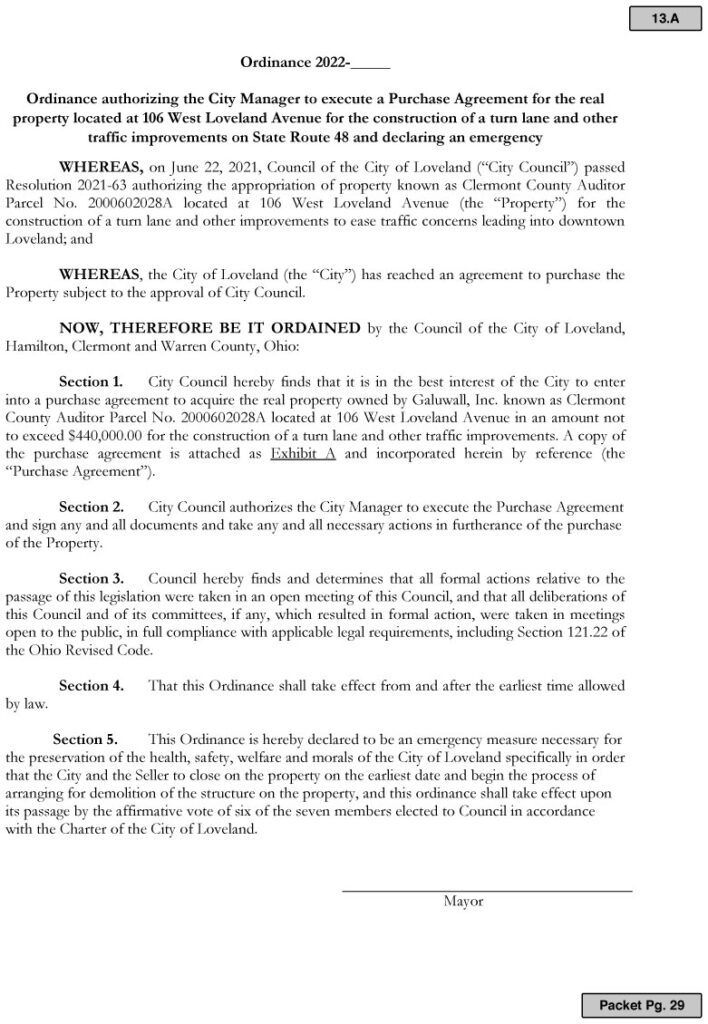
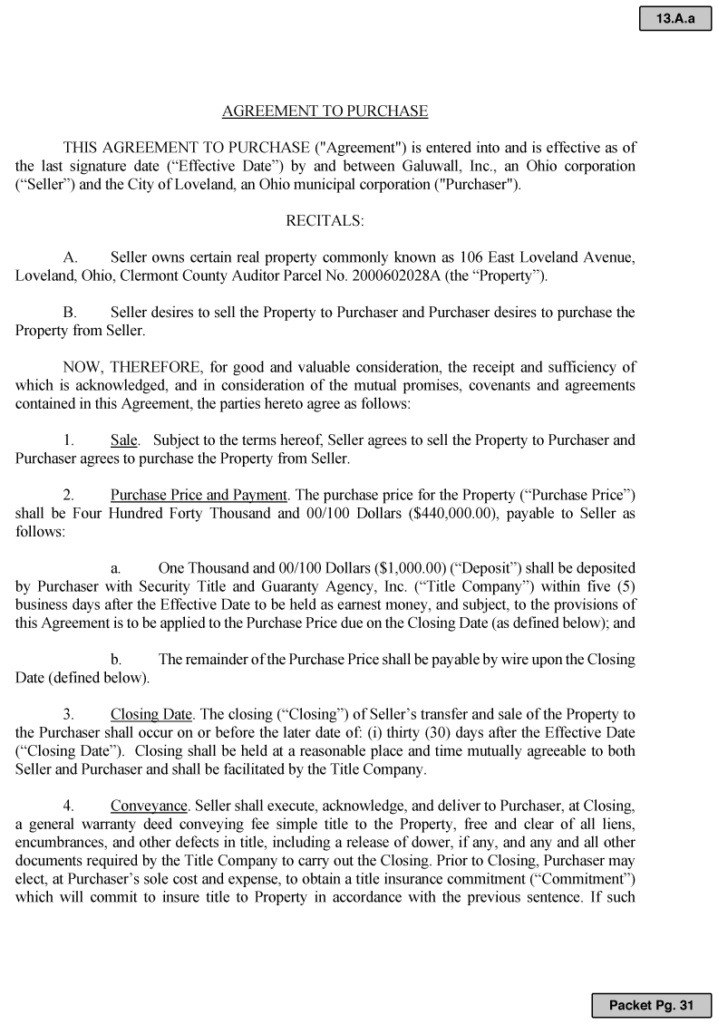
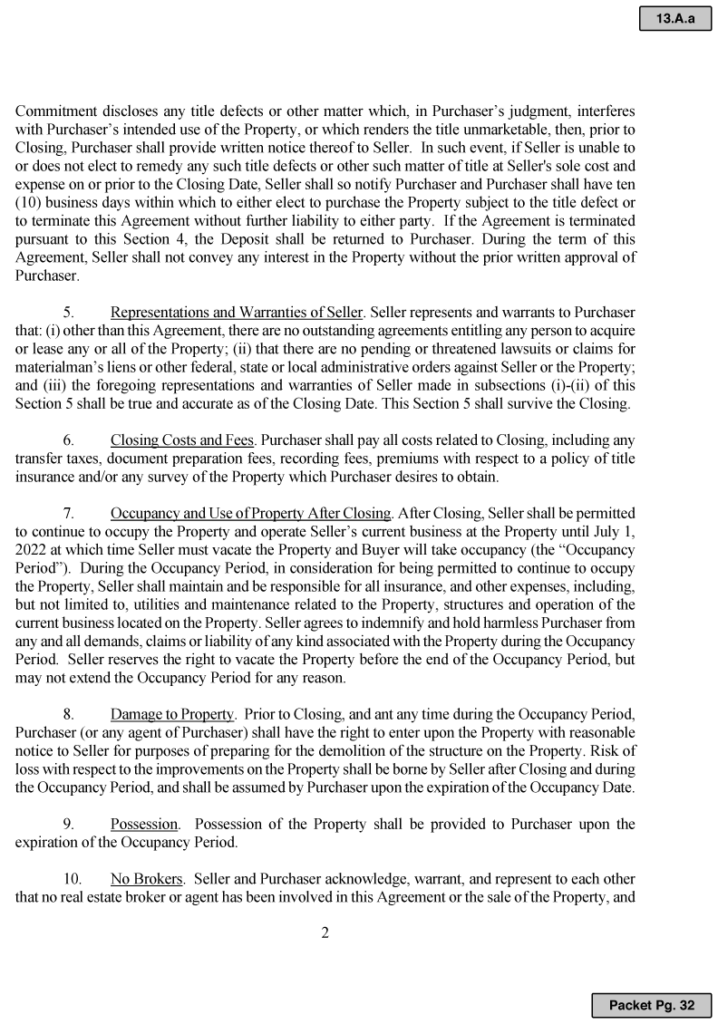
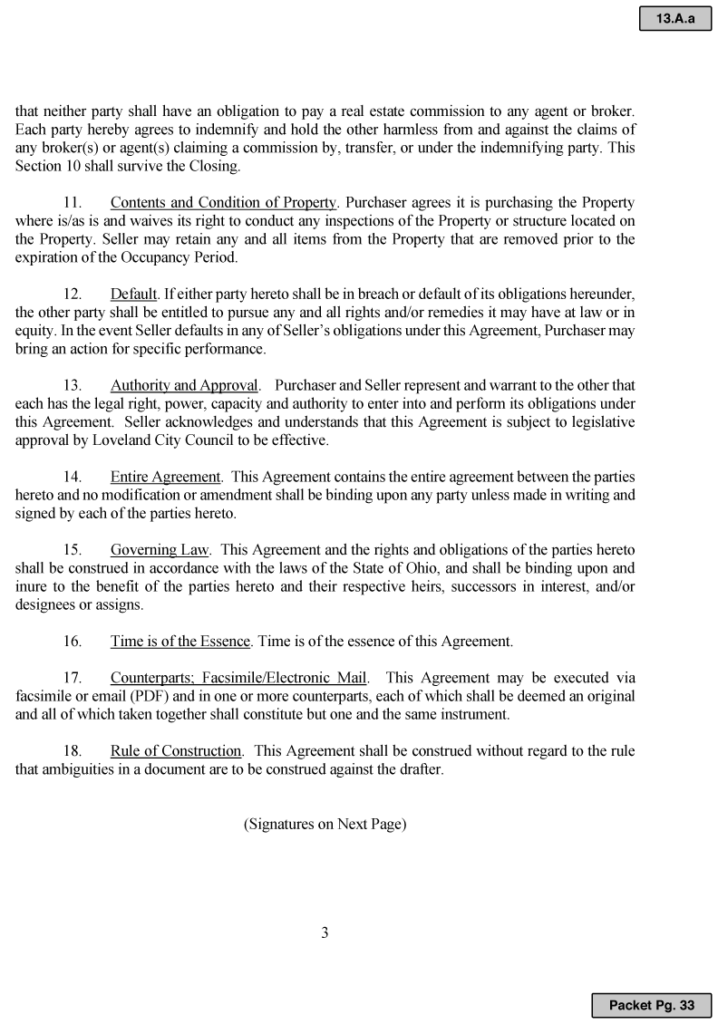
Loveland, Ohio – At Tuesday’s meeting, Council will hear the first reading of an ordinance to purchase the Mobil Gas Station at the corner of West Loveland and State Route 48.
The ordinance will authorize the City Manager to execute a purchase agreement for the property located at 106 West Loveland Avenue for the construction of a turn lane and other traffic improvements on State Route 48 – “and declaring an emergency”.
The ordinance says the final purchase is not to exceed $440,000.00.
![[W/Video] Rally at City Hall informs and asks questions about proposed parking garage](https://lovelandmagazine.com/wp-content/uploads/2022/02/parking-garage-rally.jpg)
by David Miller
Loveland, Ohio – An estimated 16 people gathered in front of Loveland’s City Hall at 1 PM on Saturday and spread out through the streets of the Historic District and along the Loveland Bike Trail. They were gathering signatures on a petition and in general educating the public about their concerns about a parking garage that is proposed for the Historic District. They expressed that they want to preserve the existing character and ambiance of the downtown area and the Loveland Bike Trail. Opinions were also expressed about protecting the Little Miami River watershed, including O’Bannon Creek that enters the Little Miami in downtown.
Those who rallied Saturday are questioning the cost of the proposed garage, the need for studies such as an environmental impact study, parking research, and even the need for a garage. They want “data” about what they say is the costliest municipal project in the history of the City.
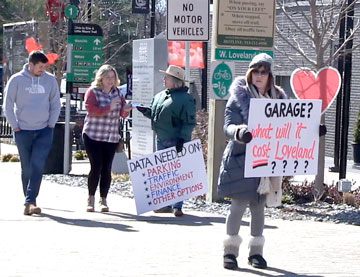
Organizer, Lauren Enda told Loveland Magazine on Monday that she obtained 75 new signatures on a petition adding to the 129 signatures she has gathered from an online petition she created.
Those who gathered are asking the city council to engage with the public before building a parking garage in historic downtown Loveland and ultimately having the question put on the ballot so residents could vote it up or down.
Loveland Magazine sent an email to all council members and City Manager Dave Kennedy on Sunday morning seeking comment on the rally. Only Councilmembers Tim Butler and Kip Ping responded. You can read the full text of their responses below.
Enda said on Monday, “We are not saying, ‘no garage’ only that the proposal should be studied from many angles, and then letting residents vote.”
Tim Butler response:
I support the right of the citizens of Loveland under the First Amendment to peacefully assemble and express their position about an important issue such as the proposed Parking Garage. I respect their passion for the City of Loveland. I also support many of their specific points and oppose the construction of the Parking Garage. I urge my fellow Members of City Council to listen to the citizens of Loveland and carefully, completely and thoughtfully address our citizens’ concerns before moving forward any further with this project.

I believe the referendum process should be used sparingly. However, with the intense feelings on both sides of the issue and the potential impact of the construction of this project, a referendum to gauge the public’s support or opposition to this project, before Council authorizes construction and our taxpayers are responsible for subsidizing and paying off the Garage for a generation, is appropriate.
Kip Ping response:
This issue cannot be looked at simply as an “are you for it or against it” sort of issue.  There are too many facets to make it that simplistic since a few tweaks one way or another could shift opinions.  As opponents have stated, there are considerations to be made with regard to cost and environmental impacts.  Proponents would note considerations with regard to supporting downtown patrons, helping traffic congestion (i.e. those circling looking for parking), and making it possible for local businesses to have parking reasonably close to their establishments.  All of these are worthy of due consideration.

Council is listening to those that have varied views on the parking garage.  We have heard in open forum from a few people that have come both in favor of and opposed to the parking garage.

Walking neighborhoods last fall during the election champaign I had an opportunity to hear from many residents, the majority of whom either didn’t have interest in the downtown parking issue or asked why the garage had not been started yet.  The Sierra Club and CROW both reached out to council members via email, and I responded to each with the intent of promoting dialog with them on their concerns.

Council is working toward improving the parking and traffic issues downtown and is not deaf to the opinions that have been shared and will be shared at future opportunities.  As already written, it is a multi-faceted issue which calls for a balanced and best solution – the project needs to be fiscally sound, environmentally respectful, aesthetic, etc.  There will, no doubt, be some that will be unhappy with the final resolution (perhaps even on both sides of the issue), but that is obviously the unfortunate necessity when there are honest differences of opinion on any issue.
by Lauren Enda,
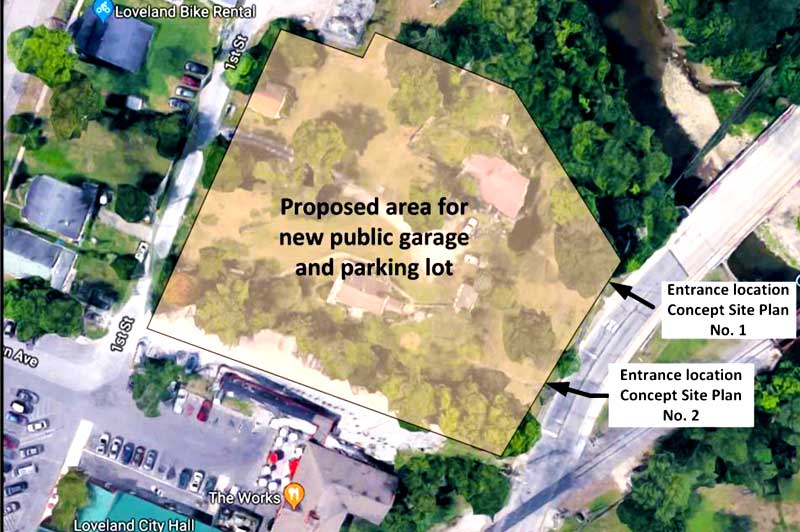
For the last several months, I have been speaking at council about the need for more conversation, study, and transparency about the parking garage proposal. Loveland needs to do something about the parking issue, that much we can all agree upon. The proposed garage is one of many, many options available to Loveland. Every other option is less expensive, less permanent, less damaging to the environment and less jarring to the landscape. And every other option would enhance, rather than detract from, Loveland’s brand as a quaint and historic area.
Here is a high-level overview of just one option that would be free to Loveland taxpayers, drastically cut down summer traffic levels in Loveland, provide Loveland businesses even more customers and clients, and maintain our natural, peaceful downtown landscape. The Miami Riverview Park is approximately one mile away from Loveland and it sits on the bike trail. There are hundreds of spaces available – all free of charge. Loveland could mount a marketing and communication plan, teaming with Miami Township, to divert cyclists and walkers coming from 275 to park there and then ride or walk into Loveland – which on a bike takes about a minute. Cyclists or walkers from the east or Route 48 could park there as well without entering Loveland’s downtown area at all.
To get the word out about the parking alternative, we could post temporary signs on the trail directing people to Miami Riverview next time they are in Loveland – we could even include a QR code with a map directing them. We could make up information cards to put on windshields and for businesses to give to their customers. Loveland has a Marketing and Communications Coordinator on staff who could design more ways to get the word out about this idea. If cyclists parked at Miami Riverview, it would free up dozens, if not hundreds, of parking spaces downtown for Loveland residents, and reduce traffic. Miami Riverview is just one option of many. And it is free, easy, available now, with no construction, no environmental damage, and no controversy. Let’s pursue this option first.
A parking committee could outline further options, weighing cost, return on investment, environmental damage, number of spaces, etc… Residents would be happy to talk through more options with members of council at any time. We do not have to choose the most expensive option. In fact, why would we choose the most expensive option? Choosing to spend millions of dollars unnecessarily shows a lack of respect for taxpayers and their money. Council needs to explain their course of action when other options are available. Let’s spend our precious dollars on other higher priority issues – our aging water system, traffic issues, or sorting out the Chestnut property. There are plenty of priorities to choose from that would benefit everyone.
“I chose Loveland as my retirement home. A large part of my decision to move here was the bike trail and the downtown area and I am determined to protect that. I will fight to protect it.”
Lauren Enda
To make speeches and write articles takes a lot of work – and a lot of courage. Partnering with and learning from a wide variety of individuals and organizations helps to learn about the garage and its detrimental impacts. Two of those organizations spoke at City Council on February 8th – the Sierra Club and the Citizens for Rights of the Ohio River Watershed. Both organizations acknowledge that parking must be addressed but saying the issue must be fully studied and the Council must give residents the ability to vote on a parking garage. Contacting Ohio’s Environmental Protection Agency, The Ohio Department of Natural Resources, multiple elected officials, and The Economic Development Administration has also widened my knowledge of the issue.
I chose Loveland as my retirement home. A large part of my decision to move here was the bike trail and the downtown area and I am determined to protect that. I will fight to protect it. I want Loveland to succeed. I want Loveland businesses to succeed. I want visitors to enjoy my town as much as I do. And I want everyone to have a place to park. Together, let’s find ways to provide that parking using a rational, systematic approach.
If you want to show your support for a more reasoned approach to the parking issues in Loveland, sign this petition. Council needs to hear from us that we want more data on the parking issue. Thank you.
Petition · Stop the Loveland Garage · Change.org
Lauren Enda lives in Loveland at Hidden Creek.
>