Tag: civil rights

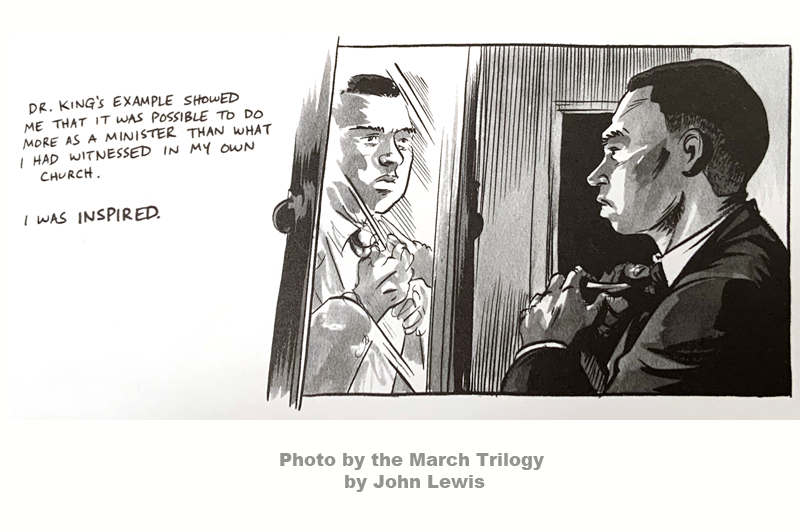
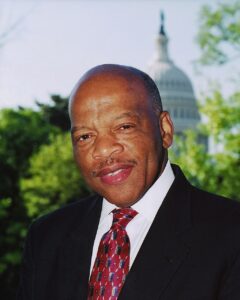
  • Civil rights icon John Lewis discusses his first meeting with Dr. Martin Luther King Jr.

    Civil rights icon John Lewis discusses his first meeting with Dr. Martin Luther King Jr.

    From #kunhardtfilmfoundation

    John Lewis (official biopic)

    Martin Luther King Jr., an American civil rights activist, was fatally shot at the Lorraine Motel in Memphis, Tennessee, on April 4, 1968, at 6:01 p.m. CST. He was rushed to St. Joseph’s Hospital, where he was pronounced dead at 7:05 p.m at age 39.

    Join us for an inspiring conversation with the late civil rights icon and politician John Lewis. In this interview, John Lewis shares his journey from segregated rural Alabama to becoming a key figure in the Civil Rights Movement.

    He discusses his first meeting with Dr. Martin Luther King Jr., his involvement in the Freedom Rides, and his philosophy of “good trouble.”

    Lewis also reflects on the Poor People’s Campaign, the assassinations of Martin Luther King Jr. and Bobby Kennedy, and the enduring struggle for equality and justice.


    John Robert Lewis was elected to Congress in 1986, serving in the United States House of Representatives for Georgia’s 5th Congressional District. He held several leadership positions in the House, including Senior Chief Deputy Whip, and was a member of the House Ways and Committee as well as the Congressional Black Caucus. He earned degrees from the American Baptist Theological Seminary and Fisk University.

    _______________

    John Lewis speaks on a House resolution celebrating Martin Luther King Jr.
    Recorded January 21, 2009

    _______________

    He began his career as a civil rights organizer in 1960 during the Nashville sit-in movement and as a Freedom Rider. He helped plan the 1963 March on Washington for Jobs and Freedom and rose to national prominence after he and Hosea Williams led the 1965 Voting Rights March from Selma to Montgomery, where he and other peaceful protestors were attacked and beaten on the Edmund Pettis bridge.

    His commitment to civil rights and social justice has been the hallmark of his career, and he has received multiple national and international awards for his work, including the John F. Kennedy “Profile in Courage” award, and a National Medal of Freedom from President Barack Obama in 2010.

    He wrote multiple best-selling books and continued his work in Congress as a human and civil rights advocate until he passed away on July 17, 2020 at the age of 80. From the HBO / Kunhardt Film Foundation (KFF) Documentary “King in the Wilderness” that follows Dr. Martin Luther King Jr. during the last years of his life: from the passage of the Voting Rights Act in 1965 to his assassination in 1968, through personal stories of the people who were around him.

    Also read:

    Assassination of Martin Luther King Jr. from Wikipedia, the free encyclopedia

  • Federal judge blasts disgraced Ohio House speaker as a “bully,” sends him straight to jail

    Federal judge blasts disgraced Ohio House speaker as a “bully,” sends him straight to jail

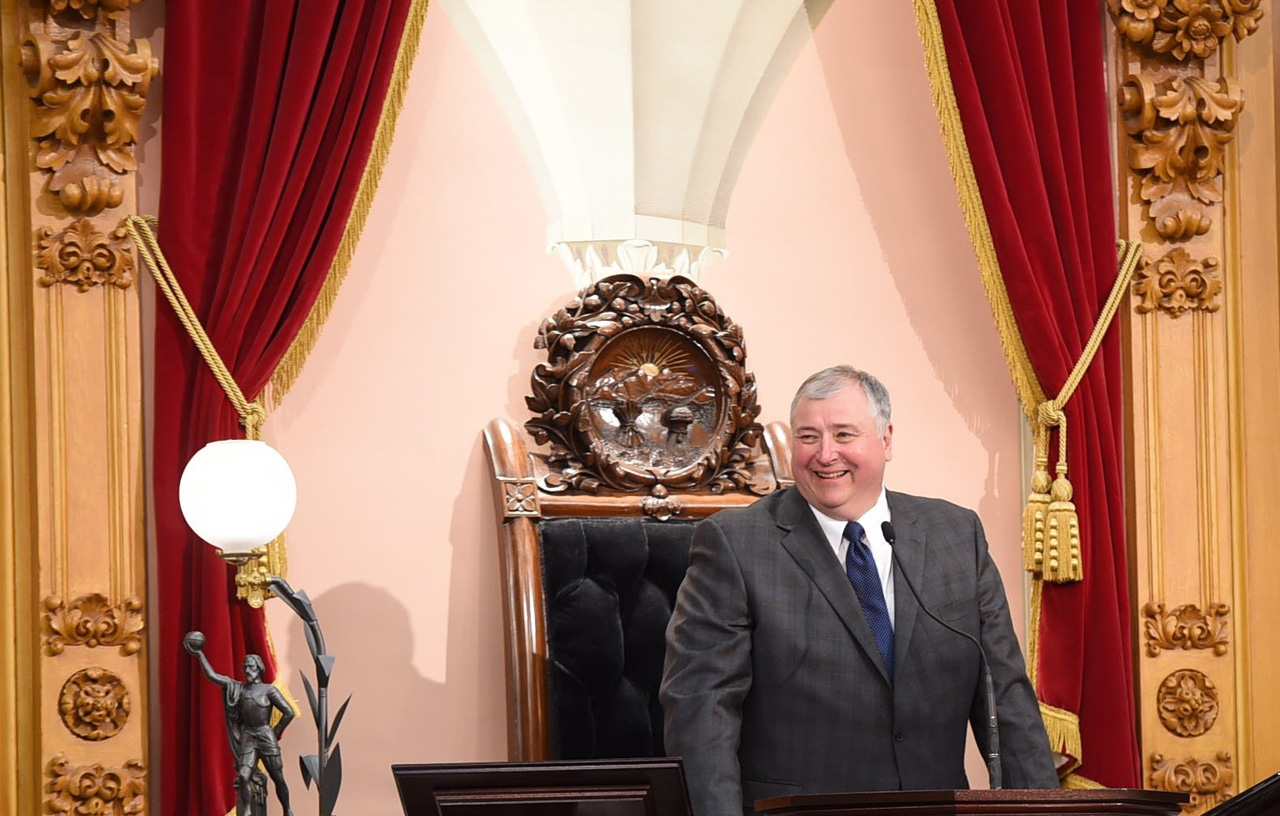
    Former House Speaker Larry Householder, R-Glenford. Source: Ohio General Assembly.

    BY:  Ohio Capital Journal

    CINCINNATI — Former Ohio House Speaker Larry Householder spent possibly his last moments as a free man around 2:30 p.m. Thursday and they couldn’t have been pleasant.

    U.S. District Judge Timothy Black gave the Glenford Republican the maximum possible sentence of 20 years and then ordered blue-shirted U.S. Marshals to immediately take him into custody. He rose, put his hands behind his back, the marshals cuffed him and led the once-powerful pol away.

    But before that humiliation, the judge blistered Householder for being the ringleader of a racketeering scandal in which Akron-based FirstEnergy paid him more than $59 million in bribes in exchange for a $1.3 billion bailout, most of which was intended to save two failing nuclear plants in Northern Ohio.

    Ratepayers could have used that money for things like education, health care or to start businesses, the judge said.

    “You handed that money to suits in private jets,” Black said.

    The judge made the speech and imposed the sentence after saying Householder clearly perjured himself during his criminal trial, which lasted from late January until mid-March.

    In it, Householder claimed to barely know FirstEnergy executives as federal prosecutors put on a mountain of evidence that Householder flew on their corporate jets, sat in their luxury boxes and dined in fancy restaurants as they plowed tens of millions of the corporation’s dollars into dark-money accounts.

    “You conned the people of Ohio and you tried to con the jury, too,” Black said in his gravely voice as Householder, clad in a gray suit and red tie, slumped his bulk back in his chair.

    The money from FirstEnergy and one of its subsidiaries was used to elect fellow Republicans in 2018 who would vote to make Householder speaker in early 2019. More than $500,000 of it was used to pay off Householder’s credit card bills, settle a lawsuit and to repair a house he owned in Florida.

    Tens of millions more went to pass the corrupt bailout — House Bill 6 — and to fund a thuggish campaign to thwart a citizen-initiated repeal.

    Earlier in the hearing, Assistant U.S. Attorney Emily Glatfelter said Householder used FirstEnergy’s dark money to crush a “citizen veto” and “because of this House Bill 6 remains in effect today.”

    That’s also because Republican supermajorities in Ohio’s gerrymandered legislature have refused to repeal the corrupt law even after arrests were made, and as they try to make it virtually impossible for citizens to initiate amendments to the Ohio Constitution.

    Also arrested in the scandal were lobbyists Juan Cespedes and Jeffrey Longstreth — who cooperated with prosecutors within days of their arrests — and Neil Clark, who died by suicide. Former Ohio GOP Chairman Matt Borges is slated for sentencing at 11 a.m. today, Friday.

    Steven Bradley, Householder’s attorney, sought leniency for his client. Referring to the possibility of a 20-year sentence, he said “That is effectively a life sentence for Larry Householder given his age and health situation.”

    Householder is 64 and overweight.

    Bradley argued that his client was around 60 when the racketeering conspiracy began in late 2016 and that prior to that, Householder did “innumerable” good deeds “for decades.” A 20-year sentence would “effectively give no consideration” to those good deeds, Bradley said.

    But when he spoke on his own behalf, Householder appeared to do more to harm his case than to help it, just as he did at trial.

    “My greatest commitment is to my creator… My next commitment is to my family,” he read from a prepared statement as he stood at the podium.

    Householder said that in the course of 38 years of marriage, “I can count on one hand” the number of nights he spent away from his wife, Taundra. Householder also described the crushing pain they suffered when they lost a four-year-old daughter.

    But then he pushed his claims past the point of plausibility.

    He said Taundra was planning to retire from her teaching position and next year, when he turns 65, he wanted to retire as well, saying he planned to “hang up my suit and tie.”

    Householder made that statement in the same courtroom where, only three months earlier, prosecutors put on testimony and displayed bank records and written messages from early 2020 that showed FirstEnergy and AEP putting money into dark money groups intended to fund an effort to change the state’s term limits so Householder could stay in office for as long as 16 more years.

    The former House speaker also implied that he wanted a lenient sentence not for himself, but for his family. Taundra, he said, would be alone while “I’ll be in a cold cell hours away.”

    But what might really have set Judge Black off was Householder’s profession of selfless public service.

    “My life has been a total and full dedication to making life better for those I serve,” he said.

    Black described voters who put out Householder yard signs, donated their hard-earned money to his campaigns, and pushed a button for him in the voting booth.

    “I’m not talking about some corporation or the (former FirstEnergy CEO) Chuck Joneses of the world,” Black said. Householder’s constituents who supported him “were saying, ‘I’m choosing to trust you,’ and you betrayed that trust,” the judge said.

    Black used Householder’s own words to give the lie to his claims. He quoted several recordings of Householder that were surreptitiously made during the conspiracy and played at trial.

    “If you’re going to fk with me, I’m going to fk with your kids,” Householder said in one of them.

    “Bottom line, you were a bully,” the judge said.

    If the federal racketeering statute didn’t cap sentences for a single count at 20 years, sentencing guidelines would have recommended life for the former House speaker, Black said. One reason for that is because Householder’s use of a mountain of hidden corporate money to elect a legislature, pass an exponentially bigger bailout for the company, and to crush a citizen repeal is “an assault on democracy,” the judge said.

    Black explained the special harm done by public corruption like that committed by Householder and his co-conspirators. To do so, he quoted former President Theodore Roosevelt, who ironically advocated the citizen-initiated amendment process in Ohio that Householder’s former Republican colleagues in state government are now trying to gut.

    “There can be no crime more serious than bribery,” Roosevelt said in a 1903 message. “Other offenses violate one law while corruption strikes at the foundation of all law.”

    When Borges, the former GOP chair, is sentenced today, it’s unclear what he’ll face. His involvement in the conspiracy was considerably less than Householder’s, but Judge Black showed that he’s not much in the mood for leniency when it comes to Ohio’s corrupt political culture.

    Also uncertain is when — or if — others might be charged.

    Former FirstEnergy CEO Chuck Jones and Vice President Micheal Dowling — as well as former FirstEnergy Solutions President John Kiani — directed the flood of corporate dollars into the Householder-controlled dark money groups, according to prosecutors.

    And FirstEnergy admitted in a deferred prosecution agreement that it paid  a $4.3 million bribe to Sam Randazzo just as Gov. Mike DeWine was appointing him to chair the Public Utilities Commission. Randazzo the helped draft the corrupt bailout law, according to trial testimony.

    On the steps of the Potter Stewart U.S. Courthouse just after the sentencing, U.S. Attorney Kenneth Parker was asked when or whether those men or others might be charged.

    “We continue to look through evidence and we continue to listen to recordings and speak to individuals, so if something’s there we’re going to go there, too, and address it,” he said.


    Marty Schladen
    MARTY SCHLADEN

    Marty Schladen has been a reporter for decades, working in Indiana, Texas and other places before returning to his native Ohio to work at The Columbus Dispatch in 2017. He’s won state and national journalism awards for investigations into utility regulation, public corruption, the environment, prescription drug spending and other matters.

    MORE FROM AUTHOR

  • A weekend of protests in Columbus following Dobbs decision

    A weekend of protests in Columbus following Dobbs decision

    Protesters gathered at the statehouse to voice opposition to the Dobbs decision overturning Roe v. Wade. (photo by Nick Evans)

    BY: NICK EVANS – Ohio Capital Journal

    Over the weekend protesters rallied in demonstrations large and small voicing their opposition to the U.S. Supreme Court’s decision overturning Roe v. Wade.

    The Attorney General

    Saturday afternoon a couple dozen people gathered near the end of a sleepy street in Beechwold. Demonstrators brought bullhorns, pots and pans, even a vuvuzela, and organizers handed out pamphlets describing what areas are and aren’t public property. Then they marched up a narrow side street to Attorney General Dave Yost’s home.

     Protesters demonstrating outside the home of Attorney General Dave Yost. (Photo by Nick Evans, OCJ.)

    “After his workday, he comes home, kicks his feet up, has real nice evening,” organizer Mandy Shunnarah-Reed told the group before they set out. “Meanwhile, the rest of us have to live with the consequences of the decisions he’s made about our bodies and our livelihoods, 24-7, 365. We don’t get to just not worry about it, because it’s not business hours.”

    “So that is why we are annoying him on a Saturday,” she said.

    The group grew to about 50 and they made a racket of chants, whistles and smashing cookware at the foot of Yost’s driveway while a security agent from the AG’s office looked on. The cacophony was short lived though — after about twenty minutes they learned Yost wasn’t home.

    Some Ohioans employed similar tactics to voice opposition to COVID-19 restrictions and to intimidate then-health director Amy Acton early in the pandemic. But Katie McKeel and her husband John were quick to draw a distinction.

    Katie carried a sign that read “my body, my rights, my vote, my voice will be heard in 2022.” But the “22” was taped on. She first made the sign in 2018 for the women’s march in Washington D.C.

    “If my right to my choice and my self-autonomy and what I do with my own body is not as important as the airspace of our elected officials, I find that to be completely out of whack,” Katie said.

    “We haven’t threatened Dave Yost. Amy Acton got death threats,” John chimed in. “That’s a big difference.”

    Christy Williams came to the protest with her daughter, and she argued that banning abortions won’t reduce the number that occur, it will just make them more dangerous. Like the McKeels, she believed their right to protest should take precedence.

    “This is a civil right,” she said. “You can do this.”

    The Statehouse

    Sunday morning thousands of people turned up at the Statehouse for a rally put on by the Ohio Democratic Party. Notably, although not surprisingly, many of the groups spanned generations. Mothers with daughters and even granddaughters showed up together waving handmade signs. Picking up on that, U.S. Sen. Sherrod Brown noted up he was there with his wife, his daughters and grandkids. Brown told the crowd “we need a plan,” and argued for electing two new Democratic U.S. Senators and maintaining the Democratic majority in the House.

    “If we can carry out this plan, by this time next year the Senate and the House of Representatives will have codified Roe v. Wade,” Brown argued.

    The problem is, picking up Senate seats while keeping the House is a pretty tall order for a midterm election amid persistent inflation. The court’s decision to overturn Roe surely changes the political calculus, but it’s unclear how much.

    The other issue, as people like Nina Turner have pointed out, is that Democrats already have control of all the levers of power they need to codify abortion protections — they simply haven’t acted because some Democratic senators oppose ending the filibuster.

    Speaking afterward, Brown acknowledged some members of his caucus are “not in the right place” when it comes to the filibuster, but he insisted with two new members the party would act.

    “If we have two more Democrats, we will change the filibuster rules, so that a majority can speak,” Brown said. “All we’re asking for is majority rule.”

    One candidate looking to flip a Senate seat in Brown’s plan spoke to the crowd as well. Ohio Democratic U.S. Senate nominee Tim Ryan described the whiplash of marching to the Supreme Court building on Friday to protest with his 18-year-old daughter, in D.C. for an internship, alongside fellow congresswomen who were part of the fight that led to Roe in the first place.

    “This is a struggle,” Ryan said. “This is a struggle for this election, and the next election, and the next election in the decades to come because we’re gonna turn this around, and we’re gonna make sure that this never happens again.”

     Tim Ryan addressing the crowd outside the statehouse. (Photo by Nick Evans, OCJ.)

    Ryan acknowledged afterward that some voters might feel pessimistic in light of Democrats’ unwillingness to roll back the filibuster and take action to protect abortion access at the federal level. But he urged them not to check out.

    “So I would say you have a chance now,” Ryan said. “We are where we are. You have a chance to actually make that difference right here in Ohio.”

    While Ryan and Brown made the case for federal action, Democratic gubernatorial nominee Nan Whaley made a more immediate, explicit argument.

    “Ohio is ground zero for this fight,” Whaley insisted. “We are one of the largest states in the country where abortion is on the ballot.

    Whaley called Gov. Mike DeWine the “most anti-choice governor in the country” and chastised him for urging people to be civil in the wake of the decision. What’s civil about taking away rights, forcing women to maintain a pregnancy or risk dying on an operating table she asked.

    Like Brown and Ryan she drew a bright line from the court decision to the ballot box.

    “This is not a drill. This is not a hypothetical,” Whaley told the crowd. “Our lives and our children’s lives are on the line. I refuse to go back and I know I am not alone.”

  • Dems flip abortion fight, seek to legalize abortion in Ohio

    Dems flip abortion fight, seek to legalize abortion in Ohio

    BY: SUSAN TEBBEN – Ohio Capital Journal

    Ohio House legislators say the intend to flip the legislative narrative in the state, pushing for a state constitutional amendment legalizing abortion in opposition to the many bans being considered.

    State Reps. Michele Lepore-Hagan, D-Youngstown, and Jessica Miranda, D-Forest Park, face a hard fight to get the measure through a General Assembly currently encompassed by a Republican supermajority, and one that has introduced multiple “trigger” bans that, if passed, would take effect in the event the U.S. Supreme Court decision in Roe v. Wade is overturned or changed.

    Under the amendment, which would be voted on by Ohioans if passed by the House and Senate, surgical and medical abortion services would be cemented into the Ohio Revised Code, along with contraceptives.

    The representatives said the attempt at an amendment came after a draft ruling from U.S. Justice Samuel Alito implied a future ruling that could limit or eliminate abortion legality nationwide. The opinion, though not the final opinion of the court, “presents a 50-year reversal on safe and legal access to abortion in the United States,” Lepore-Hagan and Miranda stated in announcing their proposed amendment.

    “I will not stand by and allow political extremists to take us back to a time where individuals were unable to make their own health care decisions and access the care they need in their communities,” Lepore-Hagan said in a statement. “No one should be forced to carry a pregnancy against their will.”

    A constitutional amendment requires a three-fifths vote of the legislature for passage, and has to be received 90 days before an election to be placed on the ballot.

    A companion resolution is also planned in the state Senate, led by state Sens. Nickie Antonio, D-Lakewood and Sandra Williams, D-Cleveland. Success in the Senate would depend on Republican support, just as a win in the House would.

    “In overturning a woman’s right to choose, I share the concern that we will have laid a roadmap to upend other civil rights, including protections for the LGBTQ community,” Antonio wrote in her own statement.

    Sponsors of the amendment are still in the process of gathering co-sponsors, and drafting bill language, after which it will be formally introduced and moved to a committee.

  • House passes bill creating new criminal charges for protesters

    House passes bill creating new criminal charges for protesters

    Photo by Sam Smith for Loveland Magazine of racial justice rally in Inwood Park, Cincinnati – Sunday, March 31st, 2020

    By Jake Zuckerman and Ohio Capital Journal

    Ohio House Republicans passed legislation Friday that would expand the definition of “obstruction of justice” broadly enough to capture protest activity, according to social justice activists and civil rights advocates who testified against the bill. 

    The legislation would qualify failing to follow a “lawful order from a law enforcement officer” as the obstruction of justice.

    It also prohibits a person from interfering with or obstructing a police officer at work with “reckless disregard” as to whether the action diverts or obstructs the officer’s attention. This includes entering or placing an object somewhere that’s large enough that the officer cannot reach a person outside the area.

    Republicans said the legislation establishes basic protections for officers after a year of increasing violence and tumultuous social justice protests.

    Democrats said the legislation is unhelpful and divisive. Rep. Jeff Crossman, D-Parma, said it “fans the flame of culture wars and is yet another dog whistle about race.”

    Crossman offered an amendment to exempt anyone from charges who uses or threatens to use force against an officer if they’re “acting in good faith” to prevent death or serious bodily injury. The amendment failed on party lines. 

    Additionally, the legislation would prohibit a person from throwing any object or substance at an officer “with intent to distract.”

    The bill largely addresses conduct that’s already illegal under Ohio law, according to analysis from the Legislative Service Commission. It provides prosecutors more charges they can impose on alleged violators.

    The expanded obstruction of justice charges would be second-degree misdemeanors, or fifth-degree felonies if they cause physical harm to a person. Second-degree misdemeanorconvictions can yield sentences up to 90 days. Fifth-degreefelonies yield sentences between six and 12 months.

    After a Minneapolis police officer murdered George Floyd, an unarmed black man suspected of using a fake $20 bill, on camera last summer, massive racial justice protests formed around the country. Activists criticized racial profiling and the excessive use of force from officers unto people of color.

    Some of the initial protests descended into violence and looting. However, researchers reviewed 2,400 demonstrations nationwide between May and August 2020 and found fewer than 220 (about 7%) turned violent.  

    Regardless, Republican-controlled legislatures around the U.S. have introduced and passed different proposals to expand on or build new charges that can be filed against protesters. A more extreme proposal in Ohio sought to expand citizens’ rights to shoot in perceived self-defense during a “riot” — a loosely defined term in Ohio law.

    “This bill is not an anti-peaceful protest bill,” said Rep. Shane Wilkin, R-Lynchburg, one of the lead sponsors. “The key word is peaceful.”

    The version of the bill advanced by the House Criminal Justice Committee on Thursday is significantly narrower than what was introduced. “Taunt[ing]”an officer would have qualified as the obstruction of justice under the original bill draft.

    Republican Reps. Jeff LaRe of Violet Twp. and Wilkin sponsored the proposal. In their written testimony to the committee, they denied any intent to infringe upon individuals’ rights to free speech and assembly. They said it’s about protecting law enforcement officers.

    “Peaceful protests have turned violent when bad actors who are not involved in a police matter begin to taunt, harass, and overall interfere with law enforcement officers performing their duties,” they wrote.

    Racial justice groups, public defenders, the ACLU, religious organizations focused on social justice and the libertarian Americans for Prosperity spoke out against the bill.

    “The language in this bill will prevent innocent bystanders from exercising their Sixth Amendment rights per the U.S. Constitution,” said Tom Roberts, president of the NAACP Ohio Conference.

    “With the excessive force issues among our law enforcement here in Ohio and across the country, the timing of this bill is inappropriate and insensitive to many communities of color.”

    Advocacy groups representing police and prosecutors testified in support of the bill. Preble County Sheriff Mike Simpson, representing the Buckeye State Sheriffs’ Association, claimed some people seized on the unrest last summer as “an avenue to promote violence.”

    House Bill 22, he said, would outlaw “diversionary tactics” from those seeking to distract, disrupt and impede law enforcement.

    Analysts with the Legislative Service Commission, which conducts policy research for lawmakers, found the legislation will increase the number of offenders being sentenced to prison and may lengthen some terms. This could increase annual prison costs by between $3,000 and $4,000 per offender.

    Thomas Quinlan — who formerly served as Columbus chief of police, including during the protests last summer — testified in support of the bill on similar lines.  

    In May, U.S. District Judge Algenon Marbley issued a blistering, 88-page opinion prohibiting Columbus police from using tear gas, pepper spray, batons and rubber bullets against nonviolent protesters. He found officers used force “indiscriminately” and without provocation.

    “This case is the sad tale of police officers, clothed with the awesome power of the state, run amok,” he wrote.

    Just seven proponents testified in support of the bill, compared to more than 100 who opposed it, as noted by Ohio Legislative Black Caucus President Rep. Thomas West, D-Canton, in a statement after the vote.

    He said the bill “further sows the seeds of fear” by attempting to criminalize the right to protest.

    “This bill, not to mention similar legislation pending before this body, takes Ohio in the opposite direction of progress,” he said. “HB 22 will not promote the safety and security of our officers and of individuals exercising their First Amendment rights. It will only create more tension and potential for conflict.”

    The bill now goes to the Senate for consideration.

  • Unfinished business: 5 legislative priorities in Ohio pushed to 2021

    Unfinished business: 5 legislative priorities in Ohio pushed to 2021

    By Tyler Buchanan and Ohio Capital Journal

    Columbus, Ohio – The 133rd Ohio General Assembly wrapped up its term with a flurry of lame-duck activity last week, closing out a challenging year of legislating amid a global pandemic. 

    Lawmakers hurried to get priority bills passed and sent to Gov. Mike DeWine’s desk for a signature before the two-year term ended. There were, however, a number of major legislative projects that did not get passed.

    Here are some of the priorities falling to the 134th General Assembly, which starts in January:

    What to do with House Bill 6?

    After months of deliberation about House Bill 6, lawmakers have decided to punt any repeal or replacement effort to 2021.

    HB 6 is the $1.3 billion nuclear bailout bill at the center of what has been called the largest corruption scheme in state history. 

    In the days after Speaker Larry Householder and four other political operatives were arrested in July, one thing was clear: Ohio lawmakers needed to do something about the tainted bill. 

    DeWine, who signed the bill into law in 2019, called for its repeal. Householder was removed as House Speaker. His replacement, Rep. Robert Cupp, R-Lima, said one of the first priorities of his speakership would be addressing HB 6. 

    Davis Bees Nuclear Power Station with electricity pylons, Ohio. Getty images.

    Cupp did create a new “House Select Committee on Energy Policy and Oversight,” which met nine times between September and December to hear testimony on various attempts to repeal HB 6.

    Members could not come to an agreement on how to best approach HB 6; some wanted a full repeal, others wanted only certain portions replaced and a few defended the whole bill as being good public policy, even if it did come about through sordid means. 

    Two of those involved have already pleaded guilty in federal court; the cases against Householder and two others are ongoing.

    Householder was reelected to another term and it remains to be seen if the chamber will take a vote in 2021 to expel him. When Cupp was elected as speaker in July, he indicated such a vote would wait until after the new term starts.

    School spending reform will take more time

    The Ohio Supreme Court ruled the state’s school funding model was unconstitutional back in 1997. Decades later, lawmakers are still working to figure out a constitutional and equitable substitute.

    A bipartisan funding overhaul passed the House in early December, but did not make it through the Senate. 

    Sen. Matt Dolan, R-Chagrin Falls, who chairs the Senate Finance Committee, wrote in a December letter “there is not enough time in the legislative session for the Senate to have the in-depth hearings this bill deserves.” Dolan suggested the new formula could be passed as a piece of the next state budget, which will be decided in the first half of 2021.

    Republicans still concerned about pandemic authority

    For all the condemnation leveled against Ohio’s pandemic response by Republican lawmakers in 2020, the legislature achieved little this year in the way of curbing the government’s executive powers.

    Between May and December, Republicans introduced numerous bills targeting the pandemic authority of the governor and the Ohio Department of Health (ODH). Only a few of them passed, and DeWine followed through on a pledge to veto any bill restricting ODH’s ability to issue health orders meant to stem the spread of COVID-19.

    DeWine vetoed a bill over the summer which would have reduced the penalties for violating a public health order. Lawmakers did not seek a veto override. 

    Gov. Mike DeWine is pictured during his statewide address on Wednesday, Nov. 11. Photo courtesy Ohio Channel.

    More recently, DeWine vetoed a bill to prevent ODH from issuing widespread quarantine orders (it also would’ve given lawmakers authority to vote down any public health orders). Despite protests and pressure from conservative lawmakers to override the veto, such a vote was not taken during the lame-duck session.

    Late in the term, lawmakers debated efforts to make future health orders more fair to business owners, should they be necessary. At other points this year, legislators said they wanted to address the state’s pandemic authority for future crises beyond the coronavirus. Those efforts may come up again in 2021.

    Campaign finance and election reform

    These were two hotly-debated topics this year in large part because of the presidential election cycle and the House Bill 6 scandal.

    As the Ohio Capital Journal has reported, lawmakers proposed a wide array of improvements to the state’s election system over the past term — from automated voter registration to online absentee ballot requests. Some legislators expressed worry about approving reforms during an election year, which may provide an opportunity for reforms to be heard during an “off year” like 2021. 

    The HB6 scandal involved allegations of bribery money being funneled through “dark money” groups in order to influence Ohio elections and public policy. These groups are registered nonprofits which are not required to disclose who funds them. 

    Ohio Secretary of State Frank LaRose, whose office oversees campaign finance in the state, came out in favor of improved transparency when it comes to “dark money groups.” He supported legislative efforts which followed Householder’s arrests to require such groups to publicly disclose their financial activity. 

    Secretary of State Frank LaRose is flanked by state Reps. Gayle Manning and Jessica Miranda during a press conference in support of HB 737.

    A bipartisan bill proposing reforms to the state’s campaign finance system did not receive a hearing in 2020, but these efforts may carry over to the new term.

    Split opinions on criminal justice reform

    There was much attention paid to the legislature’s work to reform the Ohio criminal justice system, with plenty of disagreements leading to mixed results.

    Lawmakers passed Senate Bill 1, which expands access to drug treatment programs in lieu of convictions and broadens the description for criminal records that may be sealed. 

    A separate bill to reclassify low-level drug offenses from felonies to misdemeanors passed the Senate last June, but was not taken up for a vote during the House’s lame-duck session. The bill sought to divert drug offenders into treatment rather than criminal punishment.

    Despite bipartisan support in the Statehouse and among civil rights groups, the bill remained controversial among law enforcement groups and prosecutors. The Ohio State Bar Association came out against the bill, arguing in testimony that some drug offenders “must have serious consequences hanging over their heads like the threat of a felony and prison time” in order to commit to a treatment program. 

    Rep. Bill Seitz, R-Green Twp., a supporter of the bill who will serve as Majority Floor Leader next term, told The Cincinnati Enquirer that work will continue in 2021 on criminal justice reform.

  • Apply now for ACLU’s Summer Advocacy Institute

    Apply now for ACLU’s Summer Advocacy Institute

    Are you a rising high school junior or senior interested in gaining political and grassroots experience?

    From free speech to privacy and from mass incarceration to voting rights, students will become experts on the issues currently being confronted in the United States’ courts and political arena.

    The ACLU’s Summer Advocacy Institute will bring together a diverse group of students entering their junior and senior years of high school from across the United States to participate in an advanced, firsthand learning experience for the next generation of social justice advocates. Through an intensive 8-day program (July 18-25, 2018) in Washington D.C., students will learn directly from lawyers, lobbyists, community activists, and other experts working to defend the civil rights and liberties critical to a free and open society. The Close Up Foundation — a DC-based civic-education nonprofit — will serve as a partner with the ACLU to provide substantive experiential learning opportunities that help students hone their skills as issue-focused campaigners.

    In classroom sessions, lectures, and daily debates, students will explore the complex nature of defending and advancing civil liberties as well as examine the importance of these freedoms in our current society. Students will be immersed in the real world of political and legal decision making in Washington, D.C., meeting with elected officials and/or congressional staff and community organizers as well as participating in workshops with civil rights pioneers and other current youth activists.

    APPLY NOW

    Scholarships are available.

    If a Loveland Area student qualifies, we are committed to helping raise $’s beyond what is provided by the financial assistance available.


    Wildflower House — where women & girls bloom!


  • Rev. A.J. Hamilton will receive Superintendent’s Award on November 28

    Rev. A.J. Hamilton will receive Superintendent’s Award on November 28

    Could a greater miracle take place than for us to look through each other’s eyes for an instant?  -Henry David Thoreau

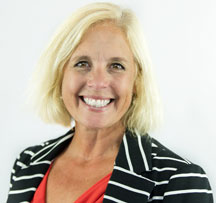
    Dr. Amy Crouse is Interim Superintendent for the Loveland City School District

    By Dr. Amy Crouse,

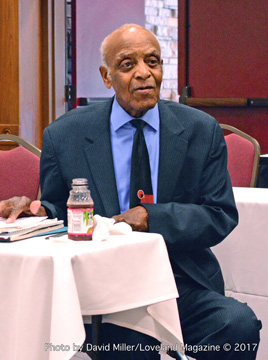
    Love Always Finds a Way – that was the title of the community forum held on a Saturday morning before school started in my new role as interim superintendent. Reverend A.J. Hamilton, respected member of the Tiger Family and a long-time advocate for civil rights in Cincinnati, wanted to gather community leaders to discuss how we might work together to ensure our community remained open to diverse opinions and provide a forum to discuss race, inclusion, and diversity in our community.   

    I wasn’t certain what to expect that morning, but what I found as I sat amongst the panel members was a unique opportunity to listen – and what I heard was a conversation centered on developing empathy that I knew needed to continue.

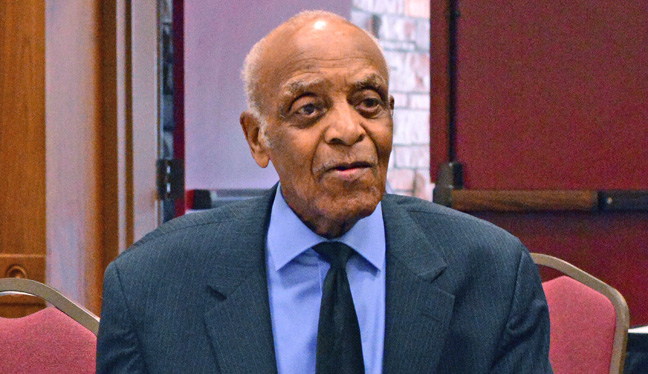
    Reverend A.J. Hamilton speaking at the “Love Always Finds a Way” forum he organized in July. He will receive the Superintendent’s Award on November 28.

    At the Loveland City School District, we talk a great deal about Tiger Care – it is one of our district’s “big three” goals, and perhaps it is the most difficult for us as educators to really define. Our ambition is that every Tiger will be cared for and supported. Our promise is that every Tiger will have the academic, social and emotional skills to plan and achieve, and that every Tiger will develop leadership skills and have opportunity to both lead and serve others. We want to achieve all of that – but, at the heart of the goal – it’s really about relationship building – developing empathy.

    Empathy is defined as the ability to understand and share the feelings of another. Achieving this requires authentic communication, and story sharing – just like what happened at the community forum – the place where I became a student of history as told by those whose experience was different than my own.

    “What I heard was a conversation centered on developing empathy that I knew needed to continue.”

    I’ve taken what I learned that day and have started to make plans for our district to begin to dive deeper into developing opportunities for our students to develop empathy – to really understand Tiger Care. I will be working with Mosaic Church to shape a story sharing partnership for our students, the details of which are still to come.

    I also want to thank the very person who began this conversation – Reverend Hamilton.

    All members of the Tiger Family are invited to our Board Business Meeting 6 p.m. Tuesday, Nov. 28, in the Loveland Intermediate School Media Center where our Board of Education will officially recognize Reverend Hamilton with the Superintendent’s Award for his devotion to the Loveland City Schools and his lifelong commitment to civil rights.

    Dr. Amy Crouse is Interim Superintendent for the Loveland City School District

    As I look for the first time in my educational career through the lens of a superintendent, I feel the weight of what we are tasked with teaching the 4,700 young Tigers we serve in a way I have not known before, during a moment in history that has been marked with separation. I believe in my heart that love does always find a way, and that is an important vision worth working toward as we Prepare Students for Tomorrow, Today.

    In service to our Tigers.

    Loveland Magazine Publisher David Miller was a co-host of the “Love Always Finds a Way” forum.


    Free breakfast with Santa