Join Opportunities for Ohioans with Disabilities (OOD) on August 20, at 10 AM for a free training to learn best practices to foster a hiring process that is accessible and inclusive for candidates with disabilities. The training includes discussion on the recruitment phase, pre-employment interviewing and testing, and the onboarding process.
Learn ways to make components of the hiring process accessible for candidates with disabilities.
Learn the two-part process for asking questions and administering tests in the pre-employment phase of hiring.
Learn common solutions for providing reasonable accommodations throughout the hiring process.
Questions and answers are facilitated throughout the presentation.
The training will be hosted by OOD’s Worksite Accessibility Specialist Julie Wood, OT R/L, and Business Relations Specialist Kelly Jordan.
A resource tool that accompanies this training can be downloaded from OOD’s website. This tool addresses the three main topics that we will be covering in this training: Recruitment, Interviewing, and Onboarding.
You will not need to pre-register for this training, but please respond to this survey to let us know you’ll be joining us. This will assist us in making sure we are sharing any updates, attachments, and resources before and after the event.
The training will take place as a Microsoft Teams Live Event. You can view the training through your web browser, and you do not need to have Microsoft Teams to participate. Here is a link to join the training.
This Program has been approved for 1.00 HR (General) recertification credit hours toward aPHR™, aPHRi™, PHR®, PHRca®, SPHR®, GPHR®, PHRi™ and SPHRi™recertification through HR Certification Institute® (HRCI®).
OOD is committed to providing access and reasonable accommodation in its services, activities and programs in accordance with the Americans with Disabilities Act and other applicable laws. To request an accommodation based on a disability, please contact Chris Glover by August 18, 2020.
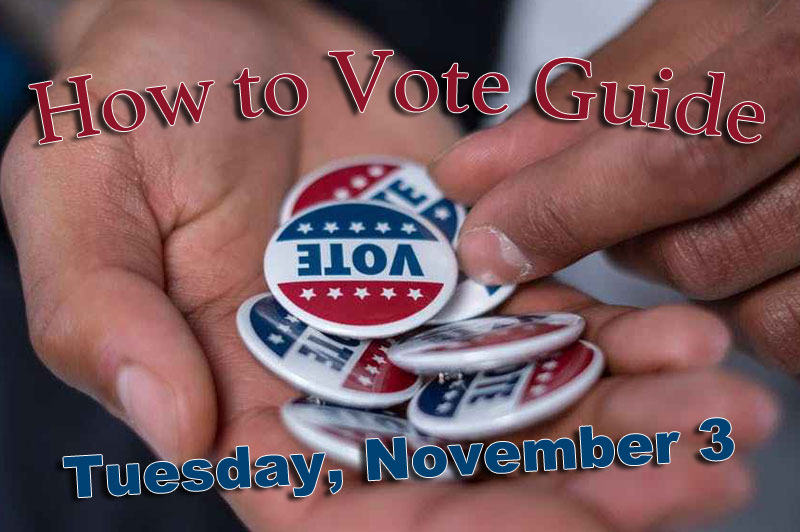
There are lots of rules around voting, but the League of Women Voters of Ohio is here to help! They offer all the “Get Ready to Vote” basic information you’ll need to cast your ballot with ease and success.
Ohio law requires that every voter, upon appearing at the polling place to vote on Election Day, must announce his or her full name and current address, and provide proof of identity. The forms of identification that may be used by a voter who appears at a polling place to vote on Election Day include:
An unexpired Ohio driver’s license or state identification card with present or former address, so long as the voter’s present residential address is printed in the official list of registered voters for that precinct;
A military identification;
A photo identification that was issued by the United States government or the State of Ohio, that contains the voter’s name and current address and that has an expiration date that has not passed;
(For the following forms of identification, “current” is less than 12 months old.)
An original or copy of a current utility or cell phone bill with the voter’s name and present address;
An original or copy of a current bank statement with the voter’s name and present address;
An original or copy of a current government check with the voter’s name and present address;
An original or copy of a current paycheck with the voter’s name and present address; or
An original or copy of a current other government document (other than a notice of voter registration mailed by a board of elections) that shows the voter’s name and present address, including license renewal and other notices, fishing and marine equipment operator’s license, court papers, or grade reports or transcripts.
If you do not have any of the above forms of identification you may cast a provisional ballot. To do so you must provide either your Ohio driver’s license number, state identification number (which begins with two letters followed by six numbers), or the last four digits of your Social Security number. Once the information is reviewed and verified by the board of elections, your ballot will be counted.
If you do not provide one of the above documents, your driver’s license/state identification number, or the last four digits of your Social Security number at the precinct, you will still be able to vote using a provisional ballot. However, in order for that ballot to be counted, you must return to the board of elections no later than seven days following Election Day to provide a qualifying form of identification. Follow this link for more information on provisional ballots.
Voting by Mail
All Ohio voters whose registration information is up-to-date have the opportunity to vote in any election from the convenience of their own home by requesting an absentee ballot. Voters must fill out and return an application to vote by mail and their absentee ballot will be mailed to them so they may make their selections at their leisure and return their ballot to the board of elections ahead of Election Day. The deadline to request an absentee ballot is three days before the election in which you want to vote, but be sure to give yourself plenty of time and send your application as soon as possible if you choose to vote by mail!
Absentee ballots must be postmarked by the day before the election in order to be counted. You can also return your absentee ballot in-person to your county board of elections before the close of the polls at 7:30pm on Election Day.
You must complete and submit a separate application for each election in which you want to vote.
Mail the form back to your local county board of elections.
Wait to receive your ballot in the mail from your county board of elections. If you have questions about your absentee ballot request, you should call your county board of elections or you can track the status of your ballot request as well as your voted absentee ballot through the Voter Toolkit.
Return your voted ballot. You can send it by U.S. Mail or deliver it in person to your county board of elections, but the return envelope containing your marked ballot must either be received by your county board of elections prior to the close of the polls on Election Day, or postmarked no later than the day before the election and received by the board of elections no later than 10 days after the election.
To make sure your absentee ballot is counted, it must be received by your board of elections by 7:30 p.m. on Election Day OR be postmarked by the day before Election Day.
Starting the day after the close of voter registration, all registered voters can vote early at their local county Board of Elections office.
Loveland, Ohio – On August 11, the Loveland Board of Education adopted a face covering policy requiring masks for staff and students in grades PreK-12.
All students riding a Loveland school bus must be wearing a face covering/mask when boarding the bus, riding the bus, and departing the bus.
Face coverings/masks must be worn into the building at all times and only removed when directed by the teacher or staff member.
The Board policy states that face coverings/masks are “required and should”…
Fully cover mouth, nose, and chin;
Not create difficulty breathing while worn; and
Be held secure through a tie, elastic, etc. to prevent slipping; and
Be of effective quality (i.e., double-layered, non-permeable, tightly woven fabric without valves).
For the current time, this is the District policy, however, the Administration is also waiting on Ohio’s written orders for the full implementation guidelines of the face covering/mask policy for schools.
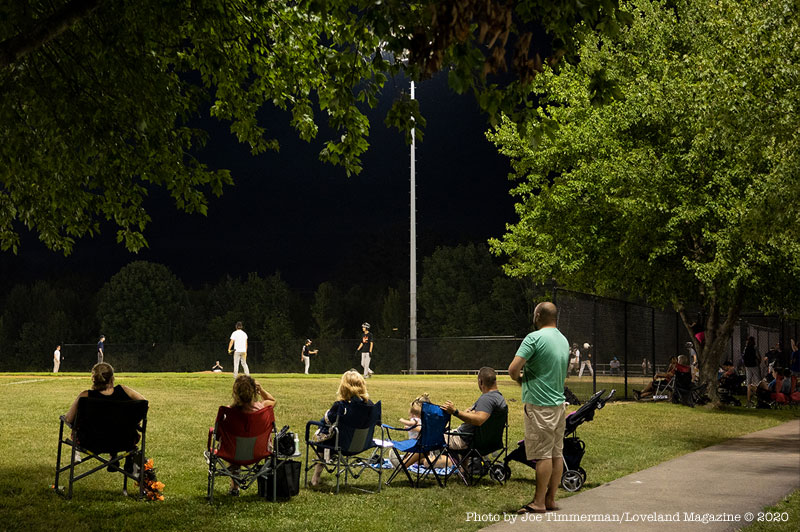
Parents sit along the outfield to watch their kids play during a Wednesday night pick-up game at at Phillips Park in Loveland, Ohio.
Joe Timmerman graduated from Loveland High School in 2019 and will return to his studies in photojournalism at Ohio University this month.
By Joe Timmerman
Loveland, Ohio – Walking up to the baseball fields at Phillips Park on Wednesday July 29, the air feels like summer again as the fields are full with kids living in America’s pastime.
Every Wednesday night since the first week of July, as the sun sets in Loveland, Ohio, kids have been playing baseball together again. Since the COVID-19 pandemic has brought upon these unusual times of social distancing, quarantine, and the cancellation of most future gatherings — the Loveland Youth Baseball Organization came up with the idea of pick-up baseball games.
With youth sports becoming seemingly more and more competitive as each year goes by, it was refreshing to watch a Sandlot-esq pick up game happening in our own town.
In conversation with Matt Kapszukiewicz, the president of LYBO, I learned that they had been throwing the idea of pick-up games around for about a year or so, and that Rob Steinman, another LYBO board member, originally came up with the idea. “We decided to launch it because these older kids had no-one else to play against… so we blended them into a t-shirt league once we got a handle on what COVID-19 meant,” Kapszukiewicz said.
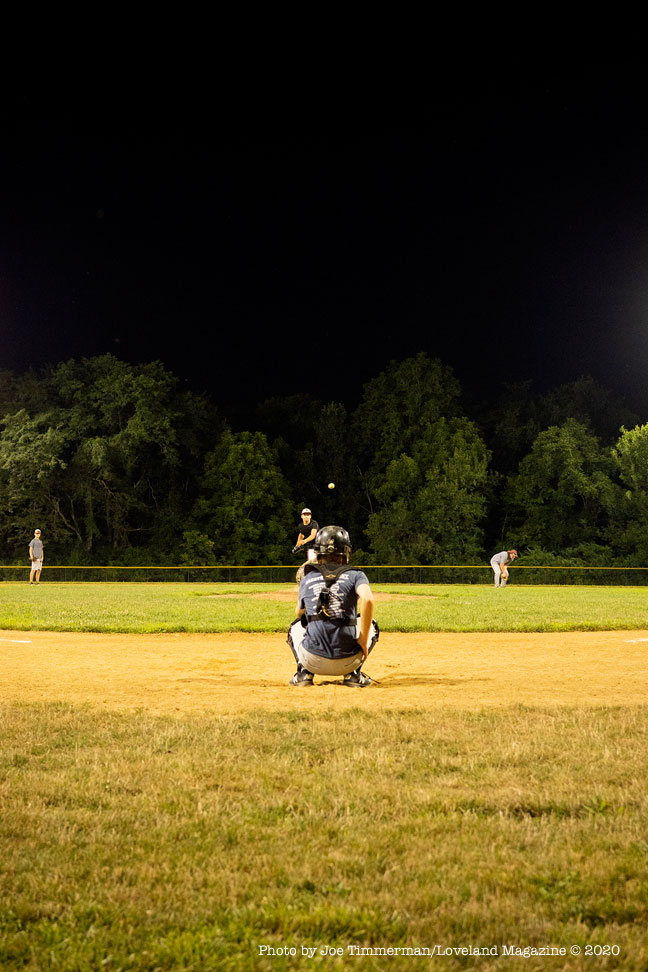
A warm up pitch is thrown before the last inning of a pick-up game with no score on Wednesday July 29 at Phillips Park in Loveland, Ohio.
When my dad and I made it to the third base fence line with our baseball gloves in hand to check out the night’s pick up game, there were a couple open spots in the outfield. Tom Sackett, my dad’s friend and the supervisor for the game, told us to run out and join in. Before too long, I overheard a conversation between the right fielder and the infield players.
“Yeah, I don’t even know… it doesn’t matter.”
“Hey, what’s the score?”
“Uh, 1-0 maybe”
“Yeah, I don’t even know… it doesn’t matter.”
With youth sports becoming seemingly more and more competitive as each year goes by, it was refreshing to watch this a Sandlot-esq pick up game happening in our own town.
“These kids are having a blast out here… just run out there and do whatever you want, play wherever you want,” Sackett said. Sackett is a former LYBO board president and the coach of the Loveland Express, a 16u team that his son plays on, who like most teams this summer, had their season cancelled.
“These kids are having a blast out here… just run out there and do whatever you want, play wherever you want,” Sackett said.
About half of the 16 kids that showed up to play are 16 year olds, the rest are 15, and they all go to Loveland High School.
After talking to a few parents who came to watch the game, I found out that there are usually about twice as many kids that show up to play on Wednesdays, but a player on Loveland’s football team tested positive which resulted in a quarantine for the entire team.
We had more fans than the Reds!
“(These games) are providing an opportunity for the kids to get out and get some exercise, everything else has pretty much been cancelled at this point. Kids, friends, and even the adults had something to do… just sitting there watching a pick-up baseball game — we had more fans than the Reds. (Wednesday nights) have been valuable for building community and offering an opportunity to stay fit,” Kapszukiewicz said. “We (LYBO) didn’t charge anything, we provided umpires — it kind of cost us money to put on, but it was an investment that was worth it. We just wanted kids to get out and play ball.”
LYBO is putting teams together this week for organized fall baseball games as local teams are starting to want to play again. From ages four and up, spring sign ups will start as early as December. You can sign up for fall or spring baseball or find more information on getting involved with Loveland Youth Baseball Organization on LYBO.org
A 16u baseball player walks to his position during a Wednesday night pick-up game on July 29, 2020 in Loveland, Ohio.
A 16u baseball player walks to his position during a Wednesday night pick-up game on July 29, 2020 in Loveland, Ohio.
Tom Sackett, LYBO board member and father of one of the players, helps make sure each position is filled and kids are social-distancing on Wednesday night pick-up games.
Kids social distance while they wait their turn to step up to the plate.
Matt Kapszukiewicz, LYBO president, and Tyler Litchfield, LYBO board member, watch the 13 and 14 year olds play in a pick-up game at the field below the 15 and 16 year olds.
Parents sit along the outfield to watch their kids play during this Wednesday night pick-up game.
A warm up pitch is thrown before the last inning of a pick-up game with no score on Wednesday July 29, 2020 at Phillips Park in Loveland, Ohio.
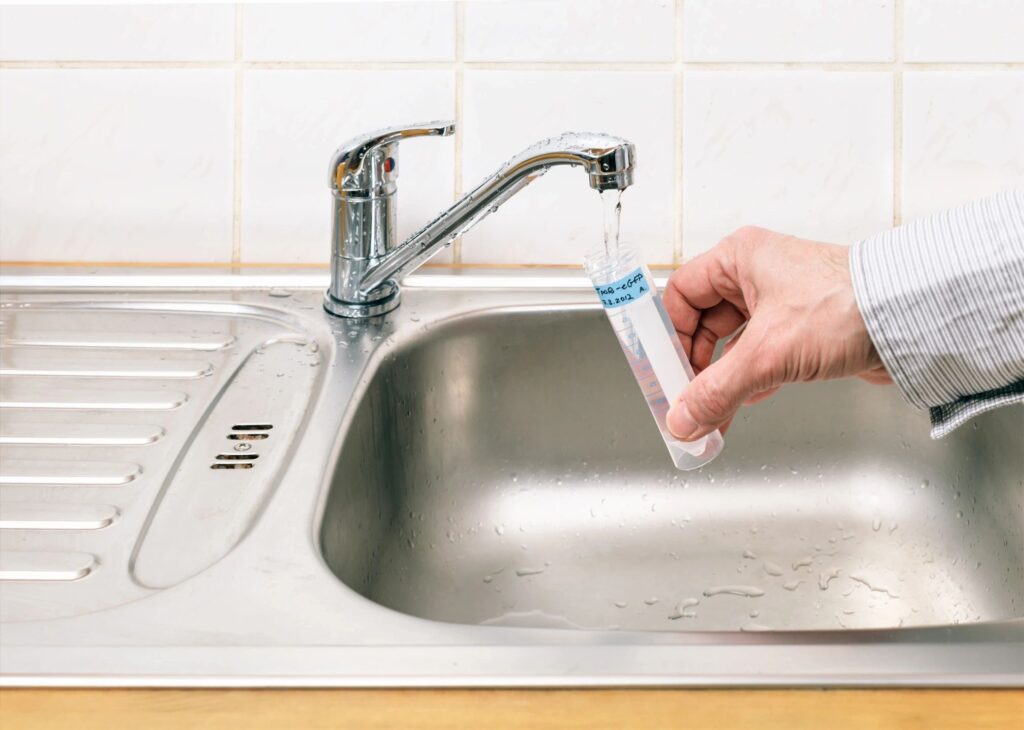
Batavia, Ohio – A recent sampling of Clermont County’s water system for chemicals called Per and Polyfluoroalkyl Substances (PFAS) found no detection of harmful substances in our water. As a real-life parallel to the movie Dark Waters, which portrayed a town in West Virginia whose groundwater is contaminated by a neighboring chemical company, the Ohio Environmental Protection Agency (OEPA) has been sampling water systems across the state.
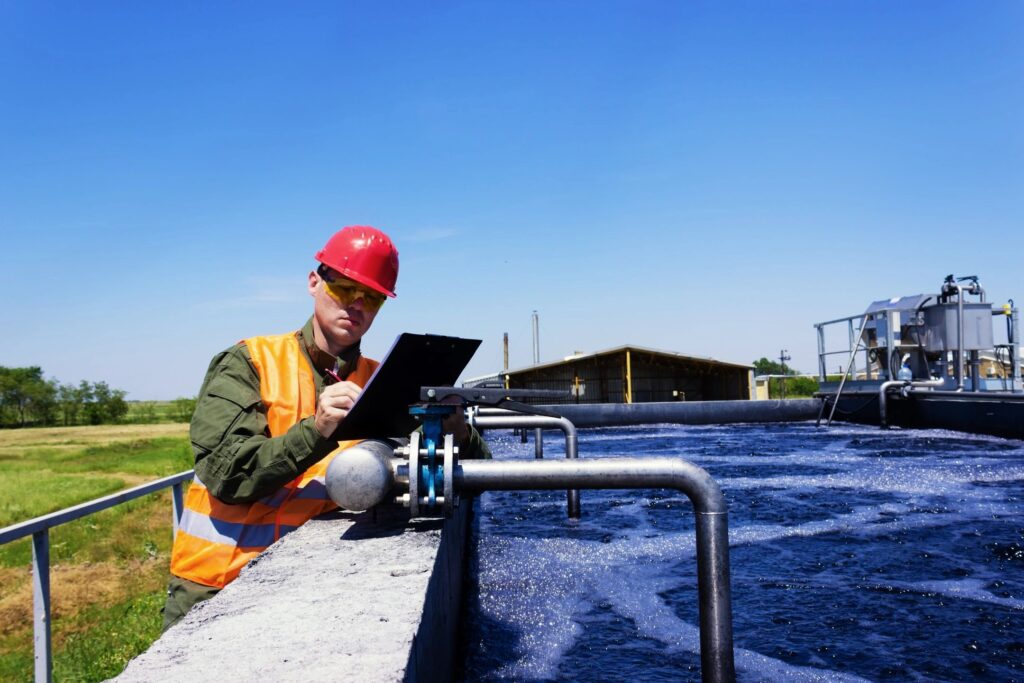
“This is very good news,” said Lyle Bloom, Director of Clermont County Water Resources. “All three of Clermont County’s water treatment plants were sampled as part of Ohio’s Statewide PFAS Action Plan for Drinking Water and there was no detection of PFAS from the raw or finished water at any of our treatment facilities.”
The Ohio Environmental Protection Agency (OEPA) has been sampling water systems across the state.
The plan calls for Ohio EPA to gather data from public water systems statewide to determine if PFAS are present in drinking water. The water system was sampled for six individual PFAS contaminants: PFOA, PFOS, GenX, PFBS, PFHxS, and PFNA.
PFAS are a group of man-made chemicals applied to many consumer goods to make them waterproof, stain resistant, or nonstick. PFAS are also used in products like cosmetics, fast food packaging, and a type of firefighting foam called aqueous film forming foam (AFFF) (which are used mainly on large spills of flammable liquids, such as jet fuel). PFAS is also called the “forever chemical” because they are not easily broken down by sunlight or other natural processes. They may remain in the environment for many years.
Recent sampling of Clermont County’s water system for chemicals called Per and Polyfluoroalkyl Substances (PFAS) found no detection of PFAS
PFAS can enter drinking water at sites where they are made, used, disposed of, or spilled. Some, but not all, studies in humans with PFAS exposure have shown that certain PFAS may: affect growth, learning and behavior of infants and children; lower a woman’s chance of getting pregnant; interfere with the body’s natural hormones; increase cholesterol levels; affect the immune system; or increase the risk of certain cancers. Scientists are still learning about the health effects of exposures to mixtures of PFAS.
In 2013, Clermont County performed sampling and analysis at all three of its water treatment plants. At that time, there was also zero detection of PFAS. There are currently no national drinking water standards (Maximum Contaminant Levels or MCLs) established for PFAS compounds; however, OEPA adopted Action Levels ranging from 21 to 140,000 ng/L for various PFAS chemicals. Ohio EPA will be establishing response protocols for public water systems in Ohio when action levels are exceeded, including public notification and issuance of drinking water advisories.
Columbus, Ohio – An Ohio school district hoping to enact a policy to arm teachers is asking the Ohio Supreme Court to speed up their decision in light of an approaching school year.
ss
Last week, the state’s highest court agreed to hear the appeal of the Madison Local School District in Butler County, after an appeals court ruled they did not have the right to enact a “firearms authorization policy” that would allow armed teachers in schools.
ss
Several parents sued the district in 2018 seeking an injunction blocking the district from arming teachers and other staff without the training required of law enforcement officials.
cc
When the court of appeals made that ruling in March 2020, it had “no practical effect” on the district, attorneys for the district said in court documents. The decision came after Ohio Gov. Mike DeWine closed schools throughout the state due to the COVID-19 pandemic.
cc
“That changes (Aug. 13), when the 2020-21 school year begins for Madison with in-person classroom instruction,” attorneys for the district said in their motion.
Due to the upcoming school year, the school district is asking the court to “expedite” the schedule and consideration for the ruling.
Due to the upcoming school year, the school district is asking the court to “expedite” the schedule and consideration for the ruling. They submitted the request two days after the state supreme court agreed to hear the case.
The request to speed up a ruling also included an argument that the school should be able to go forward with their firearms policy as the appeals court decision is appealed.
Attorneys for the district said the fact that the Ohio Supreme Court accepted the case “implies serious questions going to the merits of the Twelfth District’s decision and that Madison has at least a reasonable prospect of success on the merits.”
The firearms policy was agreed to after a shooting at the junior/senior high school in which four students were injured, and the shooter, James Austin Hancock was sentenced to juvenile detention until he turns 21.
The district also said barring the firearms policy as the school year begins could become a safety issue.
“To be sure, everyone can hope that Madison does not ever experience another school shooting, and it is possible that the absence of this deterrent effect during the upcoming school year might turn out not to have mattered,” the school district said in court documents. “But it might matter, and Madison has made the policy decision that its students and staff are safer with its policy in place.”
The firearms policy was agreed to after a shooting at the junior/senior high school in which four students were injured, and the shooter, James Austin Hancock was sentenced to juvenile detention until he turns 21.
The district noted in its statement to the court that there were no “situations or incidents” during the 2018-19 school year or the part of the 2019-20 school year in which the schools were open.
The court battle is also the subject of a bill currently in the Ohio Senate. Butler County resident and state Sen. Bill Coley introduced Senate Bill 317 in May with the aim to reduce the amount of training needed for school personnel to be armed in schools.
An amendment has been brought up to include a “school marshal program” within the bill. The last hearing on the bill was held July 21.
Susan Tebben is an award-winning journalist with a decade of experience covering Ohio news, including courts and crime, Appalachian social issues, government, education, diversity and culture. She has worked for The Newark Advocate, The Glasgow Daily Times, The Athens Messenger, and WOUB Public Media. She has also had work featured on National Public Radio.
OHSAA adjusts high school season if football is approved by Governor
by Cassie Mattia
COLUMBUS, Ohio – The Governor’s recommendation to shorten Ohio’s High School Football seasons has been approved! The Ohio High School Athletic Association (OHSAA) announced Friday that due to concerns COVID-19 may spike in the early winter, all Ohio HS football teams will enter into the playoffs on October 9th. The HS State Championship games would be played no later than November 21st. This is only in the event that the Governor’s Office approves Ohio HS Football being played this year.
The proposal for a shorter football regular season was approved by the OHSAA Board of Directors with a 9-0 vote. OHSAA released a press release after the vote saying that they considered the proposal a win-win situation for all schools because it would then not matter how many games each team played leading up to the playoffs.
So how will it be determined which HS football teams qualify for the playoffs you may be asking yourself? Well, instead of using the traditional computer ratings system, coaches in each region will conduct a tournament seed meeting the week of September 28th in order to form the regional brackets. This is very similar to how several other team sports within the OHSAA determine which teams qualify for playoffs.
Loveland High School is apart of the Eastern Cincinnati Conference.
The shortened football season guidelines state that schools may keep their first six previously scheduled games, but all regular-season football contracts will be now voidable by either school. This is especially important in the event that conferences redo their league schedules so that games will fit into the first six weeks. The OHSAA will also determine new playoff regions in September. Teams that are eliminated from the playoffs may continue to schedule regular-season games up until November 14.
MAC Announces Postponement of Fall Sports
The Mid-American Conference (MAC) has announced the postponement of all scheduled fall contests, as well as MAC championships, due to continuing concerns related to the COVID-19 global pandemic. Read on…
The Big 10 is expected to announce the cancelation of the Fall football season on Tuesday.
Those schools that have paused sports due to COVID-19 are still able to begin their season in September or early October as well as compete in the playoffs. If a school finds that they would rather play regular-season games up until November 14th and not compete in playoffs they are able to do so.
“To both ensure we can offer students the opportunity to participate in education-based athletics but do so with their best interests in mind, we believe this modified plan offers a positive solution by addressing many of the concerns of our member schools,” President of the OHSAA Board of Directors and Athletic Administrator at Mentor High School, Jeff Cassella said, “Those that are able to start their seasons on time will be able to do so. Those that are starting later can still have a season. Add in the option of all schools entering the playoffs and the possibility of schools still being able to play 10 regular-season contests, and this plan is helpful to virtually all of our schools.”
Here are the most important details in regards to the OHSAA’s modified Ohio HS Football season and changes to the Playoffs process:
Regular-season games will begin the week of August 24 (same regular-season starting date).
All teams are eligible to enter the OHSAA playoffs. New regions will be determined in September.
The number of playoff rounds is dependent upon the number of schools entering the playoffs in each division. Coaches in each region will seed all playoff teams in the region to form a bracket, similar to other OHSAA sports.
Schools eliminated from the OHSAA playoffs or those schools that choose not to enter the OHSAA playoffs have the option to schedule additional regular-season contests through Saturday, November 14 (maximum of 10 regular season contests permitted).
Playoff seeding will be determined via a vote of the coaches the week of September 28 (Harbin Ratings is suspended for the 2020 season).
All playoff contests through the regional semifinals (and possibly the regional finals) will be hosted by the higher-seeded team.
Schools must commit to participating in the playoffs by 11:59 PM on Thursday, September 17.
Playoff regions will be drawn on Friday, September 18.
Schools may withdraw from the playoffs without a penalty until Thursday, September 24.
Below is what the new modified Ohio HS Football season will look like:
Regular season Week 1: Week of August 24
Regular season Week 2: Week of August 31
Regular season Week 3: Week of September 7
Regular season Week 4: Week of September 14
Regular season Week 5: Week of September 21
Regular season Week 6: Week of September 28
Playoffs begin Friday, October 9
State Finals end no later than Saturday, Nov. 21
Still, have questions on OHSAA’s modified football season and the new Playoffs process? Click HERE for all of the Q&A’s!
Thus far the decision on whether or not spectators will be allowed to be present at contact sports this year has not been made yet. The OHSAA stated that “At a minimum, parents should be permitted to attend.”
Luckily four of the OHSAA’s Fall sports, golf, tennis, volleyball, and cross country, have been determined to be low-contact by the Governor’s Office which means these particular sports will be permitted to have contests with other schools. The remaining Fall sports, field hockey, soccer, and football, have been determined to be high-contact, so the OHSAA, the Governor’s Office and the Ohio Department of Health are working together to create a safe game plan so that these three sports may participate in contests with other schools as well.
To get the latest 411 on which of Ohio’s High School sports will be competing this year and the most up to date COVID-19 sports safety protocols stay tuned to the Sports 411 With me, Cassie Mattia!
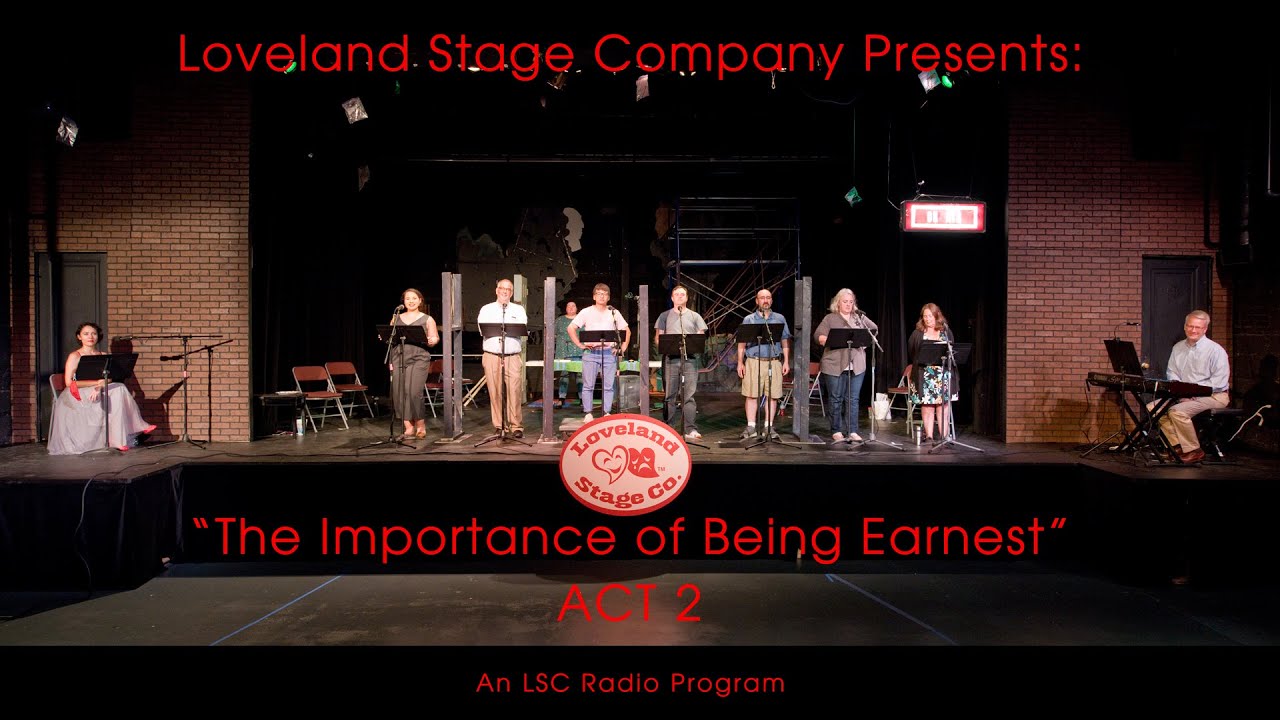
Act 2 of The Importance of Being Earnest recorded live at the Loveland Stage Company by LSC Radio in beautiful Historic Downtown Loveland, Ohio is now ready for your viewing pleasure.
Adrianna Boris – Jack
You may have seen Adrianna on the LSC stage as Philia in “A Funny Thing Happened on the Way to the Forum,” or around town as Rizzo in “Grease” at Mariemont and Footlighters. Other favorite roles have included Julia in “The Wedding Singer,” Cecily in “The Importance of Being Earnest,” and the Witch in “Into the Woods”. Thanks to Micheal and the whole team at LSC for bringing us together for this project!
Carissa Griffith-Sloan – Foley Artist
Carissa is no stranger to the LSC stage. She has appeared onstage in a number of LSC productions including The Drowsy Chaperone (u/s Drowsy), White Christmas (Martha), Young Frankenstein (Frau Blucher), and many others. Another favorite role was Grempkin in Peter and the Starcatcher at Footlighters. Carissa would like to thank her husband, John, for always being her favorite scene partner, and everyone involved with putting this production together.
David Taylor – Composer, Piano
David is a keyboard player who enjoys the challenge of creating great sounds and performing. He has performed for many community theatre companies and high school drama productions in the Cincinnati and Northern Kentucky areas including several CMT productions. Favorite shows he has performed in and created the sounds for include The Producers, Young Frankenstein, The Toxic Avenger, Seussical the Musical, Big Fish, and Shrek. By day, David is a Financial Analyst for Coesia managing the forecasts and budgets for all of the North America, Mexico, and South America regions.
Jacqlyn Schott – Algernon
There’s magic in the number three and Jacqlyn couldn’t be more elated to return to Loveland’s stage for the third time as a part of such a fun trio! Three of her favorite past credits include Spider (James and the Giant Peach), Caroline Bramble (Enchanted April), and directing Ordinary Days. This fall, Jacqlyn will be reprising the role of director for Little Shop of Horrors and hopes you’re already planning on return visits to LSC so “you too can be a star!” As always, she thanks her loved ones for their never-ending support.
Jill Gornet – Lane/Merriman
Jill is excited to be co-producing Gypsy, which is one of her favorite musicals. She was co-producer for Bugsy Malone, Jr., Don’t Drink the Water and A Funny Thing Happened on the Way to the Forum. Jill won an Orchid as the producer of The Drowsy Chaperone. She was last seen on-stage at LSC in Memphis (Clara/ensemble), White Christmas (quintet/ensemble), Will Rogers Follies (quartet) and Fiddler on the Roof (Rifke/ensemble). Retired from USPS, she sings with Sharonville Chorus at retirement/assisted living homes. Jill would like to thank her family and friends for their love and support.
John Sloan – Gwendolen
John is back once more at Loveland Stage Company. He has appeared in too many LSC shows to list them all, but favorites include: Young Frankenstein (Igor), Oklahoma! (Jud Fry), Thoroughly Modern Millie (Ching-Ho), and The Producers. He last appeared in The Drowsy Chaperone (Gangster #1) which was directed by his lovely wife, Carissa, and has directed the recent LSC productions of A Funny Thing Happened on the Way to the Forum and Don’t Drink the Water. Thanks to Micheal for this opportunity. Enjoy the show and thank you for supporting the arts!
Joshua Marcus – Miss Prism
This is Joshua’s first performance with Loveland Radio, but has previously been seen on stage in, The Drowsy Chaperone (George) and Cole, An Entertainment (Performer). He is excited to be a part of another amazing Loveland production. Joshua would like to thank his wife, Leah, and his children, Hanna and Samuel, for their love, support.
Melinda Murray-Hubbard – Chausible
Melinda is glad to be back once again with LSC after performances in Cole, An Entertainment and The Drowsy Chaperone. She has also recently been seen as Sponge in Bart’s Bards’ James and the Giant Peach, and was a costume assistant for the LSC production of Bugsy Malone, Jr. Dr. Hubbard is always up for something new, and this show fits the bill! She thanks her incredible family for supporting her and the amazing folks at LSC for this opportunity. Ya’ gotta get a gimmick!
Thomas Cavano – Lady Bracknell
Tom has been involved with community theater in the Cincinnati area for over 30 years. He first performed with LSC in 2008 (The King and I). Since then, he has performed in numerous LSC productions, directed three award-winning shows (Spelling Bee, The Producers, and Young Frankenstein), co-produced many shows, the most recent being Memphis, and has taken an active role in off stage work including set construction, design, decor and stage crew.
Vincent Eldridge – Cecily
Vincent has thoroughly enjoyed being a part of this genderswapped version of The Importance of Being Earnest. He has been seen on stage as Gangster #2 in The Drowsy Chaperone at LSC, as part of the Octet in Sweeney Todd with Queen City Productions, as was in the Gender Bender last October with Mason Community Players. When he’s not on stage, he enjoys learning the art of lighting and was the lighting designer for The Little Mermaid and Sorry, Wrong Number/The Hitch-Hiker. Outside of theatre he spends his free time painting and trying his best at woodworking. He’d like to give a shout out to the rest of the cast, the crew, and the director for making this a wonderfully fun experience!
Crew
Bob Kessler – Tech Director
Bob works as both a Director of Photography in the regional video community, and as an artist at Kessler Studios, a Loveland-based stained glass and mosaic firm. Bob has served as the Lighting Chair for the Loveland Stage Company since 2013, and has volunteered as Lighting Director on many plays at LSC: Cole: An Entertainment, Memphis, 9 to 5, Jekyll & Hyde, Fiddler On The Roof, I Remember Mama, Oklahoma!, and The Producers.
Charlie Rader – Camera Operator
Dave Bauer – Audio Director
The webmaster of LSC’s award-winning website, Dave brings a lifetime of passion for all things music, sound and photography. By day, Dave works in schools in Southwest Ohio maintaining computer systems and making sure teachers have the technology they need. By nights and weekends, Dave is the owner of Technology Concierge Services and is the sound designer for two local bands. This is Dave’s first involvement in an LSC production.
Greg Smith – Lighting Design
An Orchid award-winning Lighting Designer, Set Designer and Producer, Greg always enjoys doing lighting design for a musical at LSC. The opportunities for creativity are endless when working with such a talented cast and crew.
Micheal Harris-Kiser – Director
Micheal is a multiple award-winning director, actor, and set designer. Studying acting at The American Academy of Dramatic Arts, Micheal has pursued his passion for theatre in various fields. He is co-founder of Stage and Steel in Pittsburgh, PA. He has performed with many groups throughout the city. His set designs have graced many a stage. He serves as secretary for the LSC board, as well as secretary for The Greater Cincinnati ACT board. He is extremely happy to bring this great musical to you.
Nancy Hartman-Downing – Camera Operator
Nancy has been Owner/President of Cleveland Specialties Company since 1986, which designs and manufactures paperboard and plastic packaging products for the food and dairy industry. Her experience is in administration, sales, accounting and computer technology. She holds a B.A. in Business Administration from Baldwin-Wallace College. She currently serves as President for Loveland Woman’s Club. Nancy has been involved with LSC since 2006 doing fundraising, photography, publicity, ticket sales, program ad sales, as well as serving on the Board of Directors as Treasurer. She enjoys working with such a talented group and looks forward to continuing her involvement into the future.
The Covid-19 pandemic has hit all of us very hard. Among those most impacted have been the people of the entertainment industry – actors and actresses, musicians, performing artists of all types. Also affected, those behind the scenes, riggers and stagehands, lighting and sound designers, makeup and costume designers, carpenters, electricians and all those who make the art of live performance possible.
Their desire to “get back at it” is fierce. They love doing what they do.
Everyone involved in Loveland Stage Company counts ourselves among those mentioned above. And while our “day gig” may or may not have been as seriously impacted, our desire to “get back at it” is strong.
Out of the lemons of the Covid-19 pandemic, Loveland Stage Company proudly brings you LSC Radio! While we can’t be on stage performing live for you right now, we can bring performances that hearken back to the “good old days” of radio broadcasts. In addition, we’ll have video cameras rolling so you can see our “broadcast” as it happened. We can continue to maintain social distancing and other best practices required these days and still perform for you!
Loveland Stage Company will bring you a new production in both audio only and video with audio approximately once a month. But we’re not doling it all out at once! Oh, no. Each Act of our production will be released once weekly (we anticipate on Friday) for your weekend viewing/listening pleasure! All productions will be listed below and accessible from here or the main menu above (under LSC Radio).
Columbus, Ohio – The ACLU of Ohio (ACLU) sent a letter on August 4 to over 450 criminal legal stakeholders in Ohio with urgent recommendations to mitigate the ongoing risks associated with COVID-19 for incarcerated populations, specifically people in Ohio’s county jails. The ACLU said, “The ripple effect of the deadly virus is, and will continue to be, ongoing, but decreasing local jail populations will save lives and lessen community-spread.”
The ACLU urges stakeholders to immediately eliminate or decrease money bonds that hold pretrial individuals in jail, and also to release certain categories of people through a collaborative systems approach.
Specifically, release should be prioritized for:
People held on certain offenses
People who would be sentenced to probation
People who have six months or less remaining on their sentence
Medically-vulnerable people
“The crisis is far from over. This past week Ohio set a one-day record for new cases and public health experts predict a second wave of the pandemic later this year. We must act now to mitigate widespread infection and death in our county jails. The decarceration strategies we offer will enhance public safety, reduce harm, and potentially save countless lives,” said Sabrina Harris, Policy Strategist for the ACLU of Ohio.
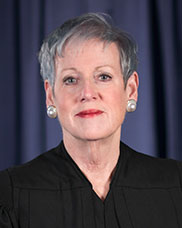
Ohio Chief Justice Maureen O’Connor
In March, Supreme Court of Ohio Chief Justice O’Connor recommended that judges reduce money bonds to decrease jail populations – and at least four counties implemented this practice during the first wave of the pandemic. The ACLU noted that approximately two-thirds of people in Ohio’s jails are legally innocent and held pretrial, which can be as many as 12,000 people on any given day.
“We commend the stakeholders that took action to reduce jail populations during phase one of the pandemic, but it is imperative that every actor in our criminal legal system – from courts to county jails – remain vigilant and alert to the devastation that COVID-19 holds over incarcerated populations. People in Ohio jails remain at a heightened risk of potentially fatal outcomes due to overcrowding, the lack of social distancing, and subpar conditions,” added Jocelyn Rosnick, Policy Director for the ACLU of Ohio.
Ohio saw the second highest number of COVID-19 deaths in state prisons, and while there is not comprehensive data for jail deaths, the ACLU of Ohio reminds Ohio stakeholders that they have the ability to make and influence policy changes to save lives in the future, and rewrite the narrative.
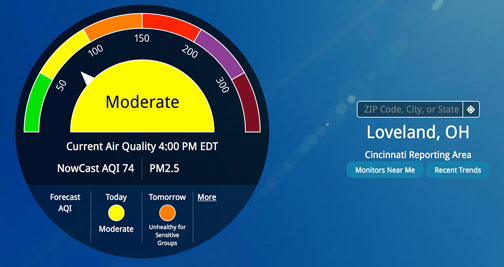
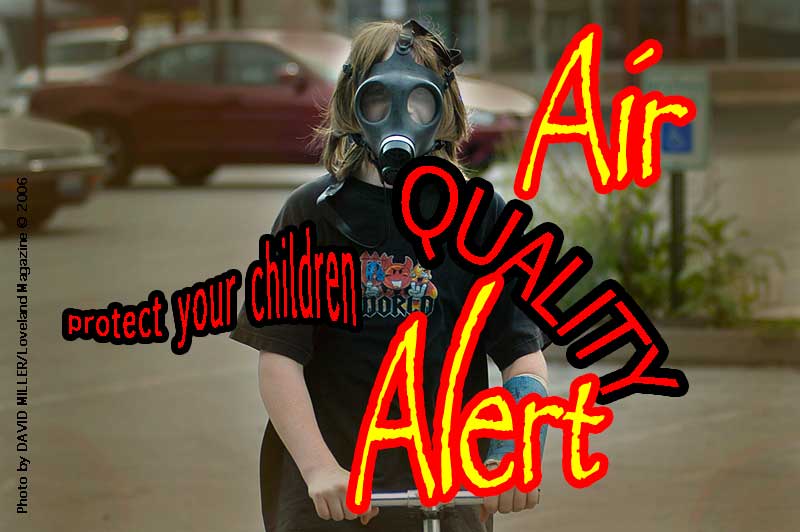
Active children and adults, people with heart and lung disease, including asthma, and older adults should reduce prolonged or heavy outdoor exertion.
Air Quality Forecast is 105 AQI for Sunday, August 9
The Southwest Ohio Air Quality Agency (Agency) has extended the Air Quality Alert for Sunday, August 9 for Butler, Clermont, Hamilton and Warren counties in Ohio; Boone, Campbell, and Kenton counties in Kentucky; and Dearborn County in Indiana.The Agency expects to see levels of ozone in the “unhealthy for sensitive groups” range
You can help protect those most vulnerable
• Take the bus, carpool, bike or walk instead of driving
• Refuel your vehicle after 8 p.m.; do not top off when refueling and tighten the gas cap
• Avoid idling your vehicle
• Combine trips or eliminate unnecessary vehicle trips
• Keep your vehicle maintained with properly inflated tires and timely oil changes
• Avoid use of gasoline-powered lawn equipment on Air Quality Advisory days
• Avoid use of oil-based paints and stains on Air Quality Advisory days
• Never burn leaves or other yard trimmings
• Always burn clean, seasoned wood in outdoor fire pits, fireplaces and wood stoves
• Do not use fire pits or fireplaces for non-essential home heating on Air Quality Advisory days
• Conserve electricity
You can check the current air quality by clicking on this image and entering a ZIP Code.
If you find that having this type of local news adds value to your quality of life, kindly consider contributing to the cost of producing it.














 In 2013, Clermont County performed sampling and analysis at all three of its water treatment plants. At that time, there was also zero detection of PFAS. There are currently no national drinking water standards (Maximum Contaminant Levels or MCLs) established for PFAS compounds; however, OEPA adopted Action Levels ranging from 21 to 140,000 ng/L for various PFAS chemicals. Ohio EPA will be establishing response protocols for public water systems in Ohio when action levels are exceeded, including public notification and issuance of drinking water advisories.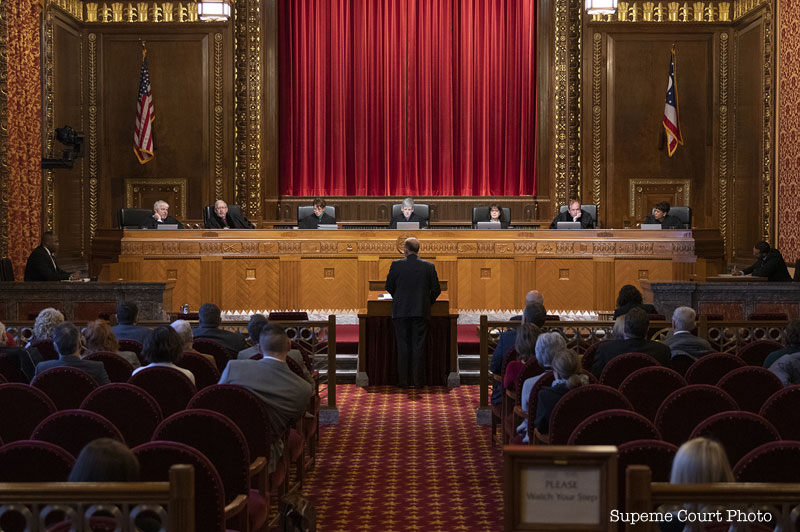




 MAC Announces Postponement of Fall Sports
 The Big 10 is expected to announce the cancelation of the Fall football season on Tuesday.















 You can help protect those most vulnerable